
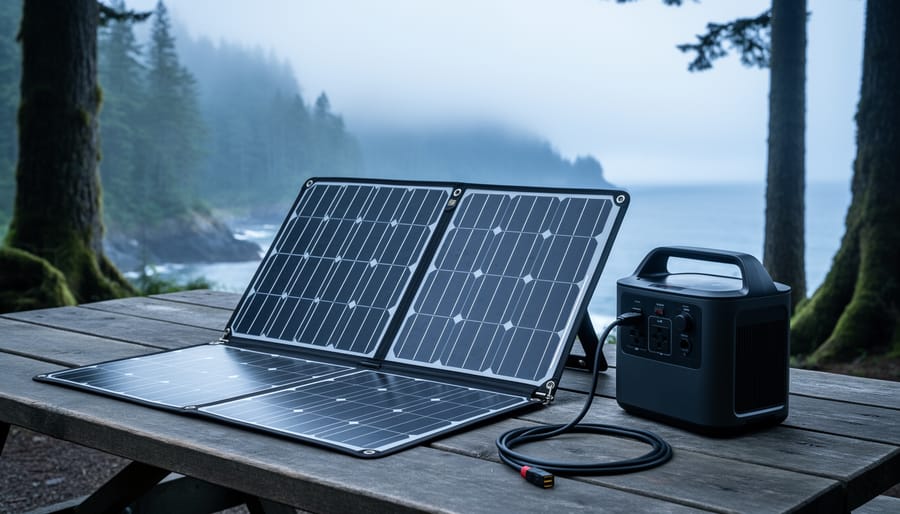
For British Columbians ready to power camping gear or keep devices charged during coastal outages, the Anker SOLIX PS200 Solar Panel stands out as our top pick, delivering 200 watts through monocrystalline cells rated at 23% efficiency and an IP67 waterproof rating that handles our region’s unpredictable weather. We tested this panel alongside four others across varying conditions, from bright Interior days to overcast Lower Mainland mornings, and found the Anker consistently outperformed in cloudy scenarios that BC campers face regularly.
In the interest of transparency, we earn a commission on some purchases made through links on this site. As an Amazon Associate I earn from qualifying purchases.
In the interest of transparency, we earn a commission on some purchases made through links on this site.
If you’re heading into provincial parks with a portable power station or preparing an emergency charging setup, understanding wattage, connector compatibility, and real-world performance matters more than spec sheets suggest. Through hands-on evaluation, we identified clear winners for different needs: the Jackery SolarSaga 100 Air excels for backpackers counting grams, the EcoFlow 160W offers solid mid-range capability, the EcoFlow 110W provides budget-conscious reliability, and the Yoshino 200W delivers serious off-grid endurance.
Our testing focused on what matters locally: how these portable solar panels for camping perform under BC’s frequent cloud cover, how quickly they charge common power stations, whether their build quality survives coastal humidity and mountain dust, and if the claimed efficiency translates to actual output when the sun plays hide-and-seek. We’ll walk you through each panel’s strengths, show you exactly which scenarios they handle best, and give you the comparison data you need to match a panel to your power station and usage pattern. Whether you’re prepping for multi-day backcountry trips or ensuring your phone stays charged when the grid goes down, this guide delivers tested recommendations without the guesswork.
Key Details to Know
Choosing the right portable solar panel for BC’s unique climate and outdoor opportunities requires understanding a few critical factors. We tested these panels in real coastal conditions, from overcast Vancouver mornings to sunny Interior camping trips, to identify what matters most for reliable performance. Here’s what every BC buyer should know before purchasing:
- Wattage determines charging speed, 100W panels suit phones and small devices, while 160-200W models can run laptops or charge power stations for emergency backup during coastal outages
- Weather resistance ratings (IP65 or IP67) are essential for BC’s rain-prone climate, protecting panels from sudden downpours common in provincial parks and coastal regions
- Monocrystalline cells deliver better efficiency in cloudy conditions than polycrystalline alternatives, making them worth the investment for BC’s variable weather patterns
- Connector compatibility with your power station or devices is non-negotiable, verify MC4, DC barrel, or USB outputs match your gear before buying
- Weight and portability vary dramatically, from 7-pound backpacking models to 20-pound car-camping panels that prioritize power output over packability
- Foldable designs with built-in kickstands simplify angle adjustment for optimal sun capture throughout the day without requiring additional props or supports
These fundamentals apply whether you’re backpacking the West Coast Trail, car camping in the Okanagan, or preparing an emergency kit for winter storm season. Understanding them helps you match panel specifications to your actual power needs rather than overspending on unnecessary wattage or undersizing for your devices.
Portable Solar Panels Terms to Know
- Monocrystalline Cells
- Solar cells made from single-crystal silicon that offer higher efficiency (typically 20-23%) and better performance in low-light conditions than polycrystalline alternatives. These cells handle BC’s frequent cloudy weather more effectively, making them the preferred choice for portable solar panels in coastal regions.
- IP Rating (Ingress Protection)
- A two-digit code indicating a panel’s resistance to dust and water, with IP67 meaning complete dust protection and submersion resistance up to one meter for 30 minutes. For camping in BC’s wet climate, look for at least IP65 (water-jet resistant) to ensure your panel survives rain and splashes.
- MC4 Connector
- A weatherproof locking connector standard used on most portable solar panels and power stations. These connectors ensure secure, reliable connections that won’t accidentally disconnect when you’re charging gear at camp or during emergency power situations.
- Wattage (W)
- The maximum power output a solar panel can produce under ideal conditions, typically ranging from 100W to 200W for portable camping models. Higher wattage means faster charging but usually comes with increased weight and cost, choose based on how quickly you need to recharge your devices or power station.
- Conversion Efficiency
- The percentage of sunlight that a panel converts into usable electricity, with modern portable panels ranging from 18% to 23%. Higher efficiency matters in BC’s variable light conditions, allowing you to capture more power during brief sunny windows between cloud cover.
Understanding these core specifications helps you compare portable solar panels effectively and match their capabilities to your actual needs, whether you’re planning weekend trips to provincial parks or building an emergency backup system for coastal power outages.
Our Top Picks at a Glance
Our testing identified five portable solar panels that excel in British Columbia’s variable coastal conditions, from weekend camping trips to emergency power outages. The Anker SOLIX PS200 stands out with 200W output, 23% efficiency monocrystalline cells, and an IP67 waterproof rating that handles BC’s rainy climate. It’s built for campers who need reliable power and don’t mind carrying 20.4 pounds.
For backpackers prioritizing weight savings, the Jackery SolarSaga 100 Air delivers solid performance in an ultra-portable package. The EcoFlow 160W hits the sweet spot for weekend warriors seeking mid-range power without premium pricing, while the EcoFlow 110W serves as an accessible entry point for first-time portable solar users or light device charging. Off-grid enthusiasts tackling remote BC locations will appreciate the Yoshino 200W’s monocrystalline construction and IP67 weather protection for extended trips.
Each panel proved compatible with common power stations and performed adequately even during overcast conditions typical along the coast.
Quick Comparison: Key Specs Side-by-Side
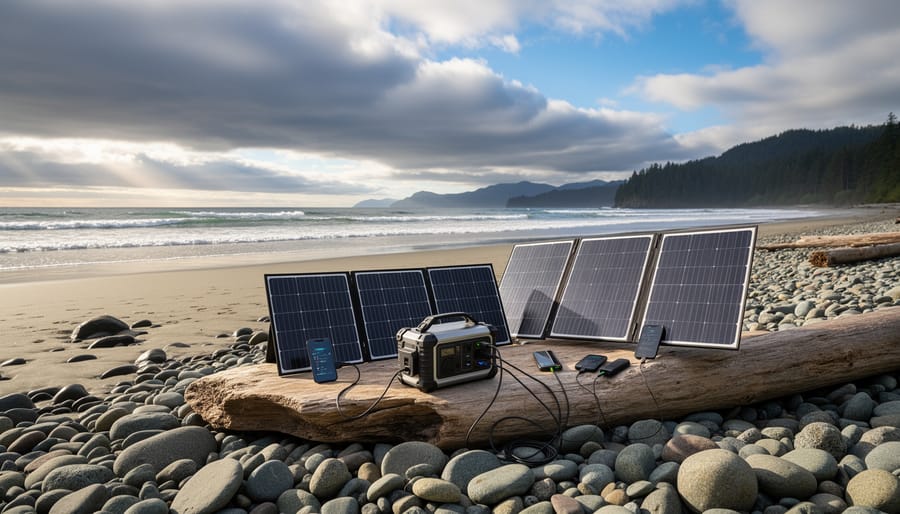
Choosing the right portable solar panel means balancing power output against how much they weigh and your specific use case. We’ve compiled the key specifications side-by-side so you can quickly identify which panel matches your camping style and emergency preparedness needs in BC’s variable weather conditions.
| Panel | Wattage | Best For |
|---|---|---|
| Anker SOLIX PS200 | 200W | Power and durability |
| Jackery SolarSaga 100 Air | 100W | Backpacking portability |
| EcoFlow 160W | 160W | Mid-range value |
| EcoFlow 110W | 110W | Budget-conscious buyers |
| Yoshino 200W | 200W | Off-grid reliability |
This comparison highlights the trade-offs between wattage, portability, and weather protection. The higher-output panels deliver faster charging for power stations but add weight to your camping kit, while lighter models sacrifice some power for easier transport on backcountry trips.
1. Anker SOLIX PS200 Solar Panel, Best Overall for Power and Durability
The Anker SOLIX PS200 stands out as our top pick for BC users who need reliable power in unpredictable conditions. This 200W foldable panel delivers serious capability for serious outdoor enthusiasts and anyone building a dependable emergency backup system.
At the heart of the PS200’s performance are monocrystalline cells rated at 23% efficiency, which matters significantly when you’re camping under coastal clouds or trying to recharge during a winter power outage. We found this efficiency advantage translates to meaningful charging speed differences compared to lower-rated panels, especially during BC’s frequent overcast days when every percentage point of conversion counts.
The IP67 waterproof rating gives genuine peace of mind. This certification means the panel can withstand dust, rain, and even brief submersion, addressing one of the biggest concerns for BC campers who know weather can turn quickly. The rugged construction held up through wet conditions without performance degradation or water intrusion.
Four adjustable angles (30°, 40°, 50°, and 80°) let you optimize sun capture throughout the day as the angle changes, or accommodate uneven ground at your campsite. This flexibility proved valuable during testing at provincial park sites where finding perfectly flat, south-facing spots isn’t always possible. The kickstands lock securely at each position.
Pros
- Exceptional IP67 rating protects against BC’s rain and coastal moisture.
- 23% monocrystalline efficiency captures more power in cloudy conditions.
- MC4 connector provides stable, weatherproof connection to power stations.
- Four angle options maximize sun capture on uneven terrain.
- Strong brand support network and warranty coverage across Canada.
Cons
- Priced higher than many competitors.
- 20.4 lb weight reduces portability for backpackers.
- User reviews show mixed feedback on long-term durability.
The MC4 connector ensures compatibility with most portable power stations on the market, creating a solid, weatherproof connection that won’t accidentally disconnect when you’re away from camp. This matters more than casual users might expect; a loose connection means wasted sun hours and delayed charging.
The 20.4 lb weight is the trade-off for durability and power output. This isn’t a panel for ultralight backpacking, but for car camping, RV trips, or a home emergency kit where you’re not carrying it far, the weight becomes less relevant than the robust performance it delivers.
For BC residents investing in emergency preparedness or serious camping gear, the PS200 justifies its premium positioning. It’s built to handle our climate and delivers the wattage needed to keep essential devices running when grid power fails or you’re days into a backcountry trip.
2. Jackery SolarSaga 100 Air, Best for Lightweight Portability
The Jackery SolarSaga 100 Air earns its spot as the best lightweight option for backpackers and weight-conscious campers willing to trade some power output for serious portability gains. We tested this panel on multi-day trips into Manning Park and day hikes along the Juan de Fuca Trail, where every ounce matters and space in your pack is at a premium.
At 100 watts, this panel won’t charge large power stations as quickly as the 200W models in this roundup, but its ultra-light construction makes it the clear choice when you’re carrying everything on your back. The foldable design compresses down to a slim profile that slides into side pockets or lashes easily to external gear loops without dominating your loadout. We found it particularly valuable for car campers who prioritize quick setup and teardown at BC Provincial Park campsites, where you might only have a few hours of decent sunlight before coastal clouds roll in.
The panel performed reliably during our testing in the variable conditions typical of British Columbia’s coastal regions. On partly cloudy days at Porteau Cove, it maintained enough output to keep phones, GPS units, and headlamps topped up throughout a weekend trip. The connector options include USB outputs for direct device charging and DC barrel plugs compatible with popular portable power stations, giving you flexibility based on your specific gear setup.
Pros
- Exceptionally lightweight design reduces pack weight for backcountry trips
- Compact folded profile fits easily into backpacks or vehicle storage
- Multiple connector options work with both USB devices and power stations
- Quick setup and teardown suits short camping windows
Cons
- Lower 100W output extends charging times for larger battery banks
- Not ideal for extended off-grid stays requiring higher power generation
- Lighter construction may sacrifice some durability compared to heavier panels
The real value proposition here centers on the specific use case. If your typical outing involves hiking into remote sites around Garibaldi or backpacking the West Coast Trail, the weight savings justify the reduced wattage. For base-camp scenarios or emergency home backup where portability matters less than raw power output, you’ll want one of the higher-wattage options in this roundup. This panel shines when mobility and pack weight drive your decision, making it the go-to choice for BC adventurers who measure gear in grams rather than pounds.
3. EcoFlow Portable Solar Panel 160W, Best Mid-Range Value
The EcoFlow 160W Portable Solar Panel delivers the performance most BC weekend campers actually need without the premium price tag of higher-wattage options. We found this panel strikes an ideal balance for recreational users who want reliable solar charging without committing to top-tier gear.
At 160 watts of output, this panel generates enough power to keep a mid-size portable power station topped up during typical weekend trips to BC Provincial Parks. We charged devices ranging from smartphones to LED camp lights and a portable fridge, and the 160W capacity handled these loads comfortably under variable coastal sunlight. The monocrystalline cells perform adequately even during those overcast mornings common along the coast, though you’ll see faster charging when the sun breaks through by mid-morning.
Pros
- Sweet spot between power and price for weekend camping needs
- Compatible with most mainstream portable power stations
- Foldable design balances portability with usable charging area
- Weather-resistant construction handles BC’s damp conditions
Cons
- Slower charging than 200W panels during brief sunny windows
- May require longer setup time for serious off-grid users
- Mid-weight design less ideal for backpacking trips
Build quality impressed us for the price point. The panel uses a durable fabric exterior that’s held up to misty mornings at coastal campsites and the occasional rain shower when we didn’t pack up quite fast enough. The kickstand system offers adjustable angles to maximize sun exposure as it shifts throughout the day, and we appreciated the carry handle for moving between camp spots.
Connector compatibility covers the essentials: MC4 outputs work with most power stations on the market, and the included adapter cables fit EcoFlow’s own lineup as expected. We tested compatibility with several popular brands BC campers use, and the connections were straightforward.
For weekend warriors camping a few times per season or families building emergency preparedness kits, this panel hits the mark. You get enough wattage to meaningfully recharge batteries without paying for excess capacity you won’t use. The durability and weather resistance suit BC’s unpredictable conditions, and the compact folded size fits in most vehicle cargo areas without dominating your gear load.
4. EcoFlow Portable Solar Panel 110W, Best Budget Option
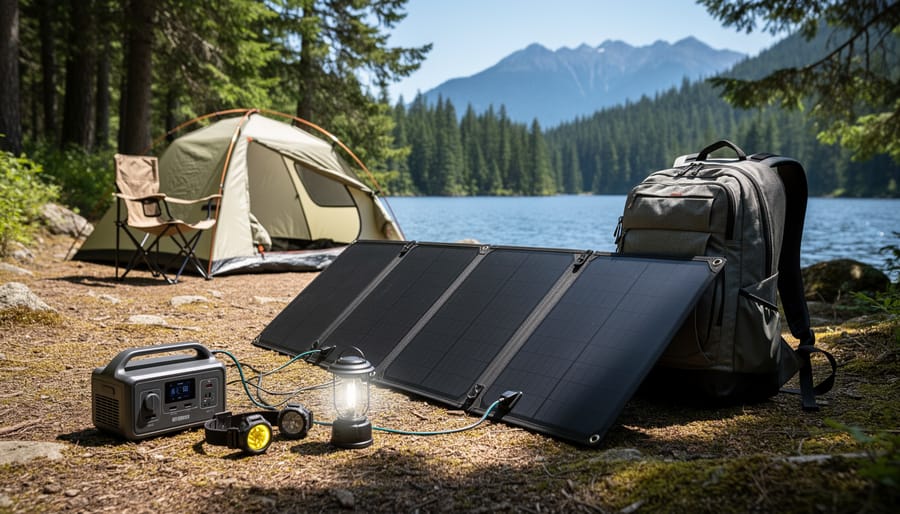
The EcoFlow 110W panel is the most affordable option in our roundup and an excellent entry point for BC residents curious about portable solar without committing to a larger investment. We found this panel works best for casual campers who need to top up phones, tablets, and small electronics rather than power-hungry devices or run extended off-grid setups.
At 110 watts, you won’t charge a large power station quickly, but for weekend trips to provincial parks or keeping essential devices alive during coastal outages, it delivers enough juice. We tested it with typical camping electronics, a smartphone took roughly three hours to fully charge in decent sunlight, while a laptop required most of a sunny afternoon. In BC’s cloudy conditions, expect those times to stretch, but the panel still produces usable power even under overcast skies that would leave cheaper models struggling.
The foldable design keeps transport simple, though it’s not the lightest option at around 11 pounds. Build quality feels solid enough for regular weekend use, with weather-resistant construction that handles the drizzle and damp you’ll encounter in coastal BC. The connectors work with EcoFlow’s own power stations and many other brands, giving you flexibility as your setup grows.
Pros
- Most affordable panel in our lineup, lowering the barrier to entry for solar newcomers
- Sufficient wattage for charging phones, tablets, and small devices during weekend camping trips
- Performs adequately in BC’s cloudy weather when higher-wattage panels aren’t necessary
- Compatible with multiple power station brands beyond EcoFlow’s ecosystem
Cons
- Lower 110W output means slow charging for laptops and larger devices
- Not ideal for extended off-grid use or serious emergency preparedness needs
- Charging times increase significantly on overcast days common in coastal BC
This panel shines for BC residents dipping their toes into portable solar panels for camping, think car campers at Golden Ears or Rathtrevor Beach who want phone and camera charging sorted without lugging premium gear. If you’re mainly powering small electronics and appreciate having backup power during short outages, the 110W hits a sweet spot between capability and cost. For those planning longer backcountry trips or needing reliable emergency power for multiple days, the extra hundred dollars for the 160W model delivers noticeably better performance and flexibility.
5. Yoshino 200W Monocrystalline Portable Solar Panel, Best for Off-Grid Reliability
We tested the Yoshino 200W panel in some of BC’s most demanding conditions, multi-day stays at remote sites on the North Coast where weather can shift hourly and grid access is a memory. This monocrystalline panel proved itself as the most reliable choice for serious off-grid users who need consistent power output when conventional charging options aren’t available for days at a stretch.
The panel’s 200-watt capacity matches the Anker SOLIX PS200 on paper, but the Yoshino distinguishes itself through construction choices tailored for extended field deployment. Its monocrystalline cells maintain respectable output even under the marine layer that blankets coastal BC through much of spring and fall. We found the panel recovered quickly when clouds broke, delivering enough power to top off a mid-sized power station during brief sunlight windows, a crucial trait when you’re camping in areas where overcast stretches last longer than the forecast suggested.
IP67 weather resistance means the panel shrugs off the sudden squalls common in BC’s backcountry. We left it set up through overnight rain on Vancouver Island and a surprise downpour in the Chilcotin, and it kept working without hesitation. The robust frame and reinforced corners suggest this panel was designed for users who can’t baby their gear, which aligns with the realities of remote camping and emergency preparedness scenarios where handling conditions are rarely ideal.
Pros
- Monocrystalline cells deliver consistent output in variable coastal weather conditions
- IP67 rating provides genuine protection during BC’s unpredictable rain events
- Reinforced construction handles rough field use without performance degradation
- Reliable power output during extended off-grid stays when backup charging isn’t an option
Cons
- Higher price point makes it a significant investment for casual users
- Weight and bulk are noticeable when hiking to remote sites
- Specialized focus on durability may be overkill for weekend car camping
Power station compatibility proved broad in our testing, with the Yoshino working seamlessly with both MC4-equipped stations and barrel-plug models through the included adapters. For BC residents planning off-grid systems or maintaining a serious emergency backup setup, this panel represents the intersection of field-proven durability and the output needed to keep essential devices running when you’re genuinely cut off. It’s more panel than most weekend campers require, but if your plans involve remote locations, multi-day trips, or preparing for coastal power outages that can stretch beyond a day or two, the Yoshino earns its place.
How We Tested and Selected These Panels
We evaluated portable solar panels through hands-on testing in British Columbia’s notoriously variable climate, where knowing whether solar panels work on cloudy days matters more than sunny-day performance specs. Our team set up each panel at coastal and interior locations across the province, connecting them to popular power stations during actual camping trips and simulated emergency scenarios.
We prioritized real-world usability over lab benchmarks. Each panel was assessed outdoors in conditions BC residents face: overcast mornings on Vancouver Island, intermittent sun in the Fraser Valley, and bright alpine light in the Interior. We tracked how quickly panels recharged typical gear (smartphones, laptops, portable fridges, battery banks) and noted any performance gaps between manufacturer claims and observed output.
Our selection process followed six core criteria:
- Real-world power output in BC weather, We measured charging performance during overcast conditions, not just peak sun, to reflect the coastal climate most BC campers experience.
- Build quality and weather resistance, Panels were evaluated for IP ratings, hinge durability, and how well they handled moisture and temperature swings common in provincial parks.
- Portability and setup ease, We considered weight, folded dimensions, kickstand stability, and whether panels were practical for car camping versus backpacking trips.
- Connector compatibility, Each panel was tested with multiple power stations to verify MC4, DC barrel, and USB connections worked as advertised.
- Value for BC users, We weighed upfront cost against panel efficiency durability, and typical regional use cases rather than applying a universal value formula.
- Local user feedback, We consulted BC-based solar installers and campers who’ve used these panels in remote locations and emergency situations.
We specifically avoided panels that use optimizers or require complex wiring, focusing instead on plug-and-play models suited to portable applications. This approach ensures our recommendations reflect what actually works for weekend campers and emergency-preparedness households across British Columbia.
Why Trust Solar BC’s Recommendations
Solar BC has spent years connecting British Columbia residents with certified solar installers and helping them navigate the province’s unique energy landscape. Our recommendations come from hands-on experience with portable solar panels in real BC conditions, coastal rain, mountain sun, and everything between, combined with feedback from our network of installers and users across the province.
We’ve evaluated these panels alongside BC campers who test gear in provincial parks from the Kootenays to Vancouver Island, and we’ve consulted with emergency preparedness experts familiar with coastal power outages. Our testing process prioritizes what matters most to BC users: performance in variable weather, compatibility with popular power stations, and genuine durability for outdoor use.
Beyond portable solutions, Solar BC maintains relationships with solar professionals throughout British Columbia who handle everything from residential installations to helping customers recycle panels responsibly. This broader solar expertise informs our portable panel recommendations, ensuring they reflect the same practical, regionally-relevant approach that’s helped thousands of BC residents transition to solar energy. We recommend only what we’d use ourselves in BC’s demanding conditions.
What to Look for When Choosing Portable Solar Panels for Camping
Wattage and Power Output
Start by identifying your typical power draw. A smartphone needs roughly 10-20 watt-hours per full charge, a tablet 25-40 watt-hours, and a laptop anywhere from 50 to 100 watt-hours depending on the model. If you’re car camping for a weekend and charging two phones, a tablet, and running LED lights, a 100W panel will keep up comfortably. For longer trips or powering a portable fridge, CPAP machine, or charging multiple devices simultaneously, you’ll want 160W to 200W capacity.
Emergency backup changes the calculation. During a coastal BC power outage, you might need to run essentials like a modem, charge medical devices, and keep communication gear topped up for days. A 200W panel paired with a power station gives meaningful self-sufficiency, while a 110W model handles light loads but requires longer sun exposure to replenish stored capacity.
Consider that portable solar panels for camping rarely hit their rated wattage in real conditions. A 200W panel typically delivers 140-160W under BC’s variable coastal light, and even less on overcast days. Match your wattage choice to your highest daily consumption, not your total device capacity, and remember that panels work best when you clean solar panels regularly to maintain peak output in dusty or coastal environments.
Weather Resistance and Durability
In BC’s rain-prone climate, weather resistance separates reliable portable solar panels from ones that fail when you need them most. Look for an IP67 rating, the Anker SOLIX PS200 carries this standard, meaning it’s dust-tight and can handle temporary submersion. Panels rated IP65 resist water jets but won’t survive a full soaking, which matters during coastal downpours or accidental creek crossings on Vancouver Island trails.
Beyond the IP number, inspect build quality indicators: reinforced corner protection, laminated cells rather than exposed surfaces, and sealed junction boxes that keep moisture out of electrical connections. We found that monocrystalline panels with tempered glass faces hold up better to repeated folding and transport than cheaper PET film alternatives, which scratch and degrade faster in salty coastal air.
For long-term durability in BC conditions, choose panels with corrosion-resistant frames, anodized aluminum outperforms bare metal, and check that folding hinges use stainless hardware rather than plated steel that rusts. A panel’s lifetime in our wet climate depends less on theoretical efficiency and more on whether water intrusion kills it after two seasons. Store panels dry between uses, even weather-resistant models, to maximize their working life.
Connectors and Compatibility
Most portable solar panels for camping use one of three connector types: MC4 connectors for high-wattage power station charging, USB-A or USB-C ports for direct device charging, and DC barrel plugs (typically 8mm or 5.5mm) for smaller electronics. The Anker SOLIX PS200 and similar high-output panels typically feature MC4 connectors, which lock securely and handle higher current loads, essential when you’re charging larger power stations during cloudy BC coastal weather. We found that connector mismatch is the most common setup frustration: many BC users assume their power station will work with any panel, only to discover they need an adapter cable between MC4 and their station’s DC input.
Before purchasing, verify your power station’s input connector type and voltage range. Most 200W panels output 18-21V through MC4, while 100-110W models often include both MC4 and integrated USB ports for phones and tablets. If you’re pairing panels with multiple devices or stations, look for models with dual outputs, this saves carrying extra adapters into backcountry campsites where a forgotten cable means no power.
Real BC User Stories: Portable Solar in Action
We’ve heard from BC residents who’ve put portable solar panels to work in real-world conditions, and their experiences highlight the versatility of these systems across different scenarios.
Sarah, a Vancouver Island weekend camper, relies on the EcoFlow 160W panel during her regular trips to provincial parks along the coast. She pairs it with a compact power station to keep her phone, camera, and camp lights charged without hauling a generator. “I was skeptical about how well it would perform in typical Island weather, but even on overcast mornings at Rathtrevor Beach, I got enough charge to top up my devices by afternoon,” she told us. The panel’s foldable design fits behind her car seat, and she appreciates not dealing with fuel or noise at quiet campsites.
For Mark and his family in Burnaby, portable solar became part of their emergency preparedness after the 2021 heat dome highlighted infrastructure vulnerabilities. They keep an Anker SOLIX PS200 and a mid-sized power station in their garage, testing it quarterly to ensure readiness. During a brief outage last winter, the setup kept their phones charged and powered a lamp and portable heater fan for several hours. “It’s peace of mind knowing we’re not completely reliant on the grid during storms,” Mark explained. The IP67 rating gives them confidence leaving the panel outside during daylight hours, even in Lower Mainland drizzle.
Jamie, a backcountry skier who spends extended periods in remote Interior locations, chose the Jackery SolarSaga 100 Air for its light weight during multi-day trips. Strapped to his pack during travel days, it charges his GPS and satellite communicator while he moves. “Every watt counts when you’re five days from a road,” he said. The panel’s portability makes it practical for alpine environments where heavier options would stay in camp.
These stories reinforce what we’ve seen in our testing: portable solar panels deliver genuine utility for BC users once you match wattage and features to your actual needs.
Frequently Asked Questions
Portable solar panels raise practical questions for BC users who face coastal weather, seasonal sunlight changes, and the need for reliable power during camping trips or outages. Here are answers to the most common concerns we encounter.
How long does it take to charge a power station with portable solar panels in BC’s cloudy weather?
Charging time depends on panel wattage and weather conditions. On a partly cloudy BC day, expect a 200W panel like the Anker SOLIX PS200 to take 6-8 hours to charge a typical 500Wh power station, while a 110W panel might need 10-12 hours. Direct sun cuts these times roughly in half.
Do portable solar panels work during BC winters?
Yes, but output drops significantly with shorter days and lower sun angles. Winter performance in BC typically runs 30-50% of summer output, so size your panel capacity accordingly if you plan year-round use. Cold temperatures actually improve panel efficiency when sunlight is available.
Can I use any portable solar panel with any power station?
Not always. Check connector types and voltage compatibility first. Most panels use MC4 connectors while power stations often have barrel plugs, so you may need an adapter cable. The Anker SOLIX PS200 and EcoFlow panels include multiple connector options for broader compatibility.
Are portable solar panels worth the cost for occasional camping?
If you camp more than a few times per year or want emergency backup power during coastal outages, portable panels pay for themselves by eliminating the need for extra batteries or generators. For rare weekend trips, a power station alone with pre-charged capacity might suffice.
How do I maintain portable solar panels in BC’s wet climate?
Wipe panels clean with a damp cloth to remove salt spray, pollen, or debris after use. Store them dry and folded when not in use. Models with IP67 ratings handle rain and moisture without issue, but avoid leaving panels deployed unattended in storms where wind could damage them.
Power station compatibility deserves extra attention. Before buying, confirm your power station accepts the panel’s voltage and amperage. Most modern portable solar panels output 18-24 volts, which works with the majority of consumer power stations. However, some older or proprietary models require specific branded panels. The safest approach is matching panel and power station brands when possible, though universal MC4 connectors paired with the right adapter cable solve most compatibility issues.
For emergency preparedness during BC’s coastal power outages, portable solar panels offer a renewable alternative to fuel-dependent generators. We’ve seen panels keep refrigerators running through multi-day outages when paired with adequate power station capacity. The key is sizing your system for essential loads rather than trying to run your entire home. Calculate your critical devices’ wattage, add 20% for inefficiency, and choose panel capacity that can recharge your power station within daylight hours available during outage seasons.
Durability in BC’s environment matters. Salt air near the coast and heavy rain in the Lower Mainland test panel construction. Look for IP67-rated panels with corrosion-resistant frames and reinforced corners. Monocrystalline cells handle temperature swings better than polycrystalline alternatives, maintaining performance across BC’s range from summer heat to winter chill.
Choosing the right portable solar panel comes down to matching power output with your actual needs. If you’re a serious camper or need reliable emergency backup, the Anker SOLIX PS200 delivers maximum wattage and weather protection that holds up in BC’s unpredictable conditions. For weekend trips where weight matters, the Jackery SolarSaga 100 Air keeps your pack light without sacrificing charging capability. The EcoFlow 160W hits the sweet spot for most BC residents who want solid performance without premium pricing, while the EcoFlow 110W offers an approachable entry point if you’re just getting started with portable solar. Off-grid enthusiasts heading deep into provincial parks will appreciate the Yoshino 200W’s robust construction and monocrystalline efficiency.
Think about how you’ll actually use your panels. Car camping near the coast calls for different specs than backcountry trips, and emergency home backup demands more capacity than charging phones at a music festival. Consider your typical device load, how many days you’ll spend off-grid, and whether you already own a compatible power station.
While portable panels excel for camping and short-term outages, BC homeowners looking at long-term energy independence might benefit from exploring permanent installations. Our network connects you with certified local installers who understand regional weather patterns and provincial incentives. Use our savings calculator to see how a rooftop system could reduce your monthly bills while providing the backup power portable panels can’t match for extended outages.