
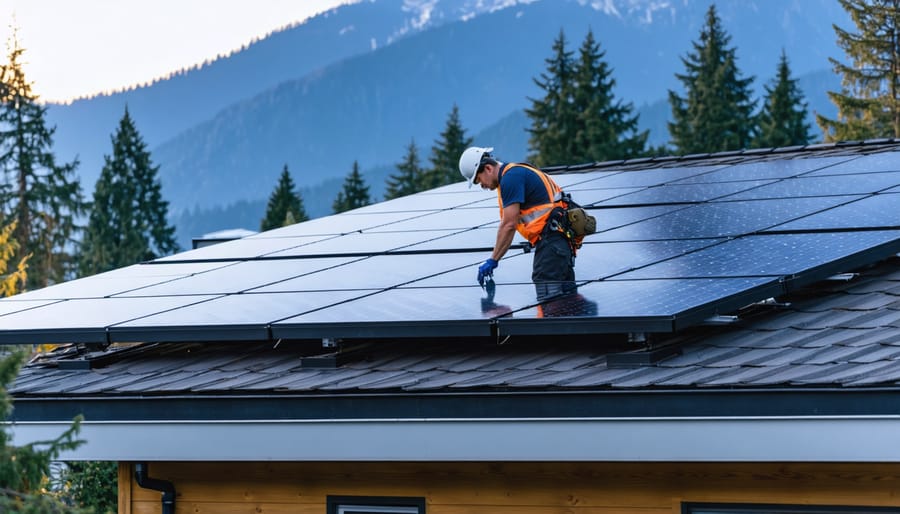
**Claim up to 30% of your solar installation costs back through federal tax incentives—but only if you understand which programs apply to British Columbia residents and how they differ from US-based credits dominating online search results.**
Canadian homeowners and businesses investing in solar power can access substantial savings through federal programs like the Canada Greener Homes Grant (up to $5,000) and accelerated Capital Cost Allowance deductions for commercial installations. These incentives significantly reduce your upfront investment, typically recovering 15-35% of total system costs when combined with BC’s provincial rebates and net metering benefits.
The key to maximizing your return lies in understanding eligibility requirements, navigating the application process correctly, and timing your installation strategically. A Vancouver homeowner recently saved $8,400 on a $28,000 system by stacking federal grants with provincial programs—cutting their payback period from 12 years to just 7.
This guide breaks down exactly which federal incentives you qualify for, provides real calculations based on typical BC installation sizes, and walks you through the claiming process step-by-step. You’ll discover how local businesses and homeowners are leveraging these programs to make solar power financially accessible while contributing to BC’s clean energy future.
What the Federal Solar Investment Tax Credit Really Means for You
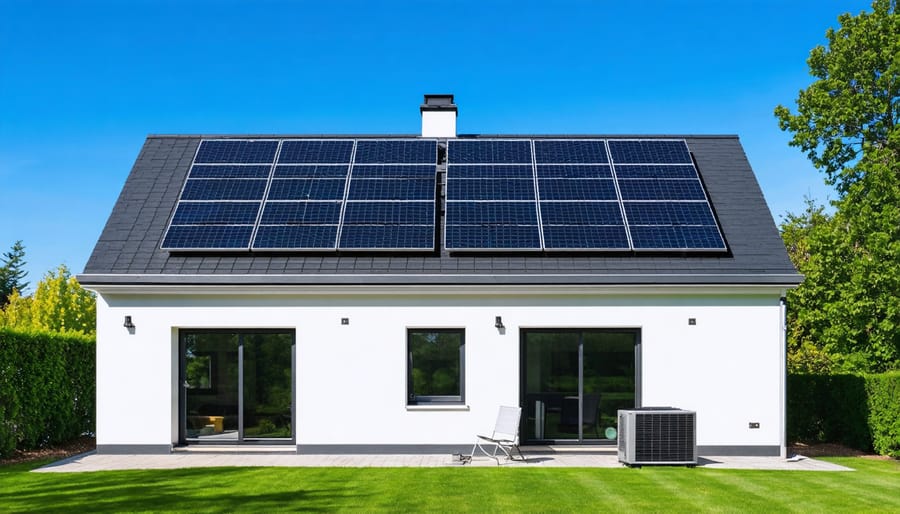
Current Tax Credit Rates and Timeline
**Important Note for BC Residents:** Canada does not currently offer a federal tax credit for residential solar installations like the United States does. However, BC residents can access several provincial and utility-based incentives that make solar power affordable and attractive.
While you may encounter information about the U.S. federal Investment Tax Credit (ITC) at 30% in your research, this program doesn’t apply in Canada. Instead, British Columbians benefit from programs like BC Hydro’s Net Metering Program, which credits you for excess solar energy fed back to the grid, and the Canada Greener Homes Grant offering up to $5,000 for solar PV installations.
**BC Solar Incentive Timeline:**
– **Available Now:** Canada Greener Homes Grant (up to $5,000)
– **Ongoing:** BC Hydro Net Metering (credits on monthly bills)
– **Municipal Programs:** Various property tax exemptions (check your local municipality)
The good news? BC’s incentive structure focuses on immediate rebates and ongoing savings rather than year-end tax credits, meaning you see financial benefits faster. A typical Vancouver homeowner installing a 5kW system can recover their investment through combined incentives and energy savings within 10-12 years, with 25+ years of continued savings ahead.
What’s Covered Under Federal Incentives
Understanding what qualifies under federal solar incentives helps you maximize your savings and avoid unexpected disappointments when claiming your benefits.
**Eligible Expenses**
The federal government covers several key components of your solar installation. Solar photovoltaic panels themselves are fully eligible, along with the mounting hardware and racking systems that secure them to your roof or ground mount. Installation labor costs qualify too, including electrical work necessary to connect your system to your home’s power supply.
Battery storage systems have become an exciting addition to eligible expenses. If you’re installing a battery like the Tesla Powerwall or Enphase system alongside your solar panels, those costs count toward your incentive calculation. This is particularly valuable for BC residents looking to store excess power generated during sunny summer days.
Inverters, charge controllers, and balance-of-system equipment all qualify. Even permitting fees and inspection costs required by your municipality are typically eligible expenses.
**What Doesn’t Qualify**
It’s important to note that standalone upgrades unrelated to solar generation won’t qualify. For example, if you’re upgrading your electrical panel purely for capacity reasons rather than solar integration, that portion may be excluded. Roof repairs completed before installation, while often necessary, don’t count as solar expenses.
Decorative elements or premium aesthetic upgrades beyond functional requirements typically aren’t covered. Additionally, any maintenance contracts or extended warranties purchased separately fall outside the incentive scope.
A Vancouver homeowner recently shared how understanding these distinctions helped them budget accurately, avoiding the common mistake of assuming their entire electrical upgrade would qualify when only the solar-specific components were eligible.
How BC Residents Can Stack Federal and Provincial Benefits
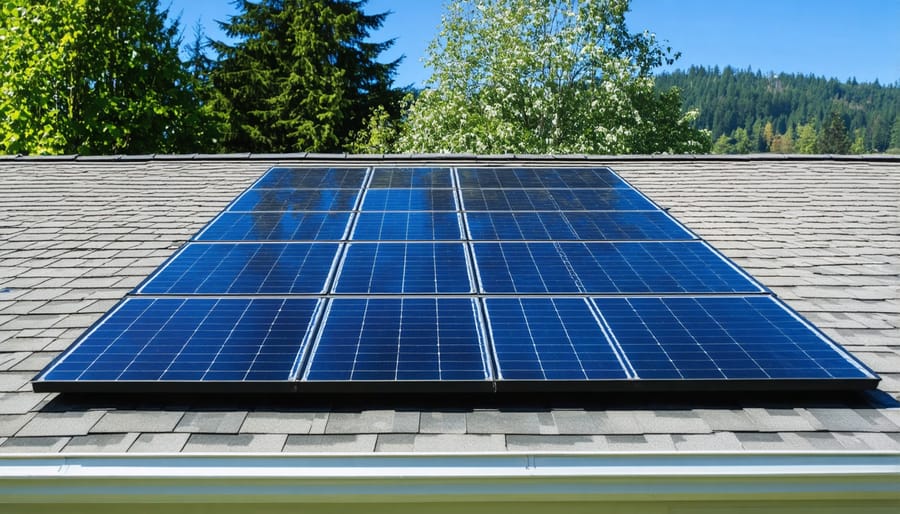
Federal Plus Provincial: A Real BC Example
Meet Sarah Chen, a homeowner in Burnaby who installed solar panels on her 1,800 square foot home in spring 2024. Her experience shows exactly how federal and provincial programs work together to make solar affordable.
Sarah’s 8 kW solar system had a total installation cost of $24,000 before any incentives. Here’s how the numbers broke down:
**Initial Investment:** $24,000
**Federal Home Renovation Tax Credit (2024):** Sarah qualified for the newly introduced federal credit covering eligible green home improvements. This provided her with a $5,000 credit against her federal income tax.
**Provincial Programs:** Through BC Hydro and provincial rebates, Sarah received an additional $3,500 in incentives for her system size and energy efficiency upgrades completed alongside the installation.
**Net Investment:** $15,500
That’s a 35% reduction in her upfront costs—bringing her system within reach of her family’s budget without requiring a large loan.
Beyond the immediate savings, Sarah’s system generates approximately $1,400 worth of electricity annually at current BC Hydro rates. Her payback period calculates to roughly 11 years, after which she’ll enjoy essentially free electricity for the remaining 15+ years of her system’s warranty period.
“The federal credit made a huge difference,” Sarah explains. “We were on the fence about solar, but when we added up the federal amount with BC’s programs, it suddenly made financial sense. Our energy bills have dropped by 85%, and we’re doing something positive for the environment.”
Sarah’s story demonstrates that combining federal and provincial incentives transforms solar from an aspirational goal into a practical investment for BC homeowners.
CleanBC and Other Local Programs That Work With Federal Credits
British Columbia residents can maximize their solar savings by stacking federal incentives with provincial support. CleanBC and other programs work alongside federal credits to reduce upfront costs even further.
The CleanBC Better Homes program offers rebates for energy-efficient upgrades, including solar-ready improvements. When combined with federal incentives, BC homeowners have reported reducing their installation costs by up to 40%. For businesses, the CleanBC Industry Fund provides additional support for renewable energy projects.
**Action Steps for Combining Programs:**
1. **Start with federal applications first** – Submit your federal tax credit claim through your annual return
2. **Check CleanBC eligibility** – Visit the CleanBC website to review current provincial offerings
3. **Consult local installers** – Many BC solar companies help navigate both federal and provincial applications simultaneously
4. **Keep all documentation** – Maintain separate records for each program’s requirements
Sarah from Victoria successfully combined both incentives for her 2023 installation: “The federal credit covered 30% of costs, while CleanBC’s programs added another rebate. Our solar company walked us through both applications—it was simpler than expected.”
Who Qualifies and How to Claim Your Federal Tax Credit
Eligibility Checklist for BC Solar Buyers
Before investing in solar power, BC residents should verify they meet the key requirements for federal tax incentives. This straightforward checklist helps you determine your eligibility and prepare for a successful claim.
**Ownership & Installation Requirements:**
– You must own the solar system outright (leased systems don’t qualify)
– The system must be installed at your Canadian residence or business property
– Installation must be completed by a certified professional
– Equipment must meet Canadian Standards Association (CSA) certification
**System Specifications:**
– Solar photovoltaic panels must be new, not previously used
– The system generates electricity for your own use, not solely for resale
– Installation date falls within the eligible tax year you’re claiming
**Tax Liability Considerations:**
– You must file a Canadian tax return for the year of installation
– You need sufficient tax liability to benefit from non-refundable credits
– If credits exceed your current tax owing, some may carry forward to future years
**Documentation Ready:**
– Receipts showing equipment and installation costs
– Contractor invoices with detailed breakdowns
– CSA certification documents for all equipment
– Property ownership confirmation
Consider this example: When Vancouver’s Chen family installed their 6kW system in 2023, they confirmed their eligibility by reviewing these criteria with their tax advisor beforehand. This preparation streamlined their claiming process and maximized their federal benefits alongside BC’s provincial incentives. Taking thirty minutes to verify these requirements now saves considerable time during tax season.
Filing Your Claim: Forms and Documentation
Filing for federal solar tax incentives requires attention to detail, but the process is straightforward when you know what to expect. Whether you’re a Vancouver homeowner or a Kelowna business owner, understanding CRA requirements will help you maximize your eligible credits without delays.
**When to File Your Claim**
Solar tax incentives are claimed when you file your annual income tax return. For individual homeowners, this means including your solar-related expenses on your T1 return for the tax year when installation was completed and the system became operational. Businesses should document expenses in the fiscal year when equipment was put into use, reporting on their T2 corporate return.
**Essential Documentation**
Keep detailed records of all solar-related expenses. You’ll need itemized invoices from your solar installer showing equipment costs, labour, permits, and installation dates. Request a certificate of completion from your installer and copies of utility interconnection approvals. The CRA may request these documents years after filing, so maintain them for at least six years.
For the Capital Cost Allowance (CCA) claims under Class 43.2, you’ll need your installer to confirm the system meets CRA’s efficiency requirements. Most reputable BC installers provide this documentation automatically, but confirm before finalizing your contract.
**Common Mistakes to Avoid**
Many British Columbians miss eligible deductions by not claiming GST/HST credits on commercial installations or forgetting to include soft costs like electrical panel upgrades. Another frequent error is claiming expenses before the system is operational—the CRA requires your system to be generating power before credits apply.
Double-check that your installer is registered for GST purposes, as this affects your documentation requirements. When combining federal incentives with BC Hydro rebates or municipal programs, ensure you’re not double-claiming the same expenses across different programs.
Business and Commercial Solar Tax Incentives
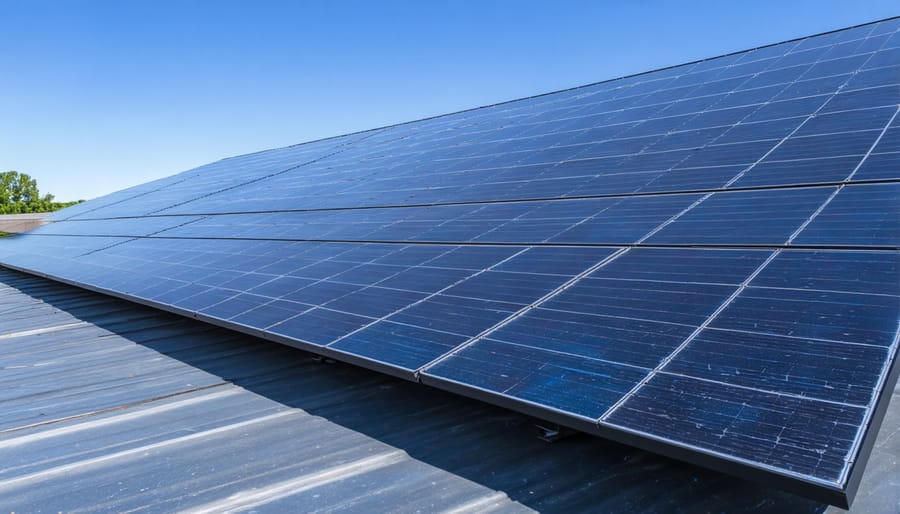
Accelerated Capital Cost Allowance for Solar
For BC businesses investing in solar power, the federal Accelerated Capital Cost Allowance (ACCA) offers substantial tax advantages by allowing you to write off your solar investment faster than standard depreciation schedules. Under Class 43.2, you can claim up to 50% of your solar system’s cost in the first year, with declining balances in subsequent years.
Here’s a practical example: A Vancouver manufacturing company installs a $100,000 solar array. In year one, they can claim $50,000 as a capital cost allowance, reducing their taxable income significantly. If their corporate tax rate is 27%, that’s an immediate $13,500 tax savings. Year two allows a 25% claim on the remaining balance ($12,500), providing another $3,375 in tax relief. These accelerated depreciation benefits dramatically improve cash flow during the critical early years of solar adoption.
The key advantage? Instead of spreading deductions over 25-30 years like traditional assets, you recover costs much faster—typically within 5-7 years. This acceleration means more immediate capital available for other business investments or expansion. Combined with energy savings from your solar system, many BC businesses find their effective payback period shortened considerably, making solar a financially smart choice beyond environmental benefits.
Local Business Success Story
Vancouver-based Green Valley Café installed a 25kW solar array in March 2023, investing $62,000 in their renewable energy system. Owner Maria Chen worked with a local solar installer who helped her understand the federal Capital Cost Allowance benefits available to small businesses.
The café’s accountant applied the Accelerated Investment Incentive when filing their 2023 corporate taxes, allowing them to claim enhanced depreciation on the system. This resulted in approximately $9,300 in tax savings during the first year alone, with additional deductions continuing over subsequent years.
Beyond the federal incentives, Green Valley Café also qualified for BC Hydro’s net metering program, reducing their monthly electricity bills by 40%. Maria notes that combining these benefits means their system will pay for itself in roughly eight years, while also attracting environmentally-conscious customers who appreciate their commitment to clean energy. The installation process took just three days, with minimal disruption to daily operations.
Planning Your Solar Investment Around Tax Incentives
Timing Your Installation for Maximum Benefit
Timing your solar installation strategically can maximize your federal tax benefits and accelerate your return on investment. In Canada, solar installations must be completed and operational before the end of the tax year (December 31st) to claim incentives on that year’s return. This means planning ahead is essential—solar projects typically take 2-4 months from initial consultation to activation, considering equipment ordering, permitting, and installation.
For BC homeowners like the Johnsons in Victoria, completing their installation in November 2023 allowed them to claim both federal and provincial incentives on their 2023 tax return filed in spring 2024, receiving their refund within weeks. This timing also positioned them to capture maximum summer production in their first full year of operation.
Business owners should consider aligning installation with fiscal year-end to optimize capital cost allowance claims. The Accelerated Investment Incentive allows immediate expense deduction, making year-end installations particularly advantageous for tax planning.
Pro tip: Start your solar journey in early summer to ensure completion before year-end. Keep all receipts, installation certificates, and interconnection agreements organized for your tax preparer. Many BC solar installers offer peak season discounts during spring months, combining timing benefits with cost savings while avoiding the December rush.
Calculate Your Total Savings With Federal Credits
Understanding your potential savings is crucial before making the switch to solar power. Solar BC’s interactive calculator tool helps you determine exactly how federal tax incentives will impact your bottom line, giving you realistic financial projections tailored to your specific situation.
To use the calculator effectively, start by entering your property’s location, average energy consumption, and estimated system size. The tool automatically factors in current federal credits, including the Canada Greener Homes Grant and available GST/HST rebates. You’ll receive a comprehensive breakdown showing your upfront costs, federal incentive reductions, and projected long-term savings.
The calculator also allows you to compare different scenarios—whether you’re considering a residential rooftop installation or a larger commercial system. By adjusting variables like system capacity and installation timing, you can optimize your investment strategy.
For the most accurate results, have your recent electricity bills handy and consider scheduling a free solar assessment. Many BC homeowners discover their payback period is shorter than expected once federal incentives are properly calculated, making solar power more accessible than they initially thought.
Common Questions About Federal Solar Tax Incentives
**Can I carry forward unused tax credits if I don’t owe enough taxes this year?**
Yes! If your solar tax credit exceeds your federal tax liability for the year, you can carry the unused portion forward to future tax years. There’s no expiration on these carryforwards, giving you flexibility to claim the full benefit over time. This is particularly helpful for retirees or those with lower annual tax obligations.
**Do federal incentives apply to new construction homes with solar panels?**
Absolutely. Federal solar tax credits apply whether you’re installing panels on an existing home or incorporating them into new construction. The key requirement is that you own the system—leased systems don’t qualify. A Kelowna family building their dream home in 2024 integrated solar from the start and claimed the full credit on their tax return.
**What about DIY installations—do they qualify?**
DIY solar projects can qualify for federal incentives, but proceed carefully. You’ll need proper permits, inspections, and must meet all electrical codes. While you’ll save on labour costs, installation errors can be costly and dangerous. Most BC homeowners find that working with certified installers provides better long-term value and ensures compliance with all program requirements.
**What happens to my tax credit if I sell my home?**
Tax credits stay with the person who paid for and claimed them—they don’t transfer to new homeowners. However, solar panels typically increase property value, making your home more attractive to environmentally-conscious buyers. If you move before claiming your full carryforward credits, you can continue using them on future tax returns.
**Next step:** Use our solar savings calculator to estimate your specific federal incentive amount based on your roof size and energy needs.
Federal tax incentives transform solar power from an environmental choice into a smart financial decision. By combining federal programs with BC’s provincial initiatives, homeowners and businesses can significantly reduce their upfront investment while enjoying decades of clean, renewable energy. The key is understanding which incentives apply to your situation and ensuring your system qualifies for maximum benefits.
Taking advantage of these opportunities starts with connecting to the right experts. Solar BC’s network of certified installers brings specialized knowledge about optimizing system design for incentive eligibility. They understand the nuances of federal requirements, documentation processes, and how to structure installations that maximize your returns. Whether you’re a homeowner looking to reduce electricity bills or a business pursuing sustainability goals, these professionals guide you through every step—from initial assessment to final paperwork submission.
Don’t let confusion about tax credits and rebates delay your solar journey. The financial benefits available right now make this the ideal time to invest in renewable energy. Contact a Solar BC certified installer today to receive a personalized assessment of your property’s solar potential and discover exactly which incentives you qualify for. Your path to energy independence and substantial savings begins with one conversation.