
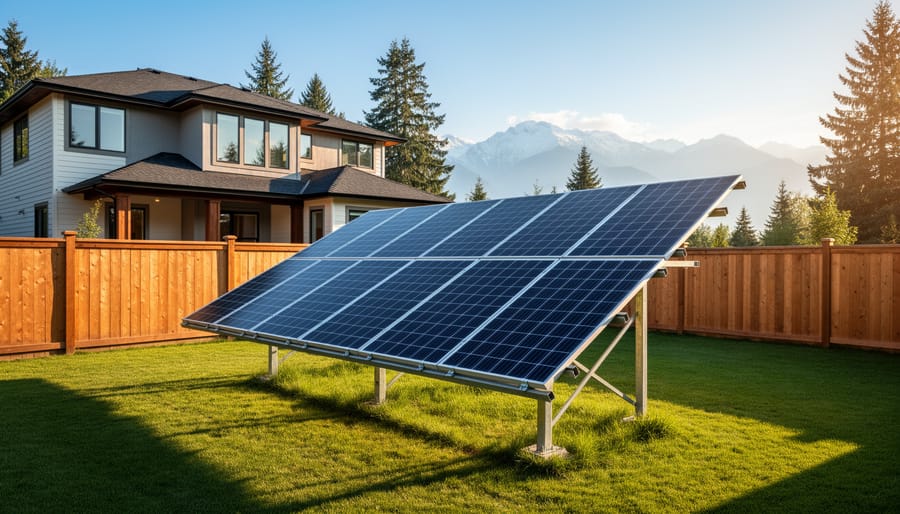
Ground-mounted solar panels offer a practical alternative when your roof isn’t ideal for installation. Whether you’re facing shading issues from nearby trees, dealing with an aging roof that needs replacement, or simply lack sufficient south-facing roof space, placing panels on your property can deliver the same clean energy benefits with added flexibility.
British Columbia homeowners are increasingly choosing ground installations for compelling reasons. You gain easier access for maintenance and snow removal during winter months, can optimize panel angles for maximum energy production, and avoid concerns about roof structural limitations. Ground systems also allow for future expansion as your energy needs grow—something fixed roof installations can’t easily accommodate.
The decision comes down to available land and your specific situation. If you have a quarter-acre or more with good sun exposure, ground mounting becomes highly viable. Installation costs run slightly higher than rooftop systems due to additional mounting hardware and trenching for electrical connections, but the long-term benefits often justify the investment. Local incentives and BC Hydro’s net metering program apply equally to ground-mounted systems, making them financially comparable to traditional installations while offering superior flexibility for your property’s unique conditions.
Why Ground-Mounted Solar Panels Work for BC Homes
When Your Roof Isn’t the Best Option
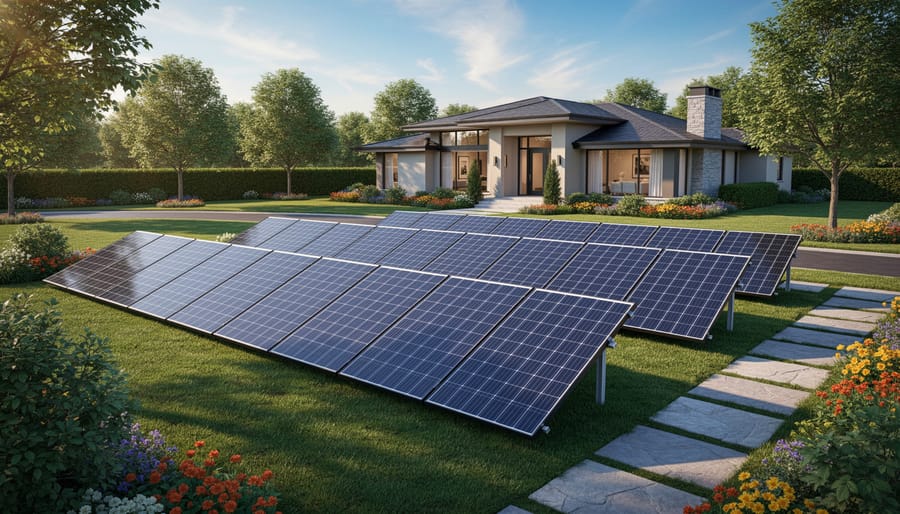
Not every roof is ideal for solar panel installation, and recognizing these limitations early can save you time and money. If your roof faces primarily north or has a steep pitch that’s difficult to work with, ground-mounted solar systems may deliver better energy production. Shading from tall trees, neighbouring buildings, or mountains can significantly reduce roof-mounted panel efficiency, whereas ground installations let you choose sunnier locations on your property.
Older roofs present another practical concern. If your roof will need replacement within the next five to ten years, installing panels now means paying to remove and reinstall them later. Ground mounting eliminates this hassle entirely. Similarly, homes with complex roof structures featuring multiple dormers, skylights, or unusual angles often lack sufficient unobstructed space for effective panel placement.
British Columbia homeowners with heritage properties or strata-controlled buildings sometimes face restrictions on roof modifications, making ground installation the only viable path forward. By honestly assessing your roof’s suitability, you can make an informed decision that maximizes your solar investment and supports your clean energy goals.
Taking Advantage of Your Property Layout
If you have a larger property, you’re already ahead when it comes to ground-mounted solar. Those unused corners of your yard, the patch of land that’s too rocky for gardening, or the open space behind your shed can become productive energy-generating areas. British Columbia homeowners with acreage often find ground installations particularly practical—you’re not limited by roof size, angle, or condition.
South-facing yard spaces are especially valuable. In BC’s climate, positioning panels to capture maximum sunlight throughout the day significantly boosts energy production. A family in Kelowna transformed their sloped, south-facing backyard into a solar array that now powers their entire home, using land that was previously just grass they rarely used.
Even smaller urban lots can work if you have an unshaded section receiving consistent sun exposure. Consider areas away from tall trees or buildings that might cast shadows. The flexibility of ground mounting means you can optimize placement for sun exposure rather than accepting whatever your roof offers.
Think about accessibility too. Ground systems make maintenance and snow clearing much easier, which matters during BC winters. If you’re sitting on underutilized land, ground-mounted solar turns that space into a long-term investment in clean energy and reduced electricity costs.
The Real Benefits of Going Ground-Level
Easier Maintenance and Snow Removal
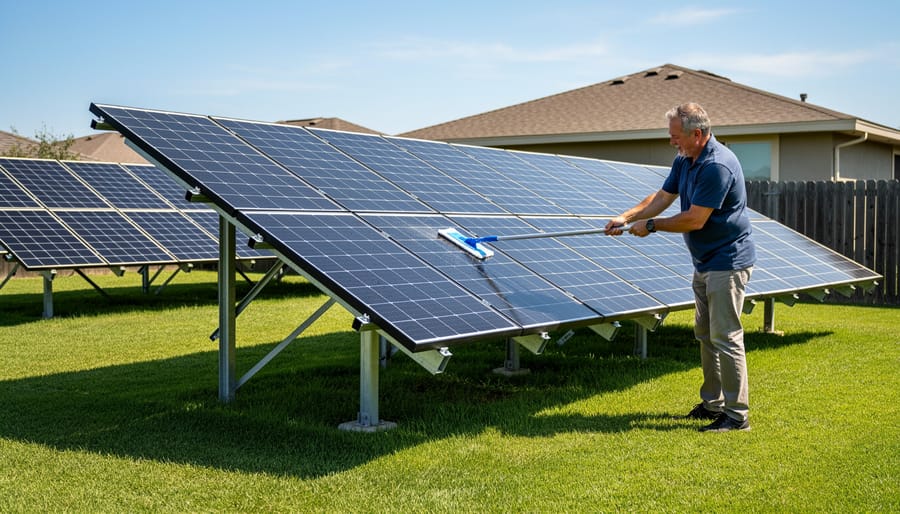
Ground-mounted solar panels offer a significant practical advantage: they’re simply easier to reach. Unlike rooftop systems that require ladders, safety harnesses, and sometimes professional help for basic upkeep, ground installations put your panels within arm’s reach.
This accessibility becomes particularly valuable in BC’s diverse climate zones. In the Lower Mainland, where coastal weather can leave panels coated with salt spray and debris, a quick wipe-down takes minutes instead of becoming a major undertaking. For those in the Interior or northern regions dealing with heavy snowfall, clearing panels after a winter storm is safer and faster when you’re standing on solid ground rather than navigating a slippery roof.
Regular maintenance tasks like checking connections, monitoring inverter performance, or replacing components also become straightforward DIY activities. A family in Kelowna found they could clear snow from their ground-mounted array in under 15 minutes using a soft-bristled broom, maintaining optimal winter energy production without the risk of rooftop falls.
The safety factor alone provides peace of mind, especially for older homeowners or those with mobility considerations. You can inspect your investment regularly without scheduling professional visits or risking injury, ensuring your system performs efficiently year-round across BC’s changing seasons.
Optimal Angle and Positioning for Maximum Energy
One of the greatest advantages of ground-mounted solar panels is the ability to position them at the ideal angle and orientation for maximum energy production. Unlike roof installations that are limited by your home’s existing pitch and direction, ground systems can be adjusted to capture the most sunlight throughout the year.
In British Columbia, the optimal tilt angle typically ranges between 30 to 40 degrees, depending on your specific latitude. Ground-mounted arrays can be positioned to face true south, ensuring panels receive direct sunlight during peak hours. This flexibility often results in 10-20% more energy generation compared to roof panels that may face east, west, or have suboptimal angles.
Some homeowners in the Fraser Valley have installed adjustable ground mounts that can be tilted seasonally, maximizing winter sun exposure when panels are angled steeper and summer production with a flatter position. This customization allows you to capture the full benefits of solar energy year-round.
Ground systems also avoid the shading issues common with rooftop installations from chimneys, vents, or nearby trees. By placing panels in your sunniest yard space, you ensure consistent energy production and a faster return on your investment.
Future Expansion Made Simple
Ground-mounted solar systems offer remarkable flexibility when it comes to future expansion. Unlike roof installations, where space and structural capacity are fixed, ground arrays can grow alongside your energy needs. Many British Columbia homeowners start with a modest system that covers their current usage, then add panels as their budget allows or consumption increases—perhaps when they purchase an electric vehicle or add a home office.
This scalability is particularly valuable for BC businesses. A Kelowna vineyard began with a 10-panel ground system and doubled it within three years as operations expanded, simply adding panels to their existing framework. The installation process for additional panels is straightforward since the groundwork and electrical connections are already established, reducing both cost and disruption.
Ground systems also allow you to incorporate emerging technologies over time, such as adding battery storage or upgrading to more efficient panels without the complexities of roof access. This phased approach makes solar more financially accessible while ensuring your system evolves with your lifestyle.
What You Need to Know Before Installation
Space Requirements and Property Assessment
Ground-mounted solar panels typically require 100 to 200 square feet per kilowatt of capacity. For a standard residential system of 5 to 8 kilowatts, you’ll need approximately 500 to 1,600 square feet of open, unshaded space. That’s roughly the size of a two-car garage footprint or a small backyard area.
Before moving forward, assess your property’s soil conditions. Firm, stable ground supports the mounting structures best, though most installations work with various soil types through appropriate foundation adjustments. Avoid areas prone to flooding or excessive moisture, as these can compromise system stability over time.
Consider sun exposure throughout the day and across seasons. Your chosen spot should receive direct sunlight for at least six hours daily, ideally facing south for maximum energy production in British Columbia. Take note of nearby trees, buildings, or structures that might cast shadows as they grow or change.
A practical first step is walking your property with these factors in mind. Many BC homeowners discover suitable spaces in side yards, unused garden areas, or field edges. If you’re uncertain about your site’s potential, local solar installers often provide free property assessments that evaluate these conditions and help you determine the best location for optimal performance.
Permits and Local Regulations in BC
Before breaking ground on your solar project, you’ll need to navigate BC’s permitting landscape. Most municipalities require a building permit for ground-mounted solar installations, as they’re considered permanent structures. The process typically involves submitting site plans, engineering drawings, and setback measurements to your local building department.
In BC, installations must comply with the Canadian Electrical Code and often require inspection by a certified electrical inspector. Many municipalities also have specific setback requirements—usually 1.5 to 3 meters from property lines—to ensure your panels don’t impact neighbours or sightlines. If you’re considering a DIY solar installation, note that electrical connections must still be completed by a licensed electrician to meet BC Safety Authority standards.
Some communities have additional requirements through local zoning bylaws or agricultural land reserve regulations. For example, properties in the ALR may need approval from the Agricultural Land Commission. The good news? Most BC municipalities are supportive of renewable energy projects, and many have streamlined their solar permitting processes. Contact your local building department early in your planning to understand specific requirements and typical processing times, which usually range from two to six weeks.
Foundation and Mounting Systems
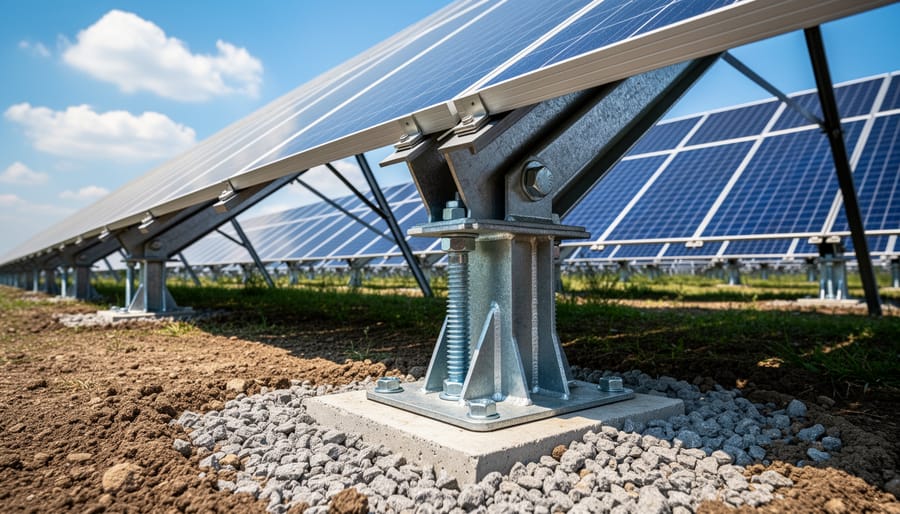
Ground-mounted solar panels require sturdy foundation systems designed to withstand BC’s diverse weather conditions, from coastal winds to interior snowfall. The right choice depends on your soil type, terrain, and budget.
Ballasted foundations use weighted concrete blocks to hold panels in place without ground penetration, making them ideal for rocky terrain common in the Interior. They’re removable and cause minimal land disturbance—perfect if you’re considering temporary installations or want to preserve natural landscapes.
Ground screws offer a faster, less invasive alternative to concrete footings. These large metal screws twist directly into the soil and work well in most BC soil conditions. A Kelowna vineyard recently installed their system using ground screws in just two days, minimizing disruption to their operations.
Concrete pier foundations provide maximum stability for permanent installations, particularly in areas with loose soil or high wind exposure. While they require more upfront work, they’re often the most cost-effective long-term solution for larger residential arrays.
Pole mounts elevate panels higher off the ground, useful for snowy regions where drift accumulation is common. They also allow for adjustable tilt angles to maximize winter sun capture—a valuable feature given BC’s seasonal variations. Your installer will assess your specific site conditions, including drainage patterns and frost depth, to recommend the foundation system that balances durability, cost, and environmental impact.
Cost Comparison: Ground vs. Roof Installation
Let’s talk numbers. Ground-mounted solar installations typically cost 10-20% more upfront than rooftop systems in British Columbia. For an average residential system, this translates to roughly $2,000-$5,000 in additional expenses. The increase comes from foundation work, trenching for electrical lines, and the mounting hardware required to secure panels at ground level.
However, understanding solar installation costs means looking beyond the initial investment. Ground systems often deliver better long-term value because they’re easier to maintain and clean. In BC’s coastal regions, where moss and debris accumulation can reduce panel efficiency by 15-25%, the ability to quickly clean ground-level panels saves money over time.
Ground installations also accommodate future expansion more affordably. Adding panels to your array later costs significantly less when you don’t need scaffolding or roof modifications. One Kelowna homeowner expanded her ground system by 30% for just $4,000, while a comparable roof addition would have exceeded $7,000.
The efficiency advantage matters too. Optimally angled ground panels can generate 15-20% more electricity than roof-constrained systems, especially in areas with winter snow loads. This increased production helps offset the higher upfront cost within the system’s lifespan.
For BC residents with suitable land and long-term property plans, ground installations often provide better return on investment despite higher initial costs. Consider your specific situation: If you plan to stay in your home for 20+ years, have maintenance concerns about roof access, or want expansion flexibility, the extra investment typically pays for itself through improved efficiency and lower maintenance expenses.
Real BC Homeowners Who Chose Ground Installation
Meet the Johnsons from Kelowna, who made the switch to ground-mounted solar in 2022. With their south-facing roof partially shaded by mature Douglas firs they weren’t willing to remove, ground installation became the clear choice. They installed a 6.5 kW system on their half-acre property, positioning the panels in an open area near their garden. “We actually get better production than our neighbor with a roof system because we could angle the panels perfectly and keep them snow-free in winter,” Sarah Johnson explains. The family now saves approximately $140 monthly on electricity bills and appreciates the easy access for cleaning and maintenance.
In the Fraser Valley, small-scale farmer Marcus Chen opted for ground mounting to power both his home and greenhouse operations. His 10 kW system sits on unused land behind his property, elevated to allow continued use of the ground beneath for shade-tolerant crops. “The installation took just three days, and we didn’t need to worry about roof structural assessments or potential leak points,” Marcus notes. He reports a 30% reduction in overall energy costs and values the flexibility to expand his array as his business grows. Both homeowners emphasize that working with experienced local installers who understood BC’s soil conditions and weather patterns made their projects straightforward and successful.
Making the Right Choice for Your Home
Choosing between ground and roof solar panels depends entirely on your unique property and priorities. Start by evaluating your available space—if you have a quarter-acre or more of open land with good sun exposure, ground mounting becomes practical. Consider your roof’s condition too. If it needs replacement within the next decade, ground panels eliminate the need for future removal and reinstallation costs.
Budget plays a key role. Ground systems typically cost 10-20% more upfront but offer easier maintenance access and better energy production through optimal positioning. Think about your timeline: are you willing to invest more now for potentially higher long-term returns?
BC homeowners often find success with hybrid thinking. The Thompson family in Kelowna, for example, installed roof panels on their garage while using ground mounts to expand capacity in their backyard. This flexibility allowed them to maximize their property’s solar potential without choosing one approach over the other.
Your decision should reflect your property’s characteristics, financial capacity, and energy goals. There’s no wrong choice—only the right fit for your situation.
Ground-mounted solar panels offer BC property owners a practical pathway to clean energy, especially when roof installations aren’t ideal. Whether you have ample yard space, want easier system maintenance, or need to maximize energy production through optimal panel positioning, ground mounting deserves serious consideration.
The next step is connecting with certified solar installers who understand BC’s unique climate, terrain, and regulatory requirements. Solar BC provides comprehensive resources to help you evaluate your options, including tools to estimate potential savings and directories of qualified local professionals. A consultation with experienced installers can clarify your site’s specific advantages, address permitting requirements, and provide accurate cost projections tailored to your property.
Many BC homeowners and businesses have already made the transition successfully—your ground-mounted solar journey starts with gathering the right information and expert guidance. Explore Solar BC’s resources today to turn your sustainable energy goals into reality.