
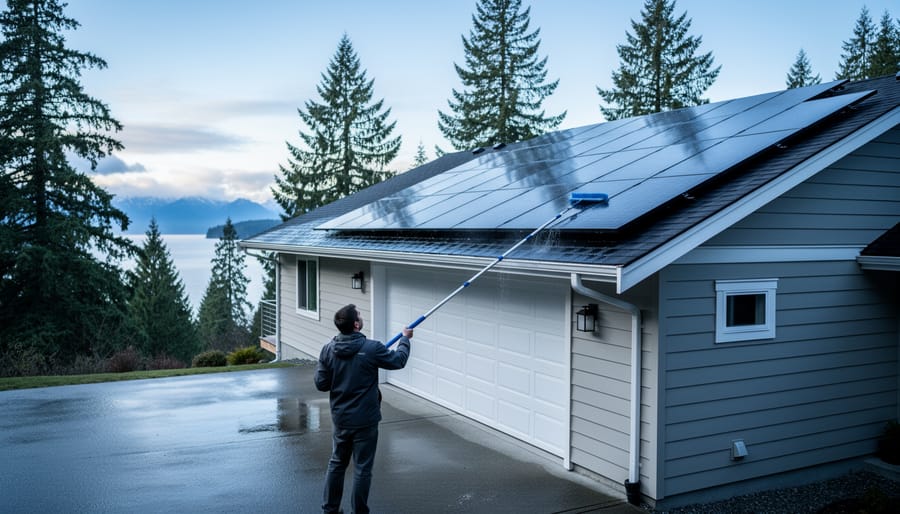
Inspect your solar panels every three months for visible dirt, pollen, bird droppings, and debris that can reduce energy production by up to 25%. British Columbia’s mild, rainy climate naturally cleans panels during wet seasons, but summer months and coastal areas with salt spray require more attention. Check your system’s monitoring app first—a sudden drop in output signals it’s time to clean rather than following a rigid schedule.
Clean panels early morning or evening when surfaces are cool to prevent thermal shock and streaking. Use a soft-bristled brush or squeegee with extension pole from ground level, paired with plain water or a mild soap solution. Never use abrasive materials, high-pressure washers, or harsh chemicals that void warranties. For single-story installations similar to DIY solar installation projects, ground-based cleaning with proper tools eliminates ladder risks entirely.
Recognize when professional help is necessary. Call experts for steep roofs above 4/12 pitch, panels higher than one story, heavy soiling from wildfire ash or industrial fallout, or if you’re uncomfortable with heights. Most BC homeowners save $150-300 annually doing basic maintenance themselves while scheduling professional deep cleaning every 2-3 years.
Document your cleaning dates and corresponding energy output to establish your system’s optimal maintenance schedule. BC’s unique climate means your panels likely need less frequent cleaning than manufacturers suggest, saving you time while maintaining peak performance.
Why Your DIY Solar Panels Need Regular Cleaning in BC
If you’ve invested in solar panels for your BC home, keeping them clean isn’t just about aesthetics—it directly impacts your return on investment. Research shows that dirty solar panels can lose between 15% and 25% of their solar panel efficiency, with some heavily soiled installations experiencing drops of up to 35%. In British Columbia’s climate, that translates to significant energy and financial losses over time.
Our province presents unique challenges for solar panel maintenance. Coastal residents contend with salt spray that creates a stubborn film on panel surfaces, reducing light absorption. The wildfire smoke that increasingly blankets our summers deposits fine particulate matter that bakes onto panels in the sun. Spring brings heavy tree pollen, particularly from our abundant Douglas firs and cedars, creating a yellow-green layer that blocks sunlight. In shadier locations, especially in the Lower Mainland and Vancouver Island, lichen and moss can actually begin growing on panel edges and frames.
Consider the experience of a Langley homeowner who noticed her monthly solar production dropping over two years. After finally cleaning her 6kW system, she discovered a 22% immediate improvement in output. At BC’s current electricity rates, those dirty panels had cost her approximately $300 annually in lost energy production—money that could have stayed in her pocket.
For a typical residential system producing 8,000 kWh annually, even a conservative 15% efficiency loss means 1,200 kWh of lost production each year. At $0.14 per kWh, that’s $168 annually, or over $4,000 across a 25-year panel lifespan. Regular cleaning is a simple maintenance task that protects your investment and maximizes the environmental benefits you sought when going solar. The good news? With basic safety precautions and the right approach, most BC homeowners can handle this maintenance themselves.
Safety First: What You Need to Know Before Climbing Up
Before you grab that ladder and bucket, let’s talk about keeping you safe while cleaning your solar panels. Many BC homeowners successfully maintain their systems, but understanding when DIY is appropriate and when to call professionals can prevent serious accidents.
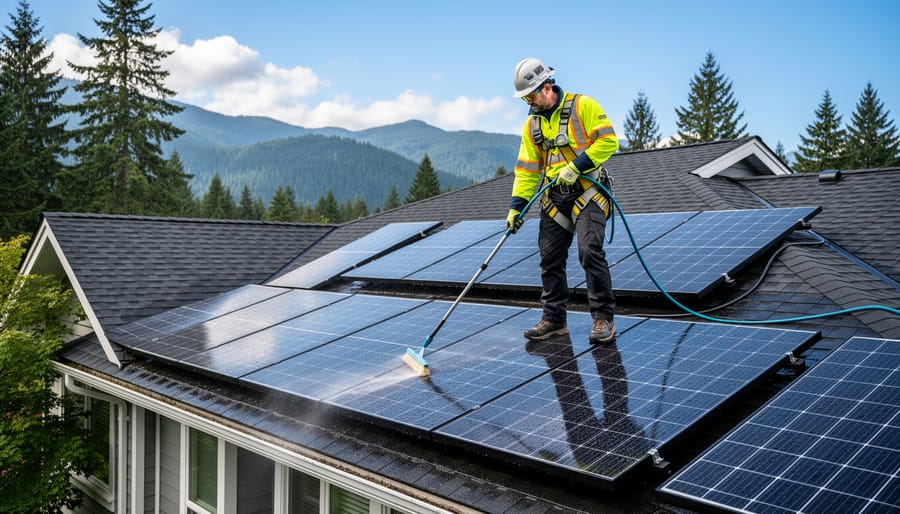
The most significant risk is working at heights. If your roof has a steep pitch (greater than 4:12), is higher than one storey, or becomes slippery when wet—common in BC’s rainy climate—professional cleaning is your safest bet. Even on accessible roofs, always use proper fall protection equipment, work with a partner who can spot you, and never clean panels in wet or windy conditions. BC WorkSafe guidelines recommend homeowners avoid roof work altogether if they lack proper safety training and equipment.
Electrical safety is equally critical. While solar panels won’t shock you during cleaning, never pressure wash electrical connections, junction boxes, or inverters. Water and electricity are a dangerous combination. If you notice damaged wiring, cracked panels, or exposed connections, stop immediately and contact a certified solar technician. Early morning or late evening cleaning sessions, when panels produce less power, add an extra safety margin.
A common misconception is that DIY maintenance voids warranties. Most manufacturers actually encourage routine cleaning by homeowners, but verify your specific warranty terms first. However, any repairs or modifications should always be handled by certified professionals to maintain coverage.
If you’re uncomfortable with heights, lack proper equipment, or your system shows any signs of damage, calling professionals isn’t admitting defeat—it’s making a smart, safe choice. Your solar investment deserves proper care, but never at the expense of your wellbeing.
Essential Tools and Materials for Solar Panel Cleaning
The Basic Cleaning Kit
Keeping your solar panels clean doesn’t require expensive equipment or specialized tools. With a few simple items, you can safely maintain your panels and ensure they’re operating at peak efficiency.
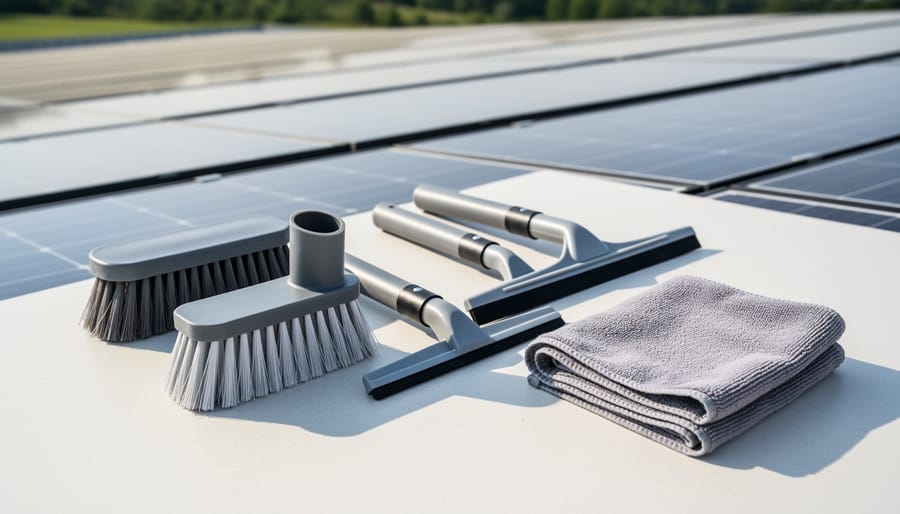
Your basic cleaning kit should include a soft-bristled brush with an extension pole, allowing you to reach panels from the ground without climbing onto your roof. Choose brushes specifically designed for solar panels or car washing—they’re gentle enough to avoid scratching. A rubber squeegee helps remove excess water, while high-quality microfiber cloths are perfect for spot cleaning and drying without leaving lint behind.
For cleaning solution, distilled water is often sufficient for light dust and pollen common in BC. If you need extra cleaning power, mix a small amount of mild, pH-neutral dish soap with water. Many BC homeowners have found success using a simple solution of one-quarter cup of vinegar per two gallons of water for stubborn grime.
What you don’t use matters just as much. Avoid abrasive materials like rough sponges, steel wool, or stiff brushes that can scratch the protective glass coating on your panels. Stay away from harsh chemicals, pressure washers, and standard household cleaners containing ammonia or solvents—these can damage the panel surface and reduce efficiency over time. Never use cold water on hot panels, as the temperature shock can cause cracking.
A garden hose with a gentle spray nozzle completes your kit, providing the water pressure you need without risking damage. This simple setup costs under fifty dollars and will serve you for years.
Optional Equipment That Makes the Job Easier
While basic cleaning supplies work for most situations, several optional tools can make maintaining your solar panels safer and more efficient, especially if you’re dealing with BC’s varied weather conditions.
Extension poles with soft brush attachments are game-changers for ground-level cleaning. Look for telescoping models that extend 12 to 24 feet, allowing you to reach rooftop panels without climbing ladders. Water-fed poles combine brushes with integrated water flow, delivering filtered water directly to the panels while you work from the ground. These systems are particularly helpful during spring when pollen and tree debris accumulate quickly on BC installations.
For debris removal before wet cleaning, a leaf blower can save considerable time. A quick pass removes dry leaves, pine needles, and dust without water, making the subsequent washing more effective. This approach works especially well after autumn storms or during dry summer months.
Local hardware stores across BC stock many of these items. Home Depot, Canadian Tire, and RONA carry extension poles and soft brushes suitable for solar panels. For specialized water-fed pole systems, consider online retailers or pool supply stores that often stock similar equipment. Vancouver’s Lee Valley Tools and Victoria’s specialty cleaning supply shops also offer quality options.
A Saanich homeowner shared that investing in a 20-foot telescoping brush cut his cleaning time in half while eliminating risky ladder work. The upfront cost of around 75 to 150 dollars pays for itself quickly compared to professional service calls, and you’ll have the equipment ready whenever maintenance is needed.
Step-by-Step: The Right Way to Clean Your Solar Panels
Timing Your Cleaning Session
Timing makes a significant difference in cleaning effectiveness and your safety. Schedule your cleaning for early morning or late evening when panels are cool to the touch. Hot panels can cause water to evaporate quickly, leaving streaks and mineral deposits, plus you risk burns from touching heated surfaces.
In BC’s climate, spring and fall are ideal seasons for thorough cleaning sessions. Spring removes winter’s accumulated dirt, moss, and pollen, while fall prepares your system before the rainy season. During summer, early morning cleaning (between 6-8 AM) lets you work in cooler temperatures and gives panels time to dry before peak production hours. Winter cleaning should happen on milder days above freezing to prevent ice formation.
Check weather forecasts before starting—avoid windy days that make ladder work dangerous, and skip cleaning right before rain, which can naturally rinse your panels. Overcast days work well since panels stay cooler and you’ll have better visibility without glare. For optimal results, clean your panels every three to six months, adjusting frequency based on your location’s exposure to dust, tree debris, or coastal salt spray.
Pre-Cleaning Inspection
Before you start cleaning, take a few minutes to carefully inspect your solar panels—this simple step can save you from bigger headaches down the road. Walk around your array and look for visible cracks in the glass or cells, which appear as thin lines or spiderweb patterns. Check the mounting frames for rust, looseness, or damage, especially after BC’s wet winter months. Examine wire connections and junction boxes for signs of wear, corrosion, or moisture intrusion.
If you spot any issues, document them with clear photos and detailed notes, including the date and panel location. This documentation becomes essential if you need to file a warranty claim later. Most solar panel manufacturers offer 20-25 year warranties, but they require proper maintenance records. Don’t attempt to clean panels with existing damage, as water and pressure could worsen the problem.
For homeowners in the Lower Mainland and Vancouver Island, pay special attention to moss or lichen growth around panel edges—a common issue in our damp climate. If you notice significant damage, loose mounting hardware, or electrical concerns, contact a certified solar professional before proceeding with any cleaning. Safety and system longevity come first.
The Cleaning Process
Start by removing loose debris before introducing any water. Use a soft brush or leaf blower to gently clear leaves, dust, and bird droppings from the panel surface. This prevents scratching when you begin wet cleaning and makes the entire process more efficient.
Water temperature matters more than you might think, especially in BC’s varying climate. Use lukewarm water rather than cold tap water, which can cause thermal stress to warm panels. Never clean panels during peak sunshine hours when they’re hot. Early morning or late afternoon are ideal times, when panels have cooled down naturally.
For your cleaning solution, simple is best. Mix a few drops of mild dish soap with water in a bucket. Avoid harsh chemicals, abrasive cleaners, or anything that leaves residue. Many homeowners in Victoria have found that plain water works perfectly well for routine maintenance, reserving soapy water for stubborn grime.
When scrubbing, apply gentle pressure with a soft sponge or squeegee designed for window cleaning. Work in overlapping sections from top to bottom, which prevents dirty water from running onto areas you’ve already cleaned. Never use abrasive pads or stiff brushes that could scratch the protective glass coating.
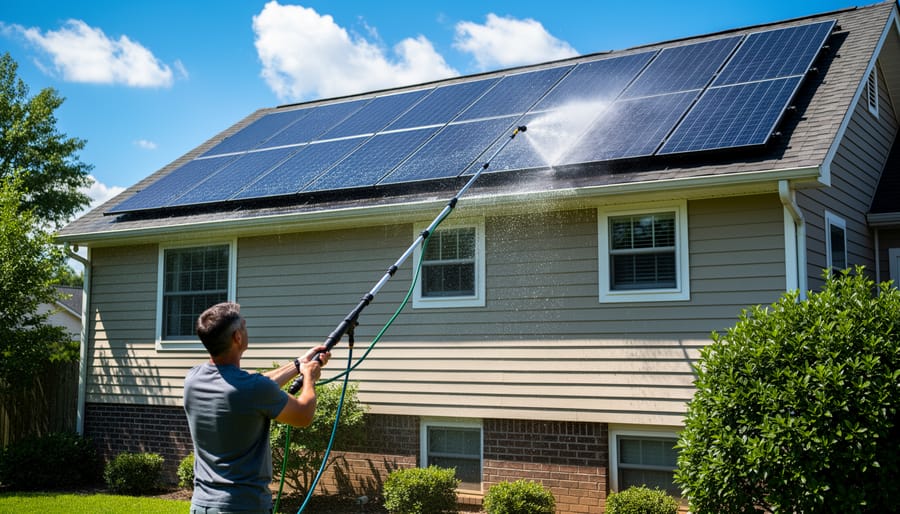
Rinse thoroughly with clean water from a hose with a spray nozzle. Ensure all soap residue is removed, as dried soap can attract more dirt and reduce panel efficiency. For panels you can’t reach safely from the ground, consider an extendable cleaning pole with a soft brush attachment rather than climbing onto your roof.
Ground-mounted systems offer easier maintenance access. You can clean these at eye level without ladders, making the process safer and more straightforward. If you have roof-mounted panels beyond comfortable reach, prioritize safety and consider professional help for those areas.
Allow panels to air dry naturally or use a squeegee to remove excess water. Inspect your work from ground level to ensure no streaks or residue remain.
Common Mistakes DIY Installers Make (And How to Avoid Them)
Even experienced DIY enthusiasts can make simple mistakes that reduce cleaning effectiveness or potentially damage their solar panels. Here’s what to watch out for and how to get it right.
Using tap water is one of the most common errors. BC’s water, while safe to drink, contains minerals that leave white spots and residue on your panels once it evaporates. These deposits can accumulate over time and block sunlight just like dirt would. The solution? Use distilled or deionized water for the final rinse, or install a simple water filter on your garden hose. Some homeowners in the Okanagan have found that collecting rainwater works perfectly for panel cleaning.
Cleaning during peak sunshine hours seems logical, but it actually causes problems. The hot glass makes water evaporate quickly, leaving streaks and soap residue behind. Plus, cold water on hot panels can cause thermal stress. Always clean early morning or late evening when panels are cool to the touch.
Applying excessive pressure is another pitfall. Solar panels are durable, but aggressive scrubbing can scratch the protective coating or damage seals around the frame. Use gentle, circular motions with a soft brush or microfiber cloth. Think of it like washing a car windshield, not scrubbing a barbecue grill.
Many people also grab whatever cleaning products are handy. Avoid anything abrasive, acidic, or containing ammonia, as these can permanently damage the anti-reflective coating. Stick with mild dish soap diluted in water, or products specifically designed for solar panels.
Finally, don’t forget the inverter screen. This small vent requires regular cleaning to prevent overheating, yet it’s often overlooked during panel maintenance. A quick brush-off during each cleaning session keeps your entire system running efficiently.
How Often Should You Clean Your Solar Panels?
Your cleaning frequency depends largely on where you live in British Columbia. Coastal regions like Vancouver and Victoria experience more rain, which naturally rinses panels, so cleaning twice yearly—spring and fall—typically suffices. However, if you’re near the ocean, salt spray accumulation may require quarterly attention. Interior communities face different challenges: Kamloops, Kelowna, and Prince George residents should plan for more frequent cleaning during dry, dusty summers, ideally three to four times annually.
Rural and forested areas present unique considerations. Pollen in spring, wildfire ash in summer, and falling leaves in autumn mean properties surrounded by trees may need monthly inspections during peak seasons. Urban environments generally require less frequent cleaning but watch for industrial pollutants or construction dust nearby.
Seasonal timing matters too. Spring cleaning removes winter grime before peak production months, while fall cleaning prepares panels for lower-light winter conditions. After significant weather events—dust storms, heavy pollen releases, or wildfire smoke—inspect your panels promptly.
Your monitoring system provides valuable guidance for establishing a regular maintenance schedule. When you notice energy production drops of 15-20% compared to similar weather days, it’s time to clean. Many modern systems send alerts when efficiency decreases.
Visible signs demanding immediate attention include thick dust layers, bird droppings, tree sap, or snow accumulation blocking sunlight. A quick visual inspection monthly helps you stay ahead of problems while maximizing your solar investment throughout the year.
Ground-Level Solutions for Hard-to-Reach Installations
Not every homeowner should climb onto their roof, and that’s perfectly okay. If your panels sit on a steep pitch or your home stands two or more stories high, ground-based cleaning methods offer safer alternatives that still keep your system running efficiently.
Water-fed pole systems have become increasingly popular across British Columbia. These telescopic poles extend up to 30 feet and feature brush heads with built-in water jets, allowing you to scrub panels from the safety of your lawn or driveway. Many BC homeowners report excellent results with these systems, particularly for removing pollen during spring months. You can rent these poles from equipment rental shops in most Lower Mainland communities for around $50-75 per day, making occasional use affordable without buying equipment outright.
Consider a hybrid approach where you handle monitoring and simple ground-level tasks while hiring professionals for the actual roof work. This strategy works well for safety-conscious homeowners who want involvement without risk. You might conduct monthly visual inspections with binoculars, track your system’s output through monitoring apps, and schedule professional cleanings only when performance drops or after major weather events.
Professional services typically cost $150-300 per cleaning for residential systems in BC. If your panels need cleaning just twice yearly, that’s $300-600 annually. Compare this against potential medical bills or property damage from a fall, and many homeowners find the professional route makes financial sense. Vancouver Island resident Maria Chen notes, “After one wobbly moment on my ladder, I realized saving $200 wasn’t worth the risk. Now I monitor daily and call pros twice a year.”
Tracking Your Results: Is Cleaning Making a Difference?
The best way to know if your cleaning efforts are paying off is to monitor performance improvements before and after maintenance. Most modern inverters have built-in displays showing daily energy production in kilowatt-hours (kWh). Simply note your system’s output for a few days before cleaning, then track it for several days afterward under similar weather conditions.
Many BC solar owners find mobile apps connected to their systems particularly helpful. These apps provide detailed production graphs, making it easy to spot improvements. You should typically see a 5-15% increase in output after cleaning dirty panels, though heavily soiled systems can show even greater gains.
For a quick assessment, check your utility bills or monitoring app to compare production to the same period last year. If output has dropped significantly, cleaning may restore lost efficiency.
Consider using an online solar maintenance savings calculator to estimate the financial impact of regular cleaning. By entering your system size and local electricity rates, you can see how proper maintenance translates to actual dollars saved. This helps BC solar owners determine the ideal cleaning schedule for their specific situation and validates that DIY maintenance efforts are worthwhile investments of time.
Regular cleaning is one of the simplest yet most effective ways to protect your DIY solar investment. After putting in the effort to install your panels, maintaining them through consistent cleaning ensures you continue reaping maximum energy benefits for years to come. British Columbia’s unique climate—with wet winters and pollen-heavy springs—makes establishing a cleaning routine particularly important for system performance.
The good news? You now have the knowledge and confidence to handle this maintenance task safely and effectively. Whether you choose to clean your panels twice yearly or adjust based on your specific location and environmental factors, the key is consistency. Mark your calendar, gather your supplies, and make solar panel cleaning a regular part of your home maintenance schedule.
Remember, you’re not alone in this journey. Solar BC offers a wealth of resources and connects you with a community of fellow solar enthusiasts across the province who are happy to share their experiences and tips. If you ever feel uncertain about tackling a cleaning challenge or need guidance on maintenance best practices, reach out to the Solar BC community.
Ready to get started? Create your personalized maintenance schedule today, and consider joining local solar groups through Solar BC to exchange insights with neighbors who understand the unique rewards and considerations of solar ownership in British Columbia.