
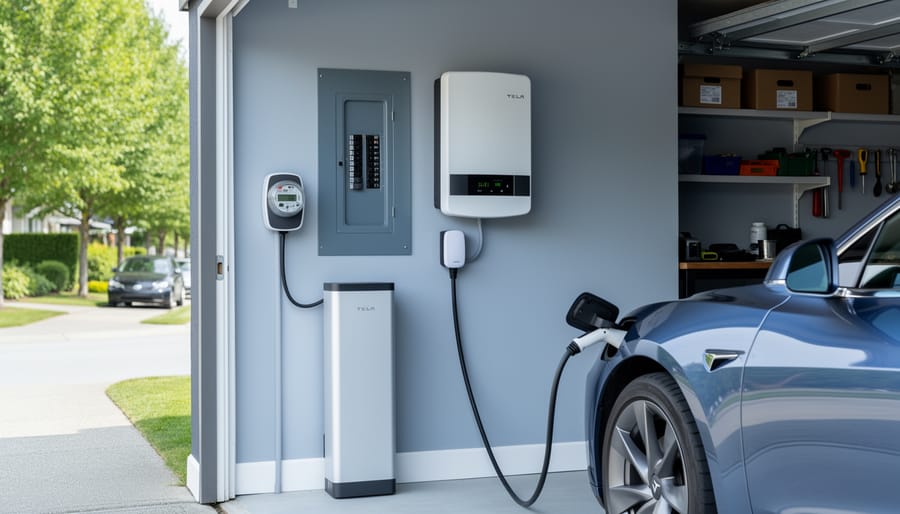
Planning to install solar panels, battery storage, or an EV charger at your BC property? Your existing electrical service might not be equipped to handle the additional power demand. An electrical service upgrade increases your home’s capacity to safely distribute electricity, preventing overloads and ensuring your renewable energy investments operate efficiently.
Most BC homes built before 1990 have 100-amp electrical panels. Adding solar with storage and EV charging typically requires 200-amp service to accommodate the combined load. Without upgrading, you risk tripping breakers, reducing system performance, or failing electrical inspections required for BC Hydro net metering approvals.
The upgrade process involves replacing your main electrical panel, upgrading the service entrance cable, and potentially updating the meter base. Licensed electricians assess your current capacity, calculate future loads based on your renewable energy plans, and determine the appropriate service size. BC’s CleanBC program and federal Greener Homes Grant can offset upgrade costs significantly, making the investment more accessible.
Understanding what an electrical service upgrade entails helps you budget accurately and avoid project delays. Many BC homeowners discover that coordinating the upgrade with their solar or EV charger installation reduces overall costs and minimizes disruption. The upgrade also adds long-term value to your property and future-proofs your electrical system for additional clean energy technologies.
This guide walks you through exactly what to expect, how to find qualified professionals, available BC incentives, and real examples from local homeowners who’ve successfully navigated the upgrade process.
The Power Problem: Why Your Current Electrical Service Falls Short
Understanding Your Home’s Electrical Capacity
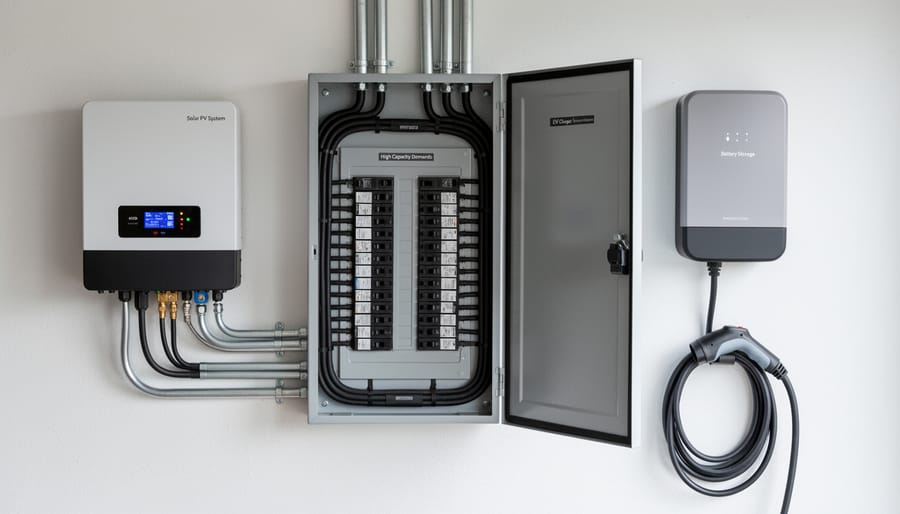
Think of your home’s electrical capacity like a highway – amperage measures how much electricity can flow safely through your system at once. Most BC homes built before 2000 have 100-amp or 150-amp service panels, which were adequate for traditional household needs. However, adding solar panels, battery storage requirements, and an EV charger is like adding several new lanes of traffic.
To check your current capacity, look at the main breaker in your electrical panel – the number indicates your amperage rating. You can also find this information on your BC Hydro bill or by consulting a licensed electrician.
Here’s the challenge: a Level 2 EV charger typically requires 40-50 amps, while solar inverters and battery systems can add another 30-60 amps combined. If you’re starting with a 100-amp panel, you’re already pushing your limits before considering regular household appliances like your dryer, oven, and air conditioning.
A Kelowna family recently discovered this when installing their solar system. Their existing 100-amp service couldn’t safely handle their new renewable energy setup alongside their daily electricity needs. Upgrading to a 200-amp panel resolved the issue and future-proofed their home for additional sustainable technologies. Understanding these power requirements upfront helps you plan your renewable energy journey realistically and ensures your system operates safely and efficiently.
The Signs You Need an Upgrade
Your home often signals when it’s time for an electrical service upgrade, especially before adding solar panels, battery storage, or EV charging. The most common indicator is frequent breaker trips—if your main panel shuts off regularly or you’re constantly resetting breakers, your system is maxed out. Many BC homeowners notice lights dimming when their electric vehicle charges overnight, a clear sign that your current electrical capacity can’t handle the additional load.
During solar or EV charger assessments, installers may recommend an upgrade if your panel lacks space for new circuits or if your service is below 200 amps. Older homes with 100-amp services simply weren’t designed for today’s energy needs. You might also notice you can’t add new appliances without unplugging others, or your panel uses outdated fuses instead of circuit breakers.
Take the example of the Chen family in Richmond—their electrician flagged an undersized service during their solar consultation. After upgrading to 200 amps, they successfully installed both rooftop solar and a Level 2 EV charger. Recognizing these signs early helps you plan your renewable energy transition smoothly and ensures your electrical system safely supports your sustainability goals.
What a Modern Electrical Service Upgrade Actually Involves
The Main Components of Your Upgrade
Understanding what components get replaced during an electrical service upgrade helps you plan and budget effectively. A typical upgrade involves several key elements working together to safely handle the increased power demands of solar panels, battery storage, and EV charging stations.
The service panel, often called your breaker box, is the heart of the upgrade. This distributes electricity throughout your property and typically needs expansion from the standard 100-amp or 200-amp panel to accommodate your new renewable energy systems. Many BC homeowners upgrading for solar and EV charging move to 200-amp or even 400-amp panels.
The meter base, where BC Hydro measures your electricity consumption, usually requires replacement to support bidirectional power flow from solar systems. This allows you to track both energy consumed and energy sent back to the grid through net metering programs.
Your main disconnect provides a critical safety function, allowing emergency shutdown of power to your home. Upgrades often include a new weather-resistant disconnect that meets current electrical codes.
The load center manages circuits for specific high-demand applications. When adding EV chargers or battery systems requiring safe battery storage, dedicated circuits and breakers ensure safe, reliable operation.
Utility infrastructure changes may include upgrading the service wire connecting your property to the grid. BC Hydro sometimes needs to enhance their transformer or service lines to support your increased capacity, which they typically coordinate directly with your licensed electrician.
Timeline and What to Expect
Understanding the timeline for your electrical service upgrade helps you plan your solar, storage, or EV charging installation more effectively. In British Columbia, the complete process typically takes 4-8 weeks from start to finish, though this can vary based on your specific situation and local utility responsiveness.
The journey begins with an initial assessment by a licensed electrician, which usually takes 1-2 hours. They’ll evaluate your current panel capacity and determine what upgrades you need. Within a few days, you’ll receive a detailed quote and timeline. Once you approve the work, your electrician will submit permit applications to your municipality and coordinate with BC Hydro or your local utility for service upgrade approval.
The utility approval stage often requires 2-4 weeks, as they need to assess infrastructure capacity in your area. Some BC communities have streamlined this process through expedited permitting programs for renewable energy projects. Once approved, the actual installation work typically takes 1-2 days for a standard panel upgrade.
Planning ahead is essential. If you’re coordinating with a solar or EV charger installation, communicate your timeline to all contractors early. Many BC homeowners schedule their electrical upgrade during the planning phase of their renewable energy project, ensuring everything flows smoothly. Remember, winter weather can occasionally extend timelines, so consider seasonal factors when planning your upgrade.
Smart Integration: Coordinating Your Solar, Storage, and EV Systems
Load Management Solutions That Save You Money
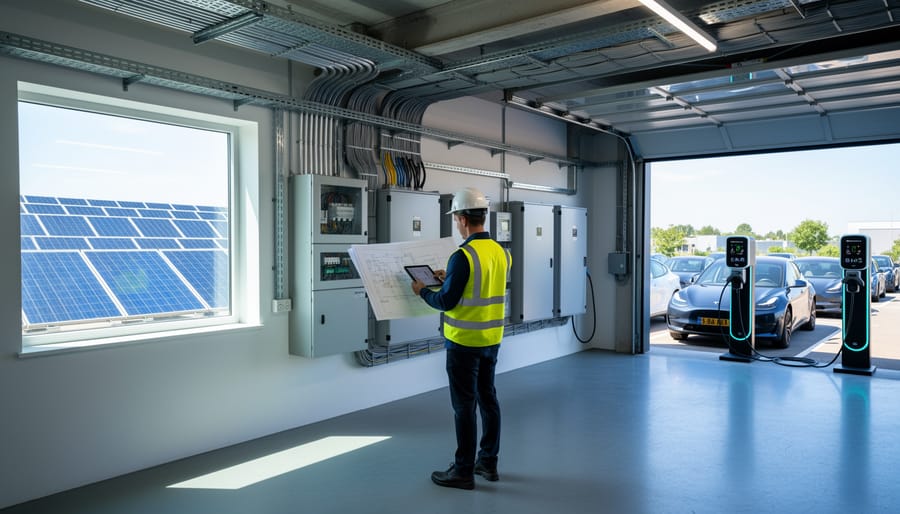
Smart load management technology offers a practical way to avoid costly electrical service upgrades while preparing your home for solar panels, EV charging, and battery storage. Instead of automatically upgrading from a 100-amp to a 200-amp panel—which can cost $3,000 to $8,000—intelligent load management devices coordinate when high-demand appliances operate, ensuring you never exceed your existing panel’s capacity.
Here’s how it works: these smart panels monitor your home’s electrical usage in real-time and temporarily delay lower-priority devices when demand peaks. For example, if you’re charging your EV and someone turns on the dryer, the system might pause EV charging for 30 minutes until the dryer cycle completes. You won’t notice the difference, but you’ll avoid overloading your panel.
A Vancouver homeowner recently saved $5,200 by installing a load management system instead of upgrading to a 200-amp service. The device coordinates their heat pump, EV charger, and solar battery system seamlessly. This approach also supports battery storage safety by preventing electrical overloads that can stress your system.
BC Hydro’s CleanBC rebate program currently offers incentives for smart panel installations, making this solution even more affordable. By intelligently managing your electrical loads, you’re not just saving money—you’re maximizing your existing infrastructure while transitioning to clean energy. Talk to your electrician about whether load management could eliminate or reduce your required service upgrade.
The BC Advantage: Incentives and Rebates for Electrical Upgrades
Upgrading your electrical service doesn’t have to break the bank. British Columbia offers some of Canada’s most generous incentive programs to help homeowners and businesses offset the costs of electrical upgrades needed for renewable energy installations.
The CleanBC Better Homes program provides rebates for electrical panel upgrades when they’re part of a home energy retrofit. Homeowners can receive up to $800 toward a 200-amp panel upgrade when combined with other eligible improvements. This incentive specifically recognizes that modern electrical infrastructure is essential for transitioning to clean energy.
BC Hydro offers additional support through their Power Smart programs. If your upgrade enables the installation of a heat pump or electric vehicle charger, you may qualify for rebates ranging from $350 to $6,000 depending on the equipment and your home type. Many customers don’t realize these utility rebates can be claimed alongside CleanBC incentives, creating substantial savings.
The real advantage comes from strategic stacking. Consider the Campbell family in Victoria, who needed a panel upgrade before installing solar panels and an EV charger. They received $800 from CleanBC for the panel upgrade, $350 from BC Hydro for the Level 2 charger installation, and qualified for federal solar incentives. Their total rebates covered nearly 40% of their electrical upgrade costs.
For businesses, the CleanBC Industry Fund offers customized incentives for electrical infrastructure improvements that support electrification projects. Commercial property owners installing EV charging stations can access substantial funding through multiple provincial streams.
Timing matters when claiming these incentives. Apply before starting work, keep detailed receipts, and work with qualified electricians familiar with program requirements. The programs do change periodically, so verify current offerings before planning your upgrade. These combined incentives make now an excellent time to modernize your electrical system while supporting BC’s clean energy future.
Real BC Stories: Homeowners Who Made the Switch
When the Chen family in East Vancouver purchased their Tesla Model Y in 2022, they quickly realized their 1960s-era 100-amp electrical panel couldn’t handle both their new Level 2 EV charger and their planned rooftop solar installation. Like many BC homeowners, they faced a choice: abandon their clean energy goals or invest in an electrical service upgrade.
“Our electrician was upfront about it,” recalls Michael Chen. “We needed a 200-amp service to safely run the car charger, our solar inverter, and regular household loads.” The upgrade cost $4,200, including the new panel, meter base, and BC Hydro connection fees. The process took three weeks from initial inspection to final approval.
The Chens navigated a few challenges along the way. Their service mast needed reinforcing to meet current building codes, adding $800 to the project. They also had to coordinate timing between their solar installer and electrician to ensure the new panel accommodated both the EV charger and solar disconnect. “It felt complicated at first, but having everything properly sized from the start gave us peace of mind,” Michael says.
Two years later, their 8kW solar array generates enough electricity to cover their home use and EV charging during summer months. Their BC Hydro bills dropped by 65 percent annually, and the system paid for itself faster than anticipated thanks to CleanBC rebates.
Meanwhile, in Lake Country, Sarah Thompson took a different path. Dreaming of energy independence, she upgraded her rural property’s 60-amp service to 200 amps as the foundation for future battery storage systems and expanded solar capacity.
“Living in the Okanagan, we experience occasional power outages during wildfire season,” Sarah explains. Her $5,600 upgrade included trenching for underground service and a main panel with dedicated spaces for backup circuits. Though she hasn’t yet installed batteries, the infrastructure is ready.
“The electrician helped me plan for the future without overbuilding today,” she notes. Her existing 6kW solar array now operates safely with room to grow, and she’s positioned to add battery backup when prices become more accessible.
Both families emphasize one lesson: don’t view electrical upgrades as obstacles, but as essential investments that make clean energy systems safer, more efficient, and future-ready.
Choosing the Right Electrician for Your Clean Energy Upgrade
Finding the right electrician for your clean energy upgrade can make the difference between a smooth installation and costly headaches down the road. Not all electricians have experience with solar panels, battery storage, or EV charging systems, so asking the right questions upfront is essential.
Start by verifying credentials. Look for electricians with FSR (Field Safety Representative) certification in BC and specific training in renewable energy systems. Ask potential contractors about their experience with solar integration and whether they’ve completed installations similar to yours. A qualified professional should readily share examples of past projects and customer references.
Key questions to ask include: How many solar or battery storage systems have you installed? Are you familiar with BC Hydro’s Net Metering program requirements? Do you have experience navigating municipal permit processes for electrical upgrades? Can you help identify available rebates and incentives? These questions reveal whether the contractor understands the unique requirements of clean energy installations.
Watch for red flags like reluctance to provide written estimates, pressure to make immediate decisions, or unfamiliarity with local building codes. A reputable electrician will conduct a thorough assessment of your existing electrical panel, explain why specific upgrades are necessary, and provide detailed quotes that break down materials and labour costs.
Working with solar-savvy contractors offers distinct advantages. They understand equipment compatibility, can optimize your system design for maximum efficiency, and know how to future-proof your electrical service for additional renewable energy expansion. In the Fraser Valley, one homeowner avoided a costly panel replacement by working with an electrician experienced in load management solutions, saving over $3,000 while still accommodating their new solar array.
Take time to compare at least three qualified contractors, verify their insurance and WorkSafeBC coverage, and trust your instincts about their professionalism and communication style.
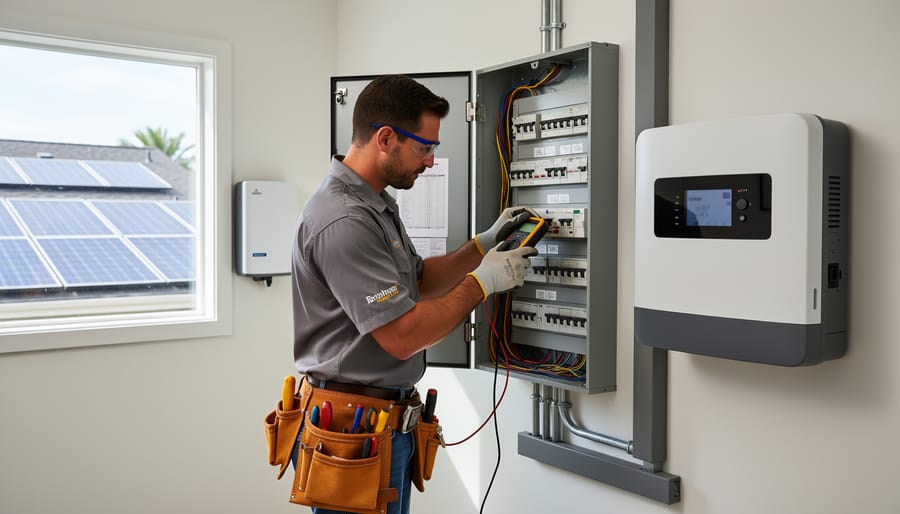
Upgrading your electrical service is more than a technical requirement—it’s a strategic investment in energy independence and a future-ready home or business. By modernizing your electrical infrastructure today, you’re creating the foundation for solar panels, battery storage, and EV charging systems that will serve you for decades to come. These upgrades reduce your reliance on the grid, lower your energy costs over time, and position you to take advantage of evolving clean energy technologies as they become available.
British Columbia is leading the way in renewable energy adoption, and your electrical upgrade is an essential step in joining this movement. The upfront costs may seem significant, but when combined with available provincial and federal incentives, the financial picture becomes much more attractive. More importantly, you’re contributing to a cleaner, more resilient energy future for your community.
Ready to take the next step? Connect with qualified electricians and solar professionals through Solar BC’s trusted network. These experts can assess your specific electrical needs and integrate them seamlessly with your solar installation planning. Don’t navigate this process alone—reach out today to find professionals who understand BC’s unique requirements and can guide you toward a more sustainable, energy-independent future.