
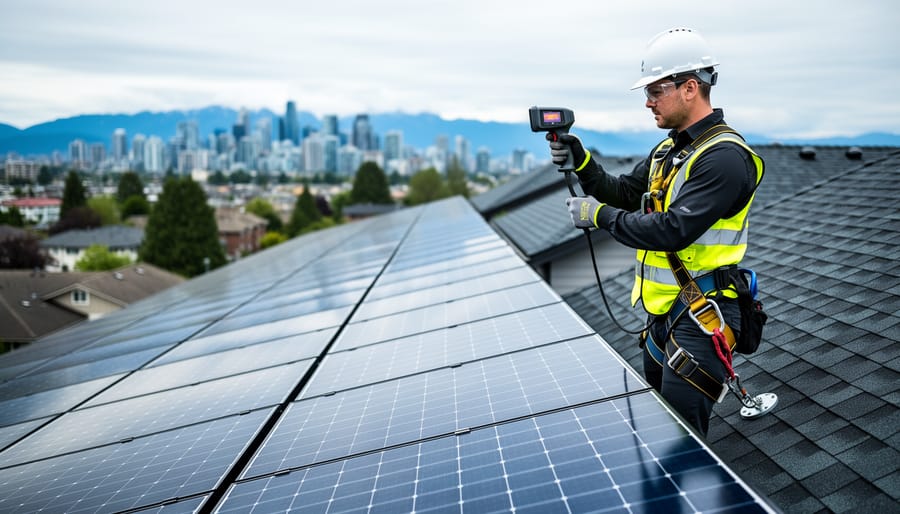
Verify your solar installer’s qualifications before signing any contract—look for certified electricians with CSA F500 accreditation and ask to see their recent commissioning reports from BC projects. The gap between a properly commissioned solar system and a rushed installation can mean the difference between 25 years of reliable clean energy and costly repairs within the first year.
Installation encompasses the physical mounting of panels, inverter setup, electrical connections, and grid integration. Commissioning follows as the critical quality checkpoint: systematic testing of every component, verification of safety protocols, performance validation against design specifications, and documentation that protects your warranty. In British Columbia’s climate, where systems face coastal moisture, interior temperature swings, and seasonal snow loads, thorough commissioning isn’t optional—it’s your financial safeguard.
A Vancouver homeowner recently avoided a $12,000 inverter replacement because their installer’s commissioning process caught a ground fault before energization. This protective layer of professional verification ensures your system operates at peak efficiency from day one, maximizing your electricity offset and return on investment.
Quality commissioning includes infrared scanning for hot spots, string voltage testing, ground continuity verification, inverter communication checks, and production monitoring setup. Your installer should provide a commissioning report documenting baseline performance metrics—these numbers become essential references for warranty claims and future maintenance.
Expect your installation team to spend 15-20% of total project time on commissioning activities. Installers who rush this phase often leave British Columbia homeowners with underperforming systems, voided warranties, and no documentation trail. Understanding what proper commissioning looks like empowers you to hold your contractor accountable and ensures your solar investment delivers promised returns for decades.
What Installation & Commissioning Really Means for Your Solar Investment
Installation: Beyond Putting Panels on Your Roof
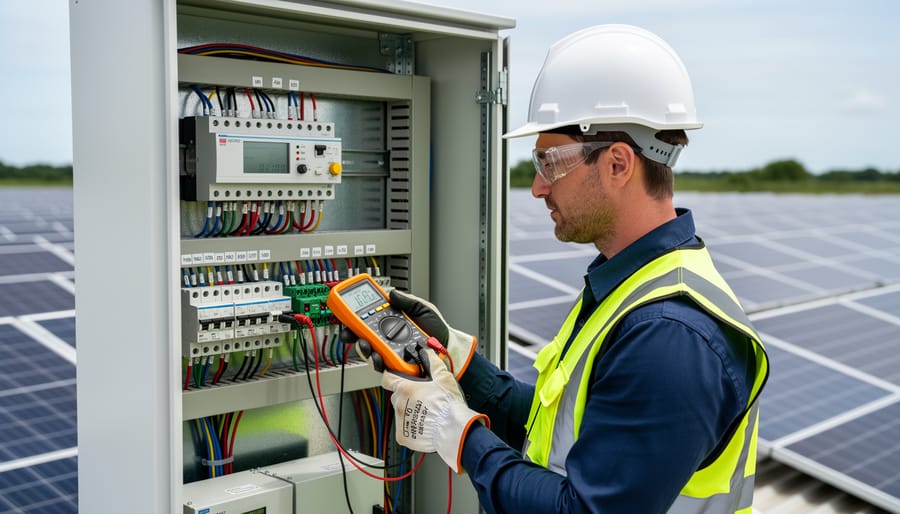
Installing a solar system involves much more than simply placing panels on your roof. It’s a carefully orchestrated process that transforms your home or business into a clean energy producer.
The installation journey begins with mounting systems. Certified installers assess your roof’s structure and orientation, then secure racking that will hold your panels firmly in place for decades. In British Columbia’s varied climate—from Vancouver’s rain to Kelowna’s snow—proper mounting is essential for both performance and safety. Quality installers use corrosion-resistant materials and follow strict building codes to ensure your system withstands our weather patterns.
Next comes the electrical work. Panels are wired together in strings, connecting to an inverter that converts the direct current from your panels into alternating current your home can use. This is where precision matters most. Proper wire management, grounding, and conduit installation protect your system and your property.
The inverter setup deserves special attention. Whether you choose a string inverter, microinverters, or power optimizers, your installer will position equipment for optimal performance and easy future maintenance. Many BC homeowners also integrate battery systems at this stage, allowing you to store excess energy for evening use or backup power during outages.
Finally, your system connects to the utility grid through a bi-directional meter. This allows you to draw power when needed and send excess generation back to BC Hydro or your local utility, often through net metering programs that credit your account for the clean energy you contribute to the community grid.
Commissioning: Making Sure Everything Actually Works
Commissioning is where your solar investment truly comes to life. Think of it as the final quality check before handing you the keys to your new energy system. This systematic testing phase ensures everything operates safely, efficiently, and exactly as promised.
During commissioning, certified technicians methodically verify each component and connection. They test the electrical connections to confirm proper voltage and current flow, inspect inverter settings to ensure optimal energy conversion, and verify that all safety mechanisms respond correctly. In British Columbia’s variable weather, this includes confirming your system can handle everything from sunny summer days to winter storms.
A thorough commissioning process typically includes performance testing under actual operating conditions, monitoring system output against expected production levels, and verifying that your monitoring software accurately reports energy generation. Technicians also ensure proper communication between components and test emergency shutdown procedures.
This phase protects your investment in several important ways. First, it catches installation errors before they cause problems or reduce efficiency. Second, it establishes baseline performance data that helps identify future issues quickly. Third, it fulfills warranty requirements from equipment manufacturers and ensures your system qualifies for available incentives.
A Vancouver Island homeowner recently shared how commissioning revealed a minor inverter setting error that would have reduced their energy production by 8 percent. Catching it immediately meant full performance from day one.
Quality installers document every test result and provide you with a comprehensive commissioning report. This becomes your system’s permanent record, essential for warranties, maintenance planning, and future troubleshooting. Expect the commissioning process to take several hours to a full day, depending on system complexity.
The Step-by-Step Commissioning Process BC Installers Follow
Pre-Commissioning Checks: The Foundation of Success
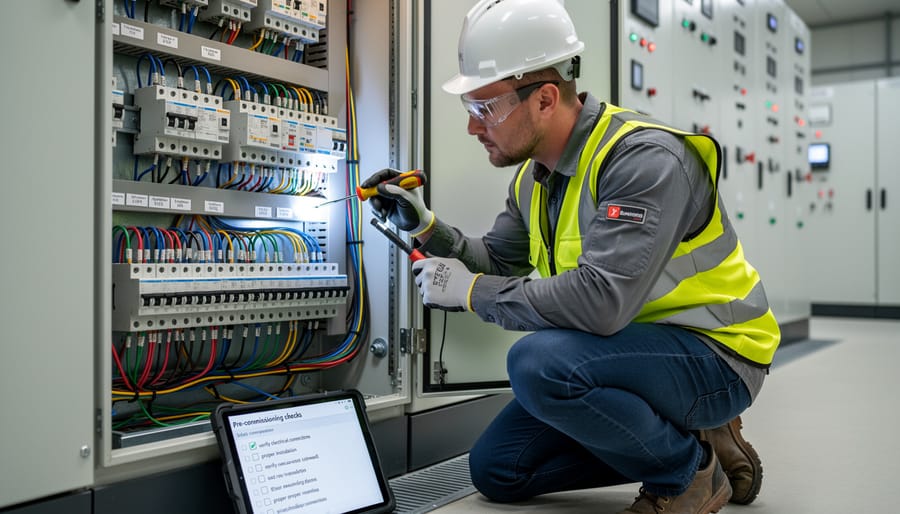
Before your solar system generates its first kilowatt-hour of clean energy, thorough pre-commissioning checks set the stage for decades of reliable performance. Think of this phase as the final quality assurance step that protects your investment and ensures safety.
Your installation team should begin with comprehensive visual inspections. They’ll examine every solar panel for shipping damage, verify that racking systems are securely fastened to withstand BC’s winter storms, and confirm that all mounting hardware meets manufacturer specifications. In coastal communities like Victoria or Vancouver, installers pay special attention to corrosion-resistant fasteners that handle our marine climate.
The electrical connections review is equally critical. Technicians verify that all DC wiring from panels to inverters follows correct polarity, check that wire gauges match system requirements, and ensure conduit installations protect against moisture and wildlife. They’ll also confirm that grounding connections are solid, which is essential for both safety and system longevity.
Documentation checks might seem mundane, but they’re invaluable. Your team should verify that electrical permits are approved, equipment serial numbers are recorded, and warranty registrations are complete. One Vancouver homeowner discovered years later that missing commissioning documentation voided a panel warranty claim, costing thousands in unnecessary repairs.
These meticulous pre-commissioning steps take just a few hours but prevent costly problems down the road, ensuring your system performs optimally from day one.
System Startup and Initial Testing
Once your solar panels are securely mounted and wired, it’s time for the exciting moment: turning on your system. This phase requires careful attention to safety and proper procedures to ensure everything works as designed.
Your installer will begin by verifying all electrical connections are secure before energizing the system. They’ll use a multimeter to check voltage readings at key points, ensuring the panels are producing expected power levels based on current sunlight conditions. In British Columbia’s variable weather, these readings will differ between cloudy and sunny days, so experienced installers know what to expect.
The inverter configuration is where your system’s “brain” gets programmed. Your technician will input specific settings including your utility company details, grid voltage parameters, and monitoring preferences. This step connects your system to BC Hydro’s grid and enables you to track your energy production in real-time through smartphone apps or web portals.
Initial performance verification includes running the system through several cycles, checking that it responds correctly to changing sunlight conditions and safely disconnects during simulated grid outages. Your installer should demonstrate these safety features and show you how to read basic system indicators.
A quality installer will document baseline performance data, creating a reference point for future maintenance. This initial testing typically takes one to two hours and confirms your investment is ready to start generating clean energy for your home or business.
Performance Validation and Fine-Tuning
Once your system is installed, the real-world performance testing begins. This validation phase ensures your solar panels deliver the energy production promised in your contract, particularly under BC’s unique weather patterns.
Your installer should conduct comprehensive monitoring during the first few weeks, comparing actual output against projected performance models. In BC’s coastal regions, expect variations between sunny summer days and overcast winter conditions. A properly commissioned system in Vancouver, for example, might generate 80-90% of rated capacity on cloudy days, which is normal and should align with initial projections.
Fine-tuning involves adjusting inverter settings, optimizing panel angles if adjustable, and configuring monitoring software to track performance accurately. Your installer should demonstrate how to access your system’s monitoring portal, showing you how to spot irregularities like unexpected production drops that might indicate shading issues or equipment concerns.
Local success stories highlight this process: a Kelowna business recently discovered through performance monitoring that morning shading from a nearby building reduced output by 15%. Simple adjustments to their energy usage schedule maximized solar consumption during peak production hours, improving their return on investment.
Request a performance report documenting baseline output levels. This becomes your reference point for ongoing maintenance and validates that your system meets BC Energy Step Code requirements if applicable. Quality installers provide clear benchmarks and remain available for optimization consultations during your first year of operation.
Safety Compliance and Final Documentation
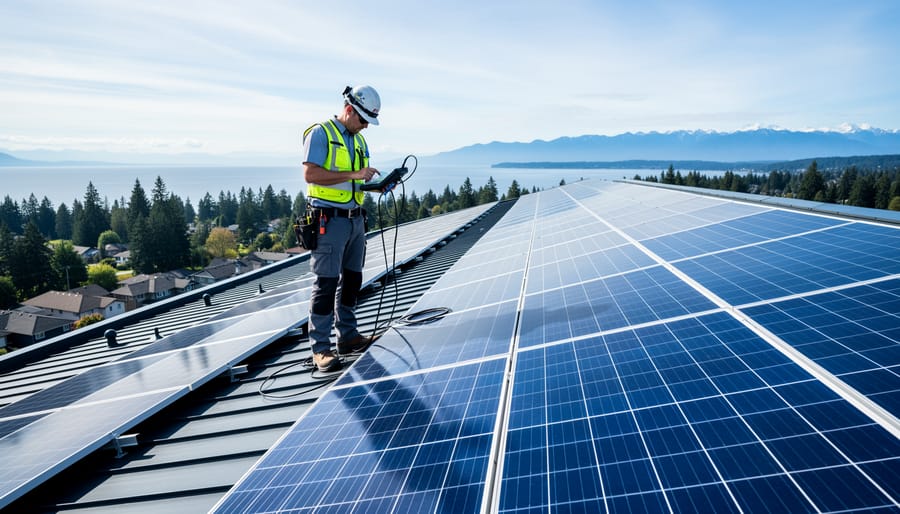
Before your solar system officially goes live, comprehensive safety testing ensures both regulatory compliance and peace of mind. Emergency shutdown procedures must be verified through hands-on testing, confirming that both manual and automatic disconnect switches function properly. This protects utility workers, firefighters, and maintenance personnel who may need to de-energize your system quickly.
In British Columbia, utility interconnection approval requires inspection by your local electrical authority and final sign-off from BC Hydro or FortisBC. Your installer coordinates these inspections, which typically occur within two weeks of installation completion. The utility verifies that your system meets grid safety standards and won’t affect power quality for neighboring properties.
Creating accurate as-built documentation captures any installation variations from original plans. These records include updated electrical diagrams, equipment serial numbers, mounting specifications, and warranty information. One Vancouver homeowner discovered this documentation invaluable when filing a warranty claim years later, as it clearly showed the original installation met all manufacturer specifications.
The owner handoff process should include a comprehensive system walkthrough, monitoring platform training, and a maintenance schedule review. Request a clear emergency contact list and understand your installer’s service response times. Keep all documentation, including permits, warranties, and utility agreements, in one accessible location. This organized approach ensures you’re prepared to maximize your solar investment from day one.
Red Flags: What Poor Commissioning Looks Like
System Performance Issues You Shouldn’t Ignore
Even after installation looks complete, certain warning signs suggest your system hasn’t been properly commissioned. Recognizing these issues early protects your investment and ensures you receive the energy production you expected.
Lower-than-expected energy production is often the first indicator. If your system consistently underperforms compared to initial projections, incomplete commissioning may be the culprit. A Vancouver homeowner discovered their panels were producing 30% below estimates, only to find that voltage settings hadn’t been optimized during commissioning.
Inconsistent output patterns throughout the day signal potential problems with panel orientation, shading analysis, or electrical configuration. Your monitoring system should show predictable generation curves matching weather conditions.
Monitoring system errors or gaps in data collection indicate incomplete setup. A properly commissioned system includes verified remote monitoring with clear baseline performance metrics. If you’re seeing frequent error messages or can’t access your production data, commissioning wasn’t finished.
Inverter problems like frequent shutdowns, error codes, or failure to restart after grid interruptions point to configuration issues. These problems often stem from skipped commissioning steps where inverter settings match grid requirements and environmental conditions.
Don’t accept these issues as normal. A thorough commissioning process prevents these problems entirely, and reputable installers address them immediately when raised. Your system should perform reliably from day one.
Documentation Gaps That Cost You Later
Incomplete documentation creates headaches that often surface months or years after installation. When warranty claims arise, missing paperwork can leave you financially exposed. One Vancouver Island homeowner discovered this the hard way when inverter issues appeared 18 months post-installation, but their contractor had never provided warranty registration documents, complicating the replacement process.
Your commissioning documentation should include complete system specifications showing panel make, model, serial numbers, inverter details, and electrical design. This information proves essential for future upgrades, troubleshooting, or insurance claims. Baseline performance data captured during commissioning establishes your system’s expected output, making it easier to identify declining performance early.
A detailed maintenance schedule tailored to BC’s climate helps protect your investment. Without clear guidance on cleaning schedules (especially important in coastal areas with salt spray) or inspection intervals, minor issues can escalate. One Kelowna business lost thousands in potential generation because nobody documented the need for spring panel cleaning after wildfire season.
Request a comprehensive commissioning package that includes warranty certificates, system diagrams, performance baseline reports, and a maintenance calendar. Store digital and physical copies securely. This documentation becomes your solar system’s health record, ensuring smooth operations and protecting your investment for decades to come.
Questions to Ask Your BC Solar Installer About Commissioning
Before your system goes live, take time to ask your installer these important questions to ensure thorough commissioning. Understanding what to listen for in their answers will give you confidence that your solar investment is in good hands.
Start by asking: “Can you walk me through your commissioning checklist?” A quality installer should have a documented process that covers electrical testing, performance verification, and safety checks. They should mention specific tests like insulation resistance measurements and ground fault verification. If they seem vague or say they just “flip the switch and see if it works,” that’s a red flag.
Next, inquire: “What performance data will you provide at commissioning?” Good answers include baseline production numbers, expected output ranges for different seasons, and documentation of system specifications. Your installer should provide written records showing your system meets design expectations. For example, a Vancouver homeowner should receive data confirming their 6 kW system produces the projected output for local conditions.
Ask: “How will you verify my monitoring system is working correctly?” Professional installers demonstrate the monitoring platform, show you how to access real-time data, and confirm alert systems are functioning. They should set up your account and ensure you can track production from day one.
Don’t forget: “What training will you provide for operation and basic troubleshooting?” Expect a hands-on orientation covering emergency shutdown procedures, basic maintenance tasks, and when to contact support. A Kelowna business recently shared how their installer’s thorough training helped them quickly identify and report a minor inverter issue.
Finally, clarify: “What documentation will I receive, and what should I keep for warranty purposes?” Complete commissioning packages include test results, warranty information, system specifications, and maintenance schedules. Keep these documents organized as they’re essential for warranty claims and future service needs.
Quality installers welcome these questions and provide clear, detailed answers that demonstrate their commitment to your system’s long-term success.
How Proper Commissioning Protects Your Warranty and O&M
The Warranty Connection
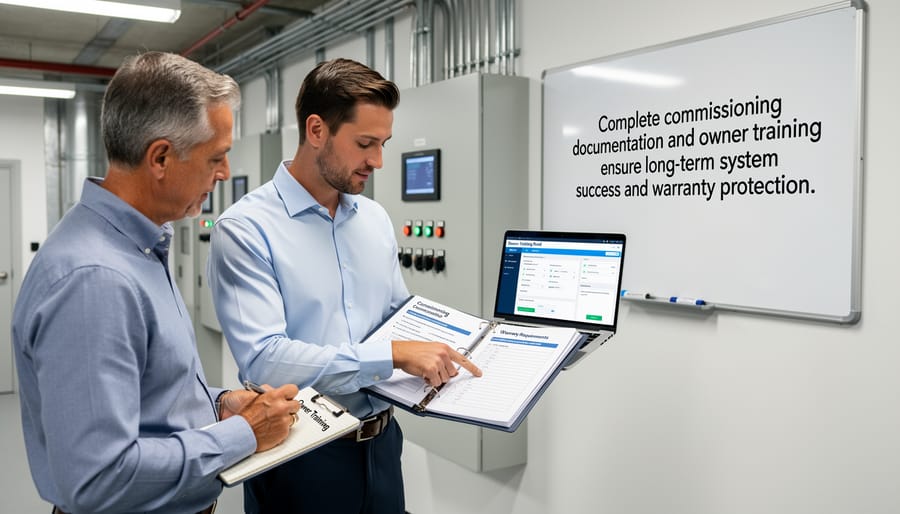
Proper commissioning documentation serves as your solar system’s insurance policy. When equipment issues arise during the warranty period, manufacturers require proof that your system was installed and commissioned according to their specifications. Without this documentation, warranty claims may be denied, leaving you responsible for costly repairs.
Think of commissioning reports as a detailed health record for your solar installation. These documents verify that every component was tested, measured, and confirmed working correctly from day one. When a manufacturer reviews a warranty claim, they need evidence that any failure resulted from a product defect rather than improper installation or configuration.
BC solar installers who follow rigorous commissioning protocols protect their customers’ investments. A comprehensive commissioning package typically includes performance test results, electrical measurements, equipment serial numbers, installation photos, and verification that all settings match manufacturer requirements. This thorough documentation has helped numerous BC homeowners successfully claim warranties on inverters and other components years after installation.
Your installer should provide you with a complete commissioning report and keep a copy in their records. Store this documentation safely alongside your equipment warranties and system manuals. If your installer cannot provide detailed commissioning records, consider this a red flag about their quality standards. Remember, comprehensive documentation is not just paperwork; it is your financial protection for the 25-year lifespan of your solar investment.
Setting Up Success for Operations & Maintenance
Proper commissioning creates a comprehensive baseline that becomes invaluable for the lifetime of your solar system. Think of it as your system’s birth certificate and health record combined. During commissioning, technicians document everything from initial performance metrics to specific panel outputs, creating a reference point that helps identify problems before they become costly repairs.
For example, a community centre in Kelowna discovered a gradual performance decline six months after installation. Because their installer had documented detailed commissioning data, technicians quickly identified underperforming panels and resolved the issue under warranty, saving thousands in potential lost generation.
This baseline data includes string voltages, inverter performance readings, and energy production benchmarks specific to your location and system design. When future maintenance is needed, technicians can compare current performance against these original measurements to pinpoint exactly what has changed and why.
Quality commissioning reports also include thermal imaging results and electrical testing documentation. These records prove particularly useful when weather patterns shift or nearby construction creates shading issues. You will have concrete evidence of how your system performed under optimal conditions, making it easier to diagnose new challenges.
Request a copy of all commissioning documentation and keep it accessible. This proactive approach ensures your solar investment continues delivering expected returns throughout its 25-plus year lifespan while simplifying any warranty claims or performance optimization efforts.
Local Success Story: How Thorough Commissioning Saved a Kelowna Business Thousands
When Okanagan Orchard Supplies, a family-owned agricultural business in Kelowna, decided to install a 50kW solar array on their warehouse, they knew the investment was significant. What they didn’t expect was how much money thorough commissioning would save them in the first year alone.
The installation wrapped up in September 2023, and the commissioning team got to work. During the detailed system testing, they discovered three critical issues that visual inspection alone wouldn’t have caught. First, two inverters showed voltage irregularities that fell just within acceptable ranges but indicated potential premature failure. Second, the monitoring system wasn’t accurately tracking production from one section of the array. Third, several panel connections showed higher-than-optimal resistance readings.
“Without proper commissioning, we would have started operations thinking everything was fine,” explained owner Marcus Chen. “Six months down the road, those inverters could have failed, and we’d be fighting about whether it was a warranty issue or installation problem.”
The commissioning team worked with the installer to address all issues before final sign-off. The inverters were replaced under manufacturer warranty at no cost to the business. The monitoring system was recalibrated to provide accurate data for tracking savings. The connection issues were resolved, improving overall system efficiency by 4 percent.
The result? Okanagan Orchard Supplies avoided an estimated $8,000 in potential repair costs and lost production. More importantly, their system has operated at peak performance since day one, generating the expected 65,000 kWh annually and reducing their electricity costs by nearly $7,000 per year.
“The commissioning process added three days to our timeline but gave us complete confidence in our investment,” Marcus noted. “We have documentation of every test, baseline performance data, and the peace of mind that our system was truly ready for 25-plus years of reliable operation.”
This case demonstrates why commissioning isn’t an optional extra but an essential protection for your solar investment.
Proper commissioning isn’t optional—it’s the foundation of your solar investment’s long-term success. A system that hasn’t been thoroughly commissioned may appear to work, but hidden issues can lead to reduced energy production, safety hazards, and voided warranties. When you understand what quality commissioning looks like, you’re empowered to hold your installer accountable and ensure you receive the full value of your solar investment.
As you move forward with your solar project, ask potential installers about their commissioning process. Request documentation of their testing procedures, ask to see sample commissioning reports from previous installations, and verify their certifications. A professional installer will welcome these questions and provide transparent answers.
Ready to take the next step? Connect with certified installers in British Columbia who prioritize proper commissioning protocols. Look for companies that are members of the BC Sustainable Energy Association and hold current CSA or NABCEP certifications. Request references from recent customers and ask specifically about their commissioning experience. Your diligence today ensures decades of clean, reliable energy production for your home or business, while contributing to BC’s renewable energy future.