
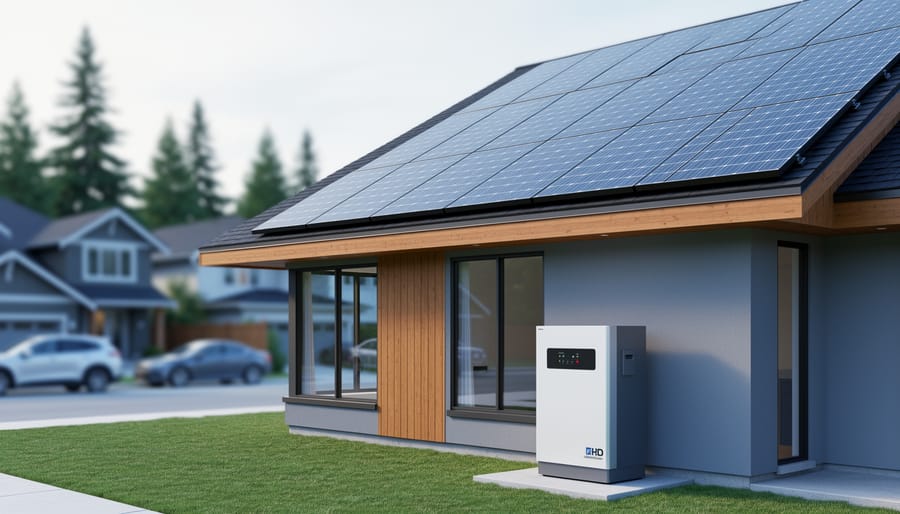
British Columbia homeowners can claim up to $10,000 in solar incentives right now through BC Hydro’s CleanBC programs. The provincial utility offers $5,000 for residential solar installations plus an additional $5,000 for battery storage systems, creating one of Canada’s most generous solar rebate packages after federal programs wound down.
Access these funds by working with a registered CleanBC contractor who handles the application process on your behalf. The rebate gets applied directly at installation, reducing your upfront costs immediately rather than requiring you to wait for reimbursement. Income-tested supplements can add another $2,000 for qualifying households.
Regional programs stack on top of provincial incentives. Metro Vancouver residents may qualify for additional municipal rebates, while rural communities in the Kootenays and Vancouver Island often offer property tax exemptions for renewable energy systems. Community solar co-ops in Victoria and Kelowna have pioneered group-buying programs that reduce installation costs by 15-20% through collective purchasing power.
The financial case grows stronger when you factor in net metering credits. BC Hydro pays you retail rates for excess electricity your panels generate, with the average 6-kilowatt residential system saving $800-1,200 annually on power bills. Combined with available rebates, most homeowners see payback periods of 8-12 years.
Start by checking your property’s solar potential and calculating projected savings based on your current energy use. Then connect with certified installers who understand the latest rebate structures and can maximize your eligible incentives.
The Current State of Solar Panel Rebates and Incentives in Canada
The landscape for solar panel rebates and incentives in Canada has shifted dramatically since October 1, 2025, when the federal government closed the Canada Greener Homes Loan to new applications. This closure marked the end of the primary federal funding pathway that had offered up to $40,000 in interest-free loans for home energy improvements, including solar installations. The earlier Canada Greener Homes Grant, which provided $5,000 per home for solar and other efficiency upgrades, had already wound down before the loan program ended.
As of 2026, provincial and municipal programs drive most of the rebate value for Canadian homeowners. The closure of federal support has created an uneven playing field across the country, with some provinces stepping up to fill the gap while others offer minimal assistance. This provincial patchwork means where you live significantly impacts your solar savings potential.
British Columbia and Prince Edward Island stand out as the strongest active provincial programs in Canada. BC Hydro’s comprehensive rebates can deliver up to $10,000 in combined savings for solar and battery storage, making it the most robust program available to Canadian homeowners today. PEI similarly maintains strong provincial incentives. For residents in provinces without active programs, the solar panel rebate landscape has become considerably less attractive compared to just a year ago.
The message is clear: if you’re in BC or PEI, provincial programs make 2026 a viable year to go solar. Elsewhere in Canada, you’ll need to check municipal offerings and utility programs carefully to understand what financial support remains available.
BC Hydro’s Solar Panel Rebates: Your Biggest Savings Opportunity
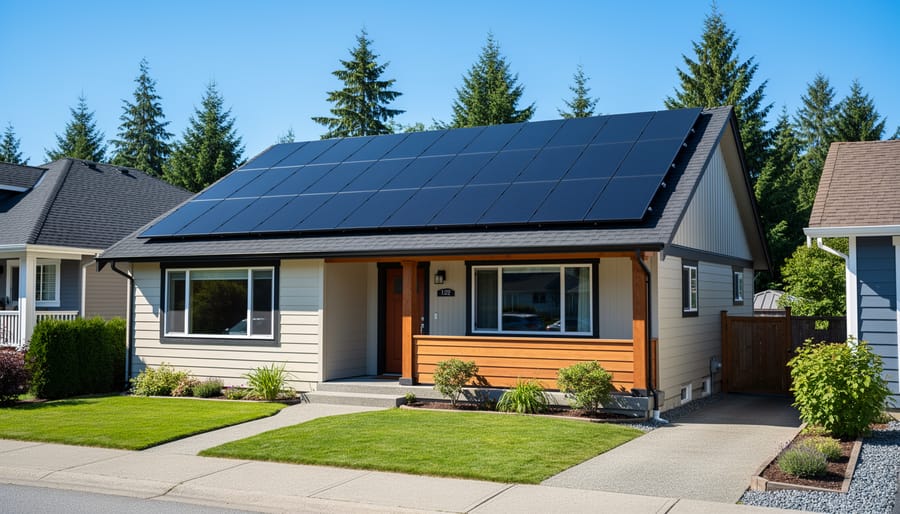
Eligibility Requirements for BC Hydro Solar Rebates
To claim the BC solar rebates you’ll need to meet three straightforward criteria that most homeowners can satisfy.
First, you must be a BC Hydro residential customer with an active account. The eligibility requirements for solar rebates specify that commercial and industrial customers qualify under separate programs, so this is specifically for homes.
Your solar system must connect to BC Hydro’s grid through a net metering agreement, which allows you to send excess power back to the grid and receive credits on your bill. This isn’t an extra step to worry about, your installer handles the net metering application as part of the installation process, and BC Hydro has streamlined approvals significantly in 2026.
The third requirement is using a certified solar installer. BC Hydro maintains a list of approved contractors who meet their technical standards, ensuring your system will perform safely and efficiently. Here’s what the program requires:
- Active BC Hydro residential electricity account in good standing
- Grid-connected solar system with approved net metering agreement
- Installation by BC Hydro-certified solar contractor
- System sized appropriately for residential use (typically under 100 kW)
Working with a certified installer also simplifies your application since they’re familiar with the paperwork and can often submit documentation on your behalf. Most reputable solar companies in BC already hold this certification, so it rarely limits your choice of contractors.
How to Apply and What to Expect
Applying for BC Hydro’s solar rebate is straightforward, but understanding the timeline helps you plan your installation around available funding. Your certified installer typically handles most of the heavy lifting, though you’ll need to stay involved at key points.
Start by contacting a BC Hydro-approved solar installer who will assess your property and confirm your system qualifies. They’ll submit the initial rebate application on your behalf before installation begins, which reserves your rebate amount. This pre-approval step is critical: installing before approval means you won’t receive the rebate, even if your system otherwise qualifies.
Once approved, you’ll receive written confirmation locking in your rebate. Your installer can then proceed with the installation. After your system passes inspection and connects to the grid, your installer submits final documentation to BC Hydro, including proof of installation and grid connection. The utility verifies everything meets program requirements before issuing your rebate payment.
Expect the entire process to take eight to twelve weeks from initial application to payment, though timelines vary based on application volume. During peak seasons (spring and summer), processing can stretch longer.
Two tips make approval smoother: first, ensure your chosen installer maintains current BC Hydro certification, as non-certified installers void your eligibility regardless of system quality. Second, don’t rush the pre-approval step. Missing paperwork causes the most common delays, so work closely with your installer to submit complete documentation upfront. Most certified installers have streamlined processes since they handle these applications regularly.
Battery Storage Incentives: Adding Up to $5,000 More in Rebates
Adding a battery storage system to your solar installation unlocks another tier of solar panel rebates and incentives worth up to $5,000, making energy storage more accessible than ever for BC homeowners. BC Hydro restructured their April 1, 2026 battery rebate changes to offer two distinct paths, each designed for different homeowner needs and goals.
The first option provides a $1,500 rebate for residential battery storage systems paired with solar panels. This straightforward incentive reduces the upfront cost of adding backup power to your solar array without requiring ongoing participation in utility programs. If you want energy independence and backup capability during outages while keeping things simple, this rebate makes the best solar batteries significantly more affordable.
The second path offers up to $5,000 for battery systems enrolled in BC Hydro’s Peak Saver program, whether or not you have solar panels. This program requires you to allow BC Hydro to discharge your battery during peak demand periods, helping stabilize the grid while earning you a larger rebate. The trade-off is less control over when your battery discharges, but the substantially higher incentive makes it compelling for homeowners comfortable with shared grid benefits.
| Rebate Amount | Solar Required? | Peak Saver Enrollment | Best For |
|---|---|---|---|
| Up to $1,500 | Yes | No | Solar owners wanting simple backup power |
| Up to $5,000 | No | Yes | Homeowners prioritizing maximum rebate value |
Most solar homeowners lean toward the $1,500 rebate because it integrates seamlessly with their existing system and preserves full control over battery use. However, if you’re motivated by offsetting the highest possible upfront cost and don’t mind coordinating with BC Hydro during peak periods, the $5,000 Peak Saver option delivers exceptional value. You can stack either battery rebate with the solar panel incentive for combined savings.
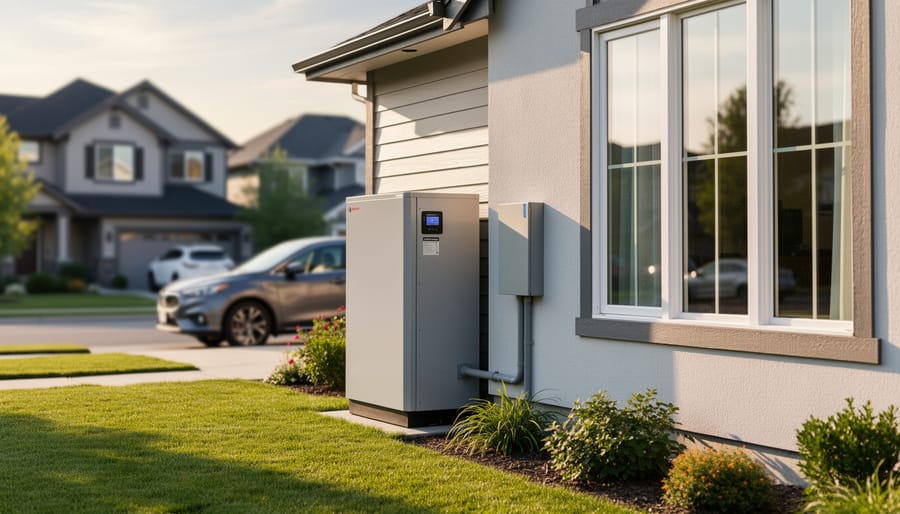
Stacking Your Solar Panel Rebates and Incentives for Maximum Savings
The real power of BC’s solar programs comes from combining incentives. By stacking solar and battery rebates you can unlock the full $10,000 in savings available to BC homeowners in 2026.
Here’s how different combinations work in practice. If you install solar panels alone, you claim the $5,000 BC Hydro solar rebate and stop there. Add a battery system paired with your solar installation, and you become eligible for both the solar rebate and the $1,500 battery pairing rebate, bringing your total to $6,500. The biggest savings scenario involves enrolling your battery in BC Hydro’s Peak Saver program, which allows the utility to discharge your battery during high-demand periods. This path unlocks the full $5,000 battery rebate on top of your $5,000 solar rebate, reaching the maximum $10,000.
Most BC homeowners pursuing maximum rebates opt for solar plus Peak Saver-enrolled battery, which delivers the largest upfront savings. That $10,000 reduction significantly shortens how long it takes panels to pay for themselves often cutting payback periods by three to four years compared to systems with no incentives.
Your choice depends on your budget and goals. Solar alone works if you want immediate electricity cost reduction without battery complexity. Adding a basic paired battery gives you backup power and modest extra savings. The Peak Saver route requires accepting some utility control over your battery but delivers the maximum financial benefit. A certified installer can model each scenario’s total cost and savings for your specific situation, helping you choose the combination that makes sense for your home and budget.
Municipal and Regional Programs to Layer On Top
Beyond the provincial BC Hydro rebates, some BC municipalities and regional districts offer their own solar panel rebates and incentives that can further reduce your installation costs. These local programs vary significantly by location, so what’s available depends entirely on where you live.
The City of Vancouver has historically offered property tax exemptions for solar installations, which can provide ongoing savings rather than an upfront rebate. Several regional districts have also run limited-time solar incentive programs, though availability changes as budgets are allocated and depleted.
The challenge with municipal programs is that they’re often smaller in scope, time-limited, and less widely advertised than provincial initiatives. Some offer a few hundred dollars in rebates, while others provide financing assistance or expedited permitting rather than direct cash incentives. A handful of communities have partnered with local utilities or sustainability organizations to create group-buying programs that reduce installation costs through volume pricing.
Your best approach is to contact your municipal sustainability office or planning department directly before finalizing your solar project. Ask specifically about any current solar panel rebates and incentives, property tax exemptions, or financing programs. Even if your municipality doesn’t have a dedicated solar program, they may offer energy efficiency rebates that cover related upgrades like electrical panel improvements needed for your installation.
Check your local government’s website under sustainability, climate action, or energy efficiency sections. These smaller programs can add a few hundred to a couple thousand dollars on top of your BC Hydro rebates, making them worth the research effort.
Real BC Homeowners Who Maximized Their Solar Incentives
The Campbell family in Victoria installed a 7.2 kW solar panel system in spring 2026 and combined BC Hydro’s $5,000 solar rebate with the $5,000 Peak Saver battery storage rebate. Their total system cost was $28,000 before incentives. After applying both rebates, they reduced their out-of-pocket expense to $18,000. They enrolled their 13.5 kWh battery in BC Hydro’s Peak Saver program, which qualified them for the larger battery incentive. The combination cut their effective installation cost by more than a third.
Sarah Chen, a homeowner in Kelowna, took a different approach. She installed a 5 kW solar array with a smaller battery in March 2026, qualifying for the $5,000 solar panel rebate and the $1,500 battery rebate for systems paired with solar. Her total project cost was $22,000, and the combined $6,500 in rebates brought her net cost down to $15,500. She worked with a certified installer who handled the rebate applications as part of the installation process. Sarah also took advantage of a zero down financing option that let her start saving on electricity immediately while the rebates processed.
Both families emphasized the importance of working with installers familiar with BC Hydro’s requirements. They recommend getting multiple quotes from certified installers, confirming which rebates apply to your specific setup before signing contracts, and submitting applications promptly after installation. The Campbells noted their rebates arrived within six weeks, while Sarah’s processed in just over a month. These real savings demonstrate how BC homeowners can strategically layer solar panel rebates and incentives to make solar adoption significantly more affordable in 2026.
Your Action Plan: Claiming Solar Panel Rebates and Incentives in 2026
Ready to claim your solar panel rebates and incentives? Here’s your practical roadmap for navigating the process from start to finish.
- Research your eligibility by checking BC Hydro’s solar and battery rebate requirements for your property type and electricity account status.
- Connect with at least three BC Hydro-certified solar installers to get quotes that include rebate estimates and total out-of-pocket costs.
- Decide on your system design, including whether you’ll add battery storage to maximize your rebates up to the full $10,000.
- Work with your chosen installer to gather required documentation, which typically includes property information, electrical permits, and system specifications.
- Submit your rebate application through BC Hydro’s online portal before installation begins (pre-approval is often required).
- Schedule your installation with your certified contractor once you receive rebate approval.
- Complete a home energy audit if required by your specific rebate program or to identify additional efficiency improvements.
- Submit final documentation and inspection reports to BC Hydro after installation is complete.
- Receive your rebate payment, which typically arrives within 6-8 weeks of final approval.
Start this process at least three months before your ideal installation date. Rebate programs can experience high demand during peak installation season (spring and summer), and processing times may extend. Your certified installer will handle most of the technical paperwork, but you’ll need to provide property documentation and sign off on the application.
Don’t go it alone. Working with experienced professionals who understand BC’s specific rebate requirements will save you time, prevent application errors, and ensure you capture every dollar available to you.

The shift away from federal programs hasn’t left BC homeowners behind. With up to $10,000 available through BC Hydro’s combined solar panel and battery storage rebates, 2026 is still an excellent year to go solar in British Columbia. You’re looking at $5,000 for grid-connected solar panels, plus up to another $5,000 for battery storage through the Peak Saver program, real money that directly reduces your upfront costs.
These provincial programs are active and well-funded right now, but incentive landscapes change. The Canada Greener Homes programs showed us that even robust federal initiatives can close with limited notice. Acting while BC Hydro’s rebates remain strong gives you certainty and maximizes your savings.
Start by connecting with a certified solar installer who understands the current rebate requirements and can guide you through the application process. Solar BC’s installer network can match you with qualified professionals in your area who’ve successfully helped homeowners claim these incentives.
The numbers work. The programs are open. Your next step is getting a personalized assessment that shows exactly what these solar panel rebates and incentives mean for your home and your budget.