
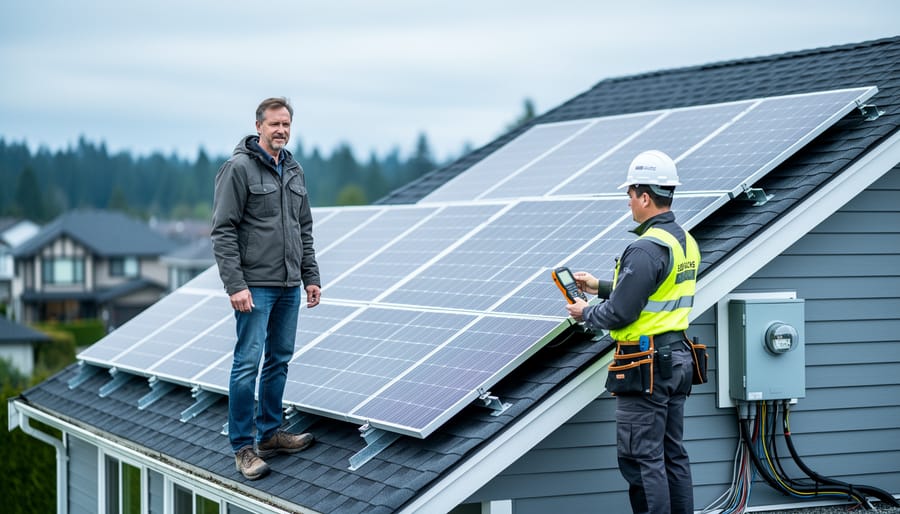
In British Columbia, anyone installing solar panels on your property must hold a valid BC electrical contractor license and employ FSR-certified electricians to connect the system to your home’s electrical panel and the grid. This licensing requirement isn’t bureaucratic red tape. It protects you from fire hazards, code violations, and insurance claim denials that can arise from faulty installations.
Many BC homeowners underestimate this when exploring their options. While a DIY solar install might seem budget-friendly, connecting to the grid legally requires a licensed professional. The consequences of skipping this step are serious: BC Hydro can refuse interconnection, your homeowner’s insurance may be voided, and you could face expensive remediation costs to bring the system up to code.
The good news? Verifying your installer’s credentials takes just minutes through SkilledTradesBC and Technical Safety BC databases. Properly licensed installers carry liability insurance, follow the Canadian Electrical Code, and ensure your system qualifies for available incentives. With solar adoption growing across the province, from Vancouver condos to Okanagan farms, understanding these licensing requirements helps you move forward confidently and avoid costly missteps down the road.
Why Solar Panel Installation Licenses Matter in British Columbia
In British Columbia, solar panel installation isn’t a casual DIY project or a job for any general handyperson, it’s electrical work that requires proper credentials and oversight. The province’s Electrical Safety Regulation establishes strict standards for any electrical installation, including solar photovoltaic systems. These regulations exist because solar installations connect directly to your home’s electrical system and the utility grid, creating potential safety hazards if done incorrectly. A licensed installer understands how to properly size circuits, install disconnect switches, ensure adequate grounding, and integrate your system safely with your existing electrical panel readiness considerations.
Beyond electrical codes, BC building codes govern structural aspects of solar installations. Mounting systems must withstand snow loads, wind pressures, and seismic events specific to different regions across the province. Licensed contractors know these local requirements and pull the necessary permits, ensuring inspections happen at critical stages. When installers skip licensing and permits, your system may fail inspection later, forcing expensive corrections before you can connect to the grid.
Proper licensing also protects your investment’s performance. Licensed installers stay current on Technical Safety BC requirements, manufacturer specifications, and best practices for BC’s climate. They understand how marine environments affect coastal installations differently than interior regions, and they size systems correctly for local solar irradiance patterns. An unlicensed installer might produce a system that technically generates power but underperforms due to poor design choices, improper wiring, or components unsuited to BC conditions. The few hundred dollars saved upfront can cost thousands in lost production, safety hazards, and failed inspections down the road.
Required Licenses and Certifications for Solar Installers in BC
Electrical Contractor License
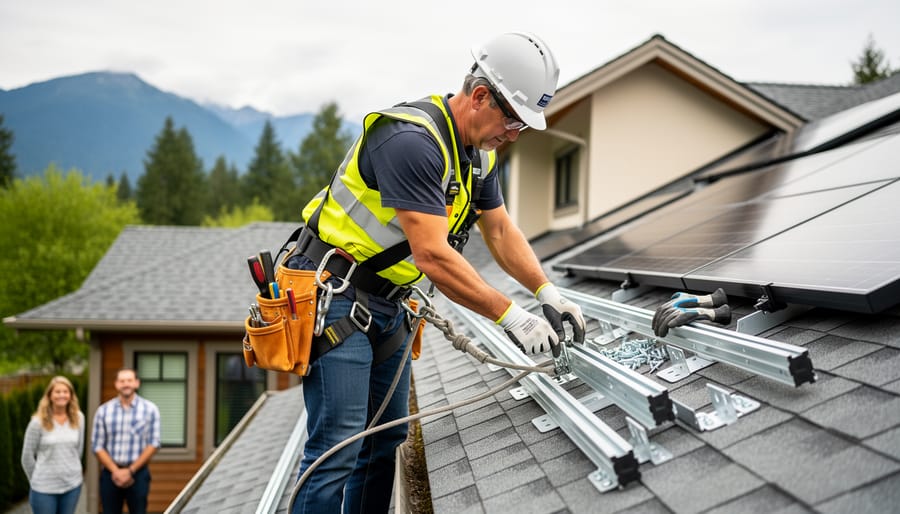
In British Columbia, anyone installing solar panels must hold a valid electrical contractor license issued through Technical Safety BC. This isn’t optional, it’s the law. The province requires this credential because solar installations involve direct connection to your home’s electrical system and the power grid, work that carries real safety risks if handled improperly.
Electrical licensing requirements in BC mandate that contractors hold either an FSR-A (unrestricted) or FSR-B (limited scope) designation. The FSR-A allows contractors to perform any electrical work, including complex commercial solar installations. FSR-B permits residential work under certain restrictions. Most solar installers working on homes hold the FSR-A designation because solar systems often exceed the voltage and complexity limits of an FSR-B license.
Beyond the FSR designation, the contractor must register with Technical Safety BC and maintain that registration in good standing. This registration gets verified during permit applications, municipalities won’t issue installation permits without it. The province tracks compliance through a public registry, which you can search before hiring anyone.
Some installers claim they can do the mechanical work while “partnering” with a licensed electrician who shows up only for final connections. That’s a major red flag. BC regulations require the licensed contractor to supervise the entire installation, not just rubber-stamp someone else’s work. The license holder bears full responsibility for safety and code compliance from start to finish.
Additional Certifications That Matter
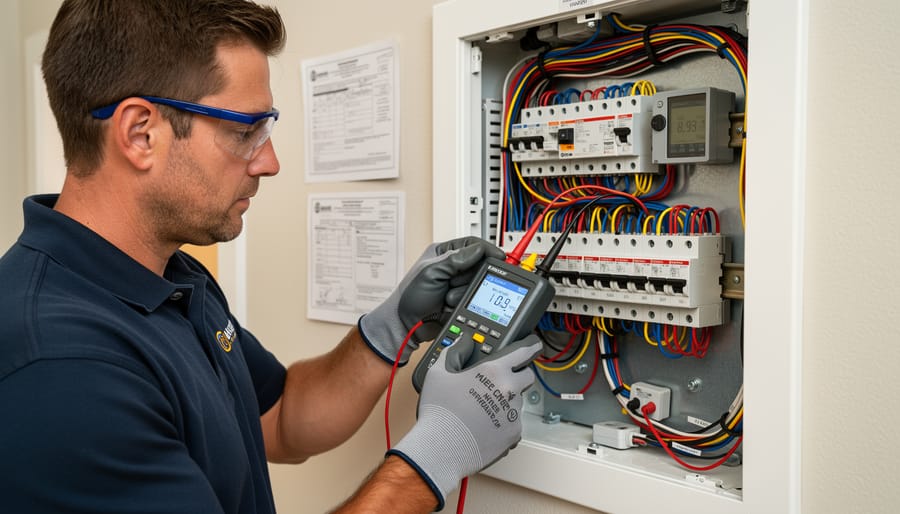
While an electrical contractor license is the legal baseline, supplementary certifications signal deeper expertise and commitment to industry standards. These credentials aren’t mandatory in BC, but they demonstrate an installer’s dedication to ongoing education and best practices in solar technology.
- NABCEP (North American Board of Certified Energy Practitioners) certification indicates advanced knowledge of photovoltaic system design, installation, and troubleshooting through rigorous examination and continuing education requirements
- CSA standards training ensures installers understand Canadian-specific electrical and safety codes that govern solar installations
- Manufacturer-specific certifications from companies like Tesla, LG, or Canadian Solar qualify installers to work with particular equipment and often unlock extended warranty coverage for homeowners
- NATE (North American Technician Excellence) certification shows expertise in system integration, particularly useful when combining solar with heat pumps or other HVAC systems
Think of these certifications as advanced degrees beyond the basic license. An installer with NABCEP credentials, for instance, has completed hundreds of hours of documented experience and passed comprehensive testing on system design and code compliance. Manufacturer certifications matter especially if you’re investing in premium equipment, some warranties require factory-certified installation.
BC homeowners should weigh these credentials when comparing quotes. An installer holding multiple certifications typically stays current with evolving technology and installation techniques, which translates to better system performance and fewer callbacks. While you’ll pay slightly more for certified expertise, you’re investing in quality that protects your solar installation over its 25-year lifespan.
Insurance and Bonding Requirements
Beyond holding the right licenses, legitimate solar installers in BC must carry comprehensive insurance and bonding that directly protects you as the homeowner. General liability insurance covers property damage during installation, think a dropped panel cracking your roof tiles or equipment damaging your electrical system. Most reputable contractors carry $2 million minimum coverage, though many BC installers maintain $5 million policies given the value of residential solar projects.
WorkSafeBC coverage is mandatory for any installer with employees working on your property. This protects you from liability if a worker is injured during installation. Ask for the installer’s WorkSafeBC account number and verify their coverage is current through WorkSafeBC’s online registry before signing any contract.
Bonding provides a financial guarantee that the installer will complete your project as contracted. If they abandon the job or fail to meet permit requirements, the bond covers completion costs or corrections. In BC’s solar market, bonding typically ranges from $20,000 to $100,000 depending on company size and project scope. Request copies of current insurance certificates and bonding documentation, legitimate installers provide these immediately without hesitation.
How to Verify Your Solar Installer’s Credentials
Confirming your solar installer’s credentials is a straightforward process that protects your investment and ensures your solar panel installation license requirements are met. BC residents have access to several free verification tools that provide transparency about who’s qualified to work on their property.
Start with the most critical verification step: confirm the installer’s electrical contractor license through Technical Safety BC. Every legitimate solar installer must hold a valid electrical contractor license to legally perform solar panel installations in British Columbia. Visit the Technical Safety BC website and use their contractor lookup tool, you’ll need the company name or license number. The search results will show current licensing status, any active suspensions, and the scope of work they’re authorized to perform.
- Check the installer’s electrical contractor license status on the Technical Safety BC website using their contractor search tool
- Verify their FSR (Field Safety Representative) designation is current and matches the scope of solar installation work
- Confirm WorkSafeBC coverage by requesting their registration number and checking it through WorkSafeBC’s online clearance system
- Ask for proof of liability insurance, minimum $2 million coverage, and verify it’s active by contacting the insurance provider directly
- Request copies of relevant certifications like NABCEP credentials or manufacturer training certificates and verify them with the issuing organizations
Don’t rely solely on certificates the installer shows you. Companies can display expired credentials or falsify documents. Always verify directly with the issuing authority. Technical Safety BC typically updates license status within 24 hours of any changes, so you’ll get current information.
Request the installer’s license number upfront. If they hesitate or claim they don’t need one because they’re “partnering” with a licensed contractor, that’s a red flag. The company physically doing your solar panel installation must hold their own valid license, subcontracting arrangements don’t exempt them from licensing requirements.
Many BC homeowners skip the WorkSafeBC verification step, but it matters. If an unlicensed or uninsured worker gets injured on your property, you could face liability. The WorkSafeBC clearance letter confirms the installer maintains proper worker coverage. Take five minutes to verify it before signing anything.
Red Flags: What Happens When Installers Lack Proper Licensing
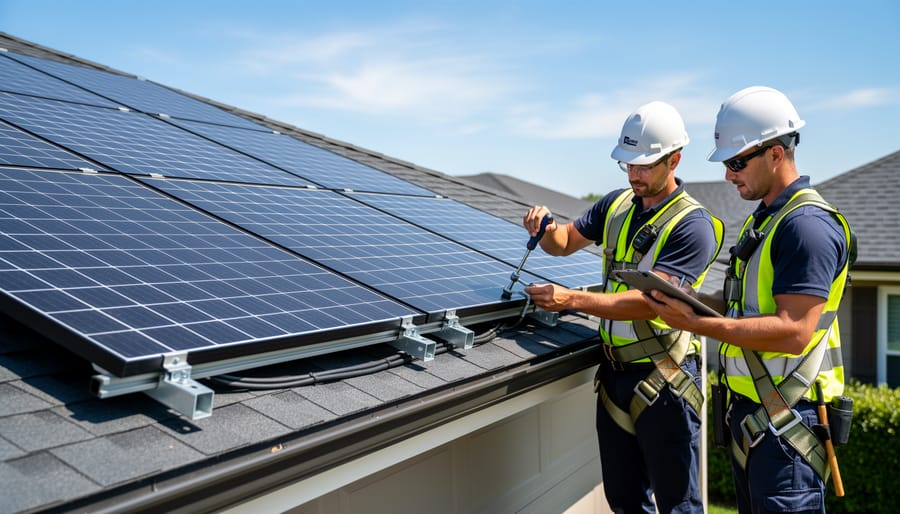
Choosing an unlicensed installer to save a few dollars upfront can cost you thousands later. When contractors lack proper credentials, you’re not just risking poor workmanship, you’re exposing yourself to serious legal and financial consequences that can derail your entire solar investment.
Permit Denials and Installation Delays
BC municipalities require permits for solar installations, and they’ll only issue them to licensed electrical contractors. If your installer isn’t properly licensed, your permit application gets rejected. You’ll need to halt the project, find a licensed contractor willing to take over someone else’s work (many won’t), and restart the permitting process. This delays your installation by weeks or months and eliminates any deposit you’ve already paid the unlicensed installer.
Failed Inspections Mean No Connection
Even if an unlicensed installer completes the physical installation, Technical Safety BC and your local authority having jurisdiction will inspect the work before allowing grid connection. Installations that don’t meet code, common with unlicensed installers, fail inspection. You’ll pay to have everything brought up to standard, and BC Hydro won’t connect your system until it passes, leaving you with an expensive roof ornament generating zero power.
Voided Equipment Warranties
Solar panel and inverter manufacturers require installation by certified professionals to honor warranties. Use an unlicensed installer and those 25-year panel warranties become worthless. When equipment fails, you’re replacing it out of pocket.
Insurance Nightmares
If your unlicensed installation causes roof damage, fire, or electrical issues, your home insurance may refuse the claim. In 2024, a Kelowna homeowner faced this exact scenario when an improperly installed system caused a roof leak, the insurer denied coverage because the installer lacked proper licensing and WorkSafeBC coverage.
Working with unlicensed installers doesn’t just risk subpar performance. It jeopardizes your entire investment and potentially your home’s safety.
Questions to Ask Before Hiring a Solar Installer in BC
Before you sign a contract, ask these five questions to protect your investment and ensure you’re working with a qualified professional.
1. “Can you provide your BC electrical contractor license number and FSR designation?”
A legitimate installer will share this immediately. Verify the license through Technical Safety BC’s online registry. If they hesitate or claim licenses aren’t necessary for solar work, walk away.
2. “What’s your experience with installations similar to mine in BC?”
Request references from recent projects in your area, ideally within the past year. BC’s climate and building codes vary by region, so an installer familiar with your municipality’s permitting process and local conditions will navigate challenges more smoothly.
3. “How do you handle permits and inspections?”
Licensed installers manage all permitting and coordinate required inspections with Technical Safety BC and your local authority having jurisdiction. They should explain this process clearly and include it in their scope of work.
4. “What warranties and insurance do you carry?”
Confirm they hold current liability insurance and WorkSafeBC coverage. Ask about workmanship warranties separate from equipment warranties. Request written proof of both insurance and bonding.
5. “Can you walk me through your installation timeline and process?”
Understanding each phase, from site assessment through final inspection, helps you spot installers cutting corners. For comprehensive guidance on evaluating responses to these questions, see our detailed resource on how to choose a contractor in British Columbia.
Finding Licensed Solar Installers Across British Columbia
Finding licensed solar panel installation professionals in British Columbia doesn’t have to be complicated. Start with Technical Safety BC’s online registry, which lists all registered electrical contractors authorized to perform solar installations. This free tool lets you verify licenses and check disciplinary records before making contact.
Solar BC’s network connects you with pre-vetted, certified installers across the province. Our directory includes only those who meet strict licensing requirements and maintain current electrical contractor credentials. You can search by region, compare installer profiles, and read verified customer reviews, all in one place.
Your local municipality’s building department can also provide lists of contractors who regularly pull solar permits in your area. These installers have proven track records navigating your specific jurisdiction’s requirements.
Industry associations like the Solar Energy Industries Association of Canada maintain member directories filtered by province and specialization. When exploring these resources, look for BC solar installers who list their FSR numbers, Technical Safety BC registration, and insurance details upfront.
Request quotes from at least three licensed installers. This comparison helps you understand typical pricing for your project while giving you opportunities to verify credentials and assess professionalism. The right installer will eagerly share their licensing information and provide references from recent BC projects.
Choosing a licensed solar panel installation professional in British Columbia isn’t just a regulatory checkbox, it’s your guarantee of safety, quality, and long-term system performance. Licensed installers bring verified electrical expertise, proper insurance coverage, and accountability that protects your investment from day one through decades of operation.
Throughout this guide, we’ve shown you exactly what licenses matter in BC, how to verify credentials through Technical Safety BC and other official channels, and which red flags signal an installer cutting corners. These verification steps take minutes but can save you from permit headaches, failed inspections, voided warranties, and costly repairs down the road.
Before you sign any contract, confirm your installer holds a valid electrical contractor license, carries proper insurance and WorkSafeBC coverage, and can demonstrate experience with BC’s specific building codes and utility connection requirements. Ask the tough questions about their credentials, past projects, and how they handle inspections and permits.
Ready to connect with properly licensed solar installers in your area? Solar BC’s network features certified professionals who meet all provincial requirements and have proven track records across British Columbia. Start your solar journey with confidence by exploring qualified installers who will do the job right the first time.