

Consider solar panels for your British Columbia home or business without the hefty upfront investment. Power Purchase Agreements (PPAs) let you host solar panels installed and maintained by a third-party company while you simply purchase the electricity they generate at a predetermined rate, typically lower than BC Hydro’s rates. This financing model has helped hundreds of commercial facilities across Canada reduce energy costs by 10-20% within the first year, making clean energy accessible without capital expenditure or technical expertise.
PPAs work differently than solar loans or leases. The solar company owns the equipment, handles all maintenance and repairs, and assumes performance risk while you lock in predictable energy costs for 15-25 years. You pay nothing upfront and avoid the complexity of system ownership, though you sacrifice tax incentives and long-term savings potential that come with direct ownership.
Understanding whether a PPA aligns with your financial goals and property situation requires examining your current energy costs, roof conditions, and long-term plans. BC’s unique climate and utility structure create specific considerations that affect PPA viability compared to alternative financing methods available in our province.
What Is a Solar Power Purchase Agreement (PPA)?
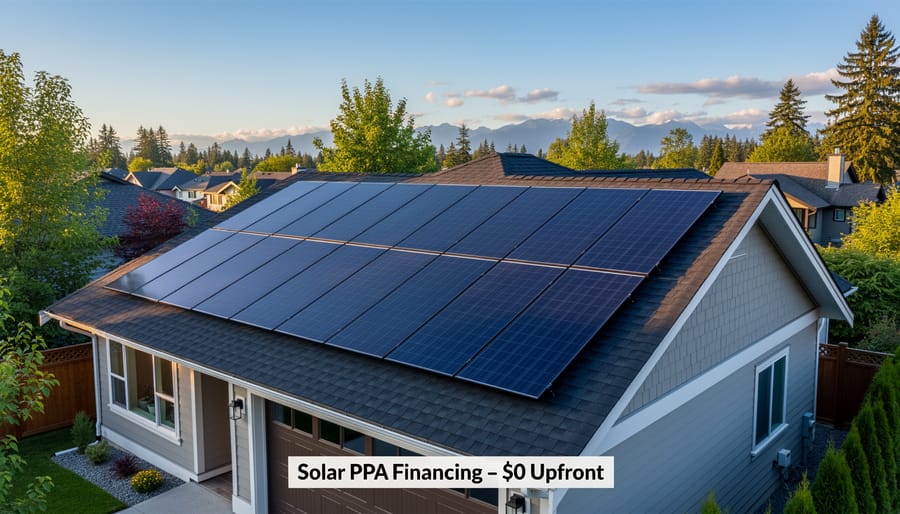
The Simple Mechanics of a PPA
A Power Purchase Agreement follows a straightforward process that removes many traditional barriers to solar adoption. Here’s how it works in practice:
First, a solar company assesses your property’s solar potential at no cost to you. Once approved, they design a system tailored to your energy needs. The third-party owner then covers all upfront costs—purchasing equipment, handling permits, and managing the complete installation. You pay nothing during this phase.
After installation, the solar company maintains ownership of the system on your roof or property. They’re responsible for monitoring performance, maintaining equipment, and handling any repairs throughout the agreement term, typically 20-25 years.
Meanwhile, you start purchasing the electricity generated by those panels at a predetermined rate per kilowatt-hour. This rate is usually lower than BC Hydro’s standard rates and remains fixed or increases at a predictable, modest rate outlined in your contract. You simply pay for the clean energy you consume each month.
Think of it like leasing a vehicle—you enjoy the benefits without the purchase price or maintenance headaches. Your monthly electricity bills from the solar provider replace a portion of your traditional utility costs, often resulting in immediate savings while supporting BC’s clean energy goals.
Who Owns What in a PPA Arrangement
In a PPA arrangement, the solar company retains ownership of the system throughout the contract term, which typically spans 20-25 years. This means you’re essentially hosting their equipment on your property while enjoying the clean energy it produces. The solar provider handles all maintenance, repairs, and monitoring at no additional cost to you, removing the burden of upkeep from your shoulders.
This ownership structure offers distinct advantages for BC property owners who want solar benefits without the upfront investment. Since the provider owns the system, they’re responsible for ensuring it operates efficiently and meets performance guarantees outlined in your agreement. If panels underperform or require repairs, you simply contact the provider rather than arranging fixes yourself.
At the contract’s end, you typically have three options: purchase the system at fair market value, extend the agreement at a reduced rate, or have the provider remove the equipment. Many BC homeowners and businesses choose to buy the system after years of savings, acquiring a mature solar array at a fraction of its original cost. For example, a Vancouver community centre recently purchased their 10-year-old PPA system for just 15% of the initial installation price, securing decades more of affordable clean energy.
Comparing PPA to Other Solar Financing Options
PPA vs. Solar Lease
The key difference between PPAs and solar leases comes down to how you pay. With a PPA, you pay only for the electricity your solar system actually produces, typically at a lower rate than BC Hydro’s prices. Your monthly bill varies based on how much sunshine your panels capture. In contrast, solar leases involve fixed monthly payments regardless of production levels, similar to a car lease.
PPAs offer more flexibility since you’re never paying for electricity that wasn’t generated. For example, a Vancouver homeowner with a PPA pays less during cloudy winter months when production drops. With a lease, payments stay constant year-round. PPAs also typically include free maintenance and monitoring, ensuring your system performs optimally. Both options require no upfront costs and make solar accessible for BC households and businesses. The choice depends on whether you prefer predictable fixed payments or bills that reflect actual solar production and seasonal variations.
PPA vs. Solar Loan
The key difference between a PPA and a solar loan comes down to ownership. With a solar loan, you own the system from day one, which means you can claim federal tax incentives and benefit from increased property value. In BC, you’ll also qualify for provincial rebates when you own your system outright. The long-term savings potential is typically higher with ownership since you pay off the loan and then enjoy free electricity for the remaining 25+ years of your panels’ life.
With a PPA, the solar company owns the equipment and handles maintenance, but you miss out on tax credits and incentives. While your upfront costs are lower or zero, you’re essentially locked into purchasing power from the provider at a predetermined rate. For BC homeowners who qualify for financing and want maximum returns, ownership through a solar loan usually makes more financial sense. However, if you prefer zero maintenance responsibility and predictable monthly payments without ownership obligations, a PPA might suit your situation better.
PPA vs. Cash Purchase
Choosing between a PPA and cash purchase depends on your financial priorities and circumstances. With a cash purchase, you own the system outright and maximize long-term savings—typically saving 20-30% more over the system’s lifetime compared to a PPA. You’ll also benefit immediately from BC’s tax incentives and rebates, plus any increase in property value.
However, cash purchases require significant upfront investment, usually $15,000-$30,000 for residential systems. You’re also responsible for all maintenance and repairs, though modern solar panels need minimal upkeep.
A PPA eliminates these barriers entirely. You pay nothing upfront and start saving on electricity bills immediately, typically reducing costs by 10-15%. The solar provider handles all maintenance, monitoring, and repairs. This makes solar accessible if you can’t afford the initial investment or prefer predictable monthly expenses.
Consider a cash purchase if you have available capital and want maximum returns. Choose a PPA if immediate savings without upfront costs better suits your situation, or if you’re uncertain about long-term property ownership in BC.
The Real Benefits of PPA Solar Financing

Zero Upfront Investment
One of the most attractive features of PPA solar financing is the ability to go solar without any money down. Unlike traditional solar installations that require significant capital investment, a Power Purchase Agreement allows BC homeowners and businesses to start generating clean energy immediately while paying nothing upfront. The solar provider owns, installs, and maintains the entire system at their expense. You simply agree to purchase the electricity generated at a predetermined rate that’s typically lower than what you’re currently paying your utility company. This means savings start from day one, not years down the road after you’ve recouped installation costs. For small businesses operating on tight budgets or homeowners who prefer to preserve their savings, this eliminates the primary barrier to solar adoption. A Vancouver café owner recently shared how their PPA allowed them to redirect capital toward expanding their business rather than tying it up in solar equipment, while still reducing their monthly energy bills by 15 percent from the start.
Maintenance and Performance Guarantees
One of the most attractive features of a PPA is the comprehensive maintenance coverage provided by the solar company. Throughout the agreement term, typically 20-25 years, the PPA provider takes full responsibility for all system upkeep, repairs, and performance monitoring. This means you won’t face unexpected repair bills or need to worry about finding qualified technicians when issues arise.
The provider remotely monitors your system’s performance daily, often catching and resolving potential problems before you even notice them. If your panels underperform due to equipment failure or other technical issues, the company handles repairs at no additional cost to you. They also guarantee a minimum performance level, ensuring you receive the energy production promised in your agreement.
For BC property owners, this hands-off approach is particularly valuable during our wet winter months when panels may need cleaning or when equipment faces weather-related challenges. A local community centre in Victoria reported that their PPA provider responded within 48 hours to address a minor inverter issue, maintaining their energy savings without any service fees. This peace of mind allows you to enjoy clean energy benefits without becoming a solar system expert yourself.
Predictable Energy Costs
One of the most appealing aspects of PPA solar financing is the protection it offers against rising electricity costs. When you sign a PPA, you lock in a fixed rate per kilowatt-hour for the entire contract term, typically 20-25 years. This provides remarkable budget stability compared to purchasing power from BC Hydro, where rates have historically increased over time.
Consider this practical example: A Vancouver manufacturing facility signed a PPA in 2015 at $0.12 per kWh. While BC Hydro rates have increased multiple times since then, their solar energy cost remains unchanged. This predictability has allowed them to forecast operating expenses more accurately and allocate resources more effectively.
The financial benefits compound over time. Even modest annual BC Hydro rate increases of 2-3% can significantly impact your energy expenses over two decades. With a PPA, your rate stays constant, making it easier to plan long-term budgets whether you’re a homeowner or business owner. This stability is particularly valuable for organizations operating on tight margins or families managing household expenses.
Many BC businesses report that predictable energy costs through PPAs have given them a competitive advantage, allowing them to price their products and services more confidently while demonstrating their commitment to sustainability.
What to Watch Out For With Solar PPAs
Long-Term Contract Commitments
Solar PPAs typically involve 20-25 year commitments, which requires careful consideration for BC homeowners and businesses. These extended agreements lock in your electricity rate for the duration, protecting you from utility rate increases while ensuring the solar provider maintains the system throughout this period.
If you decide to sell your property, the PPA transfers to the new owner in most cases. This process is generally straightforward, though potential buyers must qualify with the solar provider and agree to assume the contract terms. Some BC homeowners find this arrangement actually increases property appeal, as buyers inherit a proven energy savings solution without upfront costs. For example, a Vancouver homeowner recently shared that highlighting their PPA’s locked-in rates at 30% below BC Hydro helped close their sale faster.
Before signing, review the agreement’s transfer provisions, early termination clauses, and what happens at contract end. Most providers offer options to renew, purchase the system at fair market value, or arrange removal. Understanding these details ensures the commitment aligns with your long-term property plans.
Missing Out on Incentives
One significant trade-off with PPA solar financing is that you won’t directly benefit from available government incentives. In a PPA arrangement, the solar company owns the system installed on your property, which means they claim the federal tax credits and rebates rather than you as the property owner. These incentives can be substantial and would normally reduce your upfront costs or provide valuable tax benefits if you purchased the system outright or financed it through a loan.
For BC property owners, this is an important consideration when comparing financing options. While the PPA provider passes some savings to you through lower electricity rates, they retain the financial benefit of these government programs. If your household or business has the tax liability to take advantage of these credits, alternative financing methods might deliver greater long-term value. Understanding what you’re giving up helps you make an informed decision about whether a PPA’s convenience outweighs the missed incentive opportunities.
Limited Availability in British Columbia
While PPAs are common in other provinces, British Columbia’s current regulatory framework doesn’t widely support traditional third-party PPA models for residential solar installations. BC Hydro’s net metering program and favourable electricity rates create a different landscape for solar adoption. However, this doesn’t limit your solar options. BC residents can explore direct purchase financing through green loans, home equity lines of credit, or solar-specific financing programs offered by local installers. Some community solar projects are emerging that offer PPA-like benefits, where you subscribe to a share of a larger solar array. Commercial and industrial properties may have more flexibility with PPAs depending on their utility arrangements. The key is working with BC-based solar providers who understand our provincial regulations and can recommend the most practical financing approach for your situation.
Is a PPA Right for Your BC Home or Business?

Best Candidates for Solar PPAs
Solar PPAs work particularly well for BC homeowners with moderate to high electricity usage who want to go solar without upfront costs. If you’re not comfortable with system maintenance or prefer predictable monthly expenses, a PPA offers peace of mind since the provider handles all repairs and monitoring.
Businesses and commercial property owners are ideal candidates, especially those with stable operations and long-term facility plans. Companies looking to meet sustainability goals without capital expenditure find PPAs attractive. For example, a Vancouver-area community centre recently adopted a PPA, immediately reducing their electricity costs while advancing their environmental commitments.
Property owners with good roof conditions and unshaded south-facing exposure maximize PPA benefits. Those planning to stay in their homes or facilities for at least 10-15 years see the greatest advantages, as savings accumulate over time.
However, PPAs may not suit everyone. Homeowners planning to sell soon or those with low electricity consumption might explore other options. If you have available capital and want maximum long-term savings, purchasing a system outright could deliver better financial returns. Consider your unique situation, financial goals, and timeline when deciding if a PPA aligns with your solar journey.
When Other Options Make More Sense
While PPAs work well for many situations, they’re not always the best choice. If you have available capital and qualify for federal and provincial rebates, purchasing your system outright typically delivers the greatest lifetime savings. BC residents can maximize government incentives and own their system from day one, building immediate equity in their home.
Solar loans also deserve consideration if you want ownership benefits without the full upfront cost. Unlike PPAs, loans allow you to claim all available tax credits and rebates while your monthly payments build equity. After the loan term ends, you’ll enjoy free electricity for the remaining system lifespan.
Consider purchasing or financing if you plan to stay in your home long-term, have good credit to secure favorable loan rates, or want maximum control over your system. A Vancouver family who purchased their system in 2020 saved $4,200 more over ten years compared to a PPA option, thanks to immediate rebate access and ownership benefits. Calculate your specific situation using our solar savings calculator to determine which path offers the best value for your circumstances.
Taking Your Next Steps Toward Solar
Ready to explore solar financing options for your BC home or business? Start by connecting with certified local solar installers who understand the unique opportunities and challenges in our province. These professionals can assess your property’s solar potential, explain available financing methods including PPAs, loans, and leases, and help you determine which approach aligns best with your budget and energy goals.
Begin your journey by using online solar calculators designed specifically for BC residents. These interactive tools let you estimate potential energy savings, compare financing options side-by-side, and understand payback periods based on your actual electricity rates and consumption patterns. Input your location, roof characteristics, and current energy bills to receive personalized projections that make decision-making clearer.
Request quotes from at least three certified installers to compare pricing, financing terms, and equipment options. Ask specific questions about maintenance responsibilities, production guarantees, and what happens if you sell your property. Many installers offer free consultations and can walk you through real examples from similar BC properties.
Take advantage of provincial and federal resources that provide unbiased information about solar energy. Local municipalities often host community solar workshops where you can learn from neighbours who have already made the switch and hear about their experiences with different financing arrangements.
Remember, choosing solar financing is a significant decision that deserves careful consideration. Take time to review all options, understand contract terms thoroughly, and select the solution that supports both your financial situation and your commitment to clean energy.