
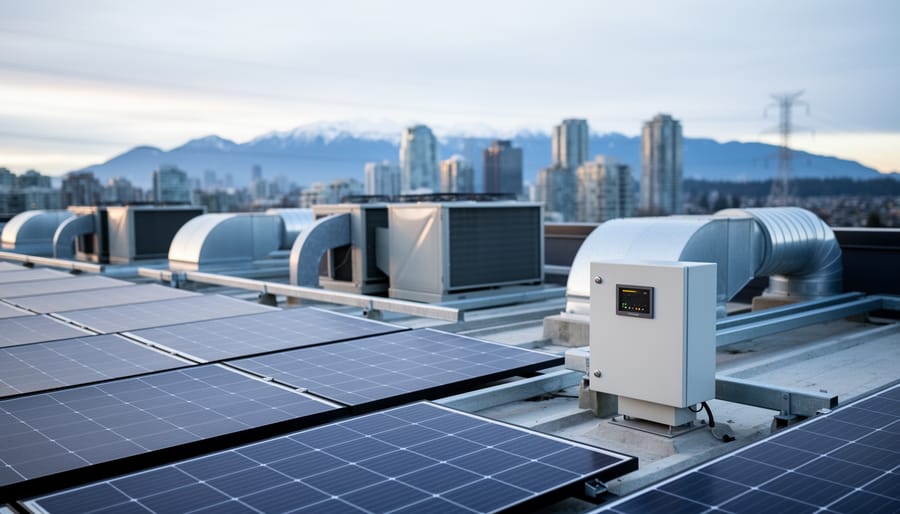
Energy costs hit BC property owners hardest during peak demand hours—typically weekday afternoons and cold winter mornings when electricity prices surge. Automated demand response (ADR) programs solve this problem by automatically reducing your building’s energy consumption during these expensive periods, cutting utility bills by 10-30% while supporting BC’s clean energy grid.
ADR technology works like a smart thermostat for your entire building. When BC Hydro signals high demand periods, the system temporarily adjusts heating, cooling, lighting, and equipment operations—changes so subtle occupants rarely notice. A Vancouver office building using ADR saved $18,000 annually by shifting just 15% of peak-hour consumption, while a Kelowna retail complex reduced demand charges by $2,400 monthly through automated load management.
BC property owners gain three immediate advantages. First, participation in BC Hydro’s demand response programs provides direct financial incentives—often covering installation costs within two years. Second, ADR systems integrate seamlessly with existing building automation and solar installations, maximizing self-consumption of renewable energy when grid prices peak. Third, the technology requires minimal ongoing management once configured, making it practical for properties of any size.
The opportunity grows more compelling as BC moves toward time-of-use electricity rates. Properties with ADR systems already installed will automatically optimize around variable pricing, avoiding rate shock that catches unprepared building owners off-guard. Whether you manage a single commercial property or multiple residential buildings, ADR transforms energy from a fixed expense into a controllable asset, reducing costs while demonstrating environmental leadership to tenants and stakeholders who increasingly value sustainability commitments.
What Are Automated Demand Response Programs?
Automated demand response (ADR) programs are smart energy systems that automatically adjust your building’s electricity use during times when the grid is under stress. Think of it as your building having a conversation with BC’s electrical grid, responding intelligently when power demand peaks across the province.
Here’s how it works in practice: During hot summer afternoons or cold winter evenings when everyone’s cranking their air conditioning or heating, BC’s electrical grid faces its highest demand. Instead of building expensive new power plants to meet these occasional peaks, utilities partner with buildings that can temporarily reduce their energy consumption. ADR technology makes this happen automatically, without you lifting a finger.
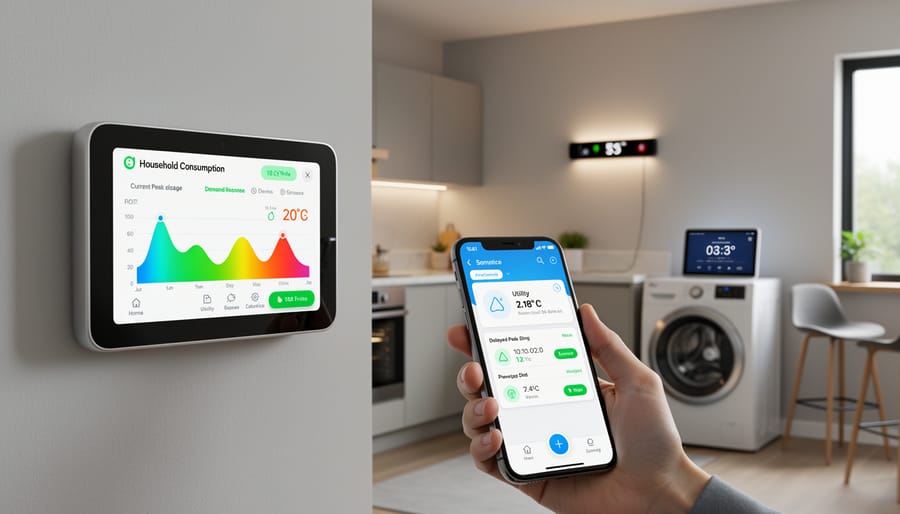
Your building’s energy management system receives signals from BC Hydro indicating when peak demand periods are occurring. The system then makes pre-programmed adjustments, like raising your thermostat by a couple degrees, dimming non-essential lighting, or delaying certain equipment cycles. These changes are typically so subtle that occupants barely notice, yet they collectively make a significant difference to grid stability.
A Vancouver office building using ADR might automatically shift its HVAC system to pre-cool spaces before peak hours, then coast through the expensive period using stored thermal mass. A Kelowna warehouse could delay non-critical refrigeration cycles by 30 minutes during peak times. A Victoria retail store might dim display lighting by 20 percent when demand spikes, a change customers rarely notice.
The beauty of automation is consistency and reliability. Unlike manual demand response programs that require someone to remember to take action, ADR systems respond instantly and perfectly every time. This reliability makes them valuable to utilities, which is why participants receive financial incentives through reduced electricity rates or direct payments.
ADR integrates seamlessly with other smart building technologies. If you’re already using smart EV charging or have solar panels installed, ADR becomes even more powerful, optimizing your entire energy ecosystem.
For BC property owners, ADR represents a practical way to cut costs while supporting our province’s clean energy goals. You’re not just saving money; you’re helping prevent grid overloads and reducing the need for fossil fuel backup generation during peak periods.
The Connection Between Solar Energy and Demand Response
Solar power systems and automated demand response programs work together like partners in a well-choreographed dance, creating powerful opportunities for BC property owners to maximize both savings and sustainability. When you combine these technologies, you’re not just generating clean energy—you’re actively participating in grid optimization while reducing your electricity costs.
Here’s how the partnership works: Your solar panels generate electricity during peak sunlight hours, which often align with periods of high grid demand. Through ADR programs, your smart system can automatically redirect this solar power where it’s most valuable. On hot summer afternoons when air conditioning demand surges across BC, your solar production naturally peaks, allowing you to avoid expensive grid electricity during these critical periods.
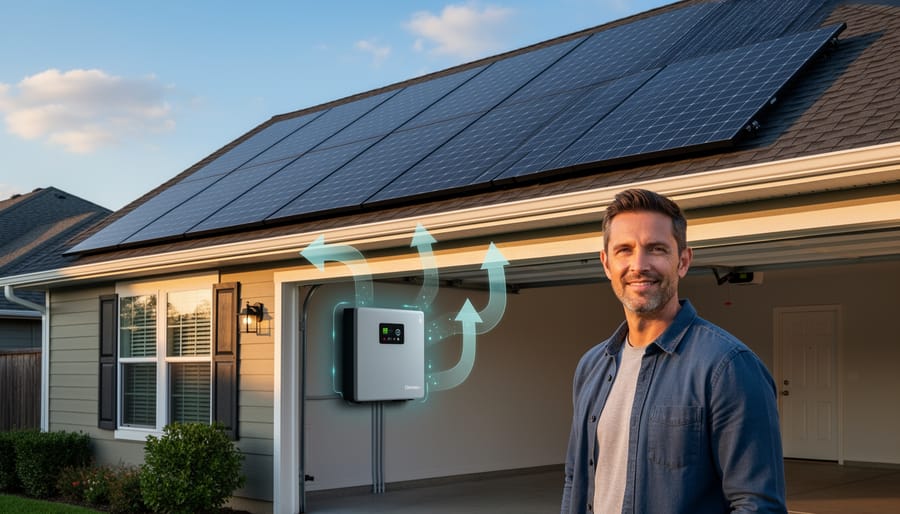
Battery storage takes this synergy to the next level. Without batteries, any excess solar energy you generate flows back to the grid. With storage, you can bank that energy for later use during ADR events. When BC Hydro sends a demand response signal on a winter evening, your battery automatically supplies power to your building, eliminating the need to draw from the grid during expensive peak periods.
Consider a Kelowna winery that installed solar panels with battery storage last year. During summer ADR events, their system automatically shifts to battery power for three to four hours, maintaining full operations while earning incentive payments. They’ve reduced their annual electricity costs by 42% compared to pre-solar levels.
The benefits extend beyond individual savings. When hundreds of BC solar users with batteries participate in ADR programs simultaneously, they collectively reduce strain on the provincial grid during critical periods. This community-wide response helps avoid the need for expensive infrastructure upgrades and supports BC’s clean energy goals.
Integration with thermal storage systems creates even more flexibility, allowing you to pre-heat water or condition spaces using solar energy before ADR events begin.
Building Tariff Optimization: Making Every Kilowatt Count
Understanding BC’s Time-of-Use Rates
BC Hydro currently operates primarily on a tiered pricing model where costs increase as consumption rises, though the utility has explored time-of-use options for specific customer segments. Understanding these rate structures is essential for maximizing savings through demand response strategies.
While residential customers typically face a two-step rate system, commercial and industrial users often have more complex tariffs that include demand charges based on peak consumption periods. These pricing structures create natural opportunities for cost reduction by shifting energy-intensive activities away from expensive peak hours, typically weekday afternoons when both businesses and homes draw heavily on the grid.
Automated demand response programs take advantage of these pricing differences by intelligently managing when your building uses electricity. For example, pre-cooling spaces during cheaper morning hours or scheduling equipment operation during off-peak energy rates can significantly reduce monthly bills without impacting comfort or operations.
BC Hydro’s evolving rate structures increasingly reward flexible consumption patterns, making now an ideal time to explore automated solutions. Property owners who proactively manage their demand position themselves to benefit as time-of-use pricing potentially expands across customer classes.
Smart Systems That Work While You Sleep
Imagine having a tireless energy assistant working around the clock to keep your electricity costs down. That’s exactly what automated demand response (ADR) systems do. These smart systems continuously monitor your building’s energy use and BC Hydro’s electricity pricing signals, making real-time adjustments without requiring any action from you.
At the heart of ADR technology is automated scheduling. The system learns your facility’s energy patterns and automatically shifts heavy power consumption to off-peak hours when electricity rates are lower. For example, your HVAC system might pre-cool your building before peak pricing kicks in, or your water heaters could heat during nighttime hours. This process, called load shifting, moves energy use away from expensive peak periods while maintaining your comfort and operations.
Similar to smart load management for electric vehicles, ADR systems prioritize essential loads and defer non-critical operations. The technology uses algorithms that consider multiple factors: current electricity rates, weather forecasts, your building’s thermal characteristics, and your comfort requirements.
A Richmond commercial property recently installed an ADR system that automatically adjusts lighting, climate control, and equipment based on real-time grid conditions. The result? A 23% reduction in peak demand charges, achieved entirely through automated optimization.
The beauty of these systems lies in their set-it-and-forget-it nature. Once configured to your preferences, they work continuously in the background, identifying savings opportunities you might never notice manually while ensuring your building remains comfortable and functional.
Real Benefits for BC Homes and Businesses
Cost Savings You Can Measure
BC businesses and homeowners participating in automated demand response programs see real financial benefits. A typical commercial building in Metro Vancouver reducing peak demand by 20% during ADR events can save $800-$1,500 monthly on electricity bills, translating to $9,600-$18,000 annually. These savings come from avoiding BC Hydro’s time-of-use rates during peak periods when electricity costs 3-5 times more than off-peak rates.
For residential properties, the numbers are equally encouraging. A Vancouver household enrolled in an ADR program might save $30-$60 monthly by automatically shifting air conditioning, water heating, and EV charging to off-peak hours. Over a year, that’s $360-$720 back in your pocket while supporting grid stability.
The savings multiply when combining ADR with solar power systems. By automatically using stored solar energy during peak periods instead of grid electricity, participants maximize their solar investment returns. One Richmond retail store reported 35% reduction in annual energy costs after implementing both solar panels and automated demand response technology.
These measurable savings make ADR programs an accessible entry point for BC residents committed to both environmental stewardship and financial responsibility.
Supporting BC’s Clean Energy Goals
Automated demand response programs play a vital role in supporting British Columbia’s ambitious clean energy objectives. By intelligently managing when and how buildings consume electricity, these systems significantly reduce strain on the provincial grid during peak demand periods. This means fewer fossil fuel peaker plants need to fire up during high-usage times, directly lowering carbon emissions across the province.
BC’s CleanBC Roadmap aims to reduce emissions by 40% by 2030, and ADR programs help achieve this target by optimizing energy consumption patterns. When your building automatically shifts non-essential loads to off-peak hours, you’re contributing to a more stable, efficient grid that relies more heavily on renewable hydroelectric power.
The environmental benefits extend beyond emissions reduction. ADR systems work seamlessly with energy storage technologies and solar installations, creating a comprehensive approach to sustainable energy management. For example, a commercial building in Vancouver reduced its carbon footprint by 25% within the first year of implementing ADR alongside existing solar panels.
These collective actions by BC businesses and homeowners create measurable impact. Every kilowatt-hour shifted away from peak times supports provincial sustainability goals while demonstrating that economic benefits and environmental responsibility can work hand in hand.
Local Success Story: A Vancouver Business Cuts Costs by 30%
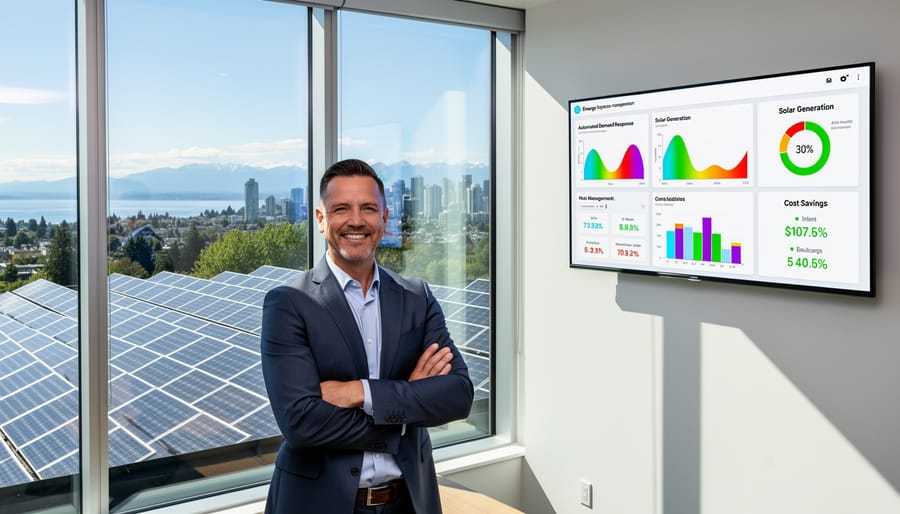
Vancouver-based Pacific Manufacturing enrolled in BC Hydro’s automated demand response program in 2022, combining it with a newly installed 85kW rooftop solar system. Within the first year, the company reduced energy costs by 30% while maintaining full production capacity.
The key to their success? Strategic timing. The ADR system automatically shifts energy-intensive operations like metal finishing to off-peak hours when rates are lower. When grid demand spikes, their solar panels handle daytime lighting and climate control, while non-essential equipment powers down temporarily.
“We were initially concerned about production disruptions,” explains operations manager Jennifer Chen, “but the system is intelligent. It never compromises our core processes, and we’ve actually improved efficiency by being more intentional about energy use.”
Their biggest lesson? Start simple. Pacific Manufacturing began with just three non-critical systems in the ADR program, then gradually expanded once staff became comfortable with the technology. They also recommend working closely with your solar installer to ensure seamless integration between renewable generation and demand response capabilities.
Getting Started with Automated Demand Response in BC
Ready to take advantage of automated demand response in your BC home or business? Here’s how to get started on your journey toward smarter energy management and cost savings.
First, determine your eligibility. BC Hydro’s ADR programs are available to commercial, industrial, and institutional customers with peak demand typically exceeding 35 kW. Residential customers with significant electric heating or cooling systems may also qualify, especially when paired with battery storage or solar installations. Contact BC Hydro directly or check with your local utility provider to confirm your property’s eligibility and understand available incentive programs.
Next, assess your technology needs. Most ADR programs require smart thermostats, building automation systems, or energy management software that can communicate with utility signals. If you already have solar panels or battery storage, many modern inverters come ADR-ready or can be upgraded. The good news is that BC Hydro often provides incentives covering a portion of equipment costs, making the initial investment more accessible.
Working with certified installers is essential for successful implementation. Look for Clean Energy BC members or BC Hydro’s list of approved contractors who understand both the technical requirements and local utility protocols. A qualified installer will conduct an energy audit, recommend appropriate equipment, handle the enrollment process, and ensure your system integrates seamlessly with existing infrastructure like solar panels or HVAC systems.
Before signing any contracts, request a customized analysis showing projected savings based on your actual energy usage patterns. Many installers offer this assessment at no cost. Ask about monitoring capabilities too – you’ll want real-time visibility into your energy consumption and DR event participation.
Finally, start small if you’re uncertain. Many BC businesses begin with a pilot program in one building or department, then expand once they see results. This approach builds confidence and allows you to refine your strategy before full implementation.
Taking these practical steps today positions your property for immediate savings while supporting BC’s clean energy future.
Automated demand response programs represent a powerful opportunity for BC property owners to take control of their energy costs while contributing to a cleaner grid. By automatically adjusting energy consumption during peak demand periods, ADR systems can reduce your electricity bills by 10-30% annually while supporting provincial sustainability targets. When combined with solar installations, the benefits multiply, creating a resilient energy ecosystem that works for your budget and the environment.
The technology is more accessible than ever, with BC Hydro and local utilities offering incentives that significantly offset implementation costs. Real examples from Metro Vancouver businesses and Okanagan residential properties demonstrate that these aren’t just theoretical savings—they’re happening right now in communities across the province.
Ready to discover what ADR could mean for your property? Start by calculating your potential savings using available online tools, then connect with certified BC solar installers who can assess your building’s unique needs. Together, we can build a more sustainable energy future—one smart building at a time. Your journey toward lower costs and reduced environmental impact begins with a simple conversation about the possibilities waiting in your own community.