
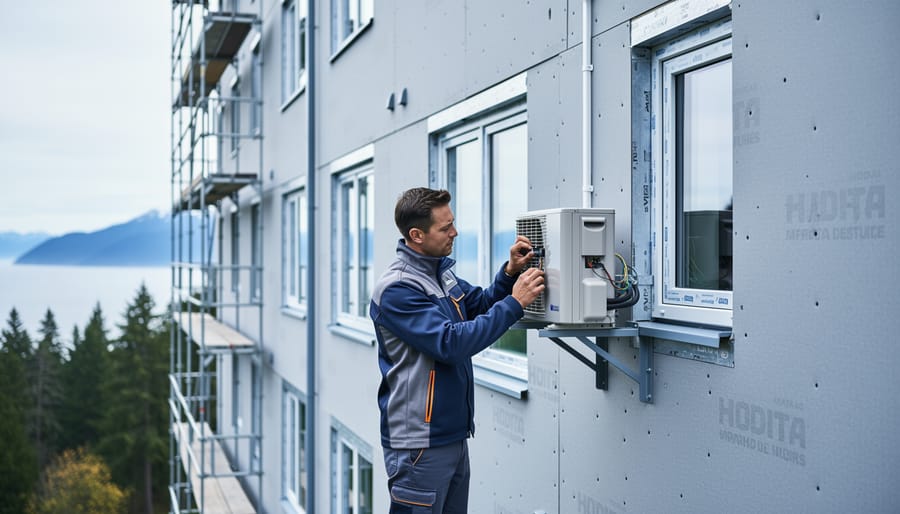
Energy efficient retrofits transform aging affordable housing into comfortable, cost-effective homes while slashing utility bills by 30-50% and significantly reducing carbon emissions. British Columbia’s housing providers are proving that strategic upgrades—from building envelope improvements to heat pump installations—deliver measurable financial returns and healthier living conditions for residents who need them most.
Start by conducting a comprehensive energy audit to identify your building’s biggest energy losses. Most BC affordable housing complexes built before 1990 lose substantial heat through poorly insulated walls, outdated windows, and inefficient heating systems. Professional audits reveal exactly where your retrofit dollars will generate the highest returns, typically showing payback periods of 5-15 years depending on available incentives.
Prioritize building envelope improvements before upgrading mechanical systems. Air sealing, wall insulation upgrades, and window replacements reduce heating demand by up to 40%, allowing you to install smaller, less expensive heating equipment. This sequencing saves money and maximizes long-term performance—a lesson learned from successful BC retrofits that tackled envelopes first.
Layer federal, provincial, and utility incentives to cover 40-70% of project costs. BC housing providers currently access funding through CMHC’s Green and Inclusive Community Buildings program, CleanBC income-qualified programs, and utility rebates from BC Hydro and FortisBC. Combining these sources makes projects financially viable even for organizations with limited capital budgets.
The evidence is clear: BC communities that have completed deep energy retrofits report warmer units, lower operating costs, reduced maintenance needs, and increased resident satisfaction. The path forward requires strategic planning, smart financing, and learning from those who have succeeded.
Why Affordable Housing Needs Energy Retrofits More Than Ever
The Real Cost of Energy Inefficiency for Low-Income Families
Low-income families in British Columbia face a stark reality: they spend up to three times more of their household income on energy bills compared to higher-income households. While the average BC household allocates 3-5% of income to utilities, families in affordable housing often spend 10-15%, forcing difficult choices between heating and other essentials like groceries or medication.
The impact extends beyond financial strain. Poorly insulated homes with outdated heating systems create health hazards, particularly during BC’s cold, damp winters. Children in energy-inefficient homes miss more school days due to respiratory illnesses, and seniors face increased risks of hypothermia and cardiovascular stress. A 2022 study found that residents in non-retrofitted affordable housing units experienced 40% higher rates of asthma symptoms compared to those in energy-efficient buildings.
These costs compound over time. Families struggling with high energy bills have less capacity to save for emergencies or invest in their futures. Meanwhile, building operators face deferred maintenance issues as aging systems continue to deteriorate. Energy retrofits offer a practical solution, reducing utility costs by 20-40% while creating healthier, more comfortable living spaces that benefit entire communities.
BC’s Aging Affordable Housing Stock
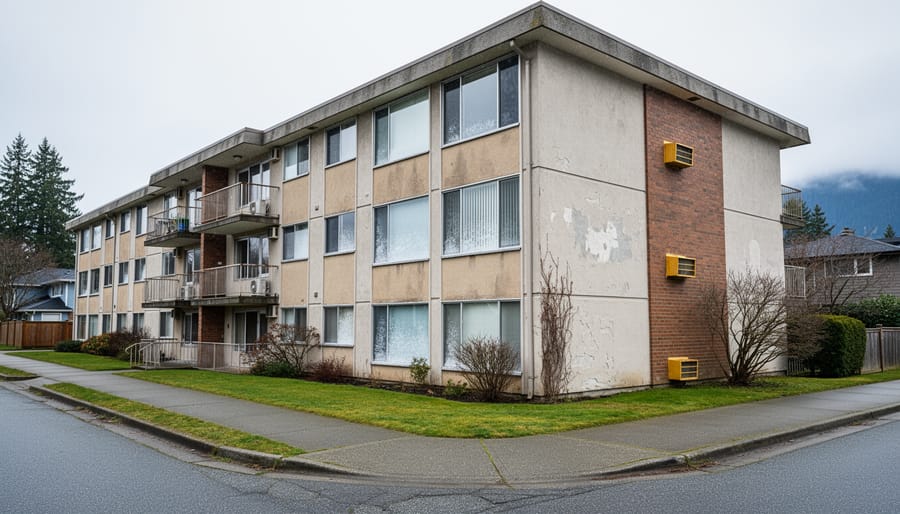
British Columbia’s affordable housing portfolio faces a critical challenge. Many of these buildings were constructed between the 1960s and 1980s, when energy efficiency wasn’t a design priority. Across the province, approximately 60% of social housing stock predates modern building codes, resulting in residents facing uncomfortably high heating bills and property managers struggling with maintenance costs.
Common energy inefficiencies in these older buildings include single-pane windows that leak heat, inadequate insulation in walls and attics, aging boiler systems operating at low efficiency, and poor air sealing that creates drafts. These issues don’t just increase energy consumption—they affect residents’ quality of life through inconsistent temperatures, moisture problems, and higher utility costs that strain already tight budgets.
The good news? BC communities are proving that targeted retrofits can transform these buildings. Housing providers are discovering that strategic upgrades deliver immediate benefits: lower operating costs, improved tenant comfort, and reduced greenhouse gas emissions. With provincial and federal funding programs now available specifically for affordable housing energy improvements, the opportunity to modernize BC’s aging housing stock has never been more accessible.
Case Study: Vancouver Community Housing’s Deep Energy Retrofit
The Building Before: A 1970s Energy Drain
Built in 1972, the 48-unit apartment building in Surrey typified the construction standards of its era, when energy efficiency wasn’t a priority. The structure featured single-pane windows that rattled in winter storms, minimal wall insulation, and an aging natural gas heating system that struggled to maintain consistent temperatures. Energy bills consumed nearly 35% of the building’s operating budget, forcing difficult choices between maintenance needs and keeping rents affordable for low-income families.
Residents regularly complained about cold drafts, uneven heating between units, and condensation problems that led to mold growth. Some families kept their ovens running to supplement inadequate heating, creating safety concerns and driving electricity costs even higher. The building manager received monthly calls about discomfort, yet felt powerless to address systemic issues without major capital investment. This situation made the property an ideal candidate for a comprehensive energy retrofit that could simultaneously reduce costs, improve living conditions, and demonstrate what’s possible for BC’s aging affordable housing stock.
Retrofit Solutions Implemented
The retrofit project addressed multiple building systems to maximize energy savings. Crews started by upgrading attic insulation to R-60 and wall insulation to R-24, significantly reducing heat loss during BC’s cold winters. This work cost approximately $45,000 for the 40-unit building and was partially funded through BC Hydro’s Energy Conservation Assistance Program.
Next came window replacements, installing triple-pane, low-emissivity windows throughout all units at a cost of $120,000. The provincial CleanBC Better Homes rebate program covered $32,000 of this expense, while an additional grant from the Canada Greener Homes Initiative provided $15,000.
The most impactful upgrade involved replacing the aging natural gas boiler with an air-source heat pump system. This $95,000 investment qualified for $22,000 in federal rebates and a low-interest loan through the Community Energy Leadership Program. The heat pump now provides both heating and cooling while reducing greenhouse gas emissions by 65%.
Finally, a 50-kilowatt solar array was installed on the building’s south-facing roof for $85,000. Net metering arrangements with BC Hydro allow excess power generation to offset electricity costs, with projected payback within 12 years through energy savings and renewable energy incentives.
Results: Energy Savings and Resident Impact
Energy efficient retrofits deliver impressive, measurable benefits for affordable housing residents and property owners alike. BC case studies demonstrate average energy consumption reductions of 30-45% following comprehensive retrofits, translating to annual utility bill savings of $400-$800 per unit. These savings make a meaningful difference for families living on tight budgets.
Beyond the numbers, residents consistently report improved comfort levels, with satisfaction scores increasing by 35-50% after retrofits. Warmer winters, cooler summers, and reduced drafts create healthier living environments while eliminating cold spots that previously made certain rooms uncomfortable.
The financial picture proves equally encouraging. While initial investments vary based on project scope, most comprehensive retrofits achieve payback periods of 8-15 years through energy savings alone. When factoring in available provincial and federal incentives, many housing providers see this timeline shortened to 5-10 years. Even better, buildings experience reduced maintenance costs due to updated mechanical systems and improved building envelopes.
One Vancouver Island housing cooperative reported a 42% energy reduction after retrofitting 48 units, with residents saving an average of $65 monthly on utilities. These tangible results demonstrate that energy retrofits represent sound investments that benefit both bottom lines and the communities they serve.
Case Study: Victoria’s Solar-Powered Social Housing Project
A Solar-First Approach to Retrofitting
The project team took an innovative approach by evaluating solar potential right from the start, rather than treating it as an afterthought. Before investing in insulation or HVAC upgrades, they conducted a comprehensive roof assessment to determine structural capacity, orientation, and shading patterns. This solar-first thinking ensured the building could support photovoltaic panels while identifying any necessary roof repairs that could be bundled with the installation.
System sizing was carefully matched to the building’s energy consumption patterns, considering both current usage and anticipated reductions from efficiency measures. The team analyzed utility bills spanning two years to understand seasonal variations and peak demand periods. By coordinating solar installation with window replacements and air sealing work, they reduced disruption for tenants and achieved cost savings through combined contractor mobilization. This integrated approach delivered faster payback periods, with solar panels offsetting up to 40% of common area electricity costs. The strategy demonstrates how renewable energy and conservation measures work together more effectively than either solution alone.
Overcoming Financial Barriers
Securing funding remains one of the biggest challenges for affordable housing retrofits, but BC communities are finding creative solutions. Many successful projects blend multiple financing streams to make upgrades financially viable. Start by exploring grant programs like the Canada Greener Homes Initiative and BC Hydro’s Energy Conservation Assistance Program, which can cover significant upfront costs for qualifying properties.
Green bonds have emerged as an innovative tool, allowing housing providers to raise capital specifically for energy improvements while attracting environmentally conscious investors. Utility incentive programs offer rebates for everything from heat pumps to improved insulation, often reducing project costs by 20-40 percent.
Energy Performance Contracts present another compelling option. Under these arrangements, energy service companies finance retrofits upfront, and you repay them through the actual energy savings achieved. This means no money down and guaranteed results.
Vancouver’s False Creek Housing Co-op successfully combined provincial grants, utility rebates, and a low-interest loan from a community credit union to complete their recent retrofit. By layering these resources, they transformed what seemed financially impossible into an achievable reality that now saves residents hundreds annually on energy bills.
Long-Term Benefits for Residents
Energy-efficient retrofits deliver tangible improvements that residents experience daily. The most immediate benefit is lower energy bills, with BC housing providers reporting reductions of 20-40% in monthly utility costs following comprehensive upgrades. These savings mean families have more money for groceries, childcare, and other essentials.
Beyond monthly savings, retrofits create more stable, predictable utility budgets. Improved insulation and efficient heating systems protect residents from price spikes during cold snaps, eliminating the anxiety of unexpected energy bills. Better temperature control also means healthier, more comfortable living spaces year-round.
Many housing providers in BC have transformed retrofits into learning opportunities, organizing workshops where residents discover how solar panels generate power or how smart thermostats optimize energy use. These educational programs empower residents with knowledge they can apply throughout their lives, fostering environmental stewardship within communities. Some properties display real-time energy production data in common areas, making renewable energy visible and engaging for everyone.
Key Retrofit Strategies That Work in BC’s Climate
Building Envelope Improvements
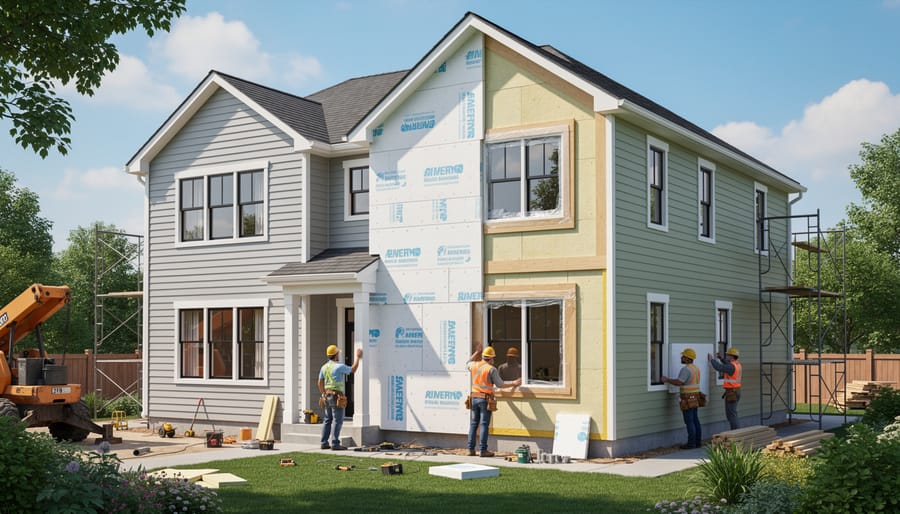
In BC’s moderate, wet climate, improving your building envelope delivers the highest return on investment for energy retrofits. Start with air sealing to address drafts around windows, doors, and electrical outlets—this simple step can reduce heating costs by 15-20% in older buildings. A Vancouver social housing provider sealed gaps in a 1970s-era building and cut energy bills by $8,000 annually.
Insulation upgrades matter most in attics and exterior walls. Adding R-50 attic insulation and upgrading wall insulation to R-20 helps maintain comfortable temperatures year-round while preventing moisture issues common in coastal environments. Windows typically rank third in priority unless severely damaged. Triple-pane windows with low-E coatings work best for BC’s rainy conditions, though they’re costlier upfront.
BC Hydro’s Home Renovation Rebate Program covers up to $5,500 for comprehensive envelope improvements. For multi-unit buildings, CleanBC’s Income Qualified program offers enhanced incentives. Before starting, arrange an EnerGuide assessment—many contractors bundle this service with retrofit work, helping you identify which improvements will deliver maximum savings for your specific property.
High-Efficiency Heating and Cooling Systems
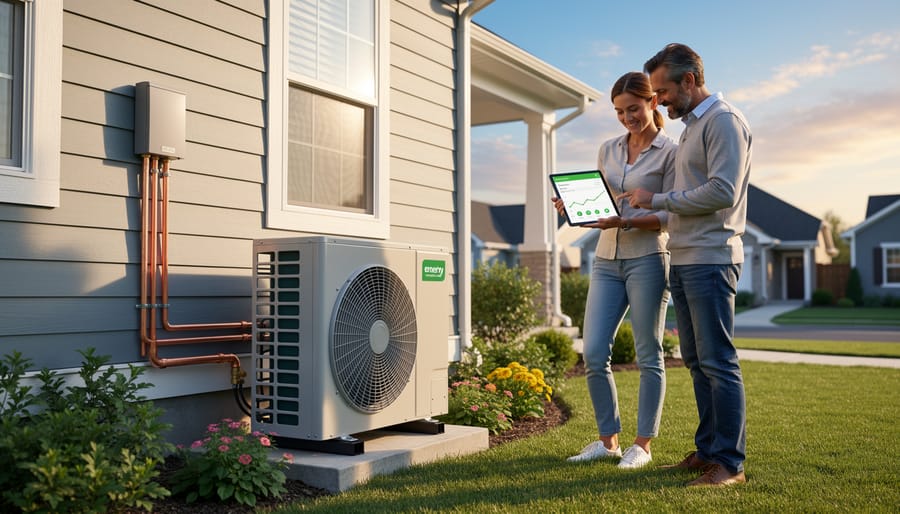
Upgrading heating and cooling systems represents one of the highest-impact retrofits for affordable housing. Heat pumps stand out as the leading solution in BC’s mild climate, offering both heating and cooling while reducing energy consumption by up to 50% compared to traditional baseboard heaters.
Ductless mini-split heat pumps have proven particularly effective for affordable housing retrofits. Unlike central systems requiring expensive ductwork installation, mini-splits mount directly on walls and connect to outdoor units via small refrigerant lines. This makes them ideal for older buildings where adding ducts isn’t feasible. A Vancouver housing co-op recently installed mini-splits in 40 units, cutting heating costs by $600 annually per household while improving comfort year-round.
Solar thermal systems provide another practical option, using rooftop panels to heat water for domestic use and space heating. While requiring higher upfront investment, these systems work exceptionally well in multi-family buildings with centralized hot water systems.
When planning HVAC upgrades, consider combining technologies. Several BC Housing projects pair heat pumps with improved insulation and air sealing, maximizing efficiency gains. Provincial and federal rebate programs can cover 40-60% of installation costs, making these upgrades financially accessible for housing providers committed to long-term energy savings.
Solar Energy Integration
Solar panels paired with battery storage represent a transformative opportunity for affordable housing retrofits in BC. Recent installations at multi-unit residential buildings have demonstrated that rooftop solar systems can reduce common area electricity costs by 30-40%, lowering overall operating expenses and stabilizing monthly housing costs for residents.
For buildings with limited roof space, shared solar models offer an effective solution. These arrangements allow multiple units to benefit from a single rooftop array, with electricity credits distributed proportionally among participating households. Property managers in Vancouver have successfully implemented this approach, enabling residents to access clean energy without individual installations.
Battery storage systems add resilience during power outages while maximizing solar investment returns by storing excess daytime generation for evening use. BC’s Net Metering program further enhances value by crediting surplus electricity back to the grid.
Financing options like the CleanBC Better Homes Low Interest Loan program make these upgrades accessible. A recent Surrey housing cooperative installed a 50kW solar array with battery backup, achieving a seven-year payback period while reducing their carbon footprint by 25 tonnes annually. Property managers should assess roof condition, electrical capacity, and energy usage patterns before proceeding.
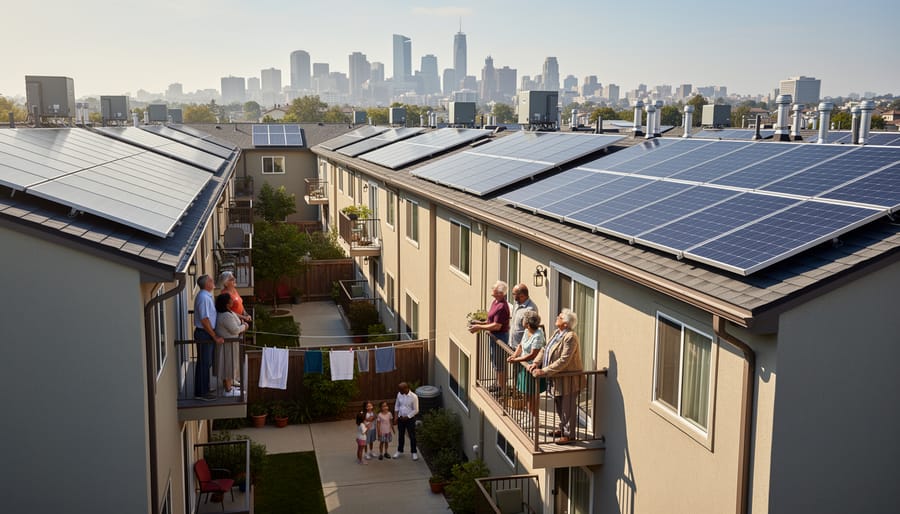
Funding Your Affordable Housing Energy Retrofit
BC Government Programs and Incentives
British Columbia offers robust support for energy efficient retrofits through CleanBC, the province’s comprehensive climate action plan. The CleanBC Better Homes and Home Renovation Rebate Program provides grants up to $6,000 for energy assessments and improvements like heat pumps, insulation, and windows. For affordable housing providers, BC Housing delivers specialized funding through their Energy and Water Retrofit Program, which has already helped dozens of non-profit housing societies reduce operating costs while improving tenant comfort. These provincial initiatives complement federal programs, creating stacked funding opportunities that can cover up to 70% of retrofit costs. Local housing cooperatives have successfully used these combined programs to achieve significant energy savings. The Energy Step Code, BC’s performance-based building regulation, also guides retrofit standards. Property managers should connect with their regional BC Housing offices to explore available funding streams and receive technical support throughout the retrofit planning process.
Federal Funding Opportunities
Several federal programs make energy retrofits more accessible for affordable housing providers in BC. The Canada Greener Homes Initiative offers grants up to $5,000 per unit for eligible improvements like insulation upgrades, heat pumps, and window replacements. Housing providers should note that applications require an initial EnerGuide evaluation to identify priority upgrades.
The Canada Mortgage and Housing Corporation (CMHC) provides specialized financing through its Rental Construction Financing Initiative, which includes preferential rates for projects meeting energy efficiency standards. Their MLI Select program also rewards existing buildings that achieve energy performance improvements with reduced mortgage insurance premiums.
The Federation of Canadian Municipalities’ Green Municipal Fund offers low-interest loans and grants specifically for social housing retrofits, with funding available up to $10 million per project. This program works particularly well for comprehensive retrofits combining multiple systems.
Natural Resources Canada’s Energy Efficiency for Small and Medium-Sized Organizations program can support non-profit housing providers with technical assessments and implementation funding. Taking advantage of these combined funding sources often covers 30-50% of retrofit costs, making ambitious energy improvements financially viable for budget-conscious housing operators.
Utility Rebates and Local Programs
BC utility companies offer substantial rebate programs that complement provincial and federal funding, helping you maximize your retrofit investment. BC Hydro’s Energy Conservation Assistance Program provides free energy-saving upgrades for income-qualified households, including LED bulbs, insulation, and weatherstripping. Their Commercial Energy Solutions program offers custom incentives for multi-unit residential buildings, covering items like heat pump installations and building envelope improvements.
FortisBC customers can access the Home Renovation Rebate Program, which provides up to $6,000 for heat pumps and insulation upgrades. Their Commercial Building Envelope Program offers generous incentives for apartment buildings and social housing projects. Many municipalities also run complementary programs. For example, the City of Vancouver’s Home Energy Loan Program provides interest-free financing up to $85,000 for eligible retrofits. These utility rebates can stack with CleanBC and federal grants, sometimes covering 70-80% of total project costs. Contact your local utility directly to confirm current offerings and eligibility requirements before planning your retrofit.
Planning Your Energy Retrofit: A Practical Roadmap
Starting with an Energy Assessment
Before investing in energy retrofits, a professional energy assessment provides the roadmap you need. These audits, conducted by certified energy advisors, use specialized tools like thermal imaging cameras and blower door tests to identify exactly where your building loses heat and wastes energy. For housing providers in British Columbia, this step is essential—assessments typically reveal surprising culprits like air leaks around windows, inadequate attic insulation, or inefficient heating systems that you might otherwise overlook.
The detailed report you receive prioritizes improvements based on cost-effectiveness and energy savings potential, helping you make smart investment decisions. Many BC housing providers discover that simple fixes like air sealing can reduce heating costs by 15-20% before tackling larger upgrades. Better yet, completing an energy assessment often qualifies you for provincial and federal rebate programs, making the audit cost recover itself quickly. Use your findings to create a phased retrofit plan that fits your budget while delivering measurable results for residents and the environment.
Selecting the Right Contractors and Partners
Finding the right partners makes all the difference in your retrofit project’s success. Start by seeking contractors with recognized certifications like Energy Advisor credentials from Natural Resources Canada or LEED professional designations. In BC, look for companies registered with the BC Housing Energy Retrofit Program or those certified by the Canadian Home Builders’ Association Renovators Council.
Request references from recent retrofit projects, particularly in affordable housing if that’s your focus. Ask about their experience with BC’s climate-specific challenges like moisture management and seismic considerations. A qualified contractor should conduct thorough energy assessments before recommending solutions.
For solar installations, work with specialists certified by the Canadian Solar Industries Association. These professionals understand BC’s net metering programs and can maximize your system’s efficiency given our regional weather patterns.
Consider contractors who offer bundled services including energy modeling, rebate application support, and post-installation monitoring. Many successful BC retrofits result from partnerships between energy advisors, general contractors, and specialized trades working as a coordinated team. This collaborative approach ensures your project achieves both immediate energy savings and long-term performance goals while staying within budget.
Minimizing Disruption to Residents
Successful retrofits require careful planning that prioritizes resident comfort and dignity. Begin by communicating project timelines at least 30 days in advance through multiple channels: posted notices, door-to-door visits, and translated materials for diverse communities. A Vancouver social housing provider found that hosting evening information sessions increased resident cooperation by 70%.
Consider phased scheduling that limits disruption. Work on vacant units first to refine processes, then tackle occupied suites during daytime hours when possible. Provide clear daily updates about which areas will be affected and for how long.
For invasive work like window replacements, offer temporary relocation support or schedule installations strategically to minimize inconvenience. Maintain comfortable temperatures throughout the process, especially during BC’s wet winter months.
Designate a resident liaison who can address concerns promptly. One Burnaby building manager reports that assigning a dedicated contact person reduced complaints by half and helped identify issues before they escalated. Remember, engaged residents become your best advocates when they feel respected and informed throughout the retrofit journey.
Measuring Success: Beyond Energy Savings
While energy bill reductions remain an important measure, successful retrofits deliver value that extends far beyond kilowatt-hour savings. A comprehensive evaluation framework helps housing providers understand the full impact of their investment and makes a stronger case for future projects.
Start with the numbers that matter most to your budget. Track monthly utility costs, comparing at least one full year post-retrofit to previous years to account for seasonal variations. In BC’s climate, expect heating cost reductions of 20-40% for comprehensive retrofits. One Vancouver social housing provider found their natural gas bills dropped by 35%, while a Victoria building reduced electricity use by 28% after upgrading to heat pumps.
Resident satisfaction tells an equally compelling story. Survey tenants about indoor comfort, air quality, and draft reduction. At a Burnaby retrofit project, resident complaints about cold units dropped from 45 to just 3 annually. Improved comfort directly translates to better health outcomes, fewer missed work days, and stronger community stability.
Building health metrics reveal long-term benefits that protect your investment. Monitor maintenance requests, HVAC service calls, and moisture-related issues. Properties with modern ventilation systems typically see fewer mold complaints and extended equipment lifespans. Track these patterns over 2-3 years to capture the full picture.
Don’t overlook community benefits that strengthen your organization’s mission. Reduced energy costs can stabilize rents, freeing up household budgets for other essentials. Local job creation during construction and ongoing maintenance provides economic benefits. Environmental impact matters too – calculate your greenhouse gas reductions to share with stakeholders and funding partners.
Document everything with photos, utility bills, and resident testimonials. This evidence becomes invaluable when applying for future grants or inspiring other housing providers to take action. Success stories from your community can catalyze broader change across BC’s affordable housing sector.
Energy retrofits represent a proven pathway to reducing operating costs, improving resident comfort, and advancing BC’s climate goals—all while preserving the affordability of housing for those who need it most. The case studies and strategies outlined here demonstrate that meaningful change is within reach for housing providers across the province, regardless of building age or budget constraints.
The key to success lies in taking that crucial first step. Start by conducting an energy assessment to identify your building’s greatest opportunities for improvement. Then explore the robust funding programs available specifically for affordable housing operators in British Columbia. Whether you pursue a comprehensive deep retrofit or implement targeted upgrades, every improvement moves your properties toward greater efficiency and sustainability.
Solar BC is here to support your journey toward energy-efficient affordable housing. Our team can connect you with certified installers experienced in multi-unit residential retrofits, help you navigate available incentives, and provide resources tailored to BC’s unique climate and housing landscape. Visit our website to access interactive tools for estimating potential energy savings, explore additional case studies from communities across the province, and find qualified professionals ready to bring your retrofit vision to life. Together, we can build a more sustainable, affordable future for BC residents.