
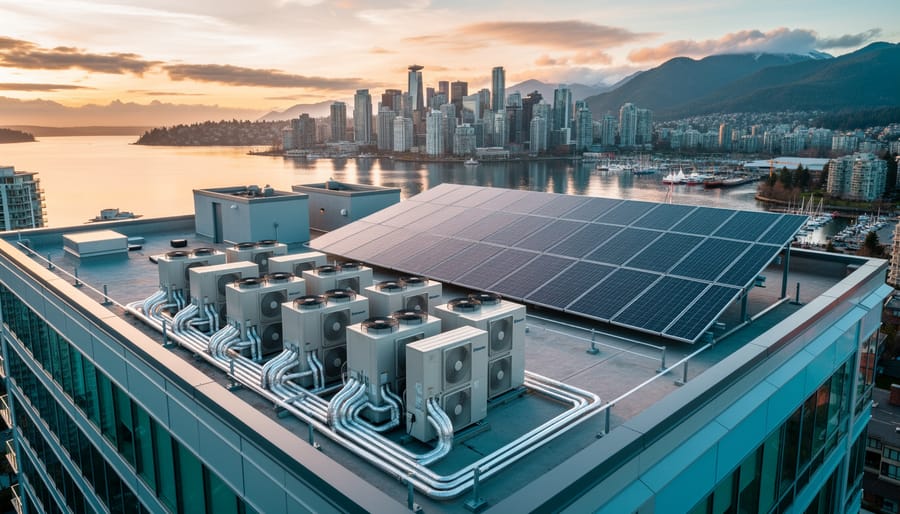
Examine your current heating, cooling, and hot water systems to identify fossil fuel dependencies—these represent your biggest opportunities for electrification savings. British Columbia businesses switching from gas furnaces to heat pumps typically see 30-50% reductions in energy costs while eliminating emissions, making this the fastest payback investment in the clean energy transition.
Prioritize heat pump installations first, as they deliver both heating and cooling while using 75% less energy than traditional systems. A Vancouver office building reduced annual energy expenses by $18,000 after replacing gas boilers with cold-climate heat pumps, achieving full payback in just four years through BC Hydro rebates and lower operating costs.
Replace gas cooking equipment with induction systems that heat faster, improve indoor air quality, and reduce kitchen cooling loads by up to 40%. A Victoria restaurant eliminated $950 in monthly gas bills while cutting kitchen temperatures by 8 degrees, directly improving staff comfort and reducing HVAC demands.
Conduct energy audits before major retrofits to sequence upgrades strategically. Buildings that improved insulation before electrifying equipment needed 20-30% smaller heat pumps, cutting upfront costs significantly. Commercial programs through BC Hydro and CleanBC cover up to 50% of assessment costs, making professional evaluation accessible for businesses of all sizes.
Time electrification projects alongside equipment replacement cycles to maximize financial returns rather than retiring functional systems early. This practical approach lets you transition systematically while capturing available incentives and avoiding unnecessary capital expenditures.
Why Commercial Buildings Are Making the Switch to Electric
BC’s Clean Energy Advantage
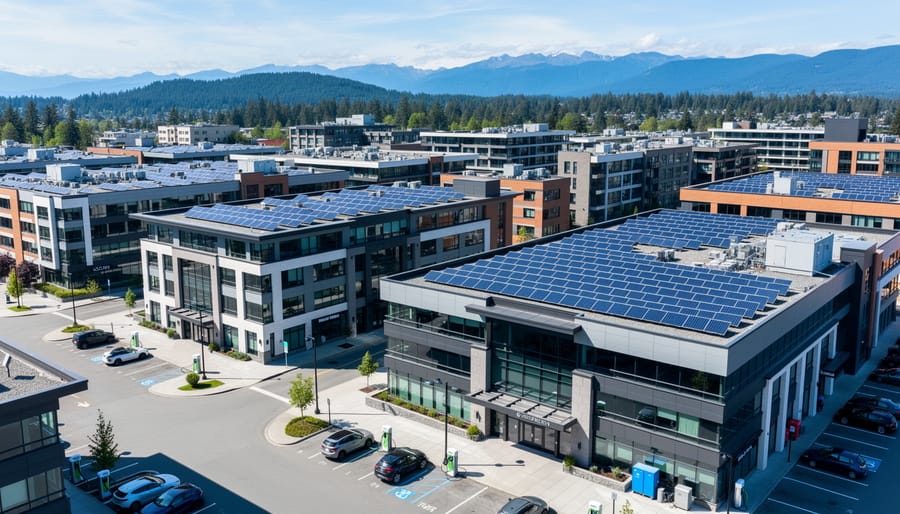
British Columbia holds a unique advantage when it comes to building electrification, thanks to our province’s predominantly hydroelectric power grid. With over 90% of our electricity coming from clean, renewable sources, switching from natural gas to electric heating and cooling systems dramatically reduces your carbon footprint. This clean energy infrastructure, part of BC’s clean energy leadership, means businesses can electrify their buildings with confidence, knowing they’re truly eliminating emissions rather than simply shifting them elsewhere.
The cost benefits are equally compelling. BC Hydro’s electricity rates remain among the most affordable in North America, making the operational costs of heat pumps and electric systems highly competitive with fossil fuel alternatives. When you factor in provincial and federal incentives for electrification projects, the payback periods become even more attractive. For commercial building owners, this combination of clean power and stable, predictable energy costs creates a solid business case for electrification. Plus, as carbon pricing continues to increase the cost of natural gas, the economic advantage of electric systems will only grow stronger in the years ahead.
The Real Cost of Staying with Gas
While gas heating may seem affordable today, BC property owners are seeing costs shift dramatically. Natural gas prices have increased by over 40% in the past three years, and the federal carbon tax continues rising—reaching $170 per tonne by 2030. For a typical commercial building, that translates to thousands of dollars in additional annual expenses.
Beyond fuel costs, gas systems require regular maintenance. Boilers need annual servicing, gas lines require inspection, and aging equipment faces costly repairs. A Vancouver restaurant owner discovered this firsthand when replacing their 15-year-old gas furnace cost $12,000, compared to $8,000 for a modern heat pump that also provides cooling.
Electric systems offer predictable operating costs and lower maintenance needs. Heat pumps have fewer moving parts and typically last 15-20 years with minimal servicing. Plus, when paired with on-site solar generation, buildings can offset electricity costs significantly, insulating themselves from future rate increases.
The numbers tell a clear story: businesses switching to electric systems are seeing 30-50% reductions in annual energy costs while future-proofing their properties against rising carbon pricing and volatile gas markets.
What Building Electrification Actually Means
The Core Systems That Go Electric
Building electrification focuses on replacing fossil fuel systems with efficient electric alternatives. For BC businesses making this transition, four core systems typically undergo transformation.
Heat pumps represent the cornerstone of electrification, handling both heating and cooling needs. These systems work like refrigerators in reverse, transferring heat rather than generating it through combustion. A typical heat pump uses one unit of electricity to move three units of heat, making them remarkably efficient compared to gas furnaces. They’re particularly effective in BC’s moderate climate, functioning reliably even during our coldest months.
Water heating is another major conversion point. Electric heat pump water heaters use similar technology to space heating systems, pulling warmth from surrounding air to heat water. Businesses often see dramatic reductions in energy costs, especially when upgrading from older gas units.
Commercial kitchens are discovering that induction cooking equipment offers precision and safety advantages alongside electrification benefits. Induction cooktops heat faster than gas, maintain more consistent temperatures, and improve indoor air quality by eliminating combustion byproducts. Restaurant owners frequently report reduced cooling costs since these systems generate less ambient heat.
The connection to solar becomes powerful when these electric systems draw power from rooftop panels. BC businesses installing solar arrays effectively create their own clean fuel source. During peak production hours, solar electricity runs heat pumps, water heaters, and kitchen equipment at minimal cost. Any excess generation feeds back to the grid, creating credits that offset evening and winter energy use. This integration maximizes both environmental benefits and long-term savings, making electrification investments even more attractive.
Case Study: Vancouver Office Building Cuts Heating Costs by 60%
The Challenge
Like many commercial properties built in the 1980s, the three-storey office building in downtown Vancouver relied entirely on natural gas for heating and hot water. While this system had served adequately for decades, rising natural gas prices and aging equipment created mounting concerns for building management. Annual heating costs had climbed 40% over five years, and the boiler system required frequent repairs. The building’s owners recognized that simply replacing old gas equipment with new gas systems would lock them into volatile fuel costs for another 20 years. They needed a solution that would reduce both operating expenses and their carbon footprint, aligning with British Columbia’s climate commitments while making sound business sense for their tenants and bottom line.
The Solution
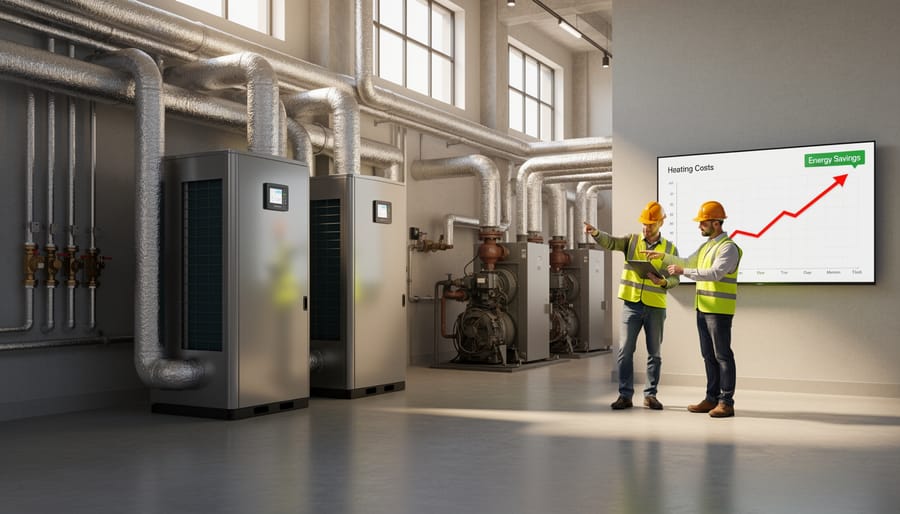
The building owner worked with a local contractor to replace the aging natural gas boiler with an air-source heat pump system rated at 15 tons capacity. This modern system uses electricity to transfer heat rather than burning fossil fuels, dramatically reducing the building’s carbon footprint while maintaining comfortable temperatures year-round. The heat pump connects to the existing ductwork, which minimized installation disruption and kept renovation costs manageable.
To power this new electric heating system sustainably, the team installed a 40-kilowatt rooftop solar array. The panels generate clean electricity throughout the day, with excess power feeding back into the grid through BC Hydro’s net metering program. During peak sunlight hours, the solar panels often produce enough energy to run the heat pump and cover other building electrical needs. This integration means the building now operates primarily on renewable energy, with grid electricity serving as backup during cloudy periods or high-demand winter months.
The installation took just three weeks from start to finish, with the business remaining operational throughout. Local incentives helped offset approximately 30 percent of the upfront costs, making the transition more financially accessible.
The Results
The results across these BC businesses demonstrate compelling financial and environmental benefits. The Vancouver office building reduced energy costs by 42% annually, saving approximately $28,000 while cutting carbon emissions by 65 tonnes yearly. The Victoria restaurant saw a 38% decrease in energy expenses, translating to $4,200 in annual savings with a payback period of just 6.5 years after provincial rebates. The Kelowna retail store achieved the most dramatic results, slashing heating costs by 51% and saving $9,800 annually with a 5-year payback period. When combined with rooftop solar installations, two of these businesses further reduced their grid dependence by 30-45%, accelerating their return on investment. These real-world examples show that commercial building electrification delivers measurable savings while supporting BC’s clean energy goals.
Case Study: Victoria Restaurant Goes Fully Electric
Making the Kitchen Transition
The kitchen transformation began with replacing three gas ranges with high-efficiency induction cooktops. The restaurant owner partnered with a commercial kitchen equipment specialist who recommended models specifically designed for high-volume cooking. The transition happened over a weekend to minimize disruption, with the electrical panel upgraded to handle the new 240-volt requirements.
Staff training proved essential to success. The head chef initially worried about adjusting cooking techniques, but the equipment supplier provided hands-on training sessions for the entire kitchen team. Within two weeks, staff noticed faster boiling times and more precise temperature control. The induction surfaces also stayed cooler, making the kitchen noticeably more comfortable during busy dinner service.
One unexpected benefit was easier cleaning, since food doesn’t burn onto the smooth cooktop surface. The restaurant documented the entire process on social media, inspiring other local food establishments to consider similar upgrades. Total installation cost was $45,000, offset by a $12,000 provincial rebate for commercial kitchen electrification. The owner now encourages other restaurateurs to take the leap, emphasizing that proper training and choosing quality equipment made all the difference.
Pairing Solar with Electric Cooking
Rooftop solar panels naturally align with commercial kitchen operations since cooking demands typically peak during daylight hours when solar generation is strongest. A Vancouver restaurant installing induction cooktops alongside a 15kW solar array found that up to 70% of their lunch service energy came directly from their panels, dramatically reducing grid dependency. For BC businesses making the switch to electric cooking equipment, this synergy creates immediate cost savings while supporting the clean energy revolution. The key is right-sizing your solar system to match your kitchen’s peak load—typically between 11 AM and 2 PM for restaurants. Use Solar BC’s calculation tools to estimate how much of your cooking energy could come from sunshine, turning your roof into a power source that pays dividends every service.
Unexpected Benefits
Beyond the expected energy savings, BC businesses report surprising advantages from electrification. Restaurant owners switching from gas to induction cooktops discovered dramatically cleaner kitchen air, reducing ventilation costs by up to 30% while creating healthier work environments for staff. A Vancouver café owner shared that eliminating combustion fumes meant fewer headaches and better air quality for both employees and customers.
Electric heat pumps provide another bonus: efficient cooling during summer months. One Kelowna office building reduced their cooling expenses by 40% after installing modern heat pump systems, proving the technology works year-round in BC’s varied climate.
Marketing benefits shouldn’t be overlooked either. Customers increasingly support environmentally responsible businesses, with several BC retailers reporting that promoting their all-electric operations attracted new clientele and strengthened brand loyalty. Going electric isn’t just good for the planet—it’s increasingly good for business.
Case Study: Kelowna Retail Plaza’s Complete Energy Makeover
The Integrated Approach
The plaza’s success came from treating electrification as a coordinated system rather than isolated upgrades. The building’s energy team worked closely with contractors to time the installation of electric heat pumps for heating and cooling alongside high-efficiency electric water heaters. This coordination was essential because they designed the entire system around the capacity of their planned renewable energy sources.
The plaza installed a 250-kilowatt rooftop solar array that generates approximately 300,000 kilowatt-hours annually, covering roughly 60% of the building’s electricity needs during peak production months. To address the intermittent nature of solar power, they added a battery storage system that stores excess daytime solar generation for use during evening hours when tenant businesses remain open.
This integrated approach delivered impressive results. The combination reduced the building’s natural gas consumption by 85% and cut overall energy costs by 40% compared to pre-electrification levels. Perhaps most importantly for other BC building owners, the plaza discovered that coordinating these installations saved 20% on total project costs compared to implementing each upgrade separately. The energy management system monitors all components in real-time, automatically optimizing when to use solar power, draw from batteries, or pull from the grid.

Adding EV Chargers as a Tenant Amenity
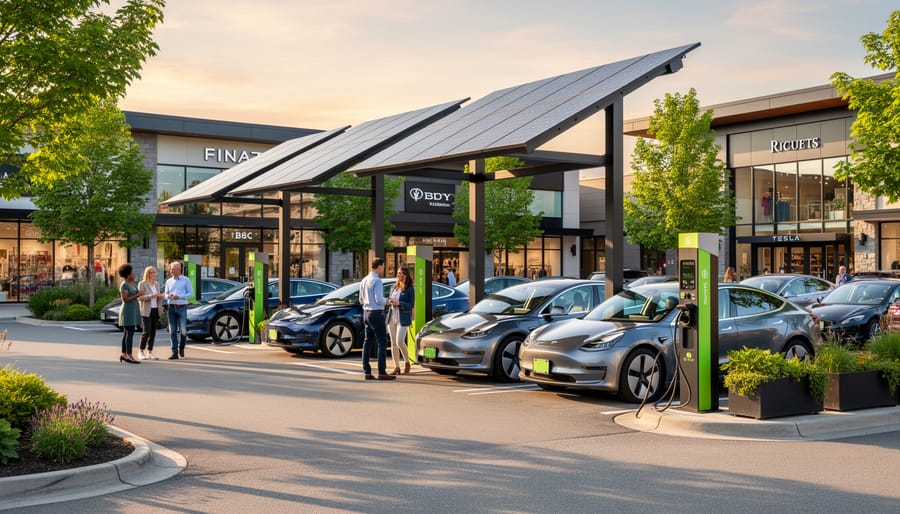
Installing EV charging stations represents a forward-thinking amenity that directly addresses tenant and customer needs while supporting building electrification. A Vancouver office building recently added six Level 2 charging stations powered by their rooftop solar array, creating a self-sustaining system that costs pennies per charge during sunny months. The property manager reports that prospective tenants now specifically ask about EV charging availability during tours, giving them a competitive edge in a tight rental market.
When powered by solar panels, these charging stations generate clean energy while offsetting operational costs. A Kelowna retail plaza found that combining solar installation with EV chargers created multiple revenue streams: they charge nominal fees to non-tenants while offering free charging as a tenant perk. The investment paid for itself within four years through increased occupancy rates and avoided electricity costs. For BC businesses, this dual approach demonstrates how electrification extends beyond the building itself to support sustainable transportation choices that resonate with environmentally-conscious clients.
Bottom-Line Impact
The financial benefits of building electrification extend well beyond energy savings. BC businesses that have made the switch report operating cost reductions of 20-40% annually, primarily through eliminated natural gas bills and lower maintenance expenses for electric systems. Property values have increased measurably, with electrified buildings commanding premium lease rates as tenants increasingly prioritize sustainability commitments. A Vancouver office building featured in our case studies saw tenant retention improve by 35% following their electrification retrofit. Additionally, qualifying businesses access provincial rebates and federal tax incentives that can offset 30-50% of upfront conversion costs. These combined financial advantages create compelling payback periods of 5-8 years for most commercial properties, while simultaneously positioning your business as an environmental leader in your community. The transition to electric systems also future-proofs your property against rising carbon pricing, protecting your bottom line for decades to come.
Key Lessons from BC’s Commercial Electrification Leaders
Start with an Energy Assessment
Before diving into electrification upgrades, conduct a thorough energy assessment of your building. This baseline understanding reveals where your facility currently uses the most energy and identifies which systems offer the greatest potential for improvement. A professional energy audit will examine your heating systems, hot water equipment, lighting, and ventilation, providing clear data on consumption patterns and costs. Many BC utilities offer subsidized or free energy assessments for businesses, making this first step accessible and affordable. Understanding your building’s energy profile helps you prioritize which electrification projects will deliver the best return on investment, whether that’s replacing a gas furnace with a heat pump or upgrading commercial kitchen equipment. This assessment also uncovers opportunities to reduce overall energy demand before switching to electric systems, maximizing your savings and ensuring any solar installation is properly sized for your needs.
Think Solar from Day One
When electrifying your building, consider solar panels from the start rather than as an afterthought. This integrated approach saves money and streamlines installation. Electricians can size your electrical panel to accommodate both heat pumps and future solar connections, avoiding costly upgrades later. Richmond’s Harbour Green Park office building took this route, installing solar-ready conduit during their 2023 electrification retrofit. When they added panels six months later, installation costs dropped 30% compared to separate projects. Similar to how BC’s Indigenous communities are leading clean energy initiatives through comprehensive planning, your business benefits from thinking holistically. Use our solar savings calculator to see how pairing electrification with solar maximizes your return on investment while reducing your carbon footprint from day one.
Take Advantage of Incentives
Making the switch to electric systems is more affordable than many BC businesses realize. Both provincial and federal governments offer substantial financial support to reduce upfront costs for commercial electrification projects.
CleanBC offers rebates through the Better Buildings program, covering energy assessments and equipment upgrades like heat pumps and efficient water heaters. FortisBC and BC Hydro provide additional incentives specifically for businesses transitioning away from natural gas systems. Many commercial property owners have accessed rebates covering 30-50% of equipment costs.
At the federal level, the Canada Greener Homes Grant extends to small businesses, while larger operations can explore the Low Carbon Economy Fund. These programs stack with provincial incentives, significantly improving project economics.
The key is planning ahead. Contact your utility provider early in your electrification journey to understand available programs and application deadlines. Many BC businesses that hesitated due to cost concerns discovered that combining incentives with long-term energy savings made electrification a smart financial decision, not just an environmental one.
Is Commercial Electrification Right for Your Business?
Questions to Ask Before You Start
Before diving into electrification, taking time to assess your building’s unique situation will help you make informed decisions and avoid costly missteps. Start by evaluating your building’s age and condition. Older structures may require electrical panel upgrades or improved insulation before switching to electric systems, while newer buildings often have infrastructure better suited for the transition.
Review your current heating, cooling, and hot water systems. Understanding their age, efficiency, and remaining lifespan helps you prioritize replacements and maximize your investment. A furnace nearing the end of its life presents an ideal opportunity to switch to a heat pump rather than replacing like-for-like.
Analyze your energy bills from the past year to identify consumption patterns and costs. This baseline data proves invaluable when calculating potential savings and payback periods. Many BC businesses discover that high natural gas costs make electrification surprisingly affordable.
Consider your available budget and financing options. Government rebates, utility incentives, and green financing programs can significantly reduce upfront costs. Establish a realistic timeline that accounts for planning, permits, installation, and any necessary building upgrades. Some businesses phase their electrification journey, starting with one system while planning future transitions. This approach spreads costs while building momentum toward your sustainability goals.
The case studies we’ve explored demonstrate that electrification isn’t just an environmental choice—it’s a smart business decision for BC companies of all sizes. From the Vancouver office building that cut heating costs by 40% with heat pumps, to the restaurant that eliminated natural gas entirely while improving kitchen comfort, these real-world examples prove that the transition to electric systems delivers measurable results.
The benefits extend beyond lower energy bills. Businesses consistently report improved indoor air quality, reduced maintenance requirements, and enhanced appeal to environmentally-conscious customers and employees. Perhaps most importantly, these organizations positioned themselves ahead of upcoming building regulations while contributing to BC’s climate goals.
The path to electrification doesn’t have to be overwhelming. As these case studies show, starting with one system—whether it’s upgrading your heating, switching to electric kitchen equipment, or installing heat pump water heaters—creates momentum and proves the concept for your business. Many BC companies are also pairing electrification with solar installations to maximize their energy independence and savings.
Ready to explore what electrification could mean for your building? Solar BC connects businesses with certified installers who understand local conditions and can assess your specific needs. Our network of professionals has helped hundreds of BC organizations make the transition successfully. Contact a certified installer today to schedule an energy assessment and discover your electrification opportunities. The case studies you’ve read could be your story next—and the benefits start the moment you take that first step.