
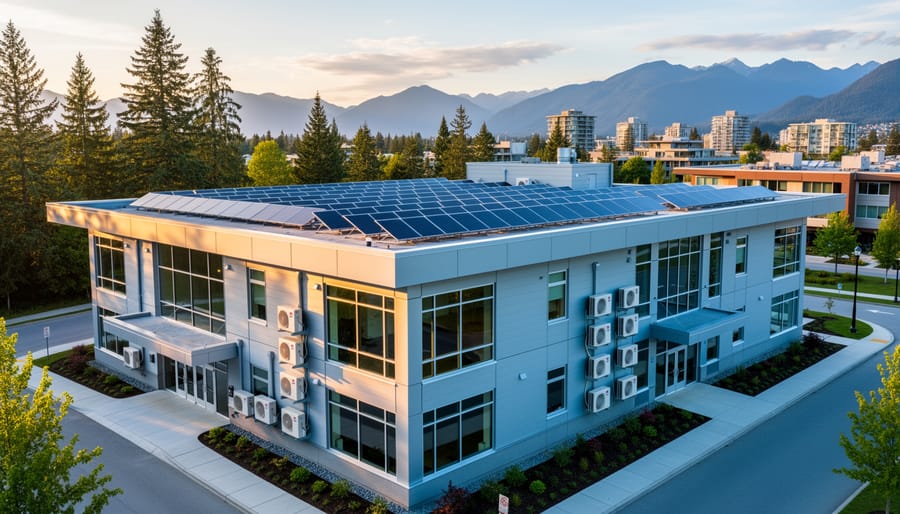
Municipal buildings across British Columbia consume vast amounts of energy for heating, cooling, and operations, accounting for a significant portion of community greenhouse gas emissions. Decarbonizing these facilities isn’t just an environmental imperative—it’s a practical pathway to reduce operating costs, demonstrate climate leadership, and inspire broader community action.
Buildings decarbonization means eliminating or dramatically reducing carbon emissions from facilities by replacing fossil fuel systems with clean energy alternatives, improving energy efficiency, and often generating renewable power on-site. For BC municipalities, this transformation typically involves switching from natural gas boilers to electric heat pumps, upgrading insulation and windows, installing solar panels, and optimizing building controls.
The financial case has never been stronger. With rising carbon taxes, falling clean technology costs, and robust provincial and federal funding programs, many BC communities are discovering that decarbonization projects pay for themselves through energy savings while building resilience against fuel price volatility.
What makes these initiatives succeed? Real-world experience shows that effective building decarbonization starts with comprehensive energy audits to identify the highest-impact opportunities, followed by phased implementation that prioritizes quick wins alongside longer-term structural upgrades. Communities that document their progress, share data transparently, and celebrate milestones create momentum that extends beyond municipal facilities to inspire residential and commercial sector action.
This article examines how BC municipalities are tackling buildings decarbonization through practical case studies. You’ll discover proven strategies, investment approaches, implementation timelines, and lessons learned from communities similar to yours. Whether you’re just beginning to explore decarbonization or ready to launch your first retrofit project, these examples provide actionable roadmaps for reducing emissions while improving facility performance and community wellbeing.
Why Municipal Buildings Are Key to BC’s Climate Goals
Municipal buildings represent a significant opportunity in British Columbia’s journey toward meeting its ambitious climate targets. Across the province, community centers, fire halls, libraries, swimming pools, and administrative offices collectively account for a substantial portion of local government emissions. While these facilities serve essential community functions, many were built decades ago with little consideration for energy efficiency, making them prime candidates for decarbonization efforts.
BC’s CleanBC plan aims to reduce greenhouse gas emissions by 40% by 2030 and achieve net-zero by 2050. Municipalities play a crucial role in reaching these targets, as local governments control approximately 3% of the province’s total emissions through their building operations and vehicle fleets. More importantly, municipal facilities serve as visible demonstrations of clean energy leadership, showing residents and businesses what’s possible when communities commit to climate action.
When a city hall installs solar panels or retrofits a recreation center with a high-efficiency heat pump system, it sends a powerful message to the community. These projects become teaching opportunities, showing that decarbonization isn’t just theoretical but practically achievable. Citizens see their tax dollars invested in facilities that reduce operating costs while protecting the environment, building trust and encouraging similar actions in private buildings.
The financial case strengthens the climate argument. Older municipal buildings often have inefficient heating systems, poor insulation, and outdated lighting that drive up energy costs year after year. Decarbonization projects typically reduce these ongoing expenses, freeing up budget resources for other community priorities. Additionally, federal and provincial funding programs specifically support municipal building retrofits, making upgrades more financially accessible than ever before.
By transforming their own buildings first, BC municipalities demonstrate accountability and inspire broader community participation in climate solutions. These visible projects create momentum, proving that decarbonization delivers both environmental benefits and practical advantages for communities across the province.
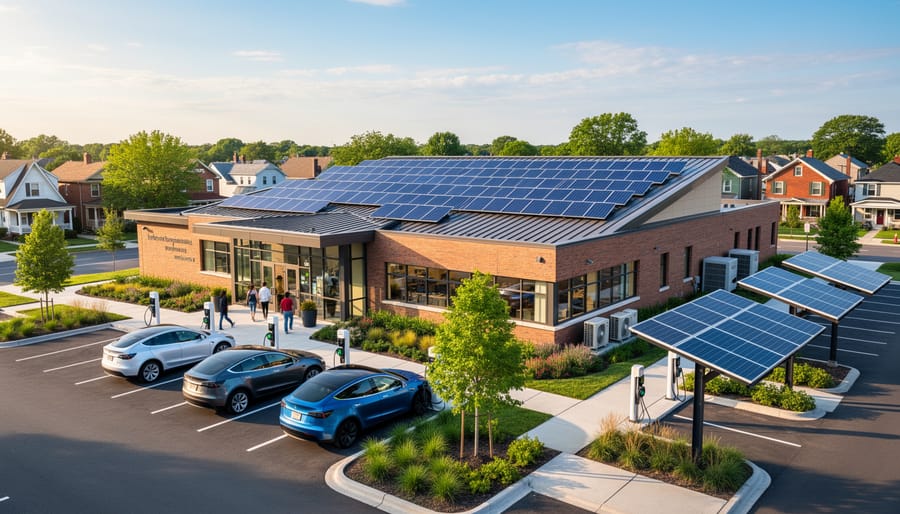
What Buildings Decarbonization Actually Means
Moving Away from Natural Gas Heating
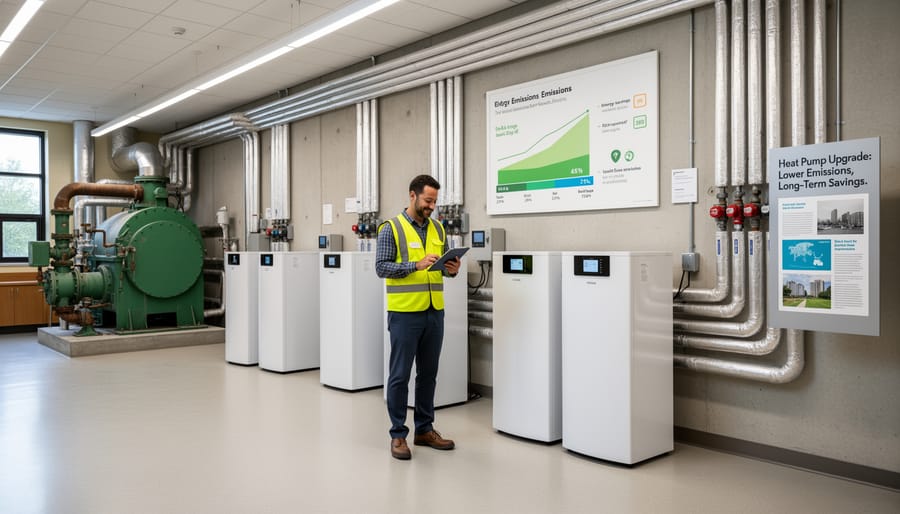
Natural gas heating has been the standard in BC buildings for decades, but it’s also one of the largest sources of building-related emissions. Switching from gas boilers and furnaces to electric heat pumps represents a critical step in decarbonization. Heat pumps work by transferring heat rather than burning fuel, making them three to four times more efficient than traditional systems. When powered by BC’s clean hydroelectricity, they produce virtually zero emissions.
For BC municipalities, this transition means retrofitting existing buildings or installing heat pump systems in new construction. Many facilities are going all-electric, combining heat pumps with improved insulation and smart controls. The District of Saanich, for example, replaced gas heating in their recreation centre with an advanced heat pump system, reducing emissions by 80% while lowering operating costs.
While upfront costs can be higher, heat pumps offer long-term savings through reduced energy consumption and lower maintenance requirements. Provincial and federal incentives currently help offset installation expenses, making now an ideal time for municipalities to plan heating system upgrades.
Solar Power for Municipal Facilities
Solar power represents one of the most effective strategies for municipal facilities to reduce greenhouse gas emissions while achieving significant long-term cost savings. By installing photovoltaic systems on rooftops and property grounds, municipalities can generate clean electricity on-site, directly offsetting power drawn from the grid and lowering their carbon footprint.
British Columbia offers more solar potential than many realize. While the province’s coastal reputation suggests cloudy skies, many BC communities receive comparable or even superior solar radiation to countries like Germany, which leads globally in solar adoption. Interior and northern regions particularly benefit from long summer days, while southern coastal areas enjoy moderate year-round temperatures that actually improve solar panel efficiency.
Municipal buildings are ideal candidates for solar installations. Their large roof areas, stable ownership, and predictable daytime energy consumption align perfectly with solar generation patterns. Schools, recreation centers, and administrative buildings typically use the most power during daylight hours when panels produce peak output, maximizing on-site consumption and reducing reliance on grid electricity.
The financial benefits extend beyond immediate utility savings. Solar installations protect municipalities from rising electricity rates, provide predictable energy costs for decades, and often qualify for grants and incentives. The City of Vancouver’s community center solar projects, for example, have demonstrated payback periods of 10-15 years, with systems designed to operate efficiently for 25-30 years.
Starting with an energy assessment helps identify the most suitable buildings and optimal system sizes, ensuring projects deliver maximum environmental and economic returns for your community.
Real Municipal Facilities Decarbonization Case Studies from BC
City of Vancouver: Community Centers Go Electric
The City of Vancouver has transformed several community centers into models of low-carbon infrastructure, demonstrating that municipal buildings can achieve substantial emissions reductions while slashing energy costs. These retrofits showcase practical approaches that other BC municipalities can replicate.
The Hillcrest Community Centre stands as Vancouver’s flagship decarbonization project. Completed in 2021, the facility underwent a comprehensive energy transformation that included installing high-efficiency air-source heat pumps to replace natural gas heating systems. The building now features a 160-kilowatt rooftop solar array that generates approximately 180,000 kilowatt-hours annually, enough to power 15 typical BC homes. Additional upgrades included LED lighting throughout the facility, improved building envelope insulation, and smart energy management systems that optimize heating and cooling based on occupancy.
The results speak volumes. Hillcrest has reduced its greenhouse gas emissions by 65 percent compared to pre-retrofit levels, eliminating roughly 80 tonnes of carbon dioxide annually. The center now saves approximately 35,000 dollars each year in energy costs, money that returns directly to community programming.
The Kerrisdale Community Centre followed a similar path, installing ground-source heat pumps that tap into stable underground temperatures for year-round heating and cooling. Combined with solar panels and improved windows, Kerrisdale cut its natural gas consumption by 75 percent and reduced overall energy use by 40 percent.
What makes these projects particularly instructive is Vancouver’s phased approach. Rather than attempting complete overhauls simultaneously, the city prioritized upgrades based on equipment lifecycle, tackling heating systems first during scheduled replacements. This strategy minimized disruption and spread capital costs over manageable periods.
The centers also serve educational functions, with public displays showing real-time energy generation and consumption. Visitors can see exactly how much solar power the building produces and how heat pumps maintain comfort efficiently, making clean energy visible and tangible for thousands of community members each year.
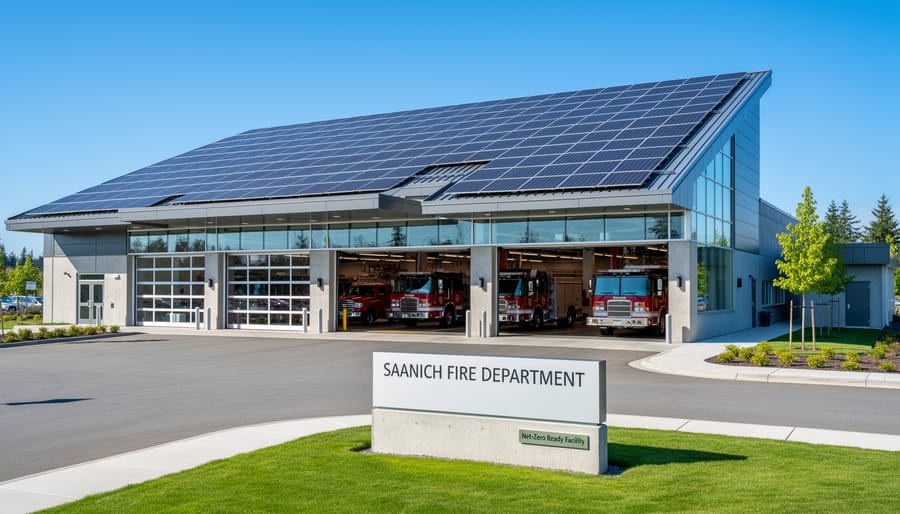
Saanich: Fire Hall Becomes Net-Zero Ready
When the District of Saanich needed to replace its aging Fire Hall No. 1, municipal leaders saw an opportunity to demonstrate climate leadership through building design. The result is a renovated facility that stands as a practical model for municipalities across British Columbia looking to reduce emissions from their building portfolios.
The fire hall project began with a comprehensive energy assessment that identified key opportunities for decarbonization. The planning team set an ambitious goal: achieve net-zero ready status, meaning the building would be capable of producing as much energy as it consumes annually once renewable energy systems were fully operational.
Three major components drove the transformation. First, the facility received a complete building envelope upgrade with advanced insulation materials that dramatically reduced heating and cooling demands. The improved thermal performance meant less energy would be needed year-round, creating the foundation for deeper carbon reductions.
Second, the renovation replaced fossil fuel heating systems with high-efficiency electric heat pumps. This switch eliminated on-site combustion emissions while taking advantage of British Columbia’s clean electricity grid. The heat pumps provide both heating and cooling, ensuring year-round comfort for firefighters and staff while maintaining the rapid response capabilities essential to emergency services.
Third, Saanich installed a solar photovoltaic array on the fire hall roof. The solar panels generate clean electricity throughout the year, offsetting a significant portion of the building’s power consumption and reducing operating costs. The system was sized based on detailed energy modeling that accounted for the facility’s 24/7 operational requirements.
The planning process involved close collaboration between municipal staff, engineers, and the fire department to ensure that energy efficiency improvements never compromised operational readiness. Emergency vehicle bays, communication systems, and living quarters all needed to function flawlessly while meeting new sustainability standards.
The outcomes speak for themselves. The renovated fire hall has reduced energy consumption by over 70 percent compared to the original building, while maintaining all essential emergency response functions. Annual energy cost savings help offset the initial investment, demonstrating that decarbonization can make financial sense for municipal budgets. For communities across BC considering similar projects, Saanich’s fire hall proves that even specialized facilities with critical operational requirements can successfully transition away from fossil fuels.
Nelson: Small City, Big Impact on Library Retrofit
When the City of Nelson set out to retrofit their historic 1920s library building, they faced a challenge familiar to many smaller BC communities: how to achieve meaningful decarbonization without the budget of larger municipalities. With a population of just over 10,000, Nelson proved that strategic planning and community involvement can deliver impressive results even with limited resources.
The city adopted a phased approach, prioritizing improvements that would deliver the quickest return on investment. Phase one focused on building envelope upgrades, including improved insulation and window replacements that reduced heat loss by 35%. This initial investment of $120,000 immediately lowered heating costs, creating savings that would fund future phases.
Rather than attempting a complete overhaul at once, Nelson’s facility managers identified a ten-year roadmap. Phase two introduced a high-efficiency heat pump system, while phase three will add solar panels to the library’s south-facing roof. This staggered timeline allowed the city to spread costs across multiple budget cycles and apply for different grant programs as they became available.
Community engagement proved essential to the project’s success. The library hosted monthly open houses where residents could tour the building, see the improvements firsthand, and ask questions about the technology. Local contractors provided workshops on home energy efficiency, turning the library retrofit into a learning opportunity for the entire community.
The city also partnered with Selkirk College students who conducted energy audits and monitored performance data, reducing consulting costs while providing valuable hands-on experience. This collaboration created a model that other small municipalities could replicate without hiring expensive external consultants.
Three years into the project, the Nelson library has reduced its energy consumption by 52% and cut greenhouse gas emissions by 48%. Annual energy costs dropped from $18,000 to $8,600, demonstrating that even communities with modest budgets can make substantial progress toward decarbonization goals through careful planning, creative partnerships, and patient implementation.
Lessons Learned: What Made These Projects Succeed
Across British Columbia’s successful building decarbonization projects, several common threads emerge that can guide other municipalities and organizations on their own journeys.
Strategic planning proved essential in every case. Successful projects began with comprehensive energy audits to identify the biggest opportunities for carbon reduction. Rather than attempting everything at once, communities prioritized projects based on impact, cost-effectiveness, and available funding. This phased approach allowed teams to build expertise gradually while demonstrating early wins that maintained momentum and community support.
Diverse funding strategies made ambitious projects achievable. The most successful initiatives combined multiple sources including federal infrastructure programs, provincial CleanBC grants, utility rebates, and municipal capital budgets. Some communities discovered creative approaches like energy performance contracts, where savings from reduced energy costs help pay for upgrades over time. This blended funding model reduced upfront financial barriers and distributed risk.
Community engagement emerged as a cornerstone of lasting success. Projects that involved residents, staff, and stakeholders from the beginning gained valuable input and built lasting support. Public tours of completed facilities, educational workshops, and transparent reporting on energy savings helped communities take pride in their achievements. These approaches align with broader community-led clean energy initiatives happening across the province.
Technical approaches that worked best combined proven technologies rather than relying on unproven solutions. Heat pumps, improved building envelopes, LED lighting, and solar panels consistently delivered reliable results. Successful projects also emphasized proper installation and training for maintenance staff to ensure systems performed as designed for years to come.
Partnership development accelerated progress significantly. Collaborations with BC Hydro, FortisBC, local universities, and experienced contractors provided technical expertise and reduced implementation risks. Several communities formed regional partnerships to share learnings and negotiate better pricing on equipment and services.
Finally, measurement and celebration of results kept stakeholders engaged. Regular tracking of energy use, cost savings, and carbon reductions provided concrete evidence of impact. Communities that publicly celebrated milestones created positive momentum and inspired others to pursue similar initiatives, creating a ripple effect across the province.

Overcoming Common Challenges
BC municipalities embarking on building decarbonization journeys commonly encounter three significant hurdles, but each has proven solutions based on local experiences.
Budget constraints top the list of challenges. Many communities worry about upfront costs for retrofits and renewable energy systems. However, municipalities like the City of Vancouver have demonstrated that strategic phasing makes projects manageable. Rather than attempting complete overhauls, they prioritize buildings with the highest emissions first and spread improvements over multiple budget cycles. Grants from programs like the Federation of Canadian Municipalities’ Green Municipal Fund and provincial CleanBC initiatives can cover 40-80% of project costs. Additionally, energy savings often pay back investments within 7-15 years, making the business case stronger when viewed long-term.
Technical complexity presents another barrier, especially for smaller municipalities without in-house expertise. The District of Saanich addressed this by partnering with local engineering firms and BC Hydro’s energy management team, who provided technical assessments at reduced rates. Communities can also join regional networks like the BC Climate Action Charter to share knowledge and pool resources for consultant services. Starting with simple measures like LED lighting upgrades and building envelope improvements builds internal capacity before tackling more complex heat pump installations.
Securing stakeholder buy-in requires clear communication about both environmental and financial benefits. Whistler’s success came from engaging staff early, training facility operators on new systems, and celebrating quick wins publicly. When community members see their tax dollars reducing both emissions and operating costs, support grows organically. Creating citizen advisory committees and sharing progress through accessible dashboards helps maintain momentum.
The key lesson from BC pioneers is simple: start small, celebrate progress, and build on success. No municipality perfected decarbonization overnight. Each challenge becomes easier with the growing network of BC communities willing to share their experiences, failed experiments, and breakthrough solutions. Your community doesn’t need to reinvent the wheel when so many practical examples already exist close to home.
How Your Community Can Start Its Decarbonization Journey
Finding Funding and Incentives
Decarbonizing municipal buildings requires investment, but British Columbia municipalities have access to numerous funding programs that make these projects financially viable. The federal government’s Green and Inclusive Community Buildings program provides grants up to $25 million for retrofits that reduce emissions and improve energy efficiency. This program has already supported several BC communities in upgrading heating systems and installing solar panels on recreation centres and libraries.
At the provincial level, the CleanBC Communities Fund offers funding for energy studies, retrofits, and renewable energy installations. Municipalities can receive up to 100% funding for feasibility studies, helping them understand which upgrades will deliver the greatest carbon reductions and cost savings. Infrastructure grants through programs like the Investing in Canada Infrastructure Program also support building decarbonization projects.
BC Hydro’s Energy Management Services provides incentives and technical support for efficient heating and cooling systems, while FortisBC offers rebates for natural gas equipment upgrades and renewable natural gas options. Many municipalities have successfully stacked multiple funding sources to cover project costs. For example, smaller communities often combine federal grants with provincial incentives and utility rebates to achieve complete project funding. Start by conducting an energy audit of your facilities to identify opportunities, then work with program administrators to develop a funding strategy that maximizes available support for your decarbonization goals.
Partnering with Local Solar Experts
Decarbonizing your building doesn’t have to be an overwhelming process when you have the right support team. Working with certified solar installers and qualified energy advisors can transform a complex undertaking into a manageable, step-by-step journey toward sustainability.
Solar BC maintains a network of trusted professionals who understand the unique requirements of British Columbia’s climate, building codes, and energy incentive programs. These local experts bring valuable knowledge about everything from site assessments and system design to navigating permits and accessing available rebates. Rather than researching countless options on your own, connecting with pre-vetted installers saves time and reduces the risk of costly mistakes.
Energy advisors play an equally important role by conducting thorough building assessments to identify your most effective decarbonization opportunities. They can help prioritize investments, ensuring solar installations work alongside other efficiency measures like improved insulation or heat pump upgrades for maximum impact.
Consider the experience of the District of Saanich, which partnered with local solar experts to install systems across multiple municipal facilities. Their advisors helped identify buildings with the greatest solar potential and coordinated installations that now generate significant clean energy while reducing operational costs.
When selecting partners, look for professionals with relevant certifications, local project portfolios, and transparent pricing. Ask about their experience with similar building types and their approach to ongoing maintenance support.
By tapping into Solar BC’s network of qualified professionals, you gain access to expertise that turns decarbonization goals into reality, backed by people who understand your community’s specific needs and opportunities.
The path to decarbonizing municipal buildings across British Columbia is not just achievable—it’s already happening. From solar installations on recreation centers to comprehensive retrofits of heritage buildings, communities throughout the province are proving that reducing emissions while improving building performance is both practical and beneficial.
The municipalities featured in these case studies demonstrate that decarbonization doesn’t require waiting for perfect conditions. Whether your community is large or small, coastal or interior, there are proven strategies that can be adapted to your unique circumstances. These projects are delivering real results: lower energy bills, reduced greenhouse gas emissions, healthier indoor environments, and local job creation.
If you’re a facility manager, municipal decision-maker, or engaged citizen, now is the time to explore how decarbonization can work for your community. Start by assessing your current buildings, identifying quick wins alongside long-term goals, and learning from the experiences of municipalities that have already taken action.
For those interested in solar energy as part of your decarbonization strategy, Solar BC offers resources to help you take the next step. Connect with certified solar installers who understand BC’s climate and regulations, access tools to estimate potential savings, and join the growing network of communities building a cleaner energy future. The technology is proven, the benefits are clear, and the momentum is building—your municipality can be part of this transformation.