
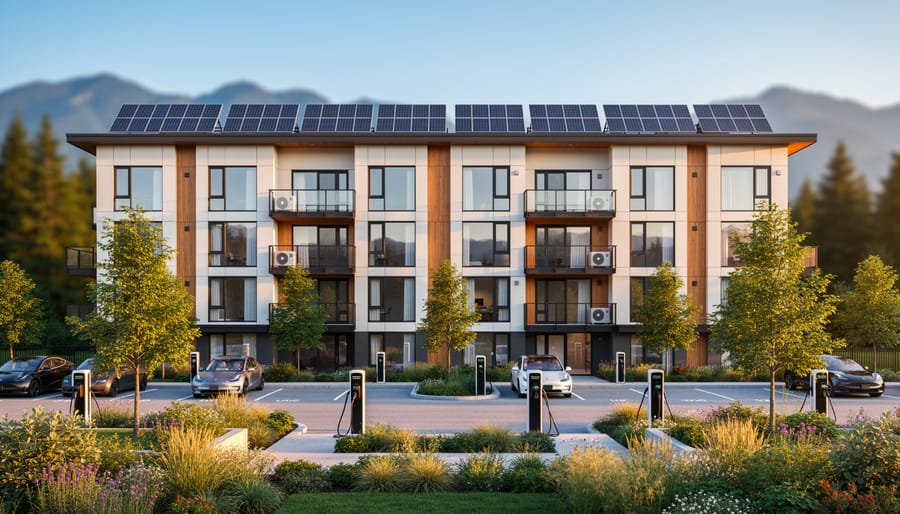
Assess your building’s current energy performance through a free energy audit to identify the highest-impact improvements—insulation upgrades, air sealing, and window replacements typically deliver 30-50% energy savings in BC’s multifamily buildings. Prioritize envelope improvements before mechanical systems, as reducing heat loss makes heating and cooling equipment more effective and affordable to operate.
Combine deep energy retrofits with climate resilience measures that protect residents during extreme weather events. Install backup power systems, improve ventilation for wildfire smoke protection, and upgrade to heat pumps that provide both emergency cooling during heat domes and efficient heating year-round. BC’s recent heat events demonstrated that multifamily buildings without cooling systems put vulnerable residents at serious risk.
Layer funding from federal, provincial, and municipal sources to make projects financially viable. CMHC’s Green and Inclusive Community Buildings program covers up to 80% of costs for affordable housing projects, while BC Hydro rebates reduce equipment expenses. Communities across BC have successfully combined smart retrofit strategies with solar installations, achieving net-zero-ready performance while cutting operating costs by 40-60%.
Engage residents early in the retrofit planning process to address concerns about disruption and demonstrate long-term benefits. Buildings that involved tenants from project start reported higher satisfaction and fewer complaints during construction. Document baseline energy use and track post-retrofit performance to quantify savings and inform future projects—measurable results build support for expanding green retrofit programs across your portfolio.
What Makes a Retrofit Both Green and Resilient
The Green Component: Cutting Energy Use and Emissions
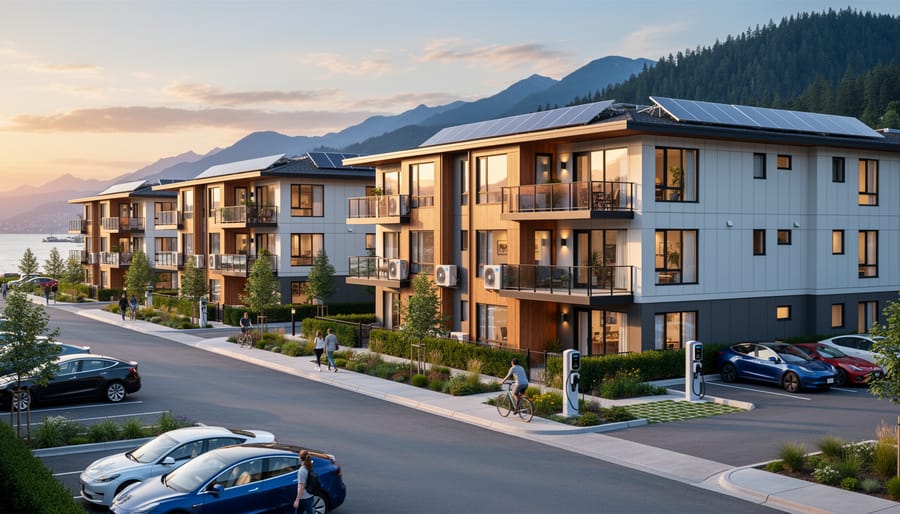
Green retrofits transform multifamily buildings into energy-efficient, climate-friendly homes while dramatically reducing operating costs. The foundation starts with upgraded insulation in walls, attics, and basements, creating an effective thermal envelope that keeps heat in during winter and out during summer. Many BC housing providers have seen heating bills drop by 30-40% after comprehensive insulation improvements alone.
Modern heating systems play a crucial role too. Replacing old furnaces with high-efficiency heat pumps not only cuts energy consumption but also eliminates fossil fuel dependence. These systems work year-round, providing both heating and cooling while running on clean electricity.
Solar panels represent a game-changing addition for multifamily properties. Rooftop installations generate renewable energy that directly offsets common area electricity costs and can even power EV charging stations. A recent Vancouver project reduced annual emissions by 25 tonnes while creating predictable energy costs for the next 25 years.
Simple upgrades matter as well. Switching to LED lighting throughout hallways, parking areas, and common spaces typically pays for itself within two years through reduced electricity use. Combined with programmable thermostats and energy-efficient appliances, these measures create homes that are comfortable, affordable, and gentle on our environment.
The Resilience Component: Preparing for Climate Extremes
Climate change is bringing more extreme weather to British Columbia, making resilience features just as important as energy efficiency in multifamily retrofits. These upgrades protect both buildings and residents when conditions turn severe.
During heat waves, improved insulation, reflective roofing, and shading systems keep indoor temperatures safer without overworking air conditioning. Battery storage paired with solar panels maintains power for essential needs during outages, which are becoming more frequent. Enhanced ventilation systems improve air quality when wildfire smoke blankets communities.
Flood protection measures like improved drainage, elevated mechanical systems, and water-resistant materials in vulnerable areas minimize damage during heavy rainfall events. Backup power ensures sump pumps and emergency lighting continue functioning when residents need them most.
A recent retrofit in Vancouver’s Downtown Eastside demonstrated these benefits when a summer heat wave struck. The building’s new cooling systems and emergency power kept vulnerable seniors safe while neighbouring properties struggled. Residents reported feeling more secure knowing their home could handle whatever weather comes next.
For property managers, resilience features reduce emergency repair costs and insurance claims while protecting your most valuable asset: your residents. These investments pay dividends in safety, reduced downtime, and long-term building preservation.
Real Results from BC Multifamily Retrofit Projects
Case Study: Vancouver Social Housing Complex Cuts Heating Costs by 40%
The Maple Ridge Housing Co-operative in East Vancouver demonstrates how strategic retrofits can transform affordability for residents while dramatically reducing environmental impact. This 42-unit social housing complex, built in 1978, was struggling with monthly heating bills that consumed nearly 30% of residents’ fixed incomes during winter months.
In 2022, the co-operative partnered with BC Housing and local contractors to implement a comprehensive green retrofit. The project began with envelope improvements, including upgraded insulation in walls and attics, new triple-pane windows, and air sealing to eliminate drafts. These changes immediately improved comfort levels and reduced heat loss by approximately 25%.
The team then replaced the aging natural gas boiler system with centralized air-source heat pumps, providing both heating and cooling. While heat pumps require electricity, their efficiency means they produce three times more heating energy than they consume. To offset the electrical demand, the co-operative installed a 50-kilowatt solar panel array on the south-facing roof and carport structures.
The results exceeded expectations. Total heating costs dropped by 40% in the first year, saving residents an average of $85 monthly during peak winter months. The solar panels generate approximately 60% of the building’s daytime electricity needs, with excess power credited back through BC Hydro’s net metering program.
Funding came from multiple sources: a BC Housing grant covered 60% of costs, CleanBC rebates provided $35,000, and a low-interest loan from a community credit union financed the remainder. The co-operative expects full payback within 12 years, after which residents will continue benefiting from reduced operating costs for decades. This project proves that even older buildings can achieve remarkable energy savings when comprehensive retrofits are properly planned and funded.
Case Study: Victoria’s Retrofit Program Adds Battery Storage for Grid Independence
When Harbour View Apartments, a 42-unit affordable housing complex in Victoria, faced frequent power outages that left elderly and mobility-challenged residents without access to elevators, refrigeration, and medical equipment, the property management team knew they needed a solution that went beyond simple backup power.
Working with BC Housing’s Energy Retrofit Program and in partnership with a local solar installer, Harbour View implemented a comprehensive system combining rooftop solar panels with battery storage in 2022. The 85-kilowatt solar array now generates approximately 75,000 kilowatt-hours annually, while the 150-kilowatt-hour battery system provides critical backup power during grid failures.
The results have been transformative for residents. During a January storm that knocked out power across the neighbourhood for 14 hours, Harbour View maintained electricity to essential systems including hallway lighting, one elevator, common area heating, and designated outlets in each unit for medical devices and refrigerators. Resident Maria Chen, who relies on a mobility scooter, shared that the backup power meant she could safely navigate the building and charge her device without evacuating to a warming centre.
Beyond emergency resilience, the financial benefits are substantial. The building now reduces its electricity costs by 62 percent annually, saving approximately $18,000 that directly offsets operating expenses. These savings help stabilize rents for low-income tenants while improving their quality of life.
The project received $120,000 in combined funding from BC Hydro’s Energy Conservation Assistance Program and CleanBC’s Building Retrofit Program, covering nearly 60 percent of installation costs. Property manager James Liu notes that the payback period of eight years made the investment feasible, and the system requires minimal maintenance beyond annual inspections.
What These Projects Have in Common
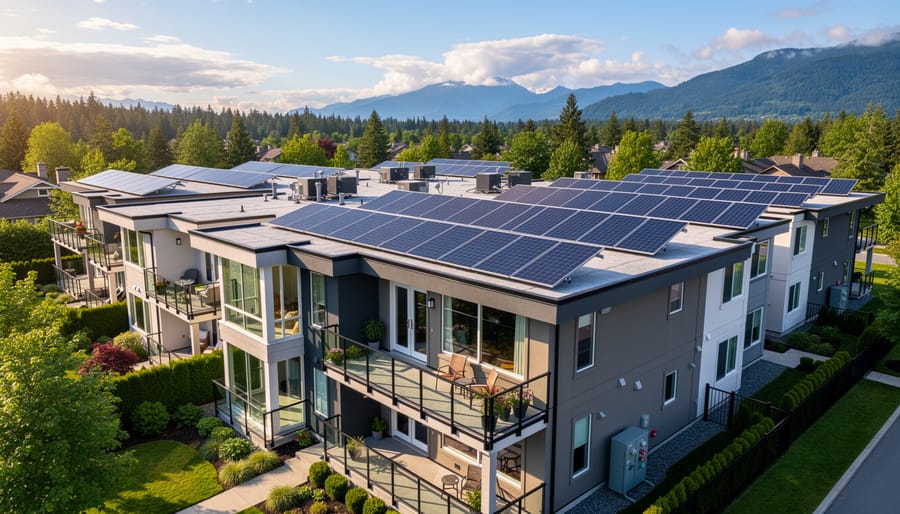
Successful BC affordable housing retrofits share several key elements that make them work. Understanding these common threads can help you plan your own project with confidence.
Community engagement stands out as the foundation of every successful retrofit. Projects that involve residents from the start see better results and fewer complications. When tenants understand why upgrades are happening and how they’ll benefit, they become partners rather than bystanders. Regular information sessions, translated materials for diverse communities, and feedback opportunities keep everyone on the same page.
Phased implementation is another winning strategy. Rather than attempting everything at once, successful projects tackle improvements in stages. This approach reduces disruption for residents, allows teams to learn from each phase, and makes large projects more manageable. Starting with energy audits, moving to weatherization, then advancing to systems upgrades and renewable energy creates a logical pathway.
Smart funding strategies combine multiple sources. The most successful projects layer federal, provincial, and municipal programs with utility rebates and financing options. This diversified approach reduces upfront costs and shortens payback periods.
Resident education programs ensure long-term success. Teaching occupants how to use new systems, adjust thermostats efficiently, and report maintenance issues early protects your investment. Simple guides, hands-on demonstrations, and ongoing support transform retrofits from one-time upgrades into lasting improvements that deliver promised savings year after year.
The Financial Case: Costs, Savings, and Available Funding
What to Expect in Upfront Costs
Understanding upfront costs helps you plan effectively for your multifamily retrofit project. In British Columbia, typical investments range considerably based on building size and chosen measures.
Insulation and air sealing projects typically cost between $15,000 to $45,000 for a 20-unit building, depending on existing conditions and accessibility. Window replacements average $800 to $1,500 per unit, while heat pump installations range from $3,000 to $7,000 per unit for ductless systems.
Solar panel installations represent a significant investment at approximately $2.50 to $3.50 per watt installed, meaning a 50kW system for a medium-sized building could cost $125,000 to $175,000 before incentives. However, BC’s strong solar incentives and net metering programs can reduce this by 30 to 50 percent.
Several factors influence your final costs: building age and condition, geographic location within BC, contractor availability, and project scope. Combining multiple measures often yields better per-unit pricing than tackling upgrades separately.
The good news: CleanBC and various municipal programs offer substantial rebates that can cover 40 to 60 percent of eligible costs. Many BC housing providers have found that strategic phasing and careful funding coordination make these improvements surprisingly affordable while delivering immediate utility savings.
Long-Term Savings for Residents and Property Owners
Completed retrofit projects across BC demonstrate significant financial benefits for multifamily housing. A Vancouver social housing complex reduced utility costs by 45% annually after upgrading to energy-efficient windows, improved insulation, and LED lighting—translating to $18,000 in yearly savings. These energy bill reductions directly benefit residents through lower monthly expenses.
Property owners also see maintenance savings through durable, modern systems. A Victoria apartment building reported 30% lower maintenance costs over five years following its retrofit, as new heating systems and weatherproofing reduced repair needs. Additionally, green retrofits typically increase property values by 5-10%, making buildings more attractive to prospective tenants and buyers.
Solar installations amplify these benefits further. One Burnaby townhouse complex installing rooftop solar panels now generates 60% of its electricity needs, saving approximately $24,000 annually while protecting residents from rising energy costs. These real-world examples show how strategic retrofits create lasting financial advantages while supporting BC’s climate goals.

BC and Federal Funding Programs You Can Access
BC and federal governments offer multiple funding streams to help make your multifamily retrofit project financially viable. Through CleanBC, the Better Buildings program provides incentives for energy efficiency improvements in existing buildings, including multifamily residential properties. This program covers upgrades like insulation, windows, and mechanical systems, helping reduce upfront costs significantly.
The Canada Mortgage and Housing Corporation (CMHC) offers financing through the Green and Inclusive Community Buildings program, which targets affordable housing providers with grants covering up to 75% of eligible retrofit costs. Their Rental Construction Financing Initiative also includes green building incentives for major renovations.
For solar installations specifically, the Canada Greener Homes Grant provides rebates for renewable energy systems, while BC Hydro’s Power Smart program offers additional incentives for energy-efficient equipment. Property managers can combine multiple funding sources to cover different aspects of their retrofit project.
Provincial property tax exemptions may apply for certain green building improvements, reducing long-term operating costs. Many regional districts also offer local rebates, so checking with your municipality is worthwhile.
The key is planning early and applying strategically. Most successful projects layer provincial and federal programs together, maximizing available support while addressing both immediate energy savings and long-term resilience goals for your affordable housing community.
How Solar Fits Into Your Multifamily Retrofit Strategy
Overcoming Common Solar Barriers in Multifamily Buildings
Multifamily buildings face unique challenges when adopting solar, but BC housing providers have developed practical solutions. The roof ownership question often tops the list of concerns. In strata buildings, common property decisions require majority approval, but the long-term savings typically convince residents once they see the numbers. Several Vancouver buildings have successfully navigated this by presenting detailed cost-benefit analyses at annual general meetings.
Electrical infrastructure presents another hurdle. Older buildings may need panel upgrades to accommodate solar systems, but BC Hydro’s Net Metering program helps offset these costs. One solution gaining traction in Victoria involves installing separate meters for common areas, allowing solar energy to power shared spaces like hallways and laundry facilities first.
Benefit allocation worries many property managers. Virtual net metering, where solar credits distribute among units, offers one approach. Alternatively, some buildings reduce common area electricity costs, lowering strata fees for everyone equally. A New Westminster complex reduced monthly fees by $40 per unit this way.
Co-op housing models simplify these challenges since ownership structures already support collective decision-making. The key is starting with thorough resident consultation and transparent communication about costs, savings timelines, and maintenance responsibilities. Provincial retrofit grants specifically address multifamily barriers, making projects more financially accessible than ever.
Pairing Solar with Other Energy Measures for Maximum Impact
The most successful multifamily retrofits in BC combine solar panels with complementary energy measures to maximize both environmental and financial benefits. When integrated thoughtfully, these systems work together to dramatically reduce energy consumption and costs.
Heat pumps paired with solar create an especially powerful combination. Solar panels generate electricity during daylight hours, which directly powers heat pumps for heating, cooling, and hot water. A Vancouver multifamily building reduced heating costs by 65% after installing rooftop solar alongside air-source heat pumps, with solar offsetting much of the electricity needed to run the pumps.
Improved insulation and air sealing form the foundation of any effective retrofit. By first reducing a building’s energy needs through better building envelope performance, you decrease the size and cost of the solar system required. One Victoria housing co-op saved $40,000 on their solar installation by completing insulation upgrades first, which lowered their energy demand by 30%.
Battery storage adds resilience by storing excess solar energy for evening use or emergency backup. During BC’s winter storms, buildings with battery systems maintain power for critical functions like lighting and elevators.
This integrated approach delivers compounding benefits: lower utility bills, improved resident comfort, reduced carbon emissions, and enhanced property values. Start by conducting an energy audit to identify which combination of measures will deliver maximum impact for your building’s specific needs.
Your Roadmap: Starting a Green Retrofit for Your Building
Step 1: Conduct an Energy Assessment
Starting your green retrofit begins with a professional energy assessment that identifies where your building loses energy and which upgrades will deliver the greatest impact. In British Columbia, qualified energy advisors use specialized equipment like thermal imaging cameras and blower door tests to detect air leaks, assess insulation levels, and evaluate heating systems. The assessment typically takes 3-4 hours and results in a detailed report ranking potential improvements by cost-effectiveness. Many BC utilities and government programs require this audit to qualify for rebates, making it an essential first step. The report will highlight quick wins like weatherstripping alongside larger investments such as heating system upgrades or solar panel installation. Property managers should request quotes from at least two certified advisors and ensure they’re familiar with multifamily buildings and local retrofit incentives.
Step 2: Prioritize Improvements and Build Your Team
Start by assessing which improvements will deliver the greatest energy savings and resilience benefits for your budget. Review energy audit recommendations and prioritize measures like building envelope upgrades, heating system replacements, and solar panel installations based on their payback period and tenant impact. In BC’s climate, focusing on air sealing, insulation, and efficient heating often yields the quickest returns.
Next, assemble a qualified team. Look for contractors experienced with multifamily retrofits and familiar with BC’s energy efficiency programs. Request references and review successful retrofit examples from their portfolio. Consider hiring an energy advisor to coordinate the project and ensure quality work.
For solar installations, verify contractors hold appropriate certifications and understand local building codes. Many BC housing providers benefit from working with consultants who specialize in navigating funding applications and managing tenant communication throughout the retrofit process. Creating a clear timeline with staged improvements helps minimize disruption while maintaining momentum toward your sustainability goals. Building strong partnerships now ensures your retrofit delivers lasting results for both your property and residents.

Step 3: Engage Residents and Secure Buy-In
Successful retrofits depend on resident cooperation and trust. Begin by hosting in-person information sessions where residents can ask questions and voice concerns about construction timelines, noise, and access to their units. Share clear timelines and what to expect at each phase, emphasizing how improvements will benefit them directly through lower utility bills, improved comfort, and healthier indoor air quality.
Create multilingual communication materials that explain the project in accessible terms, avoiding technical jargon. Consider forming a resident advisory committee to gather feedback and address issues as they arise. This approach was used successfully in Vancouver’s retrofit projects, where resident representatives helped bridge communication gaps and build community support.
Address common concerns proactively. Many residents worry about rent increases following upgrades. Be transparent about your commitment to affordability and any protections in place. Explain how energy savings can offset costs and detail any tenant assistance programs available.
Schedule disruptive work during convenient times and provide adequate notice. Offer temporary relocation assistance if needed for major upgrades like ventilation system installations. Keep communication channels open throughout the project through regular updates, suggestion boxes, and designated staff to handle questions. When residents feel heard and informed, they become champions of the retrofit rather than obstacles.
Green and resilient retrofits for multifamily affordable housing deliver powerful dual benefits: they reduce operating costs while protecting residents from climate impacts like extreme heat and flooding. These aren’t theoretical advantages—projects across British Columbia are already demonstrating proven energy savings while improving comfort and safety for vulnerable populations.
From Vancouver to the Interior, housing providers are successfully combining energy efficiency upgrades with climate resilience measures, accessing provincial and federal funding that makes these projects financially viable. Solar installations, improved insulation, modernized mechanical systems, and flood protection measures are working together to create housing that’s both affordable to operate and prepared for our changing climate.
The evidence is clear: retrofitted buildings consume less energy, cost less to maintain, and provide healthier living environments. Residents benefit from lower utility bills, improved indoor air quality, and protection during extreme weather events. Property managers see reduced operational expenses and increased building longevity.
Ready to explore retrofit opportunities for your building? Start by connecting with certified professionals who understand BC’s unique climate challenges and funding landscape. Solar BC’s network includes experienced contractors, engineers, and consultants who can assess your property, identify priority upgrades, and guide you through available incentive programs. Whether you manage a single building or an entire portfolio, the resources and expertise exist to help you move forward. The question isn’t whether green and resilient retrofits make sense—it’s how quickly you can get started.