
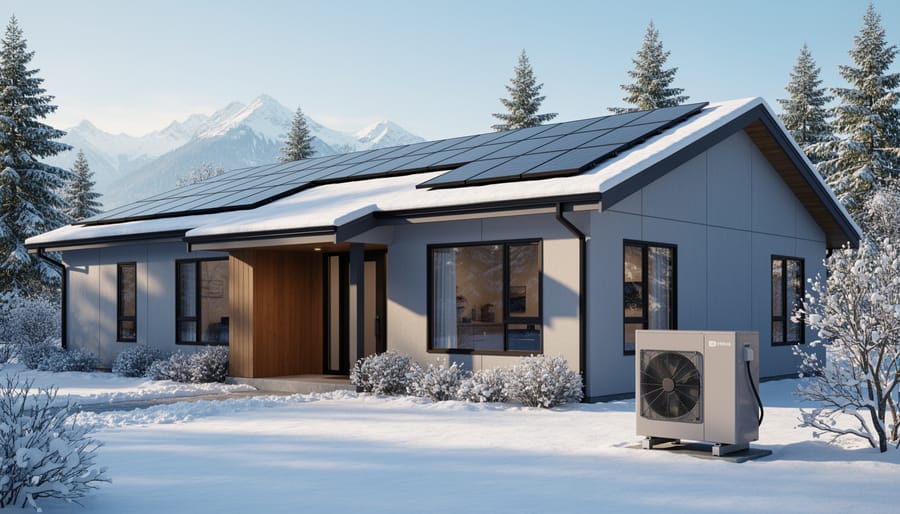
Net-zero HVAC systems combine cold-climate heat pumps with solar power to eliminate heating and cooling emissions—even during B.C.’s coldest months. Modern cold-climate heat pumps now operate efficiently down to -25°C or lower, extracting heat from outdoor air through advanced inverter technology that adjusts output based on demand. When paired with rooftop solar panels, these systems produce enough renewable electricity to offset their entire annual energy consumption, creating homes and buildings that contribute zero net carbon emissions.
B.C. homeowners are already proving this works in practice. A family in Kamloops installed a cold-climate heat pump alongside a 6kW solar array, achieving net-zero energy use throughout the year while reducing their utility bills by 85%. Similar projects in Prince George and the Kootenays demonstrate that harsh winter conditions don’t prevent net-zero success when systems are properly sized and integrated.
The economics have shifted dramatically in your favor. Federal rebates cover up to $5,000 for heat pump installations, while provincial incentives and net metering programs allow your solar panels to bank excess summer production as credits for winter use. Most B.C. homeowners recoup their investment within 8-12 years through eliminated heating costs, with systems lasting 20-25 years.
This guide walks you through proven strategies for achieving net-zero HVAC in B.C.’s climate, from selecting the right equipment to accessing local incentives, backed by real examples from your neighbors who’ve made the transition successfully.
What Net-Zero HVAC Really Means for B.C. Homeowners
The Energy Balance Equation
A net-zero home is beautifully simple in concept: it generates as much energy as it consumes over the course of a year. Think of it as a balanced equation where solar panels or other renewable sources on one side offset all your household energy use on the other. While lighting, appliances, and hot water contribute to your energy consumption, heating and cooling systems typically represent the single largest energy load in British Columbia homes, often accounting for 50-60% of total household energy use.
This makes your HVAC system the most critical piece of the net-zero puzzle. In B.C.’s climate, where we experience both chilly winters and warm summers, traditional heating systems can consume enormous amounts of energy. The good news? Modern cold-climate heat pumps have transformed this challenge into an opportunity. These efficient systems use significantly less energy than conventional furnaces or electric baseboards, making it realistic to offset their consumption with rooftop solar panels.
When you reduce your HVAC energy demand through efficient heat pump technology and then match that reduced consumption with solar generation, you achieve true net-zero status. It’s not about eliminating energy use, it’s about creating a sustainable balance that works year-round, even during B.C.’s coldest months.
Why Traditional Heating Falls Short
Traditional heating systems create a significant barrier to achieving net-zero energy homes, particularly in B.C.’s climate. Gas furnaces, while effective at heating, burn fossil fuels that release carbon emissions directly into the atmosphere. Even if you install solar panels on your roof, you can’t offset these emissions because the furnace requires natural gas to operate, not electricity. This means your home will always have a carbon footprint, regardless of how much renewable energy you generate.
Electric baseboards present a different challenge. Though they run on electricity that can be offset by solar, they’re remarkably inefficient. For every unit of electrical energy consumed, they produce only one unit of heat. During B.C.’s cold winters, these systems draw massive amounts of power, making it nearly impossible to generate enough solar electricity to cover your heating needs, especially during shorter winter days when solar production naturally decreases.
The carbon implications are clear: traditional heating keeps homes dependent on either direct fossil fuel consumption or inefficient electricity use that requires oversized, often unaffordable solar arrays. Fortunately, modern cold-climate heat pumps offer a practical alternative that makes net-zero achievable.
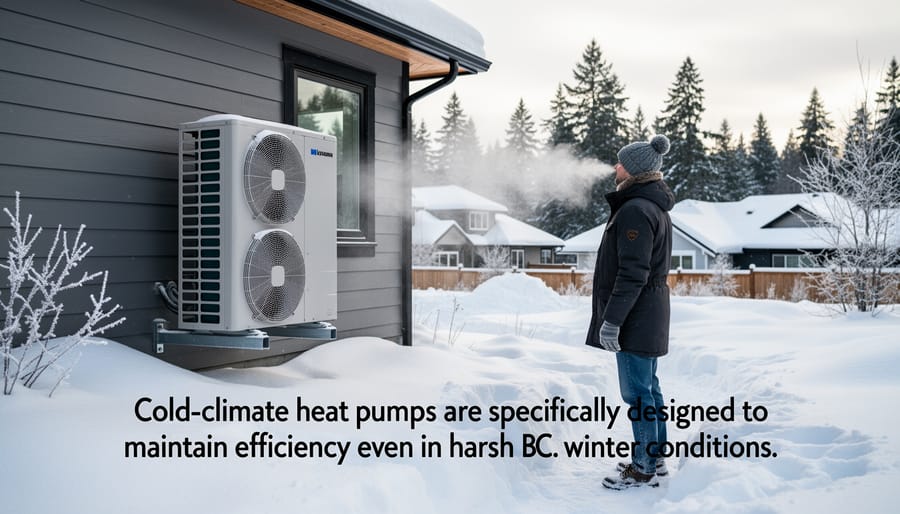
Cold-Climate Heat Pumps: The Game-Changer for B.C. Winters
How They Work at -25°C and Below
Modern cold-climate heat pumps use clever engineering to keep your home warm even when temperatures plummet well below freezing. Think of it like this: while older heat pumps struggled once the mercury dropped, today’s models are designed specifically for Canadian winters.
The key breakthrough is vapor-injection technology. In simple terms, this process gives the compressor an extra boost of refrigerant during cold weather, similar to how a turbocharger helps a car engine perform better. This allows the heat pump to extract warmth from outdoor air even at -25°C or colder, when you’d think there’s no heat left to capture.
Variable-speed compressors are the other game-changer. Unlike traditional systems that simply turn on and off, these compressors adjust their speed continuously based on how much heating you need. On a mild winter day, they run slower and use less electricity. When temperatures drop, they ramp up gradually to maintain comfort without the energy spikes of stop-start operation.
Together, these technologies mean heat pumps can operate efficiently throughout B.C.’s winter months. In places like Dawson Creek and Fort St. John, where winters are particularly harsh, homeowners are successfully using cold-climate heat pumps as their primary heating source. The systems automatically adapt to changing conditions, ensuring consistent warmth while minimizing electricity consumption—making them ideal partners for solar panels in achieving net-zero energy performance.
Real Performance Data from B.C. Installations
Real B.C. homeowners are proving that net zero HVAC isn’t just a theory—it’s working right now across our diverse climate zones. Let’s look at what actual installations are achieving.
In Vancouver’s coastal climate, the Chen family replaced their natural gas furnace with a cold-climate heat pump in 2022. Despite mild but damp winters, their system consistently delivers a Coefficient of Performance (COP) of 3.2, meaning they get three units of heat for every unit of electricity consumed. Combined with their 8kW solar array, their home achieved net zero energy over the full year, with summer solar production offsetting winter grid usage.
Moving to the interior, a Kelowna couple saw even more impressive results. Their installation handles temperature swings from -20°C winters to +35°C summers. During the coldest January week on record, their heat pump maintained a COP of 2.8—still nearly three times more efficient than electric baseboards. Their 10kW solar system generates enough annual energy to cover both heating and cooling loads, with grid export credits balancing winter consumption.
Even in northern communities like Prince George, where temperatures regularly drop below -25°C, properly sized cold-climate heat pumps are performing well. One homeowner reports maintaining comfortable indoor temperatures throughout winter with their dual-fuel system (heat pump plus backup) while their solar panels contribute significantly during shoulder seasons and summer months.
These real-world examples demonstrate that with proper system design and solar integration, net zero HVAC is achievable throughout British Columbia’s climate zones.
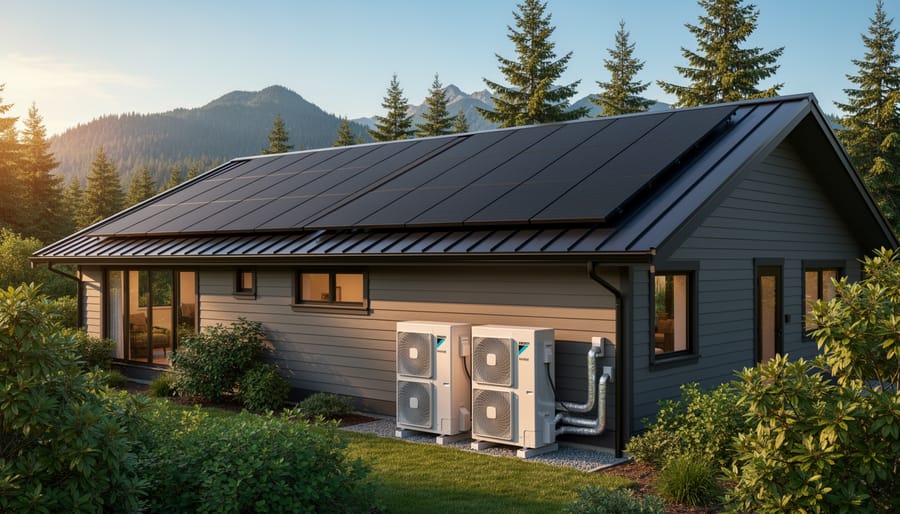
Pairing Heat Pumps with Solar: The Perfect Net-Zero Partnership
Sizing Your Solar System for HVAC Loads
Understanding how much solar capacity you need starts with calculating your heat pump’s annual energy consumption. Most cold-climate heat pumps in B.C. use between 3,000 to 8,000 kWh per year, depending on your home’s size, insulation quality, and local climate zone.
For a typical 1,500 square foot home in the Lower Mainland or southern Vancouver Island, a heat pump consuming roughly 4,500 kWh annually would require approximately a 4-5 kW solar array to offset that usage. Larger homes around 2,500 square feet might need 6-8 kW systems, while smaller homes or well-insulated builds could manage with 3-4 kW arrays.
To calculate your specific needs, start by reviewing your current heating and cooling costs. If you’re switching from natural gas or electric baseboard heating, your heat pump will likely reduce your total energy consumption, but you’ll want to account for year-round usage including summer cooling.
B.C.’s net metering program makes sizing easier because excess solar production during summer months offsets winter consumption when your heat pump works hardest. This means you don’t need battery storage to achieve net-zero, though solar-plus-storage systems provide additional resilience during grid outages.
Many B.C. solar installers offer free energy assessments that analyze your home’s orientation, roof space, and expected heat pump loads to recommend the optimal system size for achieving net-zero performance.
How Net Metering Makes Winter Work
British Columbia’s net metering programs are the key to making net-zero HVAC work year-round in our climate. Here’s how it works: during sunny summer months, your solar panels generate far more electricity than your heat pump needs for cooling. This excess energy flows back to the grid, and BC Hydro credits your account at the retail rate.
Think of it as banking sunshine. Those summer credits accumulate on your account, then offset the higher electricity your heat pump draws during winter heating season. While a cold-climate heat pump does use more power in January than July, your banked solar credits from May through September help balance the annual equation.
A typical Vancouver Island home might generate 8,000 kWh from May to September but only use 2,000 kWh for cooling. Those 6,000 kWh in credits then offset much of the 7,000 kWh needed for winter heating from November through March. Combined with energy-efficient heat pump technology, this seasonal credit system makes true net-zero achievable even in our northern climate, without needing expensive battery storage for every home.
Local Success Stories: Net-Zero Homes Across B.C.
Vancouver Island: Year-Round Comfort Without Gas
When the Chen family built their new home near Nanaimo in 2022, they made a bold decision: no natural gas connection at all. Instead, they installed a cold-climate heat pump paired with an 8.5 kW rooftop solar array, creating a fully electric net-zero home designed for Vancouver Island’s mild but damp climate.
Their monthly energy bills tell an impressive story. From November through February, BC Hydro charges average $85 per month. During spring and fall shoulder seasons, bills drop to $35-45. In summer, their solar production exceeds consumption, earning net metering credits that offset winter costs. Their annual energy expenses total roughly $600—a fraction of what comparable gas-heated homes pay.
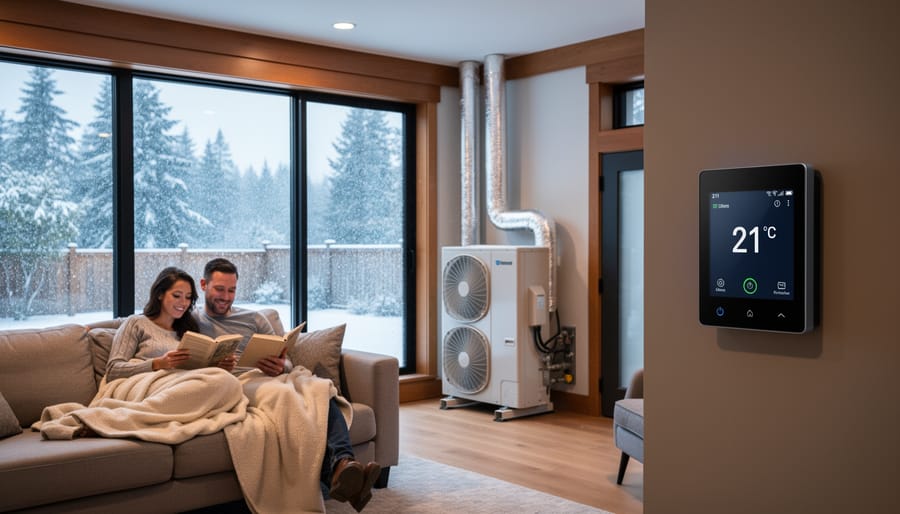
The comfort benefits surprised them most. Their ducted heat pump maintains consistent 21°C temperatures throughout the house, eliminating the cold spots and drafts they experienced in their previous home. The system also provides efficient cooling during occasional summer heat waves, a feature their old furnace couldn’t offer.
With available provincial and federal rebates covering nearly $11,000 of their installation costs, the Chens are on track to recover their investment within twelve years while enjoying superior comfort and energy independence year-round.
Okanagan Valley: Handling Temperature Extremes
The Johnson family in Kelowna faced a familiar challenge: scorching 35°C summers and frigid -15°C winters that seemed to demand both air conditioning and a powerful furnace. Their solution? A single cold-climate heat pump that handles both extremes while dramatically reducing their energy bills.
Installed in 2022, their heat pump extracts warmth from outdoor air even during January cold snaps, maintaining comfortable indoor temperatures of 21°C throughout winter. When summer arrives, the system reverses, efficiently cooling their 1,800 square-foot home without the energy drain of traditional air conditioning.
The real game-changer came from pairing the heat pump with a 7.5 kW rooftop solar array. During peak cooling season, their solar panels generate maximum power exactly when the heat pump needs it most. In winter, despite shorter days, the system still offsets a significant portion of their heating costs.
The results speak for themselves: the Johnsons reduced their annual energy costs by 68% and achieved net-zero status within their first year. Their experience demonstrates that even in climates with significant temperature swings, integrated heat pump and solar systems deliver year-round comfort and savings.
Northern B.C.: Proving It Works Where It’s Coldest
When people wonder whether net-zero is truly possible in Canada’s coldest regions, the community of Fort St. John provides a compelling answer. This northern B.C. town, where winter temperatures regularly dip below -30°C, has become home to several successful net-zero projects that combine cold-climate heat pumps with solar energy.
One residential example demonstrates exactly how this works in practice. A local family installed a cold-climate heat pump rated for operation down to -35°C, paired with an 8.5 kW rooftop solar array. During the long winter months, the heat pump draws electricity from the grid when solar production is minimal, but from April through September, their solar panels generate surplus energy that gets credited back through net metering. Over the full year, their energy consumption balances out to net-zero.
The key insight from northern projects is strategic sizing. These homeowners increased their solar capacity by approximately 20% compared to milder regions to compensate for reduced winter production. Combined with excellent insulation and triple-pane windows, their system proves that even in extreme cold, the heat pump and solar combination delivers reliable comfort while achieving net-zero performance over an annual cycle.
Cost Considerations and Available Incentives
Investment Required for Net-Zero HVAC
Transitioning to net-zero HVAC requires an upfront investment, but costs are becoming increasingly manageable. In British Columbia, a cold-climate heat pump system typically ranges from $15,000 to $25,000 installed, depending on your home’s size and existing infrastructure. This includes the outdoor unit, indoor air handlers, and professional installation optimized for our climate.
To offset this energy use with solar, most BC homes need an additional 2-4 kilowatts of solar capacity beyond what covers baseline electricity needs. This incremental solar investment adds roughly $5,000 to $10,000 to your project. In total, expect a combined investment of $20,000 to $35,000 for a complete net-zero HVAC solution.
The good news? Provincial and federal rebates can reduce costs by $5,000 to $10,000. With BC’s net metering program, many homeowners see payback periods of 10-15 years through energy savings. A Kelowna family recently achieved net-zero heating for $22,000 after rebates, saving $2,400 annually on energy bills. As electricity rates rise and equipment costs decline, these returns continue improving, making net-zero HVAC an increasingly smart investment for BC homeowners committed to sustainability.
Current Rebates and Financing Options
British Columbia residents pursuing net-zero HVAC retrofits have access to substantial financial support that makes the transition more affordable. The CleanBC Better Homes program offers rebates up to $11,000 for heat pump installations, with additional incentives available when combining multiple energy efficiency upgrades. Income-qualified households can receive even higher rebates, sometimes covering the majority of installation costs.
The federal Canada Greener Homes Grant provides up to $5,000 for eligible home retrofits, including cold-climate heat pumps and insulation improvements. Homeowners can also access interest-free loans up to $40,000 through the Canada Greener Homes Loan program, allowing you to spread costs over ten years while your energy savings begin immediately.
For those installing solar panels alongside HVAC upgrades, additional rebates may apply through utility programs. Many B.C. homeowners find that combining these incentives with solar integration creates a compelling financial case, with payback periods often shortened to 7-12 years.
Local credit unions and financial institutions also offer green mortgages and energy efficiency financing with favorable terms for net-zero projects. Some municipalities provide property tax exemptions for renewable energy installations, adding another layer of savings.
The key is starting with an EnerGuide home evaluation, which qualifies you for these programs and identifies which upgrades will deliver the greatest impact. Take advantage of free consultations from program advisors who can help you navigate rebate applications and maximize your financial support. With these resources combined, net-zero HVAC becomes an achievable goal rather than a distant dream.
Making the Switch: Your Net-Zero HVAC Roadmap
Starting with an Energy Assessment
Before upgrading to a net-zero HVAC system, a professional home energy assessment is essential. These evaluations identify where your home loses heat through air leaks, inadequate insulation, or inefficient windows. An energy advisor uses specialized equipment like blower door tests and thermal imaging to pinpoint problem areas that waste energy and money. This detailed analysis reveals your home’s actual heating and cooling needs, ensuring your new heat pump is properly sized. Oversized systems cycle on and off inefficiently, while undersized units struggle in extreme weather. In British Columbia, many homeowners discover they can downsize their heating equipment significantly after addressing air sealing and insulation first. The assessment also helps you prioritize upgrades, potentially reducing your required system capacity by 30-50 percent. This means lower upfront costs and smaller solar arrays needed to reach net-zero. Many BC utilities and programs offer rebates that cover most assessment costs, making this smart first step affordable.
Finding Qualified Cold-Climate Heat Pump Installers
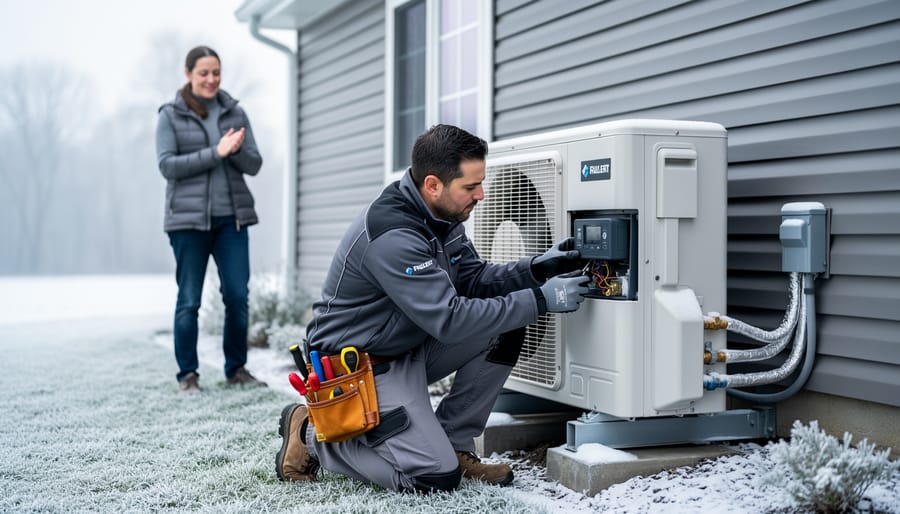
Finding the right installer is crucial for a successful net-zero HVAC system. Look for contractors certified by organizations like the Heat Pump and Renewable Energy Association of B.C. (HPRAC) or those with NATE (North American Technician Excellence) cold-climate heat pump specialization. These certifications ensure installers understand the unique requirements of B.C. winters.
Ask potential installers about their experience with cold-climate models and solar integration. Key questions include: How many cold-climate heat pump systems have you installed? Can you provide local references? How will you calculate proper sizing for my home? Do you coordinate with solar installers to optimize energy use?
A qualified installer should conduct a detailed heat loss assessment, explain backup heating options for extreme cold snaps, and help you access available provincial and federal rebates. They should also understand electrical panel capacity and how your system will interact with solar panels. Request written quotes from at least three certified installers, and don’t hesitate to ask about warranties and ongoing maintenance support.
Coordinating Solar and HVAC Installation
Timing your integrated renewable energy solutions correctly can save you money and headaches. For new construction, install your heat pump system first so your HVAC contractor can accurately calculate heating and cooling loads. This sizing information helps determine exactly how many solar panels you’ll need to offset your energy use. Your electrical panel upgrades should happen before either installation begins.
For retrofits, assess your current electrical capacity early. Many B.C. homes need panel upgrades to accommodate both a heat pump and solar inverter. Schedule this work first to avoid delays. Consider installing your heat pump during shoulder seasons when HVAC contractors are less busy and you can monitor its actual energy consumption for a few months. This real-world data provides accurate solar sizing rather than estimates.
Bundle both installations with the same contractor when possible, as some B.C. companies now offer combined heat pump and solar services, streamlining permits and coordination while potentially reducing costs.
Achieving net-zero HVAC in British Columbia’s climate is not only possible but increasingly practical and affordable. As you’ve seen throughout this guide, modern cold-climate heat pumps perform remarkably well even during our coldest months, and when paired with solar energy and battery storage, they can dramatically reduce or eliminate your heating and cooling costs while shrinking your carbon footprint.
The examples from Vancouver Island to the Interior demonstrate that homeowners and businesses across diverse B.C. climates are successfully making this transition. With provincial and federal incentives covering a significant portion of upfront costs, the financial barriers that once seemed insurmountable continue to decrease. Energy costs will likely rise over time, making your investment in net-zero HVAC even more valuable as you lock in predictable, low-cost energy independence.
The first step doesn’t have to be overwhelming. Start with a professional energy assessment to understand your home’s current performance and identify the most cost-effective improvements. This baseline will help you make informed decisions about heat pump sizing, solar capacity, and which upgrades deliver the greatest impact.
Solar BC offers comprehensive net-zero resources to guide your journey, including tools to calculate your potential savings and connections to certified installers throughout the province. Our network of experienced professionals understands B.C.’s unique climate challenges and can design systems tailored to your specific needs and budget. Take that first step today toward a more sustainable, cost-effective future.