
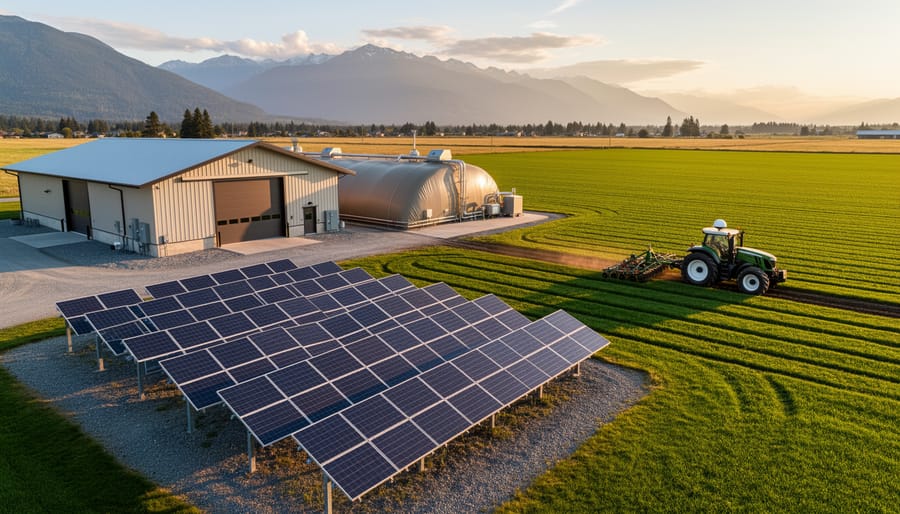
Translate cutting-edge greenhouse gas research into farm-level action by accessing peer-reviewed studies in the International Journal of Greenhouse Gas Control, then adapting proven methodologies to British Columbia’s unique agricultural landscape. BC farmers are already slashing emissions by implementing research-backed strategies that reduce operational costs while meeting environmental targets.
Start by identifying your farm’s primary emission sources through the journal’s agricultural carbon accounting frameworks, which break down methane from livestock, nitrous oxide from fertilizers, and carbon dioxide from equipment into measurable, manageable categories. This baseline assessment reveals where intervention creates maximum impact with minimum investment.
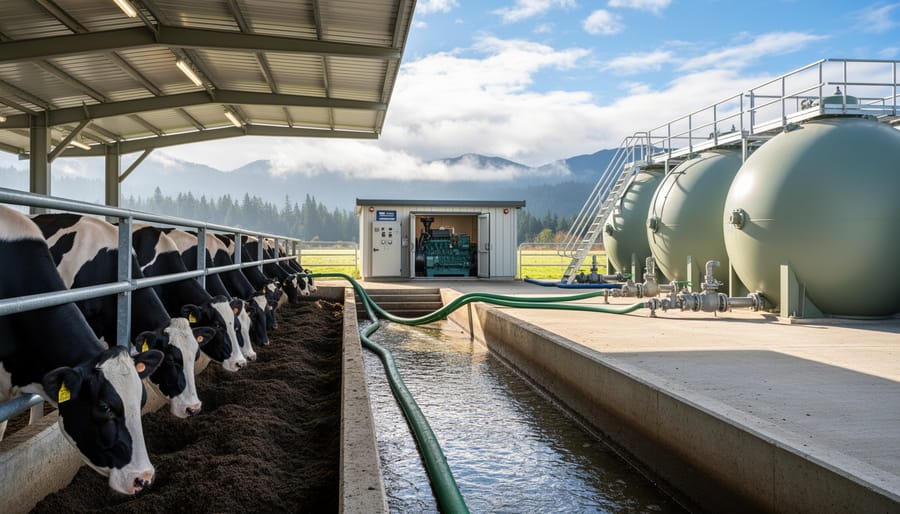
Apply the journal’s documented manure management innovations to reduce methane by 40-70 percent through covered storage systems or anaerobic digesters that convert waste into renewable energy for on-site use. Fraser Valley dairy operations have demonstrated these systems pay for themselves within 5-8 years while generating additional revenue streams.
Implement precision agriculture technologies validated in recent journal publications that optimize fertilizer application, cutting nitrous oxide emissions by up to 35 percent while reducing input costs. Variable-rate spreaders and soil sensors ensure crops receive exactly what they need, nothing more.
Integrate solar power systems to eliminate diesel consumption in irrigation, refrigeration, and processing operations. The journal’s life-cycle analyses consistently show solar installations deliver the fastest emission reductions per dollar invested in agricultural settings, with BC’s net metering policies accelerating payback periods to under seven years.
These evidence-based strategies transform abstract research into profitable, sustainable farming practices that position your operation as an environmental leader while strengthening your bottom line through reduced energy costs and access to carbon credit programs.
What the Journal of Greenhouse Gas Control Reveals About Farm Emissions
Breaking Down Agricultural Carbon Footprints
Agriculture’s carbon footprint comes from several key sources that BC farmers encounter daily. Understanding these emission points is the first step toward meaningful reduction.
Livestock operations generate the largest share through enteric fermentation, which is simply the digestive process in cattle and sheep that releases methane. A dairy farm in the Fraser Valley, for example, might find that their 100-cow herd produces emissions equivalent to driving 20 cars annually. Additionally, manure management contributes both methane and nitrous oxide, particularly in storage lagoons and composting areas.
Farm machinery and equipment represent another significant source. Tractors, combines, irrigation pumps, and transport vehicles burn diesel and gasoline throughout planting, maintenance, and harvest seasons. A typical grain farm in the Peace River region might use thousands of litres of fuel each growing season.
Soil management practices also play a crucial role. When farmers till their fields, disturb soil, or apply synthetic fertilizers, they release stored carbon and generate nitrous oxide, a greenhouse gas 300 times more potent than carbon dioxide. The good news is that BC farmers are discovering regenerative practices like cover cropping and reduced tillage that actually capture carbon rather than release it.
Energy use in heated greenhouses, grain dryers, and processing facilities adds to the total footprint. However, many BC operations are finding practical solutions, from switching to renewable energy sources to implementing energy-efficient technologies that reduce both emissions and operating costs.
Why Greenhouse Operations Need Different Solutions
British Columbia’s greenhouse vegetable industry faces unique emission challenges that differ significantly from field agriculture. Unlike open-field farming, controlled environment operations run year-round, requiring consistent heating during BC’s cooler months. A typical greenhouse in the Lower Mainland or Okanagan can consume massive amounts of natural gas for climate control, making heating the single largest source of emissions in these facilities.
The province’s greenhouse sector, which produces over 500 million pounds of vegetables annually, primarily tomatoes, peppers, and cucumbers, operates with specific energy needs. These facilities maintain precise temperature and humidity levels around the clock, creating a constant energy demand that traditional emission reduction strategies struggle to address effectively. Additionally, supplemental lighting during winter months adds to the energy footprint.
Research published in greenhouse gas control journals highlights that these operations require integrated solutions combining renewable energy sources, waste heat recovery, and advanced climate management systems. The challenge isn’t just reducing emissions but doing so without compromising crop yields or product quality. Many BC greenhouse operators are already exploring solar thermal systems and renewable natural gas as practical pathways forward, demonstrating that tailored approaches work better than one-size-fits-all solutions.
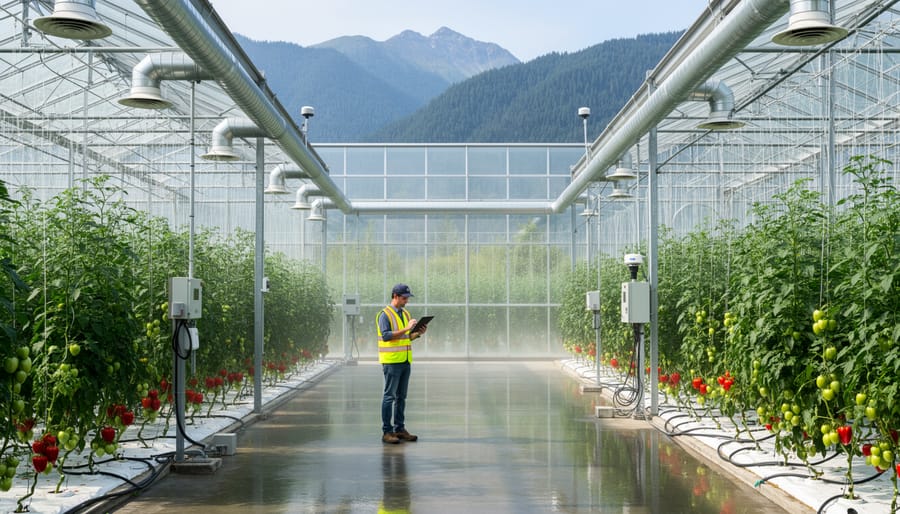
Real BC Farms Making the Switch: Decarbonization Case Studies
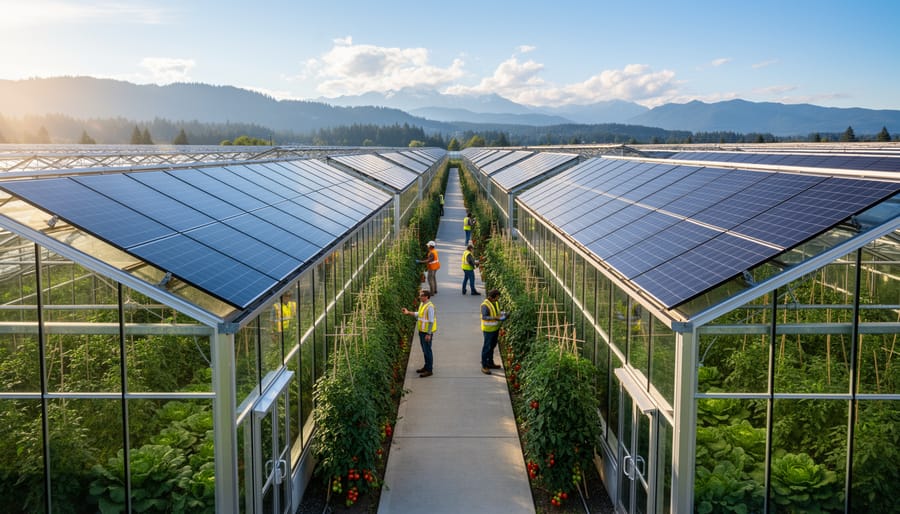
Fraser Valley Greenhouse Goes Solar-Powered
When Westham Island’s Longview Farms faced mounting heating costs and pressure to reduce their carbon footprint, owner Margaret Chen knew conventional propane systems weren’t sustainable long-term. Her 40,000 square-foot tomato greenhouse operation was consuming nearly $85,000 annually in fossil fuels just for heating and climate control.
In 2021, Chen partnered with local solar installers to design a hybrid system combining rooftop solar panels with ground-mounted arrays positioned between greenhouse rows. The project wasn’t without hurdles. Initial concerns centered on whether solar panels would block too much light needed for crop growth, and the substantial upfront investment of $180,000 seemed daunting.
The solution involved careful placement of bifacial solar panels that capture light from both sides, strategically positioned to maximize energy generation while minimizing shade on plants. Chen also integrated battery storage to ensure consistent power during cloudy winter months, though she maintained a backup propane system for extreme weather events.
The results exceeded expectations. Within the first year, Longview Farms reduced fossil fuel consumption by 67 percent, cutting annual heating costs to just $28,000. The solar system generated enough power to run automated ventilation, irrigation pumps, and supplemental LED grow lights. Chen projects the system will pay for itself within seven years through energy savings and provincial incentives.
Most importantly, the greenhouse now produces 45 tons fewer carbon emissions annually, equivalent to taking nine passenger vehicles off the road. Chen’s success has inspired neighboring farms to explore similar clean energy solutions, proving that agricultural operations can profitably transition away from fossil fuels while maintaining productivity.
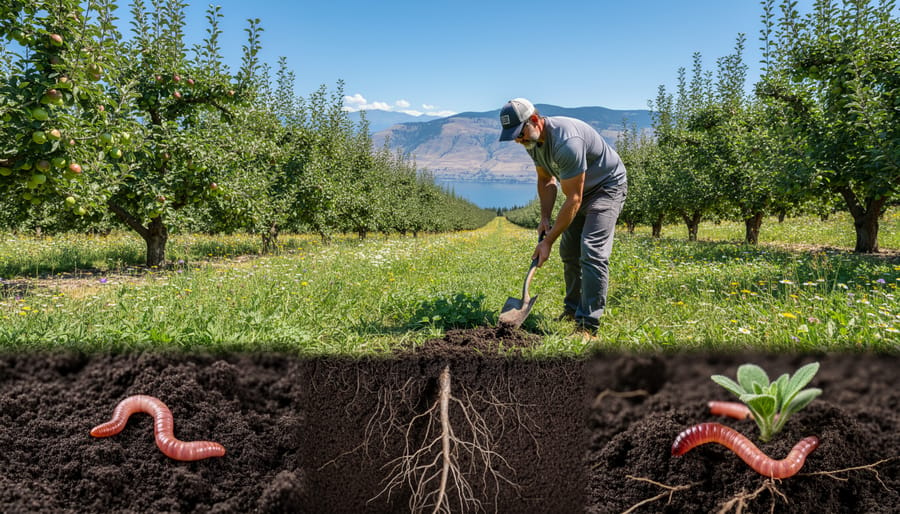
Okanagan Orchard’s Regenerative Approach
When the Thompson family took over Okanagan Orchard in 2019, their conventional apple farm was struggling with rising fertilizer costs and declining soil quality. Today, their transition to regenerative agriculture has cut greenhouse gas emissions by 42% while increasing yields by 18%, offering a roadmap for BC farms facing similar challenges.
The transformation began with cover cropping between tree rows. Instead of bare soil, the Thompsons planted a diverse mix of legumes, grasses, and flowering plants that capture atmospheric carbon while fixing nitrogen naturally. This simple change eliminated the need for synthetic nitrogen fertilizers, which are responsible for significant nitrous oxide emissions, a greenhouse gas 300 times more potent than carbon dioxide.
Composting apple waste on-site became another game-changer. Rather than sending organic material to landfills where it produces methane, the orchard now creates nutrient-rich compost that rebuilds soil organic matter. Lab testing showed their soil carbon content increased from 2.1% to 3.8% within three years, effectively turning their fields into carbon sinks.
The family also introduced mob grazing with sheep during dormant seasons. The animals naturally fertilize the orchard while controlling weeds, reducing both diesel consumption from mowing and herbicide use. Their flock’s manure adds beneficial microorganisms that improve soil structure and water retention.
These practices slashed operating costs by $23,000 annually while creating healthier, more resilient land. The Thompsons now mentor other Okanagan growers, proving that emission reduction and farm profitability can grow together when you work with nature rather than against it.
Vancouver Island Dairy Farm’s Biogas Success
Coastal Valley Dairy in the Comox Valley demonstrates how BC dairy farms can turn environmental challenges into energy opportunities. When owners Tom and Sarah Mitchell faced rising energy costs and growing concerns about their operation’s methane emissions, they partnered with local researchers to install an anaerobic digester system that processes manure from their 300-cow operation.
The system captures methane that would otherwise escape into the atmosphere and converts it into renewable biogas. This biogas now powers the farm’s milk cooling equipment, barn lighting, and heating systems. The results are impressive: the farm has reduced its greenhouse gas emissions by approximately 1,200 tonnes of CO2 equivalent annually, which equals taking about 260 cars off the road.
Beyond emissions reduction, the digester produces nutrient-rich fertilizer as a byproduct, reducing the farm’s need for commercial fertilizers. The Mitchells estimate saving $45,000 annually on energy costs alone, with the system expected to pay for itself within seven years.
What makes this success story particularly relevant for BC farmers is its scalability. While Coastal Valley’s system suits a mid-sized operation, similar biogas technology can be adapted for smaller farms through cooperative arrangements where multiple farms share digester facilities.
The project received support through provincial agricultural innovation programs and technical guidance from UBC’s Faculty of Land and Food Systems. This partnership approach demonstrates how academic research published in journals focused on greenhouse gas control translates directly into practical farming solutions that benefit both farm economics and environmental stewardship.
Practical Decarbonization Strategies Your Farm Can Implement Today
Quick Wins: Low-Cost Changes With Immediate Impact
Research published in leading greenhouse gas journals consistently shows that farms don’t need massive capital investments to start reducing emissions. Many BC agricultural operations have discovered that simple, strategic changes deliver measurable results within months.
Start with energy efficiency audits of your existing equipment. A dairy farm in the Fraser Valley reduced electricity consumption by 18% simply by upgrading to LED lighting and installing programmable thermostats in their milking parlour. The total investment was under $3,000, with payback achieved in less than a year through reduced energy bills.
Optimize your heating and ventilation schedules based on actual need rather than running systems continuously. Greenhouse operators in the Okanagan have successfully implemented zone heating, warming only occupied or actively growing areas during off-peak hours. This approach cuts natural gas usage without compromising crop quality.
Consider low-cost equipment modifications that improve efficiency. Switching to variable frequency drives on pumps and fans allows motors to run at optimal speeds rather than full capacity, reducing energy waste by up to 30%. Many BC farms qualify for rebates through provincial energy efficiency programs, further reducing upfront costs.
Even small adjustments to irrigation timing can decrease both water and energy consumption. Scheduling irrigation during cooler parts of the day minimizes evaporation and reduces the energy needed for pumping. One Abbotsford berry farm documented a 15% reduction in irrigation-related emissions through this simple scheduling change alone.
These quick wins build momentum and confidence for larger decarbonization projects while delivering immediate environmental and financial benefits.
Medium-Term Investments: Solar Integration and Energy Storage
Solar panels paired with battery storage offer BC farmers a practical path to reducing energy costs while cutting greenhouse gas emissions. For agricultural operations, this combination addresses two critical challenges: high daytime energy demands during processing and irrigation, and the need for reliable power in remote locations.
A typical BC farm solar installation ranges from 25 kW to 100 kW, with costs between $50,000 and $200,000 before incentives. Battery storage adds approximately $15,000 to $40,000 for systems capable of storing 10-20 kWh. While these numbers may seem substantial, the payback period in BC agricultural settings typically ranges from 8 to 12 years, depending on your current energy consumption and available incentives.
The Fraser Valley Dairy Farm case study demonstrates real-world application. This 200-cow operation installed a 60 kW solar array with 15 kWh battery storage, reducing annual electricity costs by $8,500 while powering milk cooling systems and automated feeders. Their system paid for itself in 10 years, and now generates predictable energy savings for decades to come.
Battery storage proves particularly valuable for farms with time-of-use rates or those processing products requiring consistent refrigeration. The batteries charge during peak solar production hours and discharge during evening milking or processing times, maximizing your solar investment.
BC’s net metering program allows you to sell excess solar generation back to the grid, creating additional revenue streams during low-demand periods. Combined with federal and provincial incentive programs offering rebates up to 25 percent of installation costs, the financial case for solar integration strengthens considerably. Consider starting with a smaller system and expanding as you verify performance and benefits specific to your operation.
Long-Term Transformation: Comprehensive System Changes
For BC farms committed to long-term emission reductions, comprehensive system changes offer the greatest impact. Transitioning to electric equipment represents a significant step forward, replacing diesel tractors and gas-powered tools with cleaner alternatives that reduce both emissions and operating costs over time.
Advanced climate control systems in greenhouses and livestock facilities can optimize heating and cooling while minimizing energy waste. These smart systems adjust automatically to weather conditions, ensuring efficient operation year-round. Several Fraser Valley farms have reduced their heating costs by 40% after installing programmable climate controls paired with improved insulation.
Renewable heating options deserve serious consideration for BC operations. Ground-source heat pumps, biomass boilers using agricultural waste, and solar thermal systems can replace fossil fuel heating. A Saanich Peninsula dairy farm now heats its facilities using a combination of solar thermal panels and a wood pellet system sourced from local forestry byproducts, eliminating propane use entirely.
While these transformations require upfront investment, provincial incentive programs and long-term energy savings make them increasingly accessible to farms of all sizes.
Funding and Support Available for BC Agricultural Decarbonization
British Columbia farmers and greenhouse operators have access to substantial financial support for implementing emission reduction strategies. Understanding these programs can make the difference between delaying action and starting your decarbonization journey today.
The Canadian Agricultural Partnership offers cost-share funding through the Environmental Farm Plan program, covering up to 70% of eligible project costs. BC farmers can access between $15,000 and $100,000 for initiatives like installing solar panels, upgrading to energy-efficient heating systems, or implementing precision agriculture technologies that reduce fossil fuel consumption.
At the federal level, the Agricultural Clean Technology Program provides substantial support for larger projects. Greenhouse operators looking to transition away from natural gas heating can receive up to $500,000 for renewable energy installations. The program specifically targets projects that demonstrate measurable emission reductions, making it ideal for operations ready to invest in solar thermal systems or biomass heating.
BC’s CleanBC Industry Fund presents another opportunity, offering grants to agricultural businesses that reduce greenhouse gas emissions while maintaining competitiveness. Recent recipients include Fraser Valley greenhouse operations that installed combined heat and power systems, cutting emissions by 40% while improving crop yields.
For smaller-scale projects, the BC Hydro Power Smart program provides incentives for energy-efficient equipment upgrades. Many BC berry farms have used these rebates to offset the cost of LED grow lights and efficient irrigation pumps, reducing both electricity consumption and operating costs.
To get started, contact your regional agrologist or visit the BC Ministry of Agriculture website to determine which programs align with your operation’s needs. Many successful applicants recommend starting with a professional energy audit to identify the most cost-effective improvements. With funding covering a significant portion of project costs, implementing emission reduction technologies has never been more accessible for BC’s agricultural community.
Measuring Your Success: Tools for Tracking Emission Reductions
Tracking your farm’s greenhouse gas reductions starts with establishing a clear baseline. Begin by calculating your current emissions using BC’s Agricultural Greenhouse Gas Calculator, a free tool that factors in fuel consumption, livestock numbers, and fertilizer use specific to our region. Document everything for at least one growing season to capture seasonal variations.
Once you’ve established your baseline, set up a simple monitoring system. Track monthly electricity bills, fuel receipts, and any changes in farming practices. Many BC farmers use spreadsheet templates available through local agricultural extension offices, making it easy to spot trends and improvements over time.
For solar installations, your inverter’s monitoring app provides real-time data on energy generation and carbon offset. This information proves invaluable when applying for grants or carbon credit programs. Fraser Valley berry farmer Sarah Chen reduced her operation’s emissions by 40% after installing solar panels, using her monitoring data to secure additional provincial funding for farm upgrades.
Consider these practical steps: photograph your meter readings monthly, save all energy bills in one folder, and note any operational changes that might affect emissions. Join regional farmer networks where members share their tracking experiences and success stories.
Documentation becomes particularly important when seeking funding through programs like the Canadian Agricultural Partnership. Clear, consistent records demonstrate your commitment to sustainability and help quantify the real impact of your emission reduction efforts, strengthening future grant applications while optimizing your farm’s environmental performance.
The journey from academic research to farm-level action is shorter than many BC farmers realize. As we’ve explored, the insights published in journals like the Journal of Greenhouse Gas Control provide the scientific foundation for practical decarbonization strategies that deliver both environmental and economic returns. Reducing agricultural emissions isn’t just about doing the right thing for our planet—it’s a smart business decision that can lower operating costs, improve soil health, and position BC farms as leaders in sustainable agriculture.
For farmers ready to begin their decarbonization journey, the path forward is clear. Start by conducting an energy audit of your operation to identify the biggest opportunities for emission reductions. Consider transitioning to solar power for irrigation systems, cold storage, and processing facilities—investments that typically pay for themselves within years while dramatically cutting your carbon footprint. Explore regenerative practices like cover cropping and reduced tillage that sequester carbon while improving yields.
You don’t have to navigate this transition alone. Solar BC offers resources specifically designed to help agricultural operations make informed decisions about renewable energy adoption. Our team understands the unique challenges BC farmers face and can connect you with funding opportunities, technical expertise, and local success stories from farms that have already taken the leap. Together, we can build a more resilient, profitable, and sustainable agricultural sector that benefits our communities and our climate.