
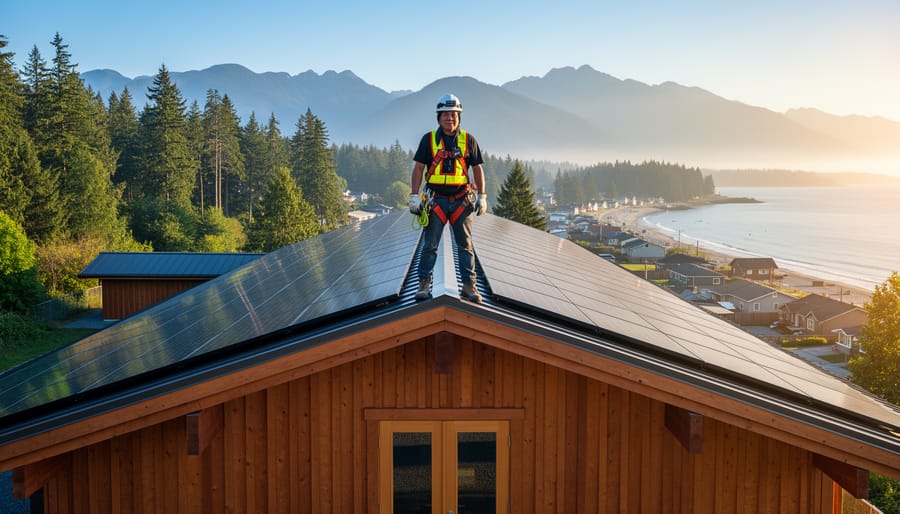
Across British Columbia, Indigenous communities are reclaiming energy sovereignty by developing renewable power projects that honor traditional values while generating economic opportunities and environmental benefits. Indigenized energy goes beyond simply installing solar panels or wind turbines on reserve lands—it means Indigenous communities controlling every aspect of energy projects, from initial planning and ownership structures through to operation and benefit distribution, ensuring decisions align with cultural protocols and community needs.
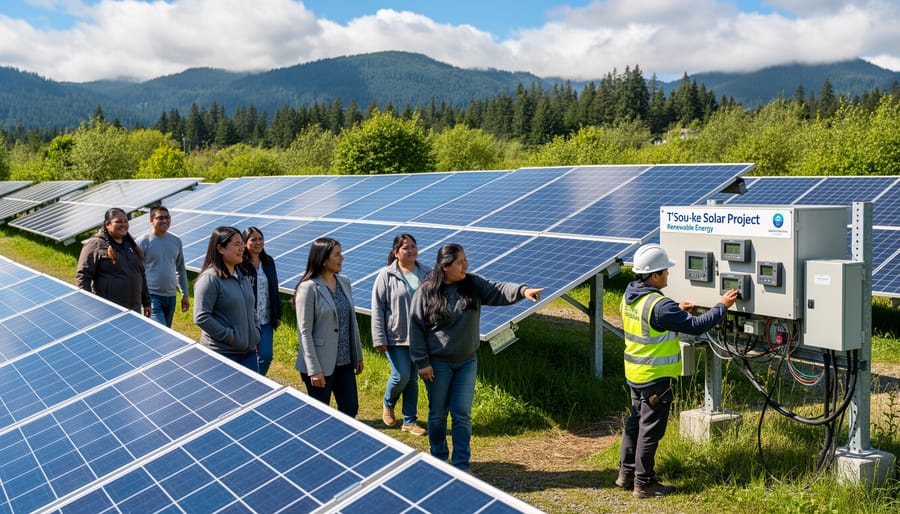
This approach transforms energy from an extractive industry that has historically harmed Indigenous territories into a tool for self-determination. When the T’Sou-ke Nation installed solar arrays on community buildings, they didn’t just reduce electricity costs—they created training programs, achieved energy independence, and demonstrated climate leadership on their terms. When Kanaka Bar Indian Band built BC’s first Indigenous-owned solar farm, they proved renewable energy could provide steady revenue while protecting the land for future generations.
The results speak clearly: lower energy costs, job creation, reduced greenhouse gas emissions, and strengthened community resilience. These aren’t aspirational goals—they’re measurable outcomes already happening in BC communities that chose to lead rather than wait for external solutions.
Understanding how these projects work, what challenges communities overcame, and which strategies proved most effective offers practical roadmaps for other Indigenous nations considering similar paths. The following case studies reveal not theoretical possibilities but proven approaches that BC Indigenous communities are implementing right now.
What Makes Energy ‘Indigenized’?
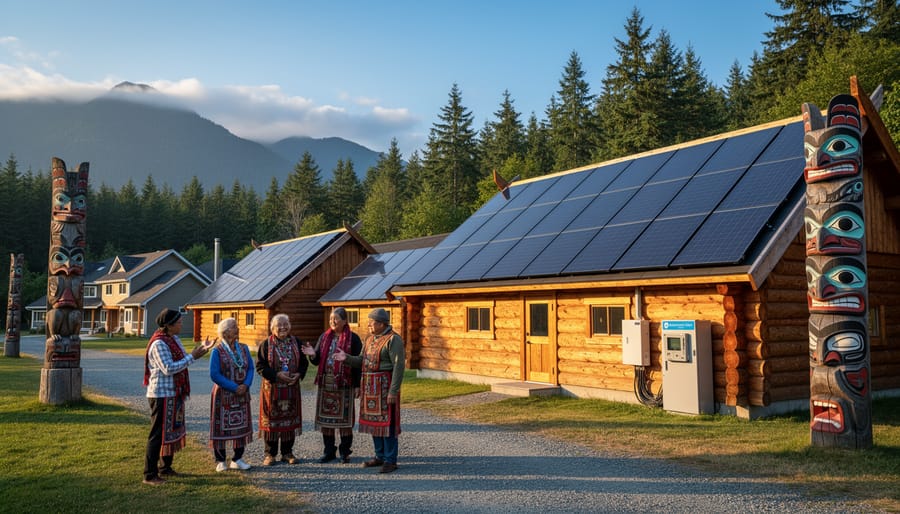
Beyond Ownership: Self-Determination in Energy
Indigenized energy goes far beyond Indigenous communities simply owning shares in energy projects. It represents a fundamental shift toward self-determination, where communities maintain complete control over how projects are developed, operated, and benefit local members.
At its core, this approach ensures that energy initiatives align with cultural values and traditional teachings. Rather than accepting standard industry models, communities decide whether projects respect sacred sites, protect traditional territories, and support cultural practices for future generations.
Benefits distribution looks different too. Instead of dividend cheques being the only measure of success, indigenized energy creates local jobs, provides skills training for community members, and generates revenue that funds education, elder care, and cultural programs. Communities determine their own priorities.
Decision-making authority remains within the community throughout the project lifecycle. This means Indigenous leadership guides everything from site selection and technology choices to hiring practices and operational protocols. The result is energy projects that strengthen community sovereignty while addressing climate change, creating a model that serves both environmental and social justice goals. For environmentally-conscious British Columbians, understanding this distinction is essential when supporting truly Indigenous-led clean energy initiatives.
Traditional Knowledge Meets Solar Technology
Indigenous communities across British Columbia are demonstrating how generations of environmental wisdom can enhance modern renewable energy projects. This approach goes beyond simply installing solar panels—it integrates traditional practices of seasonal observation, ecosystem monitoring, and collective decision-making into every phase of energy development.
For example, some communities consult with Elders to determine optimal placement for solar arrays, ensuring installations respect culturally significant viewpoints and wildlife migration patterns. Traditional ecological knowledge helps identify microclimates and weather patterns that Western meteorological data might miss, leading to more efficient system performance.
The decision-making process itself reflects ancestral governance models. Rather than top-down corporate structures, many Indigenous-led energy projects use consensus-based approaches that involve community members at every stage. This ensures projects align with both environmental sustainability and cultural values.
These communities also prioritize teaching younger generations about both traditional stewardship and technical skills, creating training programs that blend cultural teachings with hands-on solar installation experience. The result is energy independence that strengthens rather than replaces cultural identity, proving that the most innovative solutions often come from honoring the past while building for the future.
BC Indigenous Communities Powering the Future
T’Sou-ke Nation: Solar Pioneers on Vancouver Island
Located on southern Vancouver Island, the T’Sou-ke Nation has become a leading example of how Indigenous communities can achieve energy independence through solar power. Starting in 2009, this small First Nation of approximately 250 members embarked on an ambitious journey that would transform their relationship with energy and inspire communities across Canada.
The project began with installing solar panels on community buildings, including the administration office, health center, and homes. Today, T’Sou-ke generates more electricity than it consumes, selling excess power back to the grid and creating a new revenue stream. The community installed over 500 kilowatts of solar capacity, dramatically reducing their carbon footprint while cutting energy costs by approximately 90 percent.
Beyond the impressive technical achievements, the project created meaningful community benefits. T’Sou-ke trained local members in solar installation and maintenance, developing skills that led to employment opportunities. The Nation now offers consulting services to other communities interested in renewable energy, sharing their expertise and generating additional income.
What makes T’Sou-ke’s approach particularly valuable is their emphasis on community engagement throughout the process. They held numerous meetings to ensure members understood the technology, benefits, and long-term vision. This inclusive approach built strong support and helped younger generations connect with environmental stewardship values.
The lessons from T’Sou-ke are clear: start with visible community buildings to demonstrate impact, invest in training local members, seek partnerships with experienced solar companies, and maintain patience throughout the process. Their success proves that even smaller communities with limited initial resources can achieve energy independence through careful planning, strong leadership, and commitment to sustainable practices. For BC communities considering solar energy, T’Sou-ke demonstrates that the investment pays dividends in financial savings, job creation, and community pride.
Tla-o-qui-aht First Nations: Remote Power Solutions
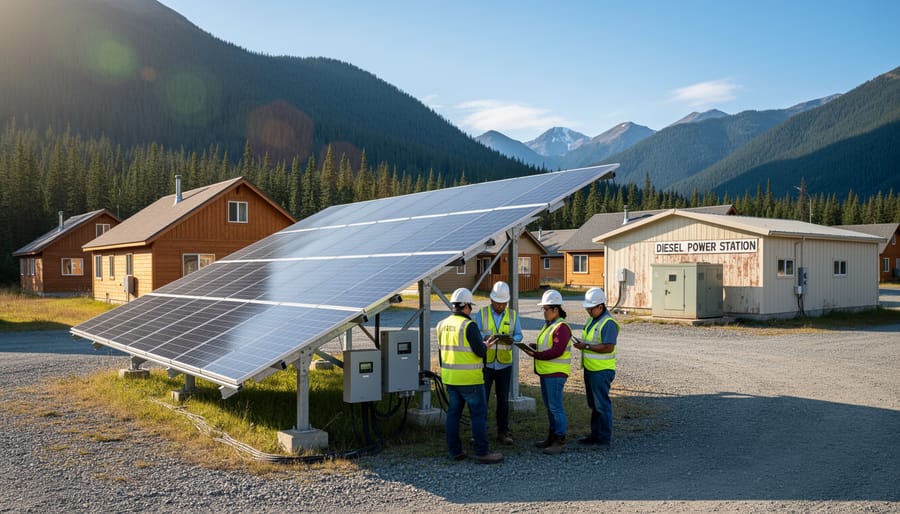
Located on the remote west coast of Vancouver Island, the Tla-o-qui-aht First Nations faced a significant challenge: their isolated communities of Opitsaht and Ty-histanis had no access to BC Hydro’s power grid. For years, residents relied entirely on diesel generators, which meant high fuel costs, transportation challenges, and environmental concerns. The community decided to take control of their energy future by developing a hybrid renewable energy system that would serve as a model for other remote Indigenous communities.
In 2016, the Tla-o-qui-aht installed a groundbreaking off-grid solar and battery storage system, combined with their existing diesel generators as backup. The project included over 100 solar panels and advanced battery storage technology, reducing diesel consumption by approximately 30 percent annually. This translates to roughly 20,000 liters of diesel fuel saved each year, significantly lowering both costs and greenhouse gas emissions.
The geographical isolation that once seemed like an obstacle became an opportunity for innovation. Community members received training in solar installation, system maintenance, and energy management, creating local employment opportunities where few existed before. Young people who might have needed to leave for work could now build careers at home.
What makes this project particularly inspiring is how the Tla-o-qui-aht integrated their energy independence goals with community values. The system powers essential services including the health center, administration building, and community facilities. By reducing their dependence on diesel, they’ve improved air quality and reduced the noise pollution that diesel generators create.
The success demonstrates that remote doesn’t mean powerless. Other isolated communities across British Columbia now look to the Tla-o-qui-aht as proof that hybrid renewable energy systems can work even in challenging coastal environments with limited sun exposure during winter months.
Kanaka Bar Indian Band: Micro-Hydro and Solar Integration
Nestled in the Fraser Canyon, the Kanaka Bar Indian Band has become a national leader in renewable energy innovation. This small community of approximately 300 members achieved something remarkable: complete energy independence through a smart combination of micro-hydro and solar technologies.
Their journey began in 2008 when they installed a 100-kilowatt micro-hydro system on Whitehead Creek, harnessing the natural flow of water rushing down the mountainside. This system now generates clean electricity year-round, taking advantage of the consistent water flow in their region. But the community didn’t stop there. They added a 120-kilowatt solar array, strategically designed to complement their hydro system by providing peak power during sunny summer months when water levels naturally decrease.
This dual-technology approach solved a common challenge in renewable energy: seasonal variation. When one resource is less available, the other compensates, ensuring reliable power throughout the year.
The results speak volumes. Kanaka Bar reduced their annual energy costs by approximately $100,000, money that now stays within the community to fund education, healthcare, and other essential services. They’ve eliminated their reliance on diesel generators, cutting greenhouse gas emissions significantly while creating local employment opportunities in system maintenance and monitoring.
What makes their success particularly inspiring is the transferability of their model. Other communities with similar geographic features can adapt this integrated approach, combining local renewable resources to achieve energy self-sufficiency while building economic resilience and reducing environmental impact.
Other BC Indigenous Clean Energy Initiatives
Indigenous leadership in clean energy extends across British Columbia, with communities embracing diverse renewable technologies. The Tla’amin Nation on the Sunshine Coast has integrated solar installations into community buildings, reducing energy costs while demonstrating renewable energy’s practical benefits. In northern BC, several First Nations are exploring wind energy potential on their territories, conducting feasibility studies that could lead to significant projects. The Adams Lake Indian Band has championed micro-hydro developments that generate power without large-scale environmental disruption. Meanwhile, coastal communities are investigating marine renewable energy options that align with their connection to ocean resources. These initiatives showcase how Indigenous communities are tailoring renewable solutions to their unique landscapes and needs, proving that sustainable energy leadership takes many forms across the province.
The Community Benefits That Matter Most
Economic Independence and Job Creation
Indigenous-led energy projects are proving to be economic game-changers for BC communities. The T’Sou-ke Nation’s solar installation has cut electricity costs by over $2,000 monthly while generating approximately $1,000 in revenue through BC Hydro’s net metering program. This translates to nearly $36,000 in annual savings and income combined, funds that support community programs and services.
The Cowichan Tribes’ 75kW solar array delivers similar financial benefits, reducing operational costs for community buildings while creating six full-time positions in system maintenance and energy management. These aren’t temporary construction jobs—they’re lasting career opportunities that keep skilled workers in the community.
Beyond individual projects, indigenized energy initiatives spark broader economic development. Local youth gain training in renewable energy installation and maintenance, skills increasingly valuable across BC’s growing clean energy sector. The Old Massett Village solar project employed 12 community members during installation and established an ongoing maintenance program that trains two apprentices annually.
Revenue independence means communities can direct more resources toward housing, education, and cultural programs rather than utility bills. For communities considering similar projects, these real-world examples demonstrate that indigenized energy isn’t just environmentally responsible—it’s financially smart.
Cultural Revitalization and Youth Engagement
Indigenous-led energy projects are creating powerful opportunities for young people to reconnect with their cultural heritage while gaining valuable skills for the future. Across British Columbia, youth involvement in renewable energy initiatives is bridging traditional land stewardship practices with modern technical expertise, fostering both cultural pride and career pathways.
When young community members participate in solar panel installations or wind energy projects, they learn more than electrical systems. They’re engaging with ancestral teachings about responsibility to the land and future generations. Elders often work alongside youth during these projects, sharing traditional ecological knowledge about seasonal patterns, local weather systems, and sustainable resource management—knowledge that proves surprisingly relevant to optimizing renewable energy systems.
For example, some communities integrate youth training programs that combine hands-on technical skills like electrical work and project management with cultural education sessions. Young people learn to read traditional weather indicators that their ancestors used, understanding how these same observations can predict solar production or wind patterns. This blend of old and new creates confident young leaders who can speak both languages—traditional and technological.
The economic benefits also matter. Youth who gain certifications through these energy projects often become employed within their own communities, reducing the need to leave home for work opportunities. This keeps families together and strengthens community cohesion. Additionally, seeing young people take leadership roles in major infrastructure projects inspires younger children and demonstrates that their culture and modern innovation aren’t opposing forces—they’re complementary strengths that can power sustainable futures.
Lessons for Other Communities Considering Solar
Start with Community Vision, Not Just Technology
The most successful Indigenous clean energy projects in British Columbia begin with conversations, not equipment catalogs. Before discussing solar panels or wind turbines, communities gather to answer fundamental questions: What does energy sovereignty mean to us? How can renewable energy support our cultural practices and economic goals? What does success look like for our children and grandchildren?
This vision-first approach ensures technology serves the community, not the other way around. For example, some BC First Nations prioritize energy projects that create local employment and training opportunities, while others focus on reducing diesel dependence in remote locations or generating revenue for cultural programs.
Community engagement at this stage looks different for every nation. It might involve elder consultations, youth workshops, or traditional governance processes. The key is ensuring diverse voices shape the project from day one, establishing clear goals that reflect authentic community values rather than external expectations.
When communities define success on their own terms first, they make better decisions about partnerships, technology choices, and project scale. This foundation also strengthens project resilience, as community ownership and vision help navigate inevitable challenges during development and implementation.
Finding the Right Partners and Funding
Securing the right partners and funding is essential for successful Indigenous-led energy projects. Start by exploring federal and provincial grant programs designed specifically for Indigenous clean energy initiatives. The Indigenous Community-Based Climate Monitoring Program and BC’s CleanBC Indigenous Clean Energy Initiative offer substantial funding opportunities. Many First Nations have successfully accessed these resources by building strong proposals that demonstrate both environmental benefits and community economic development.
When selecting installation partners, prioritize companies with demonstrated experience working respectfully with Indigenous communities. Ask potential contractors about their understanding of consultation protocols, willingness to hire locally, and commitment to knowledge-sharing. The best partnerships involve genuine collaboration rather than simple vendor relationships.
Building collaborative networks strengthens your project. Connect with other Indigenous communities who have completed similar initiatives—they can provide invaluable guidance on navigating funding applications and avoiding common pitfalls. Organizations like the BC First Nations Energy and Mining Council facilitate these connections and offer technical support.
Consider forming partnerships with local environmental organizations, universities, and businesses that share your values. These relationships can provide additional technical expertise, leverage matching funds, and create opportunities for training community members in renewable energy skills that build long-term capacity.
Indigenous communities across BC are proving that the future of clean energy isn’t just about technology—it’s about people, values, and self-determination. From T’Sou-ke Nation’s solar installations to Kanaka Bar’s micro-hydro systems, these projects show us that renewable energy works best when communities lead the way, making decisions that reflect their unique needs and long-term vision.
The lessons from indigenized energy are clear: prioritize local ownership, center community benefits over profit, and ensure projects strengthen cultural identity rather than compromise it. These aren’t just principles for Indigenous communities—they’re a blueprint for anyone seeking meaningful, sustainable energy solutions.
Ready to bring these values to your own energy journey? Whether you’re a homeowner, business, or community organization in BC, exploring solar options is an excellent first step. Solar BC connects you with certified installers who understand local conditions and can help design systems that align with your goals. Beyond installation, consider how your project can create broader benefits—supporting local jobs, reducing your carbon footprint, and contributing to BC’s clean energy future.
The shift toward indigenized energy reminds us that the best solutions emerge when we listen to communities and let values guide our choices.