
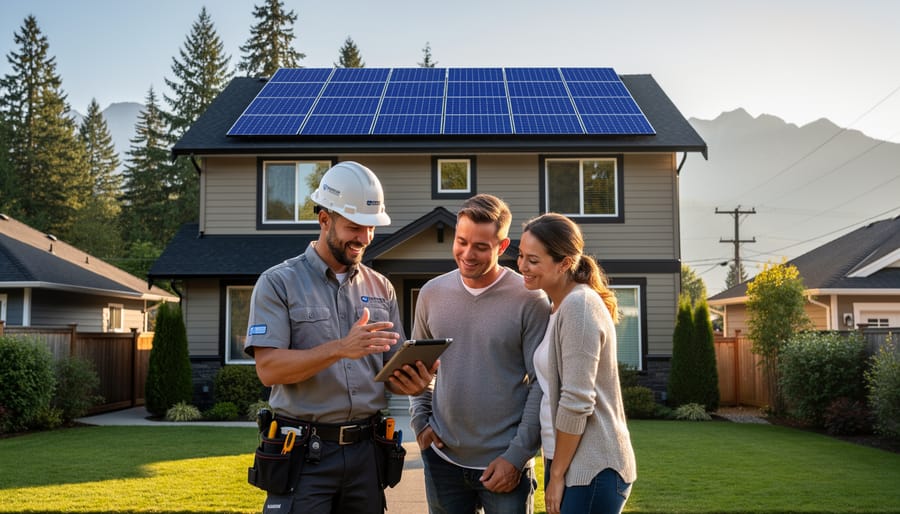
Consider whether you’re ready to go solar without the upfront cost barrier. A Power Purchase Agreement (PPA) allows you to install solar panels on your British Columbia property with zero initial investment while immediately reducing your electricity bills. Under this arrangement, a third-party company owns and maintains the system on your roof, and you simply purchase the clean energy it generates at a predetermined rate—typically lower than BC Hydro’s standard rates.
Evaluate your monthly energy expenses against the PPA rate structure. Most agreements lock you into 20-25 year contracts where you pay only for the solar electricity produced, measured in kilowatt-hours. This predictable pricing shields you from future utility rate increases while supporting your environmental goals. However, the long-term commitment means you’re not building equity in the system like you would through direct ownership.
Compare PPAs against other Solar Panel Financing Options available in BC before committing. While PPAs eliminate maintenance responsibilities and require no credit checks, purchasing systems through loans or leases often delivers greater lifetime savings. Your property type, roof condition, and how long you plan to stay in your home significantly impact which financing model serves you best. Understanding these trade-offs empowers you to make a confident decision aligned with both your financial situation and sustainability values.
What is a Power Purchase Agreement (PPA)?
Think of a Power Purchase Agreement like renting your electricity directly from the sun. Instead of buying solar panels outright or taking out a loan, you’re essentially agreeing to purchase the power those panels generate, while a solar company handles everything else.
Here’s how it works: a solar provider installs panels on your property at no upfront cost to you. They own the system, maintain it, and handle all repairs. You simply agree to buy the electricity those panels produce at a predetermined rate, typically lower than what BC Hydro charges. It’s similar to how you currently pay for electricity from the grid, except the source is right on your roof and the price is often more predictable.
The key difference from buying is straightforward: with a purchase, you own the equipment and receive all the benefits (and responsibilities). With a PPA, you’re a customer buying clean energy, not an equipment owner. You’re not responsible if a panel breaks or needs cleaning. That’s the solar company’s job.
Leasing sits somewhere in the middle. When you lease, you’re essentially renting the panels themselves and paying a fixed monthly amount regardless of how much power they generate. With a PPA, you only pay for the actual electricity produced. If it’s a cloudy month, your bill is lower. If it’s sunny, you use more solar power and pay accordingly.
For many BC homeowners and businesses, this arrangement removes the biggest barrier to going solar: the initial investment. A local Kelowna cafe recently shared how their PPA allowed them to redirect money previously earmarked for a system purchase toward expanding their patio instead, while still reducing their carbon footprint and energy costs from day one.
The payment structure is simple. You’ll sign a long-term contract, usually 20 to 25 years, agreeing to a per-kilowatt-hour rate. This rate often includes a small annual escalator, but it’s typically lower than projected utility rate increases.
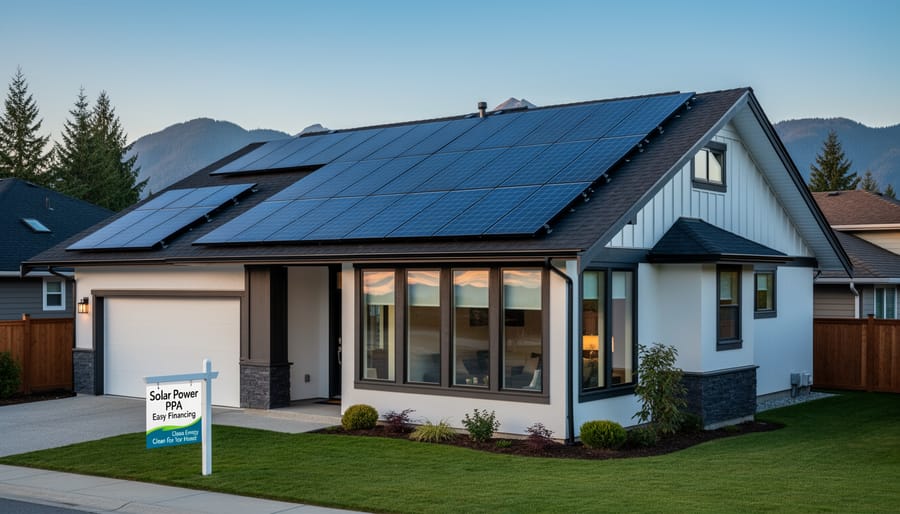
How PPA Solar Works in British Columbia
In British Columbia, the PPA solar process typically begins with a free assessment of your property by a qualified solar provider. During this evaluation, they’ll examine your roof’s condition, sun exposure, energy consumption patterns, and review your BC Hydro bills to determine the optimal system size for your needs.
Once you decide to proceed, you’ll sign a PPA agreement that outlines the terms of your arrangement. Most BC solar PPAs span 20 to 25 years, with monthly payments based on the actual electricity your panels produce, measured in kilowatt-hours. The rate you pay per kilowatt-hour is typically lower than BC Hydro’s residential rates and often includes annual escalators of around 1-2%, which still remain competitive over time.
The solar company handles all installation work, usually completed within one to three days for residential systems. They’ll also manage all necessary permits and inspections, including approval from your local municipality and BC Hydro interconnection requirements. This means you won’t need to navigate the paperwork yourself.
A crucial element in BC is net metering, which BC Hydro offers to solar customers. When your panels generate more electricity than you’re using, the excess flows back to the grid, and you receive credits on your BC Hydro bill. Your solar provider will coordinate the net metering application as part of the installation process. These credits roll forward for 12 months, helping offset energy costs during darker winter months when production dips.
Throughout the agreement period, the solar company monitors system performance remotely and handles all maintenance and repairs at no additional cost to you, ensuring optimal energy production year-round.
The Real Costs: What You’ll Actually Pay
Understanding what you’ll actually pay with a solar PPA is simpler than you might think. Unlike purchasing a system outright, you’re essentially buying the electricity your panels produce at a predetermined rate, with no upfront costs for equipment or installation.
Under a typical PPA agreement, you pay a fixed rate per kilowatt-hour (kWh) of solar energy generated. In British Columbia, PPA rates generally range from $0.10 to $0.14 per kWh, depending on your system size, location, and the provider’s terms. This pricing structure remains stable throughout your contract, usually spanning 20 to 25 years.
How does this compare to BC Hydro? Currently, residential customers in BC pay approximately $0.0939 per kWh for the first 1,376 kWh used in a billing period, then $0.1408 per kWh beyond that threshold. While PPA rates might initially seem comparable or slightly higher, remember that BC Hydro rates historically increase over time. Since 2010, residential electricity rates in BC have risen by an average of 2-3% annually. Your PPA rate, however, typically includes only modest annual escalations (often 1-2%) built into the contract, providing protection against larger utility rate hikes.
Let’s look at a practical example. Consider the Chen family in Kelowna, who installed a 6 kW solar system through a PPA at $0.12 per kWh. Their system generates approximately 7,200 kWh annually, resulting in annual payments of around $864 to their PPA provider. Meanwhile, they’ve effectively eliminated that portion of their BC Hydro bill. Over 25 years, assuming BC Hydro rates continue rising at 2.5% annually while their PPA escalates at just 1.5%, the Chens could save thousands compared to relying solely on grid electricity.
The transparency of PPAs means you’ll never face surprise maintenance bills or equipment replacement costs—those responsibilities remain with the system owner.
PPA Benefits: Why BC Homeowners Choose This Option
BC homeowners are increasingly choosing Power Purchase Agreements for solar installations because they remove the biggest barrier to going solar: the upfront cost. With a PPA, you can start generating clean energy on day one without touching your savings or taking out a loan. This zero-investment entry point makes solar accessible to families who want to reduce their environmental impact but may not have $15,000 to $30,000 available for an outright purchase.
The maintenance coverage included in most PPAs provides genuine peace of mind. Your solar provider handles all repairs, monitoring, and system upkeep throughout the agreement term. If a panel underperforms or an inverter needs replacement, you simply make a phone call. This contrasts with owning a system, where unexpected repair costs become your responsibility.
Predictable energy costs represent another practical advantage in BC’s evolving energy market. While BC Hydro rates have historically been among Canada’s lowest, recent increases signal a changing landscape. With a PPA, you lock in your solar electricity rate for 20 to 25 years, creating a hedge against future utility rate hikes. You’ll know exactly what portion of your energy bill remains fixed, making household budgeting more manageable.
The environmental impact resonates deeply with BC residents committed to climate action. A typical residential solar system offsets approximately 3 to 4 tonnes of carbon dioxide annually, equivalent to planting 100 trees each year or taking a car off the road for months at a time.
Consider the experience of the Richardson family in Kelowna. After signing a PPA in 2021, they immediately reduced their grid electricity consumption by 65 percent. “We loved that we could go solar without draining our renovation fund,” Sarah Richardson shares. “Two years later, we’re saving about $80 monthly on electricity, and our system has required zero maintenance effort from us. It just works, and we feel good knowing we’re contributing to BC’s clean energy future.”
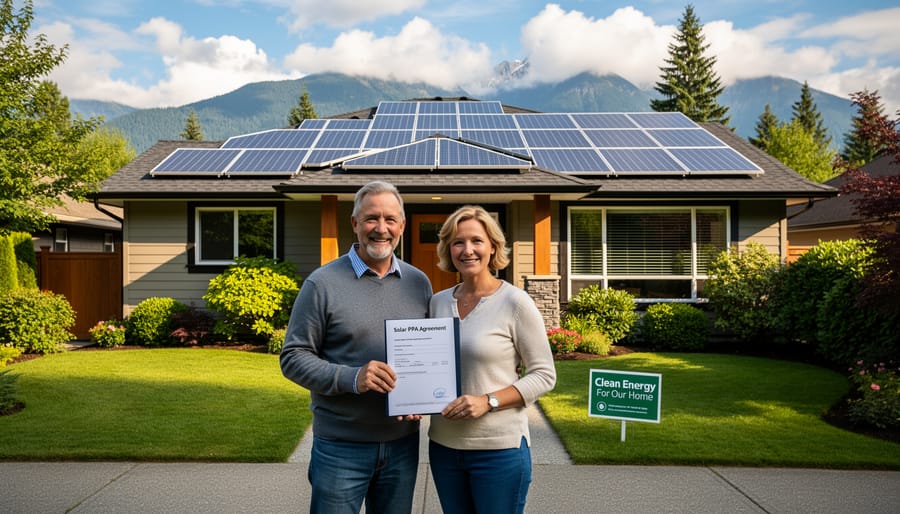
The Drawbacks You Should Know About
While PPAs offer an accessible path to solar energy, it’s important to understand their limitations before signing on. The most significant consideration is the long-term commitment. Most PPA contracts run 20 to 25 years, which means you’re locked into purchasing power from the solar company for decades. If your energy needs change or better technologies emerge, you’ll still be bound to the original agreement terms.
PPAs can also complicate real estate transactions. When selling a home with solar under a PPA, you’ll need the buyer to assume the contract or pay it off entirely, which some buyers may resist. This adds an extra negotiation layer that direct ownership doesn’t involve.
Since you don’t own the system, you won’t build any equity in the equipment itself. Unlike purchasing solar panels outright, where you own an asset that increases your property value, a PPA simply provides you with electricity at a set rate. You also won’t be eligible for certain government incentives and rebates that go to system owners, potentially reducing your overall financial benefits.
The savings with PPAs, while real, are typically more modest than if you purchased your system. You’re essentially trading maximum long-term savings for zero upfront costs and maintenance-free operation. For some BC homeowners, particularly those planning to move within ten years or preferring predictable expenses over ownership responsibilities, these trade-offs make perfect sense. For others seeking maximum financial returns and full control, direct purchase or solar loans might better serve their goals.
How PPA Compares to Other Solar Financing Options
PPA vs. Solar Loans
When comparing PPAs to solar loans, understanding ownership makes the biggest difference. With a PPA, the solar company owns and maintains your system while you simply buy the power it generates. A solar loan means you own the equipment outright from day one, taking responsibility for maintenance but also capturing all financial benefits.
Solar loans typically offer better long-term value for BC homeowners who can access financing. You’ll qualify for federal and provincial incentives, which can reduce your upfront costs significantly. The loan eventually gets paid off, leaving you with decades of free electricity and increased home value. Most BC families who choose this route see greater savings after 10-15 years.
PPAs work well if you can’t access traditional solar financing basics or prefer zero upfront costs. You’ll pay slightly higher rates for electricity than loan owners, and you won’t own the system, but you also won’t handle repairs or monitoring.
Consider a Kelowna family who went with a loan versus their neighbours who chose a PPA. After 15 years, the loan-financed system had saved them $18,000 more, despite higher initial monthly payments. However, the PPA neighbours appreciated never worrying about system performance or maintenance calls.
PPA vs. Cash Purchase
While PPAs offer zero-cost entry into solar, cash purchases deliver superior long-term savings for those with available capital. When you buy your system outright, you immediately own all the electricity it produces and capture 100% of the savings—not just a portion. A typical residential system in BC costs $15,000-$25,000 after federal incentives, but pays for itself in 10-15 years through eliminated electricity bills.
Cash buyers also benefit from increased property value, full control over their system, and access to all available rebates and tax incentives. Consider the Thompson family in Kelowna who purchased their 8kW system for $20,000. They’re saving approximately $1,800 annually on electricity, compared to a PPA scenario where they might save only $600-900 yearly while someone else owns the equipment.
The decision hinges on your financial situation and priorities. If you have the funds available and plan to stay in your home long-term, cash purchase typically makes more financial sense. However, if upfront capital is limited or you prefer predictable expenses without maintenance responsibilities, a PPA remains a practical path to clean energy.
PPA vs. Solar Lease
While both PPAs and Solar Lease agreements let you go solar with no upfront costs, they differ in important ways. With a PPA, you pay only for the electricity your panels generate, typically at a per-kilowatt-hour rate lower than BC Hydro’s rates. Your monthly bill fluctuates based on actual production. In contrast, a solar lease involves fixed monthly payments for using the equipment, regardless of how much energy the system produces.
Think of it this way: a PPA is like paying for electricity from a third-party provider on your roof, while a lease is like renting the solar panels themselves. PPAs often include performance guarantees, meaning the provider ensures your system meets certain production levels. Leases transfer more production risk to you. For BC homeowners, PPAs can offer greater peace of mind and predictable savings, especially during our cloudier winter months when production varies. Consider your priorities: if you prefer payment predictability, a lease might appeal to you; if maximizing savings based on actual production matters more, a PPA could be your better choice.
Is PPA Solar Financing Right for Your Situation?
Deciding whether PPA solar financing suits your needs depends on your specific circumstances and energy goals. Let’s explore who benefits most from this arrangement and what questions you should ask before signing.
PPA solar works exceptionally well for renters or those with shorter housing timelines who want cleaner energy without ownership responsibilities. If you’re leasing your home or planning to move within five to seven years, a PPA offers immediate energy savings without long-term commitments. It’s also ideal for homeowners with limited upfront capital who prioritize immediate savings over long-term returns. Consider the case of a Vancouver Island family who reduced their electricity costs by 15% in year one without touching their savings, while their provider handled all maintenance and monitoring.
Risk-averse individuals also find PPAs attractive. You’re essentially outsourcing the performance risk to experienced solar companies. If panels underperform or require repairs, that’s the provider’s concern, not yours.
However, if you’re a long-term homeowner planning to stay put for 20-plus years, purchasing your system outright or through a loan typically delivers better financial returns. You’ll also want to explore alternatives if capturing federal and provincial solar incentives matters to you, since these typically go to system owners rather than PPA customers.
When evaluating PPA providers, ask these essential questions: What happens if you sell your home? Can the agreement transfer easily? What’s the annual rate escalation, and how does it compare to BC Hydro’s historical increases? Are there any hidden fees for monitoring, maintenance, or early termination? Does the contract clearly specify production guarantees?
Request references from other BC homeowners who’ve worked with the provider, and review multiple proposals before deciding. Calculate your 20-year total costs under the PPA versus alternative financing options to make an informed choice that aligns with your financial situation and sustainability values.

Next Steps: Getting Started with PPA Solar in BC
Ready to explore PPA solar financing for your BC property? Here’s how to get started on your solar journey.
Begin by connecting with certified installers through Solar BC’s directory, where you’ll find qualified professionals experienced in PPA arrangements. When reaching out for consultations, prepare specific questions: What are the typical PPA rates in your area? How long are the contracts? What happens if you sell your property? Do they maintain the system throughout the agreement? Understanding these details upfront helps you make informed decisions.
Before your consultation, use online solar savings calculators to estimate your potential benefits. Many BC solar providers offer these interactive tools that factor in your location, roof orientation, and current electricity costs. This gives you a baseline for comparing PPA offers.
Gather essential documentation including recent BC Hydro bills (ideally 12 months), property ownership documents, and photos of your roof. If you’re a business, financial statements may help providers tailor their proposals.
Connect with BC homeowners who’ve chosen PPA financing through local renewable energy groups or community solar initiatives. Their real-world experiences provide valuable insights beyond what’s in marketing materials. Many British Columbians have discovered that asking questions and learning from their neighbors makes the decision process much clearer and builds confidence in choosing solar energy solutions that truly fit their needs.
Choosing the right solar financing path depends entirely on your unique circumstances, financial goals, and property characteristics. A Power Purchase Agreement offers compelling advantages for many British Columbia residents and businesses, particularly those who value minimal upfront costs and predictable energy expenses. However, it’s just one option in a diverse landscape that includes solar loans, leases, and outright purchases. Some households find that owning their system through a loan provides better long-term value, while others appreciate the simplicity and maintenance-free nature of a PPA.
Take time to assess your situation honestly. Consider your available capital, how long you plan to stay in your property, your current electricity costs, and your comfort level with system ownership responsibilities. Use solar calculators to model different scenarios and request quotes from multiple providers in BC’s growing solar community.
The transition to clean energy doesn’t require perfect circumstances or unlimited resources. It requires taking that first step toward understanding your options and connecting with knowledgeable professionals who can guide you. British Columbia’s solar industry is filled with experienced installers and financing experts ready to help you navigate these decisions. Whether a PPA or another financing method proves best for you, the important thing is moving forward with renewable energy that reduces your environmental footprint while creating long-term value for your household or business.