
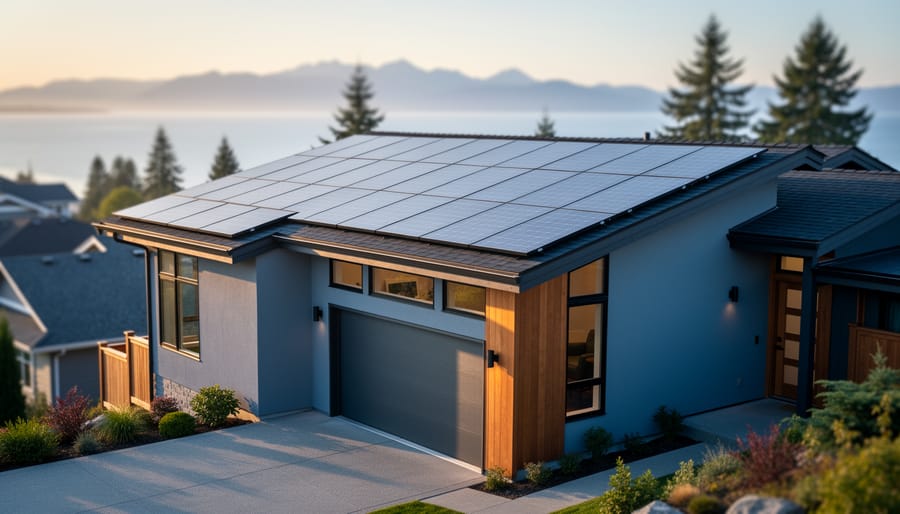
Consider a Power Purchase Agreement if you want solar panels on your BC home or business without paying $15,000-$30,000 upfront. Under a PPA, a third-party company installs and maintains the system at no initial cost while you simply purchase the electricity generated at a predetermined rate, typically lower than BC Hydro’s current prices.
Evaluate whether your property qualifies by assessing three factors: south-facing roof space receiving at least six hours of daily sunlight, a roof in good condition with 15+ years remaining lifespan, and annual electricity consumption exceeding 10,000 kWh. Most commercial properties and larger homes meet these requirements, though residential PPAs remain limited in British Columbia compared to purchase options or solar leases.
Compare the 20-25 year commitment carefully against buying your system outright or exploring BC Hydro’s net metering program. While PPAs eliminate maintenance responsibilities and equipment risks, you won’t receive federal or provincial solar incentives, and the long-term savings often favor ownership. Calculate your potential costs using realistic scenarios: a typical PPA might save you 10-15% on electricity from solar generation, but purchasing the same system could reduce your energy costs by 40-60% over its lifetime once the investment is recovered.
What Is a Power Purchase Agreement (PPA) for Solar?
A Power Purchase Agreement (PPA) for solar is a financing arrangement that lets you enjoy clean energy without buying the solar panels yourself. Think of it like leasing a car instead of purchasing one outright. You get to drive the car (or in this case, use the solar electricity), but someone else owns and maintains it.
Here’s how it works: a third-party solar company installs panels on your property at no upfront cost to you. They own the system and handle all maintenance, repairs, and monitoring. You simply agree to buy the electricity those panels generate at a predetermined rate, typically lower than what you’d pay BC Hydro. This rate is locked in for the contract term, usually 20 to 25 years, protecting you from rising utility costs.
The arrangement creates a win-win situation. The solar company benefits from selling you electricity and may receive government incentives for renewable energy production. You benefit from immediate savings on your power bills without the responsibility of system ownership or the financial burden of purchasing panels upfront, which can cost $15,000 to $30,000 for a typical residential installation.
When your contract ends, you usually have three options: renew the agreement at a new rate, purchase the system at fair market value, or have the company remove the panels at no cost to you.
It’s important to note that PPA availability in British Columbia is currently limited compared to other jurisdictions. Most BC residents exploring solar without upfront costs tend to consider solar loans or leases instead. However, understanding PPAs helps you compare all financing options and make the best choice for your situation and long-term energy goals.
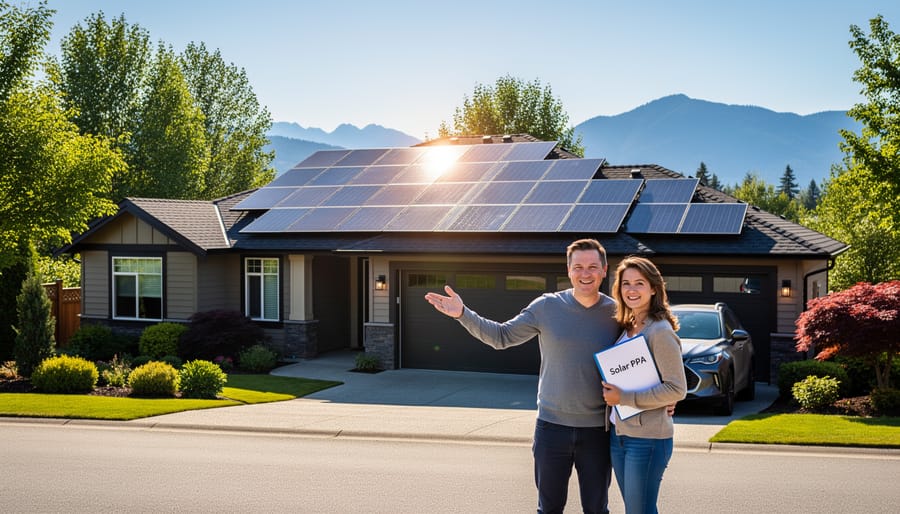
How PPAs Differ from Solar Leases in BC
Payment Structure: Electricity vs. Equipment
Understanding how you pay for solar is crucial when comparing options. With a PPA, you pay only for the electricity your panels actually generate, measured in kilowatt-hours. This means your payment fluctuates based on production—more sunny days equal higher bills, but you’re also generating more power to offset your utility costs. The rate you pay per kilowatt-hour is typically lower than BC Hydro’s rates, creating immediate savings.
In contrast, solar leases involve fixed monthly payments for renting the equipment, regardless of how much energy the system produces. Think of it like renting versus paying per use. A PPA offers more flexibility since your costs align directly with performance, while leases provide predictable payments but without the same performance guarantee. For BC residents, this distinction matters especially during our cloudier winter months when production naturally dips—with a PPA, your payments adjust accordingly, whereas lease payments remain constant.
Who Takes on Performance Risk?
One of the standout benefits of PPAs is how they handle performance risk. With a PPA, the solar provider owns and maintains the system, meaning they’re responsible if panels underperform or equipment fails. You simply pay for the electricity generated—if production drops, so does your bill. This arrangement gives you peace of mind, especially during BC’s cloudier winter months.
In contrast, solar leases typically involve fixed monthly payments regardless of system performance. If your panels don’t produce as expected due to shading, equipment issues, or weather patterns, you’re still on the hook for the full lease payment. This means homeowners bear more responsibility for monitoring system health and addressing problems.
For BC residents new to solar, PPAs offer a lower-risk entry point. The provider has financial incentive to keep your system running optimally, while you enjoy predictable energy costs without maintenance headaches. Consider your comfort level with taking on technical responsibility when choosing between these options.
Which Option Saves You More Money?
The savings depend heavily on your situation. For a typical BC household using 10,000 kWh annually, purchasing a solar system outright costs roughly $15,000-$25,000 after incentives but delivers immediate electricity bill reductions and full system ownership. You’ll typically recoup your investment in 10-15 years and enjoy decades of free power afterward.
With a PPA (where available), you pay nothing upfront but purchase solar electricity at rates slightly below BC Hydro’s—saving perhaps 10-20% monthly. However, you never own the system, and your total payments over 20-25 years often exceed what you’d pay for ownership.
For homeowners with available capital or access to low-interest financing, purchasing wins long-term. PPAs make sense if you can’t afford upfront costs, have credit challenges, or plan to move before breaking even on a purchase. Calculate your specific scenario using solar calculators that factor in your roof size, energy usage, and BC Hydro rates to determine your best path forward.
The Real Costs: What You’ll Actually Pay with a Solar PPA
Understanding the true costs of a solar PPA helps you make an informed decision about whether this financing option works for your situation.
In British Columbia, PPA rates typically range from $0.10 to $0.14 per kilowatt-hour (kWh), depending on your system size, location, and the provider. To put this in perspective, BC Hydro’s residential rate averages around $0.1159 per kWh for the first 1,350 kWh used in a two-month billing period, with higher consumption priced at approximately $0.1729 per kWh.
Here’s where it gets interesting: while your initial PPA rate might seem comparable to BC Hydro, most PPA contracts include an annual rate escalation clause, typically between 2% and 3.9% per year. This means your rate increases annually over the contract length, which commonly spans 20 to 25 years.
Let’s look at a real example. If you start with a PPA rate of $0.12 per kWh with a 2.9% annual escalator, by year 10, you’d be paying approximately $0.16 per kWh. By year 20, that rate climbs to around $0.21 per kWh. Meanwhile, BC Hydro rates have historically increased at a slower pace, averaging about 2% annually.
For a typical BC household using 11,000 kWh per year, you might pay around $1,320 annually at the starting PPA rate. With the escalator, your year 10 payment could reach approximately $1,760, and by year 20, around $2,310.
The advantage? Zero upfront costs and immediate savings compared to your current hydro bill. The consideration? You’ll need to evaluate whether the long-term escalating payments align with your financial goals and how long you plan to stay in your home.
Most BC homeowners find that PPAs make the most sense when grid electricity rates are high or expected to rise significantly, or when upfront capital simply isn’t available. Use online solar calculators to compare your projected 25-year costs under a PPA versus purchasing a system outright or through a loan.
Benefits of Choosing a PPA Program in British Columbia
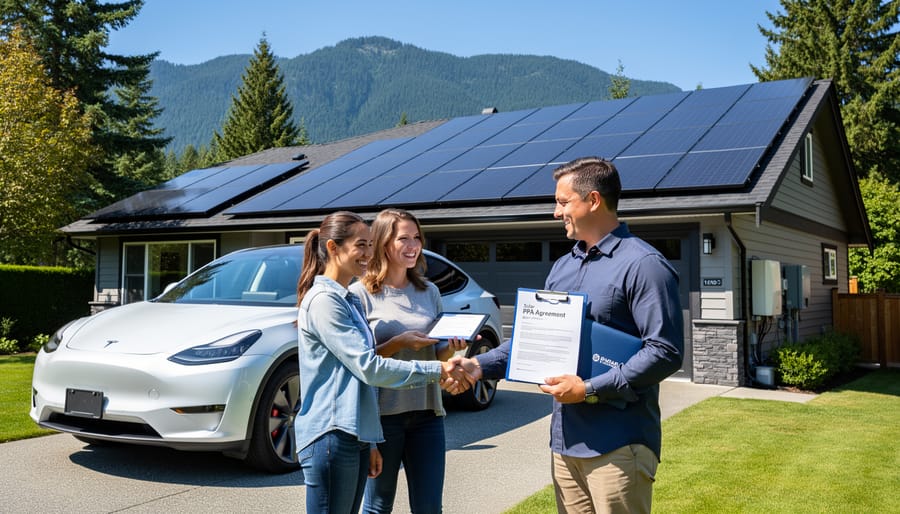
Zero Upfront Investment
For most BC homeowners, the biggest obstacle to going solar isn’t the desire for clean energy—it’s the price tag. Traditional solar installations typically cost between $15,000 and $30,000 upfront, a significant barrier even with federal rebates available. Power Purchase Agreements eliminate this challenge entirely by requiring zero down payment to start generating your own solar electricity.
Under a PPA, a solar company installs and maintains the system on your property at no cost to you. Instead of purchasing the equipment, you simply agree to buy the electricity it produces at a predetermined rate, usually lower than what BC Hydro charges. This means you can start saving on your energy bills from day one without touching your savings or taking out a loan. For families in Vancouver or Victoria looking to reduce their carbon footprint but unable to access large amounts of capital, PPAs make solar energy genuinely accessible.
Maintenance and Monitoring Included
One of the strongest advantages of solar PPAs is the comprehensive maintenance and monitoring included in your agreement. The solar provider owns the system and takes full responsibility for keeping it running at peak performance throughout the contract term, typically 20-25 years.
This coverage is particularly valuable in British Columbia’s diverse climate. From coastal rain and salt air exposure to interior snow loads and temperature fluctuations, BC weather presents unique challenges for solar equipment. Under a PPA, the provider handles everything: cleaning panels after pollen season, clearing snow accumulation, repairing weather-related damage, replacing inverters, and addressing any performance issues.
Most PPA providers include remote monitoring systems that track your solar production in real-time. If output drops unexpectedly, they’re alerted automatically and dispatch technicians before you even notice a problem. This proactive approach ensures you consistently receive the energy savings promised in your agreement.
For homeowners and businesses without technical expertise or time for system upkeep, this hands-off arrangement delivers genuine peace of mind—you simply enjoy clean energy while professionals handle everything else.
Predictable Energy Costs
One of the most compelling advantages of solar PPA programs is protection from rising electricity costs. When you sign a PPA agreement, you lock in a fixed rate for solar energy, typically for 20-25 years. This rate structure shields you from BC Hydro’s periodic rate increases, which have historically occurred every few years.
Consider this practical example: A Surrey community centre that signed a PPA in 2018 locked in their solar rate at 12 cents per kilowatt-hour. Since then, BC Hydro rates have increased twice, but the centre continues paying their original fixed rate, resulting in growing savings each year. Over two decades, these cumulative savings can amount to tens of thousands of dollars.
The predictability extends beyond just cost savings. With a fixed solar rate, businesses and homeowners can budget more accurately for energy expenses, eliminating unexpected spikes that complicate financial planning. This stability is particularly valuable for small businesses operating on tight margins or families managing household budgets. As conventional energy costs continue their upward trend, your PPA rate remains constant, making solar energy increasingly cost-effective over time while supporting your commitment to clean, renewable power.
Potential Drawbacks to Consider Before Signing
While solar PPAs offer an attractive pathway to clean energy, it’s important to understand the potential limitations before committing.
The most significant consideration is the contract length. Most solar PPAs span 20 to 25 years, which represents a substantial long-term commitment. During this period, you’re locked into the agreed-upon pricing structure and terms. For families planning to stay in their homes long-term, this may align perfectly with their goals. However, if your situation might change, this duration requires careful thought.
Selling your home with an active PPA can add complexity to the transaction. The new homeowner must agree to assume the contract, which means they’ll need to qualify for the transfer and accept the existing terms. While many buyers appreciate inheriting a solar system with no upfront costs, some may prefer homes without long-term energy commitments. Working with a real estate agent experienced in solar property transfers can smooth this process, but it’s worth considering how this might affect your home’s marketability.
From a financial perspective, PPAs typically generate less total savings compared to purchasing a system outright. While you avoid the initial investment, the trade-off is smaller lifetime savings since you’re essentially renting the equipment rather than owning an appreciating asset. Think of it like leasing versus buying a car—the monthly payments may be manageable, but you won’t build equity.
For British Columbia residents specifically, availability presents another challenge. PPAs remain relatively uncommon in our province compared to other regions. The market hasn’t developed as extensively here, meaning your options for providers and competitive rates may be limited. Some BC homeowners have found success with PPAs, but you’ll likely need to research thoroughly to find reputable providers operating in your area.
Understanding these limitations helps you make an informed decision that aligns with both your environmental values and practical circumstances.
Is a Solar PPA Available in Your BC Community?
If you’re hoping to find a solar PPA in British Columbia, you’ll need to know upfront that these programs are significantly less common here than in many US states. The difference comes down to regulatory and market structures. BC’s electricity market is dominated by BC Hydro, a Crown corporation, which creates a different framework for independent power producers compared to the competitive utility markets found in places like California or Arizona.
Currently, traditional residential solar PPAs are rare in BC. The province’s net metering program allows homeowners to generate their own power and receive credits, but third-party ownership models face regulatory hurdles. BC Hydro’s Standing Offer Program historically supported larger commercial and community projects, though residential options remain limited.
That said, some commercial and industrial properties in Metro Vancouver, the Fraser Valley, and southern Vancouver Island have successfully arranged power purchase agreements for larger installations. Indigenous communities in BC have also developed innovative solar projects through community ownership models that function similarly to PPAs.
Your best path forward is checking directly with local solar installers who understand BC’s current landscape. Some companies have developed creative financing alternatives that capture the benefits of traditional PPAs, such as equipment leasing arrangements or energy-as-a-service models that comply with provincial regulations.
Action point: Contact at least three BC-based solar installation companies to ask about their financing options. Ask specifically about any PPA-like programs, equipment leasing, or innovative payment structures they offer. Many installers can connect you with financing partners who specialize in solutions tailored to BC’s unique regulatory environment.

BC Success Story: A Vancouver Island Family’s PPA Experience
When the Morrison family from Nanaimo started exploring solar options in 2021, they faced the same challenge many BC homeowners encounter: they wanted to go solar but didn’t have $25,000 sitting in the bank. That’s when they discovered solar PPAs through a mainland-based provider offering services on Vancouver Island.
“We were spending about $180 monthly on electricity during winter months,” explains Sarah Morrison, a high school teacher. “The PPA meant we could switch to solar with zero upfront cost and still save money immediately.”
The Morrisons signed a 20-year PPA agreement in spring 2022 for their 1,800 square-foot home. Their 6.5 kW system was installed within six weeks at no cost to them. Under the agreement, they pay the solar company $0.10 per kilowatt-hour for the electricity their panels generate, compared to BC Hydro’s residential rate of approximately $0.14 per kWh.
After two full years, the numbers tell a compelling story. The family’s annual electricity costs dropped from roughly $1,850 to $1,250—saving them $600 yearly without any investment. Over their contract’s lifetime, they project total savings of $12,000.
“The monitoring app was a game-changer,” Sarah adds. “Watching our real-time solar production made us more conscious about running appliances during peak sunshine hours, which increased our savings even more.”
Their biggest lesson? Read the fine print carefully. The Morrisons made sure their agreement included a reasonable buyout option and confirmed the company would handle all maintenance for the contract duration.
For families without significant savings but decent credit scores, their experience demonstrates that PPAs can make solar accessible while delivering genuine financial and environmental benefits from day one.
Your Next Steps: Finding the Right Solar Financing Option
Choosing the right solar financing option starts with understanding your priorities. Ask yourself: Do you value ownership and long-term savings over minimal upfront costs? How long do you plan to stay in your property? What’s your current credit situation and available capital?
When evaluating providers, use this checklist. What are the total system costs over the contract term? Who handles maintenance and repairs? Can you buy out the system early, and at what price? What happens if you sell your property? Are there production guarantees, and what happens if panels underperform?
For BC residents, while traditional PPAs remain limited, exploring leases and purchase options through Solar BC’s installer network gives you access to vetted professionals familiar with provincial incentives and regulations. Many installers offer creative financing solutions tailored to local conditions.
Connect with multiple installers to compare quotes and contract terms. A Richmond family saved thousands by negotiating lease terms after getting three proposals. Don’t rush—the right solar solution should fit your budget, timeline, and energy goals. Solar BC’s resources can help you navigate available programs and connect with experienced installers who understand your community’s unique needs and opportunities.
Solar power purchase agreements represent a meaningful pathway for BC residents and businesses who want to embrace clean energy without the barrier of high upfront costs. By removing financial obstacles, PPAs make it possible for more community members to participate in the province’s renewable energy transition, creating a collective impact that extends beyond individual properties.
Whether a PPA proves right for your situation depends on your specific circumstances, property characteristics, and long-term goals. The beauty of exploring this option is that there’s no obligation to move forward until you’re completely confident in your decision. Take time to request quotes, compare financing alternatives, and ask questions that matter to your household or business.
As more British Columbians adopt solar energy through accessible programs, we strengthen our community resilience, reduce collective carbon emissions, and demonstrate that sustainable living can be practical and achievable. Your journey toward solar doesn’t need to happen overnight, but understanding your options is the essential first step toward making an informed choice that aligns with your values and budget.