
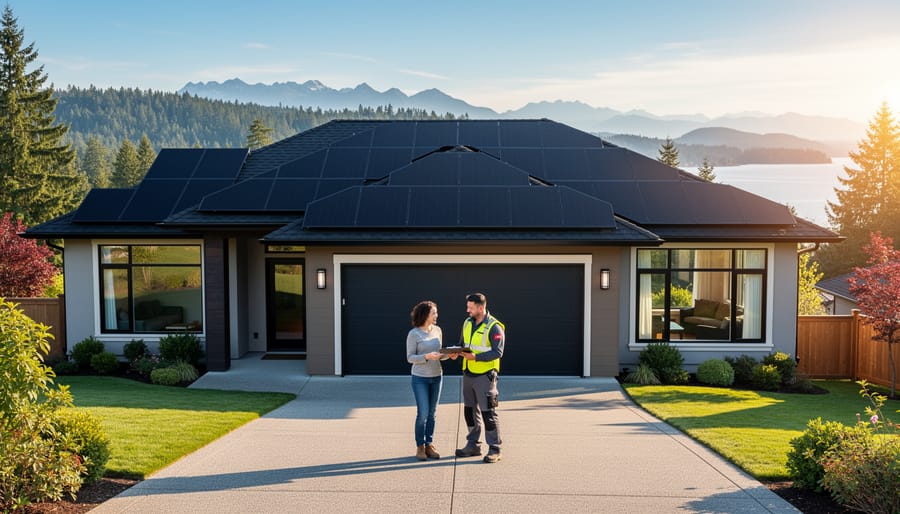
Explore upfront purchase options to maximize long-term savings and government incentives, allowing you to own your system immediately and benefit from BC’s net metering program that credits excess energy back to your account. Consider low-interest solar loans through credit unions and green financing programs that spread costs over 5-15 years while you still own the equipment and qualify for rebates. Evaluate Power Purchase Agreements (PPAs) where a third party installs panels on your property at no upfront cost and you simply pay for the electricity generated at a fixed rate below utility prices. Investigate lease arrangements that let you use solar panels for a monthly fee, though these typically offer lower savings than ownership models. Research solar panel financing programs specific to British Columbia, including CleanBC rebates up to $5,000 for residential installations and federal Greener Homes grants that can reduce initial costs by $5,000-$10,000. Compare total lifetime costs rather than just monthly payments, as ownership through cash or loans typically delivers 40-60% more savings over 25 years than leasing or PPAs, despite higher initial investment.
Why Solar Financing Makes Sense in British Columbia
British Columbia’s energy landscape is changing, and solar financing has emerged as a smart solution for residents and businesses looking to take control of their electricity costs. While BC Hydro rates have historically been among the lowest in North America, recent years have seen steady increases, with rates climbing approximately 20% over the past five years. This trend shows no signs of slowing, making solar energy an increasingly attractive hedge against future cost escalations.
The province’s commitment to renewable energy has created a supportive environment for solar adoption. The CleanBC program and various municipal incentives help reduce the overall investment required, while net metering policies ensure you receive credit for excess electricity your system produces. This means your solar panels work for you even when you’re generating more power than you need.
Here’s where financing truly shines: rather than waiting years to save enough for an upfront purchase, financing options let you start saving on your electricity bills immediately. Many BC homeowners find that their monthly financing payments are comparable to or even lower than their previous electricity costs, effectively making the transition to solar cash-flow neutral from day one.
Consider the Fraser family in Kelowna, who financed their 8kW system in 2022. Their monthly loan payment of $185 replaced an average hydro bill of $220, giving them immediate savings while building equity in a valuable home improvement. Over their system’s 25-year lifespan, they’ll save an estimated $45,000 even after accounting for financing costs.
Cash Purchase: The Traditional Route
Real BC Example: The Vancouver Island Cash Buyer
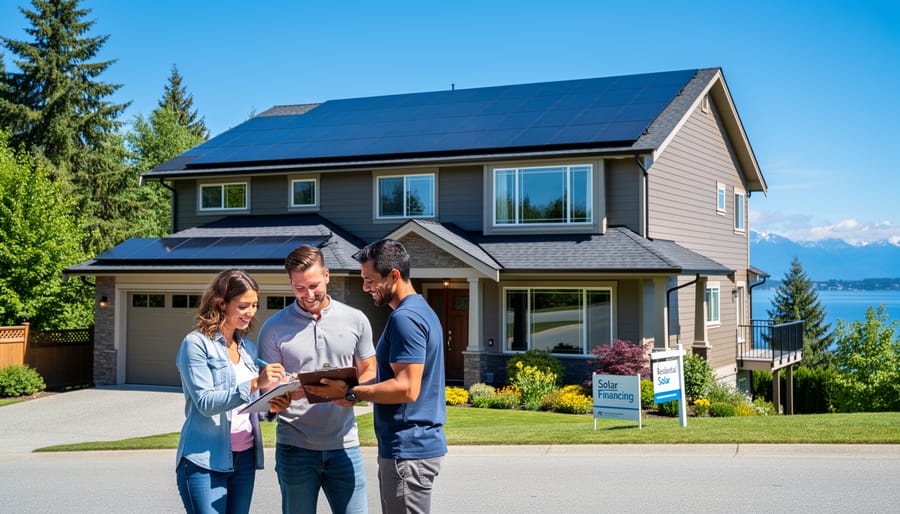
Meet Sarah Chen, a Nanaimo homeowner who took the cash purchase route in 2022. She installed a 7.2 kW solar system on her south-facing roof for $18,500 after shopping quotes from three local installers.
Sarah’s system generates approximately 8,500 kWh annually, covering about 85% of her household electricity needs. With BC Hydro rates, she saves roughly $1,100 per year on her energy bills. Combined with federal and provincial incentives totaling $6,200, her net investment dropped to $12,300. This puts her payback period at just over 11 years.
“I had savings set aside and wanted to maximize my return,” Sarah explains. “Avoiding interest charges made financial sense, and I love knowing my electricity costs are locked in for the next 25 years while rates keep climbing for my neighbours.”
Beyond the numbers, Sarah appreciates her energy independence during power outages and takes pride in reducing her carbon footprint by approximately 3 tonnes annually. Her system is projected to save over $27,500 throughout its 25-year warranty period.
Solar Loans: Own Your System From Day One
BC Credit Unions and Green Financing Programs
Several BC credit unions have emerged as leaders in supporting solar adoption through specialized green financing programs. Vancity, one of the province’s largest credit unions, offers Clean Air Auto Loans and home improvement financing that covers solar installations with competitive rates and flexible repayment terms. Their Solar Energy Loan program has helped hundreds of BC homeowners transition to renewable energy.
Coast Capital Savings provides Green Home Loans specifically designed for energy efficiency upgrades, including solar panels, with interest rates often lower than conventional home improvement loans. BlueShore Financial has partnered with local solar installers to streamline the financing process, offering pre-qualified rates and simplified applications for members.
Many credit unions also participate in the Community Energy Leadership Program, which provides additional resources and potential rate reductions for members investing in clean energy. Peninsula Credit Union and Prospera Credit Union have established strong track records of supporting residential solar projects through personalized lending approaches.
These institutions understand local climate conditions and provincial incentive programs, making them valuable partners in your solar journey. Credit union members often benefit from relationship-based lending, meaning your existing account history can improve approval odds. Contact your local credit union directly to discuss current solar financing options and any special promotions aligned with BC’s climate action goals.
Understanding Your Monthly Payment vs. Energy Savings
Understanding how your monthly solar loan payment compares to your electricity savings is key to making an informed decision. In British Columbia, most homeowners find their energy savings closely match or exceed their monthly loan payments, creating a near-neutral cash flow situation from day one.
Let’s look at a practical example: A typical BC home installing a $20,000 solar system with a 10-year loan at 5% interest would pay approximately $212 per month. With BC Hydro’s tiered pricing structure, that same household saving $200-250 monthly on electricity bills essentially covers the loan payment while building equity in their system.
The real financial benefit kicks in after your loan term ends. Once paid off, those energy savings become pure profit in your pocket for the remaining 15-20+ years of your system’s life. A Vancouver family shared how their $230 monthly loan payment was offset by $245 in electricity savings, actually putting them ahead immediately while eliminating their carbon footprint.
Keep in mind that BC Hydro rates typically increase 2-3% annually, meaning your savings grow over time while your fixed loan payment stays the same, improving your financial position year after year.
Solar Leases: Lower Upfront Costs, Different Trade-offs
Is Leasing Available in Your BC Community?
Solar leasing availability in British Columbia varies significantly by community and provider. While leasing programs are more established in urban centers like Vancouver, Victoria, and Kelowna, rural and remote areas may have limited or no leasing options currently available.
Several factors influence whether leasing is accessible in your community. Population density plays a key role, as solar companies typically establish leasing programs where they can serve multiple customers efficiently. Your community’s electricity rates also matter—areas with higher BC Hydro rates make solar more financially attractive, encouraging providers to offer leasing. Local installer presence is another crucial factor, since leasing programs require ongoing maintenance and monitoring support.
If leasing isn’t available in your area, don’t be discouraged. Many BC homeowners in smaller communities have successfully gone solar through alternative financing methods like green loans or PACE programs. Contact local solar installers directly to ask about their financing options, as availability changes frequently. Some companies are expanding their service areas as demand grows. You might also connect with neighbors interested in solar—demonstrating community demand can sometimes attract providers to establish leasing programs in previously underserved regions.
Power Purchase Agreements (PPAs): Pay Only for the Energy
With a Power Purchase Agreement, you’re not buying solar panels—you’re simply purchasing the clean electricity they produce. A solar company installs panels on your roof at no upfront cost, maintains the system throughout the contract, and you pay only for the energy generated, typically at a rate lower than BC Hydro’s current residential rates.
In British Columbia, PPA rates usually range from 10-14 cents per kilowatt-hour, compared to BC Hydro’s tiered pricing that starts around 9.9 cents for the first 1,376 kWh per billing period and jumps to about 14.9 cents beyond that threshold. While the initial savings may seem modest, they can add up over time, especially if BC Hydro rates increase as projected.
Standard PPA contracts in BC run between 20-25 years. During this period, the solar provider owns and maintains the equipment, handling all repairs and monitoring. At the contract’s end, you typically have options to renew, purchase the system at market value, or have it removed.
The biggest advantage is zero upfront investment and predictable energy costs. The Patel family in Surrey reduced their summer electricity bills by 40 percent through a PPA without spending a dollar initially. However, drawbacks include missing out on government incentives (which go to the system owner), potentially complicating home sales, and accumulating less long-term savings compared to owning your system outright.
PPAs work best for homeowners seeking immediate savings without capital investment, though BC’s relatively low electricity rates mean the financial benefits are more modest than in other provinces.
Government Incentives and Rebates That Reduce Your Costs
How to Stack Incentives for Maximum Savings
The key to maximizing your solar savings is strategically layering incentives with your chosen financing option. Start by claiming the federal Canada Greener Homes Grant, which provides up to $5,000 for eligible solar installations. Next, check if your municipality offers additional rebates—many BC communities have local programs that stack on top of federal benefits.
When combining incentives with financing, timing matters. Apply for grants before finalizing your loan or lease, as upfront rebates reduce the amount you need to borrow. For example, a Vancouver homeowner recently reduced their $25,000 system cost to $20,000 using federal and municipal incentives, then financed the remainder with a low-interest green loan. This approach lowered their monthly payments significantly.
Consider net metering programs alongside your financing plan. BC Hydro’s net metering lets you earn credits for excess energy, effectively reducing your payback period. If you’re using a PACE loan, these ongoing savings directly offset your property tax payments.
Work with local solar installers who understand BC’s incentive landscape—they can identify program combinations specific to your location and help structure financing to maximize benefits. Remember, stacking incentives isn’t just about finding programs; it’s about timing them strategically with your financing choice.
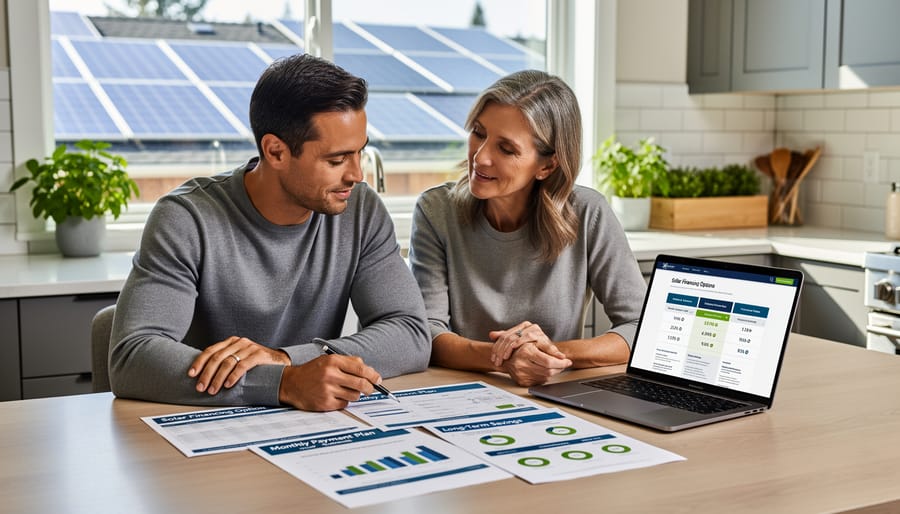
Comparing Your Options: Which Financing Path Fits Your Situation?
Questions to Ask Your Solar Installer About Financing
Before committing to a financing option, ask your installer these essential questions to ensure transparency and make an informed decision:
What is the total project cost, including all equipment, installation, permits, and fees? Request an itemized breakdown to understand exactly what you’re paying for.
What financing options do you recommend for my situation, and why? A reputable installer should explain the pros and cons of each method based on your energy needs and budget.
What are the interest rates, loan terms, and monthly payments? Compare these details across different financing providers to find the best fit.
Are there any hidden fees or prepayment penalties? Some loans charge origination fees or penalties for early payoff that can impact your overall savings.
How will this financing affect my eligibility for BC rebates and federal incentives? Ensure your chosen option doesn’t disqualify you from available programs.
What warranties and guarantees come with the system? Understand coverage for equipment, workmanship, and production guarantees.
Can you provide references from BC homeowners who used this financing method? Local success stories offer valuable insights into real-world experiences and long-term satisfaction with both the installer and financing approach.
Going solar in British Columbia is more accessible than ever, thanks to diverse financing options that work with virtually any budget. Whether you choose an upfront purchase to maximize long-term savings, a solar loan to preserve capital while still owning your system, or a lease to start immediately with minimal commitment, there’s a pathway that fits your financial situation.
The key is taking that first step. Start by using available online solar calculators to estimate your potential savings based on your specific energy usage and location in BC. These interactive tools can show you how different financing options affect your monthly costs and long-term returns, helping you visualize the real financial impact of going solar.
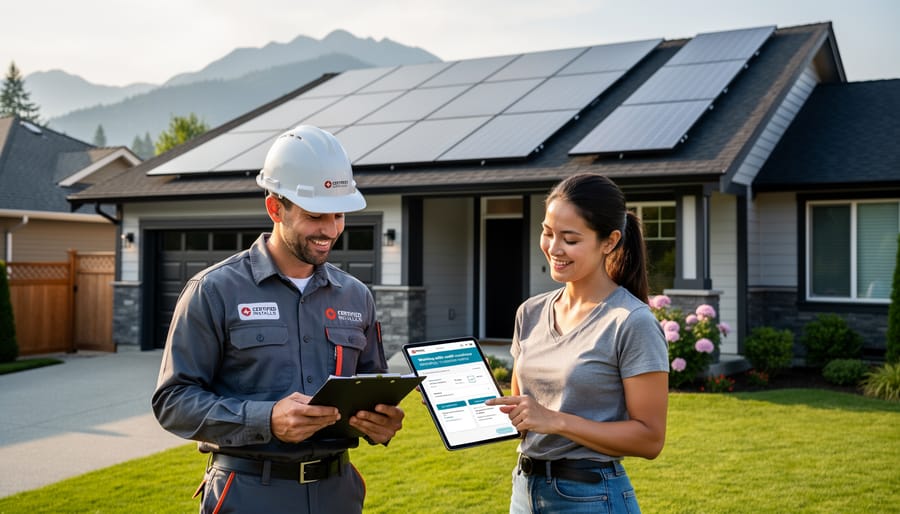
Ready to explore your options? Connect with experienced BC solar installers who understand local programs, incentives, and climate considerations. They can provide personalized assessments, compare financing alternatives side by side, and help you navigate provincial and federal rebates. Many installers offer free consultations and custom proposals at no obligation.
The transition to clean energy doesn’t require a perfect financial situation, just the right financing approach for your circumstances. British Columbia’s supportive regulatory environment, combined with these flexible payment options, means your solar journey can begin today. Reach out to local solar professionals and discover which financing solution turns your sustainability goals into reality.