
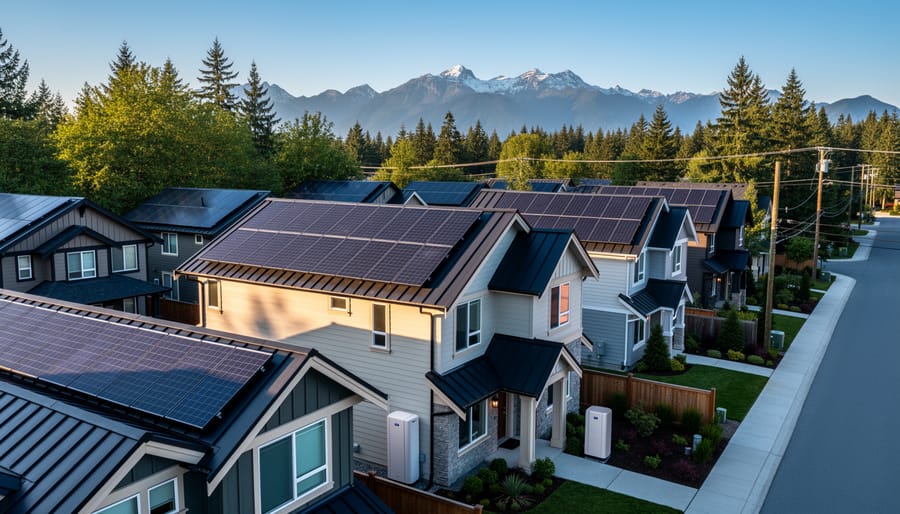
Imagine thousands of BC homes and businesses with solar panels, batteries, and smart thermostats working together as one massive clean energy resource—that’s a virtual power plant. Instead of relying solely on large centralized power stations, virtual power plants coordinate distributed energy resources across a region to generate, store, and manage electricity exactly when the grid needs it most.
Virtual power plants are transforming how British Columbia approaches energy resilience and sustainability. When you install solar panels with battery storage, your home doesn’t just power itself—it becomes part of a networked system that can feed excess energy back to your community during peak demand, help stabilize the grid during extreme weather events, and reduce the need for expensive fossil fuel backup generators.
BC Hydro and FortisBC are exploring virtual power plant frameworks that allow participants to earn credits or payments while supporting grid stability. For homeowners, this means your renewable energy investment works harder for both your wallet and your community. Businesses benefit from reduced demand charges and new revenue streams by allowing their battery systems to participate in grid services during critical periods.
The concept sounds complex, but participation is straightforward. Property owners with solar, batteries, or controllable loads sign up with aggregator companies that handle the technical coordination. You maintain full control over your energy use while contributing to a cleaner, more reliable power system. Virtual power plants represent the future of energy in BC—decentralized, resilient, and community-powered.
What Is a Virtual Power Plant? The Basics Made Simple
The Key Players in a Virtual Power Plant
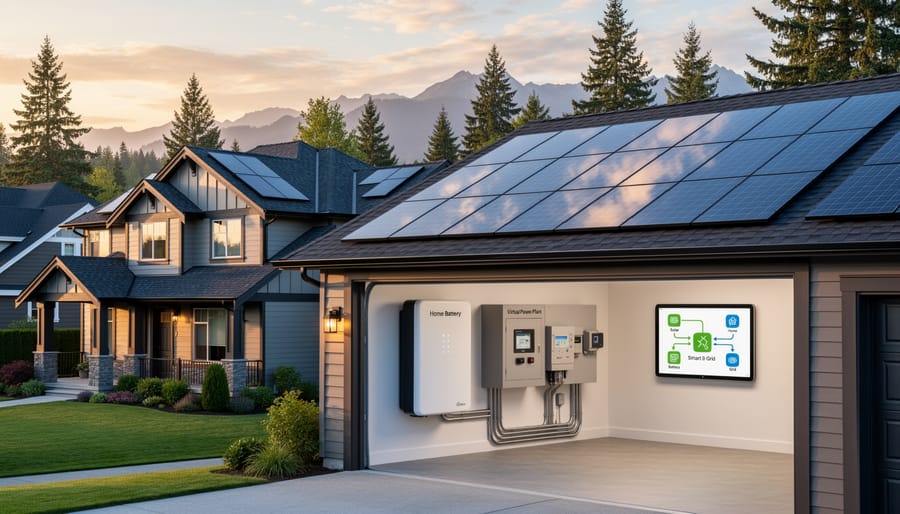
A virtual power plant brings together several types of distributed energy resources that work as a coordinated team. Understanding these components helps you see how your home or business could contribute to BC’s clean energy future.
Residential solar systems form the foundation, generating clean electricity throughout the day. When a homeowner in Victoria installs rooftop panels, they’re not just powering their own home—they become potential contributors to grid stability during peak demand.
Battery storage systems, like those being adopted by homeowners in Kelowna and Surrey, store excess solar energy for later use. In a VPP, these batteries can discharge power back to the grid when needed most, helping balance supply and demand.
Electric vehicle chargers add flexibility by charging when renewable energy is abundant and grid demand is low. A fleet of EVs in Vancouver, for example, could collectively provide significant grid support.
Smart thermostats and controllable appliances allow minor adjustments to energy use without affecting comfort. Your heat pump might delay its cycle by 15 minutes during peak times, a change you wouldn’t notice but that helps the entire system.
The aggregation platform is the brain coordinating everything. This software connects all participants, communicates with BC Hydro, and ensures each component responds appropriately to grid conditions. Think of it as a conductor leading an orchestra—each instrument plays its part to create harmony across BC’s electricity network.
Why BC Needs Virtual Power Plants Right Now
Managing Peak Demand Without Building New Infrastructure
During those bone-chilling winter evenings when everyone cranks up their heaters, or sweltering summer days when air conditioners run full blast, BC’s electrical grid faces enormous pressure. Traditionally, utility companies would respond by building expensive new power plants or upgrading transmission lines – infrastructure that sits idle most of the year but costs millions to construct and maintain.
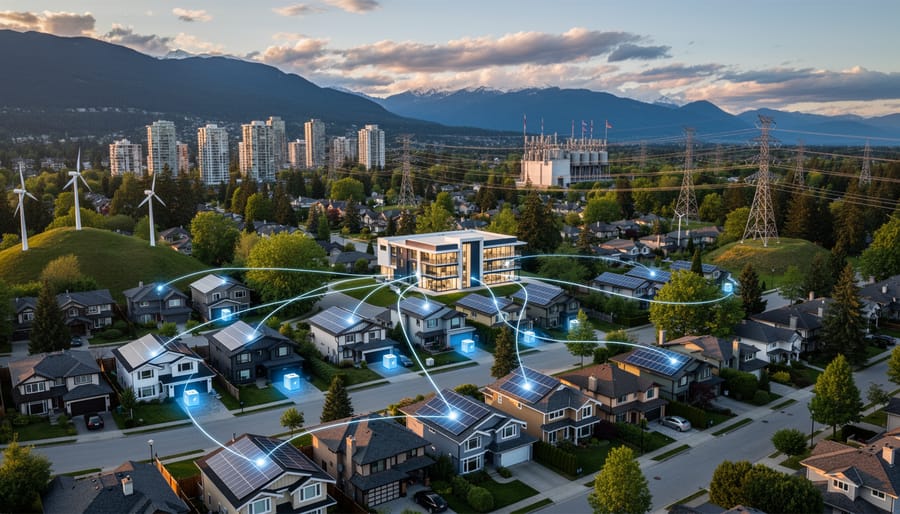
Virtual power plants offer BC Hydro a smarter alternative. Instead of constructing new substations or power lines, VPPs coordinate thousands of existing energy resources across the province to balance supply and demand in real-time. When the grid is strained, the VPP can automatically dim commercial lighting by small amounts, pause industrial processes for brief periods, or draw power from battery storage systems – all without anyone noticing a difference in their daily operations.
Think of it like carpooling during rush hour instead of building new highways. During a cold snap in January 2023, BC Hydro successfully reduced peak demand by coordinating participating businesses and homes through demand response programs, avoiding the need for costly grid upgrades.
This approach saves BC ratepayers money while maintaining reliable power. The savings from avoiding just one major infrastructure project can fund thousands of home solar installations or community energy programs. For BC businesses and homeowners participating in VPPs, this means playing an active role in grid stability while potentially earning incentives – creating a win-win situation for everyone involved.
Virtual Power Plant Aggregation Policy in BC: What You Need to Know
How BC’s Net Metering and Aggregation Rules Work Together
If you’re a BC solar owner, you’re likely already familiar with net metering—the program that credits you for excess electricity your system sends back to the grid. Virtual power plants build on this foundation by adding another layer of value to your solar investment.
Here’s how they work together: Net metering handles the immediate financial relationship between you and your utility. When your solar panels produce more power than you need, those credits accumulate on your bill. A VPP aggregator doesn’t change this arrangement. Instead, it coordinates when your battery (if you have one) charges and discharges to maximize grid benefits during peak demand periods.
Think of it this way—net metering is like having a savings account for your solar energy, while VPP participation is like earning interest on those savings by making your energy available when it’s needed most.
Currently, BC’s net metering program allows systems up to 100 kW to participate, which covers most residential and small commercial installations. While the solar connection requirements continue to evolve, the integration of VPPs represents an exciting opportunity. Solar owners with battery storage are best positioned to benefit, as they can store excess generation and dispatch it strategically through VPP coordination.
The key limitation currently is that VPP programs in BC are still emerging. However, as these programs develop, existing net metering customers will likely have the easiest pathway to participation since their systems are already grid-connected and metered.
Real Benefits for BC Solar Owners and Businesses
A Real BC Example: How One Community Is Already Doing This
While BC is still in the early stages of formal VPP development, several communities are already demonstrating how this technology works in practice. One notable example comes from Vancouver Island, where a residential neighbourhood participated in a pilot project that connected their home battery systems through BC Hydro’s smart grid technology.
The project involved 45 households who had installed solar panels and battery storage systems. During a particularly hot summer week when electricity demand peaked, BC Hydro sent a signal to the participants’ batteries, requesting stored energy to help balance the grid. The response was remarkable: these homes collectively provided enough power to support an additional 30 households during the critical period.
What made this project successful was its simplicity for participants. Homeowners didn’t need to monitor anything or make manual adjustments. Their battery systems automatically responded to grid needs while ensuring their own homes maintained adequate backup power. In return, participants received credits on their electricity bills, with the average household earning approximately $150 over the three-month pilot period.
The key lesson learned was that community participation thrives when the process is seamless and beneficial. Participants appreciated knowing their solar investment was doing more than just powering their homes; it was supporting their neighbours and reducing strain on the provincial grid during peak times.
This pilot demonstrated that BC residents are ready and willing to participate in VPPs when the technology is user-friendly and the benefits are clear. As BC Hydro expands these initiatives and more homes install solar and battery systems, opportunities for community-level virtual power plants will continue to grow, creating a more resilient and sustainable energy future for the province.
How to Join a Virtual Power Plant in BC
Do You Have What You Need? A Quick Checklist
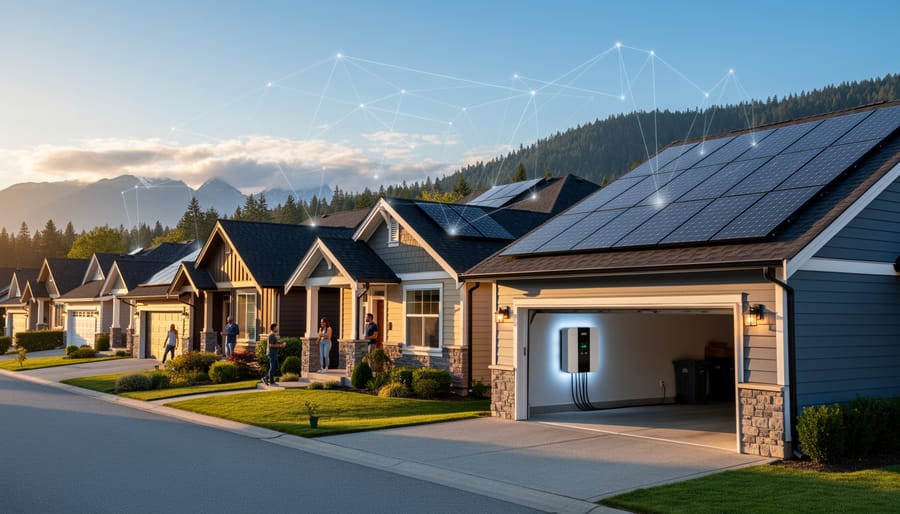
Before joining a VPP in British Columbia, you’ll want to confirm you have the essential equipment and meet basic requirements. The good news? Many BC homeowners already have what they need.
Essential Equipment:
Solar panel system: Most VPPs require a grid-connected solar installation, typically 5-10 kW for residential properties. BC homeowners can expect installation costs between $15,000-$25,000 before incentives.
Battery storage: A home battery system (10-15 kWh capacity) allows you to store and share energy with the grid. Budget approximately $12,000-$18,000, though prices continue declining.
Smart inverter: Required under BC’s new DER regulations, these devices manage energy flow between your home, battery, and the grid. Often included with modern solar installations.
Internet connection: VPP software needs reliable connectivity to coordinate energy sharing across the network.
BC-Specific Requirements:
BC Hydro net metering agreement for your solar system. Your utility must approve VPP participation, though policies are expanding rapidly across the province.
ROI Timeline:
Most BC participants see returns within 8-12 years through combined solar savings and VPP incentives. Battery storage alone typically pays for itself in 10-15 years, but VPP compensation can accelerate this timeline significantly. Some early adopters in BC’s Lower Mainland report reducing their payback period by 2-3 years through VPP participation.
Virtual power plants represent more than just innovative technology—they’re about building stronger, more resilient communities across British Columbia. By connecting individual solar and battery systems into coordinated networks, VPPs allow everyday British Columbians to contribute directly to grid stability while reducing their energy costs. This community-powered approach to energy independence positions BC as a leader in clean energy innovation, showing how distributed resources can work together for the common good.
The exciting news is that participating in a VPP is becoming increasingly accessible. Recent changes to BC solar connections have simplified the process for homeowners and businesses to join these networks. Whether you’re already generating solar power or considering making the switch, now is an excellent time to explore your options.
Ready to take the next step? Start by using an interactive solar savings calculator to understand your potential benefits. These tools show you real numbers based on your specific location and energy usage patterns. Next, connect with BC-certified solar installers who can assess your property and explain how battery storage can maximize your participation in virtual power plants. Finally, stay informed about emerging VPP programs in your area—utilities and energy cooperatives are launching new opportunities regularly.
Your journey toward clean energy doesn’t just benefit your household; it strengthens BC’s entire energy system. Together, we’re building a cleaner, more reliable energy future for all British Columbians.