

Power outages across British Columbia increased by 34% between 2019 and 2023, leaving thousands of homes without electricity during critical winter storms and summer wildfire seasons. Solar battery backup systems offer BC homeowners a practical solution: storing excess solar energy during the day to power essential appliances when the grid fails or during expensive peak-rate evening hours.
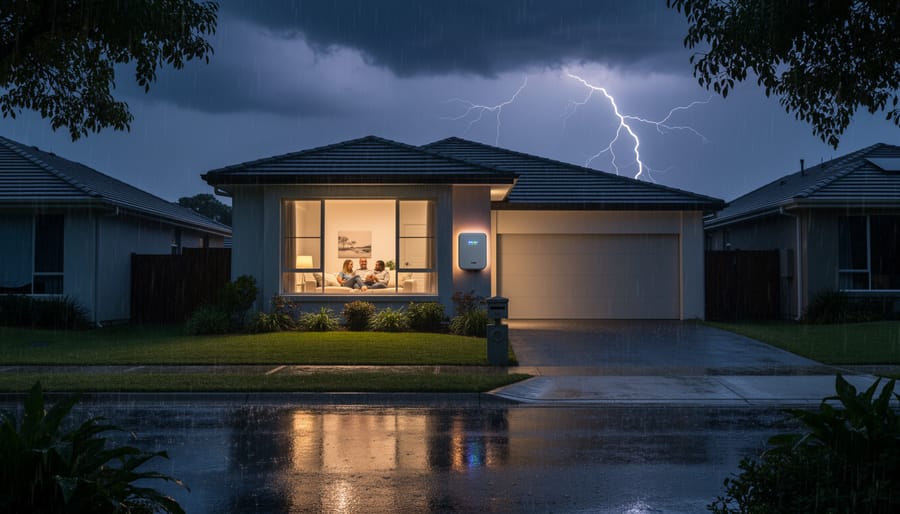
These systems work by connecting solar panels to lithium-ion batteries that charge throughout daylight hours. When BC Hydro’s grid goes down, your system automatically switches to battery power within milliseconds, keeping refrigerators running, medical equipment operational, and heating systems functional. During normal conditions, you draw from stored solar energy during expensive evening peak periods instead of paying premium grid rates.
The technology has matured significantly. A typical BC home installing a 10-13 kWh battery system can expect 8-12 hours of backup power for essential loads, while full-home backup requires 15-20 kWh capacity. Costs range from $12,000 to $25,000 installed, with federal grants covering up to $5,000 through the Canada Greener Homes program and potential provincial incentives reducing upfront investment.
BC’s unique climate makes solar battery systems particularly valuable. Coastal communities face storm-related outages averaging 6-8 hours annually, while interior regions deal with wildfire-season power disruptions. Real Vancouver Island homeowners report complete energy independence during recent multi-day outages, maintaining normal household operations while neighbors relied on generators. This practical resilience, combined with long-term electricity savings averaging $800-1,200 yearly, makes battery backup systems an increasingly smart investment for BC households prioritizing both reliability and sustainability.
What Is a Solar Battery Backup System and How Does It Work?
The Three Key Components
A solar battery backup system brings together three essential components that work as a team to power your home. First, solar panels in BC capture sunlight and convert it into electricity, even on our famously cloudy days. These panels are specifically designed to perform well in our region’s unique weather conditions.
Next, battery storage units act as your home’s energy reservoir. Think of them as a large rechargeable power bank that stores excess electricity generated during the day. When the sun sets or the grid goes down, your batteries automatically kick in to keep your lights on and appliances running. Popular options for BC homeowners include lithium-ion batteries that typically last 10-15 years.
Finally, inverters serve as the translator between your solar system and home. They convert the direct current electricity from your panels and batteries into the alternating current that your household appliances use. Modern inverters also include smart monitoring features, letting you track your energy production and consumption through simple smartphone apps. Together, these three components create a reliable, self-sufficient energy system for your home.
Grid-Tied vs. Off-Grid Systems
When choosing a solar battery backup system in BC, you’ll need to decide between grid-tied and off-grid configurations, each offering distinct advantages for homeowners.
Grid-tied systems with battery backup remain connected to BC Hydro while storing excess solar energy. During power outages, your batteries automatically kick in to power essential appliances. These systems cost less upfront, allow you to sell surplus energy back to the grid through net metering programs, and provide peace of mind knowing BC Hydro serves as your backup when solar production is low during our cloudy winter months.
Off-grid systems operate completely independently from the utility grid. While they offer total energy autonomy and eliminate monthly electricity bills, they require larger battery banks and careful energy management. In BC’s climate, where winter sunshine is limited, off-grid systems need significant investment in battery capacity to cover weeks of reduced solar production.
For most BC homeowners, grid-tied systems with battery backup offer the best balance. You gain backup power during outages while maintaining grid connection for reliability during our darker months. A family in Kelowna, for example, uses their grid-tied system to reduce bills by 80% while keeping essential circuits powered during winter storms.
Why BC Homeowners Are Choosing Battery Backup Now
Increasing Extreme Weather Events
British Columbia’s weather patterns are becoming increasingly unpredictable, leading to more frequent and severe power outages across the province. In recent years, communities throughout BC have experienced significant disruptions from extreme weather events.
Vancouver Island residents faced extended blackouts during the 2021 “bomb cyclone” windstorm, which left over 230,000 BC Hydro customers without power, some for nearly a week. The Lower Mainland has similarly experienced major outages from winter ice storms that snap power lines and damage infrastructure, with the 2022 ice storm affecting thousands of households during freezing temperatures when electricity was needed most.
Interior BC communities face a different challenge: wildfire season. The 2023 wildfire season forced evacuations and caused prolonged power disruptions as BC Hydro proactively shut down transmission lines to prevent fire ignition. Communities like Kelowna and Kamloops experienced repeated outages during critical summer months.
These incidents highlight a growing reality for BC homeowners. Climate change is intensifying weather extremes, and our aging electrical grid wasn’t designed to handle these conditions. For families who rely on electricity for heating, medical equipment, or working from home, even a 24-hour outage can create serious hardship. Solar battery backup systems offer a practical solution, allowing households to maintain power during grid failures while reducing dependence on centralized energy infrastructure vulnerable to weather-related damage.
Rising Energy Costs in BC
BC Hydro customers have seen electricity rates climb steadily over recent years, with approved increases impacting household budgets across the province. While BC still enjoys relatively affordable power compared to other regions, these rising costs mean homeowners are looking for smart ways to reduce their monthly bills.
Battery storage systems offer a practical solution by helping you manage when you use grid electricity. During off-peak hours when rates are lower, your battery charges using either solar panels or grid power. Then during peak usage times when electricity costs more, your home draws from the stored battery power instead of paying premium rates.
For homes on time-of-use billing structures, this strategy can lead to meaningful savings over time. A Vancouver Island family recently reduced their peak-hour consumption by 65% after installing a battery backup system, cutting their annual electricity costs by approximately $400. While individual savings vary based on your household’s energy patterns and rate structure, battery storage gives you greater control over your energy expenses while providing backup power during outages.
Environmental Values Meet Practical Solutions
British Columbians have long championed environmental protection, and solar battery backup systems align perfectly with this commitment. By storing clean energy generated during sunny days, these systems dramatically reduce your reliance on grid electricity, which in BC still includes fossil fuel sources during peak demand periods. The practical impact is significant: a typical home system can offset 3-5 tonnes of carbon dioxide annually, equivalent to planting roughly 150 trees. Beyond the environmental benefits, you’re protecting your home from grid outages while supporting BC’s clean energy transition. Local homeowners in communities like Victoria and Kelowna have demonstrated that environmental values and energy independence work hand-in-hand, creating resilient homes that contribute to a healthier planet while providing reliable power year-round.
What Can You Actually Power During an Outage?
Essential vs. Whole-Home Backup
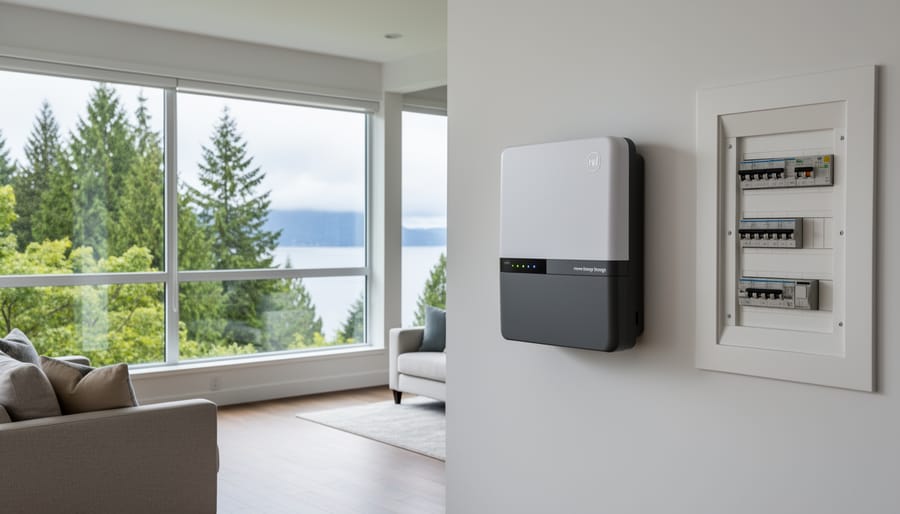
When choosing a battery backup system, you’ll need to decide between essential circuit coverage and whole-home backup. Essential backup systems typically power critical loads like your refrigerator, some lights, heating controls, and a few outlets. For most BC homes, this requires a battery capacity of 10-15 kWh, which can keep these essentials running for 1-2 days during an outage.
Whole-home backup systems power everything in your house, including appliances, HVAC systems, and electric vehicle chargers. These setups usually need 20-30 kWh or more of battery storage, often requiring multiple battery units installed together.
Consider your priorities and budget. A family in Courtenay chose essential backup for $12,000, protecting their well pump, heating, and food storage during winter storms. Meanwhile, a Victoria household invested $28,000 in whole-home coverage to maintain their home office and medical equipment without interruption.
Most BC homeowners start with essential backup, which costs roughly half the price of whole-home systems while still providing peace of mind during outages. You can always expand capacity later as your needs or budget grows.
How Long Will Your Battery Last?
The runtime of your solar battery depends on three main factors: battery capacity (measured in kilowatt-hours), your household’s energy consumption, and what appliances you’re running during an outage.
A typical BC home uses about 30 kWh daily. During a power outage, a 10 kWh battery running essential loads like your refrigerator, lights, furnace fan, and a few outlets could power your home after dark for roughly 12-18 hours. A larger 13.5 kWh system might extend this to 24 hours or more when used strategically.
Winter presents unique challenges in BC. Electric heating systems draw significant power, potentially reducing battery runtime to just 6-8 hours if you’re heating your entire home. Consider prioritizing one heated room and essential appliances during extended outages.
During summer months with minimal heating needs, the same battery could comfortably sustain your home for a full day or longer. Many BC homeowners with solar panels can recharge their batteries during daylight hours, creating truly continuous backup power.
Larger battery installations of 20+ kWh provide multi-day backup capability, especially valuable in rural areas where grid restoration takes longer.
Real BC Homeowners Share Their Battery Backup Stories
When the lights went out during last winter’s ice storm, the Martinez family in Coquitlam barely noticed. “Our solar battery system kicked in immediately,” shares Roberto Martinez. “While our neighbors were scrambling for candles, we kept our fridge running, stayed warm, and even charged our phones. The kids thought it was magic.” Their 13.5 kWh battery provided power for two full days until grid service resumed, proving its worth during one of the Lower Mainland’s worst weather events in years.
Up in Prince George, Sarah Chen’s experience highlights the everyday benefits beyond emergency backup. “We installed our battery system primarily for outage protection, but the daily energy independence has been incredible,” she explains. “During summer, our panels generate more power than we use, storing excess energy for evening use. Our electricity bills dropped by 65 percent in the first year alone.” Sarah’s system also performed flawlessly during three separate outages last winter, each lasting 4-8 hours.
On Vancouver Island, the Thompson family in Nanaimo discovered unexpected peace of mind. “We run a home-based business, so power reliability is crucial,” says David Thompson. “During a six-hour outage last fall, our battery kept our internet, computers, and office equipment running without interruption. We didn’t lose a single client meeting or deadline.” Their system paid for itself faster than anticipated through a combination of reduced utility bills and avoided business disruption costs.
These real experiences across different BC regions demonstrate how battery backup systems deliver both practical emergency protection and ongoing financial benefits, adapting seamlessly to varied climate conditions and household needs throughout the province.

Understanding the Costs and Savings
What You’ll Invest Upfront
Solar battery backup systems represent a meaningful investment, but understanding the price ranges helps you make an informed decision. In British Columbia, a basic backup system powering essential circuits like your fridge, lights, and internet typically ranges from $8,000 to $12,000 installed. This entry-level option keeps your home functional during outages without breaking the bank.
Mid-range systems that cover most of your home’s needs fall between $15,000 and $25,000. These configurations support major appliances, heating systems, and more circuits, providing greater comfort and security during extended power interruptions.
Whole-home battery systems capable of running everything simultaneously range from $25,000 to $40,000 or more, depending on your energy consumption and backup duration requirements. For context, a typical Vancouver Island family recently installed a mid-range system for $18,500, which powers their essentials for up to three days during winter storms.
Remember that BC’s CleanBC incentives and federal greener homes programs can offset portions of these costs. Many local installers offer financing options that make these systems accessible through manageable monthly payments, often comparable to what households already spend on backup generators and storm preparation.
BC and Federal Incentives You Can Use
BC residents have access to several incentive programs that make solar battery backup systems more affordable. The CleanBC Better Homes and Home Renovation Rebate Program offers rebates for energy efficiency upgrades, which can include qualifying battery storage systems when paired with solar installations. BC Hydro’s Net Metering program allows you to receive credits for excess solar energy you send back to the grid, effectively turning your meter backwards and reducing your electricity bills.
At the federal level, the Canada Greener Homes Grant provides up to $5,000 for eligible home energy retrofits, including solar installations. The federal government’s interest-free loan program offers up to $40,000 for comprehensive energy retrofits. Additionally, HST rebates may apply to solar equipment purchases.
Many BC credit unions and banks now offer green financing options with competitive rates specifically for renewable energy projects. Some municipalities also provide property tax exemptions for solar installations. Check with your local government and energy providers for additional regional programs. These combined incentives can reduce your upfront investment by 20-40%, making the switch to solar battery backup significantly more accessible for BC homeowners.
Your Return on Investment
Solar battery backup systems typically pay for themselves within 10-15 years through measurable savings. BC homeowners avoid peak electricity rates by using stored solar energy during high-demand periods, reducing monthly bills by 30-50%. During grid outages, you’ll sidestep the costs of spoiled food, lost productivity, and temporary accommodation that many families faced during recent storms.
BC’s CleanBC rebate program currently offers up to $4,000 toward battery installation, shortening your payback timeline significantly. Real estate data shows homes with solar battery systems sell for 3-5% more than comparable properties, adding tangible value to your investment.
Consider the Johnsons in Kelowna, who save approximately $1,200 annually on electricity costs while enjoying complete energy independence during wildfire season outages. Their system paid for itself in 11 years, and they’re now banking savings while contributing to BC’s clean energy goals. Calculate your potential savings using local utility rates and available incentives to determine your personalized return timeline.
Choosing the Right System for Your BC Home
Questions to Ask Before You Buy
Before investing in a solar battery backup system, take time to evaluate your specific needs and circumstances. Start by identifying your backup priorities: Which appliances are essential during an outage? A refrigerator and medical equipment differ greatly from powering your entire home. Calculate your critical loads to determine the battery capacity you’ll need.
Consider your budget realistically, including both upfront costs and available BC incentives that can offset your investment. Assess your home’s orientation and roof condition—south-facing roofs with minimal shading work best with quality solar panels that charge your battery efficiently.
Think about your future plans. Are you considering an electric vehicle? Planning a home addition or pool installation? These factors significantly impact system sizing. Also evaluate your local grid reliability—homes in remote BC communities experiencing frequent outages benefit more from backup systems than those in stable urban areas.
Finally, review your current electricity usage patterns and utility bills. Understanding when you consume the most power helps optimize your system design. A local solar installer familiar with BC’s climate and energy landscape can provide personalized recommendations based on your answers to these questions.
Working with BC-Certified Installers
Choosing a BC-certified installer ensures your solar battery backup system meets provincial building codes and performs reliably in our unique climate. Certified professionals understand the specific permit requirements across different BC municipalities, from Vancouver’s strict electrical codes to rural regulations. They’re familiar with how heavy snow loads in the Interior or coastal humidity affect installation methods and equipment selection.
Working with local installers means you get expertise tailored to BC’s weather patterns, including winter conditions that impact battery performance. These professionals can properly size your system for our shorter daylight hours in winter and recommend models that handle temperature fluctuations effectively. They’ll also navigate BC Hydro’s net metering program requirements and help you understand warranty coverage specific to Canadian installations.
Ask potential installers about their experience with similar homes in your area, request local references, and verify their certification through the BC Safety Authority. This investment in qualified expertise protects both your system’s performance and your home’s safety.
Investing in a solar battery backup system offers British Columbians a powerful combination of energy independence and environmental responsibility. By capturing clean solar energy and storing it for use during outages or peak demand periods, you’re not only protecting your household from grid disruptions but also reducing your carbon footprint and contributing to a more sustainable energy future for our province.
The transition to solar battery backup doesn’t have to feel overwhelming. Solar BC is here to support you every step of the way, from initial planning through installation and beyond. Start by exploring our interactive calculator to estimate your potential savings and system requirements based on your specific household needs and location. This tool provides personalized insights that help you make informed decisions about sizing and investment.
When you’re ready to take the next step, connect with our network of certified installers who understand BC’s unique climate conditions and regulatory requirements. These experienced professionals will ensure your system is optimized for local weather patterns and seamlessly integrated with BC Hydro’s net metering program. Join the growing community of British Columbians embracing energy resilience while making a meaningful difference for our environment.