
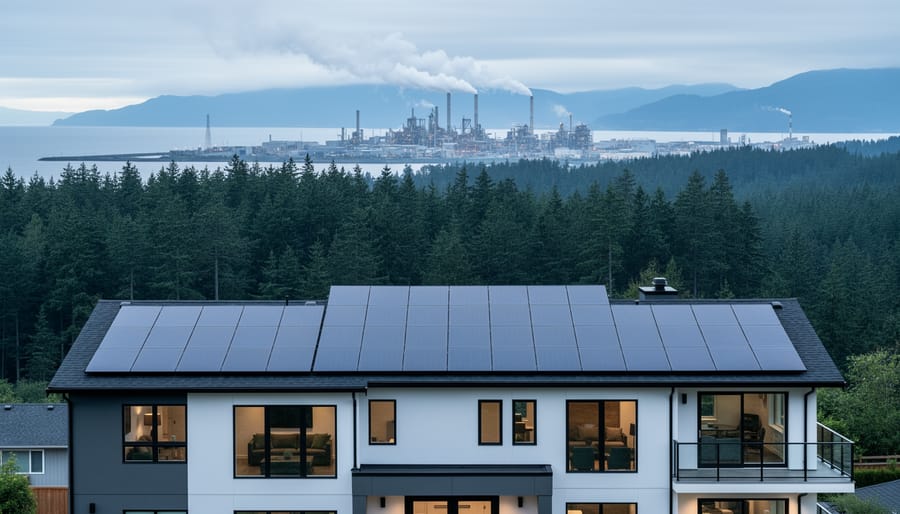
Solar panels generate clean energy for 25-30 years, but their manufacturing process involves environmental trade-offs that deserve your attention before installation. The production of photovoltaic cells requires significant energy, water, and raw materials—including silicon mining, chemical processing, and transportation across global supply chains. This reality might seem contradictory when you’re investing thousands of dollars specifically to reduce your environmental footprint.
The good news: manufacturing emissions represent only a fraction of a solar panel’s lifetime environmental equation. Most systems offset their production carbon footprint within 1-4 years of operation, then provide two decades of genuinely clean energy. British Columbia’s renewable-heavy electricity grid gives us an additional advantage—local solar installations displace less carbon-intensive power compared to coal-dependent regions, though the panels themselves are typically manufactured overseas using various energy sources.
Understanding the complete picture helps you make choices aligned with your values. Manufacturing impacts include energy consumption equivalent to 1-3 years of a panel’s electricity output, water usage in silicon purification, and potential chemical waste from production facilities. However, the industry has dramatically improved efficiency over the past decade, reducing the energy required to manufacture panels by approximately 50 percent while panel lifespans have extended.
This transparency matters because sustainable decision-making requires honest information, not greenwashed marketing. BC residents deserve to know both the challenges and solutions within solar technology, enabling you to select manufacturers with strong environmental commitments and installation practices that maximize your panels’ positive impact throughout their operational life.
What Goes Into Making a Solar Panel
Raw Materials and Energy Requirements
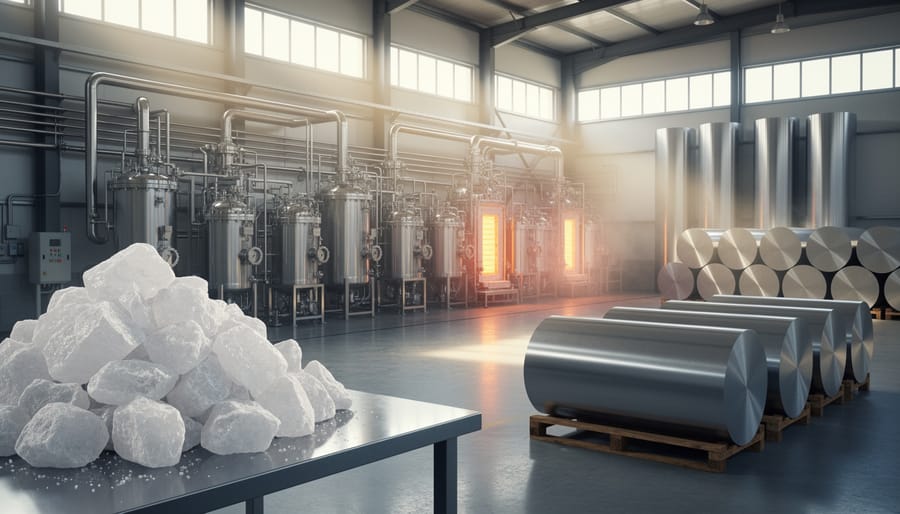
Solar panels begin their journey not in a factory, but in the earth. The primary component is quartz, the second most abundant mineral in our planet’s crust. Mining quartz itself has a relatively modest environmental footprint compared to many extractive industries. However, transforming this raw material into solar-grade polysilicon requires significant energy and chemical processing.
The purification process involves heating quartz to over 2,000 degrees Celsius in electric arc furnaces, then treating it with hydrochloric acid to produce trichlorosilane gas. This gas undergoes further refinement at temperatures exceeding 1,100 degrees Celsius to create the ultra-pure polysilicon needed for solar cells. This multi-step process traditionally consumed substantial electricity, and when powered by coal-fired plants, contributed considerably to manufacturing emissions.
Beyond silicon, solar panels require silver for electrical contacts, aluminum for frames, and various other materials including copper wiring and specialized glass. Each component has its own extraction and processing requirements. Silver mining, for instance, generates waste rock and uses chemical treatments that demand careful environmental management.
The encouraging news for British Columbia residents is that manufacturing efficiency has improved dramatically. Modern polysilicon production uses 80 percent less energy than facilities from two decades ago. Additionally, as renewable energy increasingly powers manufacturing facilities, particularly in regions with strong environmental regulations, the carbon intensity of these processes continues declining. When you consider that a solar panel generates clean electricity for 25 to 30 years, the energy invested in manufacturing is typically recovered within one to three years of operation.
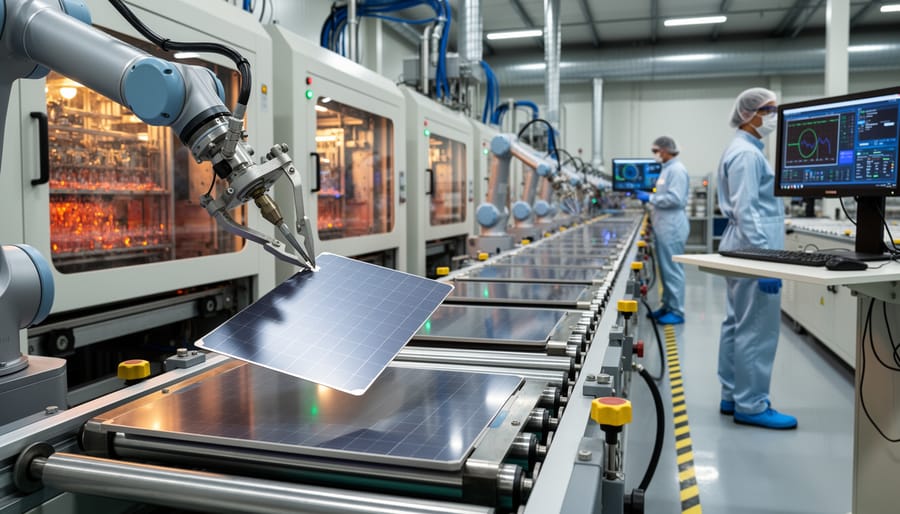
The Manufacturing Footprint
Manufacturing solar panels does require significant resources and energy upfront. Let’s put this into perspective with numbers that matter to British Columbians.
A typical residential solar panel’s production generates approximately 50 kilograms of carbon dioxide equivalent. To visualize this, that’s roughly the same emissions as driving a passenger vehicle from Vancouver to Kelowna. The manufacturing process also consumes about 200 kilowatt-hours of electricity per panel and requires approximately 11 liters of water, comparable to running your dishwasher twice.
For a standard BC home installation of 20 panels, the total manufacturing footprint equals about 1,000 kilograms of CO2. While this might sound substantial, it’s helpful to compare it to something familiar: that’s approximately what an average BC household produces in just one month of regular activities, including heating, transportation, and electricity use.
The energy payback period is particularly encouraging for our province. Thanks to BC’s clean hydroelectric grid and our excellent solar conditions, panels installed here typically recover the energy used in their manufacturing within 1.5 to 2.5 years. Given that panels last 25 to 30 years, they spend the vast majority of their lifespan as net-positive energy producers.
Water usage in manufacturing has improved dramatically over the past decade, with leading manufacturers implementing closed-loop systems that recycle up to 90 percent of process water. These advances mean newer panels have a considerably lighter environmental footprint than those produced even five years ago.
The Real Environmental Concerns You Should Know About
Carbon Emissions During Production
Manufacturing solar panels does release carbon emissions, primarily from the energy-intensive processes of purifying silicon, melting materials at high temperatures, and assembling components. On average, producing a typical residential solar panel generates between 50-100 kg of CO2 equivalent. For a standard home installation in BC with 20 panels, that totals roughly 1,000-2,000 kg of carbon emissions during production.
Here’s the encouraging news: this carbon debt doesn’t last long. The energy payback period—the time it takes for your panels to generate enough clean electricity to offset the energy used in their creation—ranges from 1-3 years depending on your location and panel efficiency. In sunny areas of British Columbia like the Okanagan, panels often reach this milestone even faster.
After this payback period, your solar system generates genuinely clean energy for the remaining 22-27 years of its typical lifespan. Think of it like this: a Kelowna family who installed panels in 2020 will have offset their manufacturing emissions by 2023 and will enjoy two decades of guilt-free renewable power afterward.
The solar industry continues improving this equation too. Modern manufacturers increasingly use renewable energy in their facilities, reducing production emissions by up to 30% compared to a decade ago. Some BC installers now prioritize panels from factories powered by hydroelectric or solar energy, further shrinking your system’s initial carbon footprint. When evaluating solar options, asking about your panels’ manufacturing emissions demonstrates informed environmental stewardship while supporting cleaner production practices.
Chemical Use and Waste Management
Solar panel manufacturing does involve several chemicals that require careful handling. The production process uses substances like hydrofluoric acid for cleaning silicon wafers, sodium hydroxide for etching, and various solvents in thin-film technologies. While these materials raise environmental concerns, understanding how responsible manufacturers manage them helps you make informed decisions.
Leading solar companies in BC and globally have implemented closed-loop systems that recycle these chemicals rather than releasing them into the environment. For example, modern facilities capture and reuse up to 95% of processing chemicals, significantly reducing waste and water contamination risks. These manufacturers also treat wastewater through multi-stage filtration before any discharge, ensuring harmful substances don’t enter local ecosystems.
The solar industry has made remarkable progress in reducing chemical intensity. Newer manufacturing techniques require fewer hazardous materials, and some BC suppliers now prioritize panels from facilities with ISO 14001 environmental certification, which mandates strict chemical management protocols.
When choosing solar panels for your home or business, ask installers about their suppliers’ environmental practices. Look for manufacturers transparent about their waste management processes and those participating in recycling programs. Many companies now publish sustainability reports detailing their chemical use reduction targets and achievements.
It’s worth noting that while manufacturing involves these materials, the chemicals remain contained within industrial facilities rather than being released during your panels’ 25-30 year lifespan. This one-time manufacturing impact stands in contrast to the ongoing emissions from conventional energy sources, making solar a net positive choice for BC communities committed to environmental stewardship.
Mining and Material Sourcing Impact
Solar panel production begins with mining raw materials, which does create environmental impacts worth understanding. Silicon, the primary component in most panels, comes from quartz mining—a process requiring significant energy and potentially affecting local ecosystems through excavation. Each panel also contains small amounts of silver for electrical conductivity, and mining this precious metal generates waste rock and uses water resources.
The good news? The industry is improving. Modern manufacturers increasingly source materials from operations with better environmental standards and reclamation practices. In British Columbia, where mining regulations are relatively stringent, you can feel more confident that materials sourced locally meet higher environmental benchmarks.
The social dimension matters too. Responsible manufacturers verify their supply chains to ensure fair labour practices and community engagement at mining sites. When researching solar installers, ask about their panel suppliers’ sourcing commitments—companies transparent about their supply chains demonstrate accountability.
Here’s the reassuring reality: while material extraction has impacts, studies show solar panels generate far more clean energy over their 25-30 year lifespan than the energy used to mine and manufacture them. The net environmental benefit remains strongly positive, especially when choosing panels from manufacturers committed to responsible sourcing practices.
How Solar Pays Back Its Environmental Debt
Energy Payback Period in BC’s Climate
In British Columbia’s climate, solar panels typically recover the energy invested in their manufacturing within 2 to 3 years of operation. This energy payback period is impressively short considering most solar systems last 25 to 30 years, meaning they generate clean energy for roughly 90% of their lifespan after breaking even.
BC’s sunlight conditions vary by region, which affects energy payback times. The Okanagan and Southern Interior receive approximately 1,800 to 2,000 hours of sunshine annually, achieving energy payback closer to 2 years. Coastal areas like Vancouver and Victoria, with around 1,400 to 1,600 sunshine hours, typically see energy payback within 2.5 to 3 years. Even in cloudier regions, modern panels efficiently capture diffuse sunlight, ensuring solid energy returns.
A residential solar installation in Kelowna, for example, demonstrated energy payback in just under 2 years, while a similar system in Richmond achieved it in 2.8 years. These real-world examples from BC homeowners show that regardless of your location in the province, solar panels quickly become net energy producers.
The calculation considers the total energy consumed during silicon extraction, panel manufacturing, transportation, and installation. Once this energy debt is repaid, your system generates emissions-free electricity for decades. This makes solar panels one of the most effective tools for reducing your carbon footprint in BC, transforming sunlight into clean power long after recovering their initial environmental investment.
Lifetime Carbon Savings
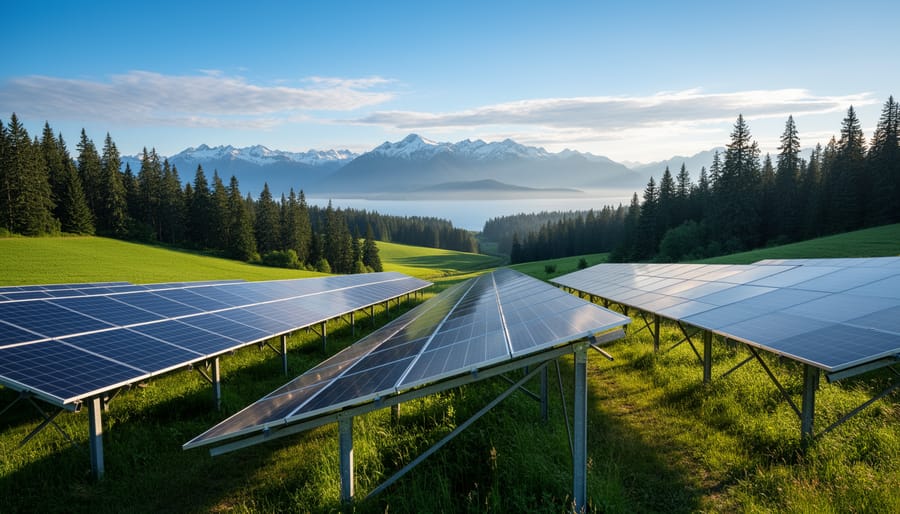
Here’s the reality that makes solar panels a clear environmental winner: despite the carbon emissions from manufacturing, solar systems typically repay their carbon debt within 2-4 years of operation, then continue generating clean energy for 25-30 years afterward.
Let’s look at what this means for British Columbia specifically. BC’s electricity grid is already relatively clean, powered primarily by hydroelectric sources. However, when you install solar panels, you’re still offsetting grid electricity use and contributing clean power back to your community. A typical 5-kilowatt residential solar system in BC prevents approximately 1.5 to 2 tonnes of carbon dioxide emissions annually, even with our cleaner-than-average grid.
Over a 25-year lifespan, that same system offsets roughly 40-50 tonnes of CO2 equivalent. To put this in perspective, that’s like taking a car off the road for 10 years or planting 2,000 trees. When you subtract the initial manufacturing emissions of about 6-8 tonnes, you’re still looking at net savings of 32-42 tonnes of carbon dioxide over the system’s lifetime.
The math gets even better in areas where solar displaces fossil fuel generation during peak demand periods. When BC’s hydroelectric capacity is stretched during hot summers or cold winters, solar generation helps reduce reliance on imported electricity from regions with higher carbon intensity.
For businesses with larger installations, the impact multiplies significantly. A commercial 50-kilowatt system can offset 400-500 tonnes of CO2 over its lifetime, equivalent to the annual emissions of about 100 passenger vehicles.
The key takeaway? Solar panels aren’t just carbon-neutral over their lifetime; they’re significantly carbon-negative, creating substantial environmental benefits that far outweigh their manufacturing footprint. This long-term positive impact makes solar one of the most effective personal climate actions available to BC residents and businesses today.
The Industry Is Getting Cleaner
Advances in Manufacturing Technology
The solar manufacturing industry has made remarkable strides in reducing its environmental footprint over the past decade. Today’s production facilities consume 50-70% less energy per panel compared to just ten years ago, thanks to more efficient manufacturing processes and equipment upgrades.
Many leading manufacturers now power their facilities with renewable energy. For example, several major panel producers have committed to operating carbon-neutral factories by 2025, using solar arrays and wind turbines to meet their electricity needs. This means the panels you install are increasingly made using clean energy, further reducing their overall carbon footprint.
Innovations in chemical use have also transformed the industry. New silicon purification techniques require fewer harsh chemicals and generate less toxic waste. Some manufacturers have developed closed-loop water systems that recycle up to 95% of water used in production, significantly reducing both water consumption and wastewater discharge.
Waste reduction has become a priority too. Advanced cutting technologies now minimize silicon waste during wafer production, while scrap silicon is increasingly being recycled back into the manufacturing process rather than discarded. Some forward-thinking companies have achieved zero-waste-to-landfill status at their facilities.
Right here in British Columbia, we’re seeing local solar installers partner with manufacturers committed to these cleaner production methods. When you’re researching solar options, ask your installer about the environmental practices of their panel suppliers. Many companies proudly share their sustainability certifications and manufacturing commitments, helping you make choices aligned with your environmental values while supporting the continued improvement of industry practices.
Recycling and End-of-Life Solutions
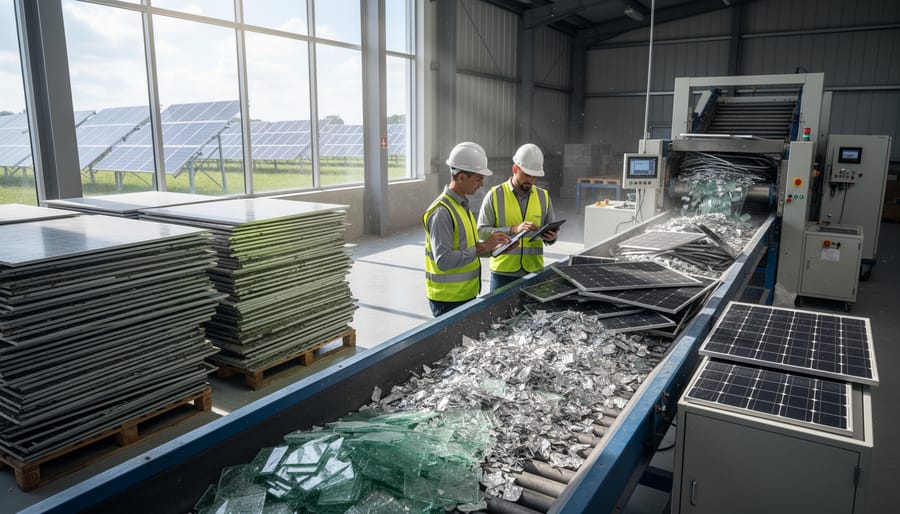
The solar industry is making significant strides in addressing end-of-life panel management through innovative recycling solar panels programs. As solar installations from the early 2000s approach their 25-30 year lifespan, recovering valuable materials like silicon, silver, copper, and aluminum has become both economically viable and environmentally essential.
Modern recycling technologies can now recover up to 95% of materials from decommissioned panels. The silicon cells are separated from glass and metal components, then purified for reuse in new panels or other electronic applications. This process dramatically reduces the need for virgin material extraction and minimizes landfill waste.
In British Columbia, several initiatives are emerging to support responsible panel disposal. The province’s Extended Producer Responsibility program requires manufacturers to manage their products’ entire lifecycle, including take-back programs. Some BC solar installers now partner with certified recycling facilities to ensure panels removed during upgrades or replacements are properly processed.
For homeowners planning solar installations, choosing manufacturers committed to recycling programs demonstrates long-term environmental stewardship. Ask your installer about their end-of-life solutions and whether they work with certified recycling partners. While current recycling infrastructure is still developing, investing in solar today supports the growth of these circular economy systems, ensuring your panels contribute to sustainability from production through their final retirement.
How BC Residents Can Make More Sustainable Solar Choices
Questions to Ask Your Solar Installer
Before committing to a solar installation, ask these key questions to ensure your investment truly supports sustainability. Start by asking where your panels are manufactured. Request information about the manufacturer’s environmental certifications, such as ISO 14001 or participation in the Solar Energy Industries Association’s sustainability initiatives. Understanding the supply chain helps you support companies actively reducing their environmental footprint.
Ask about the installer’s take-back or recycling program. A reputable installer committed to sustainability should have partnerships with recycling facilities or plans for end-of-life panel management. This is particularly important in British Columbia, where we’re building infrastructure for responsible solar waste handling.
Inquire about the carbon footprint of your specific panel model and how long it will take to offset the manufacturing emissions through clean energy production. Most quality panels achieve this within two to three years, but getting concrete numbers helps you make informed comparisons.
Request details about the installer’s own environmental practices. Do they offset their business operations? Are their installers trained in sustainable installation methods that minimize site disruption? Companies with B Corp certification or recognition from BC’s green business programs demonstrate genuine commitment beyond sales.
Finally, ask for local references from BC homeowners who chose their services specifically for environmental reasons. Hearing real experiences from your community provides valuable insight into whether an installer’s sustainability claims translate into action. These conversations often reveal practical details about long-term performance and company responsiveness that you won’t find in marketing materials.
Certifications and Standards That Matter
When choosing solar panels, environmental certifications serve as your compass for responsible purchasing. These third-party verified standards ensure manufacturers follow sustainable practices that align with your values.
The International Organization for Standardization (ISO) 14001 certification indicates a manufacturer maintains comprehensive environmental management systems. This means they actively monitor and reduce pollution, waste, and energy consumption throughout production. Look for this certification when comparing panel options, as it demonstrates a company’s commitment beyond basic compliance.
The Cradle to Cradle Certified program takes this further by evaluating materials, renewable energy use, water stewardship, and social fairness. Panels with this certification are designed for eventual recycling, addressing end-of-life concerns that matter to BC’s circular economy goals.
The Silicon Module Super League (SMSL) program, developed by the Solar Energy Industries Association, ranks manufacturers on their sustainability practices, providing transparency about carbon footprints and ethical sourcing. This helps you compare brands directly on environmental performance.
For BC residents, prioritizing panels with these certifications ensures your investment supports responsible manufacturing. A Kelowna business recently shared how selecting ISO 14001-certified panels gave them confidence their sustainability claims were authentic when communicating with environmentally-conscious customers.
When requesting quotes from installers, ask specifically about manufacturer certifications. Reputable local installers understand these standards and can guide you toward panels that meet both performance and environmental criteria. Remember, certified panels might cost slightly more upfront, but they reflect the true environmental commitment you’re seeking in your solar journey.
A Local Perspective: Solar Success in British Columbia
When the Martinez family in Kelowna began researching solar panels for their home in 2022, they had the same concerns many environmentally-conscious British Columbians face: would the environmental cost of manufacturing solar panels outweigh the benefits?
“We wanted to make a truly sustainable choice, not just feel good about going green,” explains Rebecca Martinez, who spent three months investigating the lifecycle impact of solar technology before making her decision.
The family started by requesting transparency from local solar installers about panel sourcing. They discovered that many BC solar companies now prioritize manufacturers with verified sustainability certifications and lower carbon footprints. Their chosen installer provided detailed information about the panels’ origins, including the manufacturer’s commitment to renewable energy in production facilities and responsible silicon sourcing.
Rebecca calculated that even accounting for manufacturing emissions, their 6-kilowatt system would offset its production carbon footprint within three years of operation. Over the system’s expected 25-year lifespan, it would prevent approximately 90 tonnes of carbon dioxide emissions compared to drawing power from BC’s grid.
The Martinez family also asked about end-of-life recycling options. Their installer connected them with information about emerging Canadian recycling programs and included disposal planning in their contract, ensuring responsible handling decades down the road.
Two years later, the results speak for themselves. Their solar system has eliminated 85% of their electricity bills while generating clean energy equivalent to planting 40 trees annually. More importantly, the family feels confident they made an informed choice based on complete lifecycle analysis rather than greenwashing claims.
“Understanding the full picture, including manufacturing impacts, actually strengthened our commitment to solar,” Rebecca notes. “We know exactly what we invested environmentally and what we’re getting back, and the math clearly favors renewable energy.”
Their experience demonstrates that asking tough questions about manufacturing doesn’t derail solar adoption. It leads to better-informed decisions and genuine environmental progress.
Yes, solar panel manufacturing has environmental impacts—from energy-intensive silicon processing to mining operations and chemical use. Being honest about these challenges is essential for making truly informed decisions. However, when you step back and look at the complete picture, solar energy remains one of the most environmentally responsible choices available today.
The key difference is time. While manufacturing creates an upfront environmental cost, solar panels spend 25 to 30 years generating clean electricity, typically offsetting their production impact within one to four years. That means decades of net positive environmental benefit. Compare this to fossil fuels, which create continuous emissions throughout their entire lifecycle, and the choice becomes clear.
The solar industry is also actively improving. Manufacturers are transitioning to renewable energy in their facilities, developing recycling programs, and innovating with less resource-intensive materials. When you choose solar today, you’re supporting an industry moving in the right direction.
For BC residents, our province’s clean electricity grid makes solar even more advantageous. Pairing solar with our hydroelectric infrastructure creates a powerful combination for reducing overall carbon footprints.
Making an informed decision means looking beyond just the manufacturing phase. Consider the complete lifecycle, choose reputable manufacturers committed to sustainable practices, and ask installers about panel sourcing and end-of-life recycling options.
Ready to explore how solar fits into your sustainability goals? Calculate your potential environmental impact and savings, and connect with local BC solar providers who share your commitment to responsible energy solutions.