
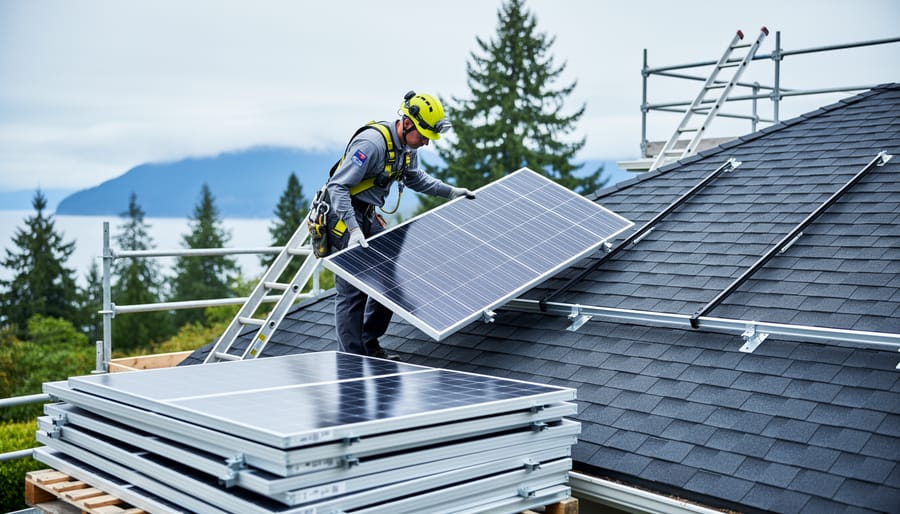
Plan for decommissioning before you install by asking your solar provider about end-of-life services, estimated removal costs (typically $400-$1,500 per installation in BC), and panel recycling programs available in your region. Include these projected costs in your initial financial planning to avoid surprises 25-30 years down the road.
Document your system specifications, installation date, and component manufacturers now. This information becomes invaluable when scheduling decommissioning, as recycling facilities need panel type, inverter models, and mounting system details to process materials properly. Store these records digitally where they’ll remain accessible decades later.
Connect with BC’s solar recycling network early. The Electronic Products Recycling Association (EPRA) operates province-wide collection programs for photovoltaic panels, which contain valuable materials like silicon, silver, aluminum, and glass—over 95% of a panel’s weight can be recovered and reused. Some manufacturers offer take-back programs, while specialized recyclers like Cascade Recovery in BC specifically handle solar equipment.
Consider timing strategically. Decommissioning costs less when combined with roof replacement or property renovation projects, as scaffolding and labor are already mobilized. Property developers can leverage this by coordinating solar removal with broader site work, reducing per-panel removal costs by 30-40%.
Environmental responsibility extends beyond your system’s active life. BC’s commitment to circular economy principles means properly decommissioned solar installations keep hazardous materials out of landfills while returning valuable resources to manufacturing supply chains. Your decommissioning choices today shape the sustainability of tomorrow’s solar industry, ensuring clean energy remains truly clean from installation through retirement.
Understanding Solar Decommissioning: More Than Just Removal
Solar decommissioning is the complete process of safely retiring your solar panel system when it reaches the end of its productive life, typically after 25-30 years of operation. Think of it as a responsible farewell to technology that has served you well, rather than simply hauling panels to the landfill.
This comprehensive process involves several key steps: carefully removing panels and mounting hardware from your roof, safely disconnecting electrical components, transporting materials to appropriate facilities, separating different components like glass, aluminum frames, silicon cells, and wiring, and finally ensuring each material is either recycled or disposed of responsibly. In British Columbia, where environmental stewardship is deeply valued, proper decommissioning helps recover valuable materials like silver, copper, and silicon while keeping hazardous substances out of our ecosystems.
It’s important to understand that decommissioning isn’t only about end-of-life scenarios. You might need to temporarily remove panels for roof repairs or upgrades, relocate your system to a new property, or replace older panels with more efficient technology. These situations require the same careful handling but with different timelines and outcomes in mind.
For example, a Vancouver homeowner recently shared how they worked with a local decommissioning specialist to remove their 15-year-old system during a roof replacement, then reinstalled the same panels afterward, extending their system’s life by another decade. This flexibility demonstrates how understanding decommissioning options early helps you make informed decisions throughout your solar journey.
Whether you’re planning ahead or facing an immediate need, knowing what decommissioning entails empowers you to choose services that align with BC’s commitment to sustainability while protecting your investment and property.
When Does Your Solar System Need Decommissioning?
End of Service Life
Most solar panels installed across British Columbia perform reliably for 25 to 30 years, though their efficiency gradually decreases over time. This degradation is natural—typically about 0.5% to 1% annually—meaning your panels still generate around 80-85% of their original capacity after two and a half decades of service.
Watch for these signs that your system is reaching its end of life: noticeable drops in energy production beyond normal degradation rates, visible damage like cracks or discoloration, moisture between panel layers, or frequent inverter issues. Many BC homeowners notice their monitoring systems flagging consistent underperformance compared to similar systems in their area.
The decision between repair and replacement depends on several factors. If your panels are producing less than 70% of their original output, replacement often makes better financial sense than ongoing repairs. Consider that newer panels are significantly more efficient—today’s technology can generate 20-30% more power in the same roof space. For a Victoria homeowner we worked with, replacing 20-year-old panels increased their energy production by 40% while reducing their carbon footprint even further.
Calculate your specific replacement timeline by monitoring annual production data and comparing costs of repairs against the benefits of upgraded, more efficient technology.
Property Changes and System Upgrades
Solar panels aren’t permanent fixtures—life changes, and your solar system may need removal before it reaches the end of its operational lifespan. If you’re planning a roof replacement, your panels will need temporary removal and reinstallation, which typically takes one to two days. Many BC solar installers offer this service, carefully documenting panel positions to ensure optimal performance after remounting.
Property sales rarely require decommissioning, as solar systems typically increase home value and transfer to new owners. However, if demolishing a building, proper decommissioning protects workers and maximizes material recovery value. Technology upgrades present an exciting opportunity—a Vancouver homeowner recently replaced their 15-year-old system with modern panels, boosting energy production by 40% while responsibly recycling the old equipment through BC recycling programs. Before upgrading, calculate whether improved efficiency justifies the investment versus maintaining your current system.
Damage and Safety Concerns
Sometimes solar panels need to come down earlier than planned. Severe weather events in BC—from windstorms to heavy snowfall—can cause physical damage that compromises your system’s safety. Cracked panels may create electrical hazards, while damaged mounting systems pose risks to people below.
Fire hazards, though rare, require immediate attention. Aging inverters or faulty wiring can overheat, and compromised panels may arc during wet conditions. If you notice scorch marks, melting components, or unusual smells, contact a certified solar professional right away.
Structural issues with your roof discovered during renovations may also necessitate early decommissioning. Rather than viewing this as a setback, consider it an opportunity to upgrade to newer, more efficient technology. Many BC homeowners who’ve decommissioned damaged systems report improved energy production and peace of mind with their replacement installations. Safety always comes first—when in doubt, schedule a professional inspection.
The Solar Decommissioning Process in BC
Safety Assessment and System Shutdown
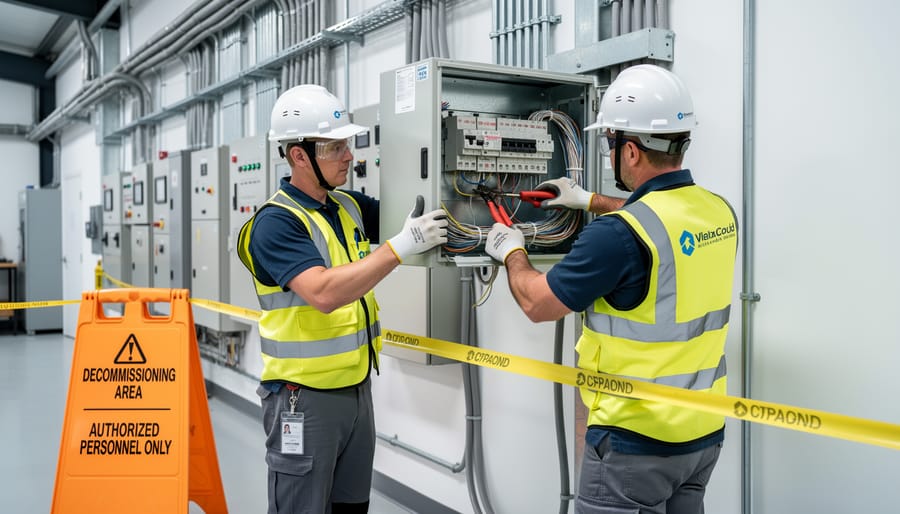
Before any physical work begins on your solar decommissioning project, proper safety protocols are essential to protect workers and your property. The first critical step involves electrical safety procedures and a complete system shutdown.
Working with BC Hydro is a key requirement during decommissioning. You’ll need to notify them of your plans and coordinate the safe disconnection from the grid. This typically involves scheduling a formal disconnection where BC Hydro personnel ensure all power flows are stopped and meters are removed or adjusted. Licensed electricians familiar with BC’s electrical codes must handle the actual disconnection work, as improper handling of live solar systems can result in serious injury or property damage.
Your solar installer or decommissioning contractor should verify that all components are de-energized before proceeding. This includes isolating the inverter, disconnecting DC circuits from panels, and ensuring no residual current remains in the system. Even on cloudy days, solar panels can generate electricity, making proper lockout procedures vital. Documentation of all safety checks should be maintained for insurance and regulatory compliance.
Physical Removal and Site Restoration
Physical removal begins with safely disconnecting and removing solar panels from your roof or ground mount. Licensed technicians follow strict safety protocols to prevent damage to your property and ensure worker safety throughout the process. Each panel is carefully detached and staged for transport to recycling facilities.
Next, crews extract inverters, disconnect wiring systems, and remove conduit runs. All electrical components are properly decommissioned following BC electrical codes. The mounting system is then dismantled, with rails, brackets, and hardware removed piece by piece.
Site restoration is the final step. For rooftop installations, contractors seal all penetration points where mounting hardware was attached, preventing potential leaks. They inspect shingles or roofing materials for damage and complete necessary repairs. Ground-mounted systems require backfilling anchor points and regrading the area.
Many BC decommissioning companies include site restoration in their service packages. A Vancouver homeowner recently shared how their contractor left their roof in better condition than before solar installation, repairing aging shingles discovered during removal. Always confirm restoration details in your contract to ensure your property is properly restored.
Transportation and Sorting
Once solar panels are carefully removed from your property, the next crucial step involves sorting and transporting materials to specialized recycling facilities. This process ensures valuable resources return to the manufacturing cycle rather than ending up in landfills.
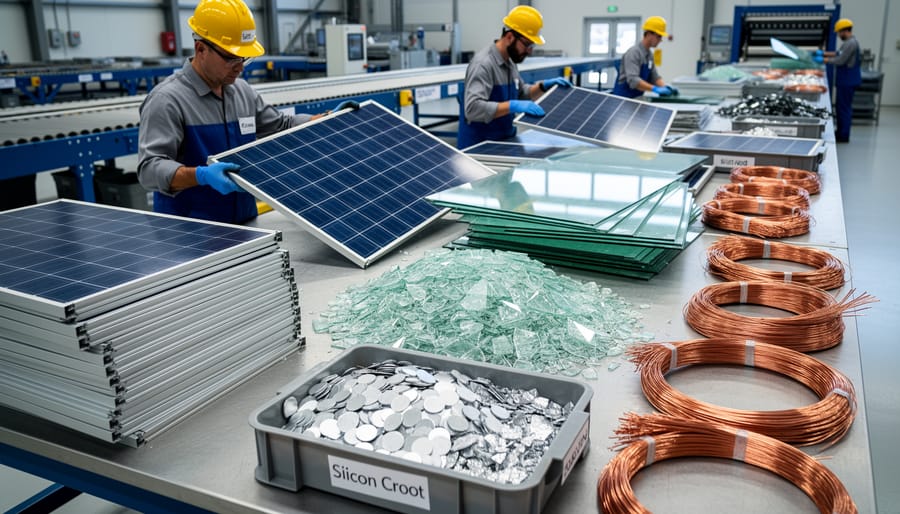
Professional decommissioning teams categorize components into distinct material streams. Glass typically makes up about 75% of a standard panel’s weight and can be recycled into new products. Aluminum frames are separated and sent to metal recyclers, where they retain significant value. Silicon wafers, the heart of solar cells, require specialized processing but can be refined and reused. Copper wiring and electrical connections are stripped and recycled separately due to their high commodity value.
Inverters and electrical equipment follow different pathways, often directed to electronic waste facilities that handle sensitive components safely. Junction boxes and mounting hardware are sorted by material type—steel, plastic, or mixed materials.
In British Columbia, several certified recycling facilities accept solar equipment, with some offering pickup services for larger decommissioning projects. Proper documentation accompanies each material stream, ensuring traceability and compliance with provincial environmental standards. This systematic approach has helped BC solar owners achieve recycling rates exceeding 90%, demonstrating our province’s commitment to closing the loop on renewable energy infrastructure.
Recycling Solar Panels: Closing the Sustainability Loop
What Gets Recycled and How
The good news about solar panel decommissioning is that most components can be recycled, making your investment environmentally responsible from start to finish. Understanding what gets recovered helps you plan for end-of-life disposal and reinforces why solar remains one of the greenest energy choices.
Solar panels are approximately 95% recyclable by weight. The glass that covers your panels, which makes up about 75% of the total weight, is fully recyclable and can be repurposed into new products. Aluminum frames are 100% recyclable and highly valuable to recyclers, often generating revenue that offsets some decommissioning costs.
Inside the panels, copper wiring is another high-value material that recyclers eagerly recover. Silicon cells, the photovoltaic heart of your system, can be processed and reused in new panels or other semiconductor applications. Even the small amounts of silver used in solar cells can be extracted and recycled.
Current recovery rates vary by facility and technology type. Crystalline silicon panels, the most common type in BC residential installations, achieve recovery rates between 85-95%. Newer specialized recycling facilities can recover up to 96% of materials from a panel.
Several BC-based and Canadian recycling programs are emerging to handle solar panel waste. When planning your decommissioning, ask your installer about partnerships with certified recyclers who meet environmental standards. Some programs even offer pickup services for decommissioned systems, making the process straightforward for homeowners.
By choosing responsible decommissioning, you ensure your solar investment benefits the environment throughout its entire lifecycle.
Recycling Facilities and Options for BC Residents
BC residents have several excellent options for responsibly recycling their decommissioned solar panels, making it easier than ever to complete the sustainable energy cycle.
The provincially-run Encorp Return-It Electronics program accepts solar panels at designated collection sites throughout British Columbia. This free service ensures your panels are processed according to environmental standards, with materials like glass, aluminum, and silicon being recovered for new products. You can locate your nearest drop-off depot through their online finder tool.
Several solar manufacturers operating in BC offer take-back programs as part of their product stewardship commitments. When purchasing your replacement system, ask your installer about manufacturer recycling options. Companies like Canadian Solar and others with Canadian operations increasingly provide end-of-life solutions for their products.
For larger commercial decommissioning projects, specialized recycling companies such as Quantum Lifecycle Partners in Vancouver handle bulk solar panel processing. They work directly with businesses and solar installers to manage higher volumes efficiently.
The Solar Panel Recycling Pilot Program, launched in the Lower Mainland in 2023, represents a promising local initiative. This community-driven program partners with regional districts to increase accessibility for residential solar owners.
Planning ahead makes recycling simpler. Keep documentation of your panel manufacturers and models, as this information helps recyclers process materials more effectively. Many BC solar installers now include decommissioning and recycling coordination as part of their service packages, taking the guesswork out of the process. Contact your original installer to discuss available options when your system reaches its retirement age.
Battery System Decommissioning: Special Considerations
Lithium-Ion Battery Safety Protocols
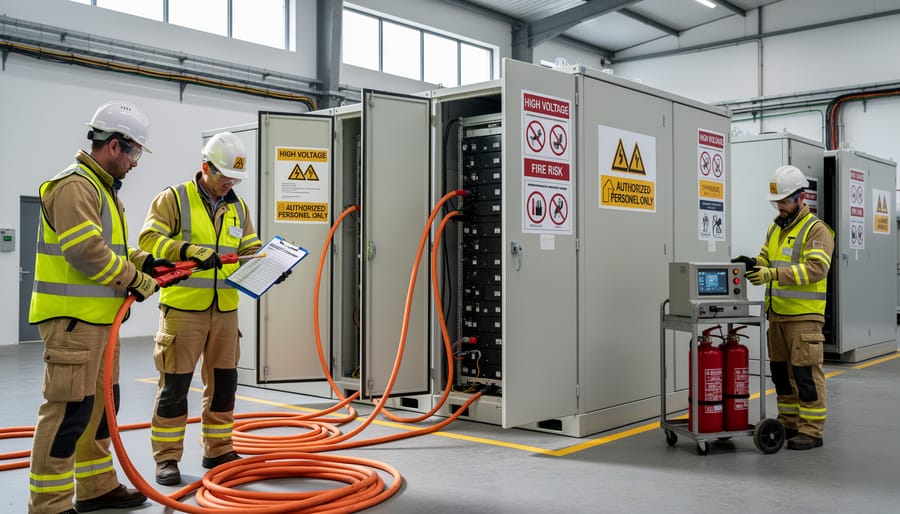
If your solar system includes lithium-ion battery storage, proper handling during decommissioning is essential for safety. These batteries pose unique fire risks if not managed correctly, as they can overheat or release toxic fumes when damaged or improperly stored.
Before removal, batteries must be safely discharged to approximately 30% capacity by qualified technicians. Never attempt to discharge batteries yourself, as improper handling can trigger thermal events. During transport, batteries require specialized packaging that prevents movement and potential short-circuits.
BC regulations mandate that lithium-ion batteries cannot go to regular landfills. Instead, they must be taken to approved facilities equipped to handle hazardous materials. Many communities across British Columbia now offer battery collection programs through Return-It depots or regional recycling centres.
When scheduling your decommissioning, ensure your contractor holds proper certification for battery handling and carries appropriate insurance. Ask about their disposal methods and request documentation confirming your batteries reached an approved recycling facility. This protects both your community and BC’s environment while recovering valuable materials like lithium, cobalt, and nickel for future use.
Battery Recycling and Reuse Opportunities
Solar batteries reaching end-of-life don’t need to head straight to recycling. Many batteries that no longer meet the demanding requirements of solar storage still retain 70-80% capacity, making them perfect candidates for second-life applications. These retired batteries are increasingly being repurposed for less intensive uses like backup power systems, smaller off-grid applications, or community energy storage projects. Several BC companies are pioneering these second-life programs, extending battery usefulness by another 5-10 years while reducing waste.
When batteries do reach true end-of-life, specialized recycling facilities can recover up to 95% of valuable materials including lithium, cobalt, and nickel. While BC currently has limited battery recycling infrastructure, several Canadian facilities accept solar batteries through mail-in programs or regional collection events. The provincial government is actively supporting the expansion of battery recycling capabilities as part of BC’s circular economy strategy.
Emerging technologies like direct recycling and hydrometallurgical processes are making battery recovery more efficient and environmentally friendly than ever before. These innovations mean materials from your decommissioned batteries can return to manufacturing new batteries, creating a truly circular system. Ask your decommissioning contractor about their battery recycling partnerships to ensure your batteries support this sustainable cycle.
Costs and Planning for Solar Decommissioning
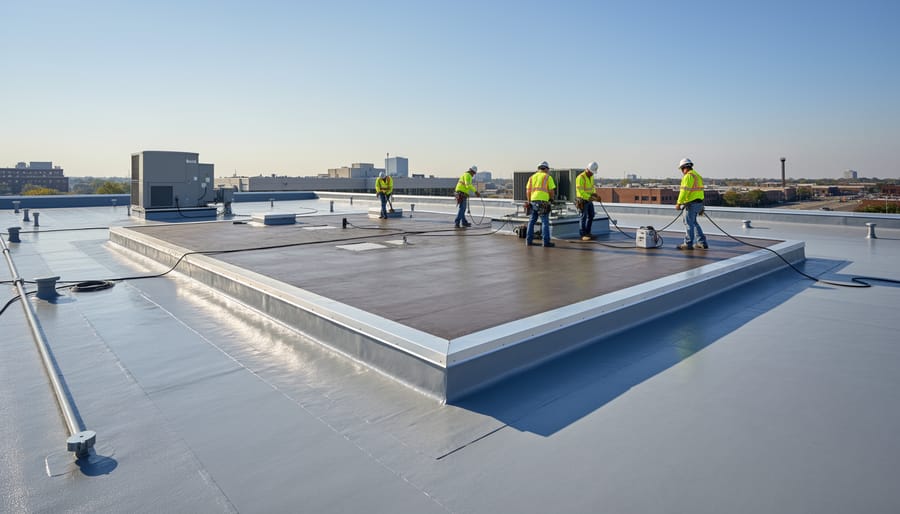
Typical Decommissioning Costs in BC
Understanding decommissioning costs helps you plan for your solar system’s complete lifecycle. In British Columbia, residential solar panel removal typically ranges from $1,500 to $4,000, depending on system size and roof complexity. Commercial installations naturally cost more, averaging between $5,000 and $15,000 based on scale and accessibility.
Several factors influence these costs. Roof pitch and height affect labor requirements, while system age may impact removal difficulty if mounting hardware has deteriorated. Geographic location also plays a role, as remote properties may incur additional transportation fees.
The encouraging news is that material recovery can offset decommissioning expenses. Silicon-based panels contain valuable materials like aluminum frames, copper wiring, and glass, which recycling facilities can reclaim. Some BC recycling programs even offer rebates, potentially reducing your net costs by 10 to 30 percent.
Planning ahead makes decommissioning more affordable. Consider setting aside approximately 1 to 2 percent of your initial installation cost annually into a decommissioning fund. For a typical residential system, this means banking roughly $100 to $200 yearly. This proactive approach ensures you’re financially prepared when the time comes, while supporting BC’s circular economy goals through responsible material recovery.
Planning Ahead: Decommissioning Funds and Warranties
Smart planning today prevents headaches tomorrow. Consider setting aside a small decommissioning fund during your system’s productive years—typically $1,000-$2,000 over a 25-30 year lifespan. You might allocate just $50-$75 annually into a dedicated savings account. Some BC solar owners treat this like a maintenance reserve, making it part of their regular energy budget.
Understanding your manufacturer’s warranty coverage is essential. Most solar panel warranties cover performance (typically 25 years) and product defects (10-12 years), but rarely include removal costs. Review your documentation to know what’s covered and what isn’t. Keep these records accessible—future property owners will appreciate it too.
Consider discussing decommissioning coverage with your insurance provider. Some homeowner policies may cover damage during panel removal, while commercial policies might offer specialized environmental liability protection. This becomes particularly valuable if you’re managing larger installations.
BC homeowners who planned ahead often share that budgeting early removed financial stress when decommissioning time arrived. One Vancouver Island couple noted their decade-old decommissioning fund earned modest interest, ultimately covering their entire recycling process. Starting small with consistent contributions makes responsible end-of-life management achievable for every solar investment.
Choosing a Certified Decommissioning Partner
Essential Qualifications and Certifications
When choosing a solar decommissioning contractor in British Columbia, verifying their qualifications protects both your investment and the environment. Start by confirming they hold a valid electrical contractor license from BC’s Technical Safety Authority, as decommissioning involves disconnecting live electrical systems. Request proof of comprehensive liability insurance and WorkSafeBC coverage to ensure you’re protected if accidents occur during the removal process.
Environmental compliance is equally important. Your contractor should demonstrate familiarity with BC’s Environmental Management Act and local hazardous waste regulations, particularly regarding proper handling of panels containing materials like cadmium or lead. Ask whether they partner with certified e-waste recycling facilities that meet provincial standards.
Experience matters significantly when navigating BC’s specific requirements. Look for contractors who can provide references from recent decommissioning projects in your region and who understand municipal permitting processes. A qualified professional will readily discuss their recycling partnerships, waste diversion rates, and commitment to maximizing material recovery rather than sending components to landfills. Don’t hesitate to request documentation of their environmental certifications and past project outcomes before making your decision.
Questions to Ask Your Decommissioning Contractor
Before hiring a decommissioning contractor, ask these essential questions to ensure a smooth, responsible process. First, inquire about their specific experience with solar panel removal in BC and request references from recent projects. Ask about their recycling commitments: “What percentage of materials do you recycle, and which facilities do you partner with?” Understanding their waste diversion rates demonstrates their environmental responsibility.
Request a detailed timeline from start to finish, including site assessment, panel removal, and site restoration. Clarify what’s included in their quoted price—does it cover permits, disposal fees, and cleanup? Ask if they’re licensed and insured, protecting you from liability during the work.
Question their safety protocols and whether crew members have proper training for electrical work and hazardous material handling. Finally, ask about guarantees: “Do you provide warranties on site restoration?” and “What happens if panels are damaged during removal and still have residual value?” A reputable contractor will answer these questions transparently, giving you confidence in their services and commitment to BC’s sustainability standards.
BC Success Story: Responsible Decommissioning in Action
When the Okanagan Valley Community Centre faced the end of their solar system’s 25-year lifespan in 2023, they turned what could have been a waste challenge into a model for responsible decommissioning. Their approach offers valuable lessons for BC solar owners planning ahead.
The centre’s 50-kilowatt rooftop installation had served the community well since 1998, but aging panels were producing significantly less power. Rather than simply removing and disposing of the system, facility manager Sarah Chen partnered with a Vancouver-based solar recycling company to ensure every component was properly handled.
The decommissioning process took just three days. Technicians carefully removed 200 panels, inverters, and mounting hardware. What happened next demonstrates the environmental benefits of proper recycling: 95 percent of the materials were recovered and repurposed. Glass and aluminum from the panels went to local manufacturers, silicon was sent to specialized processors for reuse in new solar cells, and even the copper wiring found new life in electrical applications.
The total cost came to $8,500, but the centre received $1,200 back from recyclable materials, reducing their net expense. More importantly, they kept approximately 7,500 kilograms of material out of landfills.
Chen’s advice for other BC solar owners? Start planning at least two years before decommissioning. She recommends getting quotes from multiple contractors, asking specifically about their recycling partnerships, and documenting the process for your community. The centre even created an educational display showing residents where their old panels went, reinforcing their commitment to sustainability from installation through retirement.
This practical example shows that responsible solar decommissioning isn’t just environmentally sound—it’s achievable for communities of any size across British Columbia.
The Future of Solar Decommissioning in British Columbia
British Columbia is positioning itself as a leader in sustainable solar decommissioning practices, with promising developments on the horizon that will benefit property owners across the province.
The provincial government is currently developing comprehensive regulations specifically addressing solar panel end-of-life management. Expected to roll out between 2025 and 2027, these frameworks will likely establish clear guidelines for recycling requirements, proper disposal methods, and extended producer responsibility programs. This means manufacturers may soon be required to take back old panels, significantly reducing the burden on property owners.
Recycling technology is advancing rapidly. New facilities capable of recovering up to 95% of materials from solar panels are emerging across North America, with discussions underway to establish dedicated processing centres in BC. These innovations can extract valuable materials like silver, copper, and high-purity silicon, transforming what was once considered waste into valuable resources for new manufacturing.
The circular economy approach is gaining traction in BC’s solar sector. Several local companies are pioneering panel refurbishment programs, giving functional panels removed during upgrades a second life in community projects or developing markets. For example, a Vancouver-based initiative has successfully redirected over 500 panels to remote Indigenous communities, extending their useful life while serving social good.
Property owners should expect more accessible decommissioning options in coming years. Industry experts predict costs will decrease by 20-30% as recycling infrastructure expands and competition increases. Additionally, new certification programs will help you identify qualified decommissioning contractors who follow best environmental practices.
Start planning now by documenting your system’s installation details and staying informed about provincial updates. The future of solar decommissioning in BC is bright, sustainable, and increasingly straightforward for responsible property owners.
Proper solar decommissioning represents the final chapter in your commitment to sustainable energy. Just as you carefully researched and planned your solar installation, planning for end-of-life management ensures your environmental impact remains positive throughout your system’s entire lifecycle. This isn’t just about removing panels—it’s about closing the loop on your sustainability journey.
British Columbia’s strong environmental values align perfectly with responsible decommissioning practices. When you work with certified professionals who understand the complete solar lifecycle, you’re supporting local expertise while ensuring materials are properly recycled and diverted from landfills. Many BC solar owners have discovered that planning ahead actually reduces stress and costs when the time comes to retire their systems.
The good news? You don’t need to navigate this process alone. By partnering with experienced professionals who prioritize both safety and environmental stewardship, you can ensure your solar investment remains green from installation to decommissioning. Consider discussing end-of-life planning during your next system inspection or maintenance visit—proactive conversations make the eventual process smoother.
Ready to plan ahead or start your decommissioning process? Connect with Solar BC certified partners who specialize in complete lifecycle management. They can provide customized decommissioning plans, cost estimates, and recycling options tailored to your specific system and location. Your commitment to clean energy deserves a clean conclusion—let’s make it happen together.