
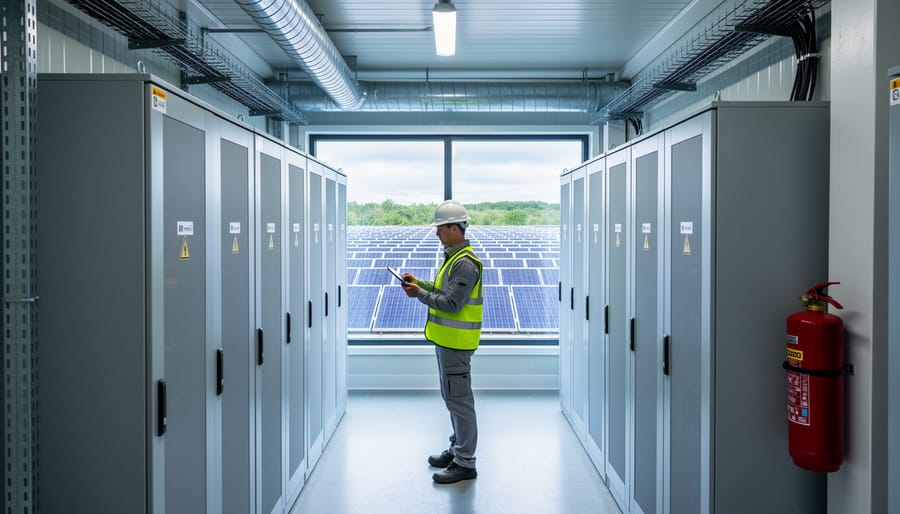
Understand that OSHA regulations don’t apply in British Columbia—WorkSafeBC governs workplace safety for battery storage systems in our province. Check the BC Fire Code Section 6.3 for specific battery storage requirements, which mandate minimum clearances, ventilation standards, and spill containment measures based on your battery type and capacity. Verify that your installation meets WorkSafeBC’s Occupational Health and Safety Regulation Part 8 for hazardous materials handling, particularly sections addressing battery room design, charging areas, and emergency eyewash station placement.
Contact a certified electrical contractor familiar with BC Building Code Section 9.33 and CSA C22.1 Canadian Electrical Code requirements, as lithium-ion and lead-acid systems each demand different installation protocols. Install proper ventilation to prevent hydrogen gas accumulation during charging cycles, maintaining airflow rates of at least 0.3 cubic feet per minute per square foot of floor area in dedicated battery rooms. Position fire suppression equipment within 25 feet of battery banks and ensure personnel access pathways remain clear at all times.
Document your safety procedures in writing, including emergency response protocols for acid spills, thermal runaway events, and electrical faults. Schedule quarterly inspections to monitor battery terminals for corrosion, check ventilation system function, and verify temperature monitoring equipment accuracy. BC homeowners and businesses who follow these provincial regulations—rather than searching for OSHA standards—create safer, compliant installations that protect both property and people while maximizing their clean energy investment.
Understanding the OSHA Connection: Why U.S. Standards Matter in BC
The Real Regulatory Authority in BC
In British Columbia, battery storage regulations fall under provincial jurisdiction rather than OSHA. The primary regulatory authority is WorkSafeBC, which oversees occupational health and safety standards for installation and maintenance work. This means workers handling battery systems must follow WorkSafeBC guidelines for electrical safety, fall protection, and hazardous material handling.
Your battery storage system must also comply with the BC Building Code and BC Fire Code, which set structural requirements and fire safety standards. These codes determine installation locations, ventilation needs, and fire suppression measures specific to battery types and capacities.
Technical Safety BC regulates the electrical components of your system. Any electrical work requires permits and inspections by certified professionals to ensure compliance with the Canadian Electrical Code as adopted in BC.
Local municipalities may add requirements through bylaws, particularly for larger commercial installations. Before installing battery storage, check with your city or regional district for additional permitting requirements.
Understanding these BC-specific authorities helps you navigate the approval process smoothly. Working with certified local installers familiar with provincial regulations ensures your battery storage system meets all safety standards while supporting your clean energy goals.
How Safety Standards Cross Borders
While OSHA doesn’t have direct authority in British Columbia, its workplace safety principles have significantly influenced how Canadian provinces approach battery storage safety. Think of OSHA standards as a foundation that Canadian regulators have built upon and adapted to local needs. WorkSafeBC and other provincial bodies regularly review OSHA guidelines when updating their own requirements, creating a cross-border exchange of safety knowledge that benefits everyone.
Here’s what this means for your battery installation: many BC installers voluntarily exceed minimum provincial requirements by incorporating OSHA-inspired practices. For example, a Vancouver community center installing a solar-plus-storage system worked with installers who implemented ventilation standards exceeding BC minimums, drawing from OSHA’s battery handling protocols. This proactive approach gave the facility added peace of mind and set them up for future regulatory changes.
When choosing an installer, ask about their familiarity with both BC regulations and international safety standards. The best professionals stay current with evolving practices from multiple jurisdictions, ensuring your system benefits from the highest safety benchmarks available. This commitment to exceeding minimums rather than just meeting them reflects the quality-focused approach that makes BC’s clean energy sector a leader in safety and innovation.
Core Battery Storage Safety Requirements in British Columbia
Building and Electrical Permits You’ll Need
Installing a battery storage system in British Columbia requires navigating several permit requirements to ensure your installation meets safety and building code standards. Understanding this process upfront helps you plan your project timeline and budget effectively.
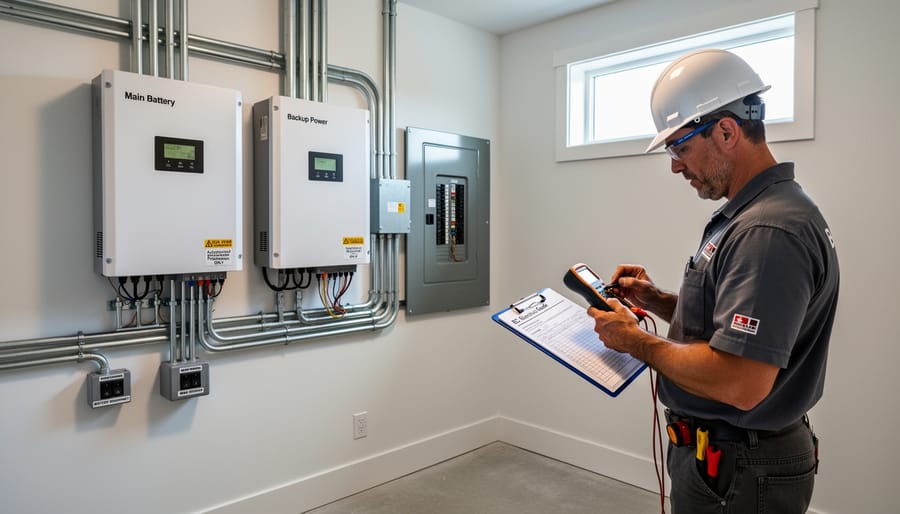
The first permit you’ll need is an electrical permit from Technical Safety BC. This provincial authority oversees all electrical work in BC, and any battery system installation requires their approval. Your licensed electrical contractor will typically handle this application, submitting detailed plans showing how your battery system connects to your home’s electrical panel and the grid. The permit fee varies based on project value, generally ranging from $100 to $300 for residential installations.
If your battery storage system requires structural modifications—such as installing floor-mounted units in basements or adding wall reinforcements—you’ll also need a building permit from your local municipality. Requirements vary by jurisdiction, but most municipalities require engineered drawings showing the system won’t compromise structural integrity. For example, a homeowner in Victoria installing a floor-mounted battery array needed building permit approval to ensure proper load distribution.
Fire safety approvals become necessary for larger installations, particularly in commercial settings. Your local fire department may need to review installation plans, especially for systems exceeding certain capacity thresholds. They’ll verify adequate spacing, ventilation, and access for emergency responders.
Working with certified installers familiar with BC’s permitting landscape streamlines this process significantly. They know local requirements and can often expedite applications, turning what seems like bureaucratic complexity into a manageable checklist. Most residential installations receive permits within two to four weeks when properly documented.
BC Fire Code Requirements for Battery Systems
The BC Fire Code, managed by Technical Safety BC, establishes specific requirements for battery energy storage systems that complement workplace safety standards. These regulations are particularly important for lithium-ion batteries, which present unique fire risks when improperly stored.
For residential and commercial installations, the Fire Code requires adequate ventilation to prevent gas accumulation, especially during thermal events. Battery rooms must have mechanical ventilation systems capable of removing potentially hazardous gases. Minimum separation distances between battery units depend on system capacity—typically ranging from 3 to 10 feet for residential systems. Larger commercial installations need greater clearances to contain potential fire spread.
Fire suppression systems are often required for installations exceeding 20 kWh capacity. While water-based sprinklers remain effective for most lithium-ion systems, certain chemistries may require specialized suppression methods. Your certified installer will determine the appropriate approach based on your specific battery type, whether you’re installing new units or working with repurposed EV batteries.
Temperature monitoring and automatic disconnect systems are essential safety features required by the Fire Code. These systems detect abnormal conditions and isolate batteries before situations escalate.
Working with a qualified professional ensures your battery storage system meets all Fire Code requirements while maximizing safety. They’ll navigate permitting, inspection requirements, and proper installation techniques specific to BC regulations.
WorkSafeBC Standards for Installation and Maintenance
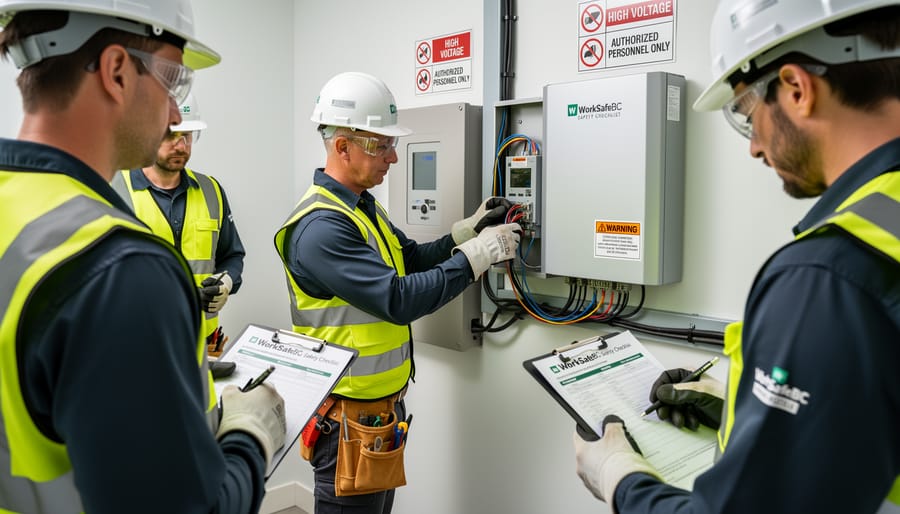
WorkSafeBC requires anyone installing or maintaining battery storage systems to follow strict workplace safety protocols to protect workers and facilities. Installation teams must complete specific training on electrical safety, fire prevention, and handling hazardous materials before working with battery systems. Personal protective equipment is mandatory and typically includes arc-rated clothing, safety glasses, insulated gloves, and steel-toed boots rated for electrical work.
Maintenance personnel need regular refresher training on evolving battery technologies, particularly as lithium-ion systems become more common in residential and commercial settings. Safe work procedures include proper lockout/tagout protocols, ventilation requirements during installation, and emergency response plans for thermal events or chemical spills.
A Vancouver-based solar installer recently shared how investing in comprehensive safety training reduced workplace incidents to zero over three years while improving installation efficiency. For homeowners and businesses, working with certified installers who prioritize WorkSafeBC compliance ensures your battery storage system is installed safely and meets all regulatory requirements. Always verify that your chosen contractor maintains current safety certifications and has documented safety procedures specific to battery storage installations.
Key Safety Standards Shared Between OSHA and BC Regulations
Ventilation and Thermal Management
Proper ventilation is essential for battery storage safety and longevity, particularly in BC’s climate where temperature fluctuations can impact system performance. Battery rooms or enclosures must maintain adequate airflow to prevent heat buildup and disperse any gases that batteries may emit during charging cycles. Modern lithium-ion battery systems typically produce minimal off-gassing compared to older lead-acid batteries, but ventilation remains a critical safety measure.
BC building codes require battery installations in enclosed spaces to have ventilation systems designed by qualified professionals. The air exchange rate depends on battery type, capacity, and room size. Natural ventilation through vents positioned near floor and ceiling levels often suffices for residential systems, while larger commercial installations may need mechanical ventilation with fans.
Temperature management is equally important. Batteries perform optimally between 15-25°C. Installing batteries in climate-controlled areas or insulated spaces protects them from BC’s winter cold and summer heat, extending their lifespan by years. A Kelowna business recently improved their battery system efficiency by 18% simply by relocating units from an uninsulated garage to a properly ventilated utility room.
Electrical Safety and Arc Flash Protection
Whether you’re installing a home solar battery system or managing a larger commercial energy storage facility in British Columbia, electrical safety must be your top priority. Battery storage systems involve high voltage DC power that can create serious electrical hazards without proper safeguards.
Your system needs clearly marked disconnects at accessible locations, allowing emergency responders or maintenance personnel to quickly shut down power. WorkSafeBC requires these disconnects to be labeled in plain language, indicating their function and the voltage levels involved. This labeling prevents confusion during emergencies and helps protect anyone working near your battery system.
Arc flash protection is particularly important for larger battery installations. An arc flash occurs when electrical current travels through air between conductors, creating intense heat and light that can cause severe injuries. Your installer should conduct an arc flash hazard assessment and provide appropriate warning labels indicating the required personal protective equipment and safe approach boundaries.
Ground fault protection devices are essential safety features that detect unwanted electrical paths and automatically disconnect power before someone gets shocked. Similarly, overcurrent protection prevents electrical fires by shutting down circuits when current exceeds safe levels.
A Vernon manufacturing facility recently upgraded their battery storage system with enhanced electrical safety features, including thermal monitoring and automatic shutdown capabilities. This investment not only protected their workers but also qualified them for reduced insurance premiums. Work with certified installers who understand both electrical codes and battery-specific safety requirements to ensure your system meets all protection standards from day one.
Emergency Response Planning
Whether you’re installing a home battery system in Vancouver or setting up commercial energy storage in Kelowna, having a solid emergency response plan isn’t just good practice—it’s essential for protecting your family, employees, and first responders.
Your emergency plan should clearly outline shutdown procedures that anyone can follow during a crisis. This means labeling your battery disconnect switches with clear, visible signage and ensuring household members or staff know exactly where they’re located. In BC, WorkSafeBC requires that emergency controls be readily accessible and marked in a way that leaves no room for confusion.
First responders need quick access to crucial information when they arrive at your property. Consider posting a simple placard near your electrical panel that identifies your battery system type, capacity, and shutdown location. Many BC fire departments now request this information to ensure safe response to electrical fires or other emergencies.
Your incident response protocol should include immediate contacts—your installer, utility provider, and emergency services. Keep these numbers easily accessible, not buried in a manual somewhere. A practical action point: create a one-page emergency sheet and post it near your battery system.
Local installers familiar with BC’s requirements can help you develop site-specific emergency procedures that account for your unique setup, ensuring you’re prepared for any situation while keeping everyone safe.
Practical Steps to Ensure Your Battery Storage Meets BC Safety Standards
Choosing a Certified Installer in BC
Selecting the right installer is crucial for ensuring your battery storage system meets all safety standards and performs reliably for years to come. In British Columbia, look for installers certified by the Technical Safety BC authority, which oversees electrical installations and energy storage systems. Your installer should hold valid electrical contractor licenses and have specific experience with battery energy storage systems.
When interviewing potential installers, ask to see their Technical Safety BC certification and proof of liability insurance. Request references from recent battery storage projects, particularly those similar in size to yours. A qualified installer will gladly walk you through how they’ll comply with the BC Electrical Code and fire safety requirements specific to your installation location.
Don’t hesitate to ask detailed questions about their safety protocols. How do they ensure proper ventilation? What fire suppression measures do they recommend? How will they position batteries to meet clearance requirements? A knowledgeable installer will provide clear answers and may even share photos from previous installations.
Warranty coverage deserves careful attention. Clarify what the manufacturer’s warranty covers versus the installer’s workmanship guarantee. Reputable installers stand behind their work with multi-year warranties and offer ongoing maintenance plans to keep your system operating safely and efficiently.
Installation Location and Placement Best Practices
Choosing the right location for your battery storage solutions is essential for safety and performance, especially in BC’s varied climate. Indoor installations offer better temperature control and protection from coastal moisture, making them ideal for areas experiencing freezing winters or heavy rainfall. Basements, garages, or dedicated utility rooms work well, provided they have adequate ventilation and are away from living spaces.
For outdoor installations, ensure batteries are housed in weatherproof enclosures rated for BC’s temperature range, typically from -20°C to 40°C. Coastal communities should prioritize corrosion-resistant materials due to salt air exposure.
Position batteries on stable, level surfaces away from flammable materials, water heaters, and heat sources. Maintain minimum clearance distances as specified by manufacturers—usually 36 inches for ventilation and maintenance access. Keep batteries at least three feet from exit routes to ensure safe evacuation during emergencies.
In seismic zones like the Lower Mainland and Vancouver Island, secure batteries with appropriate anchoring systems to prevent movement during earthquakes. Avoid direct sunlight exposure, which can degrade battery performance and lifespan. Always consult certified installers familiar with BC’s building codes and climate considerations to ensure optimal placement that meets both safety standards and efficiency goals.
Ongoing Maintenance and Safety Monitoring
Regular maintenance keeps your battery storage system running safely and efficiently for years to come. In British Columbia, establishing a simple monitoring routine protects your investment and ensures ongoing compliance with WorkSafeBC guidelines.
Start with monthly visual inspections. Check for any signs of corrosion, leaking, or physical damage to battery enclosures. Look for loose connections or unusual sounds during operation. Keep the storage area clean, dry, and well-ventilated, maintaining the temperature range specified by your manufacturer—typically between 10°C and 25°C for optimal performance.
Monitor your system’s performance through its built-in tracking features. Most modern battery systems include smartphone apps that alert you to temperature fluctuations, charging irregularities, or capacity changes. Set aside time quarterly to review these metrics and note any concerning trends.
Professional inspections matter too. Schedule annual service visits with certified BC installers who understand local requirements. They’ll verify electrical connections, test safety systems, and ensure ventilation remains adequate. Many BC service providers, like those certified through the Canadian Solar Industries Association, offer maintenance packages specifically designed for our climate conditions.
Document all inspections and maintenance activities. This record demonstrates your commitment to safety and helps identify patterns should issues arise. Keep manufacturer contact information accessible, along with emergency procedures specific to your battery chemistry. With consistent attention, your battery storage system will deliver reliable, safe performance throughout its lifespan.
Local Success Story: Safe Battery Storage in Action
When the Riverside Community Centre in Kelowna decided to add solar panels and battery storage to their facility in 2022, facility manager Janet Chen knew safety compliance would be critical. The centre serves hundreds of residents weekly, making proper battery storage requirements non-negotiable.
“I initially searched for OSHA requirements because that’s what came up online,” Janet explains. “But I quickly learned that in BC, we follow WorkSafeBC and the BC Fire Code instead. Understanding that distinction saved us time and helped us focus on the right regulations.”
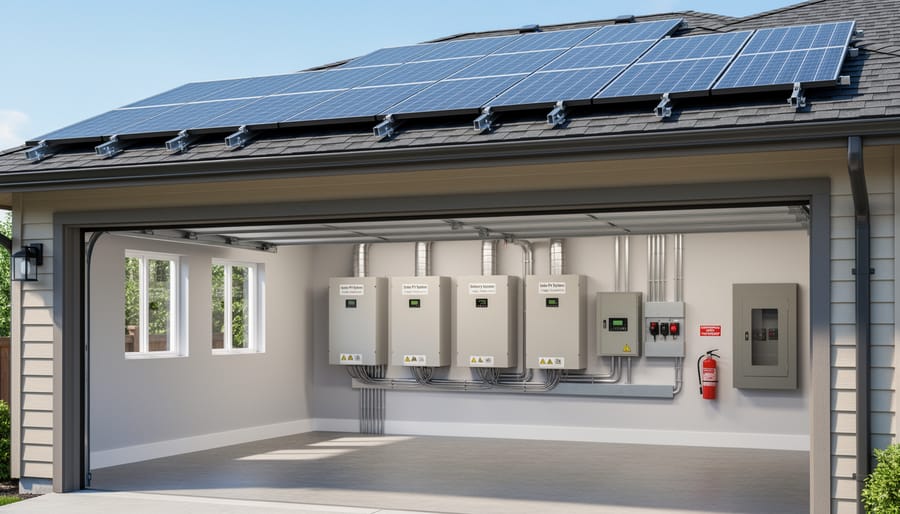
The community centre partnered with a certified solar installer familiar with BC’s specific requirements. Together, they navigated the permitting process through the City of Kelowna and the local fire department. The 30 kWh lithium-ion battery system was installed in a dedicated ground-level room with proper ventilation, fire suppression equipment, and clear safety signage.
The biggest challenge came during the inspection phase. “Our initial ventilation plan didn’t meet the fire inspector’s standards,” Janet recalls. “We needed to install an additional exhaust fan and modify the room’s layout to ensure proper clearances around the battery cabinets.”
The modifications added two weeks to the project timeline and approximately 2,500 dollars to the budget, but the investment proved worthwhile. Since going live, the system has reduced the centre’s electricity costs by 40 percent during peak hours and provides backup power during outages, which have become more frequent in recent years.
“The permitting process seemed daunting at first, but working with experienced professionals made all the difference,” says Janet. “Our installer knew exactly what the inspectors would look for and helped us get it right.”
The centre now hosts monthly tours for other BC organizations considering similar projects, demonstrating that proper planning and adherence to provincial safety standards can lead to successful, compliant battery storage installations that benefit both the bottom line and the environment.
While OSHA guidelines offer valuable safety insights that inform best practices across North America, BC residents planning battery storage installations must understand that provincial regulations take precedence. WorkSafeBC and BC Building Code requirements are the legal standards you need to meet, along with relevant fire and electrical codes specific to our province.
The good news? Following proper compliance procedures protects both your financial investment and your family’s safety. When you work with certified local installers who understand BC’s regulatory landscape, you’re ensuring your residential battery storage system meets all necessary standards from day one. These professionals navigate permit requirements, conduct required inspections, and implement safety protocols tailored to our climate and building conditions.
Think of compliance not as a hurdle, but as your assurance that your battery system will perform reliably for years to come. Properly installed systems have proven track records throughout BC communities, delivering energy independence while maintaining the highest safety standards.
Ready to move forward with confidence? Connect with Solar BC’s network of certified installers who specialize in compliant battery storage solutions. Our team understands the unique requirements of BC installations and can guide you through every step, from initial assessment to final inspection. Contact us today to schedule a consultation and discover how straightforward achieving safe, regulation-compliant battery storage can be. Your sustainable energy future starts with making informed choices and partnering with experienced local professionals.