

Your solar panels will eventually stop working—typically after 25 to 30 years—and understanding what happens next is essential to making an informed, environmentally responsible choice today. BC residents investing in solar energy rightly question whether their clean energy solution creates a waste problem down the road, and the answer depends on planning, available recycling infrastructure, and your commitment to closing the loop on sustainability.
Solar panel recycling transforms end-of-life modules into reusable materials: approximately 95% of a panel’s glass, aluminum, and silicon can be recovered and reintroduced into manufacturing. Unlike many consumer electronics, panels contain valuable materials worth reclaiming, making recycling economically viable as collection volumes increase. However, BC currently lacks dedicated solar recycling facilities, meaning panels must be transported to specialized processors in other regions or held in storage until local solutions emerge.
Consider the full environmental impact of solar when evaluating your investment. While manufacturing and disposal present challenges, panels offset their carbon footprint within two to four years of operation, then continue generating clean electricity for decades. This lifecycle perspective reveals solar’s net positive environmental contribution, especially when paired with emerging take-back programs from manufacturers and provincial extended producer responsibility legislation currently under development.
BC’s evolving regulatory landscape will soon require solar companies to manage end-of-life panels, shifting responsibility from individual owners to the industry. Until then, proactive solar owners can work with installers who partner with certified recyclers, ensuring your commitment to sustainability extends beyond your system’s productive years.
Understanding the Solar Panel Life Cycle
When Performance Drops: Signs Your Panels Need Attention
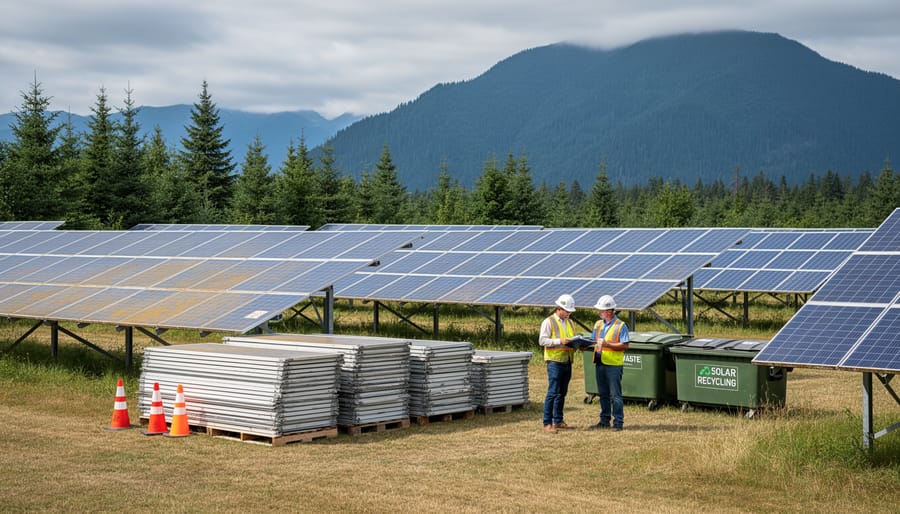
Solar panels typically maintain 80% or more of their original efficiency for 25-30 years, but several warning signs indicate when attention is needed. If your energy production drops by more than 1% annually, or you notice a sudden decline of 10-15% compared to previous years with similar weather conditions, it’s time for an inspection.
Visual cues matter too. Watch for discoloration, micro-cracks in the glass, or delamination where layers separate. A Vancouver homeowner recently discovered their 20-year-old system had developed significant yellowing and efficiency had dropped to 72% of original capacity, prompting them to consider replacement options.
Your monitoring system provides valuable data. Compare monthly production against historical averages for the same period. A Victoria business noticed their autumn output had declined 18% year-over-year, leading to the discovery of failed bypass diodes.
BC’s coastal climate can accelerate wear through moisture infiltration and salt exposure. Regular professional inspections every 3-5 years help catch issues early. Remember, even panels performing below peak efficiency still generate clean energy. However, once production falls below 70-75% of original capacity, replacement often makes economic and environmental sense, especially given today’s more efficient technology and BC’s growing recycling infrastructure.
The Recycling Challenge and Opportunity in BC
Where BC Panels Go Today
When your solar panels reach the end of their productive life in British Columbia, you have several responsible recycling options available right here in the province.
The primary resource for BC residents and businesses is the Product Care Recycling program, which operates an extended producer responsibility system for solar panels. This provincial initiative ensures manufacturers take responsibility for end-of-life management of their products. You can drop off residential solar panels at authorized collection sites throughout BC at no charge. To find your nearest depot, visit Product Care’s website or call their hotline at 1-877-592-2972.
Many solar installation companies in BC also offer take-back programs when they replace or upgrade your system. Companies like Shift Energy Group and Empower Energy have established partnerships with certified recyclers, making it easy for their customers to dispose of panels responsibly. When shopping for solar, ask your installer about their end-of-life services—this shows you’re thinking long-term and often indicates a company committed to true sustainability.
For larger commercial operations, Cascadia Resource Recovery in the Lower Mainland specializes in electronic waste including solar panels, offering pickup services for bulk quantities. They recover up to 95% of panel materials, including valuable silicon, glass, and metals.
Some BC panels are also shipped to specialized facilities in Washington State that have advanced recycling technology, reflecting the growing cross-border collaboration on renewable energy waste management.
The key takeaway? Don’t let your old panels end up in landfills. Multiple convenient pathways exist to ensure your solar investment remains environmentally responsible from installation through retirement.
The Material Recovery Process
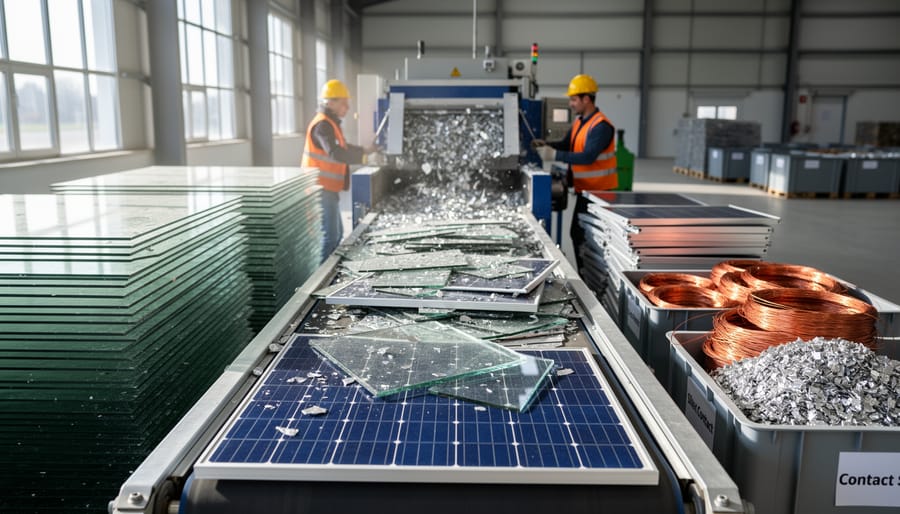
When solar panels reach the end of their productive life, they don’t need to landfill. Modern recycling facilities break panels down systematically to recover valuable materials. The process begins by removing the aluminum frame and junction box, which are easily recyclable. Workers then separate the glass, which makes up about 75% of a panel’s weight, from the silicon cells and other components.
The silicon cells undergo thermal or chemical processing to extract pure silicon, silver, and copper wiring. Even the protective plastic layers can be recovered for reuse. Research shows that up to 95% of a solar panel’s materials can be successfully recycled and reintroduced into manufacturing supply chains.
This impressive recovery rate reinforces solar’s environmental benefits throughout their entire lifecycle. In BC, several facilities now accept end-of-life panels, making responsible disposal increasingly accessible. The recovered glass often becomes new panels or construction materials, while reclaimed metals return to electronics manufacturing. This circular approach means choosing solar today contributes to a cleaner manufacturing process tomorrow, reducing the need for virgin materials and minimizing environmental impact across the renewable energy sector.
BC’s Move Toward Circular Solar Design
What Makes a Panel ‘Circular’?
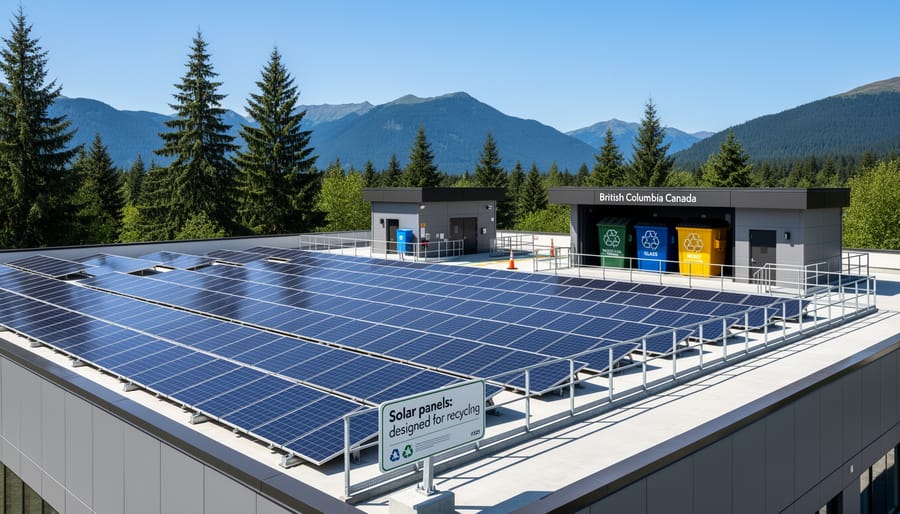
The solar industry is actively redesigning panels with their end-of-life in mind, making recycling simpler and more efficient. A circular solar panel follows key principles that benefit both the environment and your wallet.
Modern circular designs use modular construction, meaning components can be easily separated without specialized equipment. Instead of gluing layers together permanently, manufacturers now use mechanical fasteners or adhesives that dissolve at specific temperatures. This allows recyclers to quickly access valuable materials like silicon wafers, glass, and aluminum frames.
Material selection is another crucial factor. Leading manufacturers are reducing or eliminating hazardous substances like lead and certain plastics that complicate recycling. In BC, several solar companies have committed to using only recyclable materials in their frame designs and junction boxes.
Clear material labeling helps recyclers identify components quickly. Think of it like the recycling symbols on your household plastics—circular panels include markings that indicate material types and optimal disassembly methods.
A great local example comes from a Vancouver Island solar installer who exclusively sources panels with documented recycling pathways. They provide customers with material passports that track every component, making end-of-life processing straightforward. This transparency ensures your environmental investment remains sustainable throughout the panel’s entire lifecycle.
When shopping for solar panels, ask providers about their circular design features and recycling partnerships—it’s a clear indicator of long-term environmental commitment.
Local Success Story: A BC Solar Company Leading the Way
Right here in British Columbia, Solaire Energy is demonstrating what responsible solar looks like from start to finish. This Vancouver-based company has built its reputation not just on installing high-quality panels, but on planning for their entire lifecycle before they even reach your roof.
Solaire partners exclusively with manufacturers who design panels for easier disassembly and material recovery. When they install a system, customers receive a detailed end-of-life plan that outlines recycling options and projected costs decades down the road. This transparency helps BC homeowners make truly informed decisions about their solar investment.
The company has also pioneered a take-back program for residential customers. When panels eventually need replacement, Solaire coordinates transportation to certified recycling facilities, eliminating the guesswork for homeowners. They’ve already diverted over 5,000 panels from landfills since 2019.
What sets Solaire apart is their integration of sustainable solar practices throughout their business model. They track each installation’s environmental impact and provide annual updates to customers showing their carbon savings alongside plans for responsible decommissioning.
This approach proves that BC companies can lead in both renewable energy adoption and circular economy principles, making solar truly sustainable from manufacturing to recycling.
What This Means for Your Solar Investment
Planning for End-of-Life: Questions to Ask Your Installer
Before committing to a solar installation, asking the right questions ensures you’re partnering with an installer who prioritizes environmentally responsible solar practices throughout your system’s entire life cycle. Here’s your essential checklist:
Does your company offer a take-back program when my panels reach end-of-life? Understanding whether your installer will handle disposal removes future uncertainty and demonstrates their commitment to sustainability.
What happens to removed panels during maintenance or upgrades? This reveals their existing recycling partnerships and processes.
Are disposal or recycling costs covered in my warranty or service agreement? Clarifying financial responsibility now prevents surprises decades later.
Which recycling facilities do you work with in BC or across Canada? A clear answer shows established relationships rather than vague promises.
Can you provide documentation of your recycling commitments? Reputable installers should offer written policies.
What percentage of panel materials do your recycling partners recover? This indicates the quality of their recycling network.
Do you track and report on recycling outcomes? Transparency matters for truly sustainable operations.
Will you notify me about new recycling options as technology improves? The industry evolves rapidly, and proactive communication helps.
Consider documenting responses in writing. A local Vancouver installer, for instance, recently won contracts by offering comprehensive 25-year take-back guarantees, proving that customer demand drives industry responsibility. Your questions encourage installers to prioritize end-of-life planning, benefiting BC’s entire solar community while protecting your investment and environmental values.
The Economics of Solar Recycling
Solar panel recycling currently adds minimal cost to your total ownership picture, but this landscape is evolving quickly. Right now, BC doesn’t have mandatory solar recycling fees at purchase, unlike some jurisdictions where you pay an advance disposal fee upfront. However, when your panels reach end-of-life in 25-30 years, expect to budget approximately $20-$30 per panel for responsible recycling through specialized facilities.
The good news? This cost is often offset by recovered materials. Panels contain valuable aluminum, copper, silicon, and silver that recyclers can resell, sometimes reducing or eliminating your disposal fee. Some BC recycling programs are exploring deposit-return systems similar to beverage containers, which could create financial incentives rather than costs.
Provincial regulations are shifting too. BC’s Extended Producer Responsibility framework may soon require solar manufacturers to fund take-back programs, transferring recycling costs away from homeowners entirely. This makes solar ownership even more attractive long-term.
When calculating your solar investment, factor in that small end-of-life cost but remember it’s decades away and likely to decrease as recycling infrastructure improves. The Nelson Solar Co-op, for example, has already begun setting aside modest reserves for future recycling, demonstrating how communities can plan responsibly. Including recycling in your total cost of ownership keeps your solar journey truly sustainable from start to finish.
How BC Can Lead Canada’s Solar Circular Economy
British Columbia has a unique opportunity to become Canada’s pioneer in solar circular economy practices. With provincial commitment to climate action and a growing solar industry, BC can establish comprehensive systems that keep valuable materials in use while creating local green jobs.
The BC government is exploring extended producer responsibility programs specifically for solar panels, which would require manufacturers to fund end-of-life management. This policy framework, similar to successful programs for electronics and paint, would ensure panels are responsibly managed without burdening homeowners. Industry associations are already collaborating with recycling facilities to develop provincial collection networks, making proper disposal as convenient as recycling household batteries.
Several BC municipalities are piloting solar take-back programs where residents can drop off aging panels at designated depots. Richmond and Kelowna have shown particular leadership, partnering with recycling companies to offer free collection events. These community-led initiatives demonstrate what’s possible when local governments prioritize circular economy principles.
You can help BC lead this transformation. Contact your MLA to express support for solar recycling legislation and extended producer responsibility programs. When purchasing solar panels, ask installers about their end-of-life services and choose companies committed to responsible disposal. Join local environmental groups advocating for renewable energy infrastructure that includes full lifecycle planning.
For business owners, consider partnering with organizations developing solar recycling capabilities. Some BC companies are already innovating in panel refurbishment and material recovery, creating economic opportunities while solving environmental challenges. Supporting these enterprises strengthens our local circular economy.
By taking action now, BC residents and businesses can ensure our solar future is truly sustainable from installation to retirement, setting an example for provinces nationwide while protecting our beautiful environment for generations to come.
Solar panels remain one of the most environmentally responsible energy choices available, and their sustainability credentials are only improving as British Columbia advances its recycling infrastructure and circular economy initiatives. While it’s important to acknowledge the end-of-life challenges, the climate benefits of solar energy far outweigh the material management considerations—especially as innovative recycling solutions emerge and industry standards evolve.
As a BC resident considering solar, you’re not just investing in clean energy; you’re becoming part of a growing movement toward comprehensive solar environmental commitment. Here’s how you can make the most informed, sustainable choice:
Ask potential installers about their end-of-life plans and partnerships with certified recycling facilities. Reputable companies should have clear answers about panel disposal and takeback programs. Use Solar BC’s resources to connect with certified installers who prioritize sustainability throughout the entire solar lifecycle, not just installation.
Stay informed about BC’s evolving regulations and recycling infrastructure. As the province develops more robust programs, you’ll have increasing options for responsible panel management. Consider joining local renewable energy communities to share knowledge and advocate for improved recycling systems.
The solar panels you install today will generate clean electricity for decades while BC builds the infrastructure to ensure they’re responsibly recycled tomorrow. By choosing solar now and asking the right questions, you’re helping drive demand for better end-of-life solutions—making the entire industry more sustainable for future generations. Your decision matters, and you have the power to be part of the solution.