
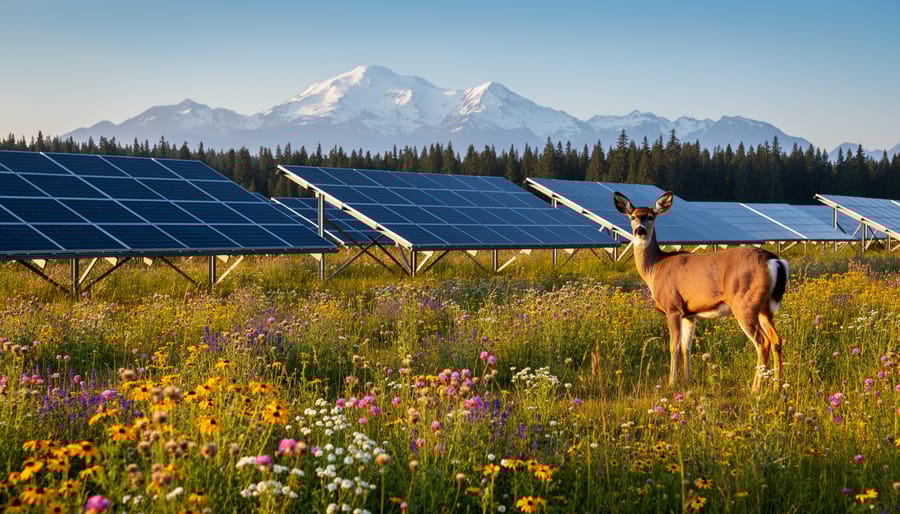
Solar energy represents one of British Columbia’s most promising pathways to clean power, yet the panels and infrastructure required inevitably interact with the land beneath them. The critical question isn’t whether solar development affects biodiversity—it does—but rather how we can harness this renewable resource while protecting, and even enhancing, the ecosystems that sustain us.
Across BC, from the Fraser Valley to the Okanagan, solar installations are demonstrating that energy production and ecological health can coexist. Forward-thinking developers are transforming installation sites into pollinator habitats, landowners are integrating panels with agricultural operations, and communities are prioritizing brownfield development over pristine ecosystems. These approaches prove that the shift to renewable energy doesn’t require sacrificing the rich biodiversity that makes our province extraordinary.
Understanding the relationship between solar infrastructure and local ecosystems empowers you to make informed decisions that align with your environmental values. Whether you’re considering rooftop panels for your home, exploring ground-mounted systems for your business, or simply want to support responsible solar development in your community, the choices you make today shape the ecological legacy of tomorrow.
This article examines the real impacts of solar land use on BC’s diverse habitats, showcases proven strategies that minimize harm while maximizing benefits, and provides practical guidance for ensuring your solar investment supports both energy independence and environmental stewardship. The path to a sustainable energy future runs directly through thoughtful, biodiversity-conscious solar development.
How Solar Installations Change the Land
Ground-Mounted Systems and Habitat Disruption
Ground-mounted solar systems, whether utility-scale installations or residential arrays, require careful planning to minimize their footprint on BC’s diverse ecosystems. A typical residential ground-mounted system occupies approximately 100-400 square feet, while utility-scale projects can span several acres. The key concern isn’t just the space occupied by panels, but how that land use affects local wildlife and vegetation.
In British Columbia, ground-mounted arrays have been successfully integrated into previously disturbed lands, such as brownfields or agricultural areas with low biodiversity value. For example, a solar farm near Kimberley was developed on former industrial land, avoiding impact on pristine habitat while generating clean energy for the community. However, projects sited on native grasslands or wetlands can disrupt critical habitats for species like the Western painted turtle or migrating songbirds.
The ecological impact depends largely on site selection and design. Clearing vegetation removes food sources and shelter for insects, small mammals, and ground-nesting birds. Soil compaction during construction can alter drainage patterns and affect underground ecosystems. Fencing around installations may block wildlife corridors used by deer, coyotes, and other species.
For homeowners considering ground-mounted systems, choosing already-cleared areas like lawns or gravel pads minimizes disruption. Maintaining vegetation beneath and around panels, where feasible, preserves some habitat value. On larger projects, conducting environmental assessments before installation and implementing wildlife-friendly designs ensures BC’s solar expansion supports rather than undermines our conservation goals.
Why Rooftop Solar Protects Wildlife
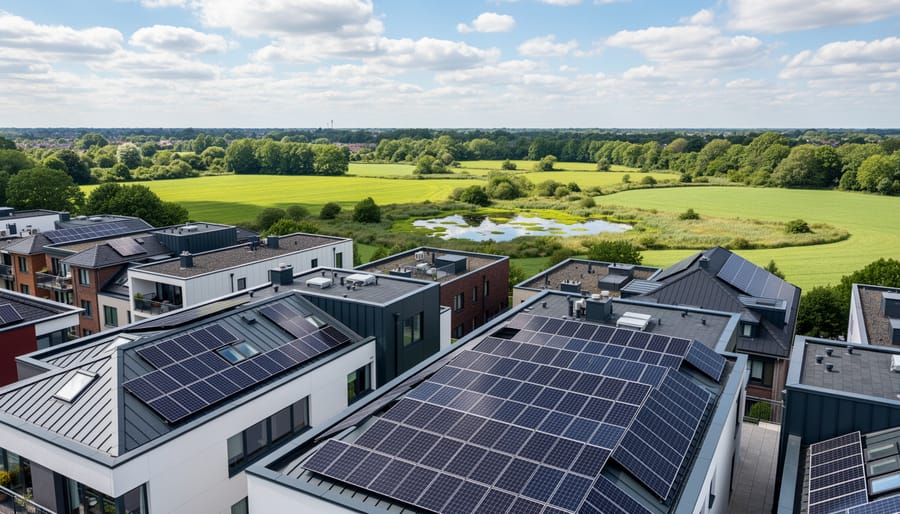
Rooftop solar offers one of the most wildlife-friendly approaches to renewable energy by utilizing existing structures rather than converting natural spaces. When you install solar panels on your home or business, you’re choosing to generate clean power without disturbing forests, grasslands, or wetlands that provide critical habitat for BC’s diverse species.
Unlike ground-mounted solar farms that require clearing land, rooftop installations work with the built environment we’ve already created. This approach is particularly valuable in British Columbia, where we share our landscape with everything from endangered salmon populations to nesting songbirds. By keeping solar on rooftops, we preserve the ecosystems that support these species while still meeting our energy needs.
Building-integrated solar takes this concept even further, incorporating panels directly into construction design. Several Metro Vancouver businesses have demonstrated this approach effectively, generating significant power while maintaining green spaces around their properties for local wildlife corridors.
For homeowners concerned about ecological impact, rooftop solar represents the best of both worlds: you reduce your carbon footprint while avoiding any land-use conflicts. Your solar panels occupy space that’s already developed, leaving surrounding natural areas untouched for the creatures that depend on them. This makes rooftop solar an ideal choice for environmentally-conscious British Columbians who want their clean energy transition to genuinely protect wildlife.
The Wildlife Living Beneath Your Solar Panels
Pollinator-Friendly Solar Sites
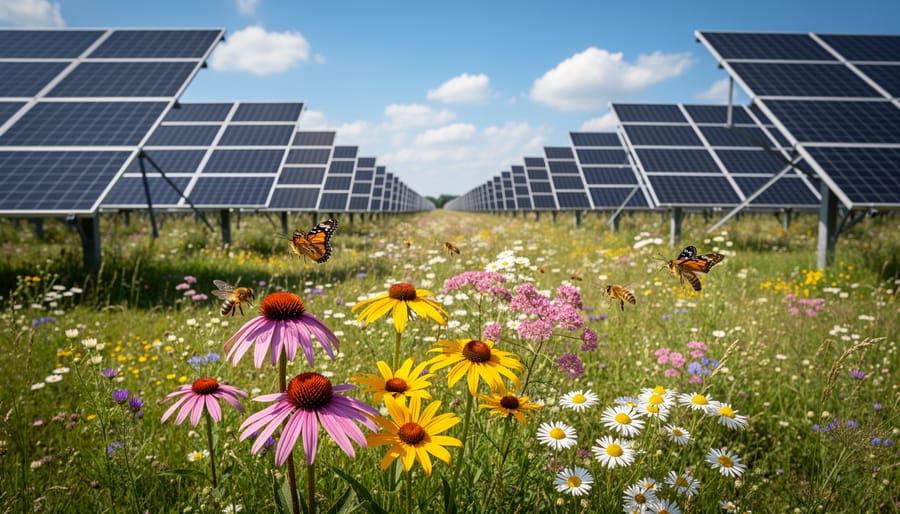
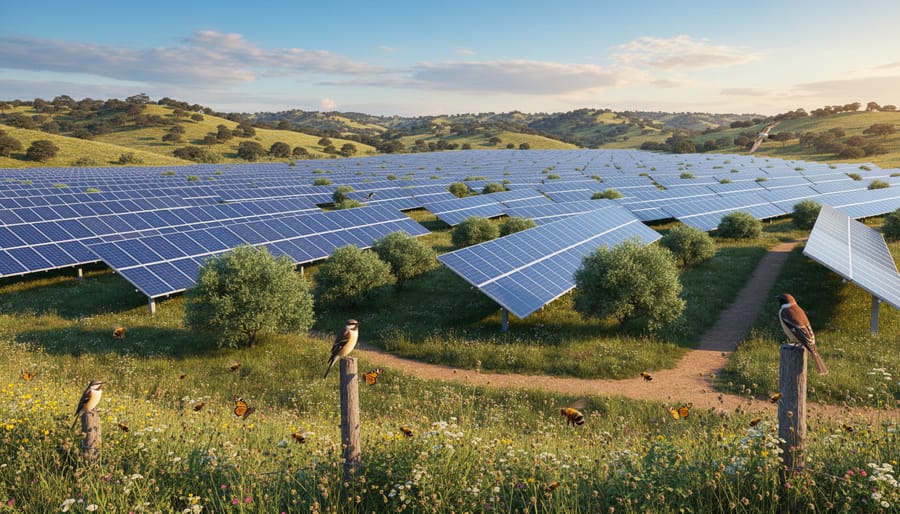
Solar farms across British Columbia are becoming unexpected sanctuaries for pollinators, proving that renewable energy and thriving ecosystems can coexist beautifully. By incorporating native plant species beneath and around solar panels, these sites create valuable habitat for bees, butterflies, and other essential pollinators that have been declining due to habitat loss.
The approach is straightforward: instead of bare ground or gravel, solar installations feature native wildflowers, grasses, and shrubs that bloom throughout the growing season. These plants provide continuous nectar and pollen sources while requiring minimal maintenance once established. The panels themselves offer partial shade, creating microclimates that benefit certain plant species and provide shelter for insects during hot summer days.
Several BC solar projects have embraced this pollinator-friendly design. These sites maintain habitat corridors connecting different areas, allowing pollinators to move freely across the landscape. Native plant species like lupines, asters, and goldenrod attract diverse pollinator populations while supporting the broader food web.
The benefits extend beyond the solar site boundaries. Healthy pollinator populations support nearby agricultural operations and natural areas, creating positive ripple effects throughout the community. For homeowners and businesses considering solar installations, incorporating native plantings around ground-mounted systems or creating pollinator gardens near rooftop arrays offers similar benefits on a smaller scale.
This approach demonstrates that thoughtful planning transforms solar sites from simple energy infrastructure into multi-functional landscapes that generate clean power while actively supporting local biodiversity. It’s a practical example of how we can address climate change and habitat loss simultaneously.
Birds, Small Mammals, and Solar Coexistence
Solar installations can create surprisingly diverse habitats when designed thoughtfully. Many ground-nesting birds, including grassland sparrows and killdeer, successfully adapt to solar sites, particularly when native vegetation is maintained beneath and around panels. Small mammals like voles, mice, and shrews often thrive in these areas, benefiting from predator protection and enhanced plant diversity.
However, some species do face challenges. Birds may mistake reflective panels for water bodies, leading to collision risks. Raptors hunting in open areas might initially avoid sites during construction, though many return once vegetation establishes.
In British Columbia, several solar farms have successfully balanced energy production with wildlife habitat. One Okanagan installation preserved existing shrubland and added native wildflower plantings, attracting pollinators while generating clean power. The key was maintaining vegetation height and diversity beneath panels.
Practical mitigation strategies make a significant difference. Anti-reflective panel coatings reduce bird confusion, while thoughtful fencing designs allow small mammals to move freely through sites. Maintaining vegetation corridors between panel rows supports species movement and creates microhabitats. Many BC solar operators schedule maintenance activities outside breeding seasons to minimize disturbance.
Creating pollinator-friendly zones with native plants like Oregon grape, kinnikinnick, and fireweed transforms solar sites into wildlife havens. These plantings require minimal irrigation once established and provide food sources for birds and beneficial insects throughout the season.
The encouraging reality is that solar farms often support greater biodiversity than conventional agricultural land, particularly when designed with local ecosystems in mind.
Manufacturing to Decommissioning: The Full Lifecycle Picture
Material Extraction and Global Ecosystems
Solar panels require materials like silicon, silver, aluminum, and small amounts of rare earth elements, and extracting these resources can affect ecosystems far from where the panels are installed. Mining operations in source regions sometimes lead to habitat disruption, water contamination, and biodiversity loss, particularly in sensitive areas like tropical forests or desert ecosystems that harbor unique species.
However, the solar industry is increasingly embracing responsible sourcing practices that make a real difference. Leading manufacturers now prioritize recycled materials, reduce water usage in production, and work with mines that follow environmental restoration protocols. For example, some companies have committed to using recycled silicon and aluminum, which significantly reduces the need for new extraction and its associated impacts.
As a BC consumer, you can support these efforts by choosing solar providers who prioritize transparency in their supply chains. Ask your installer about the origin of their panels and whether manufacturers follow environmental certification standards. Many reputable companies in British Columbia now partner with suppliers who demonstrate commitment to ecosystem protection and ethical mining practices.
The encouraging news is that once installed, solar panels generate clean energy for 25-30 years without ongoing resource extraction, unlike fossil fuels that require continuous mining. By selecting responsibly-sourced solar equipment, you’re investing in a technology that increasingly minimizes its ecological footprint while delivering long-term environmental benefits right here in our province.
What Happens When Panels Retire
Solar panels typically last 25-30 years, and what happens afterward matters for BC’s ecosystems. The good news is that solar installations can leave the land in better condition than they found it.
When panels reach retirement, property owners have several environmentally responsible options. Modern panels are 95% recyclable, with materials like aluminum, glass, and silicon recovered for new products. BC currently ships panels to specialized facilities in Washington State, though local recycling infrastructure is expanding as more panels approach end-of-life.
For ground-mounted systems, decommissioning provides an opportunity to restore native vegetation. Many BC landowners have successfully returned solar sites to productive agricultural use or natural habitat. The land typically benefits from years of reduced chemical inputs and soil disturbance during the panel’s operational life.
Community solar projects in the Fraser Valley demonstrate this potential. Project agreements include detailed restoration plans that specify native plant species and soil rehabilitation methods, ensuring the land returns to its ecological function.
Planning for retirement from the start makes the process smoother. Ask your installer about take-back programs and include decommissioning provisions in ground lease agreements. Some BC municipalities now require restoration bonds for larger installations, protecting landowners and ensuring environmental accountability.
This thoughtful approach to panel retirement completes the sustainability circle, making solar a truly regenerative energy choice for British Columbia.
Smart Solar Choices That Protect BC’s Ecosystems
Site Assessment: Where Not to Put Solar
Before choosing a location for solar panels, taking time to identify environmentally sensitive areas can prevent lasting ecological damage and help you make choices that support local wildlife.
Start by checking if your property overlaps with protected areas or sensitive ecosystems. In BC, this includes Provincial Parks, Wildlife Management Areas, and Ecological Reserves. The province’s online mapping tools and local conservation offices can help you identify these zones. Even outside officially protected areas, certain features deserve careful consideration.
Look for signs of high biodiversity value on your property. Wetlands, seasonal ponds, and riparian zones along streams provide critical habitat for amphibians, birds, and insects. Old-growth forest patches, even small ones, support unique species that can’t survive elsewhere. Native grasslands and meadows, increasingly rare in BC, host specialized pollinators and ground-nesting birds.
Areas with existing wildlife activity should also be avoided. Watch for animal trails, nesting sites, or den locations. If you notice frequent visits from deer, bears, or other wildlife, that pathway likely connects important habitat areas.
The good news? Most residential and commercial solar installations work perfectly on rooftops, over parking areas, or on previously disturbed land like cleared yards or agricultural fields. These locations provide the energy you need while leaving sensitive habitats undisturbed. When in doubt, consulting with a local environmental professional or your regional district can provide property-specific guidance that protects both your investment and BC’s remarkable biodiversity.
Working With Eco-Conscious Solar Installers
Choosing the right solar installer can make all the difference in protecting local ecosystems during your solar transition. Start by asking potential installers about their approach to site assessment. Do they evaluate existing vegetation and wildlife habitat before designing your system? A responsible installer should conduct a thorough ecological review and suggest placement that minimizes disruption to native plants and animal corridors.
Inquire about their installation practices specifically. How do they protect soil quality during construction? What measures do they take to prevent erosion? Ask if they offer native plant landscaping as part of their service or can recommend local ecological restoration specialists to help revegetate disturbed areas after installation.
Request examples of past projects where they’ve prioritized biodiversity. Can they show you installations that incorporated pollinator gardens, preserved mature trees, or used low-impact mounting systems? In BC, several installers now partner with conservation groups to ensure their work aligns with regional ecosystem goals.
Don’t hesitate to ask about post-installation monitoring and maintenance practices that protect wildlife. Simple questions about wildlife-friendly fencing options or reflective panel concerns demonstrate your values and help you find an installer who shares your commitment to environmental stewardship alongside clean energy production.
Dual-Use Solar: Agrivoltaics and Habitat Creation
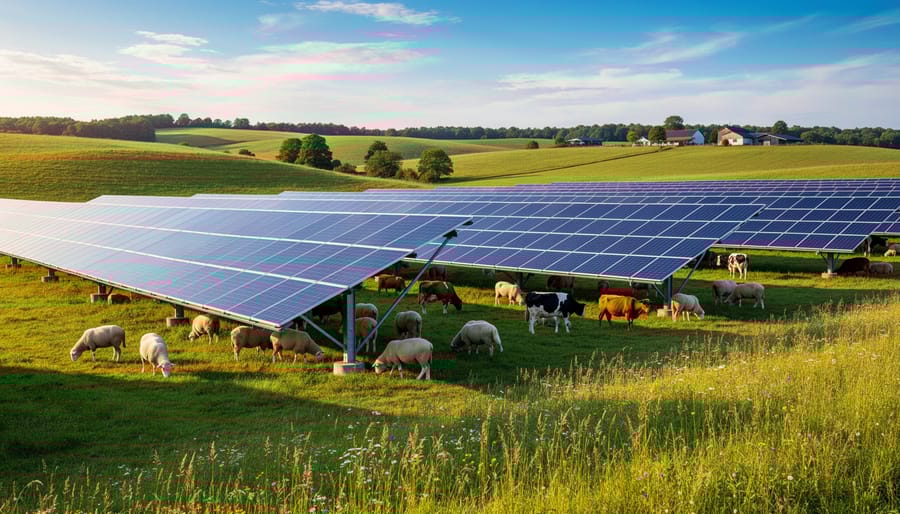
Solar installations don’t have to choose between energy production and ecological benefit. Agrivoltaics combines solar panels with agriculture, allowing crops or livestock grazing beneath elevated arrays. This approach maintains food production while generating clean energy, and studies show certain crops actually thrive in the partial shade panels provide.
Even more promising for BC ecosystems is pairing solar installations with native pollinator habitat. Instead of traditional turf grass, solar sites can feature native wildflowers, grasses, and shrubs that support bees, butterflies, and birds. These pollinator-friendly solar gardens sequester carbon, manage stormwater naturally, and create wildlife corridors in areas that might otherwise remain barren.
Several BC projects are exploring these dual-use approaches. By incorporating native plant species suited to our regional climate, these installations demonstrate that solar development can actively restore habitat rather than simply minimize harm. Whether you’re considering residential or commercial solar, ask your installer about incorporating pollinator plantings or preserving existing vegetation where possible. Small choices collectively create significant ecological benefits across our communities.
BC Success Story: Solar That Helps Nature Thrive
When the Squamish Nation partnered with local solar developers in 2022 to install a 2-megawatt solar array near Whistler, they didn’t just create clean energy—they created a blueprint for how solar installations can actively support local ecosystems.
The project team worked closely with environmental consultants from the start, conducting wildlife surveys before breaking ground. What they discovered shaped every decision that followed. The site was home to several species of ground-nesting birds and provided crucial habitat for pollinators during summer months.
Rather than clear the entire area, the team designed a layout that preserved 40% of the site as natural habitat corridors. They clustered solar panels in strategic zones, leaving untouched spaces for wildlife movement. Between panel rows, they planted native wildflower species including yarrow, lupine, and Indian paintbrush—plants specifically chosen to support local bee and butterfly populations.
Two years later, the results speak for themselves. Biodiversity monitoring conducted by University of British Columbia researchers found a 35% increase in pollinator activity compared to pre-installation levels. The shaded areas beneath panels created microclimates that retained moisture better than exposed ground, helping native plants thrive during dry summer months.
“We’ve actually seen species return that hadn’t been documented here in years,” explains Sarah Chen, the project’s ecological consultant. “The combination of undisturbed corridors and managed vegetation created ideal conditions. It’s proof that with thoughtful planning, solar installations can enhance rather than harm local ecosystems.”
The site now produces enough clean electricity to power approximately 300 homes annually while simultaneously functioning as a pollinator sanctuary. Local schools bring students for educational tours, showing the next generation that renewable energy and nature conservation aren’t competing priorities—they’re complementary goals.
This success story demonstrates what’s possible when solar developers prioritize biodiversity from day one. The project cost only 8% more than conventional installation approaches, a modest investment that delivered measurable environmental benefits alongside clean energy production.
Comparing Solar to Other Energy Sources
When weighing different energy options, understanding land use and biodiversity impacts helps us make informed decisions. Solar energy performs remarkably well in this comparison, though each source has distinct trade-offs.
Fossil fuel extraction and combustion create substantial environmental challenges beyond carbon emissions. Coal mining removes entire mountaintops and destroys habitats permanently, while oil and gas operations fragment ecosystems through drilling sites, pipelines, and access roads. These impacts persist for decades, often contaminating soil and water sources that wildlife depends on.
Hydroelectric dams, though renewable, dramatically alter river ecosystems by flooding vast areas upstream and disrupting fish migration patterns. British Columbia has witnessed these challenges firsthand with salmon populations affected by dam infrastructure. A single large reservoir can submerge hundreds of square kilometers of forest and wetland habitat.
Wind energy requires relatively modest land footprints, with turbines occupying small ground areas while allowing agricultural use beneath them. However, wind farms can impact bird and bat populations, particularly along migration routes. Strategic placement and modern turbine designs have significantly reduced these concerns.
Solar installations compare favourably on several fronts. Ground-mounted arrays typically use 2-8 hectares per megawatt, considerably less than coal mining or reservoir flooding. More importantly, solar sites can incorporate native plantings that support pollinators and small wildlife, creating dual-use spaces. Many BC farms are discovering that solar panels coexist beautifully with grazing sheep or pollinator gardens, actually enhancing local biodiversity.
Rooftop solar represents the smallest footprint option, generating clean energy without using any new land. For urban and suburban BC residents, this means producing power without any habitat conversion whatsoever.
The key takeaway? Solar offers flexibility that other sources cannot match, allowing communities to generate clean energy while actively protecting or restoring the ecosystems we all depend on.
Going solar and protecting biodiversity aren’t opposing goals—they’re partners in building a sustainable future. When you approach your solar installation thoughtfully, considering site selection, native plantings, and pollinator habitats, you’re doing more than reducing carbon emissions. You’re actively participating in ecosystem stewardship right in your own backyard.
British Columbia’s landscape offers incredible opportunities to blend renewable energy with habitat protection. Before starting your solar project, ask your installer about their environmental assessment process. Do they work with ecologists? Can they incorporate native vegetation? Will they avoid sensitive areas during construction? These questions matter, and responsible solar companies welcome them.
Your next steps are straightforward: research installers who prioritize environmental considerations, explore options for pollinator-friendly landscaping around ground-mounted systems, and connect with local conservation groups to understand your area’s specific biodiversity needs. Many BC communities have already demonstrated that solar arrays can coexist beautifully with thriving ecosystems—from wildflower meadows beneath panels to bird-friendly design features.
Remember, your solar transition is part of something bigger. By demanding biodiversity-conscious installations, you’re helping shape an industry that values both clean energy and healthy ecosystems. That’s the kind of legacy worth creating.