
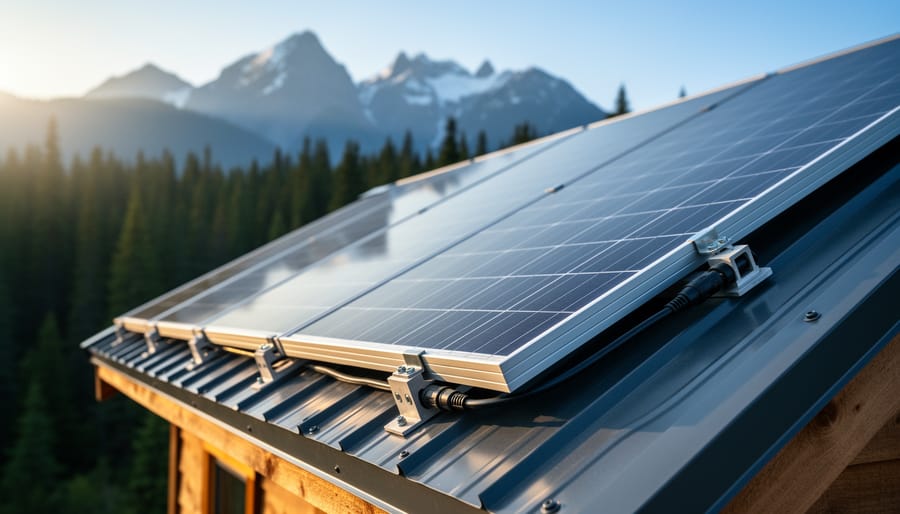
A 100-watt solar panel typically produces between 18 and 22 volts under standard test conditions, though the actual voltage output varies based on whether the panel is actively connected to a load. This seemingly simple specification becomes crucial when you’re planning your solar installation in British Columbia, where matching panel voltage to your battery bank or inverter system determines whether your investment delivers reliable power or sits idle on your roof.
Understanding voltage output helps you avoid the most common mistake homeowners make: purchasing panels incompatible with their existing equipment. Most 100-watt panels generate around 18 volts at their maximum power point, the sweet spot where they operate most efficiently. However, open circuit voltage (when nothing is connected) reaches 21-22 volts, while voltage under load drops to approximately 17-18 volts depending on sunlight intensity and temperature.
British Columbia’s climate adds another layer to voltage considerations. Panels actually produce higher voltage in cooler temperatures, meaning your winter performance in places like Kamloops or Prince George differs significantly from summer output. This temperature coefficient affects system design, especially for off-grid cabins or RV setups popular throughout the province. Whether you’re powering a remote fishing lodge or reducing grid dependency in Vancouver, knowing your panel’s voltage range ensures proper charge controller selection and battery protection, turning technical specifications into practical energy independence.
The Quick Answer: Voltage Range for 100-Watt Panels
If you’re considering a 100-watt solar panel for your BC home or business, here’s what you need to know about voltage output: a typical 100W panel produces between 17-20 volts for 12-volt systems, or 28-36 volts for 24-volt systems. Understanding solar panel output voltage helps ensure you select equipment that’s compatible with your energy needs.
Let’s break down these numbers in practical terms. When manufacturers label a panel as “12V” or “24V,” they’re referring to the nominal voltage—essentially the system voltage it’s designed to charge. However, the actual voltage fluctuates depending on conditions and how you measure it.
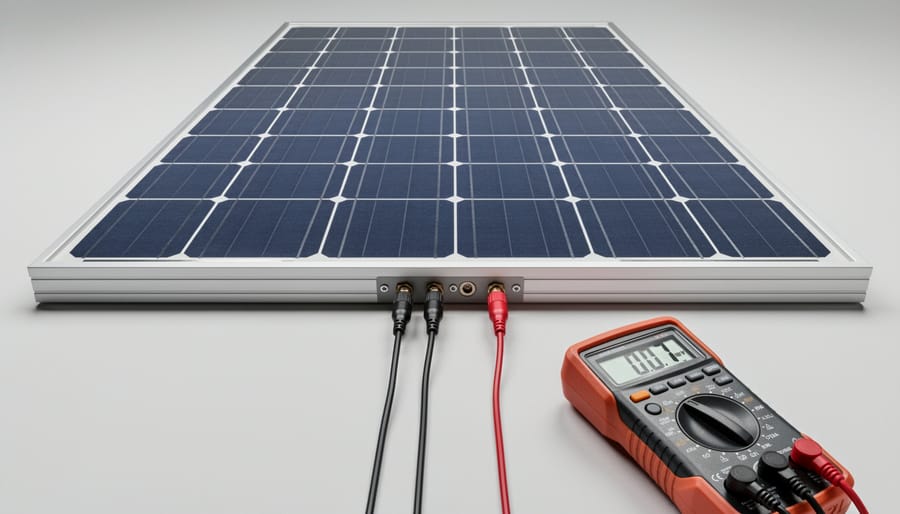
You’ll encounter three key voltage measurements. Open circuit voltage (Voc) is what you’d measure when the panel sits in sunlight with nothing connected—typically 20-22 volts for a 12V panel. This is the maximum voltage your panel can produce. Operating voltage, also called maximum power point voltage (Vmp), ranges from 17-18 volts and represents where your panel performs most efficiently during actual use. Finally, there’s the nominal voltage (12V or 24V), which tells you which battery bank or system the panel is designed to work with.
Think of it like water pressure in a hose. Open circuit voltage is like measuring pressure with the nozzle closed—you get the highest reading. Operating voltage is the pressure when water flows at the ideal rate for your garden. The nominal voltage simply tells you which hose system it fits.
For BC residents, this matters when matching panels to batteries, charge controllers, and inverters. A mismatch means lost efficiency or equipment damage. When planning your solar installation, discuss these voltage specifications with your installer to ensure all components work harmoniously together, maximizing your investment in clean energy.
Why Voltage Changes Throughout the Day
Your 100-watt solar panel won’t produce the same voltage consistently throughout the day, and understanding why helps you set realistic expectations for your system’s performance.
The most significant factor is sunlight intensity. During peak afternoon hours, when the sun sits highest in the sky, your panel receives maximum irradiance and produces voltage closer to its rated specifications. Early morning and late evening hours see reduced sunlight angles, which means lower voltage output. This natural variation is completely normal and affects all solar installations across British Columbia.
Temperature plays a surprising role too. Solar panels actually perform more efficiently in cooler conditions. While a sunny Okanagan afternoon might seem ideal, the heat can slightly reduce voltage output. Conversely, a crisp spring morning in Kelowna often produces excellent voltage levels, even if the day feels cooler.
Weather conditions create the most noticeable fluctuations. Cloudy Vancouver mornings demonstrate this perfectly—your panel still generates power, but voltage drops compared to clear conditions. The good news is that modern solar technology handles these variations efficiently, and your inverter adapts to maintain consistent power delivery to your home.
Seasonal changes matter too. Summer’s longer days and higher sun angles mean more hours of optimal voltage production, while winter months see shorter windows of peak performance. This doesn’t mean your investment sits idle—it simply means understanding these patterns helps you plan energy usage and storage needs throughout the year.
Understanding the Three Voltage Numbers on Your Panel
Open Circuit Voltage (Voc)
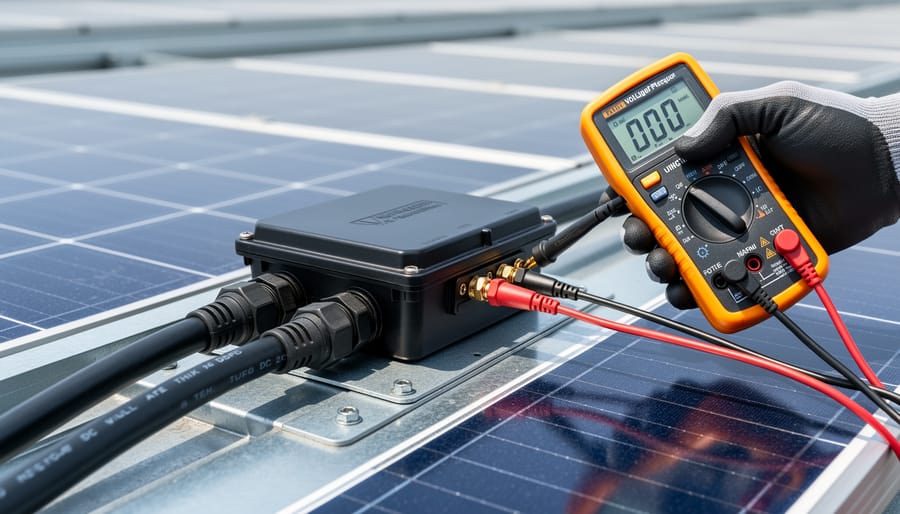
Open circuit voltage, or Voc, represents the maximum voltage your 100-watt solar panel produces when nothing is connected to it—essentially when it’s sitting in full sunlight without drawing any power. For standard 12-volt panels commonly used throughout British Columbia, you’ll typically see Voc readings between 20 and 22 volts. This might seem counterintuitive if you’re expecting exactly 12 volts, but this higher voltage is intentional and necessary for effective charging.
Think of it like water pressure in a hose—you need extra pressure to push water uphill. Similarly, your panel needs this voltage buffer to overcome resistance in the system and properly charge your batteries, especially during BC’s cooler months when panels actually produce slightly higher voltages due to temperature effects.
You’ll find the Voc specification listed on your panel’s label or datasheet. This number matters when sizing charge controllers and ensuring compatibility with your battery bank. A local homeowner in Kelowna discovered this firsthand when planning their off-grid cabin setup—understanding Voc helped them select the right equipment the first time, avoiding costly returns and ensuring their system performs reliably year-round.
Maximum Power Voltage (Vmp)
The Maximum Power Voltage, or Vmp, represents the sweet spot where your 100-watt solar panel delivers its best performance. For most 12-volt systems common in BC homes and cabins, this voltage typically sits between 17 and 18 volts. Think of it as the panel’s optimal cruising speed—where it generates the full 100 watts it’s rated for.
Understanding Vmp matters because it’s the voltage your charge controller uses to efficiently transfer power to your batteries. When a 100-watt panel operates at its Vmp of around 18V, it produces approximately 5.5 to 6 amps of current, giving you that full 100 watts of power. This specification becomes particularly important during BC’s variable weather conditions. Even on overcast days typical of our coastal climate, panels strive to maintain operation near their Vmp, though total power output decreases.
When planning your solar installation, ensure your charge controller and battery bank are compatible with this voltage range. A reputable BC installer will match these components properly, optimizing your system’s performance year-round. This attention to voltage specifications helps maximize your investment and ensures reliable power generation through all seasons.
Nominal Voltage
When shopping for solar panels, you’ll often see them labeled as “12V” or “24V” systems. This is the nominal voltage—a simplified classification that helps match panels with compatible batteries and charge controllers. Think of it like choosing the right adapter for your electronics.
Here’s what matters for your BC solar project: a 100-watt panel labeled as 12V nominal actually produces around 18-22 volts during operation. The “12V” designation simply means it’s designed to charge standard 12-volt battery banks, which need that higher voltage to charge effectively.
A local example helps clarify this: when a Kamloops homeowner installed their off-grid cabin system, they paired three 100-watt 12V panels with a 12-volt battery bank. The nominal voltage classification ensured everything worked together seamlessly without complicated calculations.
If you’re building a larger system, 24V nominal panels (producing roughly 36-40 volts) become more efficient for powering bigger loads. Your installer will recommend the right configuration based on your energy needs and existing equipment. The key takeaway? Nominal voltage is about system compatibility, not the actual voltage your panel produces during the day.
Matching Your 100W Panel to Your System
12-Volt Systems (Most Common for Small Setups)
For RVs, cabins, and small off-grid applications across BC’s rural areas, 12-volt systems paired with 100-watt panels offer an ideal starting point. These setups shine in scenarios where you need reliable power without complexity—think weekend getaways to the Interior, seasonal cabins in the Kootenays, or small camper conversions.
A single 100-watt panel producing around 18 volts typically connects to a 12-volt battery bank through a charge controller, which regulates the voltage to safely charge your batteries at approximately 14.4 volts. This configuration works perfectly for powering LED lighting, charging phones and laptops, running small water pumps, or operating 12-volt refrigerators.
The beauty of 12-volt systems lies in their simplicity and widespread component availability. Most marine and RV supply stores throughout BC stock compatible equipment, making repairs and upgrades straightforward. For a typical weekend cabin, two to four 100-watt panels can provide enough power for basic comfort without the expense of larger systems.
Many BC residents start with a single panel setup to test their energy needs before expanding. This approach lets you learn your consumption patterns while keeping initial costs manageable, usually under $500 for a complete basic system including the panel, controller, and battery.
24-Volt Systems (Better for Larger Arrays)
As your solar installation grows beyond a few panels, upgrading to a 24-volt system becomes worth considering. Most single 100-watt panels work perfectly in 12V systems, but when you’re connecting multiple panels together, 24V configurations offer real advantages for British Columbia homeowners and businesses.
The key benefit is efficiency. Higher voltage systems experience less power loss through wiring, which matters more as your array expands. When electricity travels through cables at lower voltages, more energy converts to heat and gets wasted. A 24V system cuts these losses roughly in half compared to 12V setups, meaning more of your captured sunlight actually reaches your batteries or inverter.
Consider the experience of a Kelowna organic farm that started with three 100-watt panels in a 12V setup. When they expanded to twelve panels to power their cold storage, switching to 24V reduced their wiring costs and improved overall system performance by approximately 8 percent. For installations with six or more panels, this voltage upgrade typically pays for itself through improved efficiency and reduced cable requirements.
Most quality charge controllers and inverters handle both 12V and 24V systems, giving you flexibility as your energy needs evolve. If you’re planning to add panels over time, discussing 24V options with your installer from the start can save money and headaches down the road.
Real-World Example: A Kelowna Home Installation
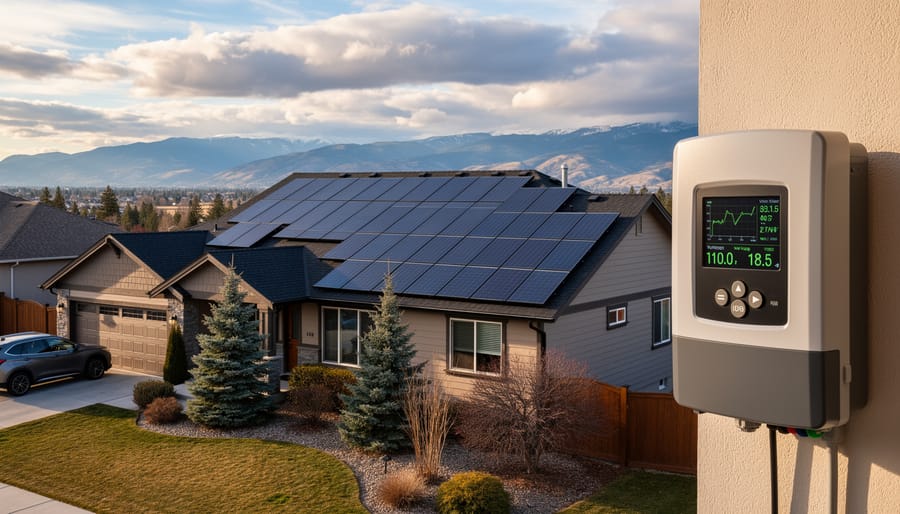
When Sarah Thompson from Kelowna decided to add a 100-watt solar panel to power her garden shed, she learned some valuable lessons about voltage output that helped her avoid common mistakes.
Sarah purchased a standard 100W panel with an 18-volt nominal rating. However, when she measured the actual output on a sunny October morning, her multimeter showed 21.5 volts at open circuit. “I was surprised it wasn’t exactly 18 volts,” she explained. “I almost returned the panel thinking something was wrong.”
After consulting with her installer, Sarah learned this higher reading was perfectly normal. The 18-volt rating represents the operating voltage when the panel is connected to a load, while the open-circuit voltage typically runs 15-20% higher. Under actual working conditions powering her shed’s LED lights and small fan, the voltage stabilized at 17.8 volts, right within the expected range.
Sarah’s biggest takeaway came from testing during different conditions. On a cloudy November day, her panel’s voltage only dropped to 16.2 volts, but the current decreased significantly. “The voltage stayed relatively stable, but the actual power output dropped by more than half,” she noted. This taught her that voltage alone doesn’t tell the full story about solar panel performance.
She also discovered the importance of matching her charge controller to the panel’s voltage specifications. Her initial 12-volt controller wasn’t efficient with the 18-volt panel. After upgrading to an MPPT controller that could handle the higher voltage range, she saw a 25% improvement in charging efficiency for her battery bank.
Sarah’s experience highlights why understanding voltage specifications matters for real-world installations, especially in BC’s variable weather conditions.
How BC’s Climate Affects Your Panel’s Voltage
Here’s something that might surprise you: your solar panels actually produce more voltage on chilly winter mornings than during hot summer afternoons. This happens because solar cells operate more efficiently in cold temperatures, with voltage output increasing as temperatures drop.
For BC residents, this temperature effect is particularly relevant given our diverse climate zones. If you live in coastal areas like Vancouver or Victoria, you’ll experience relatively moderate temperatures year-round, meaning your panel’s voltage stays fairly consistent. Your 100-watt panel might produce around 18 volts on a typical day.
However, if you’re in the interior regions—places like Kelowna, Kamloops, or Prince George—you’ll see more dramatic voltage variations. On a crisp winter morning when temperatures dip below freezing, that same panel could generate 20 volts or more. During summer heat waves, voltage might drop to 16-17 volts.
Why does this matter for your solar project? Your charge controller needs to handle these voltage fluctuations to protect your batteries and ensure efficient energy storage. This is especially important in BC’s interior, where temperature swings can be significant.
The good news: modern solar equipment automatically adjusts for these variations. When consulting with local installers, mention your specific location and climate patterns. They’ll recommend controllers rated for your area’s temperature range, ensuring your system performs optimally whether you’re facing a coastal drizzle or an interior cold snap. Understanding these regional differences helps you make informed decisions about equipment specifications and expected performance throughout the year.
What This Means for Your Solar Investment
Understanding your solar panel’s voltage output directly impacts your system’s efficiency and your long-term savings. When you know that your 100-watt panel produces around 18 volts, you can make informed decisions about battery compatibility, inverter sizing, and overall system design. This knowledge helps prevent costly mismatches that could reduce your energy production by 20-30%.
For BC homeowners and businesses, proper voltage matching translates to tangible benefits. A well-designed system maximizes energy harvest during our variable coastal weather and shorter winter days. When your panels, charge controllers, and batteries work in harmony, you’ll see consistent performance year-round and faster return on investment.
Working with certified solar installers in British Columbia ensures your system is optimized for local conditions. Professional installers understand regional building codes, net metering requirements, and how to configure voltage specifications for peak performance. They’ll account for factors like our province’s temperature fluctuations and cloudy periods when designing your system.
Ready to see what solar could save you? Interactive tools for calculating solar savings can help you estimate your potential energy production and financial returns based on your specific location in BC. These calculators factor in your roof orientation, local electricity rates, and available incentives.
The bottom line: understanding voltage isn’t just technical knowledge—it’s the foundation for a solar investment that delivers reliable clean energy and meaningful savings for decades to come. Connect with local solar professionals who can turn this technical understanding into a customized solution for your property.
Understanding that a 100-watt solar panel typically produces between 18 to 22 volts is your starting point, but remember that real-world performance depends on your specific system configuration and BC’s unique climate conditions. The key voltage numbers to keep in mind are: around 18V for standard 12V systems and 30-40V for panels in 24V setups.
For BC residents ready to harness solar energy, your next step is connecting with Solar BC certified installers who understand our regional weather patterns and can design properly matched systems. They’ll ensure your panels, charge controllers, and batteries work together efficiently, whether you’re in sunny Kelowna or coastal Vancouver.
Don’t navigate this journey alone. A qualified installer will assess your property’s solar potential, calculate accurate voltage requirements for your energy needs, and help you access available provincial incentives. Start by requesting quotes from multiple Solar BC members, comparing their system designs, and asking specific questions about voltage compatibility and expected output in your area. British Columbia’s clean energy future begins with informed homeowners like you taking that first step today.