
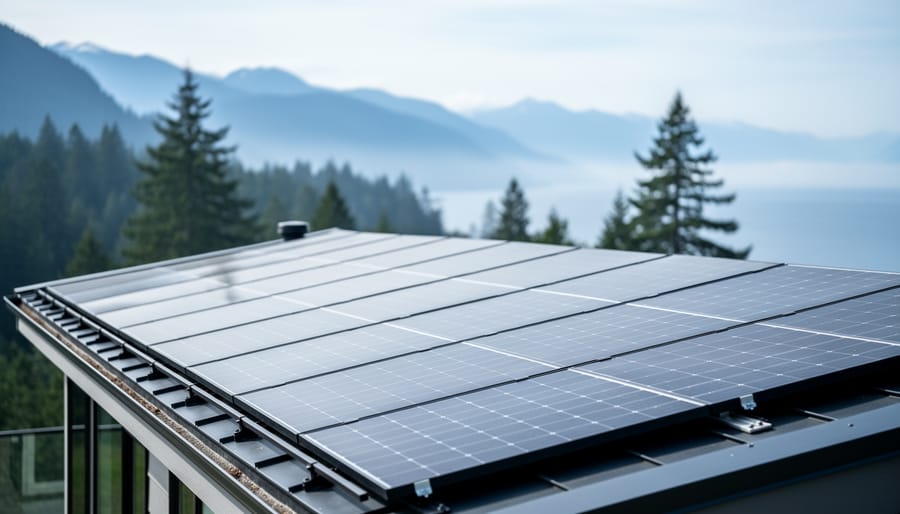
Compare wattage ratings across multiple panels to understand power output potential: a 400W panel generates more electricity per hour of sunlight than a 300W panel, directly impacting how many panels you’ll need for your home. Check the efficiency percentage, which tells you how much rooftop space you’ll require—panels with 20% efficiency produce more power per square foot than 15% models, crucial for BC homes with limited south-facing roof area.
Examine the temperature coefficient, measured as a percentage per degree Celsius, because solar panels lose efficiency as they heat up. In BC’s mild summers, panels with coefficients around -0.35%/°C will maintain better performance than those at -0.45%/°C. Look for degradation rates under 0.5% annually to ensure your system maintains at least 85% output after 25 years of operation.
Review warranty terms carefully: product warranties covering defects should span 10-25 years, while performance warranties guaranteeing specific output levels typically extend 25-30 years. Match panel specifications to your local conditions by considering BC’s frequent overcast days, where panels with strong low-light performance ratings deliver more consistent energy production than spec sheets optimized for intense desert sun.
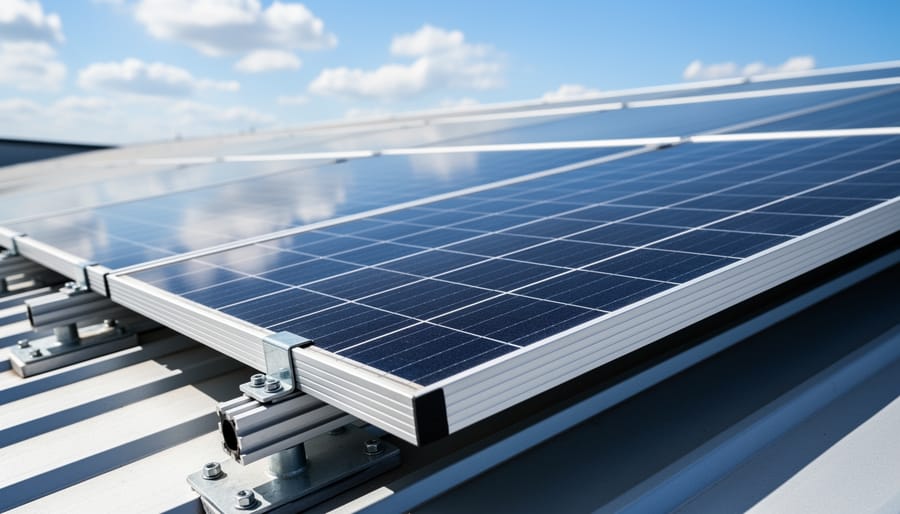
The Numbers That Actually Matter on Your Spec Sheet
Power Output (Wattage): Your Panel’s Energy Potential
A solar panel’s power output, measured in watts (W), tells you how much electricity it can produce under ideal laboratory conditions. Think of it as your panel’s maximum capacity – like the horsepower rating on a vehicle.
Most residential panels today range from 300W to 400W+, with newer models pushing even higher. For a typical BC home, a 400W panel can generate roughly 400-500 kWh annually, depending on your location and roof conditions. Coastal communities might see slightly lower production due to cloudier weather, while Interior regions often exceed these averages with their sunnier climate.
Understanding wattage helps you determine how many panels you’ll need. For example, if your household uses 10,000 kWh yearly and you’re considering 350W panels, you’d typically need 20-25 panels to cover your energy needs. Higher wattage panels mean fewer installations needed, which can reduce mounting hardware costs and maximize limited roof space – particularly valuable for Vancouver-area homes with smaller roofs.
When calculating panel output for your specific situation, remember that rated wattage represents peak performance. Real-world production varies with BC’s seasonal sunlight patterns, making it important to work with local installers who understand regional performance expectations and can right-size your system accordingly.
Efficiency Rating: How Much Sunshine Becomes Electricity
Solar panel efficiency tells you what percentage of sunlight gets converted into usable electricity. Most residential panels today range from 15-22% efficient. While it might seem logical to always choose the highest efficiency, that’s not necessarily the best approach for every BC home or business.
Higher efficiency panels excel in space-constrained situations. If your roof area is limited, premium 22% panels produce more power per square foot. However, for properties with ample roof space, standard 18% panels often deliver better value since they cost less while still meeting your energy needs.
BC’s climate actually works well with moderate efficiency panels. Our cooler temperatures help panels perform better, as excessive heat reduces efficiency. Additionally, BC’s mix of direct and diffuse sunlight means even standard-efficiency panels generate reliable power year-round.
To calculate solar panel efficiency for your specific situation, consider your available roof space, budget, and energy goals. A Fraser Valley homeowner recently discovered that mid-range 19% panels provided ideal performance without the premium price tag, generating enough power to offset 85% of their annual electricity costs while leaving room in their budget for battery storage.
Temperature Coefficient: BC’s Secret Advantage
Here’s a specification that works in BC’s favour: the temperature coefficient. Solar panels actually lose efficiency as they heat up, which might seem counterintuitive. The temperature coefficient, shown as a negative percentage (typically -0.3% to -0.5% per degree Celsius), tells you how much power output decreases for every degree above 25°C.
Here’s what this means practically: a panel with a -0.4% coefficient operating at 35°C will produce about 4% less power than its rated capacity. The lower the negative number, the better the panel performs in heat.
BC’s climate provides a genuine advantage here. Our coastal regions rarely experience extreme heat, and even interior summers maintain moderate temperatures compared to southern jurisdictions. This means your panels operate closer to their optimal temperature range more often, maintaining higher efficiency throughout the year.
A Vancouver homeowner might see their panels actually outperform rated specifications during cool, sunny spring days. Meanwhile, installations in California or Arizona face significant heat-related losses during peak summer months. When comparing panels, a difference of 0.1% in temperature coefficient might seem small, but over 25 years in BC’s climate, it translates to meaningful energy production and cost savings.
Durability Specs That Protect Your Investment
Degradation Rate: How Your Panels Age
Solar panels don’t maintain 100% efficiency forever. Like most technology, they experience gradual degradation over time. Understanding this natural aging process helps you set realistic expectations for your investment.
Most quality solar panels degrade at a rate of 0.3% to 0.8% per year. Premium manufacturers typically guarantee degradation rates at the lower end of this spectrum. For example, if you install panels with a 0.5% annual degradation rate, they’ll still operate at approximately 88% efficiency after 25 years.
Here’s a practical calculation for BC homeowners: If your new system produces 8,000 kWh in year one with a 0.5% degradation rate, you can expect about 7,040 kWh in year 25. Over the system’s lifetime, you’ll still generate substantial clean energy, even accounting for this gradual decline.
When comparing panels, ask manufacturers about their degradation warranties. Many guarantee that panels will maintain at least 80-85% of their original output after 25-30 years. Lower degradation rates mean more predictable long-term savings and better return on investment.
A Vancouver Island family found their 15-year-old system still performs at 93% capacity, exceeding their installer’s conservative estimates. This real-world performance demonstrates how quality panels paired with BC’s moderate climate can outperform standard degradation projections, maximizing your environmental impact and energy independence over decades.
Weather Resistance Ratings
British Columbia’s diverse weather patterns demand solar panels built to withstand everything from coastal storms to heavy interior snowfalls. Understanding weather resistance ratings helps ensure your investment performs reliably for decades.
Hail ratings indicate a panel’s ability to survive impact events. Most quality panels withstand 25mm hailstones at 23 meters per second, adequate for BC’s typical conditions. However, interior regions experiencing larger hail events may benefit from panels rated for 35mm impacts. During the 2021 Lytton heatwave and subsequent severe weather, properly rated panels continued generating power while lesser-quality alternatives sustained damage.
Wind load capacity measures how well panels resist strong gusts. Coastal installations facing Pacific storms should target ratings of 2,400 pascals or higher. A community solar project in Tofino, exposed to frequent winter windstorms, selected panels rated for 3,800 pascals, resulting in zero weather-related failures over five years.
Snow load specifications matter particularly for interior and northern installations. Panels rated for 5,400 pascals handle substantial snow accumulation common in areas like the Kootenays or Prince George. The smooth glass surface of most panels naturally sheds snow, but proper tilt angles between 30-45 degrees optimize both snow clearing and year-round energy production. A Revelstoke business found their 40-degree installation cleared snow within days while maintaining excellent winter output.
Warranty Terms Decoded
Solar panels come with two distinct warranties that reveal important information about quality. The product warranty covers manufacturing defects and physical durability, typically ranging from 10 to 25 years. This warranty protects against issues like frame corrosion or junction box failures, common concerns in BC’s wet coastal climate. A longer product warranty often indicates higher-quality materials and construction.
The performance warranty guarantees minimum power output over time. Most reputable manufacturers offer 25-year performance warranties, guaranteeing around 80-85% of original capacity after 25 years. For example, a Vancouver homeowner installed panels in 2015 with an 85% performance guarantee, ensuring predictable energy production throughout decades of rainy winters and sunny summers. When comparing panels, look for manufacturers offering both comprehensive product warranties (at least 12 years) and strong performance guarantees. These terms directly reflect the manufacturer’s confidence in their product’s longevity and your long-term energy savings.
How BC’s Climate Changes Everything
Coastal vs Interior Performance
British Columbia’s diverse climate creates distinct performance patterns for solar panels across regions. Understanding these differences helps you set realistic expectations and choose appropriate specifications for your location.
Coastal areas like Vancouver and Victoria experience milder temperatures year-round, which actually benefits solar panel efficiency. Panels operate more effectively in cooler conditions, so even on overcast days, your system maintains good performance. The trade-off is more cloud cover, particularly during winter months. However, modern panels still generate significant power from diffused light. A Vancouver homeowner, for instance, can expect their panels to produce about 70% of their annual energy between April and September, with steady contributions throughout winter.
Interior regions like Kelowna and Kamloops enjoy more sunshine hours and clearer skies, translating to higher annual production totals. Summer temperatures can reduce efficiency slightly during peak afternoon heat, but the abundance of sunny days compensates well. These areas typically see 15-20% higher annual production compared to coastal installations using identical equipment.
Northern communities face unique seasonal variations, with long summer days providing exceptional production but limited winter output. When reviewing specifications, pay attention to the temperature coefficient, as this indicates how your panels will perform across BC’s temperature ranges. A lower coefficient means better performance during those hot interior summers or surprisingly warm coastal days.
Low-Light Performance Matters Here
British Columbia’s frequent overcast conditions make low-light performance a critical specification to examine. While solar panels work on cloudy days, not all panels perform equally well when light is diffused.
The key indicator for low-light performance is the temperature coefficient, typically listed as a percentage per degree Celsius. Premium panels maintain efficiency better in cooler, cloudy conditions common along the coast and in the Interior. Look for coefficients closer to -0.3% rather than -0.5%, as this means less power loss on grey days.
Additionally, examine the panel’s spectral response curve if available. Panels optimized for diffuse light conditions capture more energy from indirect sunlight. Monocrystalline panels generally outperform polycrystalline options in these situations.
A Vancouver homeowner we worked with chose panels with superior low-light ratings and generated 18% more energy during winter months compared to their neighbour’s standard panels. This difference translates to hundreds of dollars in additional savings annually.
For BC residents, prioritizing low-light performance often matters more than peak power ratings. When comparing spec sheets, panels that excel in overcast conditions deliver more consistent year-round production, maximizing your investment regardless of weather patterns.
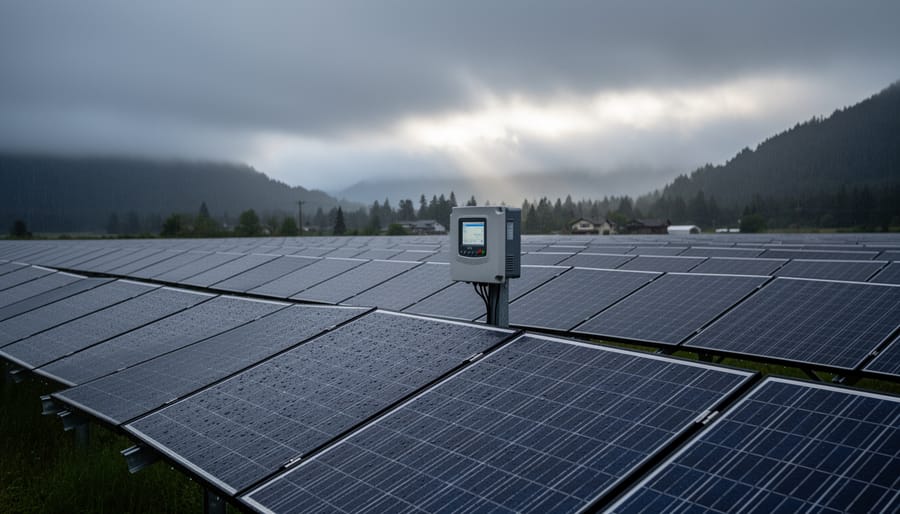
Matching Specs to Your Specific Needs
Limited Roof Space? Prioritize These Specs
When you’re working with limited roof space—common in Vancouver townhomes or properties with nearby tree shading—every square meter counts. Focus on efficiency ratings above 20% and prioritize panels with higher watts per square meter output. A 400-watt panel at 21% efficiency will generate more power in the same footprint than a 300-watt panel at 17%, making it worth the extra investment.
For urban BC homes, look for panels rated between 350-450 watts with efficiency ratings of 20-22%. These specifications mean you’ll maximize energy production even with constrained installation areas. Temperature coefficient also matters here—choose panels with lower coefficients (around -0.35%/°C or better) since rooftop installations can get quite warm during BC’s summer months.
A Victoria homeowner recently increased their system output by 30% simply by switching to higher-efficiency panels, fitting their entire energy needs on a 25 square meter roof section. When space is your limiting factor, investing in premium efficiency specifications pays off through years of optimized performance. Calculate your available roof area first, then select panels that deliver maximum output within that constraint.
Budget-Conscious Choices That Still Perform
You don’t need to break the bank to get reliable solar performance in BC. Focus on panels with efficiency ratings between 18-20% rather than premium models at 22%+. For most residential installations, the performance difference doesn’t justify the significant price premium, especially when our moderate climate doesn’t push systems to extreme limits.
Temperature coefficient is where you can save smartly. While premium panels offer -0.26%/°C, standard panels at -0.40%/C perform nearly identically in BC’s cool climate. The difference only matters in regions with extreme heat, not in our typical conditions.
Consider the Kelowna Community Centre case: they chose mid-range panels with strong warranties instead of top-tier options, saving 25% on upfront costs while achieving their 25-year energy goals. Their panels rated at 19% efficiency have performed excellently through four BC winters.
The real value lies in balancing three factors: reasonable efficiency (18-20%), solid warranty coverage (25 years product, 25 years performance), and proven durability for wet climates. Panels meeting these criteria from established manufacturers typically cost 30-40% less than premium options while delivering 95% of the performance.
Remember, in BC’s solar-friendly climate, installation quality and proper system sizing often matter more than marginal specification improvements. Invest those savings in professional installation or additional panels to increase your total system capacity.
Off-Grid and Remote Applications
For rural BC properties, off-grid solar systems require extra attention to reliability specifications. Look for panels rated for extreme temperature ranges (-40°C to +85°C), essential for remote mountain and northern locations. Higher durability ratings matter here—seek panels certified for heavy snow loads (5,400 Pa or greater) and wind resistance up to 2,400 Pa. Temperature coefficient becomes critical during harsh winters; panels with coefficients closer to -0.3%/°C maintain better performance in freezing conditions. Battery compatibility specs also matter significantly for off-grid setups. Consider panels with 25-year warranties backed by established manufacturers, as service access is limited in remote areas. A Cariboo homesteader recently shared how choosing panels rated for severe weather prevented costly replacements after their first winter. For properties beyond the grid, prioritize proven durability over marginal efficiency gains.
Real BC Installations: Specs in Action
Understanding specifications on paper is one thing, but seeing how they perform in real BC conditions brings these numbers to life. Here are some local examples that demonstrate how different panel specifications translate to actual results across our province.
In Kelowna’s sunny Okanagan Valley, a homeowner installed 400-watt panels with 21% efficiency ratings on their south-facing roof. Despite the region’s hot summers, the panels’ temperature coefficient of -0.35% per degree Celsius meant they maintained strong output even when temperatures soared above 30°C. The system produces approximately 5,200 kWh annually, offsetting their entire electricity bill while the high wattage per panel kept the installation footprint compact.
Along the coast in Vancouver, a local business chose panels with lower efficiency ratings (18%) but superior low-light performance specifications. This decision proved wise for their partly shaded location. The bifacial design, which captures reflected light from surrounding surfaces, boosted their expected output by 12% compared to standard panels. Even during cloudy winter months, their system consistently generates enough power to cover daytime operations.
Up in Prince George, where snow and cold are common concerns, a family selected panels with exceptional snow-shedding capabilities and warranties covering extreme weather conditions. Their frameless design prevents snow accumulation, and the -0.29% temperature coefficient actually means their panels perform better in cold weather. Winter production exceeded expectations, demonstrating how matching specifications to local climate conditions maximizes returns.
These real-world examples show that the best panel specifications depend entirely on your specific location, roof characteristics, and energy goals. Understanding which specs matter most for your situation helps ensure your investment delivers optimal performance year after year.
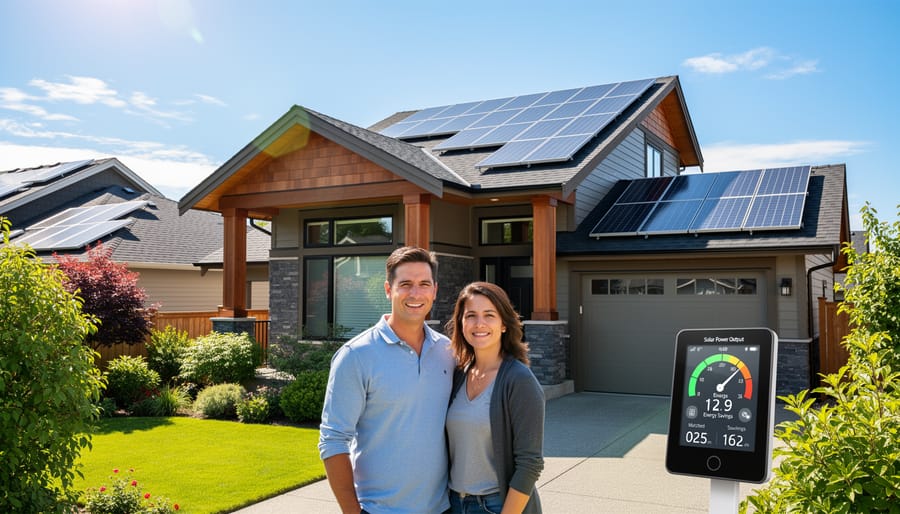
Understanding solar panel specifications doesn’t require an engineering degree. Focus on the essentials: efficiency ratings for space constraints, temperature coefficients for BC’s climate variations, and warranty terms that protect your investment. These three factors, combined with power output ratings, give you the foundation to compare options confidently.
Ready to take the next step? Request detailed spec sheets from Solar BC certified installers who can translate numbers into real-world performance for your specific location. They’ll help you understand how panels perform in coastal fog, mountain snow, or Interior sunshine.
Use our interactive solar savings calculator to see how different specifications translate into actual energy production and cost savings for your property. Armed with this knowledge, you’re empowered to make informed decisions that balance performance, budget, and long-term value. The right solar system for your BC home or business is within reach.