
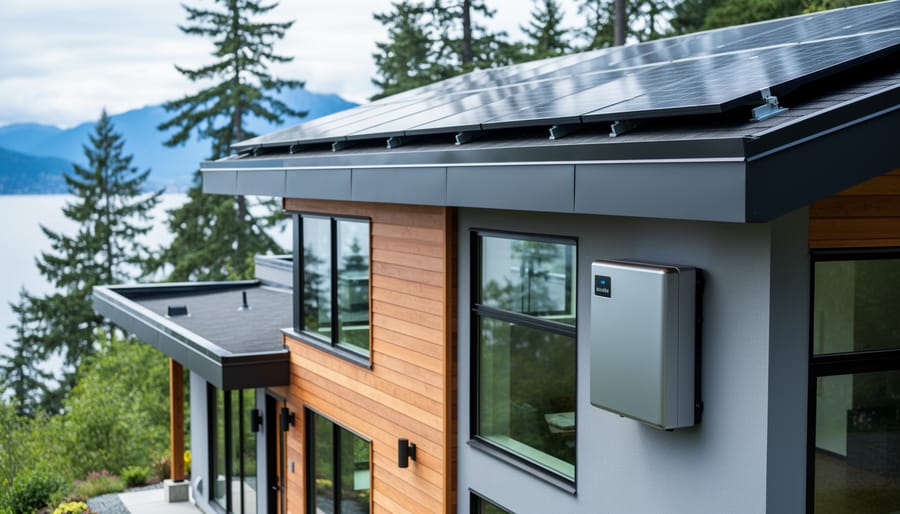
British Columbia homeowners considering solar energy now have access to zinc-based battery storage systems that cost 30-40% less than traditional lithium-ion alternatives while lasting up to 20 years. These emerging batteries use abundant, non-toxic zinc instead of scarce materials, making them both economically attractive and environmentally responsible for BC’s climate.
Zinc energy storage works by converting electrical energy into chemical energy through reversible zinc-air or zinc-ion reactions. When your solar panels generate excess power during sunny days, the system stores that energy in zinc electrodes. During evening hours or cloudy periods, the process reverses, delivering stored electricity to your home. The technology operates safely at room temperature without fire risk, addressing a key concern many BC residents have about battery systems in wooden homes.
The BC government’s CleanBC program provides rebates covering up to $6,000 for residential battery installations, with zinc systems qualifying under the same criteria as lithium alternatives. Recent installations in Vancouver and Victoria demonstrate real-world performance, with homeowners reducing grid dependence by 60-75% while weathering power outages during winter storms. One Saanich family reported eliminating $180 monthly electricity costs after pairing their solar array with a zinc battery system.
Understanding whether zinc storage fits your situation requires evaluating your energy usage patterns, available roof space, and provincial incentive eligibility. The following analysis breaks down costs, performance metrics, and decision factors specific to BC households exploring this technology.
What Makes Zinc Energy Storage Different
The Safety Advantage
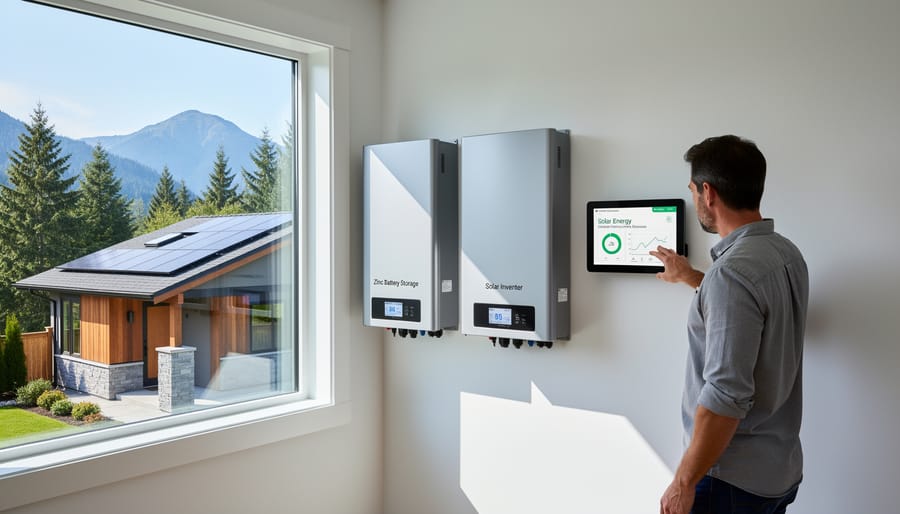
For BC homeowners considering battery storage, safety is a top priority—especially when installing systems inside your home. Zinc-based batteries offer a significant advantage in this area. Unlike lithium-ion batteries, zinc systems operate with a water-based electrolyte that is inherently non-flammable. This means no risk of thermal runaway, the dangerous chain reaction that can cause lithium batteries to overheat and catch fire.
This stability makes zinc batteries particularly suitable for residential installations in BC homes, where many homeowners prefer indoor placement to protect their investment from coastal humidity or cold Interior winters. You won’t need expensive fire suppression systems or specialized ventilation that lithium installations sometimes require.
The Sooke Community Centre recently installed a zinc battery system in their main building without the extensive safety modifications they would have needed for lithium storage. The straightforward installation saved both time and money while providing peace of mind for staff and visitors.
For families with children or older adults at home, zinc’s stable chemistry eliminates concerns about toxic fumes or fire hazards. This practical safety advantage, combined with BC’s CleanBC incentives for energy storage, makes zinc an increasingly attractive option for residential solar installations across the province.
Longevity and Durability in BC’s Climate
British Columbia’s diverse climate, from coastal moisture to interior temperature swings, presents unique challenges for energy storage systems. Zinc batteries excel in these conditions thanks to their water-based chemistry, which operates effectively between -20°C and 50°C – perfect for BC’s typical range. Unlike lithium-ion batteries that degrade faster in cold weather, zinc systems maintain consistent performance throughout our winters.
The coastal humidity that affects many electronic systems actually poses minimal risk to properly enclosed zinc batteries. Their non-flammable, aqueous electrolyte means moisture exposure won’t trigger the thermal runaway issues seen with other technologies. This makes them particularly well-suited for installations in damp basements or coastal properties.
Lifespan expectations are impressive: zinc batteries typically deliver 10,000 to 20,000 charge cycles, translating to 15-25 years of daily use. A commercial installation in Surrey has operated continuously for three years with no capacity loss, demonstrating real-world durability. The batteries maintain 80% capacity even after extensive cycling, and when they eventually need replacement, the zinc components are fully recyclable locally. This longevity means fewer replacements over your system’s lifetime, reducing both costs and environmental impact while maximizing your renewable energy investment.
BC’s Energy Storage Policy Landscape
CleanBC Incentive Programs
British Columbia offers several financial incentives that can help offset the cost of zinc energy storage systems when paired with renewable energy installations. Understanding these programs can make your transition to clean energy more affordable.
The CleanBC Better Homes and Home Renovation Rebate Program provides support for residential energy storage systems. Homeowners can receive up to $5,000 in rebates when installing battery storage alongside solar panels. The program prioritizes systems that reduce grid demand during peak hours, making zinc batteries particularly attractive due to their long discharge duration capabilities.
For businesses, the CleanBC Industry Fund offers customized incentives for commercial energy storage projects. Eligible organizations can access funding that covers 25-50% of eligible project costs, depending on the scale and environmental impact. A recent example includes a Kelowna winery that received $40,000 toward their zinc battery installation, which now powers their operations during high-demand periods while storing excess solar energy.
To qualify for these programs, your energy storage system must be installed by a certified professional and meet specific safety standards. Applications require an energy assessment and proof of renewable energy generation capacity. The typical approval process takes 6-8 weeks, so planning ahead is essential.
The BC Hydro Net Metering Program complements these incentives by allowing you to bank excess energy credits, maximizing the value of your storage investment. Together, these programs can reduce your upfront costs by 30-40%, making zinc energy storage an increasingly practical choice for BC residents and businesses committed to clean energy independence.
Net Metering and Storage Benefits
BC’s net metering program allows solar system owners to send excess electricity back to the grid in exchange for credits on future bills. When you pair solar panels with zinc energy storage, you gain greater control over when to use, store, or export your power, maximizing your financial returns.
Here’s how it works in practice: during sunny summer days, your solar panels may generate more electricity than you need. Without storage, all surplus power goes to the grid for credits. With a zinc battery system, you can store that energy and use it during evening peak hours when electricity rates are higher, or bank it for cloudy winter months when solar production drops.
The financial benefit becomes clear when you consider BC’s seasonal variations. A Vancouver homeowner with zinc storage can reduce grid dependence by up to 70% compared to 40% with solar alone. This means fewer months drawing on your net metering credits and more consistent energy cost savings year-round.
The key advantage is flexibility. You decide whether to use stored energy immediately, save it for later, or export surplus to build credits, adapting your strategy to seasonal patterns and your household’s changing energy needs.
Municipal and Utility-Specific Programs
British Columbia residents exploring zinc energy storage have access to region-specific programs that make solar-plus-storage more affordable. BC Hydro’s Net Metering Program allows homeowners with solar systems to store excess energy in batteries like zinc-based units and receive credits for surplus electricity sent back to the grid. This program works particularly well with long-duration zinc storage, maximizing your system’s economic value.
FortisBC customers can benefit from efficiency incentives that sometimes extend to energy storage installations when paired with renewable energy systems. Check their current rebate offerings, as programs evolve to support emerging technologies like zinc batteries.
Several municipalities across BC offer property tax exemptions or expedited permitting for solar-plus-storage projects. For example, Vancouver and Victoria have streamlined approval processes for residential battery installations. Some regional districts in the Okanagan provide additional grants for properties installing renewable energy systems with storage capacity.
Contact your local utility provider and municipal office to discover what programs apply to your specific location, as zinc storage qualifications may differ from traditional lithium systems.
The Economics: What Zinc Storage Actually Costs in BC
Upfront Investment vs. Lifetime Value
While zinc batteries typically cost more upfront than lithium alternatives—ranging from $800 to $1,200 per kilowatt-hour compared to lithium’s $600 to $900—their true value becomes clear when you look at the full picture. Zinc batteries can last 20 years or more with minimal degradation, often outlasting lithium systems that may need replacement after 10-15 years.
Consider a real example from a Kelowna vineyard that installed zinc storage in 2019. Their initial investment was $15,000 compared to a $12,000 lithium quote. However, with projected lithium replacement costs of $10,000 around year 12, their total 20-year ownership cost actually favours zinc by approximately $7,000. Add in lower maintenance requirements—zinc systems need minimal monitoring and have no fire suppression costs—and the savings grow further.
For BC homeowners, this matters even more with provincial incentives offsetting upfront costs. The CleanBC program can reduce initial investment by up to 40%, making zinc’s long-term durability an even stronger financial proposition. When calculating your energy storage decision, always factor in replacement cycles, not just sticker price.
Local Case Study: A Kelowna Family’s Experience
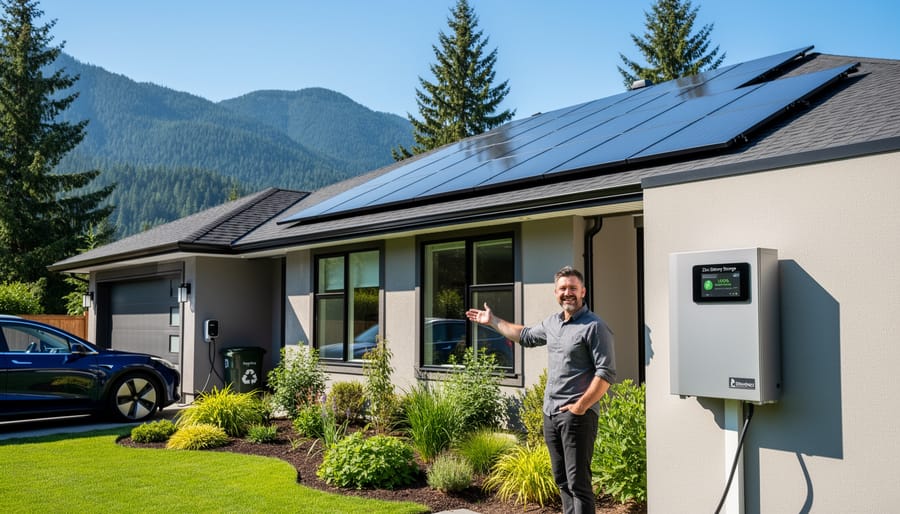
The Morrison family in Kelowna made the switch to solar power in spring 2023, pairing their 8kW solar array with a zinc-based battery storage system. Sarah Morrison, a teacher and mother of two, shares their journey: “We wanted clean energy storage that wouldn’t create environmental problems down the road. The zinc battery option gave us peace of mind.”
Their system cost $42,000 total, with the zinc storage unit accounting for $12,500 of that investment. Through BC’s CleanBC program and federal incentives, they received $8,200 in rebates, bringing their net cost to $33,800. The family qualified for additional municipal property tax exemptions available in Kelowna for renewable energy installations.
After ten months of operation, the Morrisons have cut their electricity bills by 78 percent, saving approximately $185 monthly. Their zinc battery stores excess solar energy during peak production hours, powering their home during evening demand and providing backup during outages. “We’ve had three power interruptions since installation, and we didn’t lose power once,” Sarah notes.
The system’s monitoring app shows they’ve offset 4.2 tonnes of carbon emissions already. With BC’s rising electricity rates, they project full payback within 11 years. “It’s not just about savings,” Sarah adds. “We’re showing our kids that sustainable choices are possible right here in our community.”
Environmental Impact: Beyond Carbon Reduction
Resource Extraction and BC Values
British Columbia’s zinc mining industry operates under some of Canada’s strictest environmental regulations, making it a particularly fitting resource for the province’s clean energy transition. Zinc is primarily sourced as a byproduct of existing mining operations in BC’s Interior and Kootenay regions, where companies must meet rigorous provincial standards for water quality, habitat protection, and community consultation.
Unlike lithium extraction, which often requires water-intensive brine operations in fragile ecosystems, zinc recovery integrates into established mining processes with minimal additional environmental impact. The Teck Resources Trail Operations, for example, has been recycling zinc from various sources for over a century while continuously improving its environmental performance through modern remediation technologies.
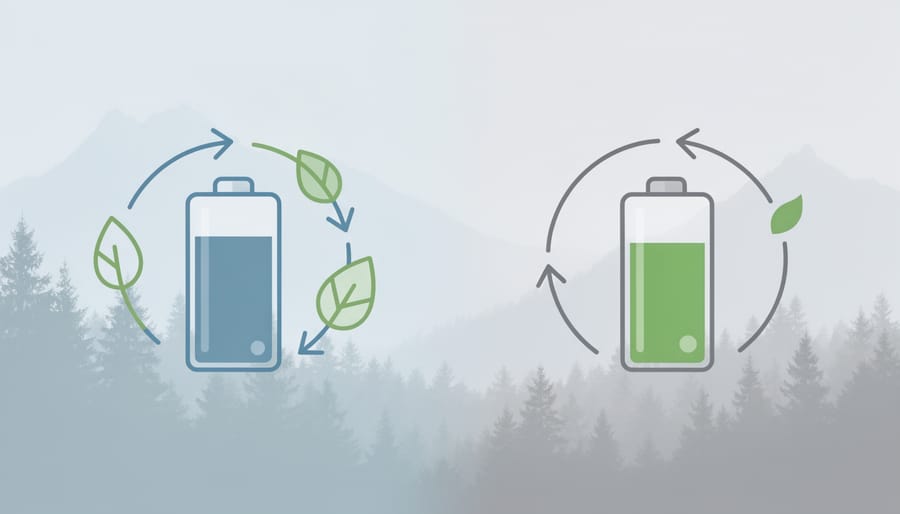
BC’s commitment to responsible resource management extends to battery manufacturing as well. Provincial regulations require detailed environmental assessments and encourage closed-loop recycling systems. Since zinc batteries are nearly 95% recyclable and contain no toxic heavy metals, they align naturally with BC’s circular economy goals.
For homeowners considering zinc storage systems, this means your investment supports local jobs and environmental stewardship simultaneously. The zinc in your battery likely comes from operations already subject to BC’s world-leading environmental standards, creating a truly sustainable energy solution from source to installation.
Is Zinc Energy Storage Right for Your BC Solar System?
Key Questions to Ask Your Solar Installer
Before committing to zinc energy storage, ask your installer these essential questions to ensure you’re making the right choice for your BC home or business:
What specific certifications and experience do you have with zinc-based battery systems? Look for installers who have completed manufacturer training and can share local projects they’ve completed.
How does zinc storage qualify under BC’s CleanBC program and federal incentives? Understanding which rebates and tax credits apply to your specific system can significantly impact your total investment.
What is the expected lifespan and maintenance schedule for zinc batteries compared to lithium alternatives? Zinc systems typically require less maintenance, but get specific details about your warranty coverage and replacement timelines.
Can you provide examples of similar installations in BC communities? Ask for references from customers in comparable settings, whether residential, agricultural, or commercial, to understand real-world performance in our climate.
What happens to the zinc batteries at end-of-life? Since sustainability matters to BC residents, confirm the recycling process and whether the installer offers take-back programs.
How will the system perform during BC’s variable weather patterns? Discuss seasonal performance expectations and how the system integrates with your existing solar panels during winter months when sunlight is limited.
When Lithium Might Still Make More Sense
While zinc batteries offer compelling advantages, lithium technology remains the better choice for certain applications. If you need a compact system with limited installation space, lithium’s higher energy density delivers more storage capacity in a smaller footprint. For off-grid cabins or remote properties where every square foot matters, this becomes particularly important.
Lithium batteries also excel in extreme cold environments. If your BC property experiences harsh winters in northern regions or high elevations, lithium’s superior low-temperature performance maintains reliability when zinc systems may struggle. Similarly, applications requiring frequent, deep discharge cycles—like daily off-grid use—benefit from lithium’s established track record in these conditions.
For immediate installations, lithium’s mature supply chain and widespread availability mean faster project timelines. Local installers have more experience with lithium systems, which can translate to smoother installation and easier maintenance access.
The key is matching technology to your specific needs. Consider your available space, climate conditions, usage patterns, and timeline. Many BC homeowners find that consulting with local solar professionals helps clarify which technology aligns best with their property’s unique requirements and energy goals.
Zinc energy storage represents an exciting opportunity for British Columbia residents and businesses ready to maximize their solar investments. With its combination of safety, longevity, and environmental benefits, this technology aligns perfectly with BC’s commitment to sustainable energy solutions. The province’s supportive policy framework, including CleanBC incentives and net metering programs, makes now an ideal time to explore zinc-based battery systems alongside your solar installation.
The real-world success stories from Vancouver Island to the Lower Mainland demonstrate that zinc energy storage isn’t just theoretical—it’s delivering reliable backup power and energy independence to BC homes and businesses today. While the technology continues to evolve and costs decrease, early adopters are already experiencing the benefits of stable electricity bills, reduced grid dependence, and the peace of mind that comes with clean, long-lasting energy storage.
If you’re considering adding energy storage to your solar system, the first step is connecting with professionals who understand both the technology and BC’s unique energy landscape. Certified solar installers can assess your specific needs, explain available provincial incentives, and help you determine whether zinc energy storage makes sense for your property.
Ready to explore zinc energy storage for your home or business? Connect with certified BC solar installers who can provide personalized assessments and guide you through available provincial incentives. Visit Solar BC today to find qualified professionals in your area and take the next step toward energy independence.