
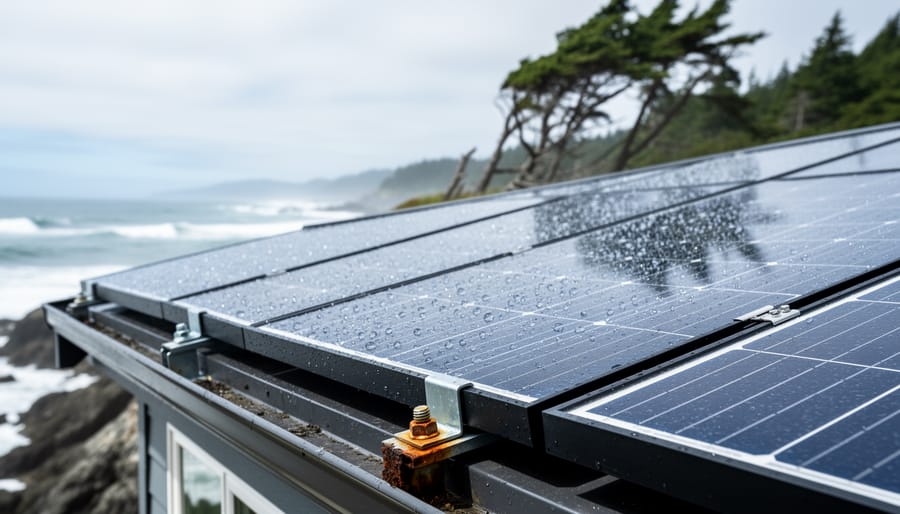
Demand IEC 61701 salt spray certification when selecting solar panels for BC’s coastal regions—this international standard specifically tests photovoltaic modules against salt mist corrosion, ensuring your investment withstands ocean spray that can corrode electrical connections and degrade performance within years. Coastal installations from Tofino to Prince Rupert face unique environmental stresses beyond typical inland concerns like snow load challenges, requiring equipment designed for marine environments.
Verify that mounting hardware features marine-grade stainless steel (316-grade minimum) or aluminum with specialized protective coatings, as standard galvanized steel corrodes rapidly in salt-laden air found within 10 kilometers of the coastline. This specification matters because coastal British Columbia’s prevailing westerly winds carry salt particles inland, affecting not just waterfront properties but communities throughout the Georgia Strait and outer islands.
Request documented evidence of successful coastal installations from your solar provider, particularly systems operating for 5-plus years in comparable BC locations. Companies experienced with coastal deployments understand that inverter placement, electrical enclosure ratings, and preventive maintenance schedules differ significantly from interior installations. Salt spray testing validates whether components can handle real-world exposure, translating laboratory standards into practical longevity for your specific site.
Understanding these requirements empowers you to ask informed questions during consultations, ensuring your coastal solar system delivers decades of reliable performance rather than becoming an expensive maintenance burden.
What Salt Spray Corrosion Actually Does to Your Solar Panels
When you live near BC’s beautiful coastline, that fresh ocean breeze carries more than just the smell of salt water. Tiny salt particles become airborne through wave action and sea spray, traveling inland and settling on everything in their path, including your solar panels.
Here’s what happens: those microscopic salt crystals contain sodium chloride, which attracts moisture from the air. This creates a thin electrolyte layer on metal surfaces. When combined with oxygen, this starts an electrochemical reaction that we call corrosion. Think of it like rust on a car, but accelerated by the constant presence of salt and humidity.
BC’s coastal climate makes this particularly challenging. Areas like Vancouver Island’s western shore, the Sunshine Coast, and coastal communities in the Lower Mainland experience high humidity year-round, with salt spray that can travel several kilometers inland depending on wind conditions. Unlike drier climates where salt might blow away, our frequent rain and fog keep surfaces damp, maintaining that corrosive cycle.
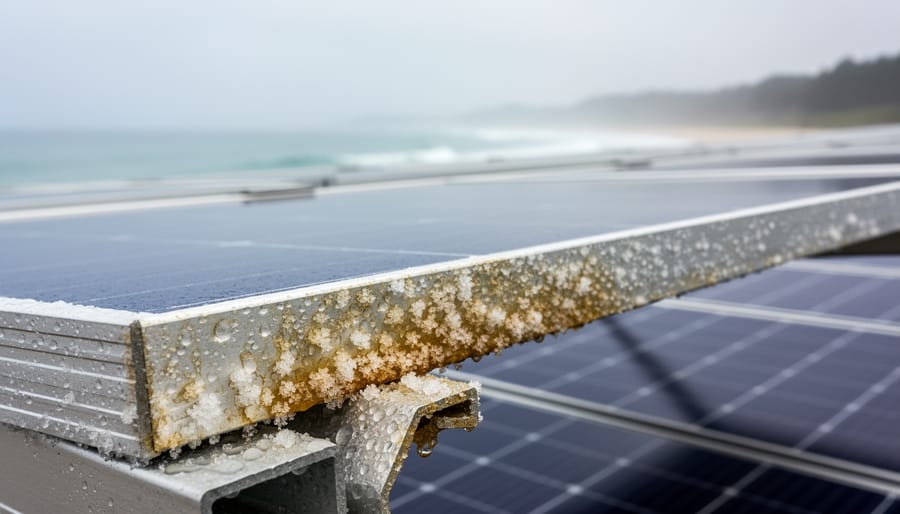
You might notice corrosion starting at junction boxes, mounting hardware, or frame edges where protective coatings can wear thin. Early signs include white or greenish deposits on aluminum frames, discoloration around electrical connections, or in advanced cases, reduced power output as connections degrade. A homeowner in Tofino discovered this firsthand when unexplained efficiency drops led to finding corroded wiring behind otherwise clean-looking panels.
The good news? Understanding this process helps you make informed equipment choices. Not all solar panels are created equal when facing coastal conditions. Panels and mounting systems that pass rigorous salt spray corrosion testing use specialized coatings, marine-grade stainless steel hardware, and sealed junction boxes designed specifically to withstand these harsh environments. This testing simulates years of coastal exposure in just days, ensuring your investment can handle whatever our Pacific weather brings.
Understanding Salt Spray Corrosion Testing Standards
What the Test Results Mean for Your Installation
When you’re reviewing solar equipment specifications, you’ll see salt spray test ratings expressed in hours—typically ranging from 240 hours (basic protection) to 6,000+ hours (marine-grade). Here’s what these numbers mean for your coastal BC installation.
For properties located more than 5 kilometers inland from the coast, equipment with 1,000-hour ratings generally provides adequate protection. These installations face minimal salt exposure and benefit from natural barriers like forests or hills that reduce airborne salt particles.
If you’re within 1-5 kilometers of the ocean, look for panels and racking systems rated at 2,000-3,000 hours. This mid-range protection handles moderate salt exposure while remaining cost-effective. Many residential installations in places like Sidney or Powell River fall into this category.
Direct waterfront properties—those within 1 kilometer of the ocean or facing prevailing winds—require marine-grade equipment with 6,000+ hour ratings. While these systems cost 15-20% more upfront, they prevent costly replacements and maintain performance warranties. A Tofino bed-and-breakfast owner who initially chose budget equipment learned this lesson after replacing corroded components within three years; switching to marine-grade systems eliminated ongoing maintenance headaches.
Don’t assume all “coastal-rated” equipment is equal. Request specific salt spray test certifications from installers and verify that all components—panels, frames, mounting hardware, and electrical connections—meet the appropriate rating for your distance from shore. Quality installers familiar with BC’s coastal conditions will proactively recommend suitable protection levels based on your specific microclimate and exposure factors.
How Far From the Coast Does Salt Spray Really Reach?
Understanding how far salt spray travels inland helps you make informed decisions about your solar installation. In British Columbia’s diverse coastal regions, distance isn’t the only factor that matters.
Along the exposed west coast, communities like Tofino and Ucluelet face intense salt spray that can reach 500 to 800 meters inland during winter storms. The combination of prevailing winds and wave action creates a challenging environment for any outdoor equipment. In contrast, sheltered locations like Sidney on the Saanich Peninsula or parts of Richmond along the Fraser River experience significantly less salt exposure, even when they’re technically closer to the water.
The key zones break down like this: properties within 200 meters of open ocean face the highest exposure and require marine-grade equipment. Between 200 and 500 meters, you’re in a moderate zone where standard coastal-rated solar panels typically perform well with proper maintenance. Beyond 500 meters, salt spray becomes minimal unless you’re on an exposed hillside or facing prevailing winds.
Local geography plays a huge role. A property in West Vancouver facing the ocean has different needs than one tucked behind a hill in the same neighborhood. Wind patterns, elevation, and natural barriers like trees or buildings all affect your actual exposure.
Just like our shading analysis tool helps assess sun exposure, we’re developing an interactive salt spray assessment tool specific to BC coastal regions. This tool will consider your exact location, distance from water, elevation, and local wind patterns to provide personalized equipment recommendations.
The good news? Hundreds of coastal BC properties successfully operate solar installations by matching equipment to their specific exposure level rather than avoiding solar altogether.
Choosing Corrosion-Resistant Solar Equipment for BC’s Coast
Material Matters: Aluminum vs. Stainless Steel vs. Coated Components
Choosing the right materials for your coastal solar installation can mean the difference between decades of reliable performance and costly premature repairs. Let’s break down your options.
Stainless steel components, particularly marine-grade 316 stainless steel, offer superior corrosion resistance for BC’s coastal conditions. This material contains molybdenum, which provides exceptional protection against salt spray. Many coastal installations from Tofino to Prince Rupert successfully use 316 stainless steel hardware and mounting systems. While the upfront cost runs approximately 20-30% higher than standard materials, the longevity makes it worthwhile for properties within five kilometres of the ocean.
Aluminum components with proper anodized coatings represent a middle-ground option. Quality anodized aluminum resists corrosion well and costs less than stainless steel. However, verify that manufacturers have conducted extensive salt spray testing – look for products rated for 1,000+ hours in standardized tests. Several BC installers have reported excellent results with anodized aluminum racking systems along the Sunshine Coast and Gulf Islands.
Coated steel components offer the most budget-friendly option but require careful selection. Hot-dip galvanized steel with additional protective coatings can perform adequately in moderate coastal conditions. These work best for properties slightly inland rather than directly oceanfront.
A successful Ucluelet installation combines 316 stainless steel fasteners with anodized aluminum racking, demonstrating how mixing materials strategically balances cost and durability. Your installer should assess your specific exposure level and recommend materials accordingly, ensuring your investment withstands BC’s coastal environment for 25+ years.
Real Stories: BC Coastal Solar Installations That Got It Right
When the Tofino Brewing Company wanted to reduce their energy costs in 2021, they knew their ocean-facing location presented challenges. Just 200 meters from the surf, their facility faced constant salt spray exposure. Working with a local solar installer, they selected panels with IEC 61701 Grade 6 certification—the highest salt spray resistance rating available. Two years later, their system operates at 98% efficiency with no signs of corrosion. Their lesson? Investing an extra 15% upfront in marine-grade equipment saved them from costly replacements down the road.
Not everyone gets it right the first time. A waterfront bed and breakfast in Sidney installed standard solar panels in 2019 without considering salt spray testing. Within 18 months, the owner noticed white residue forming around panel frames and junction boxes. An inspection revealed early-stage corrosion that would eventually compromise the system. The solution involved replacing mounting hardware with stainless steel components and adding protective coatings to vulnerable areas—an expense that could have been avoided with proper planning.
The Powell River Recreation Complex offers another success story. Located just blocks from the Georgia Strait, facility managers prioritized corrosion resistance from day one. They chose panels that passed 96-hour salt spray tests and installed them with marine-grade aluminum mounting systems. Three years in, their 250-panel array shows zero corrosion and produces enough energy to power their pool heating system year-round.
These examples share a common thread: property owners who asked their installers specific questions about salt spray testing and demanded documentation of corrosion resistance ratings. They understood that coastal solar absolutely works in BC—when you choose equipment designed for the environment it will face.
Protecting Your Investment: Maintenance and Monitoring
Your coastal solar installation represents a significant investment in both sustainability and your energy independence. Protecting that investment starts with establishing proper maintenance schedules tailored to BC’s coastal environment.
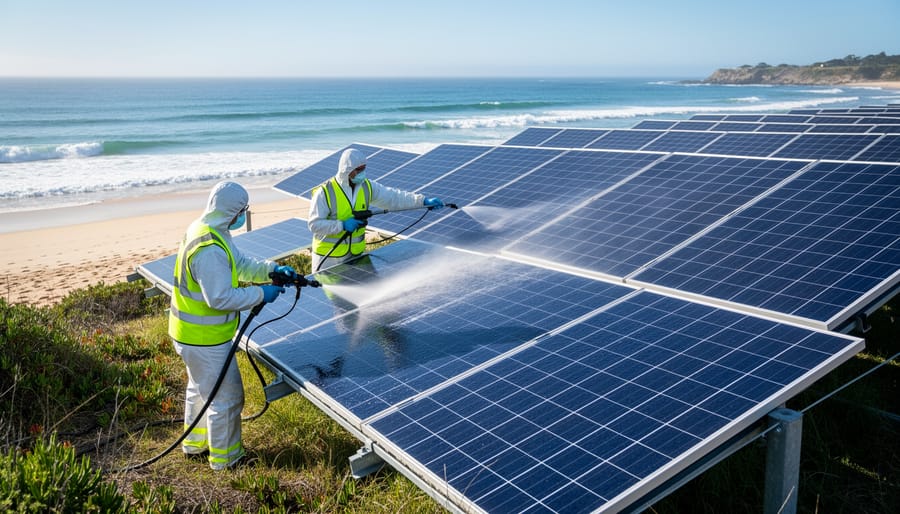
For most coastal installations, clean your panels every three to four months, or more frequently if you’re in areas with heavy salt spray exposure like Tofino or Haida Gwaii. A simple rinse with fresh water removes salt buildup before it causes long-term damage. Schedule cleanings after storm seasons when salt spray is most intense.
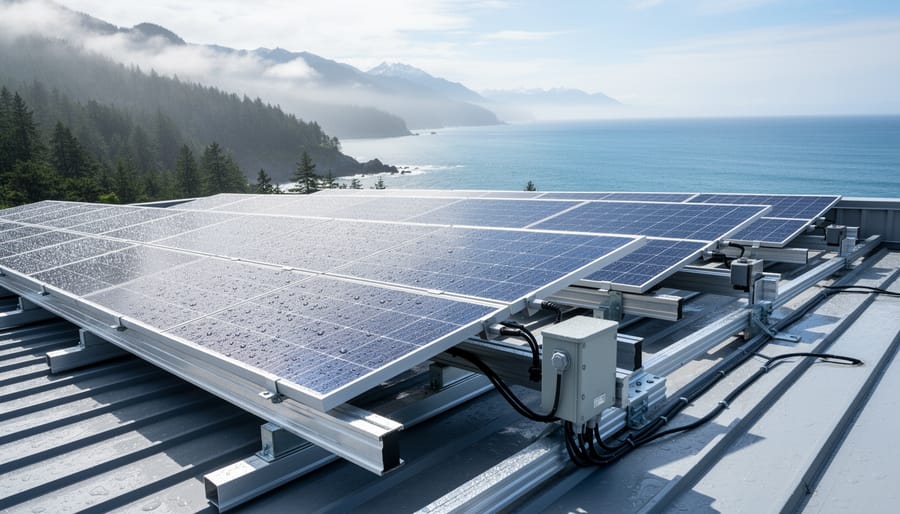
During quarterly inspections, look for white crusty deposits on panel frames and mounting hardware, which indicate salt accumulation. Check all electrical connections for signs of corrosion, particularly those greenish or white powdery formations. Examine seals around junction boxes to ensure moisture hasn’t penetrated. If you notice reduced energy output that cleaning doesn’t resolve, this warrants professional attention.
Annual professional inspections are essential for coastal systems. Qualified technicians can assess hidden corrosion in mounting systems, verify electrical connections remain secure, and confirm your panels are performing optimally. They’ll also check that protective coatings on hardware remain intact.
Call a professional immediately if you spot severe corrosion on mounting brackets, loose connections, or if your system’s output drops unexpectedly. Catching problems early prevents small issues from becoming costly repairs. Remember, proactive maintenance extends your system’s lifespan and ensures you maximize your clean energy production for decades to come.
Your Next Steps: Getting a Proper Coastal Site Assessment
Finding the right solar installer who understands coastal conditions is essential for a successful installation. Start by connecting with Solar BC’s network of certified installers who have experience with British Columbia’s marine environments. These professionals know which equipment performs best in salt-laden air and how to design systems that last.
During your consultation, ask specific questions: What marine-grade ratings do they recommend for your location? Have they completed installations in similar coastal conditions? Can they provide references from nearby projects? A qualified installer should discuss corrosion-resistant mounting systems, salt spray testing certifications, and maintenance plans tailored to coastal exposure.
A comprehensive site assessment should evaluate your distance from the ocean, prevailing wind patterns, and microclimate factors that affect salt exposure. The installer should examine your roof structure, electrical system, and any obstacles that might complicate installation or maintenance access.
Don’t hesitate to seek multiple quotes and compare approaches. The right installer will welcome your questions and provide detailed explanations about equipment choices and expected performance. Remember, investing time in selecting an experienced coastal solar specialist now prevents expensive problems down the road and ensures your system delivers reliable clean energy for decades.
Coastal corrosion is a genuine consideration for solar installations near the ocean, but it’s far from a barrier. With proper assessment and the right equipment, solar panels thrive in BC’s coastal communities just as successfully as they do inland. The key is understanding your specific exposure level and selecting components rated for your environment—whether that’s standard panels for sheltered locations or marine-grade systems for properties facing direct salt spray.
Hundreds of coastal BC homes and businesses are already generating clean energy by the water, proving that location doesn’t have to limit your solar potential. The difference between success and premature wear comes down to informed planning and working with installers who understand local conditions.
If you’re considering solar for your coastal property, don’t let corrosion concerns hold you back. Connect with experienced installers through Solar BC who can assess your site, recommend appropriate equipment, and design a system built to last in your specific coastal environment. Your clean energy future is within reach—you just need the right local expertise to make it happen.