
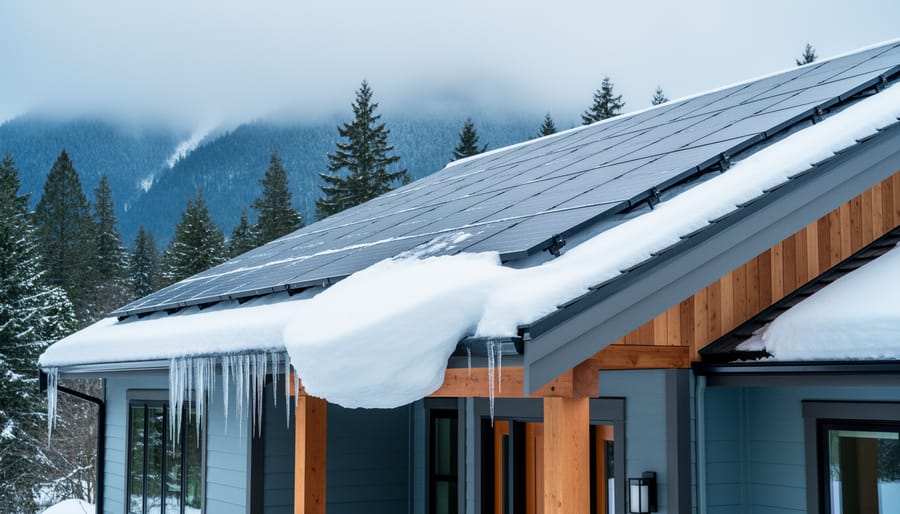
Snow accumulation on solar panels reduces energy production by up to 100% during winter months, but understanding hazard assessment protocols protects both your investment and safety in British Columbia’s diverse climate zones.
Request a detailed snow load analysis from your installer before committing to any solar project. In BC, snow loads vary dramatically from coastal regions receiving minimal accumulation to interior and northern areas where roofs must withstand substantial weight. Your assessment should account for local building codes, roof pitch, panel mounting angles, and historical snowfall data specific to your municipality. Installers qualified in regional conditions will calculate whether your roof structure requires reinforcement and determine optimal panel positioning to facilitate natural snow sliding.
Evaluate your site’s snow shedding characteristics by observing winter patterns on your existing roof. South-facing installations at 40-degree angles typically shed snow more effectively than flat or low-angle arrays. Document where snow accumulates, forms ice dams, or creates dangerous falling hazards near entrances and walkways. This information helps installers design systems that minimize both production loss and safety risks for people below.
Plan for safe snow management without voiding warranties or damaging equipment. Most manufacturers prohibit using metal tools or excessive force on panels. Professional installers design ground-mounted systems or specify appropriate roof rakes for accessible cleaning when necessary. Some BC homeowners in heavy snowfall regions choose steeper mounting angles or leave bottom rows clear to prevent dangerous snow slides onto pathways, balancing energy optimization with practical winter safety considerations.
What Exactly Is Hazard Snow?
How BC’s Climate Creates Unique Snow Hazards
British Columbia’s diverse geography creates dramatically different snow conditions that directly impact solar panel safety and performance. Understanding these regional variations helps homeowners and businesses make informed decisions about their solar installations.
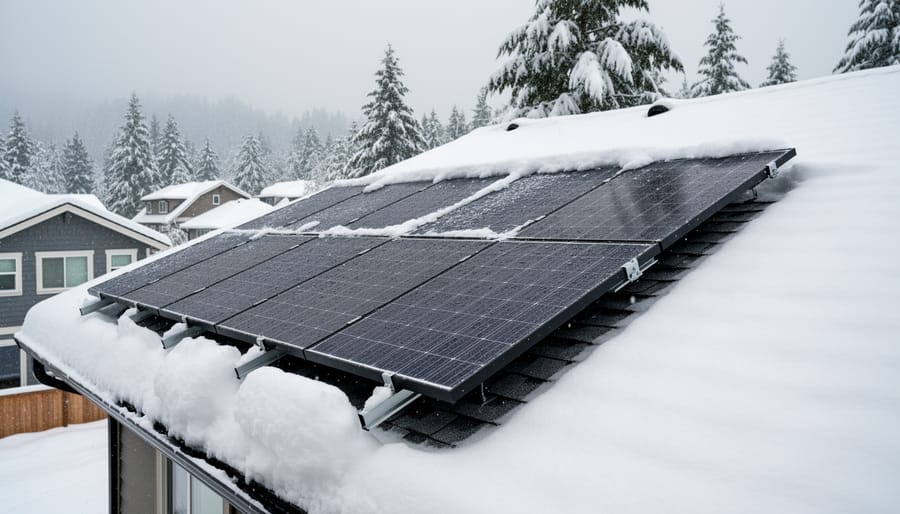
In coastal areas like Vancouver, Victoria, and the Lower Mainland, snow arrives wet and heavy due to warmer Pacific air. This maritime snow can weigh two to three times more than interior snow, creating substantial loads on solar arrays. A typical 30-centimeter snowfall in Vancouver might exert 30 to 50 pounds per square foot on your panels, compared to just 10 to 15 pounds for the same depth of dry snow in Kamloops. This weight difference matters significantly for roof integrity and mounting system design.
Interior communities like Kelowna, Prince George, and the Okanagan experience lighter, fluffier snow that tends to slide off tilted panels more easily. However, these regions often see greater total accumulation throughout winter, requiring different installation considerations. For example, a Kamloops homeowner might face minimal individual storm loads but extended periods of snow cover affecting energy production.
Coastal installations require robust mounting systems designed for heavier loads, while interior systems need careful attention to potential ice damming and extended snow coverage periods. Communities at elevation, such as Whistler or Nelson, combine both challenges with heavy snowfall and variable temperatures that create freeze-thaw cycles.
Working with experienced local installers who understand your specific region’s snow patterns ensures your solar system is properly engineered for the unique conditions in your area.
The Real Cost of Ignoring Snow Hazards
Understanding snow hazards isn’t just about checking a box during installation—it’s about protecting your investment and ensuring long-term performance. When proper snow hazard assessment gets overlooked, the consequences can be costly and dangerous.
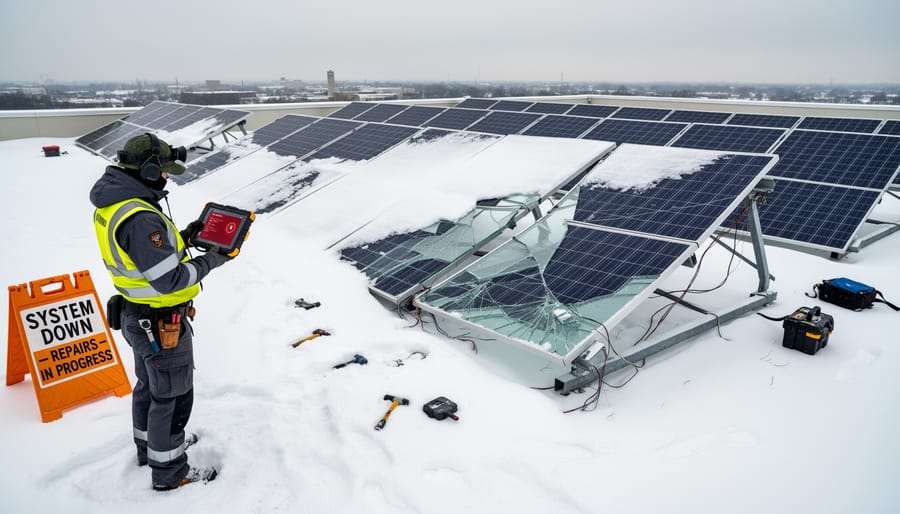
The physical risks are substantial. Heavy snow accumulation can crack solar panels, bend mounting rails, and in severe cases, cause complete structural collapse. Even without catastrophic failure, excessive snow loads stress mounting systems, leading to premature wear and shortened equipment lifespan. Beyond the hardware, inadequate snow management creates safety hazards for anyone near the installation, as sliding snow and ice can injure people or damage property below.
Financial impacts extend beyond repair costs. When snow covers your panels for extended periods, energy production drops to zero, meaning you’re purchasing grid electricity instead of generating your own clean power. This lost production adds up quickly during BC’s winter months.
A recent case in the Interior demonstrates these risks clearly. A commercial property owner in Kelowna installed a rooftop solar array without proper snow load assessment. During the winter of 2022, accumulated snow caused significant racking damage, requiring emergency repairs costing over $15,000. The system was offline for six weeks during peak winter rates, resulting in additional losses of approximately $3,000 in foregone energy production and increased utility bills.
This situation was entirely preventable. A qualified installer would have identified the snow load risks during assessment and designed the system accordingly—perhaps with steeper panel angles, reinforced mounting, or strategic placement to encourage natural shedding. The upfront investment in proper assessment and design would have been a fraction of the repair costs, not to mention avoiding the stress and lost production time.
How Professional Site Risk Assessments Protect Your Investment
Key Factors Assessed for Snow Hazards
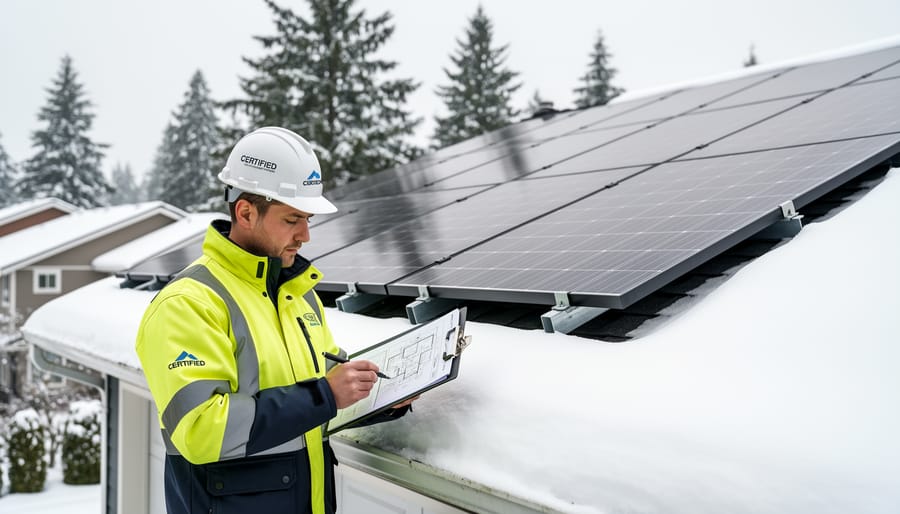
When assessing snow hazards for solar installations in British Columbia, qualified professionals examine several interconnected factors to ensure your system remains safe and productive through winter months.
Roof pitch plays a fundamental role in how snow accumulates and releases. Steeper roofs naturally shed snow more easily, while flatter surfaces may require additional design considerations. In BC’s diverse climate zones, what works in mild Vancouver differs significantly from snow-heavy Interior regions.
Roof orientation determines sun exposure patterns that influence natural snow melting. South-facing installations typically benefit from solar warming that helps clear snow, while north-facing sections may need extra attention during design planning.
Structural load capacity assessment ensures your roof can safely support combined weight from solar panels, mounting equipment, and accumulated snow. BC building codes provide baseline requirements, but proper evaluation considers your specific roof age, construction type, and condition.
Snow retention features prevent dangerous sliding snow or ice sheets. Strategically placed snow guards or rail systems protect people, property, and landscaping below while allowing controlled release. These features become particularly important on metal roofs or steep pitches common in mountain communities.
Wind patterns around your property affect snow distribution significantly. Prevailing winds can create drifts in certain areas while clearing others completely. Local terrain features like nearby hills, forests, or buildings create microclimates that influence accumulation patterns.
Historical weather data for your specific location provides context for design decisions. Examining snowfall records, extreme weather events, and temperature patterns helps installers prepare for worst-case scenarios rather than average conditions.
Surrounding terrain evaluation considers factors like tree coverage affecting shade and snow load, elevation differences, and exposure to valley winds or coastal weather systems. A qualified BC installer understands these regional variations and designs accordingly, giving you confidence that your solar investment accounts for realistic winter conditions.
Design Solutions That Handle BC’s Winter Weather
The good news? BC’s certified solar installers have developed proven strategies to handle our challenging winter conditions while keeping your system safe and productive.
Panel angle makes a significant difference in managing snow accumulation. In BC’s Interior and northern regions, installers typically mount panels at steeper angles—often 45 degrees or more—allowing snow to slide off naturally before it becomes hazardous. This approach proved effective during the winter of 2022 when a Kelowna homeowner’s properly angled system shed heavy snow overnight, while a nearby installation with a shallow tilt required manual clearing.
Snow guards and retention systems provide controlled release of accumulated snow. Rather than allowing large sheets to suddenly slide off, these devices break up snow into smaller, safer chunks. They’re especially important when panels are installed above walkways, driveways, or ground-level windows. Think of them as controlled avalanche prevention for your roof.
Structural reinforcement ensures your roof can handle both the solar equipment and increased snow loads. Professional installers conduct load calculations specific to your location’s snowfall patterns. In areas like Prince George or Terrace, where heavy snow is common, this might mean additional roof bracing or choosing lighter panel options that achieve the same energy output.
Strategic spacing between panel rows prevents snow from one row affecting another. Adequate gaps allow for natural shedding and easier maintenance access. This design consideration becomes crucial in areas receiving over 200 centimetres of annual snowfall.
Ground-mount systems offer an excellent alternative in high-risk zones. A farm near Kamloops switched to ground-mounted panels after roof concerns, gaining easier snow management access and the flexibility to adjust angles seasonally. These installations can be positioned away from buildings and designed with generous clearance for snow accumulation beneath.
The key takeaway? Winter weather doesn’t prevent successful solar installation—it simply requires thoughtful design tailored to your specific location and conditions.
Questions to Ask Your Solar Installer About Snow Risk
Before signing any solar installation contract, having an informed conversation with your installer about snow hazards protects your investment and ensures safety. Here are essential questions to guide that discussion:
Start by asking how they assess snow risk at your specific location. A qualified installer should conduct a detailed site evaluation that considers your property’s elevation, typical snowfall amounts, roof pitch, and potential avalanche zones. Request documentation of this assessment in writing.
Ask what design modifications they recommend for heavy snow conditions. This might include reinforced racking systems, increased tilt angles to encourage snow shedding, or strategic panel placement away from roof edges where snow accumulation creates hazards.
Inquire about their experience with winter installations in British Columbia. Request examples of similar projects in your region and how those systems have performed during heavy snow years. A reputable installer should readily share local success stories and provide references you can contact.
Question their warranty coverage related to snow damage. Understand what’s included and what circumstances might void protection. Also ask about maintenance recommendations for winter months and whether they offer seasonal inspection services.
Finally, request their emergency response plan. If snow buildup creates safety concerns or equipment damage, how quickly can they respond? What support do they provide for monitoring system performance during winter?
Document all responses and commitments in your contract. An installer who thoroughly addresses these questions demonstrates the expertise needed to handle BC’s unique winter challenges, giving you confidence in your solar investment year-round.
In British Columbia’s diverse climate zones—from coastal rain belts to interior snowpack regions—hazard snow assessment isn’t a luxury consideration. It’s a fundamental requirement for safe, effective solar installations. The difference between a system that performs reliably for 25+ years and one that causes property damage or safety concerns often comes down to thorough upfront risk evaluation.
As you’ve learned throughout this guide, hazard snow encompasses everything from sliding snow masses to ice dam formation and structural loading concerns. These risks vary significantly even within BC, which is why cookie-cutter approaches simply don’t work. What’s appropriate for a Victoria rooftop differs substantially from requirements in Prince George or Revelstoke.
The good news? You don’t need to become a snow engineering expert yourself. Working with certified solar installers who understand local conditions makes all the difference. Qualified professionals conduct comprehensive site assessments that consider your specific roof configuration, regional snowfall patterns, nearby structures, and ground-level hazards before designing your system.
Consider the experience of the Thompson family in Kamloops, whose installer identified potential snow sliding risks during assessment and incorporated appropriate guards—preventing what could have been a dangerous situation during their first winter. This proactive approach protected both their investment and their property.
Ready to move forward with confidence? Connect with Solar BC’s network of certified installers who prioritize thorough site risk assessments as standard practice. They’ll evaluate your property’s unique conditions, design systems that work with BC’s winter realities rather than against them, and ensure your solar investment delivers safe, reliable performance year-round. Contact us today to find the right installer for your project.