
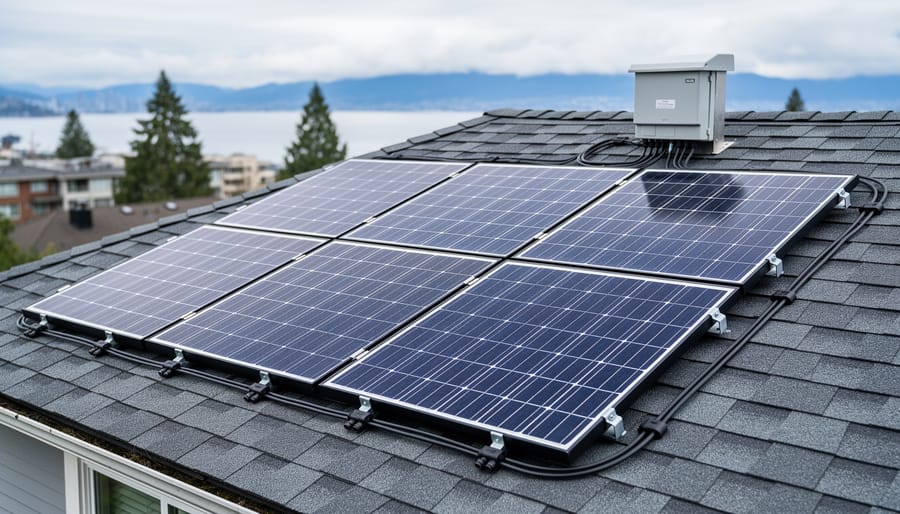
Connect your four solar panels by pairing two panels in series to boost voltage, then connecting those two pairs in parallel to maintain higher current output. This series-parallel configuration balances the system’s electrical characteristics, delivering optimal performance for medium-sized installations across British Columbia’s varied climate conditions.
This wiring approach solves a common challenge: achieving the right voltage for your inverter while maintaining sufficient current capacity. When you wire two panels in series, you double the voltage while keeping the current constant. Pairing two of these series strings in parallel then doubles your current output while maintaining that elevated voltage level.
For BC homeowners, this configuration proves particularly valuable. Consider a typical Vancouver home running a 48-volt battery system with four 300-watt panels. Series-parallel wiring delivers approximately 72 volts (reduced to 48V by the charge controller) at higher amperage than a purely series configuration, improving charging efficiency during our overcast winter months when every bit of production matters.
The setup also provides practical redundancy. If shading affects one panel, only half your array’s performance suffers, unlike a purely series arrangement where one shaded panel dramatically reduces total output. This matters greatly in BC’s forested areas where partial shading from surrounding trees occurs seasonally.
Understanding this configuration empowers you to optimize your solar investment, match your specific energy needs, and build confidence in your renewable energy journey. Whether you’re powering a cabin in the Kootenays or reducing grid dependence in Metro Vancouver, series-parallel wiring offers flexibility that pure series or parallel connections cannot match.
Understanding Series-Parallel Solar Panel Configuration
What Series Wiring Does for Your Panels
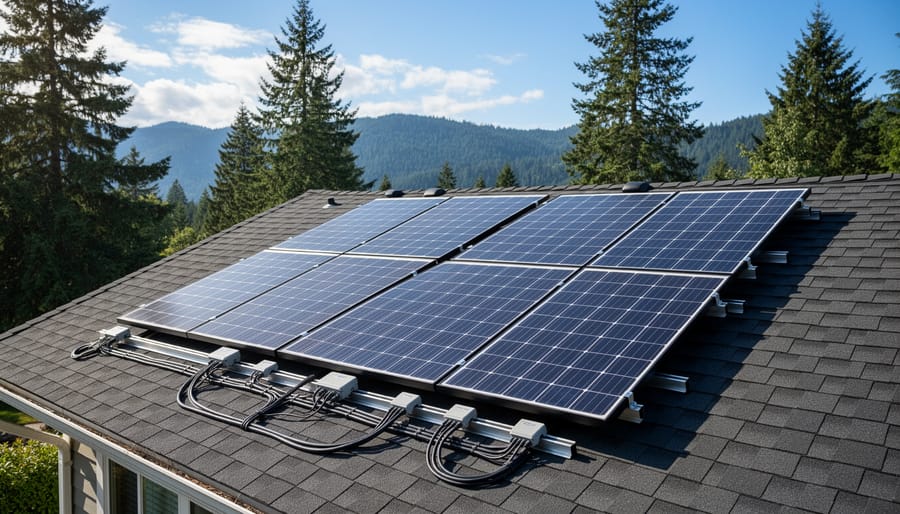
When you connect solar panels in series, you’re essentially linking them end-to-end, like adding batteries in a flashlight. This configuration takes the solar panel output voltage from each panel and adds them together, while the current stays the same.
Here’s a practical example: If you have four panels, each producing 40 volts, connecting two in series would give you 80 volts total. This higher voltage is particularly valuable for BC homeowners because it reduces energy loss over longer cable runs, which is common when panels are mounted away from inverters on larger properties.
Think of voltage like water pressure in a hose. Higher voltage means electricity flows more efficiently through your wiring, much like higher water pressure pushes water further with less effort. This becomes especially important during our overcast coastal days when every bit of efficiency counts.
The series connection is the first step in a series-parallel setup, giving you the voltage boost needed before combining panel strings in parallel for increased power output.
What Parallel Wiring Adds to the Mix
While series connections boost your voltage, parallel wiring takes a different approach by increasing your current, measured in amperes (amps). Think of it like adding more checkout lanes at a grocery store – the speed limit stays the same, but you can handle more flow.
When you wire solar panels in parallel, you connect all the positive terminals together and all the negative terminals together. The voltage stays at the level of a single panel, but the amperage multiplies. For example, if one panel produces 8 amps, two panels in parallel produce 16 amps, maintaining the same voltage throughout.
This matters especially during BC’s cloudier months. Parallel connections help your system continue producing usable power even when one panel is partially shaded – the unshaded panels keep contributing their full current. A Kelowna homeowner discovered this benefit firsthand when morning shade from nearby trees affected just one panel, yet their parallel-wired array maintained strong overall performance.
In a series-parallel configuration with four panels, you’re strategically combining both approaches: pairs wired in series increase voltage, then those pairs connect in parallel to boost current. This creates a balanced system that maximizes both power characteristics while maintaining resilience against shading and weather variations common in our diverse BC climate.
How the Two Work Together in Your System
A series-parallel configuration balances the benefits of both wiring methods, making it ideal for BC’s varied weather conditions. Here’s how it works in practice:
Start by connecting two panels in series. Wire the positive terminal of the first panel to the negative terminal of the second panel. This creates your first string, which doubles the voltage while keeping the current the same. For example, if each panel produces 30 volts, your series string now outputs 60 volts.
Next, create a second identical series string using your remaining two panels, following the same process.
Now comes the parallel connection: link the positive terminals from both strings together, and do the same with the negative terminals. This parallel connection keeps your voltage at 60 volts while doubling your current capacity.
Think of it like creating two water pipes (your series strings) and then combining them. You maintain strong water pressure (voltage) while increasing the flow rate (current). This setup helps your system perform reliably even when one string experiences partial shading from BC’s frequent cloud cover or surrounding trees. When one panel underperforms, the other series string continues generating power effectively, maximizing your energy production throughout the day.
Key Specifications That Matter for BC Installations
Voltage and Current Output You Can Expect
Let’s look at a practical example using typical residential solar panels you might install on a BC home. We’ll use 300-watt panels with these specifications: 36 volts and 8.33 amps each.
In a series-parallel configuration with 4 panels (2 strings of 2 panels each), here’s what you can expect:
When you wire 2 panels in series, their voltages add together while current stays the same. So each string produces 72 volts (36V + 36V) at 8.33 amps. When you connect your 2 strings in parallel, the voltage remains at 72 volts, but the current doubles to 16.66 amps (8.33A + 8.33A).
Your final output: 72 volts and 16.66 amps, delivering approximately 1,200 watts of power under ideal conditions. This balanced approach gives you enough voltage for most charge controllers while providing solid current output for faster battery charging or grid contribution.
For comparison, wiring all 4 panels in series would give you 144 volts at only 8.33 amps, while pure parallel wiring would produce just 36 volts at 33.32 amps. Neither extreme works as efficiently for typical home systems.
These calculations represent peak output under optimal sunlight. Real-world performance in BC will vary with weather, season, and shading. To understand your actual energy production throughout the year, you can calculate solar panel output based on your specific location and installation conditions.
Power Production in British Columbia’s Climate
When you connect four solar panels in a series-parallel configuration in British Columbia, you’re typically looking at a combined output of 1,200 to 1,600 watts under ideal conditions, assuming each panel produces 300-400 watts. However, BC’s unique climate means your actual power production will vary considerably throughout the year.
During summer months, particularly in the Interior and Okanagan regions, you can expect near-optimal performance with long daylight hours and clear skies. Coastal areas like Vancouver and Victoria, while receiving less intense sunshine, still benefit from extended summer days. Your four-panel system could generate 5-7 kWh daily during peak season, enough to power most household appliances throughout the day.
Winter presents different challenges. BC’s coastal regions experience significant cloud cover and shorter days, which can reduce output by 60-70%. The good news is that solar panels on cloudy days still produce electricity, just at reduced capacity. Interior regions often see better winter performance due to clearer skies and the bonus of light reflection from snow.
A local example from Kelowna shows a small business with this exact configuration generating approximately 1,800 kWh annually, with their series-parallel setup providing consistent voltage even during BC’s variable weather conditions. This reliability makes the configuration particularly valuable in our province, where weather patterns can shift rapidly and maintaining stable power output becomes essential for year-round energy independence.
The Real-World Advantages for BC Solar Users
Better Performance When Shade Strikes
One of the biggest advantages of connecting 4 solar panels in a series-parallel configuration is how it handles shade. Many British Columbia properties feature beautiful mature trees or are situated where buildings cast shadows during certain times of day. This makes shade resilience a practical consideration for local solar installations.
In a pure series setup, when shade hits even one panel, it acts like a bottleneck, dramatically reducing power output from the entire string. Think of it like a garden hose with a kink—the flow drops significantly. With series-parallel wiring, the impact is more contained. If shade covers one panel in your configuration, only half your array is affected because you have two parallel strings working independently.
For example, a homeowner in Victoria with morning shade from a neighboring cedar tree found their series-parallel system maintained about 70% output during shaded periods, compared to less than 40% with their previous all-series configuration. This means more consistent energy production throughout the day, especially during BC’s variable weather patterns.
While no configuration completely eliminates shade losses, series-parallel offers a practical middle ground that balances efficiency with real-world performance, making it particularly suitable for residential properties where perfect sun exposure isn’t always possible.
Matching Your Inverter’s Sweet Spot
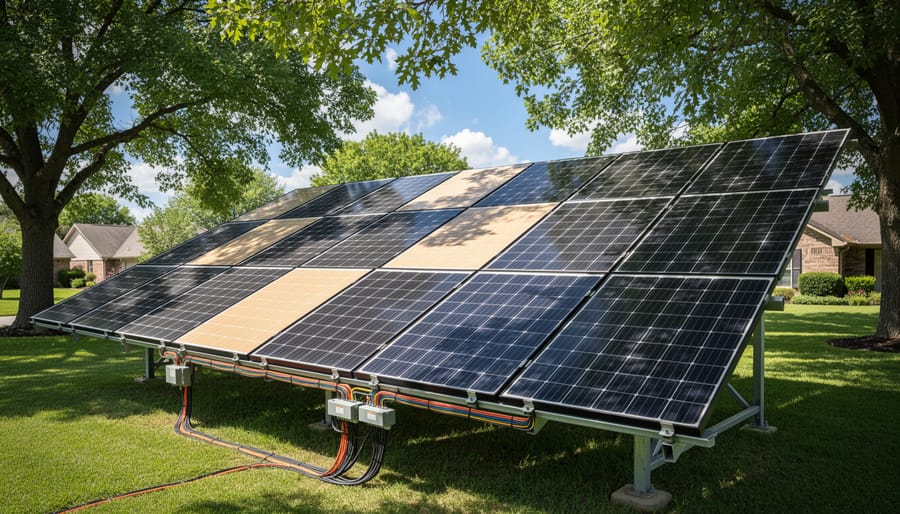
Your inverter has an optimal operating range—a “sweet spot” where it converts DC power from your panels to AC power most efficiently. When your voltage or current sits outside this range, you’re leaving energy savings on the table.
The series-parallel configuration with four panels gives you flexibility to match your inverter’s specifications. By wiring two panels in series (doubling voltage) and connecting two of these series strings in parallel (increasing current), you create a balanced output that many residential inverters prefer. For example, if your panels produce 40 volts each, your series pairs generate 80 volts—right in the comfortable range for most grid-tie inverters used in BC homes.
This matters especially during Vancouver’s cloudy winter mornings when panel output drops. Your series connection maintains higher voltage levels, helping your inverter start up earlier and shut down later in the day. Meanwhile, the parallel connection provides enough current to keep your system producing meaningful power.
For those exploring off-grid solar systems, this configuration also helps match battery bank voltages, whether you’re running a 24V or 48V setup.
Before finalizing your design, check your inverter’s datasheet for its maximum power point tracking (MPPT) voltage range. Your series-parallel configuration should deliver voltage that falls comfortably within those boundaries throughout the day.
Built-In System Redundancy
One of the smartest features of a series-parallel configuration is its built-in backup system. Think of it as an insurance policy for your solar investment. When you wire four panels this way, creating two pairs in series that connect in parallel, you’re essentially building redundancy into your system.
Here’s how it works in practice: if one panel in a series string underperforms due to shading, debris, or damage, only that string experiences reduced output. The second parallel string continues operating at full capacity. This means you still generate roughly 50% of your total system power rather than losing everything. For BC homeowners dealing with occasional tree shade or coastal weather conditions, this resilience matters.
Consider a recent example from a Nanaimo small business. When a fallen branch partially shaded two panels on one string during a winter storm, their series-parallel setup kept half their system running while repairs were arranged. They maintained enough power for essential operations without emergency calls to installers.
This configuration also helps during maintenance. You can safely work on one string while the other continues producing power, minimizing downtime. For businesses counting on consistent energy production or homes relying on solar during BC Hydro outages, this backup capability provides genuine peace of mind without requiring expensive battery systems or complex monitoring equipment.
Best Applications for This Configuration
Residential Rooftops with Limited Space
For typical British Columbia homes with limited roof space, a 4-panel series-parallel configuration offers an ideal entry point into solar energy. This compact setup fits comfortably on smaller rooftops while still generating meaningful power savings. The configuration’s balanced design ensures reliable performance even when partial shading from nearby trees or chimneys affects one panel.
Consider the example of the Chen family in Victoria, who installed four panels on their 1,200 square foot bungalow. Their series-parallel system generates enough electricity to offset 30% of their annual energy costs while occupying just 70 square feet of roof space. The setup proved particularly valuable during BC’s long summer days, when their system runs at peak efficiency.
Before moving forward, consult with a professional installation team to assess your roof’s orientation and shading patterns. They can determine if this configuration maximizes your available space and whether your electrical panel supports the connection.
Off-Grid Cabins and Remote Properties
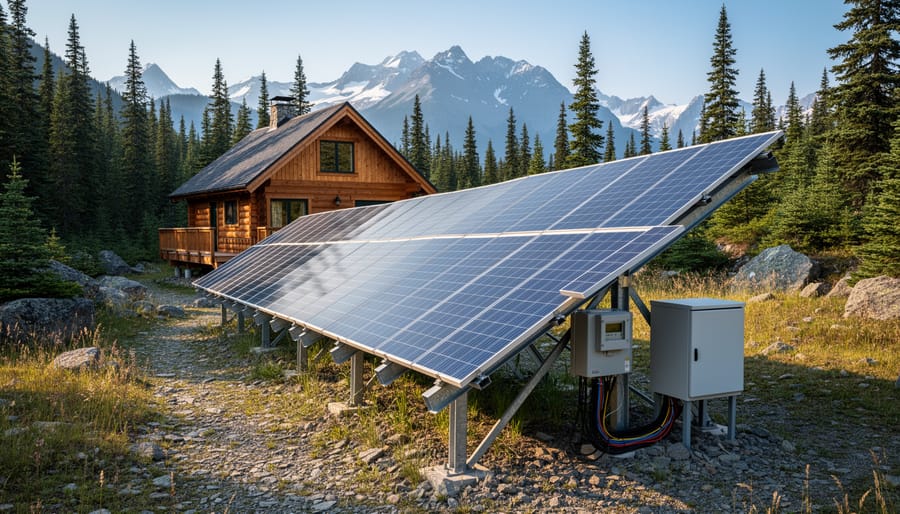
BC’s vast wilderness makes it perfect for remote cabins and recreational properties, but powering these getaways presents unique challenges. A 4-panel series-parallel configuration offers exceptional reliability for off-grid locations where system failure isn’t just inconvenient—it means no power at all.
Consider the typical BC cabin scenario: partially shaded by towering cedars and firs, with unpredictable weather patterns. A series-parallel setup ensures that even when one panel underperforms due to shade or snow coverage, your cabin maintains power for essentials like lighting, water pumps, and communication devices.
Local cabin owner Maria from the Kootenays shared her experience: “After switching to series-parallel wiring, our weekend retreat stayed powered through shoulder seasons when we previously struggled. The balanced voltage meant our battery bank charged efficiently even on cloudy days.”
This configuration also simplifies expansion. Start with four panels to meet basic needs, then add another series-parallel string as your power requirements grow. For remote properties where professional service calls are costly and time-consuming, this flexibility and built-in redundancy make series-parallel wiring the practical choice for sustainable off-grid living.
Small Business and Workshop Installations
For small businesses and workshops across BC, the 4-panel series-parallel configuration offers an ideal starting point for solar adoption. This setup provides enough power for essential operations like lighting, computers, and small tools while keeping initial investment manageable. A Vancouver Island woodworking shop, for example, uses this configuration to run their workshop lighting and battery charging stations, reducing monthly electricity costs by approximately 30%.
What makes this arrangement particularly attractive for small commercial applications is its scalability. You can start with four panels to offset daytime energy use, then expand by adding more series-parallel groups as your business grows or energy needs increase. This modular approach lets you spread costs over time while immediately benefiting from solar power. The balanced voltage and current output also works well with standard commercial inverters, simplifying installation and reducing equipment costs. Many BC small businesses find this configuration strikes the perfect balance between meaningful energy production and accessible entry into renewable energy.
What You Need to Know Before Installation
Working with Certified Installers
While researching series-parallel configurations demonstrates initiative, professional installation remains essential for both safety and system performance. Working with electricity and rooftop equipment carries serious risks, and improper wiring can damage your panels or void manufacturer warranties. In British Columbia, certified installers understand local building codes, snow load requirements, and the specific permitting processes required by municipalities and BC Hydro.
Solar BC maintains a network of qualified installers throughout the province who specialize in residential and commercial systems. These professionals can verify whether a four-panel series-parallel setup suits your roof orientation, shading conditions, and energy needs. They’ll also ensure your system integrates properly with BC Hydro’s net metering program, maximizing your long-term savings. Many BC homeowners have discovered that professional installation costs are offset by avoiding costly mistakes and ensuring optimal energy production from day one. Request quotes from multiple certified installers to compare approaches and pricing while maintaining the quality your investment deserves.
Understanding Your System’s Compatibility
Before connecting your 4 panels in a series-parallel configuration, take a moment to verify compatibility with your existing equipment. This quick checklist will help ensure everything works together safely and efficiently.
First, check your inverter’s voltage window. Your series-parallel setup will produce a specific voltage range that must fall within what your inverter accepts. Next, confirm your charge controller can handle the combined current from your parallel strings—this is particularly important during BC’s bright summer days when panels produce peak output.
Review the maximum input current rating on all components, including wiring and fuses. Your configuration will split current between strings, but you’ll need to ensure your system can manage the total output. Also verify that your panels have matching specifications—mixing different wattages or brands can reduce overall efficiency.
Finally, consult your equipment manuals for any manufacturer-specific requirements. Many BC homeowners have found that spending 20 minutes on this compatibility check saves hours of troubleshooting later. When in doubt, reach out to local solar professionals who understand our regional conditions and can provide personalized guidance for your specific setup.
Calculating Your Solar Savings
Understanding your return on investment with a 4-panel series-parallel setup starts with a few simple calculations. First, determine your system’s total output by multiplying your panel wattage by four, then factor in BC’s average solar hours and your current electricity rate. Most households in British Columbia see payback periods between 10-15 years, depending on their energy usage and available incentives.
To make this easier, we’ve developed interactive calculation tools that factor in your specific location, roof angle, and local utility rates. Simply input your monthly energy bill and system specifications to get a personalized savings estimate. Remember that BC’s net metering programs allow you to sell excess power back to the grid, potentially accelerating your ROI. Many Vancouver Island residents we’ve worked with report monthly savings of $40-80 with similar configurations, making this an accessible entry point into solar energy without overwhelming upfront costs.
Connecting four solar panels in a series-parallel configuration offers BC homeowners and businesses an ideal balance of power output and system reliability. This setup protects your investment against the shading challenges common in our region, whether from coastal fog, mountain shadows, or nearby trees. By combining the voltage benefits of series wiring with the current stability of parallel connections, you create a flexible system that continues generating power even when one panel underperforms.
The series-parallel approach makes particular sense for British Columbia’s diverse climate conditions and varied installation environments. From Vancouver Island to the Interior, this configuration adapts to your specific site conditions while maintaining consistent energy production throughout the year.
Ready to explore how a series-parallel solar system could work for your property? Connect with certified installers through Solar BC who understand local conditions and can design a system tailored to your needs. Take advantage of available online calculators to estimate your potential energy savings and see how quickly your investment can pay off. The path to energy independence starts with understanding your options and taking that first step toward a sustainable future for your home or business.