
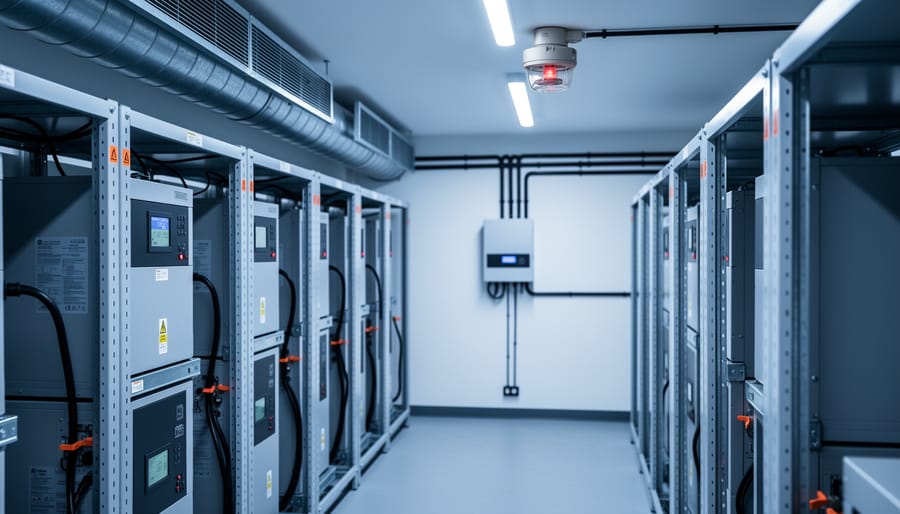
Inspect your battery room monthly for adequate air circulation—stagnant air around battery storage systems creates explosive hydrogen gas pockets that can ignite from a single spark. Install continuous mechanical ventilation that exchanges air at minimum rates of 1 cubic foot per minute per square foot of floor area, positioning exhaust vents within 12 inches of the ceiling where hydrogen naturally accumulates. Mount hydrogen gas detectors at ceiling level with audible alarms set to trigger at 25% of the lower explosive limit, ensuring early warning before concentrations reach dangerous levels.
British Columbia’s electrical codes require specific ventilation standards for battery installations, yet many homeowners with solar setups overlook this critical safety component. A Richmond family discovered their sealed battery enclosure had reached hazardous hydrogen levels only during a routine inspection—their system had been operating unsafely for eight months. Proper ventilation prevents this scenario by continuously removing gases produced during normal charging cycles.
Temperature control matters equally. Battery rooms exceeding 25°C reduce battery lifespan by up to 50% while increasing off-gassing rates. Your ventilation system should maintain temperatures between 15-25°C year-round, which protects your investment and ensures safe operation.
Local building inspectors consistently flag inadequate battery room ventilation as a compliance failure. Address this proactively by documenting your ventilation specifications, maintaining inspection logs, and connecting with certified installers who understand BC’s specific requirements. Your safety—and your family’s—depends on getting these fundamentals right from day one.
The Hidden Dangers in Your Battery Room
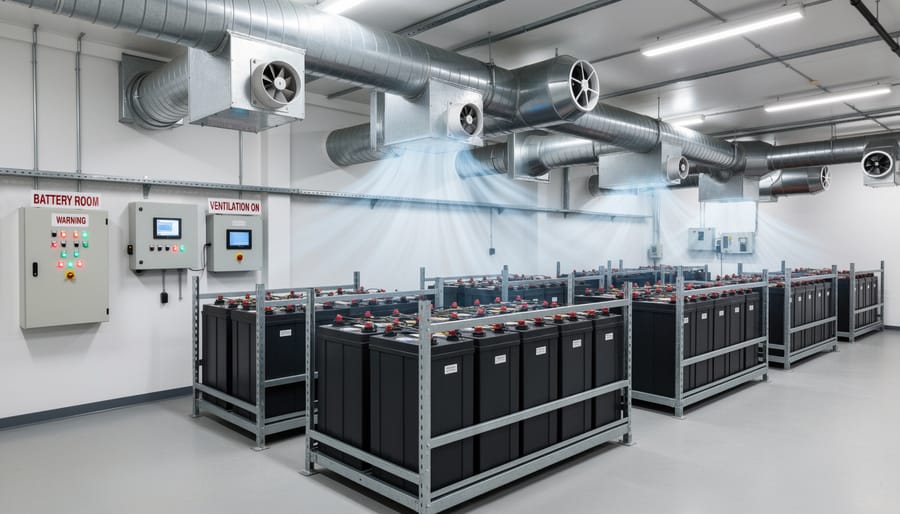
Hydrogen Gas: The Invisible Threat
During the charging process, certain battery types—particularly flooded lead-acid batteries—naturally release hydrogen gas through a chemical reaction. While modern lithium-ion systems produce minimal hydrogen, lead-acid batteries commonly used in off-grid and backup solar installations can generate significant amounts. Hydrogen becomes explosive when it accumulates to concentrations between 4% and 75% in air, creating a genuine safety concern in enclosed battery rooms.
The risk isn’t theoretical. In 2019, a warehouse in Surrey experienced a battery room fire when hydrogen accumulated due to inadequate ventilation, damaging equipment and disrupting operations for weeks. Similarly, industrial facilities across North America have documented incidents where hydrogen buildup led to flash fires during routine maintenance.
The good news is these situations are entirely preventable with proper ventilation design. Understanding your battery type and charging patterns helps determine appropriate ventilation requirements. The key is ensuring continuous air circulation that keeps hydrogen concentrations well below the 4% threshold. By addressing ventilation proactively, BC solar system owners can safely enjoy the energy independence batteries provide while protecting their investment and property.
Heat Buildup and Battery Performance
When battery storage systems operate without adequate ventilation, heat becomes a silent performance thief. Batteries generate thermal energy during both charging and discharging cycles, and in enclosed spaces, this heat accumulates quickly. Elevated temperatures directly impact battery efficiency and lifespan, reducing their capacity to store energy effectively and accelerating wear on internal components.
In British Columbia’s climate, the challenge varies seasonally. During summer months in the Interior, battery rooms can experience significant heat buildup, while coastal areas face humidity concerns year-round. Without proper airflow, temperatures inside battery enclosures can exceed manufacturer specifications, sometimes reaching levels that trigger thermal runaway—a dangerous chain reaction that poses fire risks.
Poor ventilation also affects your return on investment. Batteries operating consistently above their optimal temperature range (typically 15-25°C) lose approximately 20% of their lifespan for every 10°C increase. This means a battery system designed to last 15 years might need replacement after just 10 years, significantly impacting your energy independence goals. Proper ventilation maintains stable temperatures, protects your investment, and ensures your solar battery system performs reliably when you need it most.
Essential Ventilation Requirements for Battery Storage Rooms
Natural vs. Mechanical Ventilation: What Works Best
When planning your battery room ventilation, you’ll need to choose between natural (passive) and mechanical (powered) systems. Each approach has its place in BC installations, depending on your specific situation.
Natural ventilation relies on strategic placement of vents to create airflow through temperature differences and air pressure. This method costs nothing to operate and requires minimal maintenance. It works well for smaller battery banks in spaces with good cross-ventilation potential, such as ground-level rooms with exterior walls. A Kelowna homeowner with a modest 10 kWh battery system successfully uses natural ventilation by positioning low intake vents on the cooler north side and high exhaust vents on the warmer south side, creating continuous airflow without electricity.
However, natural ventilation has limitations. It depends on weather conditions and may not provide consistent airflow during calm days or extreme temperatures. For larger battery installations or rooms without ideal vent placement, this approach might not meet safety requirements.
Mechanical ventilation uses fans to actively move air, ensuring reliable hydrogen dilution regardless of weather. This is essential for commercial installations or homes with battery banks exceeding 15 kWh. A Vancouver Island community centre installed mechanical ventilation for their 30 kWh battery system, using a timer-controlled exhaust fan that runs continuously during charging cycles.
The investment in mechanical systems (typically $300-$800 for residential installations) provides peace of mind through consistent performance. Consider mechanical ventilation if your battery room lacks natural airflow pathways, your system is large, or local building codes require it. Your certified installer can assess which approach best suits your setup and ensures compliance with BC safety standards.
Calculating Your Ventilation Needs
Determining the right ventilation for your battery room doesn’t require an engineering degree, but it does need careful attention to a few key factors. The goal is simple: keep hydrogen concentrations well below dangerous levels while maintaining a comfortable, safe environment.
Start with your battery type and capacity. Lead-acid batteries, commonly used in off-grid systems, produce more hydrogen during charging than lithium-ion batteries. For a typical residential solar battery setup in BC, you’ll need to calculate based on your total amp-hour capacity and charging rate.
Here’s a practical approach: Most safety standards recommend ventilation rates that provide at least one complete air change per hour during normal operation, increasing to four or more changes per hour during active charging. To calculate your minimum cubic feet per minute (CFM) requirement, multiply your room volume in cubic feet by the number of air changes needed, then divide by 60 minutes.
For example, a 10-foot by 8-foot room with 8-foot ceilings (640 cubic feet) needing four air changes hourly would require approximately 43 CFM of ventilation capacity. However, this is just a baseline. Consider additional factors like how often your batteries charge, local temperature variations throughout BC’s seasons, and whether your system charges during peak sun hours or overnight.
Room size matters beyond just calculations. Smaller spaces concentrate hydrogen more quickly, while larger rooms with good natural airflow might need less mechanical assistance. Position intake vents low and exhaust vents high, as hydrogen rises naturally.
Many BC homeowners find success starting with slightly higher ventilation rates than minimum requirements, providing an extra safety margin. When in doubt, consult with your solar installer about your specific configuration—they can help verify your calculations against manufacturer specifications and local building codes.
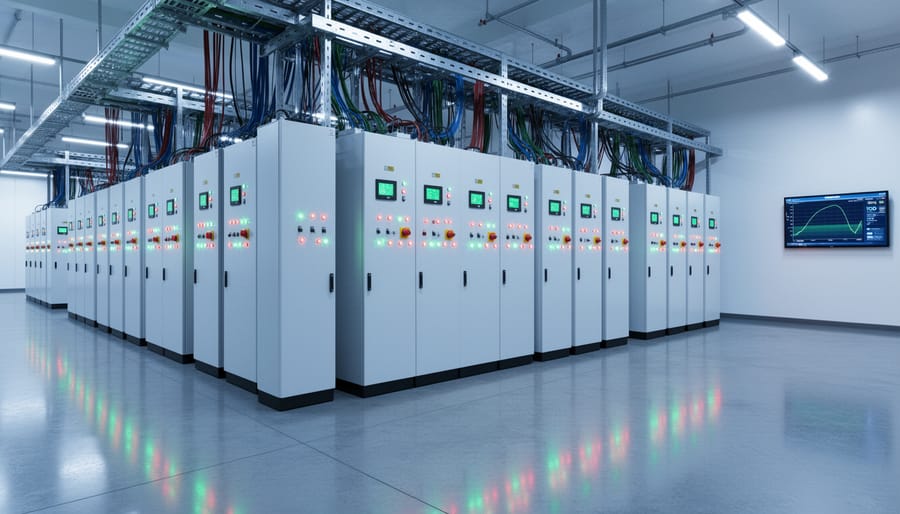
Designing a Safe Battery Room Ventilation System
Placement Matters: Where to Install Vents
Proper vent placement isn’t just about installing fans—it’s about working with the natural behavior of the gases your batteries produce. Understanding this helps create a safer, more effective ventilation system.
Hydrogen gas, the primary concern in battery rooms, is extremely light and rises quickly to the ceiling. This means your exhaust vents should always be positioned at the highest practical point in the room, typically within 12 inches of the ceiling. Think of it like releasing a helium balloon—it naturally seeks the top. By placing exhaust vents high, you’re capturing hydrogen before it can accumulate to dangerous levels.
Conversely, your intake vents belong near the floor, ideally within 12 inches of ground level. This creates a natural circulation pattern called “cross-ventilation,” where fresh air enters low, sweeps across the battery area picking up any released gases, and carries them upward and out through the exhaust. Picture a gentle river flowing through your battery room, continuously refreshing the air.
In British Columbia’s varied climate, consider seasonal factors too. Coastal communities might need additional moisture protection around vents, while interior regions should account for temperature extremes that could affect airflow. Position vents away from prevailing wind directions that might disrupt the intended airflow pattern during BC’s stormy winter months.
A local Kelowna solar installation demonstrates this principle beautifully: their battery room features low intake vents on the north wall and high exhaust vents on the south, creating optimal cross-ventilation while minimizing weather exposure. This thoughtful placement ensures year-round safety regardless of outdoor conditions.
Selecting the Right Ventilation Equipment
Choosing appropriate ventilation equipment for your battery room ensures both safety and system longevity. The right setup depends on your battery type, room size, and local building codes.
Start with fans designed specifically for battery rooms. For lithium-ion batteries, standard ventilation fans typically suffice since these batteries produce minimal off-gassing under normal conditions. However, if you’re storing lead-acid batteries that generate hydrogen gas, explosion-proof fans rated for hazardous locations are essential. These fans prevent sparks that could ignite flammable gases. A Vancouver-based solar installer recently shared how upgrading to explosion-proof equipment helped a client meet WorkSafeBC requirements and provided peace of mind.
Calculate your required air exchange rate based on battery capacity and room volume. Most jurisdictions, including British Columbia, require sufficient airflow to keep hydrogen concentrations below one percent. Your certified installer can perform this calculation, but as a general guideline, battery rooms need 4-12 air changes per hour depending on battery size.
Ductwork should be corrosion-resistant since battery rooms can have acidic conditions. PVC or coated metal ducts work well in these environments. Position intake vents low and exhaust vents high, as hydrogen rises and needs to be expelled from the ceiling area.
Hydrogen sensors add an important safety layer by triggering alarms or activating additional ventilation when gas levels approach unsafe thresholds. While not always mandatory for small residential systems, they’re recommended for larger installations and commercial applications.
Connect with local solar professionals familiar with BC’s specific requirements to ensure your ventilation system meets all safety standards while optimizing your renewable energy investment.
Fire Readiness: Beyond Ventilation
Detection and Monitoring Systems
Early detection systems are your first line of defense in battery room safety, providing crucial warning before small issues become serious hazards. Think of these systems as vigilant guardians working around the clock to protect your investment and ensure peace of mind.
Hydrogen gas detectors are essential for any battery storage space. During charging, batteries naturally release small amounts of hydrogen gas, which becomes dangerous when concentrations reach 4% in air. Modern hydrogen sensors trigger alarms well before reaching hazardous levels, typically at 1% concentration. These detectors should be installed near the ceiling where hydrogen naturally accumulates, given its lighter-than-air properties.
Temperature sensors complement gas detection by identifying overheating situations that could indicate charging problems or failing batteries. A sudden temperature spike often signals trouble before visible signs appear. Position these sensors close to battery banks for accurate readings.
Smoke detectors remain important despite hydrogen being the primary concern. They catch issues like electrical fires from wiring problems or malfunctioning equipment before they spread.
Consider integrated monitoring systems that combine all these sensors into one dashboard, often accessible through smartphone apps. Many BC homeowners with solar battery systems appreciate receiving instant alerts while away from home, allowing quick response or remote system shutdown if needed.
A Victoria homeowner recently shared how their monitoring system alerted them to a minor ventilation fan failure on a Saturday evening. The early warning allowed them to increase temporary ventilation and schedule repairs Monday morning, preventing any safety concerns and avoiding a costly emergency service call. This real-world example demonstrates how proper detection systems transform potential emergencies into manageable maintenance tasks.
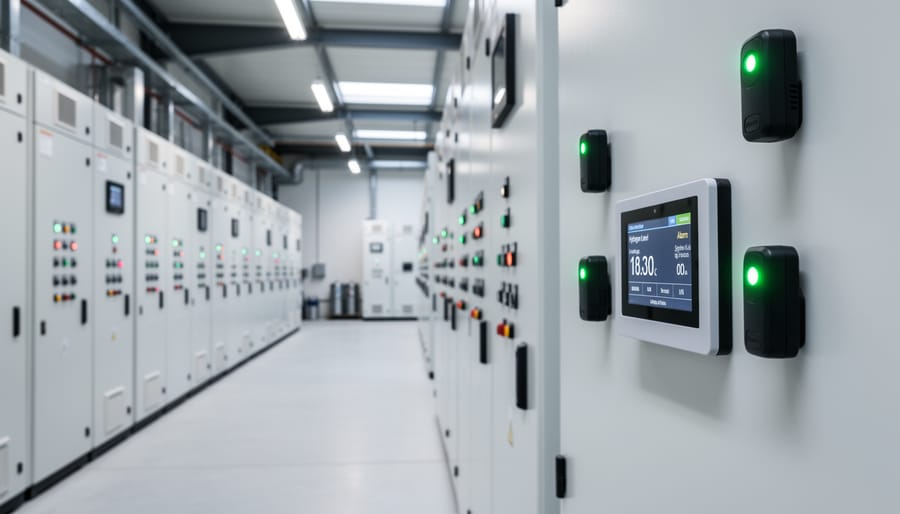
Fire Suppression and Emergency Response
Battery fires require specialized response protocols that differ significantly from conventional fires. Understanding proper fire suppression methods and emergency procedures is essential for anyone operating battery energy storage systems in British Columbia.
Class D fire extinguishers are the appropriate choice for lithium-ion battery fires, as they’re specifically designed to handle combustible metals and high-temperature chemical reactions. Standard ABC extinguishers may be ineffective or even dangerous when used on battery fires. Many BC facilities also install automatic fire suppression systems that use aerosol agents or water mist technology specifically calibrated for battery storage areas. When selecting fire suppression equipment, consult with a certified fire safety professional familiar with energy storage systems to ensure you have the right tools for your specific battery type.
Your emergency shutdown procedure should be clearly documented and posted in visible locations near battery storage areas. This includes identifying the main disconnect switch, establishing communication protocols with emergency responders, and designating trained personnel who can safely initiate shutdown sequences. Practice these procedures regularly with your team to ensure everyone responds confidently during an actual emergency.
Coordination with your local fire department is a critical but often overlooked step. Schedule a site visit to familiarize firefighters with your battery system layout, ventilation infrastructure, and shutdown procedures. Fire Chief Sarah Morrison from Kelowna Fire Department notes that advance knowledge of battery installations helps crews respond more safely and effectively. Provide your fire department with site plans, battery specifications, and emergency contact information. This proactive collaboration protects both your investment and the first responders who would assist during an incident, strengthening community safety across BC’s growing renewable energy landscape.
Real-World Success: Battery Safety Done Right in BC
When theory meets practice, BC homeowners and businesses have proven that proper battery room ventilation isn’t just about compliance—it’s about peace of mind and long-term performance.
Take the example of a Kelowna-based organic winery that installed a 30 kWh lithium-ion battery system in 2021. Working with their certified installer, they converted an existing utility room into a dedicated battery space. The key to their success? A simple but effective cross-ventilation system with intake vents positioned low on the north wall and exhaust fans near the ceiling on the opposite side. They also installed a basic hydrogen sensor connected to their alarm system. Two years later, the system runs flawlessly, and the facility manager reports that quarterly inspections consistently show optimal conditions. Their practical lesson: investing an extra $800 in proper ventilation during installation saved potential headaches and insurance complications down the road.
Similarly, a Vancouver Island community center housing a larger 50 kWh system opted for a mechanical ventilation approach with automatic controls. Their battery room includes continuous exhaust fans rated for six air changes per hour, temperature monitoring, and a dedicated emergency shutoff accessible from outside the room. The facility director emphasizes that working closely with their installer to understand maintenance requirements made all the difference. They schedule quarterly filter cleanings and annual professional inspections, treating battery room maintenance as routine as their solar panel checkups.
Both cases demonstrate that successful battery safety doesn’t require complicated solutions. Clear planning during installation, appropriate ventilation for your system size, and consistent maintenance create safe, reliable energy storage. These BC examples show that when you prioritize safety from the start, your solar investment delivers confidence along with clean energy.
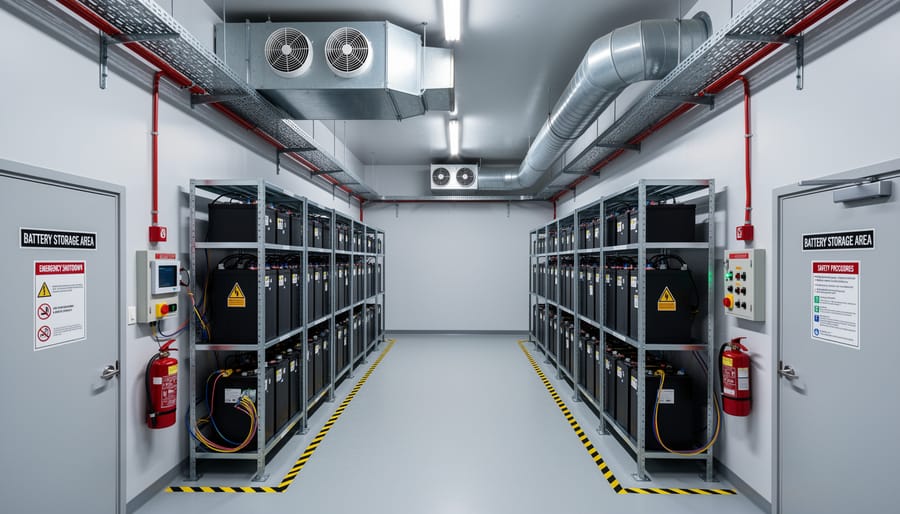
Your Battery Room Safety Checklist
Whether you’re setting up a new battery storage system or evaluating your existing installation, this practical checklist will help ensure your space meets essential safety standards. Take a few minutes to walk through your battery room with these action items in mind.
Start with ventilation basics. Check that your battery room has adequate airflow—either natural ventilation through vents positioned at both floor and ceiling levels, or mechanical ventilation with proper exhaust fans. Confirm that air can flow freely without obstructions blocking vents or creating stagnant pockets where gases might accumulate.
Next, inspect your monitoring systems. Verify that hydrogen gas detectors are installed and functioning, with alarm thresholds set appropriately. Test these detectors monthly and replace sensors according to manufacturer recommendations. Ensure temperature monitoring is in place, as excessive heat indicates potential ventilation problems.
Review your physical setup. Batteries should sit on non-conductive stands or racks with adequate spacing between units for air circulation. Look for proper electrical connections without corrosion or loose terminals that could generate excess heat. Confirm that emergency shutoff switches are clearly marked and accessible.
Check compliance documentation. Keep records of your ventilation system specifications, maintenance logs, and any required permits. British Columbia facilities should verify alignment with local building codes and fire safety regulations.
Finally, establish a maintenance schedule. Plan quarterly visual inspections, annual professional assessments, and immediate responses to any alarm triggers. Many BC homeowners working with certified installers have found that systematic checks prevent small issues from becoming costly emergencies, giving them peace of mind while maximizing their solar investment’s safety and longevity.
Investing in proper battery room ventilation and fire readiness measures isn’t just about meeting code requirements—it’s about protecting your investment, ensuring the longevity of your solar energy system, and gaining genuine peace of mind. A well-ventilated battery storage space reduces degradation, maintains optimal performance, and significantly lowers safety risks for your property and everyone in it.
British Columbia’s solar energy community continues to grow, and with that growth comes a collective responsibility to adopt best practices that keep our installations safe and efficient. Whether you’re operating a residential system or managing commercial battery storage, taking proactive steps now prevents costly emergencies later.
If you’re unsure about your current setup or planning a new installation, connect with certified solar installers in BC who understand local regulations and climate considerations. They can conduct a thorough assessment of your ventilation needs, recommend appropriate upgrades, and ensure your system meets all safety standards.
Your next steps are straightforward: schedule a ventilation assessment, review your fire safety equipment, and document your maintenance schedule. These simple actions demonstrate your commitment to responsible solar energy adoption while protecting your investment for years to come.
By prioritizing safety alongside sustainability, you’re contributing to a thriving renewable energy future in British Columbia—one that’s built on solid foundations of knowledge, preparation, and community responsibility.