
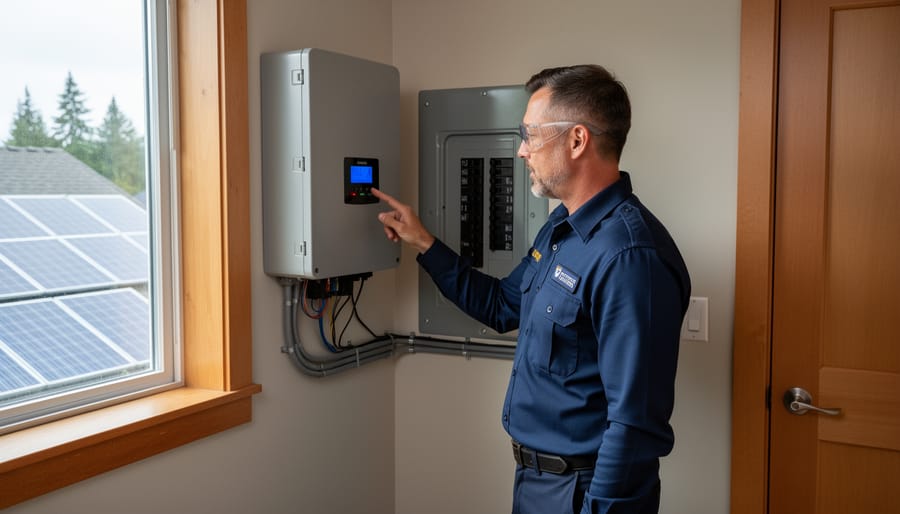
Schedule your electrical inspection before installing solar panels to avoid costly reinstallation. BC’s electrical safety regulations require a qualified electrical inspector to verify your solar system meets provincial standards before connecting to the grid. This mandatory step protects your investment, ensures your family’s safety, and prevents insurance complications down the road.
Understand that inspections happen in two phases for most solar installations. The rough-in inspection occurs after mounting and wiring but before final connections, allowing inspectors to verify proper installation techniques. The final inspection confirms everything functions correctly and complies with the BC Electrical Code. Book both inspections early, as delays of two to three weeks are common during peak construction seasons.
Prepare comprehensive documentation before inspection day. Gather your electrical permit, system design plans, equipment certifications, and installation photos. Inspectors need to see panel specifications, inverter details, and proof that all components are CSA-approved for Canadian use. Missing paperwork causes 60% of first-time inspection failures in BC, creating frustrating delays and additional fees.
Work exclusively with certified installers familiar with BC’s specific requirements. Local electrical regulations vary between municipalities, and experienced professionals know exactly what inspectors expect. They’ll handle permit applications, arrange inspection appointments, and address any concerns that arise. This expertise typically reduces your total project timeline by three to four weeks compared to DIY approaches, getting your system producing clean energy faster while ensuring complete compliance with provincial safety standards.
What Home Electrical Inspections Really Mean for BC Solar Homeowners
When you’re adding solar panels to your BC home, electrical inspections become a key checkpoint in your journey toward clean energy. Think of these inspections as a safety net that protects your investment, ensures your system performs optimally, and confirms everything meets British Columbia’s rigorous electrical standards.
For solar homeowners, you’ll typically encounter three types of inspections. A pre-installation inspection verifies your home’s existing electrical infrastructure can support solar panels. This assessment examines your service panel capacity, wiring condition, and grounding systems. Many BC homeowners discover during this stage that their older homes need panel upgrades to safely accommodate solar, which actually prevents future problems and increases property value.
The final inspection happens after your solar installation is complete but before your system can connect to BC Hydro’s grid. An inspector will verify that all components meet the Canadian Electrical Code, including proper inverter installation, disconnect switches, and grounding. This inspection is your official green light to start generating clean energy.
Upgrade inspections come into play if your electrical panel needs modernization before solar installation. About 40 percent of homes built before 1990 in BC require some level of electrical upgrade to support solar systems safely.
Here’s a practical example: The Chen family in Richmond wanted to install a 6kW solar array but learned their 100-amp service panel needed upgrading to 200 amps. While this added upfront costs, it made their home safer, increased resale value, and allowed them to install their desired system size. Their inspector became a helpful resource, answering questions and ensuring everything was done right the first time.
Understanding these inspection types helps you plan realistically and budget appropriately for your solar project.
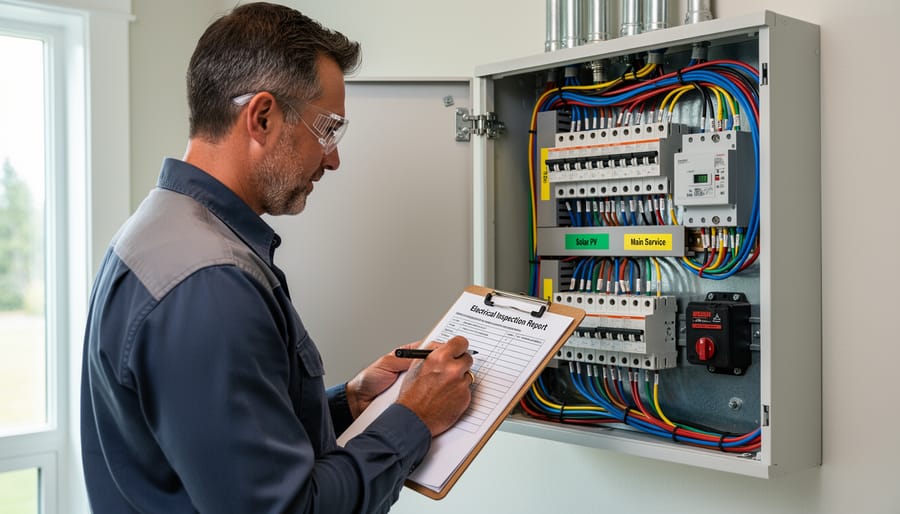
Understanding BC’s Electrical Permitting Process for Solar Installations
When You Need an Electrical Permit in BC
In British Columbia, you’ll need an electrical permit anytime you make changes to your home’s electrical system. This is especially important for green energy upgrades that are becoming increasingly popular across the province.
Solar panel installations always require an electrical permit before work begins. This applies whether you’re installing a small residential system or a larger setup for your business. The permit ensures your solar array connects safely to your home’s electrical system and the grid.
If you’re adding battery storage systems to complement your solar panels, these also require separate electrical permits. The inspection process verifies that your battery backup integrates properly with your existing electrical infrastructure.
Electric vehicle charger installations represent another common scenario requiring permits. Whether you’re installing a Level 2 home charger in your garage or adding multiple charging stations at your workplace, BC regulations require proper permitting and inspection.
The good news is that obtaining permits protects your investment. A recent Vancouver homeowner discovered faulty wiring during their solar installation inspection, preventing potential fire hazards and ensuring their insurance coverage remained valid. Think of permits as your safety checkpoint, not a roadblock to going solar.
The Inspection Timeline: What to Expect
Understanding the timeline helps you plan your solar installation smoothly. Here’s what BC homeowners typically experience:
The process begins when your solar installer submits a permit application to your local authority, which usually takes 2-4 weeks for review and approval. During this time, building officials verify that your installation plans meet BC Building Code and electrical safety standards.
Once your permit is approved and installation is complete, you’ll schedule the actual inspection. Most municipalities in BC offer inspection appointments within 5-10 business days, though this can vary by location and season. The inspection itself typically takes 30-60 minutes, depending on your system’s complexity.
If everything passes, you’ll receive approval immediately or within 1-2 business days. The Maple Ridge family who installed a 6kW solar array last spring found their entire process—from permit submission to final approval—took just under six weeks, right on schedule for their summer energy production goals.
Keep in mind that inspection timelines can extend during busy construction seasons or if corrections are needed. Planning for 6-8 weeks total gives you a comfortable buffer. Your solar installer will coordinate most of these steps, making the process straightforward while ensuring your system meets all safety requirements before connecting to the grid.
The Four Critical Areas Inspectors Check in Solar-Ready Homes
Your Electrical Panel’s Capacity and Compatibility
During your electrical inspection, the inspector will carefully evaluate whether your current electrical panel can support your new solar system. Think of your panel as the heart of your home’s electrical system—it needs enough capacity to manage both your regular household power needs and the energy flowing from your solar panels.
Inspectors check the panel’s amperage rating, available breaker spaces, and overall condition. Most BC homes have 100 to 200-amp panels. If you’re adding a solar system, you might need an upgrade if your panel is outdated, already at capacity, or doesn’t have room for the required solar breakers.
Common upgrade requirements include replacing older 100-amp panels with 200-amp models, adding a dedicated solar breaker, or installing a sub-panel to accommodate the solar connection. While this might sound costly, it’s actually an investment in your home’s safety and efficiency.
For example, the Chen family in Richmond discovered during their inspection that their 1980s panel needed replacement. Though initially concerned about the cost, they found the upgrade improved their entire home’s electrical capacity, allowing them to confidently add their solar array and even support future electric vehicle charging.
Your inspector will provide clear recommendations on whether upgrades are necessary and help ensure your solar installation meets BC’s electrical standards from day one.
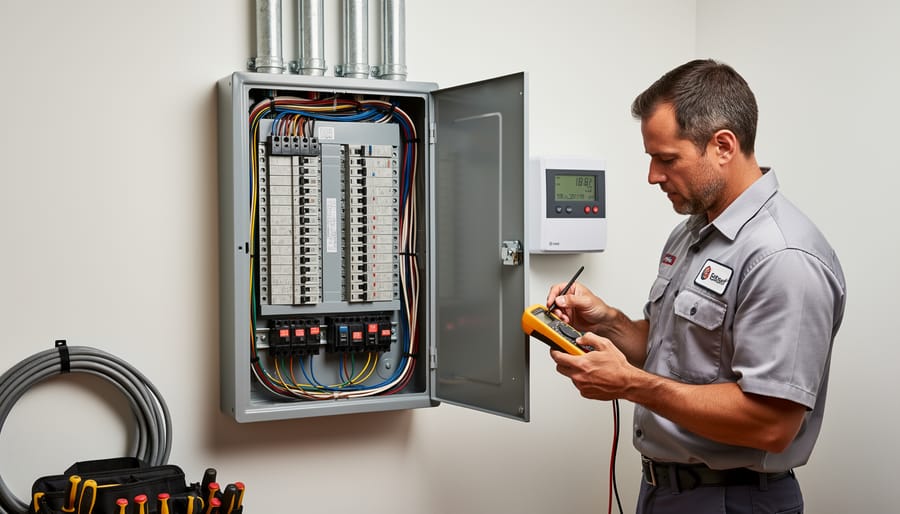
Wiring, Grounding, and Connection Safety
Proper wiring and grounding are fundamental to a safe solar installation. During your inspection, the electrical inspector will verify that all connections meet BC Electrical Code standards to protect your home and family from electrical hazards.
Inspectors check that wiring is correctly sized for the system’s voltage and current loads. Undersized wires can overheat, creating fire risks, so this verification is essential. They’ll also examine all junction boxes to ensure secure, weatherproof connections that can withstand BC’s rain and moisture.
Grounding is equally critical. Your solar system must be properly bonded to your home’s grounding system, creating a safe path for electrical faults. This prevents dangerous voltage buildup and ensures surge protection during storms. Inspectors verify grounding connections at the solar panels, inverter, and main electrical panel.
The Johnsons in Kelowna learned this firsthand when their inspector caught a grounding issue that could have voided their warranty and created safety risks. After a quick correction, their system passed with flying colours.
Think of these safety checks as your quality assurance. They confirm your investment is protected and your family is safe, giving you peace of mind as you start generating clean energy for years to come.
Inverter and Battery Storage Compliance
Inspectors pay special attention to inverters and battery systems during electrical inspections, ensuring they meet safety standards and function properly within your home’s electrical system. Your inverter, which converts solar energy into usable household power, must be properly sized, ventilated, and labeled. Mounting requirements are strict—inspectors verify secure installation and appropriate clearances for maintenance and cooling.
Battery storage systems require thorough evaluation for fire safety, including proper enclosure ratings and ventilation. The inspector confirms batteries are installed away from living spaces when required and that disconnect switches are accessible. Learn more about battery storage compliance to prepare your system adequately.
Temperature monitoring systems and proper grounding receive close scrutiny, as these prevent equipment damage and safety hazards. Documentation matters too—inspectors need to see manufacturer specifications, warranty information, and proof your equipment is CSA-approved for Canadian use. Many BC homeowners find that working with qualified solar installers familiar with local inspection requirements helps avoid common issues and ensures faster approval.
Real BC Stories: Inspections That Prevented Problems
When Sarah and Tom from Nanaimo decided to install solar panels on their 1970s rancher, they thought their home’s electrical system was perfectly fine. Their pre-installation inspection told a different story. The certified electrician discovered their main service panel was only rated for 100 amps, insufficient for adding solar equipment. Even more concerning, he found several outdated aluminum wire connections that posed a fire risk. “We were shocked,” Sarah recalls. “We had no idea these problems existed.” By addressing these issues before solar installation, they avoided potential equipment damage and created a safer home overall. The upfront cost of upgrading their panel to 200 amps and replacing problem wiring added $3,200 to their project, but their insurance company actually reduced their premiums after the upgrades were completed.
Over in Kelowna, Mark’s experience demonstrates why timing matters. Eager to go solar, he skipped the recommended pre-installation assessment and went straight to installation. Midway through the project, the mandatory electrical inspection revealed his grounding system didn’t meet current code requirements. The installation had to stop while corrections were made, extending his project timeline by three weeks and adding unexpected costs for mobilizing the crew twice. “I thought I was saving time and money by skipping that initial inspection,” Mark explains. “Instead, I learned an expensive lesson about doing things in the right order.”
Both homeowners now advocate for thorough electrical inspections before starting any solar project. Their experiences show that inspections aren’t obstacles but opportunities to ensure your solar investment operates safely and efficiently for decades to come.
Common Inspection Failures and How to Avoid Them
Most BC solar installation inspections fail due to preventable issues. Understanding these common pitfalls helps you prepare properly and keep your project on track.
Grounding and bonding errors top the list of inspection failures. Your solar system must have proper electrical grounding to protect against power surges and faults. Many homeowners overlook connecting the grounding wire correctly or fail to bond metal components as required. Before your inspection, have your installer verify all grounding connections meet BC Electrical Code requirements.
Improper wire sizing and labeling frequently cause rejections. Wires carrying solar power must be appropriately sized for the current and clearly labeled at both the array and main panel. Missing or incorrect labels confuse inspectors and future electricians who may service your system. Ask your installer to walk you through the labeling system they’ve used.
Inadequate weatherproofing creates safety concerns, especially in BC’s rainy climate. Outdoor connections, conduits, and junction boxes must be rated for weather exposure. Check that all exterior electrical components have proper seals and protection.
Distance violations between panels and roof edges also trigger failures. BC fire codes require specific clearances for firefighter access. Review your installation plans against local setback requirements before mounting begins.
Working with certified installers familiar with BC regulations significantly reduces these risks. They understand local codes and can avoid permit rejections by building compliance into their installation process from day one. When you receive your inspection notice, confirm all components are accessible and properly secured beforehand.
Preparing Your Home for a Smooth Electrical Inspection
Taking a few simple steps before your inspection day can make the process smoother and help you pass with confidence. Here’s your practical preparation checklist:
Start by gathering your documentation. Have your electrical permit number, approved design plans, and any correspondence with BC Safety Authority readily available. Your certified installer should provide you with a copy of their work completion notice, which the inspector will reference during the visit.
Ensure clear access to all electrical components. The inspector needs to examine your solar panel array, inverter, electrical panel, disconnect switches, and any battery storage systems. Remove any stored items blocking these areas and trim back vegetation around outdoor equipment. If your attic or crawl space contains electrical work, confirm these spaces are accessible.
Communication with your certified installer is key. Schedule the inspection only after they’ve confirmed all work is complete and up to code. Many BC homeowners find it helpful to have their installer present during the inspection to address technical questions, though this isn’t mandatory.
Create a simple checklist of completed items: Are all junction boxes covered? Are wire connections secure? Is labeling complete? Your installer should verify these details, but a quick visual check gives you peace of mind.
Consider your neighbours too. Let them know an inspector will be visiting, especially if they need to access shared property lines. This community-focused approach, common in BC’s collaborative solar neighbourhoods, prevents surprises and builds goodwill.
With proper preparation, your inspection becomes a straightforward final step toward energizing your solar system.
Working With Certified Solar Installers Who Know BC’s Requirements
Choosing the right solar installer can make the difference between a smooth inspection process and costly delays. In British Columbia, working with certified professionals who understand local electrical codes ensures your solar installation meets all safety standards and passes inspection on the first attempt.
Look for installers registered with Technical Safety BC and certified by the Canadian Solar Industries Association. These credentials confirm that your installer stays current with BC’s evolving electrical regulations and understands the specific requirements for solar installations in our province. Qualified installers should hold appropriate electrical licenses and carry liability insurance to protect your investment.
A knowledgeable installer does more than mount panels on your roof. They prepare accurate permit applications, coordinate inspection schedules, and ensure all work complies with the BC Electrical Code. This expertise prevents common pitfalls like improper grounding, inadequate disconnect switches, or documentation errors that trigger inspection failures.
Consider the experience of the Chens in Burnaby, who initially hired an out-of-province contractor unfamiliar with BC requirements. After their installation failed inspection twice, they brought in a local certified installer to correct the work, adding weeks and unexpected costs to their project.
Solar BC connects homeowners with vetted professionals who know the local landscape. Our network includes installers with proven track records of successful inspections across British Columbia’s diverse municipalities. When you work with certified professionals familiar with BC’s processes, you protect your investment and gain peace of mind that your solar system is safe, compliant, and built to last.
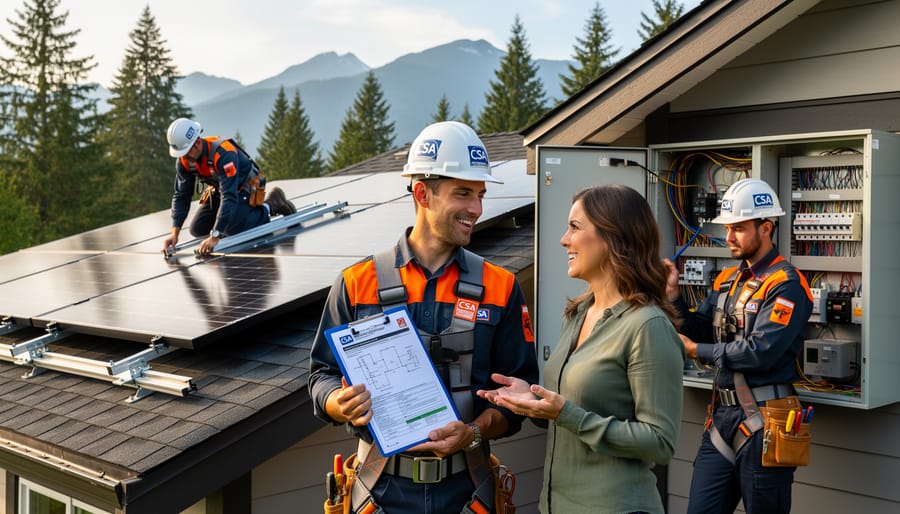
A proper electrical inspection isn’t just another box to check—it’s your assurance that your solar investment will perform safely and efficiently for decades to come. When you view inspections as a protective measure rather than a hurdle, the permitting process becomes part of ensuring your family’s safety and your system’s long-term value.
The residents who experience the smoothest solar transitions are those who work with installers who truly understand BC’s inspection requirements from the start. Consider the Vancouver homeowner who avoided costly corrections by choosing an installer familiar with local codes, or the Richmond business that passed inspection on the first visit thanks to proper preparation and documentation.
Ready to move forward with confidence? Connect with certified solar installers through Solar BC who bring deep knowledge of BC’s permitting and inspection landscape. These professionals handle the technical details, communicate directly with inspectors, and ensure your project meets all safety standards. By partnering with experienced installers who prioritize compliance, you’re not just adding solar panels—you’re making a secure investment in clean energy that protects both your home and British Columbia’s sustainable future.