
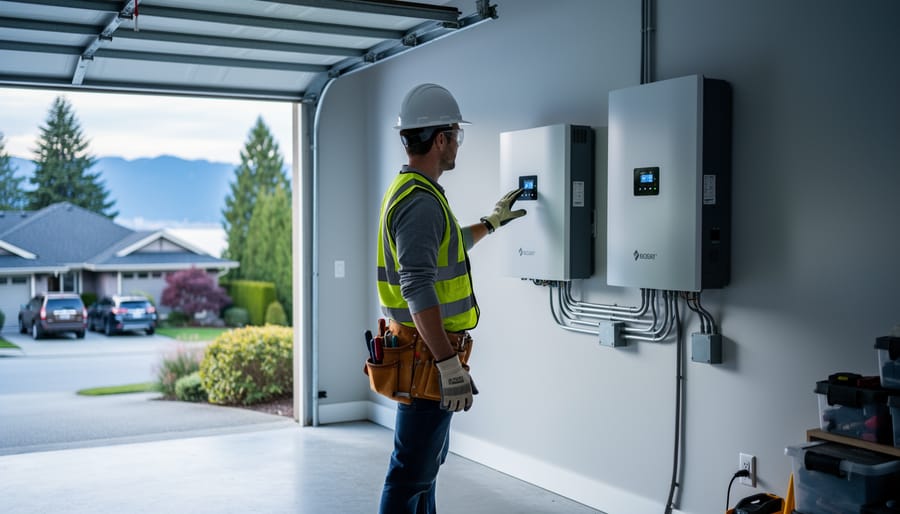
Installing battery energy storage in British Columbia requires navigating multiple regulatory layers, and building energy codes form just one piece of this compliance puzzle. These codes establish minimum performance standards for energy efficiency in new construction and major renovations, but they intersect with fire safety, electrical, and permitting requirements when you add battery systems to your home or business.
Understanding which code applies to your project saves time and prevents costly mistakes. Building energy codes primarily focus on how efficiently your building uses energy through insulation, heating systems, and ventilation. When you install solar panels with battery backup, your project triggers requirements under the BC Building Code, BC Fire Code, and electrical regulations simultaneously. Each jurisdiction across British Columbia may interpret these codes differently, making local knowledge essential.
The confusion often starts when homeowners assume energy storage falls entirely under energy efficiency regulations. In reality, battery systems must meet stringent fire safety standards due to thermal runaway risks, electrical codes for proper wiring and disconnects, and building codes for structural mounting and ventilation. A qualified professional familiar with BC’s regulatory landscape becomes invaluable here.
Consider a Vancouver homeowner who recently added a 13.5 kWh battery system. Their permit application required electrical drawings, fire safety plans showing clearances and suppression equipment, and energy code compliance documentation. Working with an experienced installer streamlined the process from eight weeks to three.
Your next steps depend on understanding these overlapping requirements and finding professionals who navigate them daily.
What Building Energy Codes Actually Mean for Your Energy Storage System
When you’re planning to add a battery energy storage system to your BC home or business, you’ll encounter several types of building regulations. Understanding what building energy codes actually cover—and what they don’t—helps you navigate the approval process with confidence.
Building energy codes in British Columbia focus primarily on how efficiently your building uses energy and how new systems integrate with your existing structure. Unlike fire codes that address safety hazards or electrical codes that govern wiring and connections, building energy codes ensure your energy storage system contributes to overall building performance without compromising structural integrity or creating energy inefficiencies.
Think of it this way: the electrical code makes sure your battery is wired safely, the fire code ensures it won’t create hazardous conditions, and the building energy code verifies that adding storage actually makes sense for your building’s energy profile and doesn’t negatively impact its thermal envelope or ventilation systems.
The BC Energy Step Code represents a significant part of this regulatory landscape. This performance-based standard measures how energy-efficient your building is, using a stepped approach from basic compliance to net-zero ready construction. When you install energy storage, it can positively impact your Step Code performance, particularly if paired with solar panels or other renewable systems.
For existing buildings adding battery storage, building energy codes typically require that your installation doesn’t compromise insulation, create thermal bridging, or interfere with ventilation systems. If your battery system requires modifications to exterior walls or affects your building’s heating and cooling loads, you’ll need to demonstrate compliance.
A practical example: A Vancouver homeowner installing a Tesla Powerwall in their basement needed to show that the installation maintained proper clearances from their furnace and didn’t obstruct required ventilation pathways. The building energy code review also confirmed that adding the battery wouldn’t create moisture problems or affect the home’s air barrier.
For commercial installations, the requirements become more complex. Your energy storage system must integrate with building automation systems and meet higher performance standards. Documentation showing how the battery system improves overall building energy use often streamlines the approval process.
The good news is that BC’s building energy codes increasingly recognize energy storage as beneficial technology. Reviewers understand these systems support provincial climate goals, making the approval process more straightforward when applications are properly prepared.
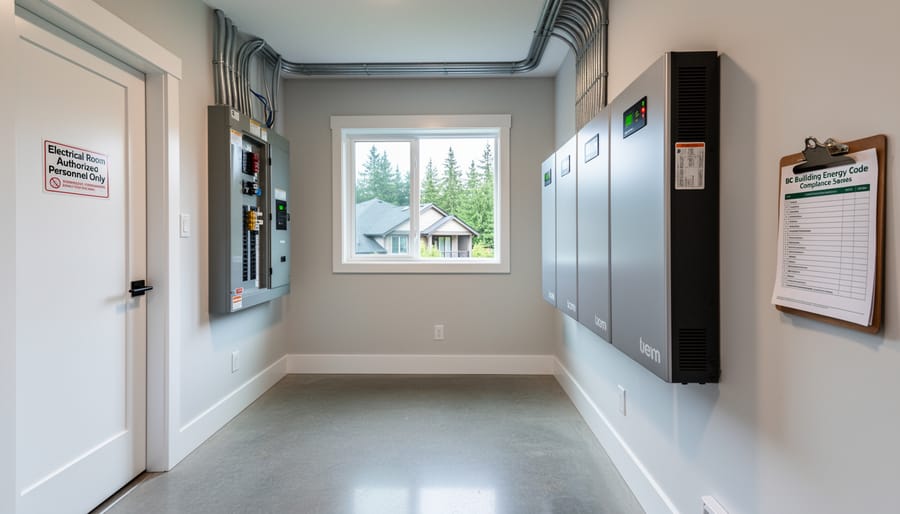
The Three-Part Compliance Framework You Need to Understand
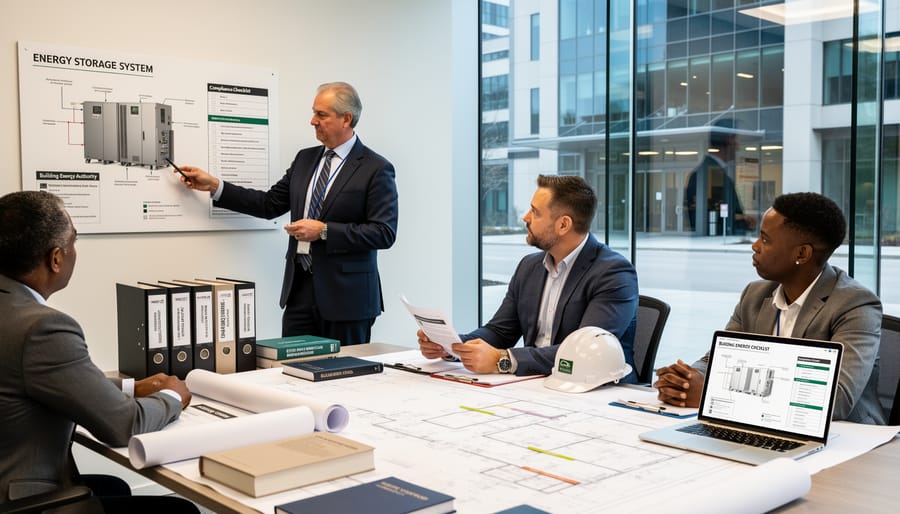
Building Energy Code Requirements
BC’s building energy code focuses on making new buildings and major renovations more energy efficient while ensuring battery storage systems integrate safely into your home or business. When adding battery storage to your property, you’ll need to meet specific performance standards that consider how stored energy contributes to your building’s overall efficiency.
The BC Building Code includes Part 9 for houses and smaller buildings, which sets minimum requirements for insulation, air sealing, and mechanical systems. Battery storage systems must be sized appropriately for your building’s energy needs without exceeding safety thresholds. Your installation must demonstrate how the battery integrates with your building’s existing electrical and heating systems.
Energy efficiency ratings matter when permitting battery storage. If you’re installing batteries as part of a solar energy system, the combination can significantly improve your building’s energy performance. For example, a Vancouver homeowner who installed a 13.5 kWh battery system alongside rooftop solar improved their home’s energy rating by 22 percent, qualifying for municipal incentives they hadn’t initially considered.
System sizing requires careful planning. Your battery capacity should match your building’s typical energy consumption patterns. Oversizing can trigger additional code requirements, while undersizing may not deliver the efficiency benefits you’re expecting. BC Hydro offers free energy assessments that help determine optimal system sizing before you submit permit applications.
Working with certified installers ensures your battery storage meets both safety standards and energy performance requirements. They understand how to document compliance and navigate the permitting process efficiently, saving you time and potential costly revisions.
Fire Code Integration Points
When you’re planning battery storage for your BC home or business, energy codes and fire safety requirements work hand-in-hand to protect both your investment and your property. Understanding these integration points helps you design a system that meets all regulatory standards while maintaining optimal performance.
Ventilation requirements illustrate this connection perfectly. Building energy codes focus on maintaining system efficiency and preventing energy loss, while fire codes prioritize safety through proper air circulation to prevent dangerous gas accumulation. Battery storage rooms typically need dedicated ventilation systems that satisfy both requirements. For example, a Vancouver business installing lithium-ion batteries recently designed a ventilation system that met fire code’s air exchange requirements while incorporating heat recovery technology to minimize energy waste, satisfying both code frameworks simultaneously.
Thermal management presents another integration point. Energy codes encourage efficient heating and cooling to reduce overall building energy consumption. However, battery systems generate heat and require specific temperature ranges for safe operation. Your mechanical systems must maintain batteries within manufacturer specifications, typically between 15-25°C, while coordinating with your building’s overall HVAC strategy. This might mean installing dedicated temperature controls or integrating battery cooling with existing building systems.
Emergency power systems also bridge both codes. Fire safety requirements mandate backup power for critical safety systems like emergency lighting and fire alarms. Meanwhile, energy codes recognize that properly designed battery systems can serve dual purposes, providing both emergency backup and daily energy management. This integration can actually improve your building’s energy performance rating while enhancing safety compliance.
Working with qualified professionals who understand both code frameworks ensures your system design addresses all requirements efficiently from the start.
Electrical Code Coordination
When you’re adding battery storage to your home or business in BC, your electrical system needs to work double-duty: keeping you safe while helping you meet energy efficiency goals. Think of it as ensuring your new energy system is both a good neighbor and a smart investment.
The BC Building Code requires that all electrical work supporting energy storage systems meets specific load calculations. This means your electrician must verify that your existing electrical panel can handle the additional equipment, or determine if an upgrade is necessary. A Vancouver homeowner recently discovered during their battery installation that their 1970s-era panel needed replacement, which actually improved their home’s overall safety and efficiency.
Load calculations consider your battery system’s charging requirements, inverter capacity, and how the system integrates with your solar panels if you have them. Your electrician will calculate whether your service entrance can accommodate peak charging times without overloading circuits or compromising other essential systems.
Backup power configurations require special attention under the code. If you’re installing batteries to provide emergency power during outages, your system needs proper transfer switches and islanding protection. These safety features ensure your system doesn’t accidentally send power back to the grid when utility workers are making repairs.
Working with a certified electrician familiar with energy storage systems is essential. They’ll handle the technical requirements while ensuring your installation maximizes efficiency. Many BC homeowners find that proper electrical coordination not only satisfies code requirements but also optimizes their system’s performance, reducing energy waste and lowering monthly costs.
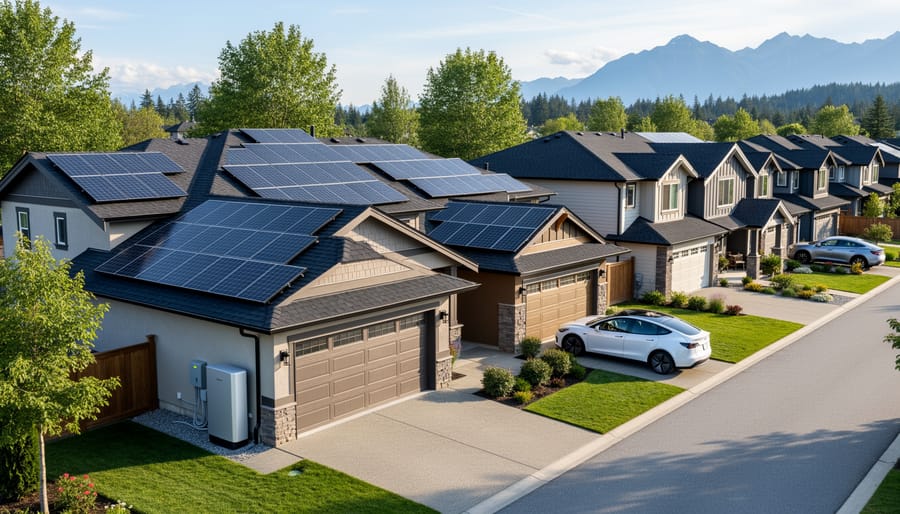
Real BC Homeowners Share Their Permitting Experiences
Learning from those who’ve already navigated the building energy code process can save you time, money, and frustration. Here are two BC homeowners who took different paths through the permitting journey.
When the Chen family in Vancouver decided to add a 10 kWh battery storage system to their existing solar array, they knew documentation would be key. Before contacting installers, they reviewed the BC Building Code requirements and prepared a list of questions about energy efficiency compliance. Their solar company provided detailed energy modeling reports showing how the battery system would integrate with their home’s energy consumption patterns. The permit application included thermal performance calculations and mechanical system diagrams that clearly demonstrated code compliance.
The result? Their permit was approved in just three weeks. “We were surprised how smooth it was,” says Michael Chen. “Having everything organized upfront made a huge difference. Our installer had worked with the Vancouver permitting office before and knew exactly what documentation they needed to see.”
The Chens’ key lesson: Choose an installer familiar with local building energy code requirements and don’t rush the documentation phase. The extra week they spent preparing saved them months of potential delays.
In contrast, Riverside Commerce Center in Kelowna faced unexpected setbacks with their commercial solar-plus-storage project. The building manager assumed their contractor had submitted complete energy code documentation, but the application was missing the required energy performance compliance report. The city’s building department couldn’t process the permit without demonstration that the installation met energy efficiency standards for commercial buildings.
“We lost six weeks going back and forth,” explains facilities manager Sarah Thompson. “Nobody told us that commercial installations need more detailed energy modeling than residential projects. We had fire code and electrical documentation ready, but the building energy code piece caught us completely off guard.”
After hiring an energy advisor to complete the necessary reports and resubmitting with proper HVAC integration plans, their permit was approved. The project ultimately succeeded, but the delay cost them a full season of potential energy savings.
Sarah’s advice? “Ask your installer specifically about building energy code compliance, not just electrical and fire codes. Get a checklist of every document the city needs before you start. And if you’re doing commercial, budget extra time and possibly hire an energy advisor early in the process.”
Both experiences highlight a common theme: proactive preparation and choosing knowledgeable professionals make all the difference in navigating BC’s building energy code requirements successfully.
Your Step-by-Step Permitting Checklist
Before You Apply: Documentation to Gather
Before starting your energy storage system application, gathering the right documentation will save you time and help ensure a smooth approval process. You’ll need detailed building plans that show where your battery system will be installed, including floor plans and elevation drawings. Your solar installer or energy consultant should provide energy modeling reports that demonstrate how your system integrates with BC’s energy efficiency requirements—these reports show your project meets Step Code performance targets if applicable in your municipality.
System specifications are essential, including manufacturer cut sheets for your battery storage unit that detail safety features, capacity, and thermal management systems. You’ll also need electrical drawings showing how the battery connects to your existing electrical panel and solar array. If you’re in a multi-family building or commercial space, include structural engineering reports confirming your installation location can safely support the equipment weight.
For heritage buildings or properties in special districts, add any required design review approvals. Many BC municipalities now offer pre-application checklists on their websites—downloading these ensures you haven’t missed local requirements. Consider working with a qualified energy advisor familiar with BC’s energy codes; they can review your documentation package before submission, catching potential issues early and speeding up the approval timeline.
Working With Your Local Authority Having Jurisdiction
Building strong relationships with your local Authority Having Jurisdiction (AHJ) can make your energy storage installation smoother and more efficient. The AHJ is typically your municipal building department, and they’re responsible for reviewing permit applications and ensuring compliance with building energy codes.
Start by contacting your local building department early in the planning process, ideally before purchasing equipment. Ask to speak with an inspector familiar with energy storage systems. Key questions to ask include: What specific documentation do they require for battery storage permits? Are there any local amendments to the BC Building Code that apply? What is the typical permit review timeline? Do they require professional engineer sign-off for your system size?
It’s important to recognize that interpretation of building energy codes can vary between municipalities. For example, the City of Vancouver may have different supplementary requirements than smaller communities in the Interior. Some jurisdictions have streamlined processes for residential battery systems under a certain capacity, while others review each application individually.
Come prepared with system specifications, manufacturer data sheets, and installation plans. Many building departments appreciate when applicants proactively address fire safety measures, proper ventilation, and thermal management in their submissions.
Consider sharing success stories from neighbouring communities. In Saanich, collaborative discussions between solar installers and the building department led to clearer guidelines that benefited everyone. Building this collaborative relationship demonstrates your commitment to safety and compliance, often resulting in faster approvals and smoother inspections. Remember, your AHJ wants safe installations just as much as you do.
Common Pitfalls and How to Avoid Them
Even experienced installers sometimes stumble when navigating BC’s building energy code requirements for battery storage systems. Understanding these common mistakes can save you time, money, and frustration during your installation process.
The most frequent pitfall is inadequate energy modeling during the planning phase. Many homeowners and businesses dive into battery storage without properly calculating how the system fits into their building’s overall energy profile. For example, a Kelowna business recently had to redesign their installation because they hadn’t accounted for seasonal energy variations in their initial model. Take time to work with your installer to create a comprehensive energy model that reflects your actual consumption patterns throughout the year.
Missing thermal performance data ranks as the second major issue. Battery systems generate heat, and BC’s building energy code requires documentation showing how this affects your building’s thermal envelope. Some installers forget to include manufacturer specifications for heat output or ventilation requirements. Always request complete thermal performance documentation from your equipment supplier before submitting permit applications.
The third common mistake involves failing to incorporate the storage system into your building’s total energy budget calculations. BC’s energy code looks at your entire building as one system, not individual components in isolation. A Vancouver homeowner discovered this when their otherwise compliant battery installation pushed their building over energy consumption thresholds because the initial calculations only considered the solar panels.
The good news? These pitfalls are entirely preventable. Choose installers who understand BC-specific requirements, request detailed documentation upfront, and ensure your energy modeling includes all building systems working together. This proactive approach keeps your project on track from day one.
How to Choose an Installer Who Understands Building Energy Codes
Finding a solar installer who truly understands BC building energy codes can save you significant headaches during the permitting process. The right professional will navigate compliance requirements smoothly, while the wrong choice may lead to project delays, failed inspections, or costly retrofits.
Start by asking direct questions about their familiarity with the BC Building Code and BC Energy Step Code. A qualified installer should confidently explain how these codes apply to your specific project and describe their typical permitting timeline. Ask them to walk you through their compliance checklist and what documentation they prepare for building officials. If they seem vague or dismissive about code requirements, that’s your first red flag.
Look for installers with relevant certifications, particularly those from the Canadian Standards Association or NABCEP (North American Board of Certified Energy Practitioners). Membership in professional associations like Solar Energy Industries Association demonstrates commitment to industry standards. However, certifications alone aren’t enough. Request references from recent BC projects and contact those customers directly about their permitting experience.
Red flags include installers who promise to “handle everything” without explaining what that means, those who suggest shortcuts around official approvals, or professionals unfamiliar with your municipality’s specific requirements. Victoria’s permitting process differs from Prince George’s, and experienced installers recognize these regional variations.
Ask about their relationship with local building inspectors. Established installers often have working relationships with municipal offices, which can streamline your project. Question whether they employ dedicated permit coordinators or if installers handle this themselves.
For homeowners and businesses concerned about finding properly qualified professionals, Solar BC connects you with vetted solar installers who understand local compliance requirements. This matching service helps eliminate guesswork by pre-screening installers for their regulatory knowledge and track record. When choosing an installer, remember that expertise in building energy codes isn’t just about avoiding problems—it’s about ensuring your investment performs safely and efficiently for decades.
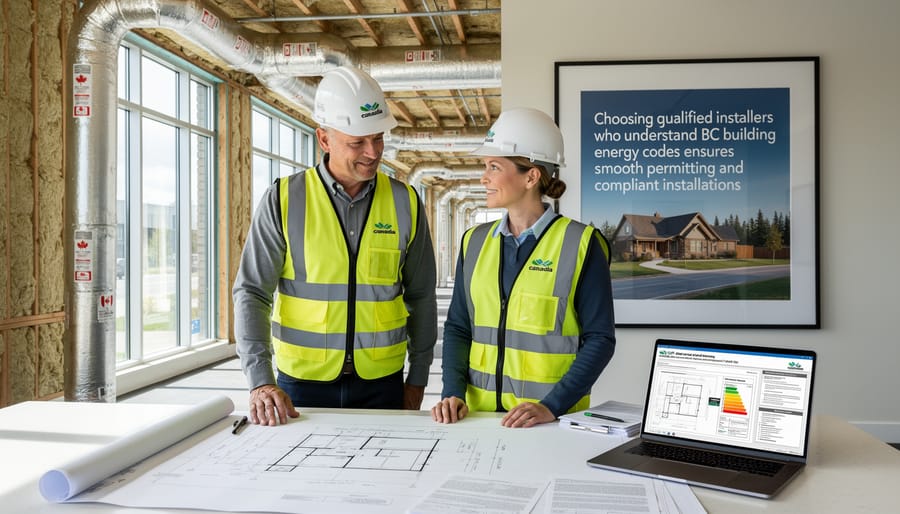
Navigating building energy code requirements might seem daunting at first, but viewing compliance as an opportunity rather than a barrier changes everything. When you work with qualified professionals who understand BC’s regulatory landscape, you’re not just checking boxes—you’re ensuring your energy storage system operates safely, efficiently, and delivers maximum value for years to come. Proper compliance means your battery installation meets rigorous safety standards, performs as expected, and integrates seamlessly with your home or business operations.
Beyond peace of mind, compliance can unlock additional benefits you might not have considered. Many utility programs and government incentives require code-compliant installations, meaning your attention to these details could qualify you for rebates or preferential rates. Some homeowners in the Lower Mainland have discovered that their properly permitted systems increased their property values and even reduced insurance premiums.
The path forward is clearer than you might think. Solar BC’s network connects you with experienced installers who handle permitting, code compliance, and inspections as part of their standard service. These professionals stay current with evolving regulations so you don’t have to become an expert yourself.
Ready to start your compliant energy storage journey? Connect with Solar BC’s trusted installer network today. They’ll assess your specific situation, navigate the regulatory requirements, and help you design a system that meets all building energy codes while supporting BC’s clean energy future. Your sustainable energy solution is closer than you think—take the first step now.