
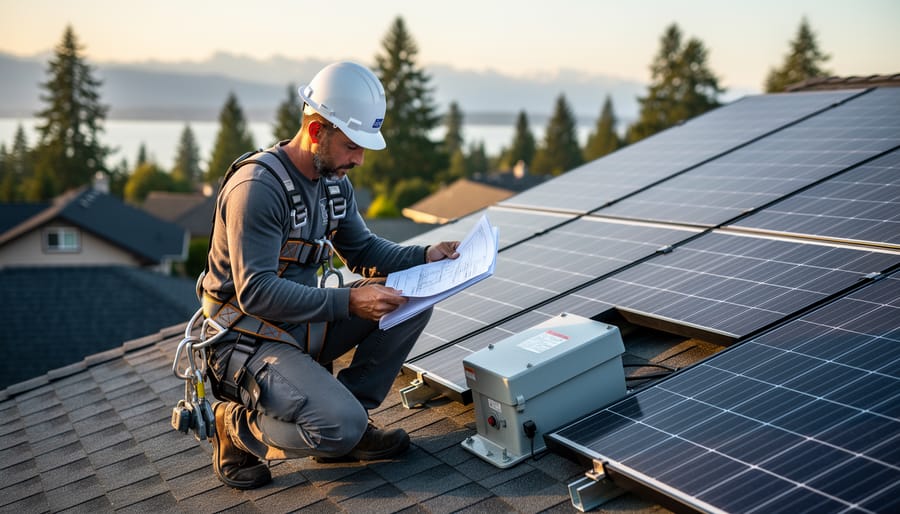
Verify your solar installation plans comply with the 2024 Canadian Electrical Code Part I and BC’s specific amendments before submitting permit applications. The electrical code mandates precise requirements for conductor sizing, disconnect locations, and rapid shutdown systems that can delay or derail your project if overlooked.
Request a detailed code compliance checklist from your solar installer during initial consultations. Certified professionals understand that BC Building Code Section 9.34 governs small-scale renewable energy systems, while larger installations require stamped engineered drawings. A qualified installer will identify whether your project needs structural assessments for roof-mounted arrays or if ground-mount systems trigger additional municipal bylaws in your region.
Schedule pre-application meetings with your local Authority Having Jurisdiction before finalizing system design. Many BC municipalities offer free consultations that clarify specific documentation requirements, saving weeks of revision cycles. These meetings reveal whether your area requires fire setbacks, electrical one-line diagrams, or specialized equipment ratings that aren’t immediately obvious from general code documents.
Document every code requirement in a centralized project folder with corresponding solutions. When inspectors reference CSA C22.3 No. 8 (photovoltaic systems standard) or specific grounding requirements, you’ll have immediate answers. This preparation transforms potentially stressful inspections into straightforward approvals, accelerating your path to grid connection and solar savings.
Non-compliance carries tangible consequences: failed inspections cost $150-$400 in re-inspection fees, insurance may void coverage for unpermitted work, and electrical utilities refuse interconnection until all code violations resolve. Understanding these regulations upfront protects your investment and ensures your system generates clean energy safely and legally from day one.
What Are Solar Codes and Why BC Takes Them Seriously
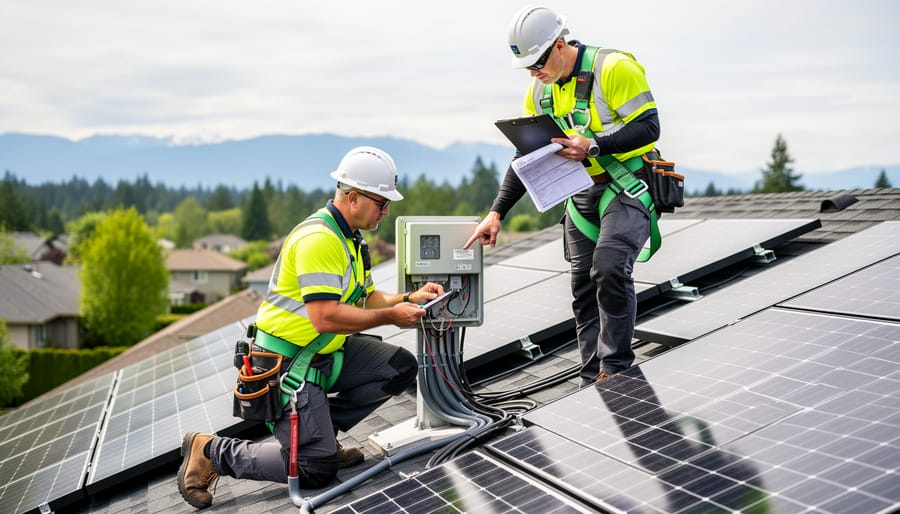
The Three Layers of Solar Regulation in BC
When you’re planning a solar installation in BC, you’ll navigate three distinct but interconnected layers of regulation. Understanding how these work together helps ensure your project proceeds smoothly from planning to power-up.
At the foundation sits the Canadian Electrical Code (CEC), a federal standard that sets nationwide safety requirements for all electrical installations, including solar systems. The CEC covers essential elements like wiring methods, equipment standards, and connection protocols. Think of this as the baseline that applies everywhere across Canada.
The second layer is the BC Building Code, which incorporates the CEC while adding provincial-specific requirements. This is where you’ll find regulations about structural integrity for rooftop installations, weatherproofing standards suited to BC’s climate, and battery storage code requirements. The provincial code ensures your solar system works safely within BC’s unique environmental conditions, from coastal rain to interior snow loads.
Finally, municipal bylaws form the third layer. Your local government may add requirements for setbacks, aesthetic considerations, or heritage district restrictions. For example, Vancouver has different permitting timelines than Kelowna, and some municipalities offer streamlined approval processes for residential solar.
Here’s how they interact: your installation must comply with all three layers simultaneously. The CEC sets the safety baseline, the BC Building Code adds provincial standards, and municipal bylaws address local concerns. Your certified solar installer navigates these requirements together, not separately.
The good news? Working with qualified professionals who understand this regulatory framework means you don’t need to become an expert yourself. They ensure compliance at every level, letting you focus on the benefits your solar system will bring to your home or business.
Who Enforces These Codes During Your Solar Installation
When you install solar panels in British Columbia, several important organizations work together to ensure your system meets safety and performance standards. Understanding who these key players are helps streamline your installation process and ensures everything goes smoothly.
Your local municipal building officials are typically your first point of contact. They review permit applications and conduct preliminary inspections to confirm your solar installation meets building codes and zoning requirements. These officials ensure structural integrity and proper placement of your panels.
Electrical inspectors play a crucial role in verifying that all wiring, connections, and electrical components meet the Canadian Electrical Code requirements. They examine your system at various installation stages to protect your home from electrical hazards and ensure safe operation.
The BC Safety Authority oversees electrical safety across the province and maintains the registry of qualified electrical contractors. They ensure that only licensed professionals perform electrical work on your solar system, which is essential for both safety and energy code compliance.
Your utility company, either BC Hydro or FortisBC depending on your location, also participates in the approval process. They review your interconnection application to ensure your solar system integrates safely with the electrical grid. The utility conducts a final inspection before activating your net metering agreement, allowing you to receive credits for excess power your system generates.
Working with certified solar installers familiar with these organizations helps navigate the process efficiently, as they maintain established relationships with inspectors and understand local requirements thoroughly.
The Most Important Electrical Code Requirements for Solar PV in BC
Grounding and Bonding Requirements
Proper grounding and bonding form the safety backbone of your solar installation, protecting both people and equipment from electrical hazards. When lightning strikes or electrical faults occur, a well-grounded system safely channels excess electricity into the earth rather than through your home or anyone touching the equipment.
BC electrical inspectors pay close attention to several key grounding elements during permit reviews. They’ll verify that all metal components—including panel frames, mounting rails, and junction boxes—are properly bonded together and connected to your home’s grounding system. The grounding electrode conductor must be sized correctly according to the Canadian Electrical Code, typically using copper wire of appropriate gauge based on your system size.
Common mistakes that frequently cause permit failures include using undersized grounding conductors, failing to bond all metallic surfaces together, and improper connections that can corrode over time. One Vancouver homeowner learned this the hard way when their installation failed inspection because the installer used aluminum wire without proper anti-oxidant compound at connection points—a recipe for dangerous resistance buildup.
Another frequent issue involves neglecting to ground equipment on both the AC and DC sides of the system. Your inverter, combiner boxes, and even the metal conduit protecting your wiring all require proper bonding. Inspectors also look for proper labeling of grounding points and verification that bonding jumpers are installed where needed.
Working with certified solar professionals ensures these critical safety requirements are met the first time. They understand that cutting corners on grounding isn’t just about passing inspection—it’s about keeping your family and investment protected for decades to come.
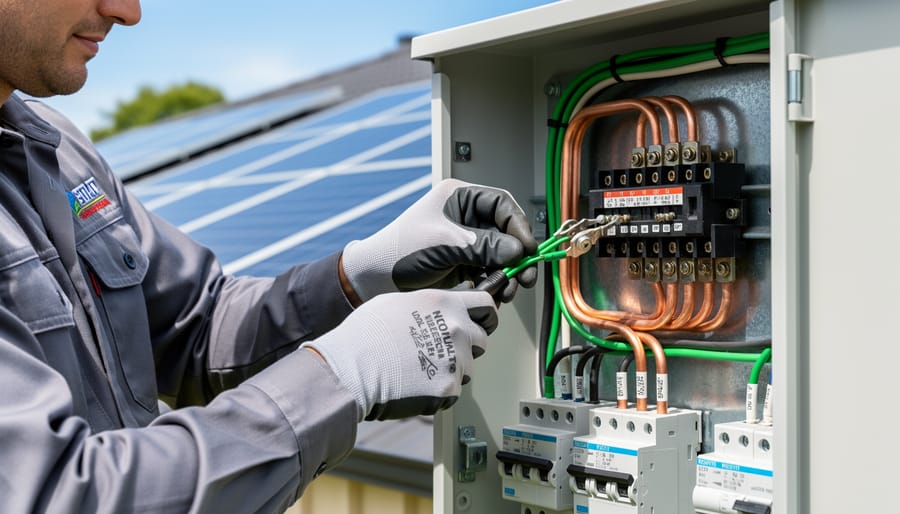
Disconnect Switches and Rapid Shutdown Systems
Safety comes first when it comes to solar installations, which is why BC’s electrical codes require specific disconnect switches and rapid shutdown systems. These devices protect both emergency responders and maintenance workers by ensuring solar panels can be quickly de-energized when needed.
Think of disconnect switches as emergency off-switches for your solar system. They allow firefighters or electrical workers to safely shut down power flow from your panels during emergencies or maintenance work. Your system needs a clearly labeled disconnect switch that’s easily accessible, typically installed near your electrical panel or on the exterior of your home.
Recent updates to the Canadian Electrical Code have strengthened rapid shutdown requirements, reflecting lessons learned from emergency response situations across North America. When activated, rapid shutdown systems must reduce voltage at panel level to safe limits within 30 seconds. This requirement addresses a critical safety concern: even when your main disconnect is off, solar panels continue generating electricity in daylight, creating potential hazards for firefighters working on roofs.
For BC homeowners, these safety features add minimal cost to your installation while providing significant peace of mind. A Vancouver Island residential project in 2023 demonstrated how proper rapid shutdown integration allowed fire crews to safely respond to an unrelated electrical issue, showcasing the real-world value of code compliance.
Your certified solar installer will integrate these safety systems seamlessly into your design, ensuring they meet current code requirements while remaining simple to operate. Don’t view these as regulatory hurdles but rather as essential protections for your family, your property, and your community’s first responders.
Wire Sizing, Conduit, and Equipment Ratings
BC’s unique climate—from coastal rain to interior temperature extremes—directly influences your solar system’s wire and equipment specifications. Understanding these requirements helps you avoid one of the most common inspection failures: undersized components.
Wire sizing isn’t just about carrying current; it’s about doing so safely under BC’s varying conditions. The Canadian Electrical Code requires wires to handle 125% of your system’s maximum current, accounting for continuous solar generation. Temperature corrections matter too—wires in hot attics or cold outdoor installations need different ampacity ratings. Using 10 AWG wire where 8 AWG is required might save a few dollars initially, but it creates safety risks and guarantees inspection failure.
Conduit choices also reflect local conditions. UV-resistant materials are essential for BC’s sunny regions, while coastal installations need corrosion-resistant options to withstand salt air. Metal conduit offers superior protection but requires proper grounding, while PVC works well for underground runs if buried at code-required depths.
Equipment ratings must match your system’s specifications. A 200-amp service panel handling a 10kW solar array needs properly rated breakers and bus bars. One Vancouver homeowner learned this the hard way when their inspector red-tagged an installation using residential-grade equipment for a larger commercial system.
Working with certified installers ensures components are correctly sized from the start, preventing costly do-overs and keeping your project on schedule.
Arc-Fault Protection and Fire Safety Standards
Arc-fault circuit interrupters (AFCIs) are now a required safety feature in BC solar installations, designed to detect dangerous electrical arcing that could spark a fire. Think of them as smoke detectors for your electrical system – they identify problems before they become dangerous.
Since 2011, the Canadian Electrical Code has mandated AFCIs for rooftop solar arrays. These devices monitor the electrical current flowing through your solar panels and quickly shut down the system if they detect irregular patterns that indicate arcing. This is particularly important because solar panels operate at high voltages and are often installed in hard-to-reach locations where fires could go unnoticed.
For homeowners, this means your solar installer must include AFCI protection either at the inverter level or within the combiner box where panel strings connect. Modern inverters typically have this protection built in, which simplifies installation and reduces costs.
A Kelowna family learned the value of this protection firsthand when their AFCI detected a loose connection caused by thermal cycling. The system shut down automatically, preventing potential fire damage. Their installer quickly identified and fixed the issue.
When planning your solar project, confirm your installer uses code-compliant equipment with integrated AFCI protection. This investment in safety protects your home, your family, and ensures your system meets all BC requirements.
Navigating BC’s Solar Permitting Process Step-by-Step
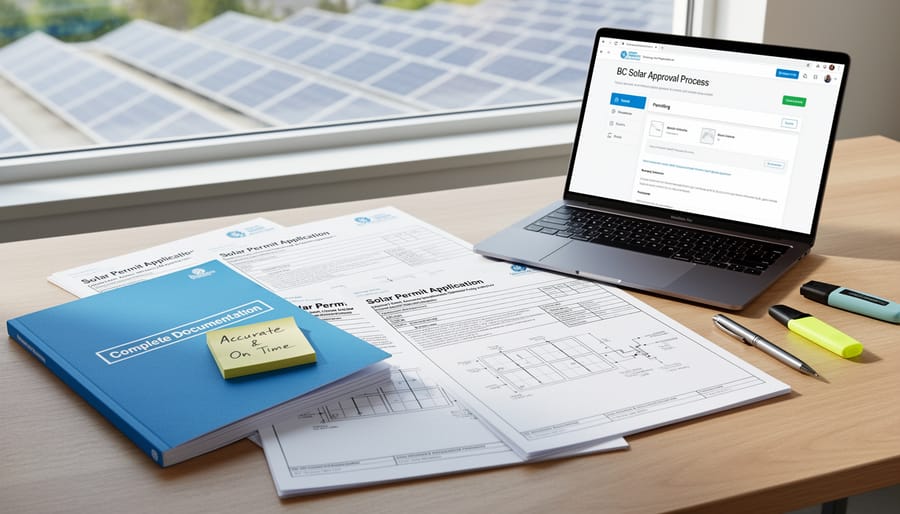
What Documentation Your Municipality Will Require
When you’re ready to submit your solar permit application to your local BC municipality, you’ll need to gather several key documents. While requirements vary slightly between municipalities, most follow similar standards to ensure your system is safe and compliant.
Your application typically starts with a detailed site plan showing your property boundaries, the location of your home or building, and where the solar panels will be installed. This helps officials understand how your system fits within your property and any potential impacts on neighboring properties.
You’ll also need electrical drawings that show how your solar panels will connect to your home’s electrical system and the utility grid. These drawings, usually prepared by your solar installer, illustrate the wiring, inverter placement, and connection points. For systems with battery storage, you’ll need building energy code approval documentation as well.
Equipment specifications are essential, including cut sheets for your solar panels, inverters, and mounting hardware. These documents prove your equipment meets Canadian Standards Association certification requirements.
Finally, structural calculations verify that your roof can safely support the additional weight of the panels. A structural engineer may need to review your building, particularly for older homes or complex installations.
The good news? Most reputable solar installers in BC handle this paperwork as part of their service, making the process straightforward for homeowners.
Working With BC Hydro or FortisBC for Grid Connection
Once your solar system passes electrical inspection, you’ll need to work with your local utility—either BC Hydro or FortisBC—to connect your system to the grid. This step is essential for participating in net metering programs, which allow you to receive credit for excess electricity your panels generate.
The interconnection agreement is your formal contract with the utility, outlining how your solar system will operate alongside the grid. Both BC Hydro and FortisBC require you to submit a net metering application before your system goes live. This application typically includes your electrical permit approval, system specifications, and installer certifications. Processing times vary, but you should expect 4-8 weeks for approval, so plan accordingly in your project timeline.
BC Hydro’s net metering program is available to customers with systems up to 100 kilowatts, while FortisBC offers similar programs with slightly different technical requirements. Your certified installer will be familiar with these utility-specific details and can guide you through the paperwork.
A helpful tip from successful solar homeowners: submit your net metering application as soon as you receive your electrical permit approval. Don’t wait until installation is complete, as this parallel processing can save you weeks.
Both utilities require an inspection of their meter equipment and may need to install a bi-directional meter to track both the electricity you consume and the excess you send back to the grid. This final step completes your connection process, allowing you to start generating clean energy and earning credits on your electricity bill.
The Inspection Process and What Inspectors Check
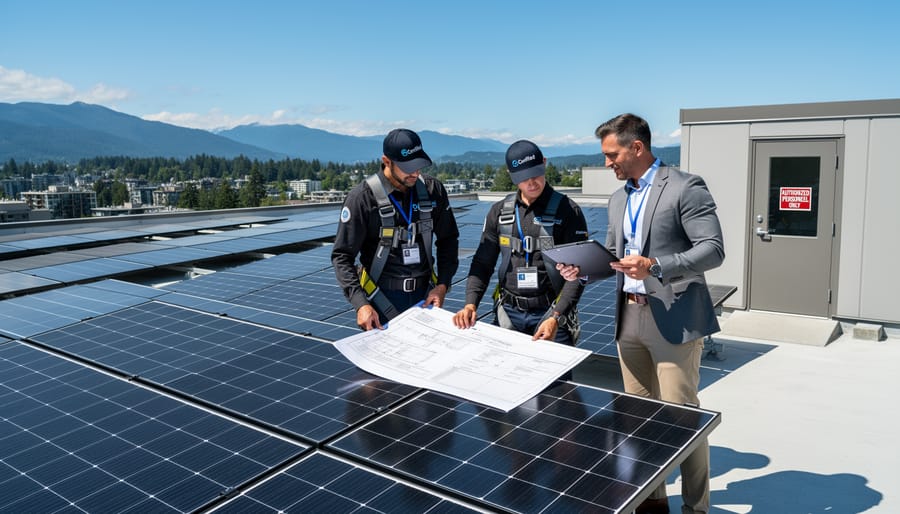
During a solar inspection, certified inspectors will examine both electrical and structural components of your installation. Expect them to verify that your system matches approved plans, check wire sizing and connections, confirm proper grounding, and ensure your disconnect switches and inverters meet BC electrical code requirements. They’ll also assess roof attachments, checking that mounting systems won’t compromise your roof’s integrity or violate building codes.
Common red flags include mismatched equipment specifications, improper wire labeling, inadequate clearances around electrical components, and missing safety disconnects. Before your inspection, ensure all components are clearly labeled, keep approved plans on-site, and verify that your installer has completed all work including final connections.
A Vancouver homeowner recently shared how their installer’s pre-inspection checklist caught a labeling issue that could have delayed approval by weeks. Working with certified professionals who understand local inspection requirements makes the process straightforward. Most inspections take under an hour, and addressing any minor concerns immediately keeps your project on track toward generating clean energy.
Local Success Story: How a Vancouver Island Business Navigated Solar Code Compliance
When Saltspring Island Coffee Roasters decided to install a 50kW solar array on their production facility in 2023, owner Marcus Chen knew he needed expert help to navigate BC’s electrical code requirements. Like many business owners, Marcus initially considered handling the permitting himself to save costs, but quickly realized the complexity of the regulations.
The project faced two significant code challenges from the start. First, their older building required electrical panel upgrades to meet current safety standards before solar could be integrated. Second, the rooftop installation needed structural certification to confirm it could support the additional weight while meeting seismic requirements specific to Vancouver Island.
Marcus partnered with a certified solar installer who conducted a thorough site assessment and identified these issues early in the planning phase. This foresight prevented costly delays that often occur when code violations are discovered mid-installation. The installer coordinated directly with BC Safety Authority inspectors, ensuring all documentation met provincial standards before breaking ground.
The electrical panel upgrade alone involved three separate inspections: initial wiring, inverter connection, and final grid integration. Having a certified professional manage this process meant each inspection passed on the first attempt, keeping the project on schedule.
One unexpected challenge arose when inspectors required additional fire safety measures due to the building’s commercial classification. The installer quickly adapted the design, incorporating required access pathways and labeling systems that Marcus hadn’t known were mandatory for commercial solar installations.
The entire project, from initial assessment to final approval, took four months. Marcus estimates that working with certified installers saved at least six weeks compared to attempting the permitting process independently. Today, the solar array generates 65% of the roastery’s daytime energy needs, and Marcus has complete confidence that his system meets all safety and code requirements. His advice to other business owners is simple: invest in certified professionals from day one. The peace of mind and time savings far outweigh any perceived cost savings from going it alone.
Common Code Compliance Mistakes That Delay BC Solar Projects
DIY Installations Without Proper Credentials
British Columbia’s electrical safety regulations exist for good reason. While DIY enthusiasm is admirable, solar installations require specialized knowledge and certification to ensure safety and system performance. The province mandates that only certified electricians handle solar electrical work, protecting both homeowners and the broader electrical grid.
Non-compliant installations create serious risks. Improperly connected systems can cause electrical fires, damage your home’s wiring, or create dangerous backfeed conditions that endanger utility workers during power outages. Insurance companies may also deny claims if they discover uncertified work, leaving you financially responsible for any damages.
Consider the experience of a Kelowna homeowner who attempted a DIY installation to save costs. The system failed inspection three times, ultimately costing more in corrections and delays than hiring a qualified installer from the start. Beyond immediate safety concerns, non-compliant systems often underperform, generating less power than expected and failing to deliver promised savings.
Working with certified professionals ensures your installation meets BC’s electrical code, passes inspections on the first attempt, and qualifies for available incentives. Certified installers stay current with evolving regulations and best practices, giving you peace of mind that your investment is protected and performing optimally for decades to come.
Using Non-Approved Equipment or Materials
Using the right equipment isn’t just a formality—it’s a safety requirement that protects your home and investment. In British Columbia, all solar installations must use CSA-certified components and materials approved for use in the province. Think of certification like a quality seal that confirms your solar panels, inverters, and mounting hardware have been rigorously tested for Canadian weather conditions and electrical standards.
Installing non-approved equipment can void your manufacturer’s warranty, create safety hazards, and result in failed inspections that delay your project. Your electrical inspector will verify that components meet BC standards during the final review. Many homeowners have learned this lesson the hard way—one Vancouver family had to replace their entire inverter system because their installer used non-certified equipment to save costs.
Working with qualified solar professionals ensures you get proper components from the start. They know which products carry the necessary certifications and source materials from approved suppliers. This not only speeds up your permitting process but gives you peace of mind knowing your system meets safety standards and will perform reliably for decades to come.
Incomplete or Incorrect Permit Applications
Missing paperwork or simple errors on your permit application can easily add three to six weeks to your solar project timeline. Common issues include incomplete electrical diagrams, missing structural calculations for roof mounting, or incorrect equipment specifications that don’t match BC’s current electrical codes.
Consider the experience of a Vancouver homeowner who submitted their application without the required shading analysis. Their permit sat in the queue until staff requested the missing document, then returned to the back of the line for review—adding nearly two months to the installation schedule.
Before submitting your application, work with your installer to verify you’ve included all required documents: site plans, single-line electrical diagrams, equipment specifications, and structural assessments. Many BC municipalities now offer pre-submission consultations where staff can flag potential issues before formal review begins. Taking advantage of this service can save considerable time and frustration. Double-checking your application against your municipality’s specific checklist ensures you get it right the first time, keeping your project on track and your solar system generating clean energy sooner.
How Certified Solar Installers Keep You Code-Compliant
Working with certified solar installers takes the guesswork out of navigating BC’s solar codes and regulations. These professionals bring specialized knowledge that protects your investment and ensures your system operates safely and legally from day one.
When searching for a qualified installer, look for technicians certified by the Canadian Solar Industries Association (CanSIA) or those holding an Electrical Safety Authority (ESA) license. These credentials demonstrate that installers have completed rigorous training in both technical installation and regulatory compliance. Certified professionals stay current with evolving codes through ongoing education, so they’re equipped to handle everything from provincial building codes to municipal permitting requirements.
Before hiring, ask potential installers about their experience with code-compliant installations in your specific municipality. Each BC community may have unique requirements, and local experience matters. Request references from recent projects similar to yours, and verify they carry proper liability insurance and Workers’ Compensation Board coverage.
Key questions to ask include: How many inspections has your company passed on first attempt? Will you handle all permit applications and inspection scheduling? What warranties do you provide on workmanship? A reputable installer should answer these confidently and provide documentation.
Consider the case of Vancouver homeowner Michael Chen, who chose a certified installer for his rooftop solar project. “They handled everything from permit applications to final inspection,” Michael explains. “I didn’t have to navigate the bureaucracy myself, and the system passed inspection without any corrections needed.”
The peace of mind that comes with professional installation extends beyond compliance. Certified installers ensure your system qualifies for available rebates, maintains manufacturer warranties, and meets insurance requirements—protecting your investment for decades to come.
Understanding solar codes doesn’t have to be overwhelming. By familiarizing yourself with BC’s electrical and building code requirements, you’re setting yourself up for a smoother, faster installation process that saves both time and money. When you know what to expect, you can avoid costly delays, failed inspections, and the frustration of redoing work that doesn’t meet compliance standards.
The good news? You don’t have to navigate these regulations alone. Solar BC’s network of certified installers works with code compliance every single day. They understand the nuances of local bylaws, stay current with the latest electrical code updates, and know exactly what inspectors look for during reviews. This expertise translates directly into installations that pass inspection the first time, getting your system up and running faster.
Ready to move forward with your solar project? Connect with one of our certified installers who can guide you through every step of the permitting and installation process. They’ll handle the technical details while keeping you informed about what’s happening and why.
Don’t forget to explore the interactive tools available on our website. Our solar savings calculator helps you understand the financial benefits of going solar, while our resource library provides additional guidance on everything from system sizing to maintenance. These tools put the power of informed decision-making right at your fingertips, helping you plan a solar installation that meets your needs and exceeds your expectations.