
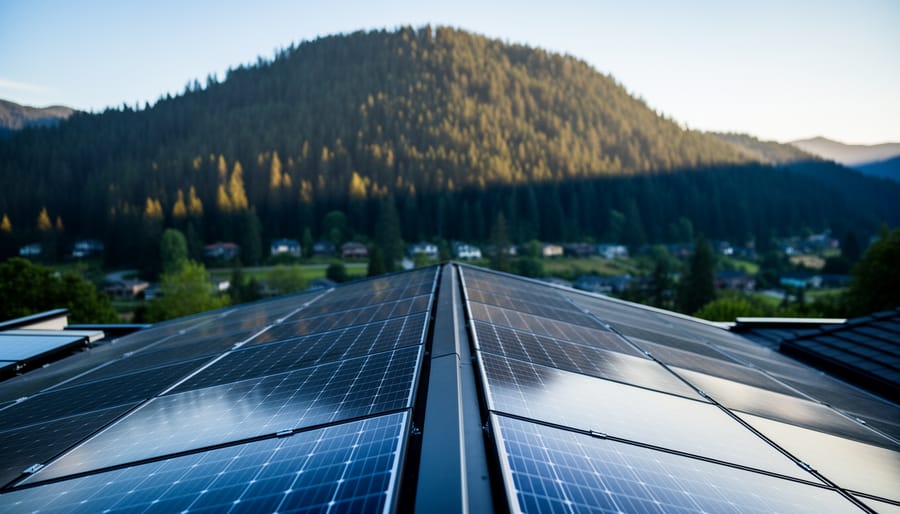
Picture this: your solar panels are producing clean energy under bright sunshine, yet your electricity output reads 30% lower than your neighbor’s identical system just down the street. The culprit? That hill to your east casting shadows across your roof each morning—a phenomenon called horizontal shading.
Horizontal shading occurs when nearby terrain features like mountains, hills, or valleys block sunlight from reaching your solar panels at certain times of day or year. In British Columbia, where dramatic landscapes define our communities, this isn’t just a technical consideration—it’s a critical factor that can make or break your solar investment’s performance.
Understanding horizontal shading matters because it directly impacts your energy production and financial returns. A system designed without accounting for that eastern ridge might generate thousands of kilowatt-hours less annually than projected, extending your payback period by years. For BC homeowners investing $15,000 to $30,000 in solar installations, accurately assessing terrain-related shading means the difference between a smart investment and a disappointing one.
The good news? Horizontal shading is predictable and manageable when you know what to look for. Modern assessment tools can map your site’s unique shading patterns throughout the year, helping you optimize panel placement or adjust your expectations accordingly. Whether you’re in the Fraser Valley, the Kootenays, or coastal communities, understanding your property’s relationship with surrounding terrain is your first step toward maximizing solar potential.
What Horizontal Shading Really Means for Your Solar Investment
When you picture shade affecting solar panels, you probably think of a tree casting a shadow across your roof. But in British Columbia, there’s another type of shading that’s equally important to understand: horizontal shading. Unlike the shadow from nearby trees or buildings, horizontal shading comes from distant terrain features like mountains, hills, and ridges that block sunlight when the sun sits low on the horizon.
Here’s what makes horizontal shading unique: these distant geographical features don’t cast traditional shadows on your property. Instead, they limit the hours of direct sunlight you receive each day by blocking the sun during early morning or late afternoon when it’s positioned at lower angles in the sky. Think of it as the sun disappearing behind a mountain range earlier than it would on flat terrain.
This matters particularly in BC, where our stunning mountainous landscape means many properties face significant horizontal shading challenges. A home in the Fraser Valley might lose morning sun to the coastal mountains, while properties in the Kootenays could see reduced afternoon production due to surrounding peaks. Even in relatively flat areas, distant ridgelines can shorten your effective solar window.
The financial impact is real. Horizontal shading reduces your total annual energy production, which directly affects your return on investment and payback period. However, understanding this factor early in your solar journey allows you to make informed decisions. Professional solar installers use specialized tools to measure horizon obstructions at your specific location, helping you get accurate production estimates rather than unwelcome surprises after installation.
The good news? Horizontal shading is predictable and quantifiable, making it manageable when planning your solar investment.
The Hidden Cost of Ignoring Your Site’s Horizon
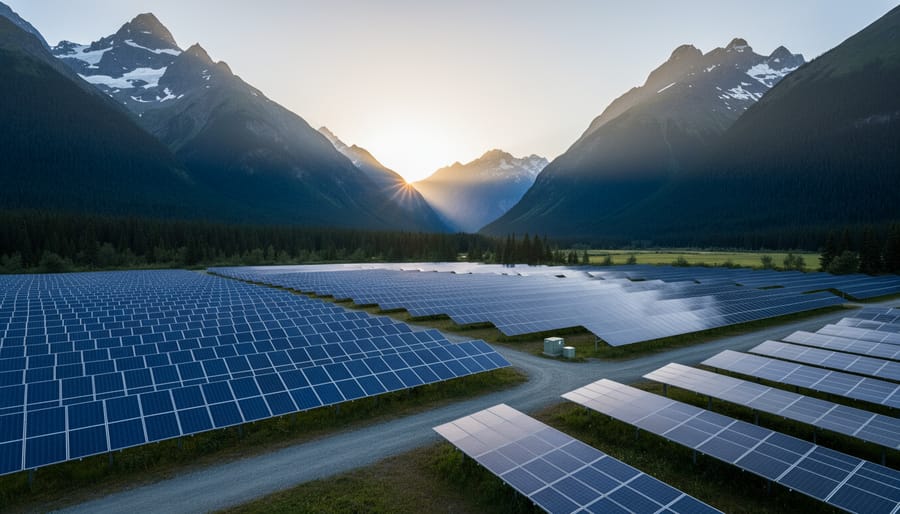
When the sun sits low on the horizon during BC’s winter months, even small obstructions can cast surprisingly long shadows across your solar panels. This phenomenon, known as horizon shading, can quietly chip away at your system’s energy production and financial returns—often without homeowners realizing it until they review their first year of data.
The impact varies throughout the year, but it’s most pronounced from November through February when the sun’s path stays closer to the horizon line. During these months, a tree line or hillside that seems insignificant in summer can block direct sunlight during crucial mid-morning and late-afternoon hours. For a typical residential installation in the Lower Mainland, horizon shading can reduce annual energy production by 10-25%, depending on the severity of obstructions.
Consider a homeowner in Coquitlam who installed a 6kW system expecting to generate 6,500 kWh annually. With moderate horizon shading from mature trees to the southeast, their actual production dropped to 5,200 kWh—a 20% reduction. That translates to roughly $200-300 in lost annual savings and extends the payback period by two to three years.
The financial impact compounds over your system’s 25-year lifespan. That same Coquitlam installation could lose $5,000-7,500 in potential savings over time—money that could have offset the initial investment significantly faster. Understanding your site’s horizon profile before installation helps set realistic expectations and guides decisions about panel placement, tree trimming, or even whether solar makes economic sense for your specific location.
How Terrain Shading Analysis Actually Works
The Sun Path Diagram: Your Solar Site’s Fingerprint
Think of a sun path diagram as your solar site’s unique fingerprint—it reveals exactly where and when sunlight will reach your property throughout the year. This circular diagram maps the sun’s journey across the sky during different seasons, with arcs showing the sun’s position from sunrise to sunset. In British Columbia, these paths vary dramatically between our long summer days and shorter winter periods.
Here’s where it gets practical: your solar installer will overlay your property’s terrain profile onto this diagram. Those mountains to the east? They’ll show up as shaded areas blocking morning sun. That tree line to the southwest? It appears as an obstruction during certain months. This overlay creates a visual snapshot of exactly when and where horizontal shading affects your panels.
For a Squamish homeowner, the sun path diagram might reveal that nearby mountain peaks block sunlight until 9 AM during winter months. A Kelowna resident might discover that a hillside only impacts their panels during early morning hours in December. This information isn’t just interesting—it’s essential for sizing your system correctly and setting realistic expectations for year-round energy production.
Your installer uses specialized tools to measure the horizon profile from your roof, creating an accurate diagram that accounts for every peak, valley, and obstacle. This becomes the foundation for calculating your system’s actual performance and ensuring your investment delivers the returns you expect.
Modern Tools That Map Your Horizon
Understanding how mountains and trees affect your solar potential no longer requires guesswork. Today’s certified solar installers in British Columbia use sophisticated tools to create precise horizon profiles for every installation site.
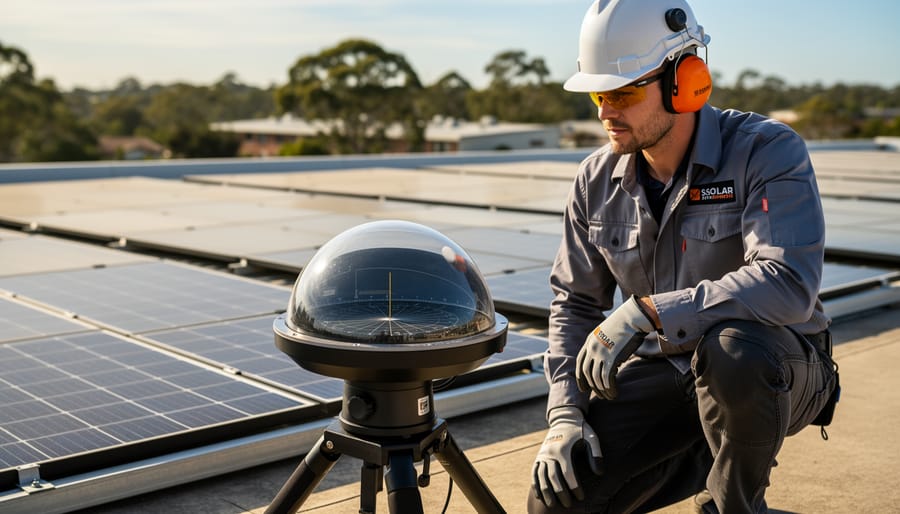
The Solar Pathfinder remains a trusted field device that resembles a transparent dome placed at your proposed panel location. When positioned correctly, it captures a complete 360-degree view of your horizon, showing exactly where obstructions will block sunlight throughout the year. Many BC installers still rely on this proven technology during initial site visits because it provides immediate, visual results that homeowners can understand.
Digital apps have transformed how we analyze shading patterns. Tools like Solmetric’s SunEye and smartphone applications now allow installers to photograph your site and generate detailed shading reports within minutes. These apps calculate the percentage of available sunlight your location receives, accounting for seasonal sun paths and local terrain features. Some even incorporate real-time data specific to BC’s latitude and typical weather patterns.
Satellite-based terrain modeling represents the cutting edge of horizon analysis. These systems use LiDAR data and topographic mapping to create three-dimensional models of your property and surrounding landscape. Google’s Project Sunroof and similar platforms can assess your roof’s solar potential before an installer even visits your home.
When you request a site assessment from qualified BC installers, expect them to combine multiple technologies for accuracy. They’ll measure your specific horizon line, calculate shading losses for different seasons, and provide concrete data about your site’s solar production potential. This thorough analysis ensures your investment delivers expected returns and helps identify the optimal panel placement for maximum energy generation year-round.
BC-Specific Shading Challenges You Need to Know
Coastal Mountains and Valley Sites
BC’s coastal regions present unique horizontal shading challenges due to their dramatic terrain. The Coast Mountains create significant east and west shading for properties in the Lower Mainland, Fraser Valley, and communities along the Sea-to-Sky corridor. If you live in areas like Squamish, Whistler, or even parts of North Vancouver, nearby peaks can block early morning or late afternoon sun, reducing your solar production window.
Valley locations throughout the region experience similar effects. Properties in narrow valleys may see reduced winter sun exposure when the sun sits lower on the horizon. Vancouver Island’s mountainous spine affects solar potential differently depending on whether you’re on the windward or leeward side, with coastal communities like Tofino and Ucluelet facing different shading patterns than Nanaimo or Victoria.
Understanding your site’s specific mountain and valley shading is essential for accurate solar production estimates. A home in Abbotsford will have different considerations than one in Port Moody or Campbell River. Professional installers use specialized software to map these terrain features and predict seasonal shading impacts, helping you make informed decisions about panel placement and system sizing for your coastal BC location.
Interior Valleys and Winter Sun Access
British Columbia’s interior valleys present distinct solar challenges that homeowners and businesses need to understand before installing panels. In regions like the Okanagan and Kootenays, the combination of steep valley walls and lower winter sun angles creates pronounced shading patterns that can significantly impact energy production during the coldest months when you need it most.
Unlike coastal areas, these interior communities experience much lower sun angles in winter—sometimes as low as 15-20 degrees above the horizon at solar noon. When you add surrounding mountain terrain, south-facing slopes that seem ideal in summer may receive limited direct sunlight from November through February. This makes understanding your specific site’s shading profile absolutely essential.
Valley orientation matters tremendously. A property in Vernon might face different challenges than one in Nelson, even with similar roof configurations. East-west valleys can block morning or afternoon sun, while narrow north-south valleys may create surprisingly favorable conditions despite the mountainous terrain.
The good news? Local solar installers familiar with these winter conditions can conduct detailed shading analyses using specialized software that accounts for your valley’s unique topography. This assessment helps optimize panel placement and set realistic production expectations, ensuring your investment delivers returns year-round.
Northern BC Considerations
Northern BC communities face unique solar challenges due to extreme seasonal sun angles. In summer, the sun barely sets, creating extended daylight hours with lower sun angles across the horizon. Winter brings the opposite—limited daylight with the sun tracking very low across the southern sky, making even modest terrain features or vegetation significant obstacles.
For homeowners in Prince George, Fort St. John, or Dawson Creek, horizon analysis becomes especially critical. A tree line or hillside that seems insignificant during summer site visits might completely block precious winter sunlight when you need solar production most for heating and lighting.
The good news? Understanding these patterns helps installers optimize panel placement and tilt angles specifically for northern conditions. Some northern BC residents have successfully worked with qualified local installers to design systems accounting for seasonal variations, achieving reliable year-round performance. Before moving forward with solar, request a detailed horizon analysis that accounts for your community’s specific latitude and seasonal sun paths—this ensures your investment delivers returns even during those challenging winter months.
Real BC Homes: When Horizon Analysis Made the Difference
When Sarah and Marcus considered solar for their Kelowna home, they were excited about the southern exposure—until their installer conducted a horizon analysis. The assessment revealed that a ridge about 200 meters away would cast shadows across their roof between November and January, reducing winter production by nearly 40%. Rather than abandoning solar entirely, they worked with their installer to adjust the system size and angle, focusing panels on the western section of their roof where shading was minimal. The result? A system that performs exactly as projected, with accurate financial returns and no unwelcome surprises on their first winter utility bill. Sarah notes that understanding the shading impact upfront helped them set realistic expectations and avoid overspending on panels that wouldn’t have produced efficiently.
In Squamish, the Chen family faced a different challenge. Their property sat in a valley with mountains on three sides, and they assumed solar wouldn’t work for them. A detailed horizon analysis told a different story. While morning shading from the eastern peaks did reduce early-day production, their roof received excellent sun from 10 AM through sunset year-round. Their installer used this data to design a system optimized for afternoon generation, when household energy use naturally peaks. Three years later, their solar array consistently offsets 75% of their annual electricity consumption—far better than they’d imagined possible.
Both families learned the same valuable lesson: horizon analysis transforms assumptions into actionable data. Instead of guessing whether solar makes sense for challenging properties, BC homeowners can now make informed decisions based on their specific terrain. The analysis takes just minutes during a site assessment but can mean the difference between a solar system that delivers on its promise and one that disappoints.
What to Ask Your Solar Installer About Terrain Shading
Before committing to solar, protect your investment by asking the right questions about how BC’s terrain will affect your system’s performance. A thorough horizon analysis should be a non-negotiable part of every solar consultation.
Start by asking your installer to explain their site assessment process. Request to see how they measure horizon angles and account for shading from nearby objects as well as distant terrain features. Reputable installers use specialized tools like solar pathfinders or digital shade analysis software that can predict shading patterns throughout the year.
Ask specifically: Will you provide a horizon profile for my property? This visual representation should show the elevation angles of surrounding terrain and buildings at different compass directions. Request that they identify the times of year when horizon shading will be most significant for your location.
Inquire about how horizon shading calculations factor into your energy production estimates. Your installer should provide detailed monthly or seasonal projections that account for reduced winter sun exposure. Ask them to explain the difference between summer and winter production and whether your system design has been optimized accordingly.
Red flags to watch for include installers who dismiss terrain concerns without measurement, provide only generic production estimates without site-specific shading analysis, or cannot explain how they account for BC’s unique latitude and seasonal variations. A professional site assessment should include written documentation of shading analysis, not just verbal assurances.
Finally, request references from customers with similar terrain challenges. Ask whether panel placement or tilt angles have been adjusted to minimize horizon shading impacts. The right installer will welcome these questions and provide clear, documented answers.
Quick Ways to Check Your Site’s Horizon Before Calling an Installer
Before reaching out to a solar installer, you can get a helpful preliminary sense of whether horizon shading might affect your property using a few simple approaches.
Start with direct observation. On a clear day, visit your proposed solar panel location at different times—early morning, midday, and late afternoon. Note where the sun rises and sets relative to nearby mountains, hills, or tall trees. In BC’s varied terrain, particularly in valley communities like Squamish or Nelson, you’ll quickly see if mountains block the sun during key hours. Take photos facing east, south, and west to review later.
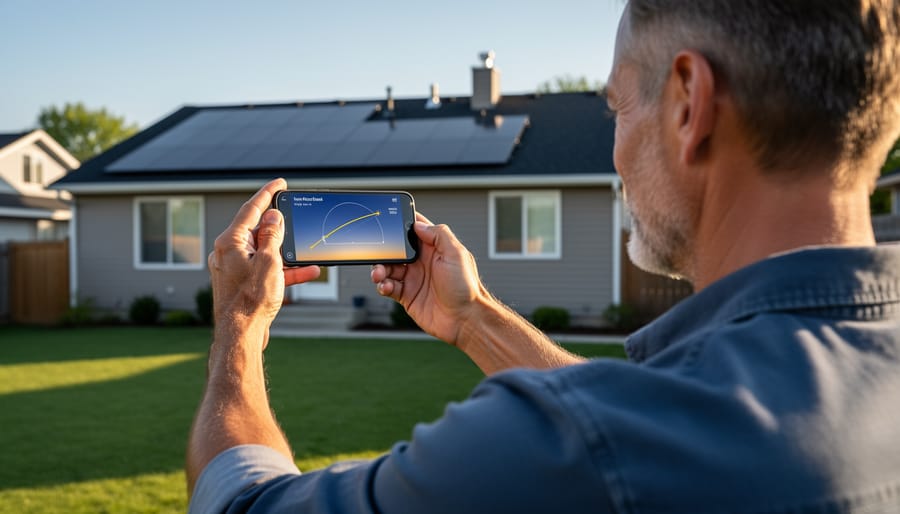
Smartphone apps offer another accessible option. Sun surveyor tools and solar pathfinder apps use your phone’s camera and GPS to overlay the sun’s path throughout the year onto your actual view. While these won’t replace professional analysis, they give you a visual understanding of potential shading patterns. Many are free or low-cost, making them perfect starting points.
Free online tools like Google’s Project Sunroof can provide initial insights for some BC locations, though coverage varies. The tool analyzes satellite imagery and provides rough estimates of solar potential, including some shading considerations.
For a quick reality check, observe your property on the shortest day of the year (winter solstice, around December 21). If the sun clears your horizon obstacles during most daylight hours on this day, you’re likely in good shape year-round.
Remember, these DIY methods are valuable for initial assessment but shouldn’t replace professional evaluation. A qualified solar installer uses specialized equipment to measure precise shading impacts and calculate actual energy production. Think of your preliminary checks as gathering information before your consultation, helping you ask better questions and understand your installer’s recommendations.
Understanding your site’s horizon profile isn’t just a technical checkbox—it’s the foundation of a successful solar investment. In British Columbia’s diverse landscape, from coastal valleys to mountainous interior regions, horizon shading analysis reveals the real solar potential of your property. This critical assessment helps you avoid costly surprises, ensures your system is sized appropriately for actual conditions, and sets realistic expectations for energy production throughout the year.
Without proper horizon analysis, you might overestimate your system’s output by 20% or more, leading to disappointing returns and extended payback periods. Conversely, understanding shading patterns can reveal opportunities to optimize panel placement or adjust your energy strategy accordingly.
Whether you’re a homeowner in the Fraser Valley dealing with morning mountain shadows or a business in the Okanagan maximizing southern exposure, the right site assessment makes all the difference. Don’t leave your solar investment to guesswork. Connect with certified Solar BC installers who conduct comprehensive horizon shading analysis as part of their site assessments. They’ll help you design a system matched to your property’s unique conditions, ensuring you get the maximum return on your sustainable energy investment.