
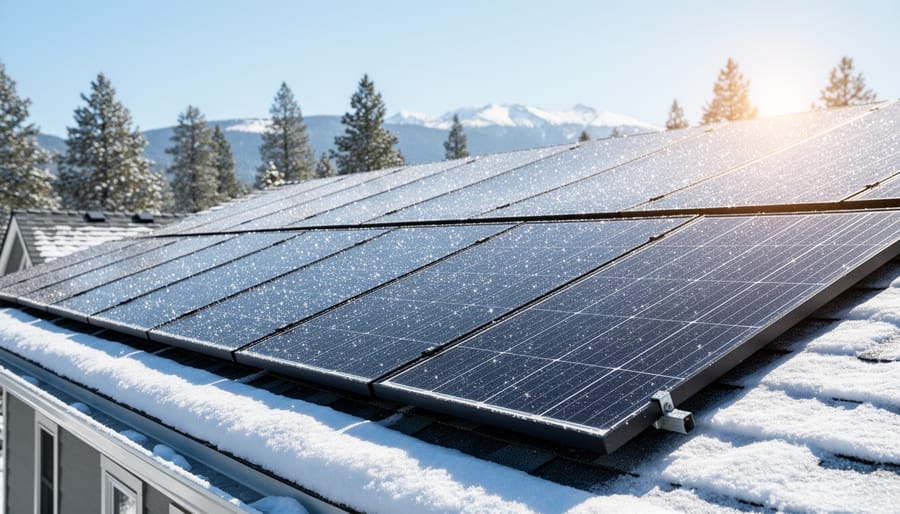
Your solar panels produce less electricity on hot days than cool ones—a reality that surprises most people who assume sunshine equals maximum power. For every degree Celsius above 25°C, most panels lose 0.3-0.5% of their efficiency, meaning a scorching 35°C day reduces output by up to 5% compared to optimal conditions.
This temperature factor matters significantly for British Columbia residents considering solar investment. While our summers bring warmth, BC’s moderate coastal climate and cooler interior regions actually create ideal conditions for year-round solar performance. A panel operating at 15°C on a bright winter day often outperforms the same panel during summer heat, maximizing your energy production when heating demands peak.
Understanding this temperature-efficiency relationship empowers you to make smarter decisions about panel selection, installation angles, and realistic performance expectations. The good news: BC’s climate provides a natural advantage, with our cooler temperatures offsetting efficiency losses seen in hotter regions. Combined with adequate ventilation beneath panels and strategic positioning, your system can maintain optimal performance throughout the year, delivering reliable clean energy and meaningful cost savings regardless of season.
The Temperature-Efficiency Connection: What Really Happens
How Silicon Responds to Heat
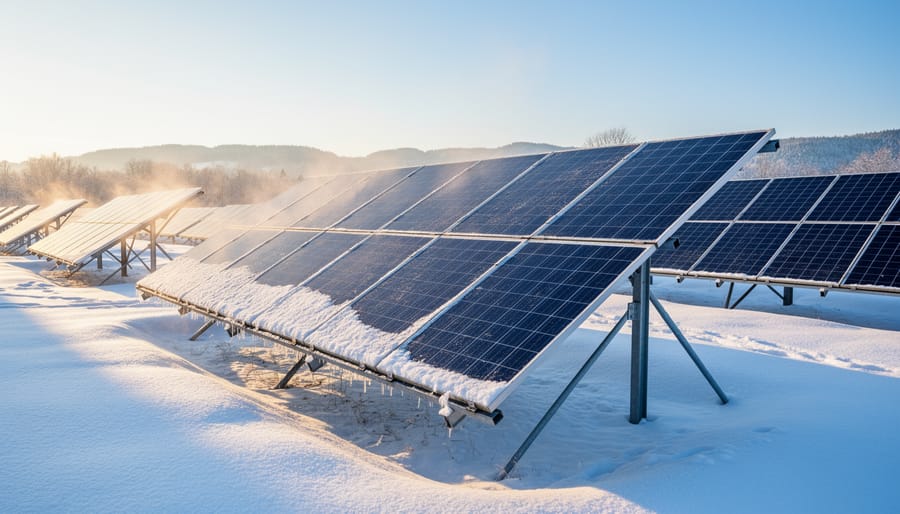
Think of solar panels like runners on a track. Just as athletes perform best in cool morning conditions rather than midday heat, solar cells work more efficiently when they’re cooler. Here’s why: silicon, the primary material in most solar panels, acts as a semiconductor that converts sunlight into electricity. When temperatures rise, the silicon atoms vibrate more intensely, making it harder for electrons to flow smoothly through the material. This increased resistance reduces the voltage your panels can produce.
For every degree Celsius above 25°C (77°F), most solar panels lose about 0.3% to 0.5% of their efficiency. That might sound small, but on a hot summer day when panels reach 65°C, you could see a 12-15% drop in output compared to their rated capacity.
The good news for British Columbia residents? Our moderate coastal climate works in your favour. While panels still generate electricity from intense sunlight during warmer months, our cooler temperatures mean you’re often operating closer to optimal conditions than homeowners in hotter regions. Those crisp, sunny days we experience throughout much of the year are actually ideal for maximum solar performance.
The Temperature Coefficient Explained
The temperature coefficient tells you how much power your solar panels lose for every degree Celsius above their standard testing temperature of 25°C. Think of it as your panel’s sensitivity to heat. Most modern panels have a temperature coefficient between -0.3% and -0.5% per degree Celsius.
Here’s what this means in practice: On a sunny summer day when your panels reach 45°C (20 degrees above standard), a panel with a -0.4% coefficient would lose about 8% of its rated power output. So a 400-watt panel would produce roughly 368 watts instead.
For BC homeowners, this is actually good news. Our moderate climate means panels rarely experience extreme heat, unlike Arizona or California installations. A Vancouver rooftop on a typical sunny day might see panels at 35°C, resulting in only 4% power loss.
When comparing panels, look for lower temperature coefficients (closer to -0.3%). Premium panels from manufacturers like LG and SunPower typically perform better in heat. You can calculate solar panel efficiency based on your local temperature patterns to project real-world performance and ensure you’re getting accurate savings estimates for your specific location.
Real-World Performance: BC’s Climate Advantage
Coastal vs Interior BC: Temperature Impact Comparison
British Columbia’s diverse climate zones create distinct solar performance patterns that matter for your investment. Let’s look at real-world data comparing coastal and interior regions.
In Vancouver, the coastal climate keeps average summer temperatures around 22°C, rarely exceeding 30°C. This moderate climate means solar panels operate closer to their optimal temperature range throughout the year. During a typical July day, panels maintain efficiency even during peak sunlight hours because the marine breeze naturally regulates temperature.
Kelowna tells a different story. Interior summers regularly hit 32°C, with heat waves pushing temperatures above 38°C. A solar installation there might see a 10-15% efficiency drop on the hottest days compared to cooler spring months. However, Kelowna’s advantage lies in receiving more sunny days annually—approximately 2,000 hours of sunshine compared to Vancouver’s 1,900 hours.
Here’s what this means practically: A Vancouver system might produce steadier output year-round with less temperature-related efficiency loss. A Kelowna system experiences more dramatic seasonal variation but benefits from extended sunshine duration, often compensating for heat-related losses with sheer volume of sunny days.
One Kelowna business owner shared that their 50-panel commercial array produces 8% less per panel on extreme heat days, but their annual output still exceeds their Vancouver counterpart due to consistent summer sunshine. The takeaway? Both regions offer excellent solar potential—coastal installations enjoy temperature advantages, while interior systems capitalize on abundant sunshine. Understanding your specific microclimate helps set realistic performance expectations and maximizes your solar investment returns.
Why BC Solar Owners Get a Performance Bonus
BC’s moderate climate creates an unexpected advantage for solar energy. While panels are tested at 25°C, they perform even better in cooler conditions. During spring and fall, when BC temperatures hover between 10-20°C, solar panels operate at peak efficiency, often exceeding their rated capacity.
Take the Johnson family in Kelowna as an example. Their 6kW system consistently outperformed projections during shoulder seasons, generating 15% more power than expected in April and October. Even on cooler summer days, their panels maintained excellent output thanks to BC’s comfortable temperatures rarely exceeding 30°C.
This temperature advantage contributes significantly to solar performance in BC weather throughout the year. The Johnsons tracked their production data and discovered their annual energy generation exceeded installer estimates by 8%, translating to additional savings of $200 yearly.
BC’s coastal regions particularly benefit from ocean-moderated temperatures. Interior locations experience temperature variations but avoid the extreme heat that reduces panel efficiency in hotter climates. This means your solar investment works harder year-round, delivering consistent returns regardless of season. BC solar owners genuinely enjoy a performance bonus simply by living where temperatures naturally optimize solar output.
Reading Your Solar Panel Temperature Specs
What to Look for on the Specification Sheet
When comparing solar panels, two critical temperature metrics appear on every specification sheet: the temperature coefficient and the Nominal Operating Cell Temperature (NOCT).
The temperature coefficient, measured as a percentage per degree Celsius, tells you how much efficiency drops as panels heat up. Look for numbers between -0.3% and -0.5% per °C. Premium panels from manufacturers like LG or SunPower often achieve -0.29% to -0.35%, meaning they lose less performance in warm conditions. Budget panels may show -0.45% or higher, which translates to noticeably lower output on sunny days.
Here’s a practical example: A panel rated at 400 watts with a -0.4% coefficient operating at 35°C (10°C above standard test conditions) produces approximately 384 watts. The same panel with a -0.3% coefficient would generate 388 watts—a meaningful difference over years of operation.
NOCT indicates the temperature panels reach under typical conditions (20°C ambient, 800 W/m² irradiance, 1 m/s wind). Look for NOCT values between 42-46°C. Lower numbers suggest better heat management through improved panel design.
For BC’s moderate climate, you’ll benefit from these specifications during summer months, particularly in the Interior and Okanagan regions. Panels with strong temperature coefficients maintain higher output during those warm, sunny days when your system generates peak power, maximizing your return on investment throughout the year.

Comparing Panel Types: Monocrystalline vs Polycrystalline in Heat
Not all solar panels handle heat the same way. Monocrystalline panels typically have temperature coefficients around -0.35% to -0.40% per degree Celsius, meaning they lose slightly less efficiency as temperatures rise. Polycrystalline panels usually sit at -0.45% to -0.50%, making them marginally more affected by heat.
For BC homeowners, this difference matters less than you might think. Our moderate coastal climate and cooler interior temperatures mean panels rarely experience extreme heat stress. A Vancouver installation, for instance, might see only 3-4% annual efficiency difference between panel types due to temperature alone.
The real consideration? Monocrystalline panels offer better space efficiency if your roof area is limited, while polycrystalline options provide excellent value for larger installations. In BC’s climate, both technologies perform reliably year-round. Focus on overall system quality, warranty coverage, and certified installers familiar with local conditions rather than getting caught up in small temperature coefficient differences that won’t significantly impact your energy production.
Maximizing Efficiency in All Temperatures
Installation Techniques That Keep Panels Cooler
Proper installation makes a significant difference in keeping your solar panels cool and efficient. The key is maximizing airflow beneath and around your panels to prevent heat buildup.
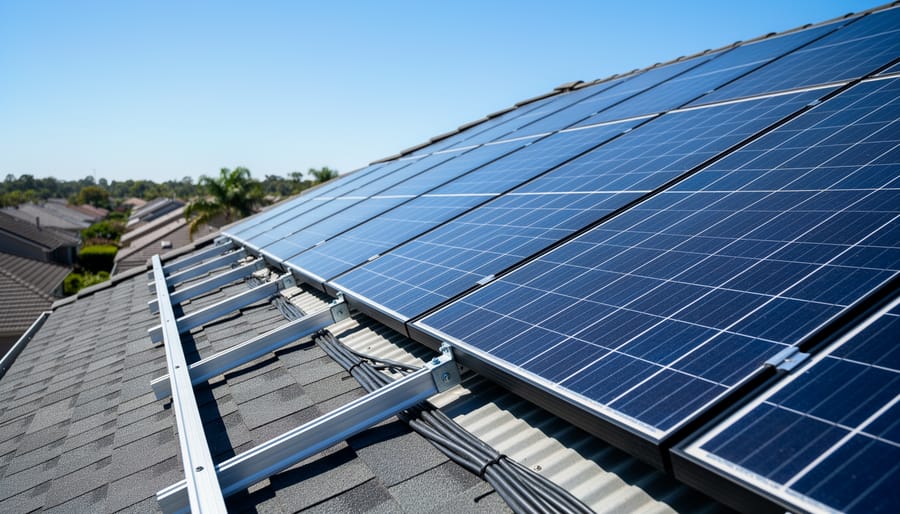
Raised mounting systems are your best friend in BC’s climate. Installing panels 4-6 inches above your roof creates natural air circulation that whisks away heat. Ground-mounted systems offer even better cooling potential, as air flows freely on all sides. A Vancouver homeowner recently reported their ground-mounted array runs 10-15°C cooler than their neighbour’s flush-mounted panels.
Spacing between panels matters too. Leave gaps of at least 1-2 inches between modules to allow hot air to escape rather than trap heat. While this slightly reduces the number of panels you can fit, the efficiency gains often outweigh the trade-off.
Consider panel orientation carefully. In our northern latitude, south-facing installations receive optimal sunlight while naturally staying cooler than flat or poorly angled installations. Light-coloured roofing materials also reflect rather than absorb heat, keeping the entire system cooler.
Professional installation ensures these cooling techniques are properly implemented. Experienced installers understand BC’s unique climate conditions and can optimize your system’s ventilation from day one, protecting your investment and maximizing long-term performance.
Seasonal Maintenance for Optimal Performance
Keeping your solar panels in top condition throughout BC’s changing seasons helps maintain efficiency and maximize your energy production. In spring, remove accumulated winter debris like leaves and needles, and inspect for any damage from snow loads. Summer requires checking for dust buildup, especially during dry months when Vancouver Island and Interior BC experience less rainfall to naturally clean panels.
Fall preparation is crucial before winter arrives. Clear nearby trees that drop leaves and ensure proper drainage around panel installations to prevent water pooling. During winter, our moderate coastal temperatures actually work in your favor for efficiency, but occasional snow removal may be necessary in higher elevations. A simple seasonal checklist includes visual inspections every three months, professional cleaning once or twice yearly depending on your location, and monitoring your system’s output through its app or display.
Local solar installation companies throughout BC often provide maintenance packages tailored to regional conditions, making it easy to keep your system performing optimally year-round. Regular attention ensures your panels continue delivering the efficiency advantages that BC’s cooler climate naturally provides.
When to Consider Active Cooling Solutions
For most BC homeowners, passive cooling through proper installation is sufficient—active cooling systems typically don’t make economic sense for residential rooftop arrays. However, if you’re operating a large commercial installation in BC’s warmer interior regions (like the Okanagan), where summer temperatures consistently exceed 30°C, active cooling might warrant consideration. Ground-mounted solar farms and systems experiencing restricted airflow may also benefit. The key question: will the efficiency gains from cooling offset the system’s cost and energy consumption? In BC’s moderate coastal climate, the answer is usually no. A local Kelowna business recently calculated that improved panel tilt and spacing provided better returns than expensive cooling equipment. Before investing in cooling technology, consult with a qualified solar installer who understands BC’s regional climate variations. Most homeowners will see better results focusing on optimal panel placement, regular cleaning, and ensuring adequate ventilation beneath panels during installation.
Calculate Your True Efficiency: Temperature Matters
Understanding how temperature affects your solar panels is one thing—knowing your actual expected output is what matters for making informed decisions. Fortunately, BC residents can easily estimate their real-world solar production using a straightforward calculation method.
Start with your panel’s rated capacity. If you have a 400-watt panel, that’s your baseline under standard test conditions (25°C). Next, check your panel’s temperature coefficient, typically listed on the manufacturer’s spec sheet—usually around -0.35% per degree Celsius.
Now factor in your local conditions. In Vancouver, summer roof temperatures might reach 40°C, meaning a 15°C increase from the testing standard. Multiply that 15°C by your temperature coefficient (-0.35%), giving you approximately 5.25% efficiency loss. Your 400-watt panel effectively produces 379 watts during peak summer heat.
The encouraging news? BC’s cooler climate means you’ll often operate closer to—or even above—rated capacity during spring, fall, and winter months when temperatures drop. A panel operating at 15°C actually gains about 3.5% efficiency over its rating.
To calculate your solar output more precisely, track your local monthly temperature averages and apply these adjustments throughout the year. Many BC homeowners discover their annual production exceeds initial expectations because our moderate climate compensates beautifully for those hot summer days, delivering consistent, reliable energy generation year-round.
British Columbia’s cooler climate is actually a significant advantage for solar energy production. While sunshine powers your panels, cooler temperatures allow them to operate at peak efficiency, meaning you’re getting more electricity from every ray of sunlight. This makes our region particularly well-suited for solar investment, combining abundant daylight hours with temperature conditions that maximize performance.
Understanding how temperature affects your solar panels is just the first step. Working with certified local installers who know BC’s unique climate patterns ensures your system is designed and positioned for optimal year-round performance. These professionals can account for seasonal temperature variations, recommend the best panel types for your specific location, and help you maximize your return on investment.
Ready to explore solar for your home or business? Connect with experienced installers in your area who understand how to harness BC’s temperature advantages. Use Solar BC’s calculation tools to estimate your potential savings and discover how much energy you could generate. The combination of our favorable climate and expert local guidance makes now the perfect time to join BC’s growing solar community.