
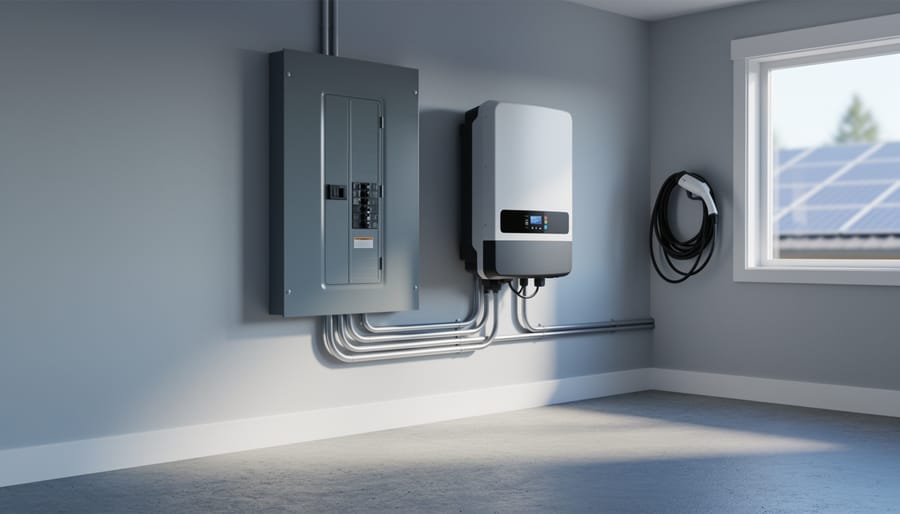
Check your home’s electrical capacity before installing solar panels by locating your main breaker—if it reads 100 amps or less, you’ll likely need an upgrade to safely accommodate solar energy production. Most BC homes built before 1980 have 100-amp panels that can’t handle the combined load of modern appliances plus solar generation, creating potential safety hazards and limiting your solar investment.
Calculate whether you need an upgrade by adding your planned solar system size to your home’s current electrical draw. A typical 8-10 kW solar system requires approximately 40-50 amps of capacity, and BC Hydro recommends maintaining at least 20% spare capacity in your panel. If your current usage hovers near 80 amps on a 100-amp panel, upgrading to 200 amps before solar installation prevents costly retrofits and ensures your system operates at full capacity.
Expect to invest $3,000-$5,000 for a standard 200-amp panel upgrade in British Columbia, including permits, materials, and licensed electrician labor. This cost often pays for itself within your solar system’s lifetime by eliminating power restrictions that would otherwise limit your solar production and prevent you from adding battery storage later.
Time your upgrade strategically by coordinating with your solar installation timeline—completing the electrical work 2-4 weeks before solar panels arrive streamlines inspections and avoids installation delays. Many BC solar installers partner with certified electricians who understand municipal permit requirements across different communities, from Vancouver to the Interior, ensuring your upgrade meets local codes while preparing your home for decades of renewable energy generation.
Understanding Your Current Electrical Panel Capacity
What Does 200 Amps Actually Mean for Your Home?
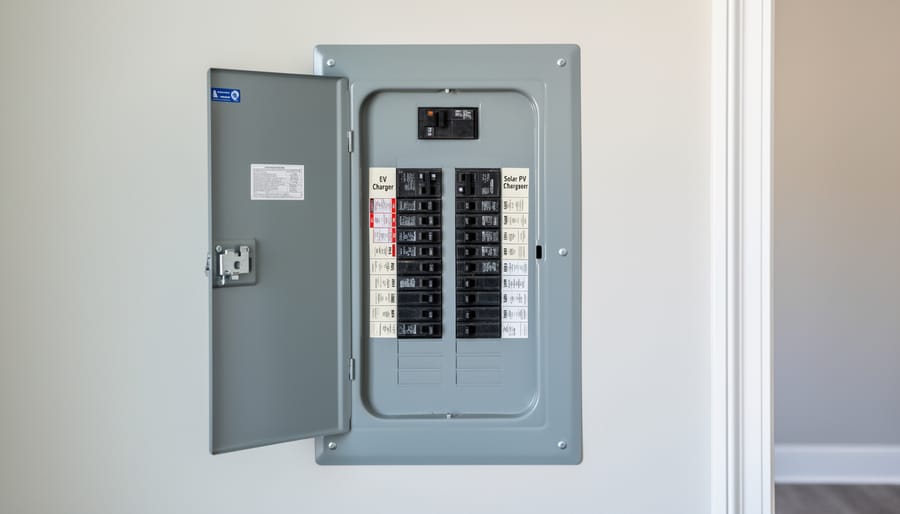
Think of amperage as your home’s electrical capacity — like the width of a pipe determining how much water can flow through at once. A 200-amp electrical panel means your home can safely handle 200 amps of electricity flowing simultaneously across all circuits.
In practical terms, this translates to roughly 48,000 watts of power available at any moment (200 amps x 240 volts). To put this in perspective, a typical BC home with standard appliances like a refrigerator, washer, dryer, heating system, and lighting might use 100-150 amps during peak hours.
When you add solar panels with battery storage, an electric vehicle charger, or heat pumps, that capacity fills up quickly. For example, a Level 2 EV charger alone can draw 40-50 amps, while a heat pump system might use another 30-40 amps. This is why many homeowners planning solar installations discover their existing 100-amp panel won’t meet their evolving energy needs.
Understanding your amperage capacity helps you make informed decisions about which sustainable upgrades you can implement safely and effectively in your home.
Signs Your Panel Can’t Handle Your Energy Future
Your home gives clear signals when it’s time for an electrical upgrade. Frequent breaker trips are the most obvious warning—if you’re constantly resetting breakers when running multiple appliances, your panel is maxed out. Many BC homeowners notice lights dimming when the air conditioner kicks in or the kettle heats up, indicating voltage drops from overtaxed circuits.
Planning to add solar panels or an EV charger? Most residential panels below 200 amps simply can’t accommodate these additions safely. A typical Level 2 EV charger requires a dedicated 40-50 amp circuit, while solar installations need adequate capacity for both production and consumption. If your current panel is 100 amps or less, you’ll likely need an upgrade before going solar.
Watch for warm breaker panels or burning smells—these are serious safety concerns requiring immediate attention. Older panels with fused connections rather than circuit breakers are outdated and unable to support modern energy demands. The Nakamura family in Victoria faced exactly this situation. Their 1970s-era 100-amp panel couldn’t support their planned rooftop solar system, so they upgraded to 200 amps first. Now they’re generating clean energy and charging their electric vehicle worry-free.
When Solar Makes a Panel Upgrade Essential
The Solar + Electric Vehicle Equation
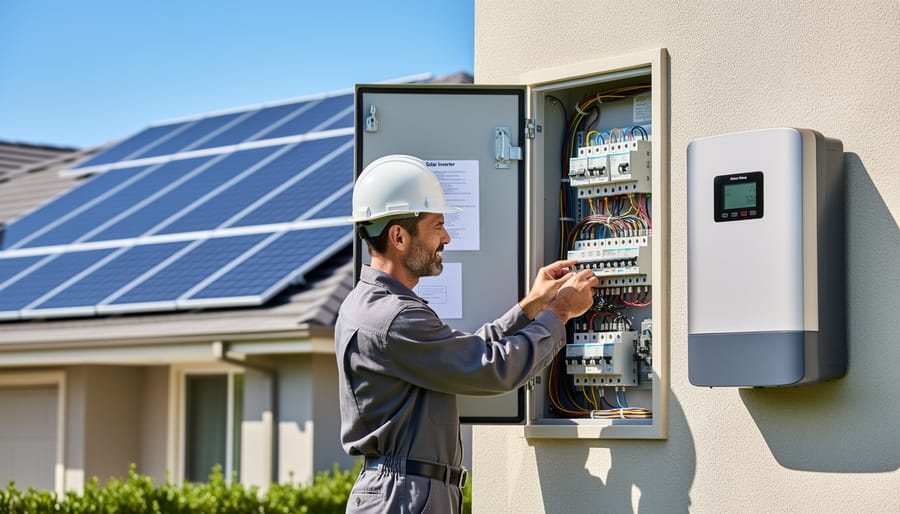
When you’re planning a solar panel installation in BC, adding an electric vehicle to the mix creates a compelling case for upgrading to 200 amps. Here’s why: a typical Level 2 EV charger draws 40-50 amps, while a solar system with battery backup can add another 30-40 amps to your electrical load. Combined, these two clean energy technologies can easily push a standard 100-amp panel beyond its safe capacity.
Consider the Johnsons from Victoria, who installed solar panels and purchased a Tesla. Their evening routine of charging their EV while running household appliances repeatedly tripped their 100-amp breaker. After upgrading to 200 amps, they now enjoy seamless solar EV charging without worrying about power limitations.
The beauty of this combination is that solar panels generate electricity during the day, which can offset the energy your EV uses at night. However, your electrical panel must handle the simultaneous demands of your home, charging equipment, and solar inverter. A 200-amp panel provides the headroom needed for both technologies to work efficiently together, future-proofing your home for BC’s clean energy transition.
Battery Storage Systems and Panel Requirements
Adding battery storage solutions to your solar setup is an excellent way to maximize energy independence, but these systems draw significant power that often exceeds what a standard 100-amp panel can safely handle. Home batteries like the Tesla Powerwall or Enphase Encharge typically require 30-50 amps of dedicated capacity just for charging and discharging cycles. When you factor in your existing household loads plus solar inverter requirements, a 200-amp upgrade becomes necessary to prevent overloading.
Many BC homeowners who initially installed solar panels are now returning to add battery backup for protection during power outages and to store excess summer generation for winter use. This trend means planning ahead for battery capacity during your initial panel upgrade can save you money and hassle down the road, avoiding a second electrical service upgrade later.
Using the Electrical Panel Capacity Calculator
What Information You’ll Need
Before you contact an electrician, gather key information to make your consultation productive and get an accurate assessment. Start by listing all current major appliances: electric stove, dryer, hot water heater, air conditioning, and any existing electric heating systems. Next, document your planned additions. Are you installing solar panels? Planning an EV charger for your electric vehicle? Considering a heat pump to reduce your carbon footprint? These upgrades significantly impact your electrical needs.
Locate your existing electrical panel and note the current amperage rating, typically found on the main breaker. Most older BC homes have 100-amp service, while newer construction features 200-amp panels. Take a photo of your panel’s label showing manufacturer details and age. Also check if your panel has available breaker slots for new circuits.
Finally, measure the distance from your panel to your utility connection point outside. This affects upgrade costs, as longer distances require more materials. Having this information ready helps electricians provide realistic quotes and timelines for your sustainable energy transition.
Reading Your Results: What the Numbers Tell You
Once you’ve run your numbers through the calculator, you’ll see several key figures that guide your decision. The first number shows your home’s current electrical capacity versus your actual usage. If you’re consistently using 75% or more of your existing panel’s capacity, an upgrade makes practical sense before adding solar panels.
Look for the projected load calculation, which includes your planned solar system. This shows whether your current panel can safely handle the additional circuits and equipment. Many BC homeowners discover they’re closer to capacity limits than expected, especially in homes built before 2000.
The cost estimate breaks down labour, materials, and permit fees specific to your municipality. Compare this against your solar installation timeline. If your existing panel is over 25 years old or shows signs of wear, upgrading now prevents delays and potential safety issues down the road.
Pay attention to the future capacity indicator. This tells you if 200 amps leaves room for other upgrades like electric vehicle charging or heat pumps. Many Vancouver Island residents who upgraded their panels report that planning for future needs saved them from needing another upgrade within five years. Use these numbers alongside quotes from licensed electricians to make a confident, informed choice that supports your clean energy goals.
The Cost Reality: What BC Homeowners Actually Pay
Breaking Down the Investment
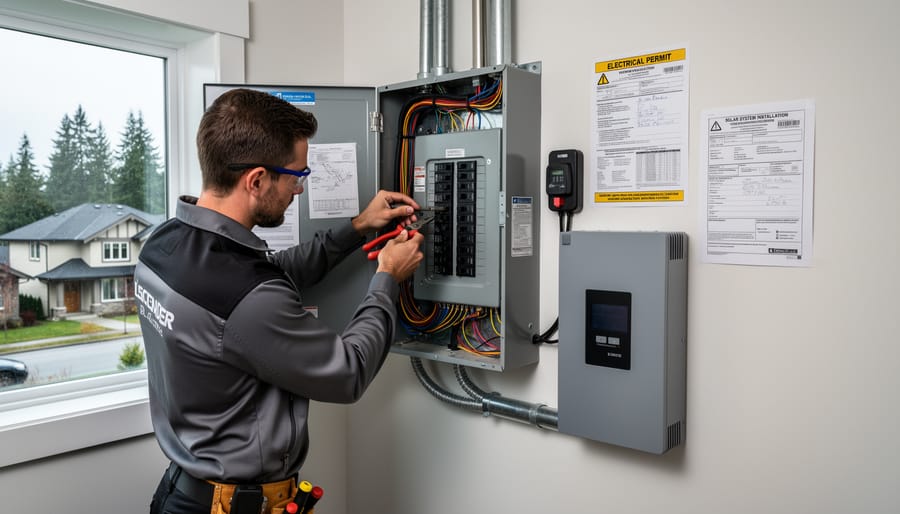
Understanding the cost breakdown helps you budget effectively and avoid surprises. In British Columbia, a typical 200 amp panel upgrade ranges from $2,500 to $4,500, depending on your home’s specific needs.
Here’s what you’re paying for: Electrical permits through your municipality typically cost $150-$300 and are required by BC law. The panel itself runs $400-$800 for quality equipment that meets Canadian electrical standards. Labor from a licensed electrician represents the largest expense at $1,500-$2,800, reflecting their expertise and liability insurance requirements.
Additional costs may include panel relocation if your current setup doesn’t meet today’s codes ($500-$1,200), service mast replacement for weather-damaged equipment ($300-$600), and sub-panel updates if you’re planning a solar installation ($400-$900).
BC-specific considerations matter too. Coastal homes may need corrosion-resistant materials, adding $200-$400. If you’re in a remote community, travel costs for electricians can increase labor by 15-25 percent. Many BC Hydro customers also bundle this upgrade with energy efficiency rebate applications, which can offset some costs.
The Kamloops family mentioned earlier spent $3,200 total, which proved worthwhile when their solar system began generating savings within the first month. Getting multiple quotes from licensed electricians ensures you’re getting fair pricing for your area.
Funding Options and Solar Rebate Coordination
Timing your panel upgrade with your solar installation can unlock significant savings. Many BC homeowners bundle these projects together, reducing overall solar installation costs by 15-20% through shared labour and permitting fees.
The CleanBC Better Homes program and BC solar incentives can offset upgrade expenses when coordinated properly. For example, the Richmond family from our community saved $1,200 by completing their 200-amp upgrade before their solar array installation, allowing them to claim both energy efficiency rebates and solar incentives in the same tax year.
Work with your solar installer early in the planning process. They can assess whether your current panel capacity supports your planned system size and help you time the upgrade strategically. Some installers offer package pricing that includes the electrical work, streamlining both the process and paperwork.
Pro tip: Apply for available rebates before starting work. Most programs require pre-approval, and documentation becomes simpler when you coordinate both projects under one timeline. Your electrical contractor should provide detailed invoices separating panel upgrade costs from solar-specific work to maximize your eligible rebate amounts.
Making the Decision: Upgrade Now or Later?
The ‘Future-Proofing’ Advantage
Combining your panel upgrade with solar installation makes both financial and practical sense. Most solar installers already coordinate with licensed electricians, meaning you’ll save on separate service calls and project management fees. You’ll also avoid the frustration of installing solar panels only to discover weeks later that your panel can’t handle the load, requiring a second round of permits and installation work.
The Thompsons in Kelowna learned this firsthand. By upgrading their 100-amp panel to 200 amps during their solar installation, they saved approximately $800 in redundant permit fees and labour costs compared to doing the work separately. Their electrician was already on-site, their yard was already prepared for equipment access, and they only needed one inspection visit.
Think of it as getting your electrical infrastructure ready for tomorrow’s needs today. Beyond solar, a 200-amp panel accommodates electric vehicle chargers, heat pumps, and other energy-efficient upgrades that British Columbia homeowners increasingly adopt. You’re not just installing solar panels; you’re creating a foundation for decades of sustainable living.
When You Can Safely Delay
If your current electrical system comfortably handles your existing loads and you’re not planning solar installation or major home upgrades in the near future, an immediate panel upgrade may not be necessary. Homeowners in older BC homes with 100-amp panels can often wait if they’re only using basic appliances and haven’t experienced frequent breaker trips or dimming lights. Similarly, if you’re planning to move within the next two years, delaying the upgrade makes financial sense unless it’s required for a home sale. However, keep in mind that many BC residents who initially delayed their upgrades later wished they’d completed them earlier when considering electric vehicle chargers or heat pumps. A Vancouver Island family, for example, postponed their upgrade for three years but eventually needed it when provincial incentives made solar installation too attractive to pass up.
Real BC Homeowner Stories
Maria Chen, a Vancouver homeowner, decided to install solar panels in 2023. During her initial consultation, the electrician identified that her 100-amp panel wouldn’t support both her home’s existing needs and the new 8kW solar array. “I’m so glad we discovered this early,” Maria shares. “We coordinated the panel upgrade with the solar installation, which meant only one permit process and one set of inspection fees. The electrician ran all the new wiring for solar at the same time, saving us about $800 in labour costs.”
Her upgrade took three days from start to finish, and she was generating clean energy within two weeks of completion. The total cost was $3,200 for the panel upgrade, but Maria notes the efficiency savings made it worthwhile. “My energy consultant showed me we’d need the extra capacity anyway within five years as we planned to add an EV charger.”
In contrast, James Wong from Victoria moved forward with his solar installation in 2022 without upgrading his 100-amp panel first. “The installer said we could make it work,” James explains. Six months later, he faced frequent breaker trips when running multiple appliances. He had to schedule a separate panel upgrade, which meant another round of permits, inspections, and electrician visits. “The second project cost me an extra $1,500 because the crew had to work around the existing solar setup. I wish I’d asked more questions upfront about our home’s capacity.”
Both homeowners agree that using a capacity calculator before starting any solar project would have provided clearer guidance from the beginning.
Upgrading to a 200 amp electrical panel is a significant decision that sets the foundation for your home’s energy future. Whether you’re planning a solar installation, adding an EV charger, or simply preparing for increased electrical demands, understanding your specific needs and costs is the first step toward making an informed choice.
Use the calculator tool provided in this article to assess your current electrical capacity and determine if an upgrade makes sense for your situation. Remember that timing matters: coordinating your panel upgrade with your solar installation can save you money and reduce disruption to your home.
The cost range we’ve outlined for British Columbia homeowners gives you realistic expectations, but every property is unique. Factors like your home’s age, current panel condition, and local permit requirements will influence your final investment.
Ready to move forward? Connect with certified electricians through Solar BC who understand both electrical systems and solar integration. These professionals can provide accurate quotes, help you navigate permits, and ensure your upgrade meets all safety standards while supporting your sustainable energy goals. Taking action today means you’ll be prepared for tomorrow’s clean energy opportunities.