
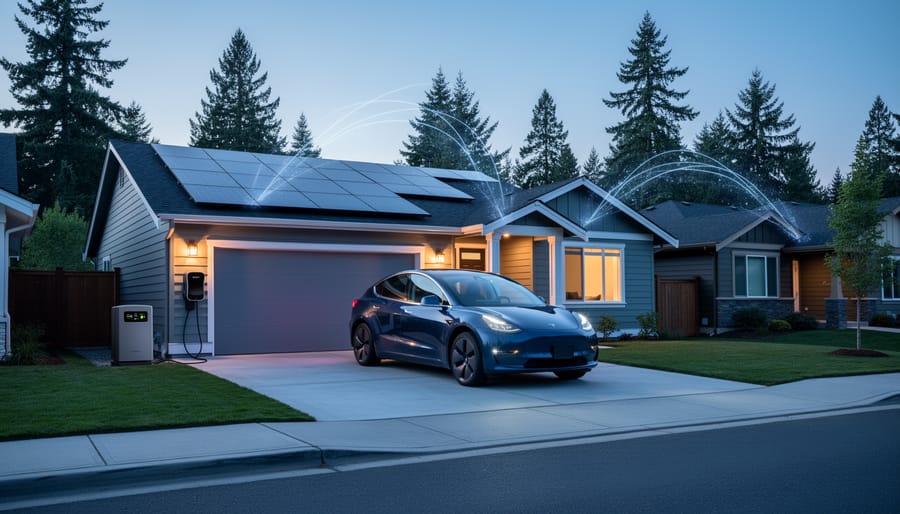
Your solar panels and EV charger represent a significant investment in clean energy, but they’re also becoming vulnerable entry points into your home network. As British Columbia rapidly adopts 5G-connected solar inverters and smart charging systems, cybercriminals are exploiting the same wireless connectivity that makes these systems convenient to monitor and control.
The stakes are real. Hackers can manipulate your inverter settings to damage equipment, steal your energy production data to map usage patterns, or use compromised devices as gateways to access personal information on your home network. Unlike older systems with isolated connections, 5G-enabled renewable energy equipment maintains constant internet connectivity, creating perpetual exposure to cyber threats if left unprotected.
Change your inverter’s default passwords immediately. Most manufacturers ship devices with generic credentials like “admin/admin” that remain unchanged in thousands of BC installations. Create unique, complex passwords combining letters, numbers, and symbols, and store them securely rather than leaving them on default settings.
Enable automatic firmware updates on all connected energy devices. Manufacturers regularly release security patches addressing newly discovered vulnerabilities, but these protections only work if your equipment actually installs them. Configure your inverter and charging station to update overnight when they’re not actively needed.
Segment your home network by creating a separate WiFi network specifically for energy equipment. This isolation prevents compromised solar or charging devices from accessing computers, phones, and other personal devices on your primary network. Most modern routers include guest network features that accomplish this separation in minutes.
The transition to 5G-connected renewable energy brings undeniable benefits for monitoring and optimization, but security cannot be an afterthought in BC’s growing solar community.
The New Reality: Your Solar Equipment Is Always Online

What 5G Connectivity Means for Your Home Energy System
5G connectivity is transforming how your solar panels, battery storage, and EV chargers communicate with you and with each other. Unlike older 4G networks, 5G enables near-instantaneous data transmission with speeds up to 100 times faster. For your home energy system, this means you can monitor energy production and consumption in real-time through your smartphone, receiving updates within milliseconds rather than minutes.
This enhanced connectivity allows BC homeowners to respond quickly to changing energy needs. During peak demand periods when BC Hydro rates are highest, your system can automatically shift to battery power. When your solar panels generate excess energy on a sunny afternoon, you’ll receive immediate notifications so you can start charging your EV or run energy-intensive appliances.
Remote control capabilities mean you can adjust your system settings from anywhere. Heading home early on a cold winter day? Start your heat pump remotely using stored solar energy. Planning a weekend trip? Optimize your battery charging schedule to take advantage of forecasted sunny weather.
For BC residents, particularly those in remote or rural areas where energy independence matters most, 5G connectivity bridges the distance between you and your system. A homeowner in the Kootenays shared how 5G monitoring helped identify a minor panel issue before it impacted production, saving hundreds in potential losses.
However, this increased connectivity also expands the potential entry points for cyber threats, making security measures essential to protect your investment and personal data.
The Trade-Off: Convenience vs. Security
The appeal of 5G-connected solar systems and EV chargers is clear: you can monitor energy production from your phone, schedule charging during off-peak hours, and receive instant alerts about system performance. For BC homeowners managing renewable energy investments, this convenience is invaluable. However, each connected feature creates a potential entry point for cyber threats.
Consider a Vancouver family who installed a smart solar system with remote monitoring. While they loved checking their energy savings in real-time, they didn’t realize their inverter’s default password remained unchanged for months, leaving their home network vulnerable. This scenario plays out across the province as more households embrace connected technology without understanding the security implications.
The challenge isn’t choosing between convenience and security—it’s implementing both thoughtfully. Modern 5G-enabled systems offer sophisticated encryption and authentication features, but these protections only work when properly configured. BC solar owners need to view cybersecurity not as an obstacle to convenience, but as a foundation for it. A secure system provides peace of mind alongside accessibility, ensuring your investment in clean energy remains protected while delivering the monitoring and control features that make renewable energy management practical for busy households and businesses.
What Could Actually Go Wrong: Real Cybersecurity Threats

Unauthorized Access to Your Energy Data
When your solar inverter or EV charger connects to the internet through 5G, it continuously shares data about your energy consumption patterns. While this connectivity enables convenient monitoring and optimization, it also creates an entry point for cybercriminals. Hackers who gain unauthorized access to this data can learn surprisingly detailed information about your household routines.
Your consumption patterns reveal when you’re using the most electricity, when your home sits empty during work hours, and even when you’re away on vacation. For BC homeowners, this represents a significant privacy concern. A home showing minimal energy use for several days becomes an obvious target for break-ins. Similarly, predictable daily patterns help criminals time their activities when residents are consistently absent.
Beyond physical security risks, your energy data can be sold on dark web marketplaces or used for targeted phishing schemes. Scammers armed with knowledge about your solar system specifications and usage patterns can craft convincing emails pretending to be from your equipment manufacturer or utility provider.
The good news is that most of these risks are preventable with straightforward security measures. Understanding what’s at stake is the first step toward protecting both your privacy and your home.
Equipment Manipulation and System Shutdowns
When your solar inverter or EV charger connects through 5G networks, it becomes vulnerable to remote manipulation if security measures aren’t properly implemented. Imagine waking up to find your inverter has been remotely disabled overnight, halting your solar energy production. Or consider the safety concern of a compromised EV charger being manipulated to overcharge your vehicle’s battery, potentially causing overheating or equipment damage.
These aren’t just hypothetical scenarios. Connected devices can be targeted by cybercriminals who exploit weak passwords, outdated firmware, or unsecured network connections. For BC homeowners who’ve invested thousands in solar systems, this represents both a financial risk and a potential safety hazard.
The good news is that most modern equipment includes built-in safety features that prevent dangerous operations. However, disruptions to your energy production or charging capabilities can still impact your daily routine and system efficiency.
Protect yourself by changing default passwords immediately after installation, enabling two-factor authentication when available, and keeping your device firmware updated. Work with reputable local installers who prioritize cybersecurity in their system design. Regular monitoring of your system’s performance can also help you quickly identify unusual behavior that might indicate unauthorized access.
Grid-Level Vulnerabilities
While individual solar system security matters, the bigger picture involves what happens when multiple systems across British Columbia become compromised simultaneously. Cybercriminals could potentially target numerous 5G-connected solar installations and EV chargers at once, creating what security experts call a coordinated attack. Imagine hundreds of solar inverters across Metro Vancouver suddenly disconnecting from BC Hydro’s grid during peak demand hours, or conversely, all pushing power back at the same time. This kind of disruption could destabilize the local grid, affecting not just solar owners but entire neighbourhoods.
This isn’t just a theoretical concern. As British Columbia continues its impressive growth in residential solar adoption, our interconnected systems become attractive targets. The good news is that BC Hydro actively monitors grid stability and works with solar installers to implement protective measures. For homeowners, this means your security practices protect more than just your own investment—they contribute to your community’s energy resilience. Simple steps like changing default passwords, keeping firmware updated, and working with certified installers who prioritize cybersecurity help safeguard our collective energy future. When we think about solar security as a shared responsibility, we strengthen the entire renewable energy network that benefits all British Columbians.
How 5G Changes the Cybersecurity Game
More Devices, More Entry Points
The arrival of 5G technology brings impressive benefits for solar systems and EV chargers in British Columbia, but it also opens new doors for potential security threats. Think of it this way: your solar inverter and EV charger are now part of a vast network where billions of devices communicate simultaneously. While previous wireless technologies could handle thousands of connections per square kilometer, 5G supports up to one million devices in the same space.
For BC homeowners with solar installations, this means your system shares network space with countless smart appliances, sensors, and connected devices throughout your neighborhood. Each connection represents a potential entry point that malicious actors could exploit to access your energy infrastructure.
Consider a recent situation in Vancouver where a community solar project experienced interference because inadequately secured smart devices on the same network created vulnerabilities. The more devices connected through 5G, the more pathways exist for unauthorized access to your solar monitoring systems or EV charging stations.
The good news? Understanding this expanded attack surface is the first step toward protection. By recognizing that every connected device in your home or business could potentially provide access to your renewable energy systems, you can take targeted action to secure each connection point and maintain the integrity of your sustainable energy investment.
Speed Cuts Both Ways
Think of 5G like a wider highway for your solar system’s data. While this speed lets your monitoring systems detect suspicious activity almost instantly, it also means potential attackers can work much faster. For BC homeowners with solar panels and EV chargers, this creates an interesting balance. Your inverter can now alert you to problems in real-time, and security updates download in seconds rather than minutes. However, if someone does gain unauthorized access, they could potentially make changes just as quickly. The good news is that this speed advantage works primarily in your favor when you have proper security measures in place. Fast detection beats fast attacks every time, especially when you’re actively monitoring your system and keeping firmware updated regularly.
Edge Computing and Data Vulnerability
Edge computing is a core feature of 5G networks that processes data closer to your solar panels and EV chargers rather than sending everything to distant servers. Think of it like having a local coordinator managing your system instead of phoning headquarters for every decision. For BC solar users, this means faster response times and less dependency on internet connectivity—your system can make real-time adjustments even during network disruptions.
However, edge computing creates new security considerations. Each edge device becomes a potential entry point for cyber threats. When your solar inverter processes data locally, it stores sensitive information about your energy production, consumption patterns, and home routines. If not properly secured, this data could be vulnerable to interception or manipulation right at the source.
The advantage is that less data travels across networks, reducing exposure during transmission. The challenge is ensuring each edge device has robust security measures in place. For solar installations in remote BC communities where connectivity can be spotty, edge computing offers resilience, but it requires careful attention to device-level protection—such as strong passwords, regular firmware updates, and network segmentation to isolate your renewable energy equipment from other home systems.
Protecting Your Solar Investment: Practical Security Steps
Choose Certified Equipment with Built-In Security
When installing or upgrading your solar system or EV charger, selecting equipment with proper cybersecurity certifications is your first line of defense against digital threats. Look for inverters and chargers that meet recognized security standards such as UL 2900-2-3 (cybersecurity for network-connectable products) or IEC 62443 (industrial automation and control systems security). These certifications indicate that manufacturers have built security features directly into their products rather than adding them as afterthoughts.
Before installation, ask your contractor specific questions about security features. Does the equipment support encrypted communications? How often does the manufacturer release security updates, and how are these applied? Can you disable remote access features if you don’t need them? A reputable installer should welcome these questions and provide clear answers.
Here’s a practical example from Vancouver: when the Chen family installed their residential solar system last year, they specifically requested inverters with certified security protocols. Their installer explained that while the upfront cost was slightly higher, the built-in encryption and automatic security patches would protect their investment for years to come. The family now monitors their system confidently, knowing their equipment includes industrial-grade cybersecurity protection.
Don’t hesitate to request documentation about security certifications. Manufacturers proud of their security measures will readily provide this information, giving you peace of mind as your home joins BC’s growing network of connected renewable energy solutions.
Network Segmentation: Keep Your Energy System Separate
Think of your home network like a building with multiple apartments. You wouldn’t want strangers wandering from one unit into another, right? The same principle applies to your energy equipment.
Network segmentation means creating separate digital spaces for different devices. Your solar inverters and EV chargers should operate on their own isolated network, completely separate from the network your computers, smartphones, and tablets use. This way, if someone manages to access your home Wi-Fi through a laptop or phone, they can’t automatically jump over to control your energy systems.
Setting this up is simpler than it sounds. Most modern routers allow you to create a “guest network” – use this feature to dedicate one network exclusively to your energy equipment. Many BC homeowners have successfully implemented this approach by working with their internet service provider or a local IT professional during installation.
This separation acts as a firewall between your daily devices and your critical energy infrastructure. Even if your child accidentally downloads malware on their tablet, your solar panels and EV charger remain protected in their own secure zone. It’s a practical step that significantly reduces your vulnerability to cyber threats without requiring advanced technical knowledge.
Regular Updates and Password Hygiene
Protecting your solar inverter and EV charger from cyber threats doesn’t require technical expertise—just consistent habits. Start by checking for firmware updates monthly. Most manufacturers send notifications when updates are available, so enable these alerts in your device’s app or online portal. These updates patch security vulnerabilities and should be installed promptly.
Next, change all default passwords immediately after installation. Default credentials are publicly available and represent your system’s biggest weakness. Create unique, strong passwords combining letters, numbers, and symbols. A password manager can help you track these securely without writing them down.
Enable two-factor authentication whenever your device offers it. This adds an extra verification step beyond passwords, significantly reducing unauthorized access risk. Most modern solar inverters and EV chargers now support this feature through smartphone apps.
Consider this real-world example: A Kelowna homeowner discovered unusual activity on their solar monitoring app. Because they had enabled two-factor authentication and regularly updated their system, the attempted breach was blocked automatically. Their diligence prevented potential system manipulation or data theft.
Set calendar reminders quarterly to review your security settings, verify authorized users, and confirm your firmware is current. These simple steps take minutes but provide lasting protection for your renewable energy investment.
Monitor for Unusual Activity
Regularly check your solar monitoring app and EV charger interface for signs something’s off. Normal activity shows consistent daily energy production patterns aligned with weather conditions and predictable charging schedules. Watch for red flags like unexpected system shutdowns, unfamiliar devices connected to your network, sudden changes in energy production data that don’t match actual sunlight conditions, or login attempts from unknown locations. If your app shows energy being used at odd hours when you’re typically asleep, or your EV charger activates without your input, investigate immediately. Set up alerts within your monitoring platforms to notify you of unusual events. Most BC solar owners find that checking their systems weekly helps them spot irregularities early, preventing potential security breaches before they escalate.

What BC Solar Installers Are Doing About It
Questions to Ask Your Installer
Before selecting a solar installer or purchasing 5G-enabled equipment for your BC home or business, protect your investment by asking these essential cybersecurity questions:
Does the equipment include automatic security updates, and how are they delivered? Ensure your inverters and EV chargers receive regular patches to address new vulnerabilities without requiring manual intervention.
What encryption protocols protect data transmission between devices and monitoring platforms? Look for installers who prioritize WPA3 for wireless connections and end-to-end encryption for cloud communications.
Can I change default passwords and usernames on all connected devices? Default credentials are a common entry point for cyberattacks, so customization is essential.
How is my energy production and consumption data stored and who has access to it? Understand whether information stays local, goes to the cloud, and what privacy protections exist.
What happens if the manufacturer stops supporting the product? Choose equipment with clearly defined support lifecycles and plans for security maintenance.
Does the system allow me to isolate smart energy devices on a separate network from personal devices? Network segmentation significantly reduces risk if one device is compromised.
These straightforward questions help you identify installers who take cybersecurity seriously and equipment designed with your protection in mind, ensuring your renewable energy system remains secure for years to come.
Protecting your solar investment from cybersecurity threats doesn’t require a degree in computer science. By implementing the straightforward security measures we’ve discussed—updating firmware regularly, using strong passwords, keeping devices on separate networks, and monitoring your system—you’re building a robust defense that safeguards both your equipment and your peace of mind.
These basic precautions create a ripple effect beyond your own property. When British Columbia’s solar community collectively prioritizes security, we strengthen the entire clean energy grid that’s vital to our province’s environmental goals. Every secured system contributes to a more resilient renewable energy infrastructure that benefits all of us.
The good news is you don’t have to navigate these security considerations alone. Working with qualified professionals who understand both solar technology and cybersecurity best practices makes all the difference. Certified installers bring expertise that ensures your system is configured correctly from day one, with security protocols built into the installation process rather than added as an afterthought.
Ready to move forward with confidence? Connect with installers through Solar BC who prioritize not just system performance but also the security measures that protect your investment for decades to come. Whether you’re planning a new installation or want to enhance security on your existing system, these professionals can provide guidance tailored to your specific situation. Your journey toward secure, sustainable energy starts with asking the right questions and choosing partners who value protection as much as production.