
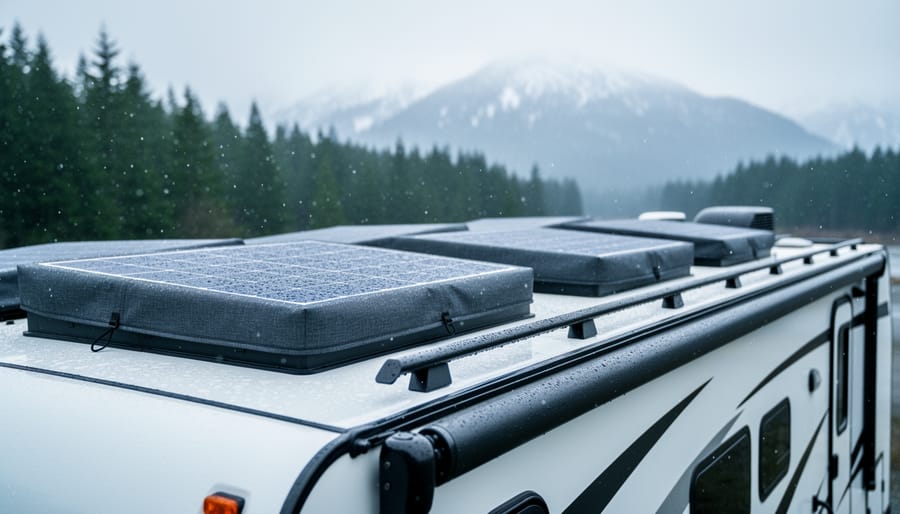
Protect your RV solar investment from British Columbia’s harsh winter snow, coastal rain, and summer hail by installing dedicated protective covers during storage periods or extreme weather events. These covers prevent physical damage, reduce weathering, and extend panel lifespan by up to 30%, making them essential for the province’s diverse climate zones from the Lower Mainland’s wet winters to the Interior’s heavy snowfall.
Choose covers specifically designed for solar panels rather than generic tarps. Quality protective covers feature UV-resistant materials, secure fastening systems that won’t scratch panels, and breathable fabric that prevents moisture buildup underneath. Marine-grade materials work exceptionally well in BC’s coastal regions, where salt air and constant moisture accelerate wear on unprotected equipment.
Install covers during extended storage periods at RV parks or when severe weather warnings are issued. Many BC RV owners near Kelowna and Kamloops use seasonal covers from October through March, removing them during sunny winter days to capture available solar energy. This balanced approach protects panels during the harshest conditions while maintaining year-round charging capability.
Expect to invest between $80 and $250 for quality RV solar panel covers, depending on your array size. Local retailers in Victoria, Vancouver, and Prince George stock BC-appropriate options, while custom solutions accommodate unique panel configurations. This upfront cost typically pays for itself by preventing a single hail damage repair, which averages $600 to $1,200 in replacement costs.
Why BC’s Weather Makes Solar Panel Protection Essential
British Columbia’s diverse climate zones create unique challenges for RV solar panels throughout the year. Understanding these regional weather patterns helps explain why protective covers are a worthwhile investment for BC-based RV owners.
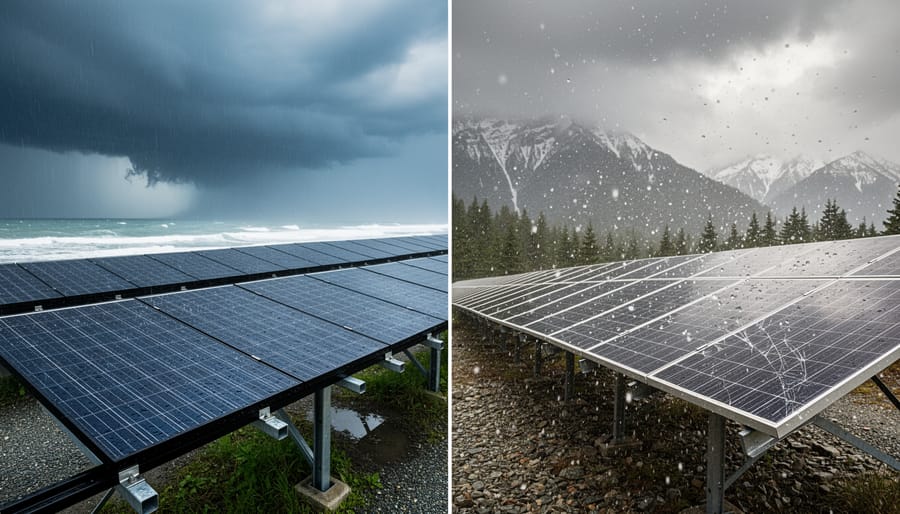
Along the coast, powerful Pacific storms bring intense wind-driven rain that can penetrate panel seals and mounting systems. Vancouver Island and the Lower Mainland regularly experience these atmospheric rivers, especially between November and March. Salt spray from coastal areas can also corrode panel frames and connections over time, reducing system efficiency.
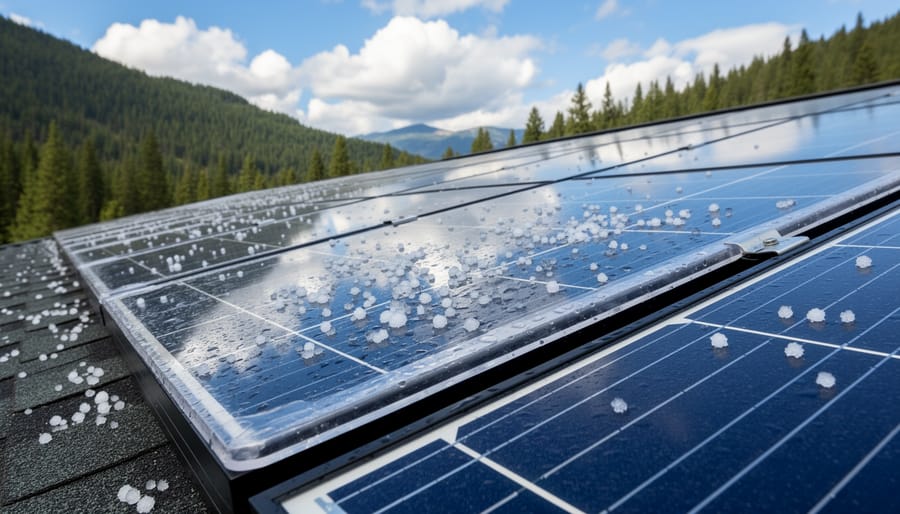
The Interior faces different threats. Summer hailstorms are increasingly common in regions like the Okanagan and Thompson-Nicola, where ice pellets can crack panel surfaces and destroy solar cells. Effective hail damage prevention becomes essential when storms develop rapidly during warm-weather camping trips. Interior winters bring heavy snowfall that creates weight stress on panels, while rapid freeze-thaw cycles can damage mounting hardware.
Year-round UV exposure across BC is stronger than many realize, particularly at higher elevations. The province’s extended summer daylight hours mean panels face more cumulative UV damage, which degrades protective coatings and reduces panel lifespan.
Recent wildfire seasons have introduced another concern: ash and particulate matter. Fine ash settles on panel surfaces, creating a barrier that blocks sunlight and reduces power generation by up to 25 percent. This acidic residue can also etch panel glass when combined with morning dew.
For RV owners who store their vehicles during off-season months, these cumulative weather effects become particularly damaging. Unprotected panels face six to eight months of exposure without regular cleaning or maintenance, accelerating deterioration. A quality protective cover addresses all these regional challenges, preserving your solar investment regardless of where your BC adventures take you.
What RV Solar Panel Covers Actually Do (And Why They Work for Home Installations Too)
RV solar panel protective covers were originally designed to shield solar panels during travel and storage when RVs aren’t in use. These covers typically use durable materials like marine-grade vinyl, UV-resistant fabric, or reinforced polyester to protect panels from road debris, hail, and prolonged sun exposure when the system is offline.
The basic principle is simple: create a removable barrier between your solar investment and harsh environmental conditions. For RV owners, this made sense during winter storage or long periods of inactivity. What many British Columbians are discovering is that these same protective principles work exceptionally well for residential and commercial installations during our intense weather events.
The materials used in quality RV covers offer excellent protection against heavy snow loads, which can stress mounting hardware, and hail storms that occasionally sweep through interior BC regions. The covers are designed to be breathable, preventing moisture buildup that could damage panels or create electrical issues.
Here’s where the crossover benefits really shine for home installations: you don’t need permanent coverage. Many BC homeowners use protective covers seasonally, installing them before predicted severe weather or during wildfire seasons when ash and debris pose risks. This approach differs from RV usage but applies the same protective technology.
A family in Kelowna saved their rooftop system during an unexpected hailstorm last spring by quickly deploying RV-style covers they kept on hand. The temporary protection prevented thousands in potential damage, demonstrating how adaptable these solutions can be beyond their original mobile application.
Types of Solar Panel Protective Covers for Different BC Climates
Hard Covers for Hail and Impact Protection
For RV owners traveling through Interior BC communities like Kelowna, Kamloops, and the Okanagan, hard covers offer the strongest defense against hail damage and falling debris. These rigid protective shields are typically constructed from polycarbonate, aluminum, or reinforced acrylic materials that can withstand significant impact without cracking.
Unlike flexible covers, hard covers mount directly above your solar panels, creating a permanent protective barrier. Most designs leave a small air gap between the cover and panel surface, which helps maintain proper ventilation and prevents overheating. Popular materials include clear polycarbonate sheets that maintain 85-90% light transmission while absorbing hail impacts up to golf-ball size.
Installation requires careful planning since these covers add permanent weight and wind resistance to your RV roof. Many BC RV owners work with local solar installers who understand regional building codes and can ensure proper mounting that won’t compromise your roof warranty. The investment typically ranges from $200-500 per panel depending on material quality and professional installation costs.
Hard covers make the most sense if you regularly park your RV in hail-prone areas during summer months or store it outdoors year-round in Interior BC locations. A Penticton RV owner shared how polycarbonate covers protected his 400-watt system during a severe June hailstorm that damaged neighboring unprotected vehicles, saving him thousands in panel replacement costs.
Soft Covers for Snow and Debris Management
Soft covers offer a practical solution for RV owners who frequently travel through BC’s varied weather conditions. These flexible, weather-resistant covers distribute snow weight evenly across your solar panels, reducing the risk of stress fractures or mounting system damage common during heavy snowfall in Northern BC regions.
Made from durable materials like reinforced vinyl or polyethylene, soft covers protect against debris accumulation from coastal storms, falling branches in forested areas, and hail damage. They’re particularly valuable for seasonal RV users who store their vehicles during winter months. The covers are lightweight and easy to install, making them ideal for quick deployment before storms or extended storage periods.
One Kelowna RV owner reported preventing significant panel damage during an unexpected spring snowstorm by using a soft cover combined with proper snow management techniques. The investment of approximately 150-300 dollars proved worthwhile compared to potential panel replacement costs exceeding 1,000 dollars.
When selecting a soft cover, ensure it’s specifically designed for solar panels with secure tie-down points and breathable material to prevent moisture buildup. This protection extends your panel lifespan while maintaining your commitment to sustainable energy, even in challenging conditions.
Seasonal vs. Permanent Protection Solutions
When protecting your RV solar panels, you’ll need to decide between seasonal and year-round solutions based on your travel patterns and budget.
Seasonal covers work well if you only use your RV during BC’s warmer months and store it during winter. These removable covers typically cost between $50-150 per panel and provide excellent protection against snow, ice, and debris during storage periods. A Victoria RV owner shared that using seasonal covers for five winter months has kept her panels pristine for three years, with minimal investment.
Permanent protection systems, like mesh guards or specialized coatings, range from $200-500 but offer continuous defense against hail, falling branches, and UV degradation. These solutions make sense for full-time RVers or those frequently traveling BC’s diverse terrain. A Kelowna couple who travels year-round found permanent guards eliminated the hassle of repeated cover removal and prevented two hail damage incidents.
Consider your usage pattern: occasional travelers benefit from affordable seasonal covers, while frequent adventurers gain better value from permanent solutions. Calculate the replacement cost of damaged panels (typically $300-800 each) against protection investment to determine your best option. Many BC RV communities recommend starting with seasonal covers, then upgrading if your travel frequency increases.
Real Costs: What BC Solar Owners Actually Spend on Protection
Let’s talk numbers, because protecting your RV solar investment should make financial sense. In BC, quality protective covers for standard RV solar panel setups typically range from $150 to $400, depending on size and materials. Custom-fit covers cost more but provide better protection and easier installation. Most BC solar owners report spending around $250 for a durable cover that lasts 3-5 years.
Installation costs vary based on your approach. DIY installation is free if you’re comfortable working on your RV roof, though you might spend $20-30 on proper mounting hardware. Professional installation adds $100-200 but ensures correct fit and secure attachment, especially important during coastal wind events.
Now consider the alternative costs. Replacing a single damaged 100-watt panel runs $200-350, plus installation fees. A complete system replacement for a typical RV setup with four panels? You’re looking at $1,200-2,000 or more. One Vancouver Island RV owner shared that hail damage to their uncovered panels cost $1,400 in replacements, far exceeding what protective covers would have cost.
The cost-benefit calculation is straightforward. Spending $250 on protection versus potentially $1,400 on repairs represents an 82% cost saving. Even factoring in replacement covers every few years, you’re still ahead financially. Plus, protective covers maintain your panels’ efficiency, maximizing your energy output over time.
BC’s extreme weather events are becoming more frequent. Vernon resident James Chen noted that after spending $300 on covers following a close call with hail, he’s experienced complete peace of mind during three subsequent storms. His panels remain undamaged and performing at full capacity. Prevention isn’t just cheaper than repair, it’s the smarter long-term investment for your solar setup.
Installing Protective Covers: DIY or Professional Help?
Installing protective covers for your RV solar panels can be straightforward, but the right approach depends on your comfort level and specific situation. Many RV owners in BC successfully install covers themselves, similar to how some tackle DIY solar installation projects.
DIY installation makes sense when you’re working with universal-fit covers or simple tilt-mount systems. These typically require basic tools and follow clear instructions. If you’re comfortable working on your RV roof and have proper ladder safety equipment, this approach saves money while giving you hands-on knowledge of your system. Most fabric covers attach with straps or bungee cords, making them ideal weekend projects.
However, professional installation becomes essential in certain scenarios. Custom-fitted hard covers often require precise measurements and specialized mounting hardware. If your warranty documentation specifies professional installation for modifications, going the DIY route could void coverage. Marnie from Kelowna learned this lesson after installing covers herself, only to discover her panel warranty required certified installers for any additions.
Safety should guide your decision. Working on RV roofs presents fall risks, especially during BC’s rainy seasons. If you’re uncertain about secure footing or proper installation techniques, hiring a local solar professional provides peace of mind and typically includes warranty protection on the installation work itself.
Consider getting quotes from BC-based solar installers who understand regional weather challenges. Many offer reasonable rates for straightforward cover installations, and their expertise ensures optimal protection for your investment.
A Kelowna Vineyard’s Story: How Protective Covers Saved Their Solar Investment
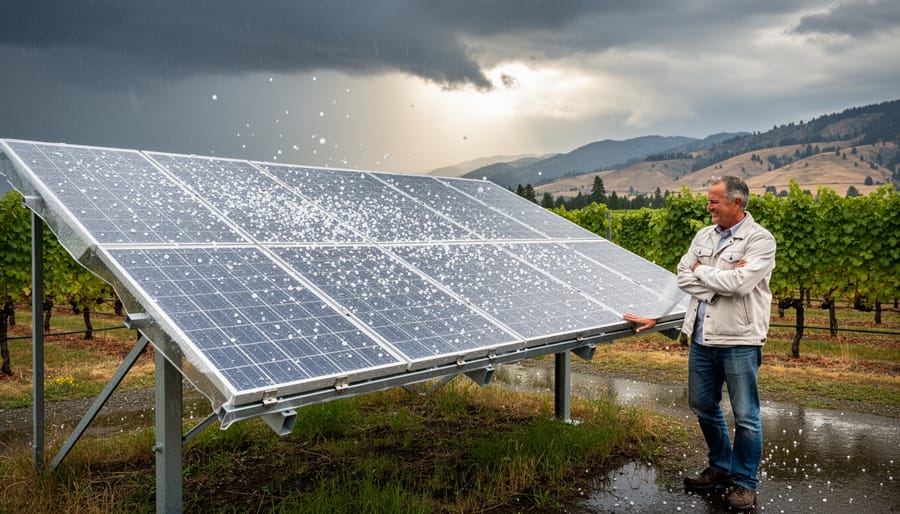
When severe hail was forecast for the Okanagan Valley last spring, Jennifer Martinez, owner of Suncrest Vineyard in Kelowna, made a quick decision that saved her business thousands of dollars. With a 15-panel solar array powering her tasting room and refrigeration systems, she had invested $18,000 in her solar installation just two years earlier.
“I remembered reading about protective covers and found a local supplier who could deliver them within 24 hours,” Jennifer explains. She spent $850 on custom-fit protective covers for her entire array. The next afternoon, golf ball-sized hail battered the region for twenty minutes. While several neighboring properties reported cracked panels and damaged equipment, Jennifer’s solar investment remained intact.
The financial impact was clear. Without the covers, she estimates repairs would have cost between $4,500 and $6,000, not including lost production time while waiting for replacement panels. Her insurance deductible alone was $2,000. The protective covers paid for themselves in a single storm.
Jennifer now keeps the covers readily accessible and has developed a simple weather monitoring routine. “I check Environment Canada’s severe weather alerts twice daily during hail season, from May through September,” she says. “Installing the covers takes about 45 minutes with two people, which is a small investment compared to the alternative.”
Her advice for other BC solar owners? “Don’t wait for the perfect storm to think about protection. These covers are reusable for years, and the peace of mind is worth every penny.”
What to Do Right Now: Your Solar Protection Action Plan
Start by evaluating your RV solar panels’ current condition and protection needs. Check for existing wear, debris accumulation, or mounting system vulnerabilities. Take photos and note any weather damage from recent BC storms or winter conditions.
Next, contact certified installers through Solar BC’s professional network for quotes on protective covers and weatherproofing solutions. Request site assessments that consider your specific camping patterns and seasonal storage requirements. Compare options for both permanent protective solutions and removable covers based on your RV usage.
Create a maintenance calendar tailored to BC’s climate. Spring inspections should follow winter weather, while fall preparations protect against coastal storms and interior snowfall. Establish regular maintenance schedules that include cleaning, seal checks, and cover condition assessments.
Connect with fellow RV solar users in BC through local sustainability groups and camping communities. Many experienced owners share practical tips about protective strategies that work in specific regions, from Okanagan heat management to coastal moisture protection.
Document your system’s performance before and after implementing protection measures using Solar BC’s monitoring tools. This data helps you understand your return on investment while contributing to our community’s knowledge about effective RV solar protection solutions.
Protecting your RV’s solar panels is just as crucial as the decision to go solar in the first place. British Columbia’s unpredictable weather—from coastal storms to interior hail—can quickly damage unprotected panels, undermining your investment in clean energy. The good news? Taking action now is straightforward and affordable compared to replacing damaged equipment later.
Before the next weather event arrives, assess your current setup and consider whether protective covers make sense for your situation. Whether you’re storing your RV through winter or traveling year-round, the right protection ensures your panels continue generating clean power for years to come.
Your solar investment represents more than cost savings—it’s a commitment to sustainable living and energy independence. By protecting that investment today, you’re securing both your financial future and BC’s clean energy goals. Connect with local RV solar specialists to find the best protective solution for your needs, and enjoy peace of mind knowing your panels are ready for whatever weather comes next.