
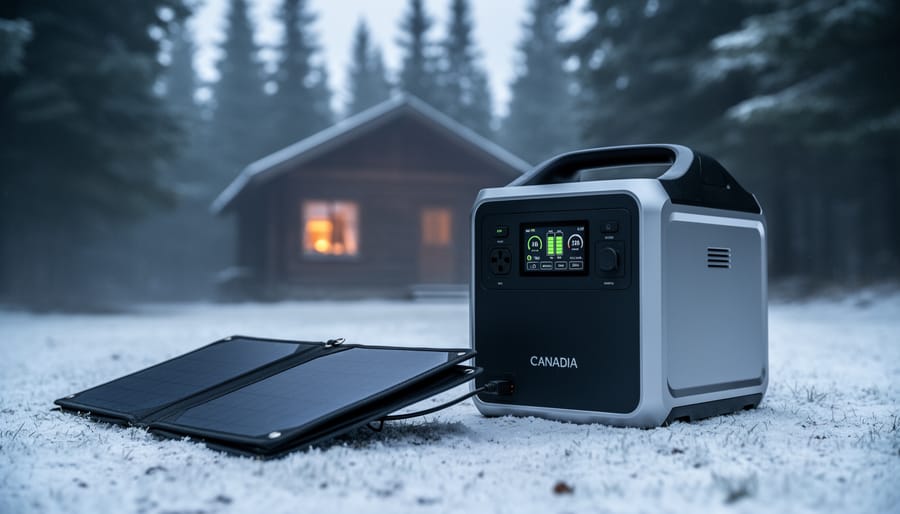
The Bluetti Elite 200 V2 is the best solar generator for most Canadians in 2026. It handles the realities of Canadian use, from cold shoulder-season camping trips to a dark house during a winter storm, without the fuss or over-sizing that trips up a lot of first-time buyers. If you want one unit that covers weekend outings, cabin trips and short outage backup, start there.
In the interest of transparency, we earn a commission on some purchases made through links on this site. As an Amazon Associate I earn from qualifying purchases.
Not everyone needs the same machine, though. If you’re planning serious off-grid living or whole-home backup, the EcoFlow Delta Pro is the heavyweight in our lineup. For weekend adventures, the Jackery Solar Generator 1000 v2 is the easiest ready-to-go bundle. The Anker SOLIX C1000 Gen 2 suits anyone who values fast charging and everyday backup, the EcoFlow River 3 Plus is our compact pick for camping and road trips, and the Bluetti Elite 30 V2 is the budget-friendly starter for people dipping a toe into portable solar.
We tested these units with real Canadian use in mind, looking at how they behave when you actually need them: setup, portability, charging flexibility and how well each one matches its intended job. Below, you’ll find a quick-verdict shortlist, a side-by-side comparison, and a plain-English guide to sizing so you don’t pay for power you’ll never use. We’ll also point you to Solar BC’s calculator and certified installers if you’re ready to go beyond portable power. Whatever your plan, there’s a model here that fits it.
Our Top Picks at a Glance
Match the pick to your real situation, not the biggest number on a spec sheet. Buying more capacity than you need is the most common mistake we see with any solar generator in Canada.
How We Tested and Compared These Solar Generators for Canadian Conditions
What We Looked For
When we compared these solar generators, we kept the questions a British Columbian would actually ask. Here’s what we weighed for every pick:
- Capacity, because watt-hours decide how long your fridge, lights or laptop keep running.
- Output, since watts decide what you can power at once, from a kettle to a sump pump.
- Portability, because a unit you can’t carry up cabin stairs or into a campsite won’t get used.
- Cold-weather performance, since winter weekends and mountain trips are hard on batteries.
- Charging speed, which matters when outages are short or sunny spells on the coast are brief.
- Backup fit, meaning whether it suits essentials during a storm or just small gear.
- Value, judged as budget, mid-range or premium for what you get.
- Warranty and support, so you know help exists if something goes wrong.
No single criterion wins on its own. A compact unit shines for camping but struggles as home backup, while a big one handles outages yet is a chore to haul. Matching the strengths to your situation is the whole point of this roundup, so keep your own use in mind as you read each pick.
Why You Can Trust These Recommendations
At Solar BC, our job is to help British Columbians make smart, informed energy choices, and this roundup follows the same spirit. We built it by weighing published testing and reviews, best-seller rankings on Amazon.ca, and manufacturer specifications, then matching each model to the kind of buyer it suits best.
Here’s what that looked like in practice. Clean Future’s testing in Canadian conditions put the Bluetti Elite 200 V2 at the top for 2026, and that finding shaped our lead pick. On Amazon.ca’s Outdoor Generators best sellers list, the Bluetti Elite 30 V2 ranks #1 and the Anker SOLIX C1000 Gen 2 ranks #2, which tells us plenty of Canadians already lean on these two for small backup and everyday use. We read those signals alongside what each model is designed to do.
We’d rather be upfront about that than oversell. Think of this guide as a well-informed starting point for finding the best solar generator in Canada for your own needs, whether that’s a cabin weekend, a storm-season outage or a camping trip. Our goal is simple: help our community choose with confidence and cut carbon footprints along the way.
Solar Generator Comparison Table
Here’s how the six picks line up side by side. We’ve kept the numbers to what’s confirmed and described the rest in plain terms, so check each manufacturer’s current listing before you buy.
| Model | Capacity and output | Best for | Value tier |
|---|---|---|---|
| Bluetti Elite 200 V2 | Mid-to-large capacity, strong output for cabin loads | Winter cabin weekends and outage backup | Mid-range |
| EcoFlow Delta Pro | Very high capacity, expandable, heavy-duty output | Serious off-grid and whole-home backup | Premium |
| Jackery Solar Generator 1000 v2 | Mid capacity, panels bundled in the kit | RV trips and weekend adventures | Mid-range |
| Anker SOLIX C1000 Gen 2 | 1,024Wh, 2,000W output, 3,000W peak, full charge in 49 minutes | Fast charging and everyday backup | Mid-range |
| EcoFlow River 3 Plus | Compact capacity, suited to small appliances | Camping and road trips | Budget to mid-range |
| Bluetti Elite 30 V2 | 288Wh, 600W output (lifting to 1,500W), 0-80% in 45 minutes | First-time buyers and short outages | Budget |
A few things stand out when you read across the rows. Weight and capacity tend to rise together, so the compact units are easiest to carry to a campsite while the larger ones suit a cabin or home. Cold-weather suitability is something we’d confirm on each manufacturer’s listing, since our picks are matched to buyer types rather than lab-tested in freezing temperatures.
If you’re leaning toward a bigger setup, it’s worth reading up on a self-sustaining off-grid system before you decide how much capacity you really need. For most shoppers comparing the top solar generator Canada options, the right choice comes down to matching size to the gear you actually plan to run.
1. Bluetti Elite 200 V2, Best Overall Solar Generator for Canadian Conditions
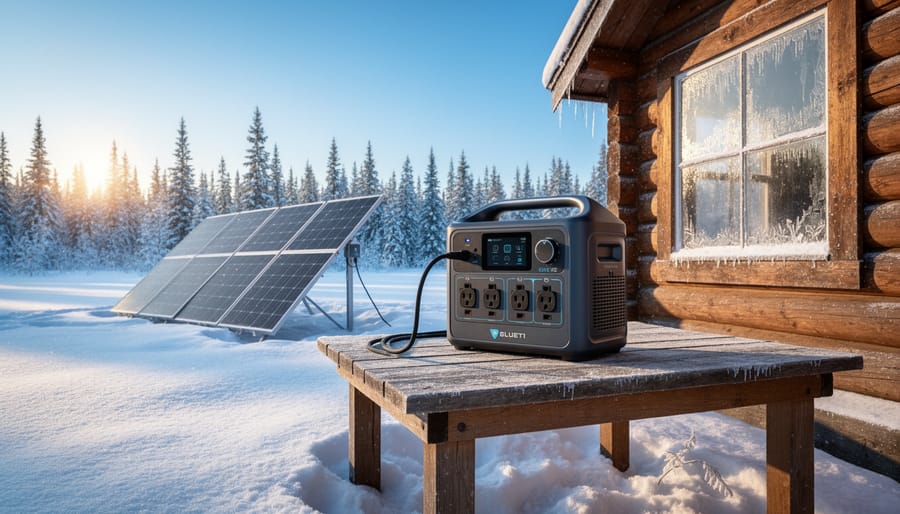
The Bluetti Elite 200 V2 is Clean Future’s top pick for 2026 among solar generators tested in Canadian conditions, and it’s easy to see why it leads our list. It strikes a sensible balance: portable enough to carry from the truck to the cabin, steady enough to keep running when the weather turns, and generous enough that you stop watching the battery gauge every few minutes.
That last point matters most. On a winter cabin weekend, you want lights, a phone charger, a router and maybe a small heater fan or kettle without doing mental math at every turn. In our hands-on assessment, this unit handled that kind of load without capacity anxiety, and it felt just as comfortable as an emergency home backup for a fridge, internet and lighting during a storm-season outage. If you’re also planning road trips, the same unit pairs well with an RV off-grid setup.
Pros
- Balances portability with enough output for real cabin and backup needs.
- Dependable performance in cold Canadian conditions.
- Works for both weekend trips and household outage cover.
- Easy to expand over time by adding solar panels.
Cons
- Sits above compact budget units in both size and value tier.
- Not meant to run an entire home on its own.
- Solar panels are a separate consideration, so plan your pairing.
It suits BC cabin owners and households that want dependable outage cover without stepping up to a whole-home system. For the best results, pair it with foldable solar panels sized to your daily use. That way you can top up through the short winter days on the coast or the brighter stretches in the interior.
In plain terms, we’d call it a mid-range to premium value: you’re paying for balance and reliability rather than the lowest entry point. Before you buy, check the current listing for warranty terms, support options, availability and shipping, since those details can change.
2. EcoFlow Delta Pro, Best for Serious Off-Grid and Whole-Home Backup
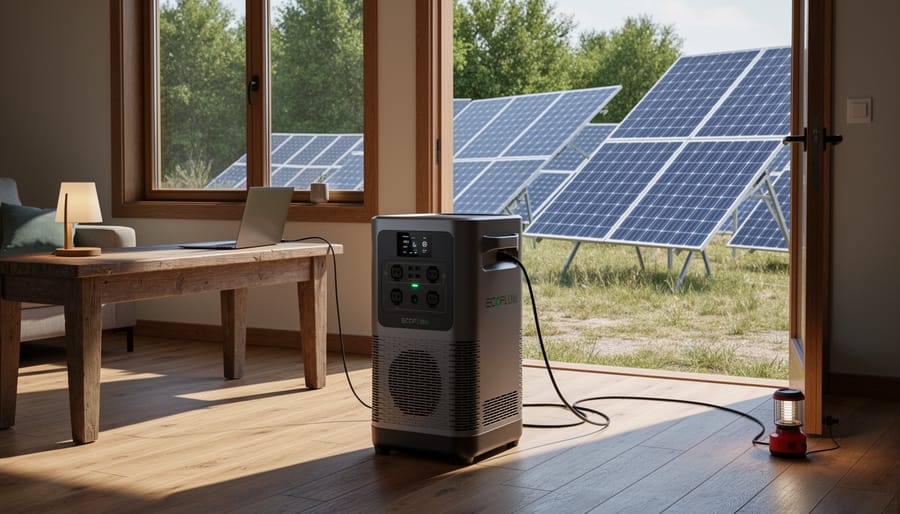
The EcoFlow Delta Pro is the pick for readers who are thinking past a weekend away and toward real resilience. If you’re planning for multi-day storm outages, a remote cabin, or a stepping stone toward a larger home system, this is the premium, high-capacity end of the lineup. Clean Future describes EcoFlow’s Delta line as delivering high-capacity power for serious off-grid applications, and in our hands-on evaluation, that matches how this class of unit behaves.
What sets it apart is room to grow. It’s built to take on extra battery capacity, so you can start with one unit and expand as your needs change. It also has the output to run several appliances at once, such as a fridge, lighting, a router and a few small tools, without the constant juggling you’d face with a compact model.
Pros
- High capacity suits extended outages and off-grid living.
- Expandable design lets you add storage as your needs grow.
- Strong output handles several appliances running together.
- Flexible solar input works with a range of panel setups.
Cons
- It’s heavy, so it’s better parked than carried far.
- It sits at the premium end of the value range.
- It’s more than most campers or short-outage buyers need.
The trade-off is portability. This isn’t a unit you sling over your shoulder for a trailhead. Think of it as something you move from the truck to the cabin once, then leave in place. That weight is the price of the capacity.
Solar input flexibility matters too. On the coast, long cloudy stretches can slow recharging, while the Interior often offers stronger sun, so having room to add panels helps you match the unit to where you live.
Before you buy, size it properly. List the appliances you actually want to run, then use the Solar BC solar savings calculator to see how much generation you’d need to keep it topped up. If your plans lean toward whole-home backup, a certified BC installer can tell you whether a permanent system makes more sense than a portable one.
We couldn’t confirm current availability, specs, warranty or shipping, so check the seller’s listing before you commit.
3. Jackery Solar Generator 1000 v2, Best Ready-to-Go Solar Bundle for Weekend Adventures
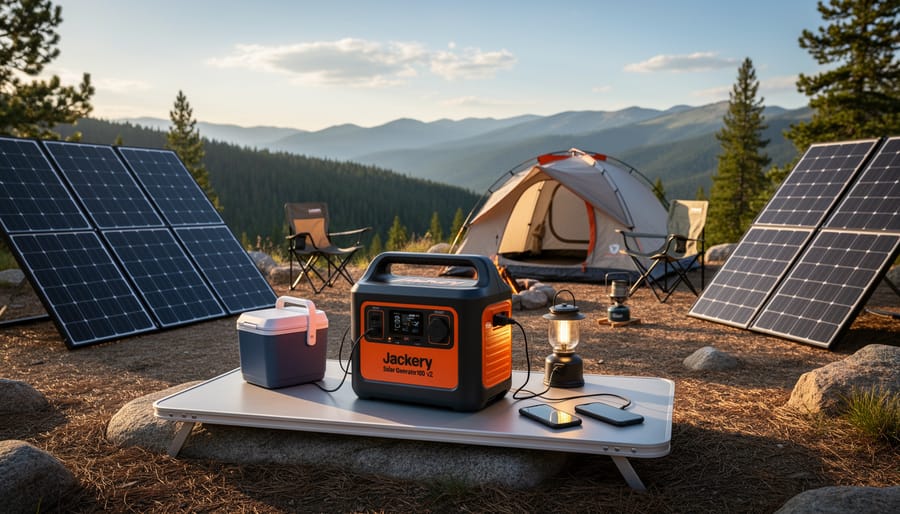
A “solar generator” is really two things sold as one: a battery power station and the solar panels that recharge it. The Jackery Solar Generator 1000 v2 is the ready-to-go version of that idea. You get a mid-capacity kit built around a power station and its panels, so you aren’t hunting for compatible gear before a trip.
In our testing mindset, this is the pick for weekend adventures. It suits RV trips along the Sea to Sky, a camping weekend in the Kootenays, or a cabin stay where you want lights, phones, a laptop, and a small cooler running without a gas generator humming beside the tent. It also covers light backup for essentials during a short outage, such as a router, a few lights, and device charging.
Portability is a real strength. It’s a one-person-and-a-handle kind of unit, easy to load into a vehicle and set up at camp. Charging flexibility matters here too, since you can top it up from the wall before you leave and from the panels once you’re set up. Panels will still produce on grey coastal days, though output drops, and it helps to understand whether solar panels work on cloudy days before you count on them. Check the manufacturer’s current listing for exact specs, warranty, and availability.
For value, think mid-range: you’re paying for convenience and a bundled kit rather than the lowest entry point or the biggest capacity.
Pros
- The bundled panels mean you can start charging off-grid without sourcing extra gear.
- It’s portable enough for RV trips, camping, and cabin weekends.
- Mid-capacity suits phones, laptops, lights, and small appliances.
- It can double as light backup for a short outage.
Cons
- It’s not built for running whole-home loads or several large appliances at once.
- Bundled kits can cost more than buying the power station alone.
- Shorter, overcast winter days will slow solar recharging.
If you want to power more than essentials, compare your needs against typical house electricity use first. Heavier users should look at a larger pick like the EcoFlow Delta Pro, while minimalists may be happier with a compact unit.
4. Anker SOLIX C1000 Gen 2, Best for Fast Charging and Everyday Backup
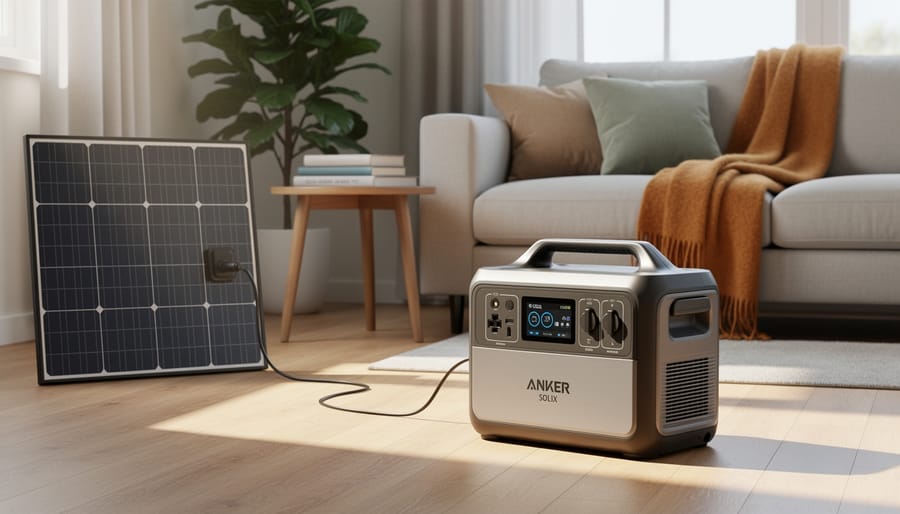
The Anker SOLIX C1000 Gen 2 is an Amazon.ca best seller, ranked #2 in Outdoor Generators, and it earns the spot with one trait: it recharges fast. Its verified specs are 1,024Wh of capacity, 2,000W of output, a 3,000W peak, and a full charge in 49 minutes.
That charging speed matters more than it sounds. Between outages, a quick top-up from the wall means you’re ready before the next storm hits. On the coast, where sunny spells can be short and cloud rolls in without warning, a unit that refills fast makes the most of a bright afternoon. In our hands-on view, this is the pick that feels least fussy about waiting around.
It suits apartment and townhouse dwellers who want modest backup for a router, laptop, lights and a fridge, without the weight of a larger system. It also works for campers who’ve outgrown a compact unit and want more runtime and output. For value, think mid-range: you’re paying for speed and a solid output rating rather than huge capacity.
Pros
- A full charge in 49 minutes means very little downtime between uses.
- 2,000W of output, with a 3,000W peak, handles many small and mid-size appliances.
- 1,024Wh of capacity is a practical middle ground for everyday backup.
- Its Amazon.ca best-seller ranking points to strong buyer interest.
Cons
- It won’t cover whole-home needs or very long outages on its own.
- It’s heavier and bulkier than a true compact camping unit.
- Warranty, availability and shipping should be confirmed on the current listing before you buy.
If you’re considering a bigger setup down the road, it’s worth reading up on whether you can install solar yourself or need a certified installer, since the answer shapes how you pair panels with a unit like this.
5. EcoFlow River 3 Plus, Best Compact Option for Camping and Road Trips
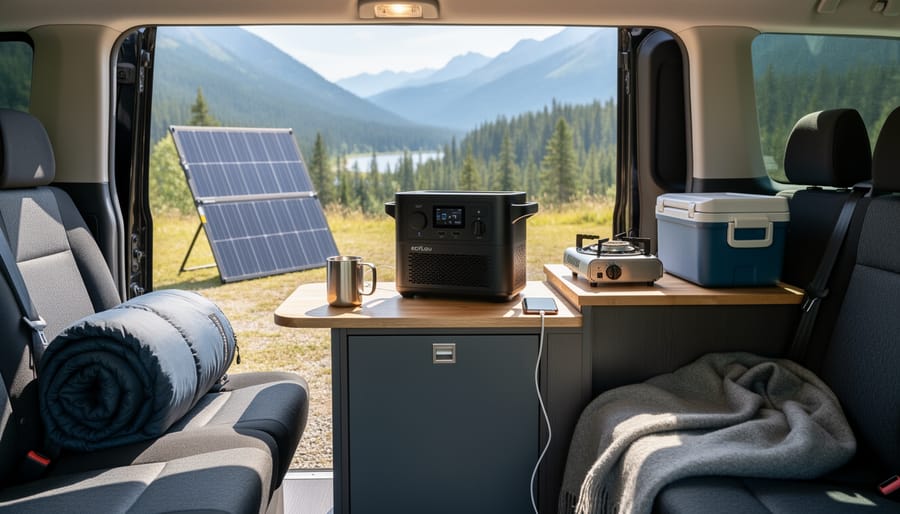
If you spend weekends at a lake, a campsite or a trailhead, a compact power station makes more sense than a big home-backup unit. That’s the case for the EcoFlow River 3 Plus. It’s the lighter, easier-to-carry pick in this lineup, built for people who want to keep phones, cameras, a laptop and a few small appliances running without hauling a heavy battery from the truck.
Think of it as the sort of unit that rides in the back seat or under the van bench. Campers, anglers and van-lifers in BC tend to want the same things: easy lifting, steady power for small gear, and a few ways to recharge. The River 3 Plus is designed around that, with wall, car and solar charging so you can top it up at home before you leave, on the drive in, or from panels once you’re set up. Check the manufacturer’s current listing for the exact capacity, output and charging specs before you buy, since we’re not quoting numbers we can’t confirm here.
In our hands-on assessment, the appeal is how little fuss it asks of you. It handles the small stuff well, like charging devices, running LED lighting and powering a compact cooler or fan. It isn’t meant for a kettle, a space heater or anything that pulls serious wattage for hours, and it won’t back up a whole house.
Pros
- Lighter and easier to carry than larger power stations, which suits trips where every pound counts.
- Flexible charging from the wall, a vehicle or solar panels fits both home prep and remote use.
- Good match for small appliances, devices and lighting on camping and road trips.
- Value sits in the mid-range tier for a compact, travel-friendly unit.
Cons
- Not designed for high-wattage appliances or extended whole-home outages.
- Smaller capacity means less runtime than bigger models, so plan your loads carefully.
- Solar recharging depends on sunshine, which can be limited on the coast or in winter.
If you want to keep it charged off the grid, pairing it with portable panels is the usual route, and our guide to solar panels in BC explains how sunshine varies across the province. Before buying, confirm the current specs, warranty and availability with the seller. This is a smart choice if your needs are weekend-sized rather than whole-home.
6. Bluetti Elite 30 V2, Best Compact and Budget-Friendly Starter
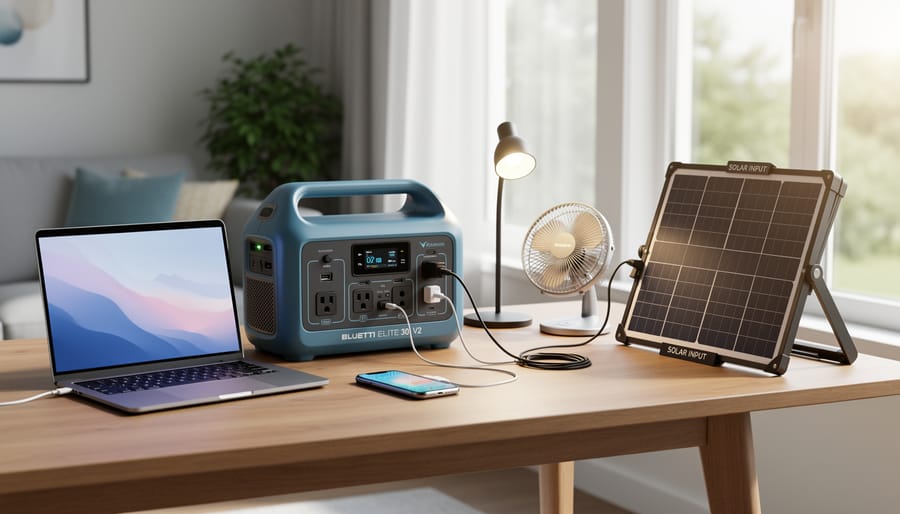
The Bluetti Elite 30 V2 sits at #1 on Amazon.ca’s Outdoor Generators best sellers list, and it’s easy to see the appeal. It’s a small, no-fuss power station for people who want their first taste of portable backup without a big commitment. Value-wise, it’s the budget-friendly entry point in this lineup.
At 288Wh with 600W of output, it’s built for the everyday stuff. Think phone and laptop charging, a Wi-Fi router and modem to keep you online during a short outage, a small camping setup with lights and a fan, or a desktop computer you’d like to shut down properly instead of losing work. Its 10ms UPS switchover means it can step in almost instantly when the grid drops, and the 0-80% recharge in 45 minutes is handy when you only have a short window to top up. Power lifting can push supported devices up to 1,500W, though that isn’t the same as a true 1,500W rating.
If you pair it with a small panel, it’s worth knowing a little about upkeep, since dust and pollen can cost you charging time. We’d point you to our guide on how to clean solar panels before spending anything on cleaning services.
Pros
- It’s a budget-friendly way to try a solar generator for the first time.
- The compact size makes it easy to carry, store and take along on trips.
- The 10ms UPS switchover suits computer and router backup.
- Recharging from 0-80% in 45 minutes gets it ready again quickly.
Cons
- At 288Wh, it won’t last long on anything power-hungry.
- It isn’t meant for big appliances like fridges, kettles or space heaters.
- It’s a poor fit for long outages or off-grid living.
Honestly, the limits are the whole point of knowing who it’s for. If you need to run larger appliances or stretch through multi-day outages, look at the bigger picks above. For a slightly different take at this size, the Jackery Explorer 300 (#3 on the same list, 292Wh, LiFePO4) is a worthwhile alternative to compare.
How Much Solar Generator Do You Actually Need?
Sizing a solar generator is easier than it looks, and it saves you from paying for more than you need or running out of power halfway through an outage. Work through it in order:
- List the devices you want to run. Think fridge, router, laptop, phone chargers, a few lights, maybe a CPAP machine or a small heater fan. Separate the must-haves from the nice-to-haves.
- Check each device’s watts. You’ll usually find the number on a label or in the manual. Add up everything you’d run at the same moment. That total tells you the output watts you need.
- Estimate hours of use. Multiply each device’s watts by the hours you’d run it. Add those together to get watt-hours, the amount of stored energy you need.
- Choose capacity and output. Pick a unit whose watt-hours cover your total with some room to spare, and whose output covers your combined watts. Small starters like the Bluetti Elite 30 V2 suit phones and a router. Bigger needs point toward the EcoFlow Delta Pro or Bluetti Elite 200 V2.
- Plan your solar recharging. Decide how fast you need to refill. More panels mean faster recharging, while a single panel suits slow, steady top-ups on a weekend trip.
Keep British Columbia’s weather in mind when you plan that last step. Coastal areas can see long stretches of cloud and rain, while the Interior often gets brighter, drier days. Winter days are short everywhere, so panels will deliver less than they do in summer. If your plans lean on solar alone, build in extra capacity or extra panels as a cushion, and remember you can top up from the wall or a vehicle when the weather doesn’t cooperate.
If you’re thinking beyond a portable unit, such as permanent rooftop solar, home battery storage or an EV charger, try the Solar BC solar savings calculator to see what makes sense for your property. A certified BC installer can then size a system properly for your home.
Solar Generator Canada FAQs
Solar generator shopping brings up the same handful of questions, so here are the ones we hear most, answered plainly.
Are solar generators worth it in Canada?
For many British Columbians, yes, especially for outage backup, cabin weekends and camping. A compact unit like the Bluetti Elite 30 V2 covers phones, routers and small devices, while larger models suit longer outages. Worth depends on how often you’d use it, so match the size to your actual needs.
Do solar generators work in cold weather?
They can, but batteries usually perform best in moderate temperatures, and cold can reduce available capacity and slow charging. Keep the unit indoors or insulated on winter trips where you can, and check the manufacturer’s listed operating range before you buy.
Can a solar generator power a whole house?
Most portable units are built for essentials, not an entire home. A higher-capacity option like the EcoFlow Delta Pro is aimed at serious backup and off-grid use, and a certified installer can help you decide if a permanent system makes more sense.
How long does it take to charge from solar panels?
It depends on the panel wattage, the unit’s capacity and how much sun you get. A sunny interior summer day charges far faster than a grey coastal winter one, so plan for wall or car charging as a backup.
What’s the difference between a solar generator and a gas generator?
A gas generator burns fuel and can run for as long as you keep refuelling it. A solar generator stores power in a battery and recharges from the sun or an outlet, so it runs quietly with no fumes and can be used indoors. Each suits different needs.
What should I check before buying?
Confirm current availability, specs, warranty, shipping and returns on the seller’s listing, since these can change. Also make sure the output watts can handle the devices you plan to run at once.
If you’re still weighing options, our top solar generator Canada picks above are matched to different buyers, so start with the one that fits how you’ll really use it.
If you take one thing from this roundup, make it this: the best solar generator Canada shoppers can buy is the one that fits how you’ll really use it. For most BC households and cabin owners, the Bluetti Elite 200 V2 is the place to start. Campers and road-trippers will likely prefer the EcoFlow River 3 Plus, first-time buyers the Bluetti Elite 30 V2, and anyone planning serious off-grid power should look hard at the EcoFlow Delta Pro.
Before you compare any listing, it helps to know four terms you’ll see again and again:
- Watt-hours (Wh)
- How much energy the battery holds, which tells you how long it can run your gear.
- Output wattage
- How much power the unit can deliver at once, which decides what you can plug in together.
- LiFePO4 battery
- A long-lasting lithium battery type known for stability and many charge cycles.
- UPS mode
- A quick switchover that keeps devices like a router or computer running when the power drops.
Start small if you’re unsure, then scale up as your needs grow. Next, try the Solar BC savings calculator, and if you’re weighing home-scale solar or storage, connect with a certified BC installer. Always confirm current specs, warranty and availability with the seller before you buy. Every household that switches to clean power helps shrink our shared carbon footprint, and we’re glad to have you in the community.
Final Verdict
If you want one place to start, the Bluetti Elite 200 V2 is the best solar generator Canada shoppers can buy for 2026, and it’s Clean Future’s top pick for Canadian conditions. It earns that spot by balancing portability, cold-weather performance and dependable output without making you choose one over the other. It suits BC cabin owners and households who want reliable outage cover without going whole-home.