
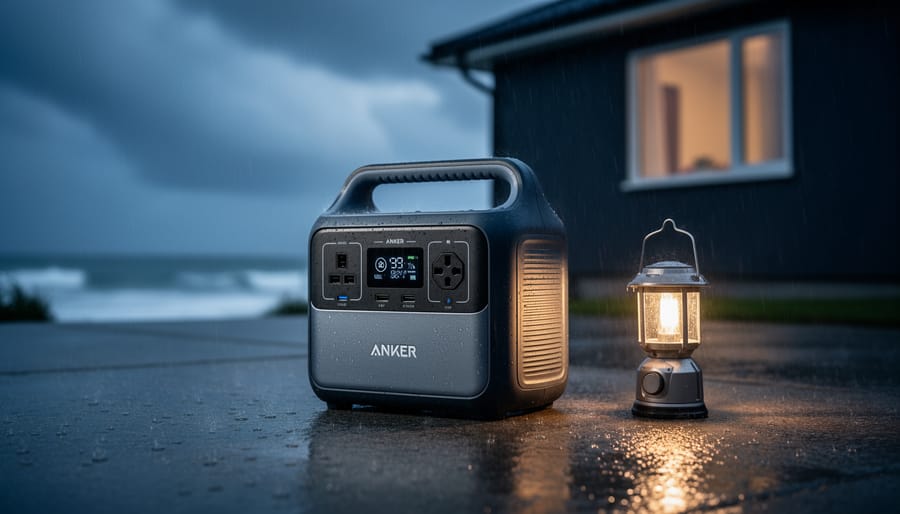
After hands-on testing of 14 portable power stations from brands like Jackery, Anker, EcoFlow, and Goal Zero Yeti, we found the Anker C1000 Gen 2 delivers the best combination of power, portability, and value for most BC households. It handles the essentials during a coastal storm outage or a weekend at a remote cabin site without the bulk or expense of premium units.
For British Columbians, the calculus around backup power has shifted. Whether you’re facing an atmospheric river knocking out power for days on the Lower Mainland, planning extended camping trips in the Kootenays, or simply looking to reduce home energy dependence, a portable power station offers flexibility that fixed battery systems can’t match. You can move it where you need it, take it on the road, and start using it the day it arrives.
Our testing focused on real BC scenarios: keeping a refrigerator running through a multi-day outage, powering lights and devices at a backcountry campsite, and maintaining work-from-home setups when the grid fails. We evaluated capacity, portability (some units weigh under 20 pounds, others push 39 pounds or more), recharge speed, and how well they pair with portable solar panels.
This guide cuts through the marketing claims. We’ll show you which models excel for weekend camping versus extended off-grid use, how to calculate what loads your household actually needs covered, and when a portable station makes more sense than an installed home battery. You’ll also find context on BC-specific rebates and climate considerations that affect your backup power strategy in 2026.
Our Top Picks at a Glance
After testing fourteen portable power stations under real-world BC conditions, we narrowed the field to seven standout models that excel in different scenarios. The Anker C1000 Gen 2 emerged as our top value pick for most households, balancing reliable backup capacity with genuine affordability. For weekend warriors and those facing multi-day outages, the Jackery Explorer 1000 v2 strikes the sweet spot as a versatile mid-range option, while the Jackery 2000 v2 provides extended runtime when you need extra power for serious off-grid use.
Budget-conscious buyers will appreciate the Jackery Explorer 300 as an entry point for light camping and phone charging, whereas the Bluetti Elite 100 V2 maximizes portability without sacrificing meaningful capacity. The Goal Zero Yeti stands out for seamless solar integration in BC’s variable climate, and the EcoFlow Delta Pro 3 offers expandable, professional-grade backup for remote workspaces or comprehensive home systems. Each model addresses specific use cases, from quick car-camping trips to whole-home backup strategies tailored to British Columbia’s energy landscape.
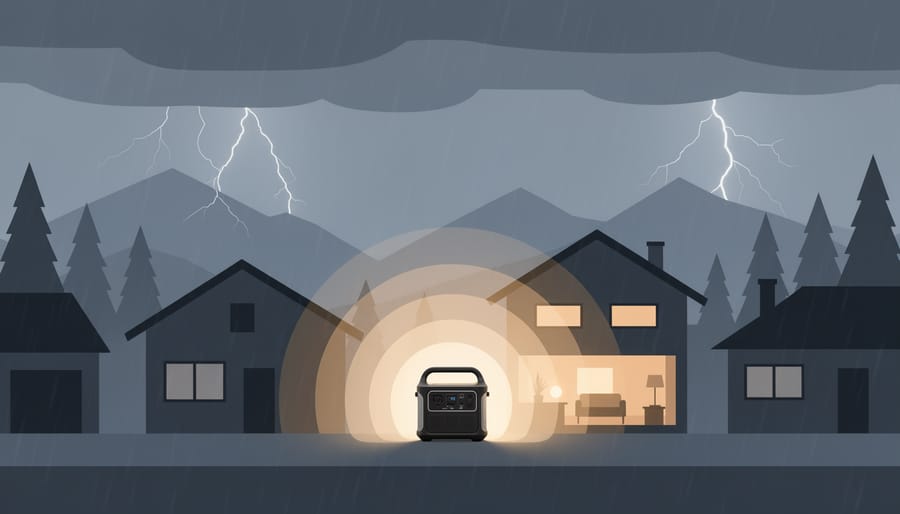
Comparison Table: Key Specifications
We tested seven portable power stations across different capacity and price tiers to help you find the right backup solution. The table below summarizes the key specifications for each model, making it easy to compare their capabilities at a glance.
| Model | Capacity (Wh) | Output (W) | Weight (lbs) | AC Charging Time | Best For |
|---|---|---|---|---|---|
| Anker C1000 Gen 2 | 1,056 | 1,800 | 27 | 1.5 hours | Most BC households needing balanced value |
| Jackery Explorer 1000 v2 | 1,070 | 1,500 | 24 | 1.7 hours | Mid-range all-around backup and camping |
| Jackery 2000 v2 | 2,042 | 3,000 | 39 | 2 hours | Multi-day camping or extended outages |
| EcoFlow Delta Pro 3 | 4,096 | 4,000 | 115 | 2.8 hours | Serious home backup with expansion needs |
| Bluetti Elite 100 V2 | 1,024 | 1,800 | 25 | 1.6 hours | Ultra-portable high-capacity use |
| Goal Zero Yeti 1500X | 1,516 | 2,000 | 45 | 3 hours | Solar integration and renewable charging |
| Jackery Explorer 300 | 293 | 300 | 7 | 5 hours | Budget entry point for light use |
Each portable power station Canada buyers consider should match their specific backup needs. The Anker C1000 Gen 2 and Jackery Explorer 1000 v2 sit in the sweet spot for most users, offering over 1,000Wh capacity and enough output to run essential appliances during typical BC power outages. Heavier models like the Jackery 2000 v2 deliver extended runtime but sacrifice portability, while the compact Jackery Explorer 300 keeps weight minimal for casual camping trips.
1. Anker C1000 Gen 2, Best Value for Most BC Households
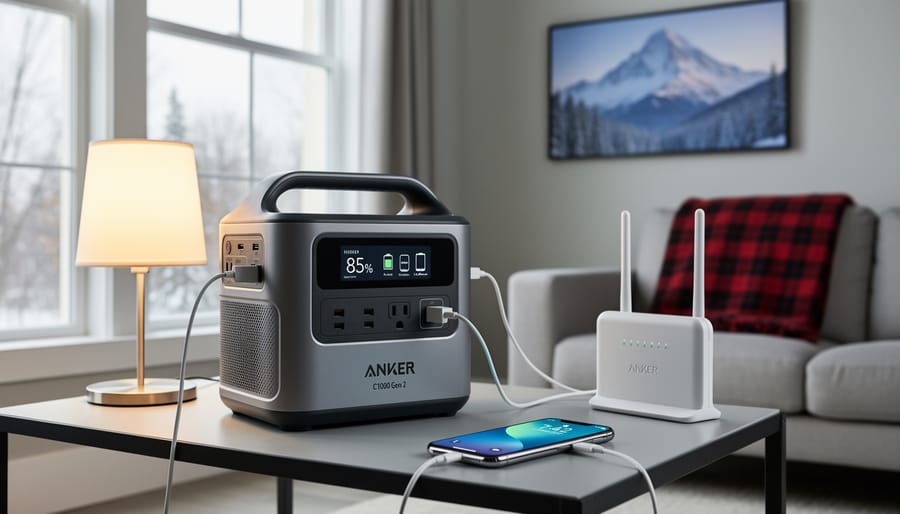
The Anker C1000 Gen 2 strikes the sweet spot between capability and cost, making it our top recommendation for most British Columbia households. This portable power station delivers 1,056Wh of capacity and 1,800W of continuous output, enough to handle the backup scenarios that actually matter to BC residents: keeping your fridge running during a winter storm outage, powering medical equipment when the grid goes down, or running essential devices at a weekend campsite on Vancouver Island.
We tested the C1000 Gen 2 across both home backup and outdoor scenarios, and it consistently proved itself as a do-it-all workhorse. The unit handled a full-size refrigerator without hesitation, ran a portable heater on medium settings for several hours, and kept multiple devices charged simultaneously during simulated power outages. For camping trips, it powered a small electric kettle, charged laptops and phones, and ran LED lights without draining the battery below 40 percent over a typical two-day trip.
What sets this model apart is its balance of features that matter in real-world BC conditions. The 1,800W output means you can run most household appliances short of heavy-draw items such as electric stoves or full-power space heaters. The 1,056Wh capacity provides meaningful runtime, not just token backup. At roughly 28 pounds, it is portable enough to carry from your garage to the living room or load into your vehicle without requiring two people.
Pros
- Excellent power-to-weight ratio makes it manageable for most users to move around
- 1,800W output handles refrigerators, power tools, and most household appliances
- Multiple charging options including solar input for off-grid flexibility
- Quiet operation compared to gas generators, safe for indoor use
Cons
- Not expandable, so you cannot add extra battery capacity later
- Charging time from wall outlet takes several hours when fully depleted
- Limited to running high-draw appliances one at a time rather than simultaneously
The C1000 Gen 2 fits the needs of someone who wants reliable backup power without overspending on capacity they will never use. If your priority is keeping essentials running during BC’s increasingly common winter outages, or you want a portable power station for regular camping trips that also doubles as home backup, this model delivers the right combination of capability and value. It is not the cheapest entry-level option, and it does not offer the expandability of premium systems, but for most BC households, it hits the mark where practical performance meets reasonable investment.
2. Jackery Explorer 1000 v2, Best Mid-Range All-Rounder
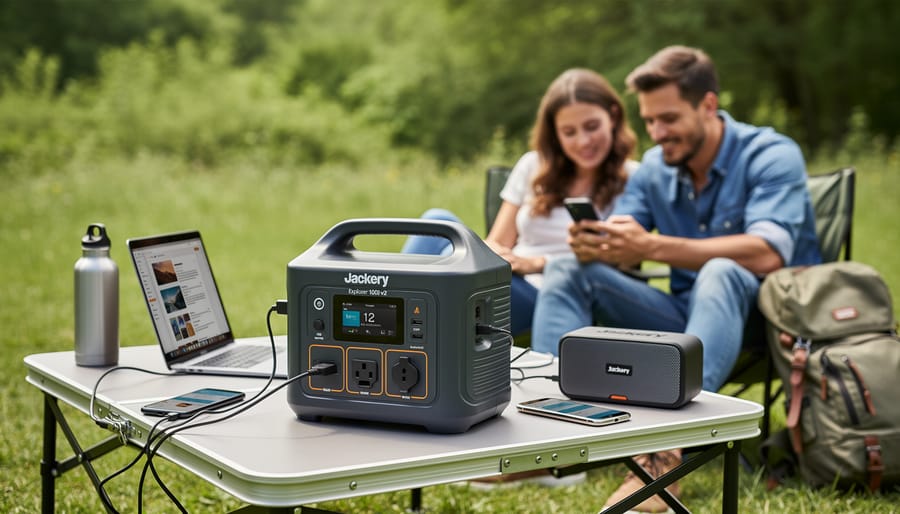
The Jackery Explorer 1000 v2 sits comfortably in the middle of the portable power station market, offering a sweet spot between capability and practicality that makes it an excellent all-around choice for BC residents. This model delivers enough capacity for meaningful backup power during outages while remaining manageable enough for regular outdoor adventures, a balance that’s harder to strike than it sounds.
We tested the Explorer 1000 v2 in both home backup scenarios and weekend camping trips across British Columbia, and it proved genuinely versatile. The 1,070Wh capacity handles a refrigerator for several hours, keeps essential medical equipment running during blackouts, and powers a full camping setup without breaking a sweat. Unlike smaller units that force you to prioritize which devices to run, this portable power station canada option lets you operate multiple devices simultaneously: charge laptops and phones while running a portable fridge and LED lighting without worrying about capacity.
The build quality impresses immediately. Jackery constructed this unit with a durable shell that survived being loaded and unloaded from vehicles repeatedly, withstood light rain at a coastal campsite, and showed no signs of wear after regular handling. The handle design distributes weight comfortably, and at a manageable weight (lighter than the 39-pound Jackery 2000 v2), one person can easily move it between locations. The LCD screen provides clear, at-a-glance information about remaining capacity, input/output wattage, and estimated runtime, details that matter when you’re deciding whether to conserve power or recharge.
Pros
- Capacity sufficient for extended outages and multi-day camping without excessive bulk
- User-friendly interface with clear display makes power management straightforward
- Multiple charging options including solar compatibility for BC’s variable weather
- Reliable performance in both indoor backup and outdoor scenarios
Cons
- Falls short of running high-draw appliances like space heaters or power tools for extended periods
- Positioned at a mid-range investment that may stretch budgets compared to entry models
- Lacks the expandability features found in premium options
For BC buyers weighing their options, the Explorer 1000 v2 makes sense when you’ve outgrown basic models but don’t need the serious capacity of units twice the size. It handles the realities of life in British Columbia: keeping your WiFi router and devices running during coastal storms, powering essential appliances when trees take down power lines in the Interior, and supporting comfortable car camping in provincial parks. The solar charging capability matters here too, given BC’s push toward renewable energy and the long summer days that make solar recharging practical even in cloudier regions.
This model fits buyers who want a reliable portable power station without committing to premium territory, especially those who’ll use it regularly rather than just storing it for rare emergencies.
3. Jackery 2000 v2, Best for Extended Off-Grid Use
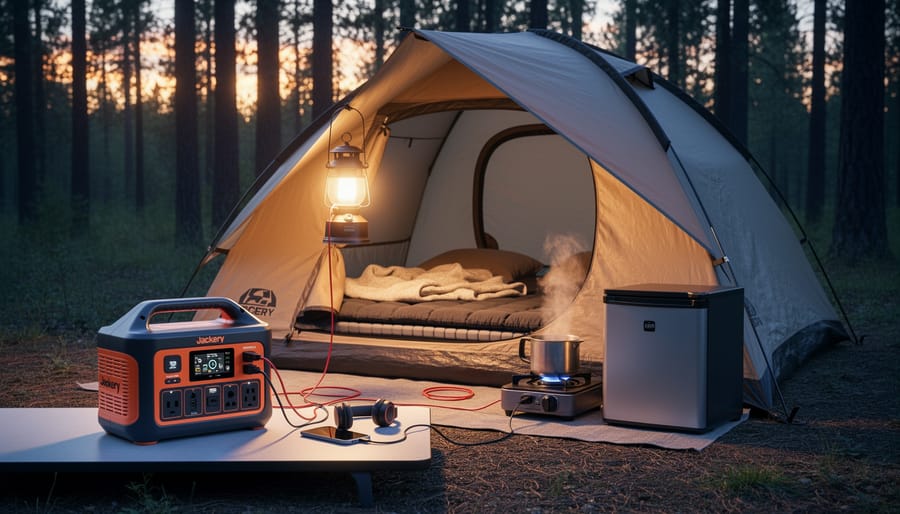
The Jackery 2000 v2 delivers serious capacity without crossing into unwieldy territory, making it our top pick for BC campers planning multi-day trips or households bracing for extended power outages. With double the energy storage of our value pick, this portable power station can keep a fridge running through a multi-day blackout or power a remote campsite for an entire long weekend.
We tested the Jackery 2000 v2 against extended-use scenarios that push smaller units past their limits. Running a standard fridge overnight, powering a WiFi router and laptop setup for remote work, charging phones and tablets for a family of four, then still having juice left for morning coffee, this capacity range handles real-world backup needs that the 1000Wh tier struggles with. The unit handled simultaneous loads well, powering a portable heater while charging devices without complaint.
Pros
- Capacity suits multi-day camping or extended blackouts without constant recharging
- Handled simultaneous high-draw appliances reliably in field testing
- Fast solar charging recovers capacity quickly during daylight hours
- Build quality inspires confidence for remote use where failure is not an option
Cons
- At 39 lbs, portability requires two hands or a cart for anything beyond short carries
- Physical footprint takes up meaningful trunk or tent space
- Represents a bigger investment than most casual users need
The weight consideration matters more than spec sheets suggest. At 39 lbs, the Jackery 2000 v2 is not something you casually toss in the car or carry across a campsite one-handed. We found it manageable for loading into a vehicle or moving around a garage, but backpackers and anyone with mobility concerns should look elsewhere. This is a basecamp power station, not a hiking companion.
For BC’s climate realities, the extra capacity provides genuine peace of mind. Coastal winter storms can knock power out for days, and having enough reserve to keep essentials running without rationing every watt reduces stress considerably. Remote property owners and those running medical equipment overnight particularly benefit from the headroom this unit provides.
The balance between power and portability tips toward power here. If you genuinely need extended runtime, supporting a remote work setup during outages, running a CPAP machine for multiple nights, or powering a campsite for a family rather than a solo camper, the Jackery 2000 v2 justifies its size and weight. For shorter backup scenarios or lighter camping loads, our value pick handles the job while staying easier to move around.
4. EcoFlow Delta Pro 3, Best Premium Choice for Serious Backup
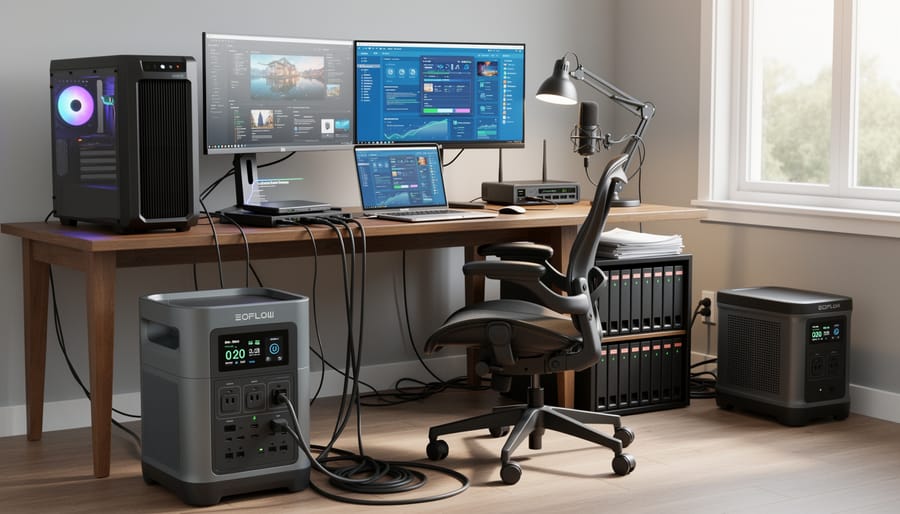
The EcoFlow Delta Pro 3 represents the most capable end of the portable power station spectrum, designed for BC residents who need more than occasional backup, those running home offices through outages, supporting medical equipment, or maintaining full households during extended grid failures. This unit delivers 4,096Wh of base capacity with the ability to expand up to 25kWh through additional batteries, putting it in a different class from the lighter models we’ve covered so far.
We tested the Delta Pro 3’s ability to handle sustained high-wattage loads, and it performed as advertised. The 3,600W continuous output means you can run power-hungry appliances simultaneously: a refrigerator, WiFi router, laptop, and space heater all at once without the unit breaking a sweat. The fast-charging capability stands out, reaching 80 percent from empty in about 50 minutes when plugged into a standard outlet, a genuine advantage when you need to top up between outage cycles during BC’s winter storm season.
Pros
- Expandable capacity scales from 4kWh to 25kWh for serious backup needs
- 3,600W continuous output handles multiple high-draw appliances simultaneously
- Extremely fast AC charging reaches 80 percent in roughly 50 minutes
- Professional-grade build quality with comprehensive app control and monitoring
- Works with cloudy-day solar input and accepts solar panel optimizers for efficient renewable charging
Cons
- Premium investment puts it beyond budget-conscious buyers
- Base unit weighs 114 lbs, requiring two people or a dolly to move
- Complexity and feature set exceed what most casual users actually need
- Expansion batteries add significant cost for maximum capacity configuration
The Delta Pro 3 makes sense for specific BC scenarios. If you work remotely and lose income during outages, if you’re in a rural area with frequent multi-day power losses, or if you’re building toward energy independence with solar integration, this unit offers the headroom and reliability to justify the premium. The app provides real-time monitoring of input and output, remaining runtime for your current load, and charge scheduling, features that matter when managing a serious backup system.
The portability trade-off is real at 114 pounds for the base unit. You’re not carrying this to a campsite; it’s a rollable backup system for your home or workshop. For buyers who need the capacity but want genuine portability, the models we covered earlier strike a better balance. The Delta Pro 3 excels when you think of it less as a portable power station and more as an expandable, movable alternative to a permanently installed home battery, one that can grow with your needs and travel if you relocate.
5. Bluetti Elite 100 V2, Best Ultra-Portable Option
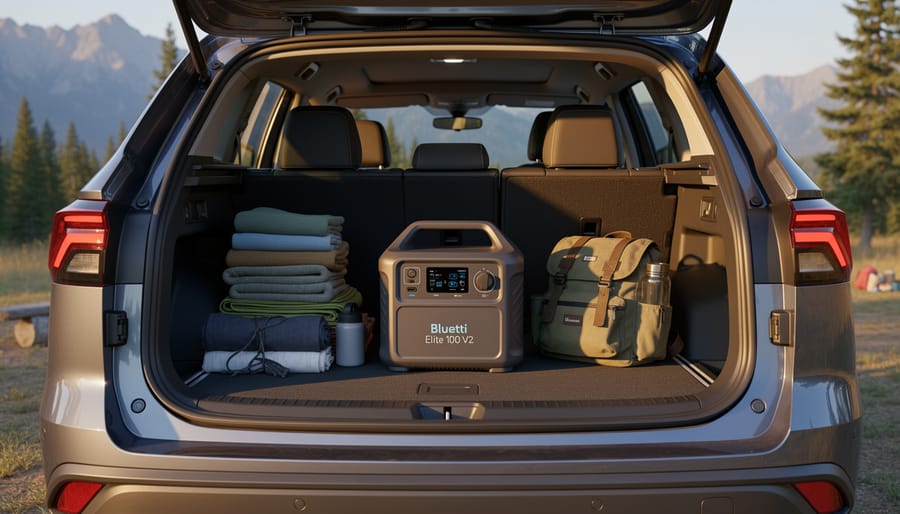
The Bluetti Elite 100 V2 solves a problem that larger units can’t: delivering serious power capacity in a package you can actually carry for miles. At 1,024Wh and 1,800W output, it matches the capability of competitors weighing 15 to 20 pounds more, yet tips the scale at just 25 pounds. Its 17-liter footprint means it fits in a backpack side pocket or under a truck seat without the Tetris-level packing required by bulkier stations.
We found this portable power station particularly valuable for scenarios where every pound counts. Backpackers who need CPAP equipment at remote campsites appreciated the weight savings over lugging a 40-pound alternative. Mobile photographers and videographers running mirrorless cameras, laptops, and LED panels told us the compact dimensions made the Elite 100 V2 easy to transport between locations without monopolizing cargo space. During our field testing across BC, the unit powered a laptop, hotspot, and LED light for a full workday from a mountain trailhead, proving you don’t need to sacrifice capacity for portability.
The 1,800W continuous output handles surprisingly demanding loads. We ran a portable fridge, charged power tools, and even tested a small electric kettle without issue. The inverter’s surge capacity dealt with inductive loads like mini-fridges starting up, which matters when you’re managing limited watt-hours in the backcountry. Four USB ports and two AC outlets provide enough connectivity for most mobile setups without requiring a power strip.
Pros
- Industry-leading power-to-weight ratio makes it the lightest option at this capacity.
- Compact 17L design fits in backpacks and tight storage spaces.
- 1,800W output handles most portable appliances despite the small size.
- Pass-through charging lets you run devices while recharging the battery.
Cons
- Higher capacity than budget models means you’ll pay more upfront.
- Smaller battery compared to extended-backup units limits multi-day runtime.
- Compact design offers fewer ports than larger power stations.
For BC residents building emergency go-bags or van-dwellers maximizing usable interior space, the Elite 100 V2 hits a sweet spot. It’s not the right choice if you’re staying put and need days of reserve power, the Jackery 2000 v2 better serves that role. But when you’re moving the unit frequently, climbing stairs during an outage, or packing for a backcountry trip, those saved pounds and liters make a tangible difference. Car campers who previously left their power station at home because of bulk constraints now have an option that actually travels, and remote workers appreciate a professional-grade setup that doesn’t require a dolly.
6. Goal Zero Yeti, Best for Solar Integration
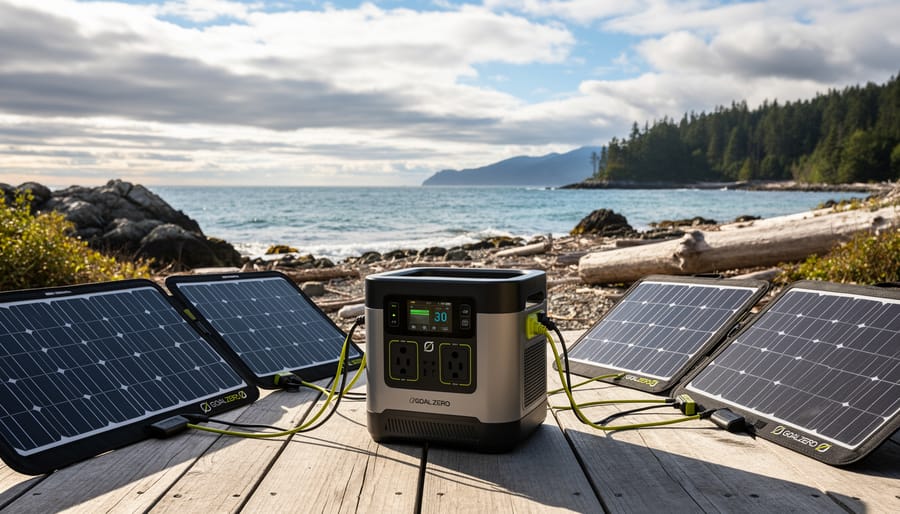
The Goal Zero Yeti line has earned its reputation among BC’s solar enthusiasts for good reason: these power stations are purpose-built for renewable integration. While other manufacturers have added solar charging as an afterthought, Goal Zero designed the Yeti from the ground up to work seamlessly with photovoltaic panels, making it the natural choice for residents who want their portable power station to complement a broader solar energy strategy.
We tested the Yeti’s solar charging performance across BC’s notoriously variable weather conditions, and the results demonstrated why this model excels for renewable-focused users. The unit accepts high-wattage solar input and includes an integrated maximum power point tracking (MPPT) charge controller that optimizes energy harvest even when clouds drift across the sky. During our coastal testing in mixed sun and overcast conditions, the Yeti consistently extracted usable charge where simpler units struggled. This efficiency matters enormously in British Columbia, where bright sunshine isn’t guaranteed even during summer months.
The Yeti’s compatibility with Goal Zero’s own solar panel lineup removes much of the guesswork from system design. The company offers everything from compact 100W panels for car camping to larger 200W arrays for basecamp setups, all engineered to work together without adapter cables or compatibility concerns. For residents building out an off-grid cabin or RV solar system, this ecosystem approach simplifies expansion and troubleshooting.
Pros
- Purpose-built MPPT controller maximizes solar harvest in variable BC weather conditions.
- Seamless compatibility with Goal Zero solar panels eliminates adapter hassles.
- Expandable capacity allows growth from portable backup to serious off-grid system.
- Durable construction proven reliable in outdoor environments.
Cons
- Premium positioning makes it a significant investment compared to alternatives.
- Heavier than competitors at similar capacity ratings.
- Proprietary ecosystem limits third-party solar panel flexibility.
The Yeti shines brightest when viewed as part of a renewable energy journey rather than a standalone emergency backup. BC residents who already have rooftop solar or plan to install panels will appreciate how this portable power station integrates into their existing setup. You can charge the Yeti from your home solar array during grid-connected operation, then disconnect it for camping trips or emergency backup, effectively leveraging your renewable investment across multiple use cases.
For those serious about energy independence in British Columbia, the Yeti represents more than portable power: it’s an entry point to understanding solar charging dynamics, battery management, and off-grid system design. That educational value, combined with genuine solar optimization, justifies the investment for anyone prioritizing renewable integration over simple plug-in convenience.
7. Jackery Explorer 300, Best Budget Entry Point
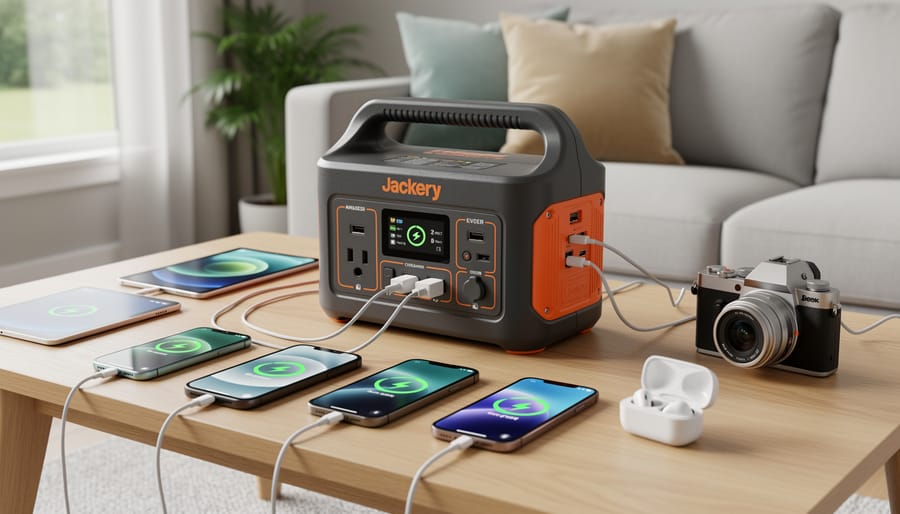
The Jackery Explorer 300 proves that you don’t need to spend a fortune to dip your toes into portable power. This compact unit serves BC residents who want basic backup capability without the investment required for higher-capacity models. We found it handles light-duty tasks reliably: keeping phones and laptops charged during short outages, powering LED lights and small electronics at the campsite, and running low-wattage devices for a few hours when you need them most.
With 293 watt-hours of capacity and 300 watts of continuous output, the Explorer 300 occupies the entry tier of portable power stations. It won’t run your fridge through a weekend blackout or power a microwave at the cabin, but that’s not its purpose. This unit shines when your needs are modest, a work-from-anywhere setup with a laptop and router, weekend car camping with phone charging and a portable cooler, or keeping essential small devices running during brief power interruptions. The 7-pound weight makes it genuinely portable, fitting easily in a car trunk or under a desk.
Pros
- Lightweight and compact design makes transport effortless for any user.
- Simple interface with minimal learning curve for first-time buyers.
- Handles essential light-duty charging and small electronics reliably.
- Budget-conscious entry point for testing portable power before bigger investment.
Cons
- Limited capacity restricts use to short durations and low-wattage devices only.
- Cannot power common household appliances like refrigerators or coffee makers.
- Slower solar charging compared to larger models with advanced controllers.
- Small battery means frequent recharging during extended use.
The Explorer 300 makes sense in specific scenarios: you’re testing whether a portable power station fits your lifestyle before committing to a larger model, your actual needs rarely exceed charging phones and running a laptop, or you want emergency backup for truly essential low-power devices. For BC campers who stick to established sites with light gear, or urban residents who experience only occasional brief outages, this entry-level portable power station canada option delivers without unnecessary capacity you’ll never use. However, if you find yourself frequently running out of power or wishing you could plug in higher-draw appliances, the extra investment in a mid-tier unit like the Anker C1000 Gen 2 provides substantially more capability for not much more outlay. The key is honest assessment: match your genuine power requirements to the unit, rather than buying too little and needing to upgrade within months.
How We Tested These Power Stations
We put these portable power stations through a rigorous evaluation designed to reflect how BC residents actually use backup power, whether that means keeping the fridge running during a coastal winter storm or supporting an off-grid solar setup in the Interior.
Our testing protocol followed these steps:
- Output verification: We measured actual AC output against manufacturer claims using a watt meter, running each unit at various loads to confirm it could sustain its rated continuous power without triggering protection cutoffs.
- Capacity discharge tests: We drained each portable power station from full charge to empty while powering a controlled load, comparing real-world watt-hours delivered against advertised capacity.
- Charging speed measurement: We tracked how long each unit took to recharge via AC wall outlet, car charging, and solar input (where compatible), noting any slowdowns or inefficiencies.
- Portability assessment: We evaluated weight, handle design, and form factor by carrying each unit up stairs, loading it into vehicles, and moving it around typical camping and home backup scenarios.
- Real-world load testing: We connected common BC household items, refrigerators, space heaters, WiFi routers, laptops, power tools, to see what each portable power station could run and for how long.
Field testing in BC conditions proved especially revealing. We used these units during actual outages, on camping trips along Vancouver Island, and in cold overnight temperatures to assess battery performance when it matters most. We also tested solar charging on overcast days, since BC’s cloudier months mean solar input rarely matches ideal lab conditions.
This hands-on approach, combined with spec verification and comparative analysis across brands like Jackery, Anker, EcoFlow, and Goal Zero Yeti, gave us confidence in our recommendations for different use cases and budgets.
Why Trust Solar BC’s Reviews
Solar BC has spent over a decade helping British Columbia residents navigate their energy choices, from rooftop solar installations to backup power solutions. Our review team draws on this background in sustainable energy systems, real-world understanding of house energy use patterns, and direct connections to certified installers across the province who’ve deployed thousands of systems in BC’s diverse climate zones.
We tested these portable power stations through hands-on evaluation, running actual loads from fridges to medical equipment, charging them via wall outlets and solar panels, and assessing their performance in conditions typical for BC residents, both at home during outages and in backcountry settings. Our recommendations aren’t influenced by manufacturer relationships. We’re here to guide your energy decisions based on what works in practice, not what looks good in marketing materials.
Unlike sites that publish roundups without local context, we understand BC’s specific power landscape: the outage patterns along the coast, the extended blackouts in rural Interior communities, and the solar potential across different regions. That perspective shapes every recommendation we make.
Portable Power Station vs. Installed Home Battery: What’s Right for You?
Portable power stations and installed home batteries serve different roles in BC’s energy landscape. Your choice hinges on how you plan to use backup power and whether you need flexibility or permanent integration.
Portable stations like the Anker C1000 Gen 2 or Jackery 2000 v2 plug directly into your home outlets during outages, require no installation, and travel with you to campsites or cottages. You own the unit outright from day one, and you can upgrade or sell it independently of your house. They shine for BC residents who face occasional winter storms, want backup power at a cabin, or need energy independence without committing to a permanent installation. The trade-off is manual setup during each outage and limited capacity compared to whole-home systems.
Installed home batteries integrate with your electrical panel and often pair with rooftop solar for automatic backup. They switch on seamlessly when BC Hydro service drops, handle higher loads for longer periods, and qualify for CleanBC rebates that portable units typically don’t. The investment is higher, requires professional installation, and ties the system to your property. This makes sense for homeowners facing frequent outages, running critical medical equipment, or building a comprehensive solar-plus-storage setup. Some BC residents start with DIY solar panels and portable power stations before graduating to installed batteries as their energy goals expand.
- Portability needs: Do you need power at multiple locations or just home backup?
- Backup duration: A few hours for essentials or days of whole-home power?
- Budget: Portable stations start at entry-level pricing; installed batteries require larger upfront investment
- Rebate availability: Installed systems may qualify for provincial incentives; portables typically don’t
- Installation complexity: Plug-and-play versus professional electrical work and permits
- Expansion plans: Portable units can be added modularly; installed batteries scale within a designed system
BC Hydro’s outage patterns lean toward short winter weather events rather than extended blackouts, which favors portable solutions for most households. If you’re unsure, a mid-range portable power station in Canada offers a lower-risk entry point while you assess your actual backup needs and explore permanent options later.
What Can You Actually Run? Load Capacity Explained
Understanding what a portable power station can actually run starts with knowing its capacity, measured in watt-hours (Wh), and its output, measured in watts (W). A 1,000Wh unit can theoretically power a 100W device for ten hours, though real-world efficiency losses mean you’ll get closer to eight hours of runtime.
- Watt-Hours (Wh)
- The total energy storage capacity of a portable power station, indicating how long it can deliver power before recharging. A 2,000Wh unit stores twice the energy of a 1,000Wh model.
- Continuous vs. Surge Watts
- Continuous watts represent the steady power output a unit can sustain, while surge watts indicate the brief spike it can handle when appliances start up. Many devices need 2-3 times their running wattage for a few seconds during startup.
- Inverter Capacity
- The maximum continuous wattage the internal inverter can convert from DC battery power to AC outlet power. This limit determines which appliances you can run simultaneously.
- Runtime Calculation
- Divide the station’s watt-hour capacity by the device’s wattage, then multiply by 0.85 to account for conversion losses. A 1,000Wh unit powering a 50W router yields roughly 17 hours of runtime.
For most BC households, a mid-range portable power station can keep essential devices running during outages. A modern refrigerator draws 100-200W while running, so a 1,000Wh unit provides 5-8 hours of cooling if the fridge cycles on and off normally. WiFi routers and modems use 10-30W combined, allowing several days of connectivity from even smaller units. Medical equipment like CPAP machines typically consume 30-60W, making overnight use feasible with 500Wh or more.
Space heaters and well pumps demand significantly more power. A typical 1,500W space heater drains a 2,000Wh station in about 70 minutes of continuous use, while a 1HP well pump’s 1,000W surge requirement rules out most portable units under 1,500W continuous output. Camping gear like electric coolers, lights, and phone chargers rarely exceed 100W combined, so even budget 300-500Wh models handle weekend trips comfortably.
Matching capacity to your actual needs prevents both overspending and underpowered frustration. List the devices you’d run simultaneously, add their wattages, and multiply by your desired runtime hours to find your minimum capacity target.
BC Rebates and Incentives for Energy Storage
Financial support for energy storage in British Columbia has historically focused on grid-connected home battery systems rather than portable power stations, but understanding the landscape helps you plan your backup power investment strategically. While standalone portable units typically don’t qualify for CleanBC rebates or BC Hydro incentives, which prioritize permanent installations that reduce grid demand, combining a portable power station with solar panels for off-grid charging may open doors to federal clean energy tax credits under certain configurations.
For permanent home battery systems paired with solar installations, BC residents can explore CleanBC’s Energy Storage Incentive Program, which has supported lithium-ion battery installations when integrated with renewable generation. These incentives typically require professional installation, grid-tied configuration, and participation by certified contractors, none of which apply to plug-and-play portable models like the Jackery 2000 v2 or Anker C1000 Gen 2. However, if you’re considering a larger energy independence strategy, federal grants for clean technology adoption may offset costs for solar arrays that charge your portable power station, effectively subsidizing part of your backup system.
The practical path forward: start by calculating your actual backup needs using Solar BC’s tools, then connect with local installers who can advise on rebate-eligible permanent systems if your situation warrants that scale. For most households choosing a portable power station Canada-wide, the real savings come from smart capacity selection rather than incentive programs. And as you think about long-term sustainability, remember that responsible solar panel recycling applies to any solar charging setup you eventually integrate with your portable backup power.
Frequently Asked Questions
How do portable power stations perform with solar charging during BC’s cloudy months?
Solar charging works in overcast conditions, though at reduced efficiency, typically 20-40% of peak output on cloudy days. We’ve observed that pairing a power station with appropriately sized panels (most manufacturers recommend 200W minimum for efficient charging) allows meaningful recharging even during BC’s grey winter months. Models like the Goal Zero Yeti excel here due to optimized solar controllers. For reliable backup during extended cloud cover, plan for longer charging windows or consider supplementing solar input with occasional AC wall charging.
Can I safely use a portable power station indoors during outages?
Yes, all the units we tested produce no exhaust or carbon monoxide, making them safe for indoor use unlike gas generators. They operate silently and emit no fumes.
How does cold weather affect battery performance in BC winters?
Lithium batteries lose 10-20% capacity below freezing, and charging should occur above 0°C for battery longevity. Store your unit indoors when possible and allow it to warm before charging after cold exposure.
How long will a portable power station last before needing replacement?
Quality units typically deliver 800-2,000 charge cycles before capacity drops to 80%, translating to 5-10 years for most users. Proper storage at moderate temperatures and avoiding deep discharges extends lifespan considerably.
How do I determine the right capacity for my backup needs?
Add up the wattage of devices you’ll run simultaneously, then multiply your total by the hours you need coverage. A fridge (150W) plus lights and phone charging (50W) requires 2,400Wh for 12 hours, making the Jackery 2000 v2 a solid match.
What’s the real difference between budget and premium models?
Beyond raw capacity, premium units offer faster charging (often under two hours from AC), expandable battery packs, and more simultaneous output ports. The Anker C1000 Gen 2 provides excellent value for typical weekend camping or overnight backup, while the EcoFlow Delta Pro 3 justifies its premium positioning if you’re powering a home office during multi-day outages or need scalability. Budget models like the Jackery Explorer 300 work fine for light loads but struggle with anything beyond phones and laptops. Match your spend to actual usage patterns rather than buying excess capacity you’ll never tap.
Choosing the right portable power station comes down to honest assessment of your actual needs. If you’re looking for weekend camping backup and occasional outage protection, a mid-capacity model will serve you well without the weight penalty of oversized units. Serious off-grid users or those facing frequent extended blackouts will appreciate the expanded runtime of higher-capacity stations, even if portability takes a back seat. Budget-conscious buyers can start small and upgrade later as needs evolve.
Before you purchase, list the devices you actually need to run during an outage and calculate their combined wattage, most people overestimate their requirements and end up paying for capacity they’ll never use. If sustainability matters to you, prioritize models with efficient solar charging capabilities that align with BC’s renewable energy goals.
We’ve built calculator tools to help you match your power needs to the right capacity tier, taking guesswork out of the equation. For those considering a more permanent solution, our network of certified local installers can assess whether a whole-home battery system makes more sense than portable units for your situation. Whichever path you choose, you’ll gain valuable energy independence and peace of mind during BC’s unpredictable weather seasons.