
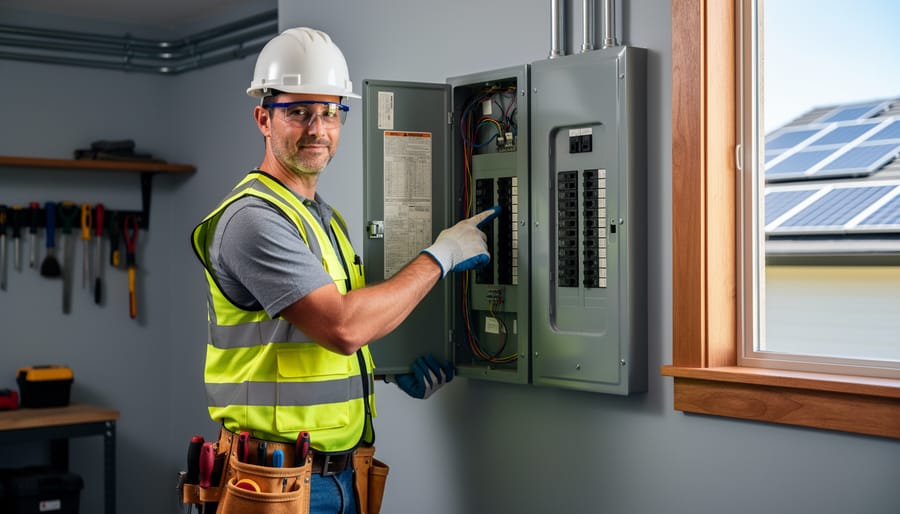
Check your electrical panel’s amperage rating before requesting solar quotes—most BC homes need at least 200 amps to accommodate solar installations, and panels below this threshold will require upgrades costing between $2,500 and $4,000. Locate your main breaker and inspect the number printed on the handle; if it reads 100 amps or less, factor panel replacement into your solar budget from the start.
Measure available breaker spaces in your panel by counting open slots, as solar installations typically require two adjacent spaces for a 30-40 amp breaker. Older BC homes built before 1990 often have fully populated panels with no room for solar connections, necessitating either a panel upgrade or a sub-panel addition ranging from $1,200 to $2,000.
Verify your panel’s physical condition and location, since outdated brands like Federal Pacific or Zinsco may need immediate replacement regardless of solar plans due to safety concerns. Panels located in hard-to-reach areas like crawl spaces or exterior walls exposed to coastal weather may require relocation, adding $1,500 to $3,500 to your project costs.
Schedule an assessment with a licensed electrician familiar with solar requirements before contacting installers. They’ll identify code compliance issues specific to BC Electrical Safety Standards and provide written quotes for necessary upgrades, preventing surprise costs during installation. Many BC solar companies offer free electrical evaluations as part of their site assessment, giving you multiple expert opinions on your panel’s readiness without upfront costs.
What Your Electrical Panel Does for Your Solar System
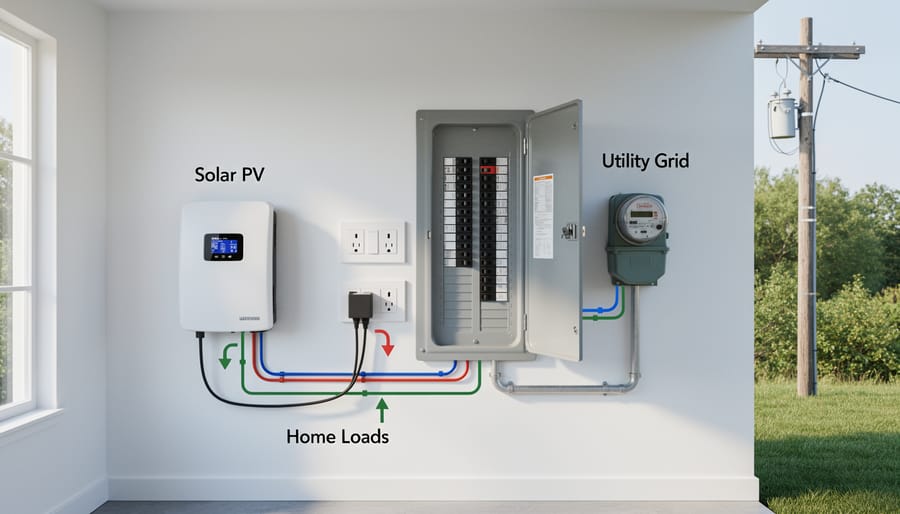
Your electrical panel, commonly called a breaker box, acts as the central hub that manages all electricity flowing through your home. When you add solar panels, this box takes on an even more important role: it becomes the gateway between your solar production, your household electricity needs, and the BC Hydro grid.
Think of your electrical panel as a traffic controller at a busy intersection. Without solar, electricity flows in one direction—from the grid through your panel to your appliances and lights. Once you install solar panels, the panel manages a two-way street. During sunny days, your solar system generates electricity that flows into the panel. The panel then directs this power where it’s needed: first to your home’s immediate needs, and any excess back to the grid through BC Hydro’s net metering program.
The panel contains circuit breakers—essentially safety switches that protect your home from electrical overloads. When you connect solar panels, your electrician installs a dedicated solar breaker that allows solar electricity to safely enter your home’s electrical system. This breaker also acts as a shut-off switch during maintenance or emergencies.
Here’s how it works in practice: On a typical BC summer afternoon, your solar panels might generate 8 kilowatts of power while your home only uses 3 kilowatts. Your panel automatically routes those 3 kilowatts to your refrigerator, computers, and other appliances, while sending the remaining 5 kilowatts back to the grid, earning you credits on your BC Hydro bill.
Unlike DIY solar installation projects that might skip critical safety steps, professional installers ensure your panel properly manages these complex electrical flows while meeting BC electrical codes and safety standards.
The Three Essential Panel Requirements Every BC Homeowner Should Know
Amperage Capacity: Is Your Panel Big Enough?
Most modern solar installations require a 200-amp electrical panel to safely handle the additional power flow from your solar array. However, if your BC home was built before the 1990s, there’s a good chance you’re working with a 100-amp panel—the standard for decades of residential construction.
Here’s what this means for your solar journey: a 100-amp panel can accommodate solar installations, but typically only smaller systems of around 4-5 kW. For context, based on typical BC home electricity usage, many households need systems between 6-10 kW to offset their energy consumption meaningfully.
The good news? Panel upgrades are straightforward and often necessary anyway for aging electrical systems. A 200-amp panel provides room for your solar system plus future electrical needs like EV charging or heat pumps—all part of the sustainable energy transition many BC homeowners are embracing.
Your solar installer will perform a load calculation to determine if your current panel can support solar or if an upgrade is needed. This assessment considers your home’s total electrical demand, including the new solar system’s contribution. Some homes with 100-amp panels can install solar using a line-side tap connection, which bypasses the main breaker, though this depends on your specific electrical setup.
Think of panel capacity like highway lanes—you need enough space for traffic to flow safely in both directions. Upgrading ensures your solar investment operates optimally without compromising your home’s electrical safety.
Available Breaker Space: Finding Room for Solar
Before your solar panels can connect to your home’s electrical system, you need available space in your electrical panel for a dedicated solar breaker. This breaker acts as the connection point where your solar-generated electricity feeds into your home’s electrical system.
Most solar installations require one or two breaker slots, depending on your system size. When your electrician assesses your panel, they’ll check for physically available slots where a new breaker can be installed. Many BC homes, particularly those built before 2000, have panels with limited or no available space, which means an upgrade may be necessary before going solar.
Beyond physical space, there’s an important electrical capacity rule you need to understand. The “120% rule” is a safety guideline that limits how much power can flow through your electrical panel’s main bus bar. Here’s how it works: the combined amperage of your main breaker plus your solar breaker cannot exceed 120% of the panel’s bus bar rating.
For example, if you have a 200-amp panel with a 200-amp main breaker, the bus bar can handle 240 amps (200 x 1.2). This means your solar breaker cannot exceed 40 amps. If your planned solar system requires a larger breaker, you’ll need a panel upgrade or alternative interconnection method.
A qualified solar installer or electrician can quickly assess your available breaker space during a site visit. They’ll measure both physical space and calculate whether your panel meets the 120% rule for your intended solar system size.
Panel Condition and Age: When Replacement Makes Sense
Your electrical panel’s age and condition play a critical role in determining whether you can safely add solar. If your home was built before 1990, it’s worth paying special attention to the panel manufacturer, as some older brands pose significant safety risks.
Federal Pacific Electric (FPE) and Zinsco panels, common in BC homes built between the 1950s and 1980s, have documented safety issues. These panels can fail to trip during overloads, increasing fire risk. If you have either of these brands, replacement isn’t just recommended for solar installation—it’s a safety necessity that protects your entire home.
BC’s coastal climate creates another challenge: corrosion. Salt air in communities like Vancouver, Victoria, and coastal regions accelerates panel deterioration. Even newer panels can develop rust, loose connections, and compromised bus bars. Before installing solar, your electrician should inspect for signs of moisture damage, oxidation, or burnt connections that indicate it’s time for an upgrade.
Panel replacement becomes non-negotiable when you have insufficient space for solar breakers, aluminum wiring connections, rust or corrosion damage, or any of the problematic panel brands mentioned above. While it adds upfront cost, modern panels are safer, more reliable, and designed to accommodate renewable energy systems.
Consider the experience of a Burnaby homeowner who discovered their 1970s-era FPE panel during their solar consultation. The required replacement added $2,500 to their project, but they gained peace of mind knowing their home’s electrical system was modernized and safe. The investment protects both your solar system and your family for decades to come.
How Certified BC Solar Installers Assess Your Electrical System
When certified BC solar installers visit your home for an initial consultation, the electrical system assessment is a crucial first step. Understanding this process helps you prepare and sets realistic expectations for your solar journey.
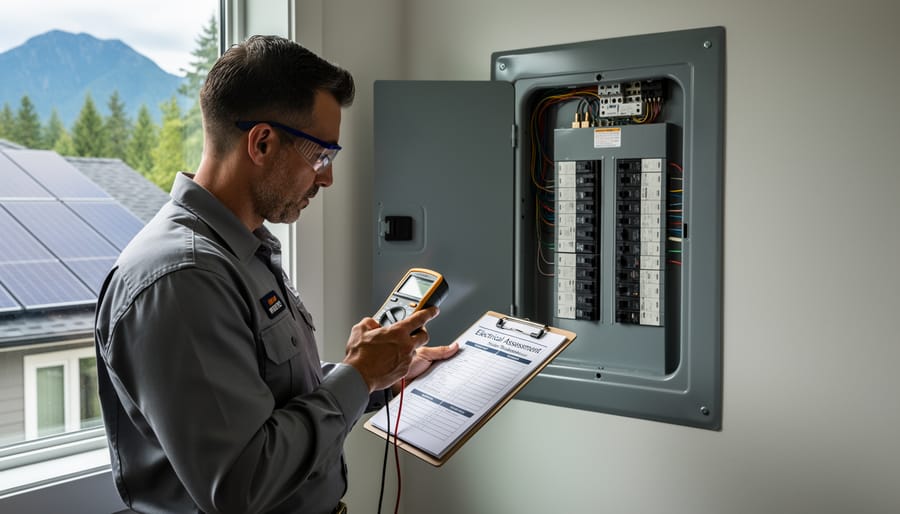
During the assessment, installers examine several key components. They’ll start with your main electrical panel, checking its amperage rating (typically 100, 125, or 200 amps in BC homes), available breaker slots, and overall condition. They’re looking for signs of wear, corrosion, or outdated components that might need attention. The panel’s location matters too, as installers need to determine the most efficient routing for solar wiring.
Next, they’ll evaluate your current electrical load. By reviewing recent utility bills and discussing your household’s energy usage patterns, they calculate how much capacity remains for solar integration. This step often reveals whether your existing panel can accommodate solar or if an upgrade is necessary. Many installers also assess your roof structure, attic space, and the distance between your roof and electrical panel during this visit.
A home energy audit may be recommended if your home has older wiring or if you’re considering other energy efficiency upgrades alongside solar installation.
To prepare for your assessment, gather recent electricity bills covering at least one year to show seasonal usage patterns. Take note of any planned major electrical additions, like electric vehicle chargers or heat pumps, as these affect your solar system design. Check your electrical panel’s location and ensure clear access. If you know your panel’s age or have documentation from previous electrical work, have this information ready.
Most assessments take 30 to 60 minutes and provide immediate feedback about your home’s solar readiness. Reputable installers will explain their findings clearly, outline any necessary upgrades, and answer your questions without pressure. This transparent approach ensures you understand exactly what your solar installation entails before making any commitments.
Panel Upgrades: Costs, Process, and What BC Homeowners Need to Know
Upgrading your electrical panel is often the first step toward solar installation, and understanding the costs and process helps BC homeowners plan effectively. In British Columbia, typical panel upgrades range from $1,500 to $3,500, depending on your home’s specific requirements and the amperage increase needed. A standard upgrade from 100-amp to 200-amp service falls within this range, though homes requiring additional electrical work or complex installations may see higher costs.
The upgrade process begins with a licensed electrical contractor assessing your current panel and determining the appropriate size for your solar system. Most BC homes installing solar need at least 200-amp service to handle both household loads and solar generation. Your electrician will then obtain the necessary electrical permit from your municipality, a requirement across all BC jurisdictions. The physical installation typically takes one to two days, with a brief power interruption during the changeover.
Timing is crucial when coordinating panel upgrades with solar installation. Most homeowners complete the panel upgrade before their solar installer begins work, ensuring all electrical infrastructure is ready for the solar interconnection. This sequencing prevents delays and allows for a smoother installation process. Your solar installer can often recommend trusted electrical contractors familiar with solar-ready panel configurations.
BC Hydro interconnection adds another layer to consider. Once your panel is upgraded and solar system installed, you’ll need BC Hydro approval before your system can begin generating power. This interconnection process typically takes four to six weeks, though timelines vary by region. Your solar installer usually handles the application, but understanding this timeline helps you set realistic expectations for when your system goes live.
The good news is that panel upgrades add lasting value to your home beyond solar compatibility. Modern electrical panels improve safety, increase capacity for electric vehicle charging or other future needs, and often reduce insurance premiums. Many BC homeowners find that exploring financing options that bundle panel upgrades with solar installation simplifies the process and spreads costs over time, making the transition to clean energy more manageable.
Real BC Homeowner Story: The Benson Family’s Panel Upgrade Journey
When the Benson family of North Vancouver started exploring solar energy in early 2023, they discovered their 1987-built home had a 100-amp electrical panel that wouldn’t support their planned 8.5 kW solar system. Sarah Benson admits she felt discouraged initially. “We thought we’d just get panels installed and start saving money right away. Learning we needed a panel upgrade felt like an unexpected roadblock,” she recalls.
After getting three quotes, the Bensons chose a local electrician who completed their 200-amp panel upgrade for $3,200, which fell within the typical BC range. The actual upgrade took just one day, though coordinating the BC Hydro disconnect and reconnect extended the timeline to about two weeks total. “The electrician was incredibly professional and explained everything clearly,” Sarah notes. “We only lost power for about six hours during the actual installation day.”
The family moved forward with their solar installation three weeks later. The combined project, including the panel upgrade and complete solar system, cost $24,500 before provincial and federal incentives brought their net investment down to approximately $19,800.
Now, 18 months into their solar journey, the Bensons produce roughly 85 percent of their annual electricity needs. “Our monthly bills went from averaging $180 to practically nothing in summer months,” Sarah shares. “Yes, the panel upgrade added to our upfront costs, but our electrician explained it also increased our home’s resale value and gave us capacity for future electric vehicle charging. Looking back, it was absolutely the right decision. We’re generating clean energy, saving money, and our home is now equipped for the future.”
Smart Alternatives When a Full Panel Upgrade Isn’t Necessary
Before investing in a complete panel upgrade, consider these cost-effective alternatives that many BC homeowners have successfully implemented.
A line-side tap (also called a supply-side connection) allows your solar system to connect directly to the main service line before your existing panel. This bypasses the 120% rule limitation without replacing your panel. The Fraser Valley Community Solar Co-op recently used this approach for a home in Chilliwack, saving the homeowner approximately $2,500 compared to a full panel replacement. Line-side taps work best when you have adequate space near your meter and your main service line has sufficient capacity.
Load management systems offer another smart solution. These intelligent devices monitor your home’s energy usage in real-time and temporarily reduce power to non-essential appliances (like water heaters or EV chargers) when solar production is feeding into your panel. A Kelowna family installed a load management system for about $1,200, enabling them to add a 7kW solar array without touching their existing 100-amp panel.
Sub-panels can also help by redistributing electrical loads and creating dedicated space for solar equipment. While not always cheaper than a panel upgrade, they provide flexibility for phased installations.
These alternatives typically work best for smaller solar installations (under 8kW) on homes with relatively newer electrical systems. Your solar installer will assess whether these options meet BC electrical code requirements and suit your specific situation, potentially saving you thousands while still achieving your clean energy goals.
Questions to Ask Your Solar Installer About Electrical Requirements
Before signing with a solar installer, asking the right questions about electrical compatibility can save you from unexpected costs and delays. Here’s a practical checklist to guide your consultation:
Start by asking, “Does my current electrical panel have sufficient capacity for solar, or will it need an upgrade?” This establishes whether your existing 100-amp or 200-amp panel can handle the additional load. Follow up with, “What specific electrical upgrades will be required for my system size?” to get clarity on whether you’ll need a service upgrade, subpanel, or other modifications.
Understanding costs upfront is crucial. Ask, “What are the estimated costs for electrical work, and are they included in your quote?” Some installers bundle electrical upgrades while others charge separately, so transparency matters. Also inquire, “Do you work with certified electricians who are familiar with BC electrical codes?” since compliance with local regulations protects your investment.
Timing considerations are equally important. “How long will electrical upgrades add to my installation timeline?” helps you plan accordingly. For older BC homes, particularly relevant is, “Have you worked with homes built in my home’s era, and what challenges typically arise?” Many Vancouver-area homes from the 1970s and 1980s have similar electrical configurations, so experienced installers will know common issues.
Finally, ask “What warranties or guarantees cover the electrical work?” and “Can you provide references from BC homeowners with similar electrical situations?” Speaking with neighbours who’ve completed the process gives you realistic expectations and builds confidence in your decision.
Taking Your Next Step: Getting a Professional Electrical Assessment
Ready to explore solar for your BC home? Here’s how to take that important next step with confidence.
Start by connecting with certified BC solar installers through the Solar BC network. These professionals understand local electrical codes, BC Hydro requirements, and the specific challenges of homes in our region. Look for installers with Clean Energy BC membership and proven track records in your community.
During your initial consultation, expect a comprehensive assessment of your electrical panel and overall system capacity. A qualified installer will evaluate your current panel’s amperage, available breaker spaces, and whether your service can handle additional solar load. They’ll also inspect your roof condition, assess shading issues, and provide realistic production estimates. This consultation is typically free and takes about an hour, giving you a clear picture of what upgrades, if any, you’ll need.
Before scheduling consultations, use Solar BC’s online solar calculator to estimate your potential savings. Input your current electricity costs, roof specifications, and location to see projected energy production and financial returns. The tool factors in BC’s net metering program and available incentives, helping you understand the complete financial picture.
When evaluating quotes, ask installers to itemize panel upgrade costs separately from solar installation costs. This transparency helps you understand the true investment and compare options effectively. Remember, many BC homeowners discover their existing panels are solar-ready, making the transition smoother than anticipated.
Take advantage of Solar BC’s educational workshops and webinars to learn more before committing. These community resources connect you with other BC homeowners who’ve made the switch, providing real-world insights alongside technical knowledge.
Understanding your electrical panel requirements is simply one piece of the solar puzzle, and it’s far more manageable than many homeowners initially assume. While the technical details might seem overwhelming at first, remember that these requirements exist to ensure your solar system operates safely and efficiently for decades to come. A proper electrical assessment now prevents headaches, safety issues, and unexpected costs down the road.
The good news? You don’t need to become an electrical expert yourself. Certified solar installers across British Columbia handle these technical details every day, conducting thorough assessments and coordinating any necessary upgrades as part of your solar installation project. They understand BC’s specific building codes, climate considerations, and utility interconnection requirements. Their expertise means you can move forward with confidence, knowing your system meets all safety standards and performance expectations.
British Columbia’s combination of abundant sunlight hours, progressive clean energy policies, and growing installer expertise creates an ideal environment for solar adoption. Whether you live in the sunny Okanagan, the coastal regions, or anywhere in between, solar technology has matured to deliver reliable performance across our diverse climate zones. Every properly installed solar system contributes to BC’s clean energy goals while reducing your environmental footprint and energy costs.
The path to solar starts with a simple conversation with a qualified installer who can evaluate your specific situation and provide clear recommendations. Your contribution to a sustainable energy future is closer than you think.