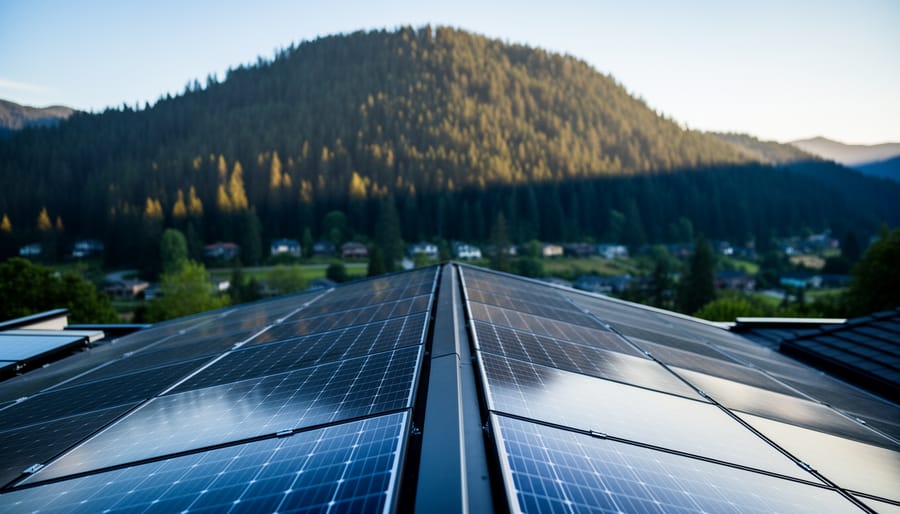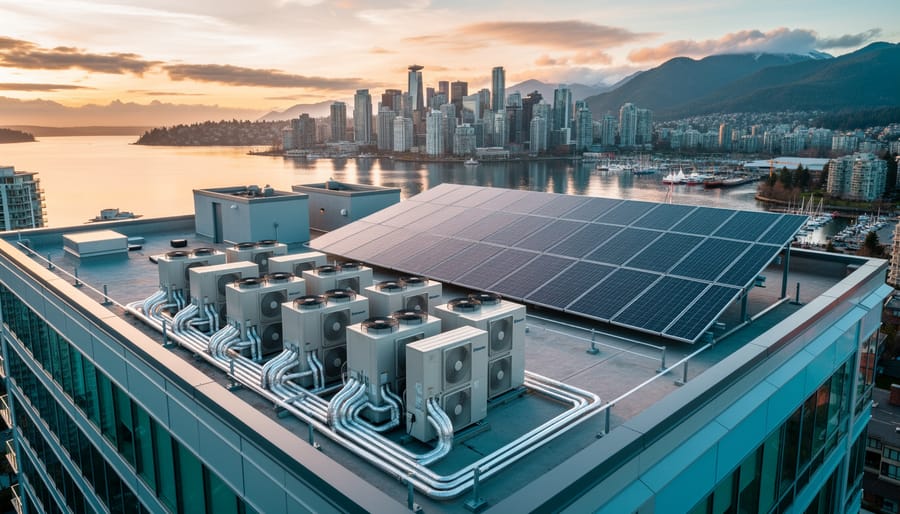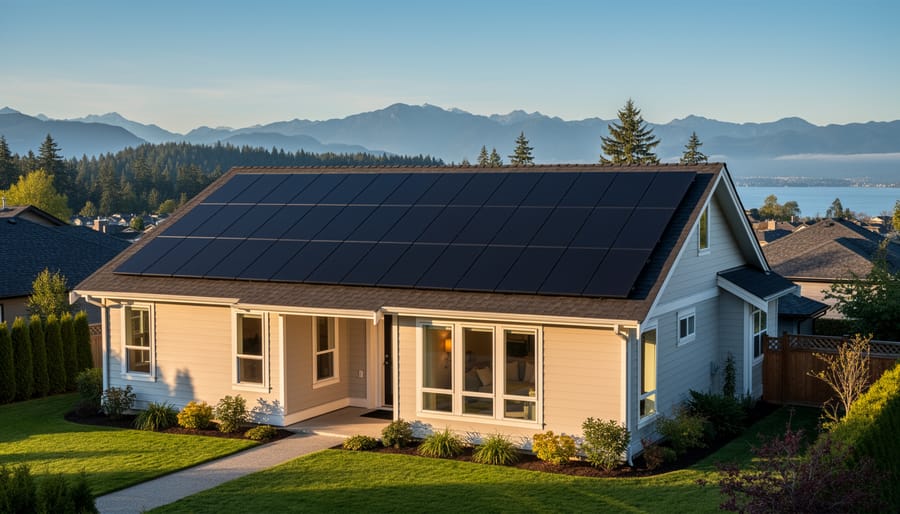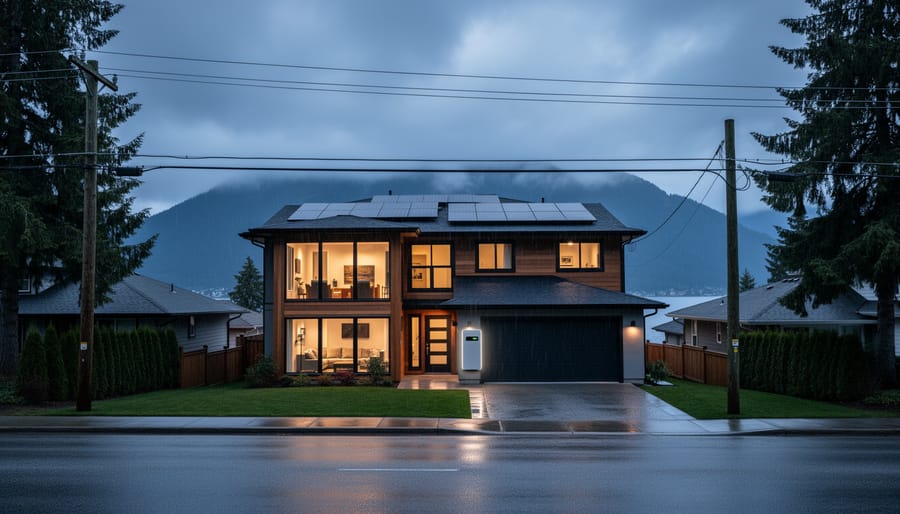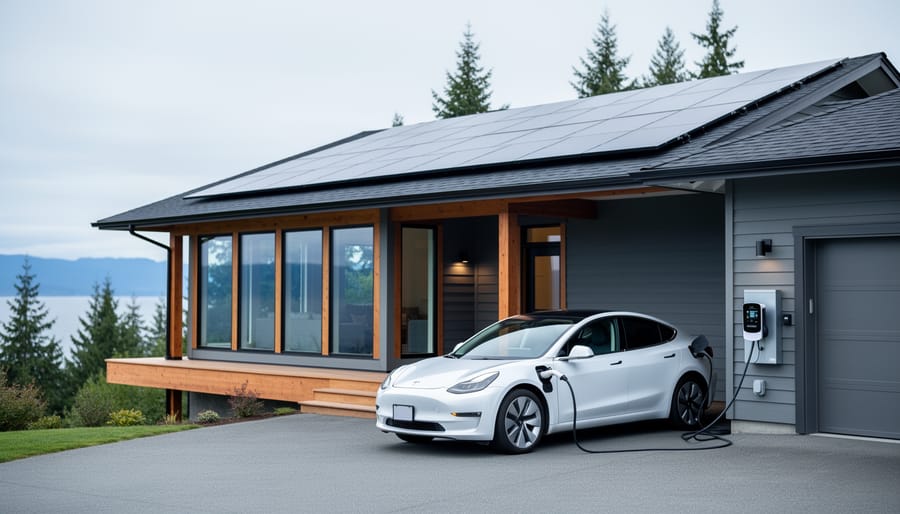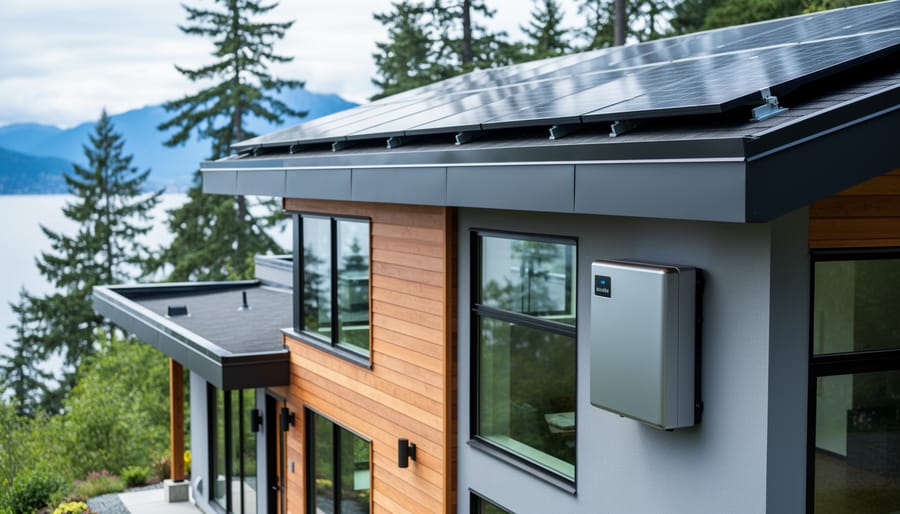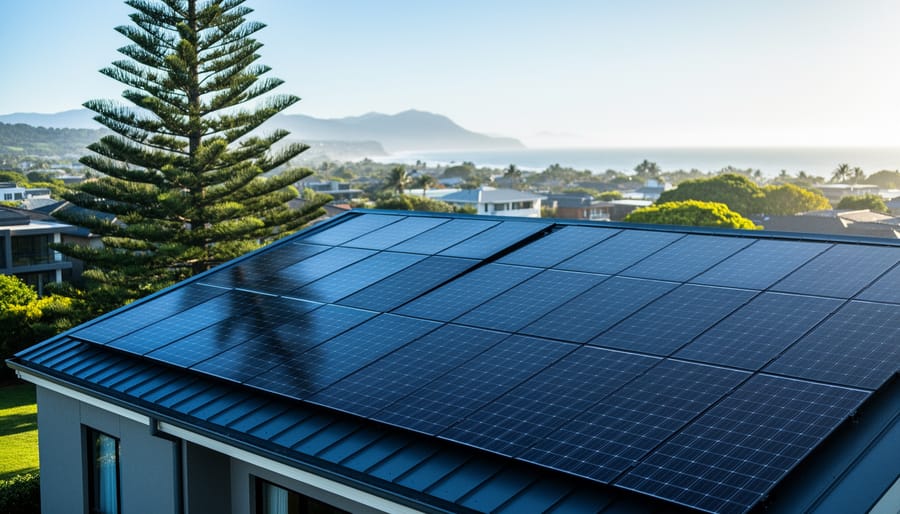
An 8kW solar system in British Columbia typically generates between 25 to 35 kilowatt-hours (kWh) of electricity daily, though this varies significantly with seasons and local weather patterns. During peak summer months, your system could produce 40-45 kWh per day, while winter output may drop to 10-15 kWh as shorter days and cloud cover reduce sunlight exposure.
Understanding your system’s actual daily output helps you determine whether an 8kW installation meets your household or business electricity needs. Most BC homes consume 20-30 kWh daily, making an 8kW system sufficient for offsetting a substantial portion of your energy costs year-round.
Your specific location within British Columbia dramatically impacts production. Coastal regions like Vancouver experience more overcast days, averaging 28 kWh daily, while interior communities such as Kelowna enjoy sunnier conditions that push daily averages closer to 32 kWh. Panel orientation, roof pitch, shading from trees or buildings, and system efficiency all play crucial roles in your real-world output.
This guide breaks down exactly what you can expect from an 8kW solar system across different BC regions, provides seasonal production data from actual installations, and offers practical tools to calculate your potential energy generation and savings.
What Is an 8kW Solar System?
An 8kW solar system represents the total power capacity your solar panels can produce under ideal conditions. Think of it like the horsepower rating of a vehicle—it tells you the maximum potential output when everything is working perfectly. The “8kW” or 8 kilowatts refers to the system’s peak power rating, which occurs during optimal sunlight conditions, typically around midday on a clear, sunny day.
In practical terms, an 8kW system in British Columbia typically consists of 20 to 24 solar panels, depending on the wattage of individual panels. Most modern residential panels range from 330 to 400 watts each. For example, if you choose 400-watt panels, you would need 20 panels to reach 8kW capacity. These panels usually require approximately 400 to 500 square feet of roof space.
This system size is ideal for medium to large homes in BC, particularly those with 3 to 4 bedrooms and families of 4 to 6 people. If your monthly electricity consumption ranges between 800 to 1,200 kilowatt-hours, an 8kW system typically provides excellent coverage. Many BC homeowners with electric vehicle chargers, heat pumps, or home offices find this capacity matches their needs well.
Understanding your system’s capacity helps you calculate solar panel output more accurately throughout different seasons. The actual daily production varies based on weather, daylight hours, and your specific location across BC—from sunny Okanagan valleys to cloudier coastal regions. An 8kW system provides substantial energy independence while reducing your carbon footprint and monthly hydro bills, making it a popular choice for environmentally-conscious British Columbians ready to embrace clean energy.


Average Daily Output: What to Expect in British Columbia
Summer Production (May-August)
Summer is when your 8kW solar system truly shines in British Columbia. During these peak months from May through August, you can expect daily output ranging from 40 to 50 kWh on sunny days, with June and July consistently delivering the highest production numbers.
Why does summer performance soar? BC experiences longer daylight hours during this season, with some regions enjoying up to 16 hours of potential sunlight. The sun also travels higher in the sky, hitting your panels at more direct angles and maximizing energy capture. Combined with typically clearer skies and minimal cloud cover compared to other seasons, these conditions create ideal circumstances for solar generation.
Take the example of a Kelowna homeowner who documented their system’s performance: during a typical week in July, their 8kW installation averaged 45 kWh daily, easily covering their entire household consumption with surplus energy fed back to the grid. Even coastal communities like Victoria, which experience more marine cloud influence, still see impressive averages of 35-42 kWh per day throughout summer.
This seasonal abundance means you’ll build up significant solar credits during summer months, which can offset your consumption during darker winter periods, making the annual economics of solar investment particularly attractive for BC residents.
Winter Production (November-February)
Let’s be honest: BC winters present real challenges for solar production. During November through February, your 8kW system will generate significantly less energy, typically between 8-15 kWh per day. This reduction happens because of shorter daylight hours (as little as 8 hours in December) and frequent overcast conditions.
However, your panels still produce electricity even on cloudy days, capturing diffused sunlight. A Vancouver homeowner we spoke with reported their 8kW system averaged 10 kWh daily throughout winter, enough to cover essential loads like heating, lighting, and appliances.
The key is setting realistic expectations. Your winter production might drop to 30-40% of summer levels, but remember that BC’s net metering program credits excess summer production toward winter shortfalls. Many solar owners essentially bank their sunny season surplus for darker months.
Consider this practical perspective: even with reduced winter output, you’re still offsetting grid consumption and reducing your carbon footprint year-round. Every kilowatt-hour counts toward your energy independence goals, regardless of season.
Spring and Fall (Shoulder Seasons)
Spring and fall offer moderate solar production for BC homeowners with 8kW systems, typically generating 25-35 kWh daily during these transition months. In Vancouver, a local family found their system produced around 30 kWh per day in April and October—enough to cover their baseline electricity needs while building credit during sunnier spring days. These shoulder seasons provide predictable output as daylight hours gradually increase or decrease. March through May sees production climbing steadily, while September through November experiences a gentle decline. Weather variability plays a bigger role during these months, with occasional rainy weeks reducing output temporarily. However, BC’s mild shoulder seasons generally maintain consistent performance compared to more extreme climates. Homeowners can expect their systems to meet 70-90% of household electricity demands during spring and fall, making these excellent months for evaluating system performance and adjusting energy usage patterns before summer peaks or winter lows arrive.
Regional Differences Across BC
BC’s diverse climate creates significant variations in solar output across regions. An 8kW system in sun-drenched Kelowna typically produces 35-45 kWh daily during summer, benefiting from some of Canada’s highest peak sun hours. Vancouver and Victoria generate 25-35 kWh in summer, with coastal cloud cover reducing output by 15-20% compared to interior locations. Northern communities like Prince George see shorter days and lower angles, producing 20-30 kWh in peak months but experiencing dramatic seasonal swings.
Winter differences become more pronounced. Kelowna maintains 8-12 kWh daily, while coastal cities drop to 5-8 kWh. Fort St. John faces the greatest challenges with minimal winter production. Understanding your region’s solar potential helps set realistic expectations and optimize system design for local conditions, ensuring your investment delivers maximum value year-round.
Factors That Impact Your Daily Solar Output
Roof Direction and Tilt
Your roof’s direction plays a significant role in your 8kW system’s daily output. In British Columbia, south-facing roofs deliver optimal performance, capturing the sun’s path throughout the day. These installations typically achieve 100% of the system’s potential output, translating to roughly 30-50 kWh daily depending on the season.
East and west-facing roofs still produce substantial electricity, though you’ll see about 15-20% less output compared to south-facing installations. An east-facing array generates more power during morning hours, while west-facing panels peak in the afternoon. This can actually work to your advantage if your household uses more electricity during specific times of day.
Roof tilt also matters. The ideal angle in BC ranges from 30-40 degrees, closely matching our latitude. A Richmond family with a 25-degree west-facing roof still generates enough power to cover 85% of their annual electricity needs with their 8kW system. Even non-ideal orientations deliver meaningful results. If your roof doesn’t face directly south, don’t let that discourage you. Modern solar panels perform efficiently across various orientations, and your system can still provide significant energy savings and environmental benefits.
Shading and Obstructions
Even BC’s best solar installations face shading challenges that can significantly reduce your 8kW system’s daily output. Trees, chimneys, and neighbouring buildings casting shadows on your panels can decrease production by 10-50%, depending on the extent and timing of obstruction. Morning shade has less impact than midday shadows when the sun is strongest.
British Columbia’s famously cloudy weather also affects performance, though perhaps less than you’d expect. On overcast days, your system might generate 10-25% of its clear-sky capacity, while partly cloudy conditions typically yield 30-60% production. This is why annual averages account for our region’s weather patterns.
A Vancouver homeowner we worked with initially worried about a large Douglas fir near their property. After a professional shade analysis, strategic tree trimming increased their daily output by 18% without removing the tree entirely. Before installation, request a shade assessment to identify potential obstructions. Many can be mitigated through panel placement adjustments, micro-inverters that minimize the impact of partial shading, or simple vegetation management. Understanding these factors helps set realistic expectations for your system’s performance throughout the year.
System Efficiency and Maintenance
Your 8kW system’s real-world performance depends heavily on maintenance and equipment quality. While manufacturers promise specific outputs, daily production can drop by 15-25% with neglected panels.
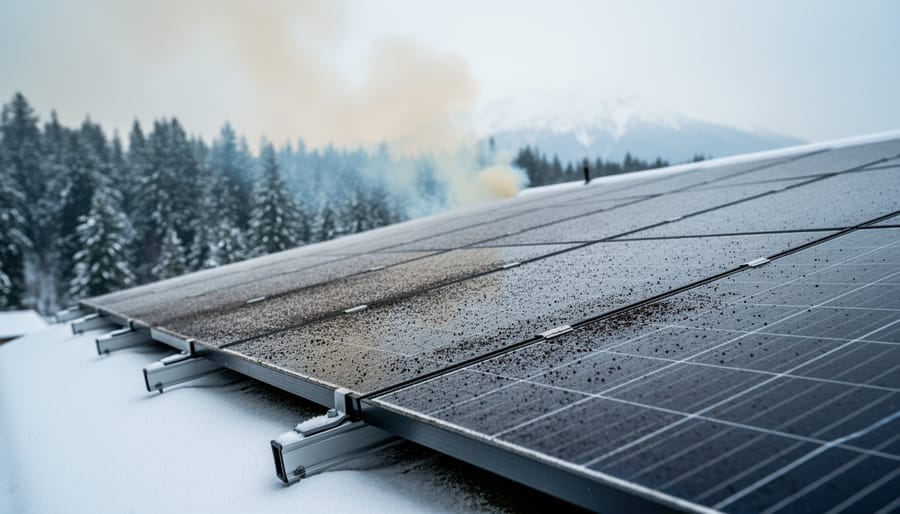
Clean panels make a significant difference. Dust, pollen, and bird droppings block sunlight, reducing efficiency. In BC’s coastal regions, salt spray can create a film that gradually decreases output. A simple quarterly cleaning can restore lost production—one Kelowna homeowner recovered 1.2 kWh daily after washing panels that hadn’t been cleaned in six months.
Equipment quality matters equally. Premium inverters convert DC to AC power more efficiently, while budget models may lose 3-5% in conversion. High-quality panels maintain 85% efficiency after 25 years, compared to 75% for economy options.
Temperature also affects performance. Panels operate best at 25°C, losing about 0.5% efficiency per degree above that. BC’s moderate climate helps here—systems stay cooler than in hotter provinces, maintaining better output during summer months.
Regular inspections catch issues early. Check for loose connections, shading from growing trees, and inverter error messages. Most BC solar installers offer maintenance packages that include annual inspections and cleaning, ensuring your system consistently delivers its expected 32-40 kWh daily average.

Real BC Homeowner Story: The Smiths’ 8kW System in Surrey
When the Smith family from Surrey decided to install an 8kW solar system in March 2022, they weren’t sure what to expect from BC’s variable weather. Now, after tracking their production for over a year, they’re excited to share their real-world results.
The Smiths’ system consists of 20 panels installed on their south-facing roof with minimal shading. Here’s what their monthly production looked like:
Their best months were July and August, generating approximately 1,200 kWh each month, averaging 38-40 kWh daily. June wasn’t far behind at 1,150 kWh for the month. Spring months of April and May produced around 950-1,050 kWh monthly, with daily averages of 32-35 kWh.
Winter presented a different story. December and January dropped to 250-300 kWh monthly, averaging just 8-10 kWh daily. November and February improved slightly at 400-450 kWh per month. The shoulder seasons of March, September, and October fell in the middle range at 650-800 kWh monthly.
Their total annual production reached 8,750 kWh, which covered approximately 85% of their household electricity consumption. The Smith family uses about 10,300 kWh annually, which is typical for a Surrey home with four residents, electric heating for part of their home, and standard appliances.
From a financial perspective, the results exceeded their expectations. Their system cost $22,000 after federal incentives. At current BC Hydro rates, they’re saving roughly $1,050 annually on electricity costs. Based on these savings and factoring in modest rate increases, their payback timeline sits at approximately 18-20 years.
Sarah Smith notes that summer months are particularly rewarding. During June through August, their system produces more than they consume, earning credits through BC Hydro’s net metering program that help offset winter shortfalls. They’ve become more conscious of running major appliances during peak sun hours to maximize their solar usage.
The family appreciates knowing their energy source is clean and that they’re contributing to BC’s renewable energy goals while reducing their carbon footprint by approximately 4 tonnes of CO2 annually.
How Daily Output Translates to Your Energy Needs
Understanding how an 8kW solar system’s daily output matches up with your energy consumption is key to determining if it’s the right investment for your home or business.
In British Columbia, the average residential household uses approximately 30-40 kWh of electricity per day. With an 8kW system generating between 24-40 kWh daily depending on the season, you can see how this system size aligns closely with typical BC household consumption. During summer months, your system may produce enough to cover your entire electricity needs and potentially generate excess energy for net metering credits. In winter, you might still need to draw some power from the grid, but your overall annual production can offset 60-90% of your electricity costs.
Consider the Johnson family in Kelowna, who installed an 8kW system in 2022. Their average daily consumption sits at 35 kWh, primarily for heating, appliances, and an electric vehicle. During peak production months from May through August, they generate surplus energy that earns credits, while winter months see them drawing about 30% of their needs from the grid. Over the full year, their system covers approximately 85% of their electricity requirements.
To determine if an 8kW system meets your specific needs, start by reviewing your past electricity bills to calculate your average daily consumption. If you use between 25-45 kWh daily, an 8kW system typically provides excellent coverage. Households with higher consumption may benefit from a larger system or implementing energy efficiency measures first to maximize their solar investment.
Calculate Your Potential Solar Output
Ready to discover your solar potential? Solar BC’s interactive calculator makes it simple to estimate your specific daily output based on your unique circumstances. Getting started takes just a few minutes and provides personalized insights tailored to your location.
To use the calculator effectively, you’ll need to gather some basic information beforehand. Have your most recent electricity bills handy, as these show your current energy consumption patterns. You’ll also want to know your roof’s orientation (which direction it faces) and approximate square footage available for panels. The calculator will also ask for your postal code to factor in your local climate conditions and sun exposure levels.
Once you input this information, the tool generates customized estimates showing expected daily, monthly, and annual production figures. You’ll see how an 8kW system specifically performs at your address, accounting for BC’s regional weather patterns. The calculator breaks down seasonal variations so you understand production differences between summer and winter months. This personalized data helps you make confident decisions about whether an 8kW system aligns with your household’s energy needs and sustainability goals.
Understanding your 8kW solar system’s daily output in British Columbia is the first step toward making an informed investment in clean energy. As we’ve explored, you can expect between 20-45 kWh per day depending on the season, with realistic annual averages around 28-32 kWh daily in most BC regions. These figures account for our province’s unique weather patterns, shorter winter days, and varying sunlight conditions throughout the year.
Remember that your specific output will depend on factors like roof orientation, shading, and local microclimates. The Okanagan homeowner generating 38 kWh on summer days and the Vancouver family offsetting 85% of their annual electricity costs demonstrate the real potential of properly installed systems in our province.
Ready to discover what an 8kW system could produce at your specific location? Connect with certified installers through Solar BC for a personalized assessment. These professionals will evaluate your property’s unique characteristics, provide accurate production estimates, and help you understand available incentives. Your journey toward energy independence and reduced environmental impact starts with a conversation tailored to your home or business. Take that next step today and join the growing community of British Columbians harnessing our natural sunshine.