
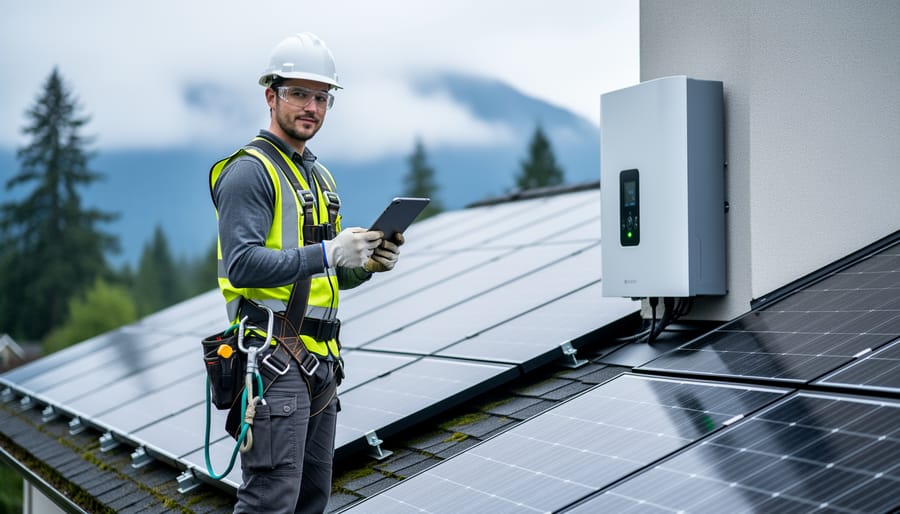
Verify your solar installer includes monitoring-based commissioning (MBCX) in their contract before signing—this systematic process uses real-time data collection to confirm your photovoltaic system operates at its designed capacity from day one. Request documented performance verification within the first 30 days of installation, comparing actual energy production against manufacturer specifications and your site’s solar potential. Insist on baseline metrics that track system efficiency, panel output consistency, and inverter performance, ensuring any issues are caught while your installation warranty allows for corrections at no cost.
MBCX transforms your solar investment from a hopeful purchase into a verified asset. Without this commissioning process, you might discover performance problems months or years later, when warranty coverage becomes disputed and your roof is ready but your system underdelivers. British Columbia’s variable weather patterns—from coastal fog to interior sun—make performance verification especially valuable, as your system’s real-world output rarely matches the sunny-day calculations in sales brochures.
The stakes are substantial. A typical residential solar installation in BC costs $15,000 to $30,000, with expected returns calculated over 25 years. Even a 10 percent performance gap, undetected during commissioning, costs thousands in lost energy production and extended payback periods. MBCX catches these gaps early: misaligned panels reducing efficiency, inverter configuration errors limiting output, or shading issues not accounted for in initial assessments.
This guide walks you through what monitoring-based commissioning actually involves, how BC homeowners and businesses use it to protect their investments, and the specific questions to ask installers before committing to a solar project. You will learn to distinguish between basic installation checks and comprehensive performance verification, ensuring your transition to clean energy delivers the environmental and financial benefits you expect.
What MBCX Actually Means for Your Solar System

Traditional Commissioning vs. MBCX
Think of traditional commissioning like a home inspection before you move in—thorough but limited to a single point in time. An inspector checks your solar system once, verifies it’s working on installation day, and moves on. If issues develop weeks or months later, you’re often left discovering problems through higher-than-expected electricity bills or reduced energy production.
Monitoring-Based Commissioning and eXtended operations (MBCX) takes a fundamentally different approach. Rather than a one-time snapshot, MBCX continuously tracks your system’s performance over months and years. It’s similar to having a health monitor that alerts you when something isn’t right, rather than waiting for an annual checkup.
Here’s what that looks like in practice: Traditional commissioning might confirm your panels are generating power on a sunny September afternoon. MBCX would track whether those panels maintain optimal performance through BC’s rainy winters, alert you to gradual efficiency drops caused by debris accumulation, and identify wiring issues before they become costly repairs.
A Richmond homeowner recently shared how MBCX caught a subtle inverter problem six months after installation—something traditional commissioning would have missed entirely. The continuous monitoring saved thousands in lost energy production.
This extended verification process integrates seamlessly with other preparatory steps, including roof readiness assessment, ensuring your entire solar investment delivers promised returns throughout its 25-year lifespan rather than just at installation.
Why BC’s Climate Makes MBCX Essential
British Columbia’s unique climate presents both opportunities and challenges for solar energy systems that make MBCX particularly valuable. Unlike regions with consistent sunshine year-round, BC experiences dramatic seasonal variations—from the long, bright summer days of the Interior to the cloudy, wet winters along the coast. These fluctuations mean your solar system’s performance can shift significantly throughout the year, and what looks normal in July might mask problems that only become apparent in December.
Our coastal fog, mountain microclimates, and varying snow loads create conditions where a solar array might underperform without obvious signs. A properly functioning MBCX process catches these issues early. For example, a Kelowna homeowner discovered through ongoing monitoring that winter snow wasn’t sliding off panels as expected, reducing output by 30 percent—a problem that would have gone unnoticed without performance tracking.
BC’s variable weather also means installation issues can take months to reveal themselves. Shading from trees, minor panel misalignments, or inverter calibration problems might not show up during summer’s abundant sunlight but become critical during our darker months. MBCX provides the year-round verification needed to ensure your investment delivers expected returns regardless of BC’s weather patterns, giving you confidence that your system is truly optimized for our local conditions.
The Three Phases of MBCX in Solar Installation
Initial System Verification
Once your solar system installation wraps up, the real work of monitoring-based commissioning begins. This isn’t just a quick flip of the switch—it’s a systematic verification process that ensures your investment performs as promised from day one.
Your installer will first confirm all equipment is communicating properly. This means checking that your inverter, monitoring system, and any battery storage are talking to each other and sending data correctly. Think of it as making sure all the instruments in an orchestra are properly tuned before the performance begins.
Next comes establishing baseline measurements. Your system’s performance on its first sunny days creates a reference point for future comparisons. Installers document how much energy your panels produce under current conditions, accounting for factors like shading patterns, roof condition, and seasonal sun angles specific to your BC location.
During these early weeks, your monitoring system tracks critical metrics: energy production, voltage levels, and system efficiency. A Kelowna homeowner recently discovered through these initial checks that one panel had a loose connection—caught and fixed before it affected their first month’s output.
These verification steps typically span two to four weeks, giving you confidence that every component works correctly and establishing the performance benchmarks that will protect your investment for decades to come.
Ongoing Performance Monitoring
Unlike traditional commissioning that happens once at installation, monitoring-based commissioning creates an ongoing safety net for your solar investment. Think of it as having a dedicated guardian for your system, continuously checking that everything operates as designed throughout the year.
Here’s how it works in practice: sensors collect performance data every few minutes, tracking energy production, inverter efficiency, and system health indicators. This information flows into software platforms that compare actual performance against expected output based on weather conditions and system specifications. When deviations occur, the system flags them for investigation.
A Kelowna vineyard discovered this value firsthand when their monitoring system detected a 12% drop in production on their south-facing array. The continuous data collection pinpointed the issue to a single inverter operating below capacity. Because the problem was caught within days rather than months, the repair cost $800 instead of the estimated $3,500 in lost production plus equipment replacement that would have resulted from a complete failure.
Similarly, a Vancouver Island community centre’s monitoring revealed gradual efficiency losses each spring. Investigation showed tree growth was creating new shading patterns. By catching this early, they scheduled strategic trimming that restored full capacity for under $400, avoiding the need for expensive panel repositioning.
The beauty of continuous monitoring lies in prevention. Small issues like loose connections, dust accumulation, or minor equipment degradation show up as performance anomalies long before they cause system failures, transforming your solar installation from a set-and-forget appliance into an actively optimized energy asset.
Long-Term Performance Validation
MBCX provides ongoing validation that your solar system continues performing as promised, protecting your investment well beyond installation day. This monitoring approach tracks your system’s actual energy production against expected performance baselines, giving you concrete evidence that you’re receiving the return on investment your installer guaranteed.
During the first year of operation, MBCX establishes performance benchmarks specific to your system’s location, orientation, and equipment. These benchmarks account for BC’s seasonal variations, from our cloudy winter months to sun-filled summer days. By comparing actual output to these realistic expectations, you can quickly identify if something’s underperforming.
This long-term tracking becomes particularly valuable when warranty issues arise. Rather than relying on guesswork, you’ll have documented performance data showing exactly when production declined and by how much. A Kelowna homeowner recently used their MBCX data to successfully claim a warranty replacement for underperforming panels, recovering thousands in lost energy production.
Most manufacturers require proof of proper operation to honor warranties. MBCX documentation provides this evidence automatically, showing you maintained your system correctly and that any performance issues stem from equipment defects rather than neglect. This protection extends throughout your 25-year panel warranty and inverter coverage periods, ensuring you get the full value promised when you made your sustainable energy investment.
Real Problems MBCX Catches Before They Cost You Money
A Burnaby Business That Saved $12,000
When a small manufacturing business in Burnaby installed their 50kW rooftop solar system in 2021, they expected immediate energy savings. Instead, their electricity bills barely changed. Something was clearly wrong, but without proper monitoring and verification, they couldn’t pinpoint the issue.
The business reached out to their installer, who conducted an MBCX evaluation six months after installation. The monitoring data revealed a critical problem: two of their ten inverters were operating at only 60% capacity due to a manufacturing defect. Because the system was still under warranty, the manufacturer replaced both units at no cost to the business owner.
The impact was immediate and substantial. Once the faulty inverters were replaced, the system’s energy production jumped by nearly 40%. Over the remaining warranty period and expected system lifespan, this correction translated to approximately $12,000 in recovered energy savings that would have been lost forever.
This case highlights why MBCX matters beyond just the initial installation. Without monitoring-based verification, this Burnaby business would have assumed their underperforming system was normal. They might have missed the warranty window entirely, leaving them responsible for expensive repairs or simply accepting reduced performance for decades.
The lesson is clear: monitoring and verification aren’t optional extras. They’re essential safeguards that protect your solar investment and ensure you receive the full financial and environmental benefits you paid for.
Common Issues MBCX Detects
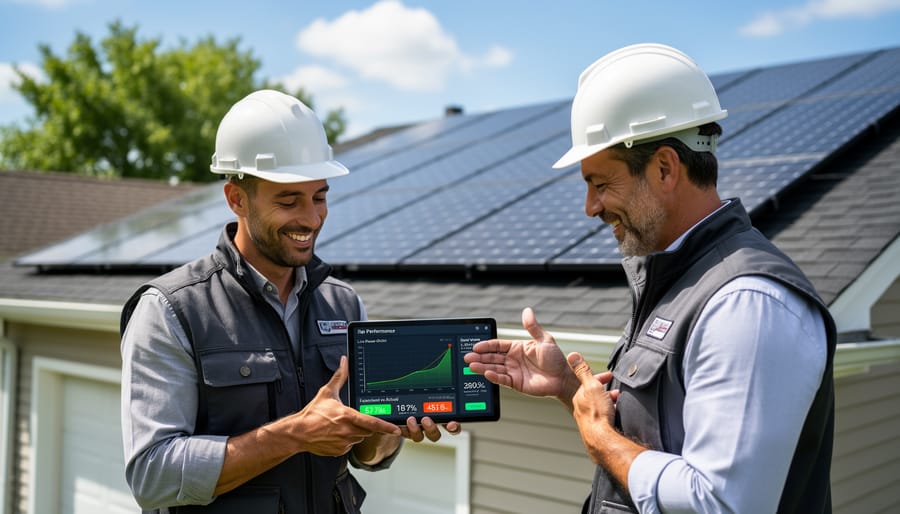
Monitoring-based commissioning acts as an early warning system for your solar investment, catching problems before they significantly impact your energy production. Here are the most common issues MBCX detects in BC solar installations:
Shading changes represent one of the most frequent discoveries. A tree that was small during installation may have grown enough to cast shadows on your panels, or a neighbor’s new structure might be blocking afternoon sun. MBCX data reveals these gradual shifts through production patterns that decline over time, allowing you to trim branches or adjust your system layout before losing substantial energy output.
Equipment degradation shows up clearly in monitoring data. Inverters naturally wear down over their 10-15 year lifespan, but MBCX can identify when performance drops faster than expected. Similarly, individual solar panels may develop micro-cracks or hot spots that reduce their efficiency. By comparing actual output against expected performance, monitoring reveals which specific components need attention.
Connection issues often hide in plain sight. Loose wiring, corroded terminals, or faulty connections can reduce your system’s output by 10-30 percent without any visible signs. One Surrey homeowner discovered through MBCX that a single loose connection was costing them over $200 annually in lost production. The problem was fixed within hours once identified.
Soiling and debris accumulation, particularly after BC’s wildfire seasons or winter storms, can significantly reduce panel efficiency. Monitoring data helps you determine when cleaning becomes necessary rather than guessing or following arbitrary schedules.
These detection capabilities transform monitoring from a passive observation tool into an active performance guardian, ensuring your solar system delivers the environmental and financial returns you expected when making this sustainable energy choice.
What to Expect: MBCX in Your Solar Installation Journey
Questions to Ask Your Solar Installer
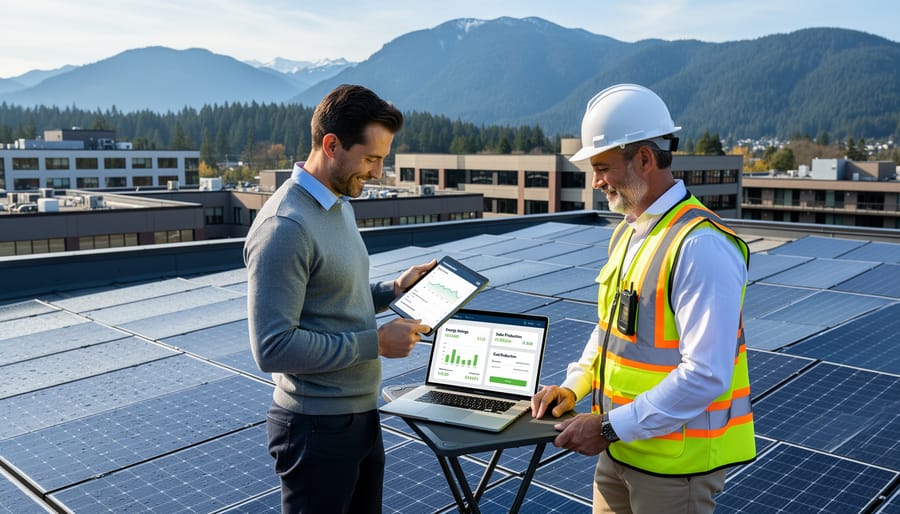
Before signing a contract with your solar installer, ask these essential questions about monitoring-based commissioning. Start with the basics: “What monitoring system will track my solar panels’ performance?” Request specific details about the platform, how you’ll access your data, and whether you can view it in real-time through a mobile app or web portal.
Next, inquire about performance guarantees: “How will you verify my system is producing the expected energy output?” A quality installer should explain their verification process and what happens if your panels underperform. Ask whether MBCX protocols are included in your contract at no additional cost or as an optional service.
Data access is crucial, so clarify: “Will I own my system’s performance data, and how long will it be stored?” Understanding data ownership prevents future complications. Also ask: “Who reviews the monitoring data, and how often?” Some BC installers assign dedicated energy advisors to conduct quarterly reviews.
Finally, connect MBCX to other preparatory steps: “Beyond proper roof assessment, what commissioning steps ensure long-term performance?” This question confirms your installer takes a comprehensive approach to system quality, not just installation speed. Document all responses in writing before making your decision.
Your Access to Performance Data
When your solar system is commissioned with monitoring-based protocols, you should receive access to a comprehensive dashboard that tracks your system’s performance in real-time. Most modern systems in BC come with online portals or mobile apps that display key metrics in easy-to-understand formats.
Your monitoring platform should show daily energy production measured in kilowatt-hours (kWh), which tells you how much electricity your panels generated that day. You’ll also see system efficiency percentages and cumulative production totals. Look for comparison features that show your actual production against expected output based on weather conditions and your system specifications.
A helpful feature to request is the performance ratio, which accounts for losses from temperature, shading, and equipment efficiency. A well-designed system in BC typically achieves 75-85% performance ratio annually. Your dashboard should also alert you to any unusual drops in production, helping you catch issues before they significantly impact your returns.
Many BC installers now provide monthly summary reports that contextualize your data. For example, a Victoria homeowner using their monitoring tools discovered their system underperformed on cloudy mornings due to nearby tree growth. The early detection allowed for simple trimming, restoring full production capacity.
Ask your installer to walk you through your specific monitoring platform during commissioning, ensuring you understand what normal performance looks like for your location and system size.
Making MBCX Work for You: Action Steps
Taking control of your solar investment starts with choosing the right partner. When selecting an installer, ask specifically about their MBCX protocols and commissioning procedures. Certified installers should provide detailed verification documentation showing your system’s baseline performance metrics within the first few weeks of operation.
Request a commissioning report that includes actual production data compared to predicted output, inverter efficiency readings, and confirmation that monitoring systems are properly configured. This documentation becomes your reference point for future performance tracking. Don’t hesitate to ask for a walkthrough of your monitoring portal—understanding how to read your system’s data empowers you to spot issues early.
Before installation begins, discuss the condition of your roof infrastructure with your installer, as structural integrity affects long-term system performance. Ensure your contract explicitly includes commissioning services and ongoing performance verification for at least the first year.
Connect with local solar owners through community forums and BC solar co-ops to learn from their experiences. Many British Columbians have successfully navigated the commissioning process and can recommend installers who prioritize thorough verification. Your solar system represents a significant investment—proper commissioning ensures it delivers the environmental and financial returns you expect.