
Category: Project Planning & Installation
-
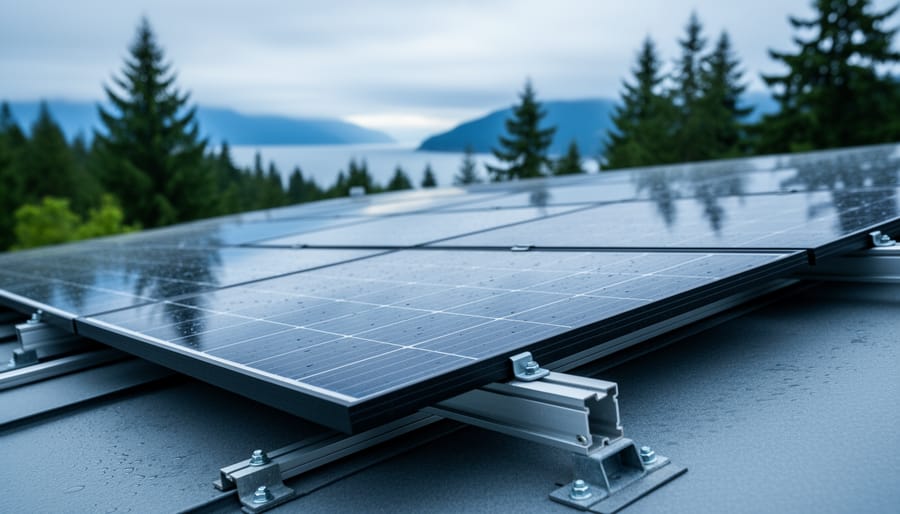
The Lifecycle of Solar Panels in BC: Stages, Performance, Recycling, and Carbon Impact
A solar panel’s journey spans roughly 25 to 30 years, moving through five distinct phases: manufacturing (where raw materials become photovoltaic cells), installation (when panels are mounted and connected), operation (the productive years of energy generation), performance degradation (gradual efficiency decline), and end-of-life management (decommissioning and recycling). Understanding this complete lifecycle helps British Columbia homeowners…
-
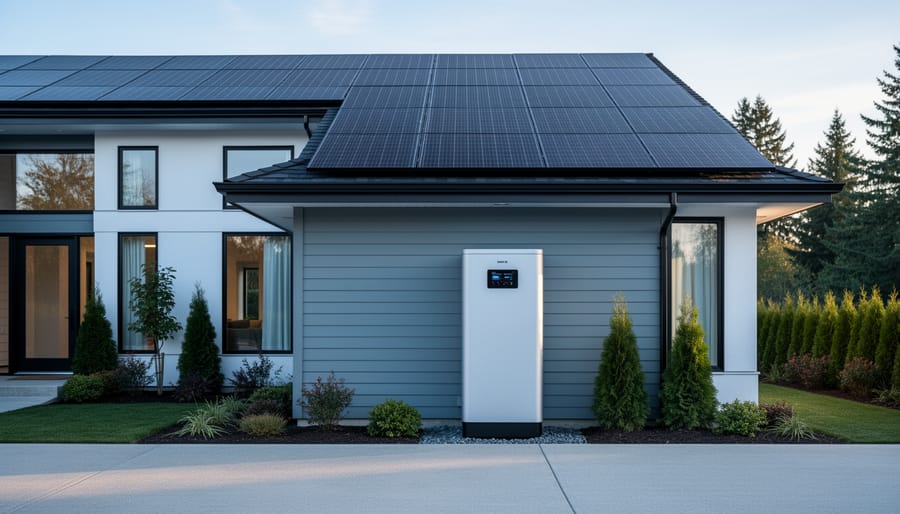
Best Home Solar Batteries That Actually Pay for Themselves in BC
Choosing the right solar battery means matching your household’s energy consumption to storage capacity, typically ranging from 10 kWh for smaller homes to 20+ kWh for larger properties with electric vehicles. BC homeowners can cut upfront costs significantly through CleanBC rebates that cover up to $5,000 per battery installation in 2026, making premium systems far…
-
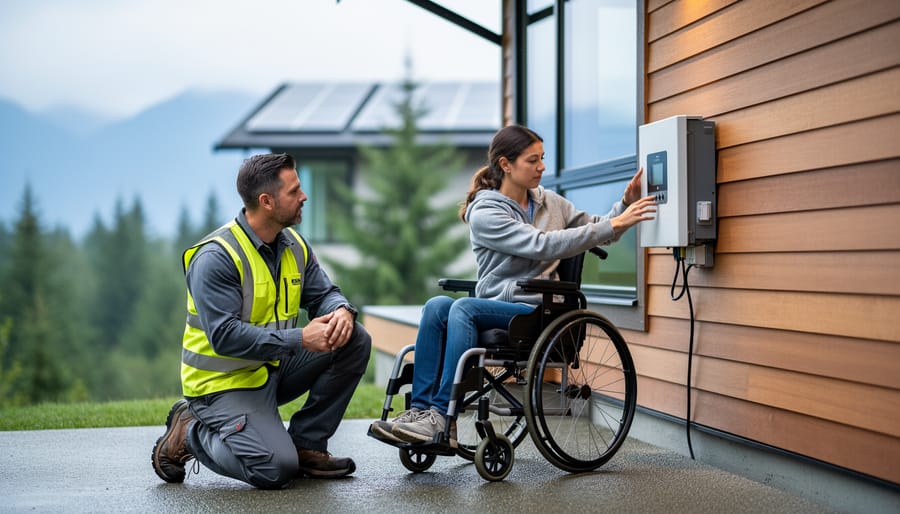
Why Your Solar Energy Plan Should Include Every British Columbian
Energy poverty affects British Columbians with disabilities at twice the rate of the general population, creating a cascade of challenges that extend far beyond monthly utility bills. When solar installations feature control panels mounted too high for wheelchair users, or when community energy programs fail to provide information in accessible formats, we exclude nearly one…
-
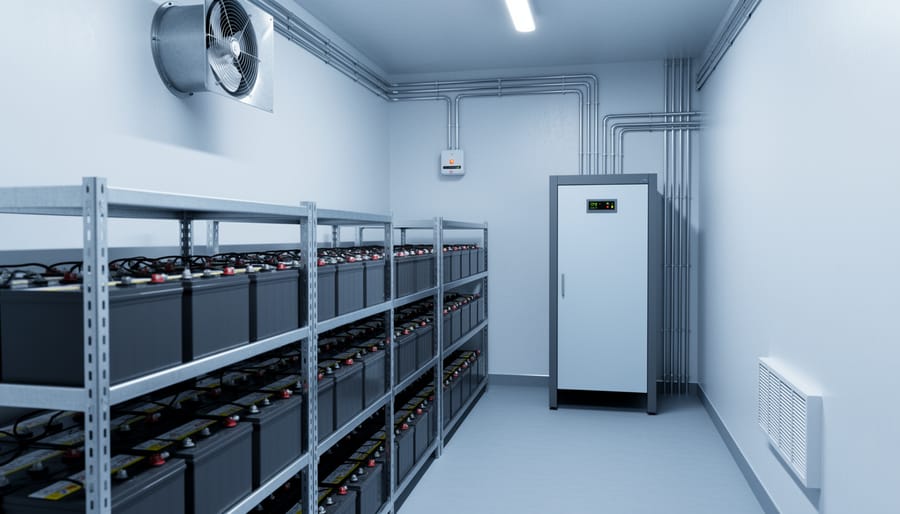
Why Your Battery Storage Room Needs Better Air Flow (Before It’s Too Late)
Install hydrogen gas detectors near ceiling level in your battery storage area, as charging lead-acid and flooded batteries release combustible hydrogen gas that rises and accumulates in poorly ventilated spaces. Without proper air exchange, concentrations can reach explosive levels of 4% or higher within hours. Calculate your required ventilation rate using the formula: CFM =…