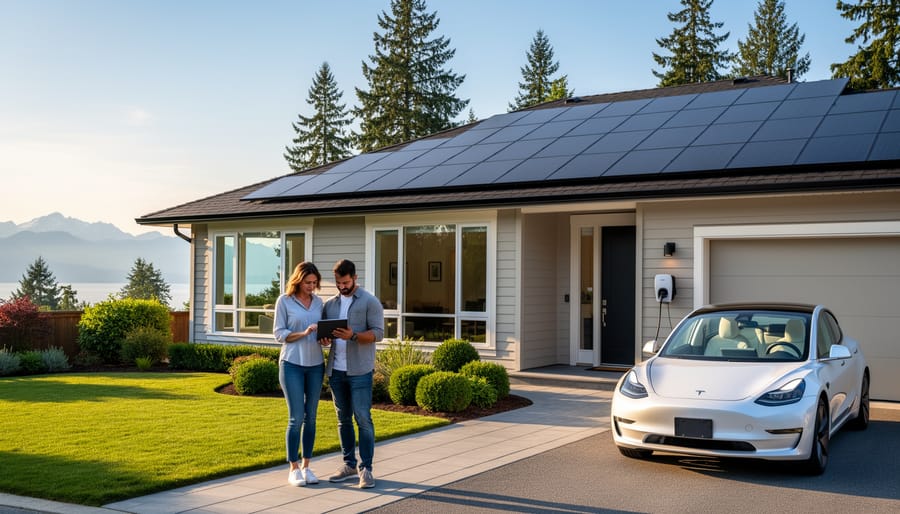
Compare the 30% federal Investment Tax Credit available to American solar adopters with BC’s net metering program and provincial incentives to determine which jurisdiction offers better returns on your solar investment. American homeowners can claim up to $7,500 annually through the ITC, reducing installation costs by thousands of dollars upfront, while BC residents benefit from some of Canada’s highest electricity rates, creating faster payback periods through energy savings rather than direct subsidies.
Calculate your potential savings under both systems by examining actual installation costs: the average American household pays $15,000-$25,000 after the ITC, while BC installations typically range $18,000-$30,000 before provincial rebates and utility incentives. The key difference lies in how you recoup costs—Americans through immediate tax credits, British Columbians through reduced electricity bills and net metering credits that roll over monthly.
Evaluate cross-border lessons that BC can apply from successful American programs. States like California and New York pair federal tax credits with state-level incentives, creating adoption rates three times higher than the national average. BC’s approach focuses on long-term value through net metering and Property Assessed Clean Energy (PACE) financing, which spreads costs over 20 years through property tax payments, making solar accessible without requiring large upfront capital.
Understanding these fundamental differences helps BC residents recognize that while American subsidies appear more generous initially, British Columbia’s combination of high electricity rates, stable net metering policies, and innovative financing creates competitive long-term returns that often match or exceed American outcomes over a system’s 25-year lifespan.
The US Solar Subsidy Landscape: What Americans Actually Get
Federal Solar Investment Tax Credit (ITC)
The United States offers one of North America’s most generous solar incentives through the Federal Solar Investment Tax Credit (ITC), which currently provides a 30% tax credit on solar installation costs. While BC residents cannot access this American program, understanding how it works helps put our own provincial incentives into perspective and shows why many of your southern neighbours are making the solar switch.
Here’s how the US ITC works: when an American homeowner or business installs a solar system, they can claim 30% of the total project cost as a credit against their federal income taxes. For example, a $20,000 residential solar installation would generate a $6,000 tax credit. Unlike deductions that reduce taxable income, this credit directly reduces the tax owed dollar-for-dollar.
The program covers solar panels, inverters, mounting equipment, wiring, and installation labour. Both homeowners and businesses qualify, though businesses can access additional accelerated depreciation benefits. The system must be installed at the taxpayer’s primary or secondary residence, or at a business location they own.
The 30% rate applies to systems installed between 2022 and 2032, then gradually decreases. There’s no maximum claim amount, making it attractive for larger installations.
For BC residents researching this topic, you might wonder how our local programs compare. While we don’t have federal tax credits like the US, British Columbia offers different but valuable incentives including utility rebates, net metering programs, and financing options that make solar accessible here too.
State-by-State Variations
Solar incentives across the United States vary dramatically depending on where you live, creating a patchwork of support that can be helpful to understand when evaluating BC’s own programs.
California leads the nation with some of the most generous solar policies, including net metering programs that credit homeowners for excess energy sent back to the grid and local rebates that can reach thousands of dollars. The state’s Self-Generation Incentive Program also offers substantial battery storage incentives. For a typical California homeowner, these combined incentives can reduce solar installation costs by 40-50% beyond the federal tax credit.
New York takes a different approach through its NY-Sun Initiative, providing upfront capacity-based incentives that pay per watt of installed solar. The state also offers property tax exemptions for solar installations and aggressive net metering policies. These programs have helped New York achieve impressive solar adoption rates despite having less sunshine than sunnier states.
Washington State, directly south of the BC border, demonstrates how northern climates can still support robust solar programs. While Washington phased out its production incentives in 2020, the state maintains sales tax exemptions on solar equipment and strong net metering policies that benefit installers and homeowners alike.
The key takeaway for BC residents is that while US incentives often appear more generous on paper, they’re designed for American tax structures and don’t typically benefit Canadian residents. Understanding this landscape helps you appreciate BC’s own evolving incentive programs, which are specifically tailored to provincial needs and available to you directly.

BC Solar Rebates and Grants: Your Complete Breakdown
CleanBC Better Homes Program
While comparing US solar programs, BC residents will find their own CleanBC Better Homes Program offers competitive incentives that make solar adoption accessible and affordable. This provincial initiative provides rebates of up to $5,000 for solar photovoltaic installations, helping offset the upfront costs that often deter homeowners from making the switch.
To qualify, your home must be your primary residence and undergo an energy assessment before and after installation. The rebate amount depends on your system size, with larger installations receiving proportionally higher incentives. Income-qualified households can access even more generous support through enhanced rebate tiers, ensuring solar energy remains within reach for all British Columbians.
The application process is straightforward: start with a registered energy advisor who will assess your home’s solar potential and help you understand your savings. After completing your installation with a qualified contractor, submit your post-installation assessment to receive your rebate within 6-8 weeks.
Take inspiration from the Thompson family in Kelowna, who combined their $4,200 provincial rebate with federal incentives to reduce their installation costs by nearly 40 percent. They now save over $1,500 annually on electricity while contributing to BC’s clean energy goals. Ready to calculate your potential savings and start your application? Visit the CleanBC website to connect with local energy advisors today.
Federal Greener Homes Grant
While US homeowners benefit from federal solar tax credits, BC residents have access to the Canada Greener Homes Grant, which provides up to $5,000 for eligible home energy retrofits, including solar photovoltaic installations. This program operates differently from American incentives but offers substantial support for BC homeowners looking to go solar.
To access this grant, you must first book an EnerGuide home evaluation with a certified energy advisor. This pre-retrofit evaluation identifies your home’s current energy performance and recommends improvements. After completing eligible upgrades like solar panel installation, a second evaluation confirms the energy efficiency gains, and you receive your grant payment.
The grant amount varies based on the improvements made, with solar installations qualifying for a significant portion of the $5,000 maximum. When combined with BC solar rebates and local utility programs, BC residents can offset a substantial part of their solar investment.
One Victoria homeowner reduced their installation costs by $7,200 by stacking the Greener Homes Grant with provincial incentives. The evaluation requirement might seem like an extra step, but it provides valuable insights into maximizing your home’s overall energy efficiency alongside your solar project.
Municipal and Utility-Specific Programs
Beyond provincial incentives, British Columbia residents can access valuable local programs that make solar even more affordable. BC Hydro and FortisBC, the province’s major utilities, along with several municipalities, offer additional rebates and incentives specifically designed for their service areas.
BC Hydro’s Net Metering Program allows solar customers to receive credits for excess electricity sent back to the grid. When your panels produce more energy than you use, the surplus generates credits that offset your consumption during less sunny periods. This program essentially turns your meter backward, maximizing your investment’s value. Recent participants in Metro Vancouver have reported annual savings between $600 and $1,200 depending on system size.
FortisBC customers can take advantage of similar net metering opportunities, with the added benefit of customized incentives for commercial solar installations. Small businesses in communities like Kelowna and Kamloops have successfully reduced operating costs by 30-40% through combined provincial and FortisBC programs.
Several municipalities sweeten the deal further. The City of Vancouver offers expedited permitting for solar installations, reducing approval time from weeks to days. Saanich provides property tax exemptions for the added home value from solar systems, while Nelson offers grants up to $2,000 for residential installations.
To discover what’s available in your area, contact your utility provider directly or visit your municipal website’s sustainability section. These local programs, stacked with provincial incentives, create compelling opportunities that often rival American subsidy packages while supporting BC’s clean energy goals.
BC’s Property Tax Exemptions for Solar: Money You Keep
How the Exemption Works
British Columbia’s property tax exemption offers a straightforward financial benefit: when you install solar panels on your home, their added value doesn’t increase your annual property taxes. Here’s what that means in practice.
Normally, home improvements that boost your property value result in higher property taxes. A new deck, renovated kitchen, or swimming pool typically increases your assessment and your tax bill. Solar panels are different. Under BC’s exemption, the value your solar system adds to your home stays off the books for property tax purposes.
Consider the Johnsons in Kelowna, who installed a $15,000 solar array in 2023. While their home’s market value increased, their property assessment excluded the solar equipment entirely. This saved them approximately $150 annually in property taxes, money that compounds year after year.
This exemption works automatically once your solar installation is complete and properly documented with your municipality. You don’t need to apply separately or file additional paperwork in most cases. The savings continue for as long as you own your home, making solar panels one of the few home improvements that pays you back through both energy savings and tax relief. For BC homeowners comparing Canadian incentives to those south of the border, this exemption represents a tangible, ongoing financial advantage unique to our province.
Comparing Tax Treatment: BC vs US States
Property tax treatment of solar installations varies dramatically between BC and US jurisdictions. In British Columbia, solar panels are generally exempt from property tax increases under the Residential Property (Solar) Exemption Regulation. This means adding a $30,000 solar system to your home won’t boost your property assessment for tax purposes—a significant advantage for homeowners.
Compare this to the patchwork approach across US states. California offers similar protections through its Active Solar Energy System Exclusion, preventing solar installations from increasing property values for assessment purposes. However, several states like Texas and Florida actually increase your property tax burden when you install solar, despite offering other incentives.
Some US states take a middle ground. New York exempts solar installations from property taxes for 15 years, while Massachusetts offers a 20-year exemption. States like Arizona provide no property tax relief at all, meaning your investment immediately raises your annual tax bill.
For BC residents, this consistent provincial protection removes a significant financial uncertainty. You can calculate your solar savings knowing that property taxes won’t eat into your returns, unlike American homeowners who must factor in varying state policies when planning their solar investments.
The Real Value: Calculating Your BC Solar Savings
Stacking Your Incentives
Maximizing your solar savings means layering available incentives strategically. Start by claiming the federal Canada Greener Homes Grant, which offers up to $5,000 for eligible solar installations. Submit your application before beginning work, as retroactive claims aren’t accepted.
Next, check if your BC municipality offers additional rebates. For example, Vancouver residents can access CleanBC programs that complement federal funding. The City of Nelson provides its own solar incentives for homeowners and businesses alike.
Don’t overlook utility programs. BC Hydro’s net metering allows you to earn credits for excess electricity your panels generate, effectively reducing future bills. Some areas also qualify for property tax exemptions on the added home value from solar installations.
For financing, explore solar financing alternatives like power purchase agreements that require zero upfront costs. Combine these with federal and provincial incentives to minimize out-of-pocket expenses.
Create a checklist of all applicable programs, noting deadlines and requirements. Many BC homeowners save 40-60% on installation costs by properly stacking incentives. Contact local solar providers who understand regional programs and can guide you through the application process efficiently.
BC Success Story: The Vancouver Island Installation
When the Chen family in Nanaimo decided to install solar panels on their 2,400 square-foot home in 2023, they carefully researched every available incentive to maximize their investment. Their experience shows exactly how BC homeowners can make solar work financially.
The Chens installed a 7.5 kW system with a total upfront cost of $22,500. They strategically layered multiple subsidies to reduce their out-of-pocket expenses significantly. First, they received a $5,000 rebate through the Canada Greener Homes Grant, which covered the energy audit and a substantial portion of equipment costs. Their local municipality in Nanaimo offered an additional $1,500 property tax incentive spread over five years.
The family also took advantage of BC Hydro’s Net Metering program, earning credits for excess electricity sent back to the grid during sunny summer months. These credits offset their winter consumption, reducing their annual electricity costs by approximately $1,800. Their final investment after subsidies totaled $16,000.
The financial results were impressive. With their energy savings and grid credits, the Chens calculated a payback period of just under nine years. After that point, they expect to save roughly $1,800 annually for the remaining lifespan of their 25-year system warranty.
Sarah Chen notes that while US federal tax credits offer a higher percentage rebate, the combination of Canadian and BC programs made their solar installation financially viable without the complexity of tax credit calculations. Their system became operational within three months of their initial application.

What BC Residents Should Know About US Solar Programs
If you own property or operate a business in the United States while living in BC, you might be wondering whether you can access American solar incentives. The good news is that US solar programs, including the federal Investment Tax Credit, are generally tied to property ownership and tax liability rather than citizenship or primary residence.
To qualify for the 30% federal ITC on a US property, you need to file US taxes and have sufficient tax liability to claim the credit. This typically applies to BC residents who own vacation homes, rental properties, or commercial buildings in the United States. The property must be used as a residence or business location, and you’ll need to work with a cross-border tax specialist to navigate the complexities of claiming credits in both countries.
Keep in mind that state-level incentives vary significantly. Some states require primary residency for certain rebates or net metering programs, while others base eligibility solely on property ownership. For example, Washington State’s incentive programs have specific residency requirements that differ from California’s approach.
It’s worth noting that while US incentives might seem attractive, BC’s programs offer their own advantages without the cross-border tax complications. The CleanBC income-qualified program and various municipal incentives provide substantial support for BC homeowners, often with simpler application processes and faster implementation timelines.
Before pursuing US solar incentives, consult with both a cross-border tax advisor and a qualified solar installer familiar with international projects. They can help you determine whether the potential savings justify the additional administrative complexity and ensure you remain compliant with tax obligations in both countries.
Your Next Steps: Accessing BC Solar Incentives Today
Documentation You’ll Need
Before applying for BC solar programs, gather these essential documents to streamline your application process. For residential rebates through CleanBC, you’ll need proof of home ownership, recent utility bills showing your current energy consumption, and quotes from qualified solar installers. A home energy assessment report is required for many programs and helps determine your system size needs.
Business applicants should prepare their BC business registration number, recent financial statements, and a detailed project proposal outlining expected energy production. Most programs require multiple competitive quotes from certified installers, so start collecting these early.
Keep your property tax assessment handy, as well as photos of your roof or installation site. If you’re considering battery storage alongside solar panels, documentation of your current electrical panel capacity will be necessary. Municipal building permits typically come after approval, but check your local requirements. Having everything organized before you apply can reduce processing time from months to weeks, getting you closer to clean energy savings faster.

Finding Certified BC Solar Installers
Choosing the right solar installer makes a significant difference in maximizing your BC solar incentives. Start by looking for installers certified by the Canadian Solar Industries Association (CanSIA) or those holding electrical contractor licenses in British Columbia. These professionals understand local building codes, BC Hydro’s net metering requirements, and provincial rebate programs.
Ask potential installers about their experience with CleanBC programs and whether they assist with rebate applications. The best installers will guide you through paperwork, explain available incentives, and help you understand options like solar PPAs that reduce upfront costs.
Request references from recent BC customers and verify their track record with local projects. A qualified installer should provide a detailed proposal showing projected savings, available incentives, and realistic timelines. Many BC solar companies offer free consultations and savings calculators to help you understand your return on investment.
Consider installers who are members of local business associations and have established reputations in your community. They’re more likely to provide ongoing support and honor warranties, ensuring your solar investment performs optimally for decades.
While US solar subsidies have garnered significant attention, British Columbia residents have access to equally compelling incentive programs that make going solar an achievable and financially smart decision. The combination of provincial rebates, federal tax credits, net metering benefits, and utility-specific programs creates a robust framework for solar adoption that rivals what’s available south of the border.
The key difference is taking action now. These programs exist to accelerate BC’s clean energy transition, but they’re only valuable if you use them. Whether you’re a homeowner looking to reduce your electricity bills or a business aiming to enhance your sustainability profile, the financial support is readily available.
Solar BC provides free interactive calculators that help you estimate your potential savings based on your specific location, energy usage, and roof characteristics. These tools remove the guesswork and show you real numbers for your situation. Additionally, Solar BC connects you with qualified local installers who understand BC’s unique climate conditions and regulatory landscape.
Don’t let this opportunity pass by. Explore the available incentives, calculate your potential savings, and join the growing community of British Columbians who are generating clean energy while saving money. Your solar journey starts with a single step—take it today.