
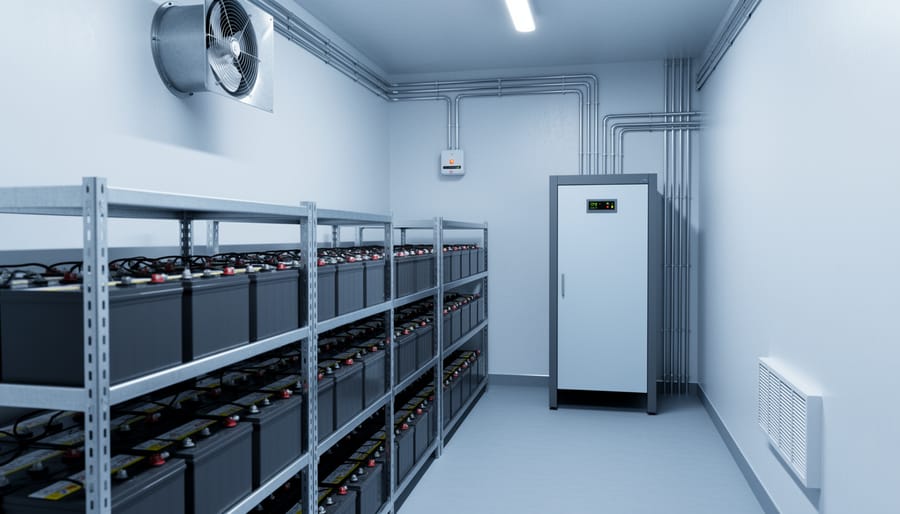
Install hydrogen gas detectors near ceiling level in your battery storage area, as charging lead-acid and flooded batteries release combustible hydrogen gas that rises and accumulates in poorly ventilated spaces. Without proper air exchange, concentrations can reach explosive levels of 4% or higher within hours.
Calculate your required ventilation rate using the formula: CFM = (battery capacity in amp-hours × number of batteries × 0.05) ÷ 100. For example, a 48-volt system with eight 200Ah batteries needs minimum 38 cubic feet per minute of continuous exhaust to safely disperse hydrogen buildup during charging cycles.
Position exhaust fans at the highest point of your battery room with intake vents near floor level on the opposite wall, creating cross-ventilation that pulls fresh air across all battery surfaces. This prevents dead zones where hydrogen pockets form and ensures compliance with British Columbia’s electrical and fire codes.
Schedule annual inspections with certified electricians familiar with BC Building Code requirements for battery installations. Many British Columbia homeowners and businesses switching to solar-plus-storage systems discover ventilation gaps during these assessments, preventing potential safety incidents before they occur.
Temperature control matters equally to gas management. Maintain battery room temperatures between 15-25°C through your ventilation system, as excessive heat accelerates battery degradation and increases hydrogen release rates during charging. Proper air circulation extends battery lifespan while protecting your investment and ensuring your sustainable energy system operates safely for decades.
What Happens Inside Your Battery Storage Room
The Hydrogen Risk You Can’t Ignore
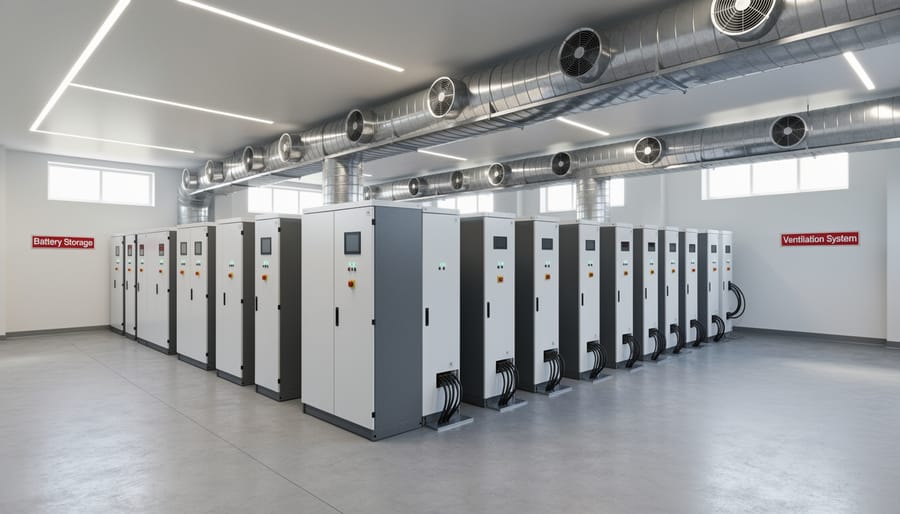
When lead-acid or flooded batteries charge, they release hydrogen gas through a natural process called off-gassing. This colorless, odorless gas is extremely light and rises quickly to accumulate at ceiling level in enclosed spaces. Here’s the concern: hydrogen becomes explosive at concentrations as low as 4% in air, creating a serious safety hazard in battery rooms without proper airflow.
In British Columbia, our climate adds another layer of consideration. During winter months, many building operators seal spaces tightly to conserve heat, which can inadvertently trap hydrogen in battery storage areas. Similarly, our humid coastal conditions can accelerate battery off-gassing rates, especially during charging cycles.
A Vernon energy storage facility learned this lesson firsthand when routine maintenance revealed dangerous hydrogen concentrations near their battery bank ceiling. The culprit was an inadequate ventilation system that couldn’t keep pace with their expanding storage capacity. After upgrading to code-compliant ventilation with continuous air exchange, hydrogen levels dropped to safe ranges within days.
The risk isn’t theoretical. Hydrogen ignites easily from something as simple as a static spark, faulty wiring, or even a light switch. Proper ventilation removes this gas before it reaches dangerous levels, protecting your investment and your community.
Heat Buildup and Battery Performance
When battery storage systems operate in poorly ventilated spaces, heat becomes a silent threat to both performance and longevity. Batteries naturally generate heat during charging and discharging cycles, and without proper airflow, temperatures can climb quickly. This heat buildup accelerates chemical reactions inside the batteries, causing them to degrade faster than expected.
For British Columbia residents investing in solar energy storage, inadequate ventilation can mean replacing batteries years earlier than anticipated. Most lithium-ion batteries perform optimally between 15-25°C. When temperatures exceed 30°C regularly, you might lose 20-30% of your battery’s expected lifespan. That’s a significant hit to your return on investment.
Higher temperatures also reduce efficiency during daily operation. Hot batteries require more energy to charge and deliver less usable power when discharging. A family in Kelowna discovered their battery system was underperforming by 15% simply because their storage room lacked adequate ventilation. After installing proper ventilation fans and vents, they noticed immediate improvements in both performance and the battery temperature readings.
Think of ventilation as protection for your investment. The upfront cost of proper airflow systems is minimal compared to premature battery replacement expenses, ensuring your sustainable energy system delivers value for decades.
Fire Readiness: Your First Line of Defense
BC Building Codes and Safety Standards
British Columbia has specific safety requirements for battery storage rooms, and understanding these regulations helps ensure your system is both compliant and safe. The BC Building Code addresses battery room ventilation primarily through the BC Fire Code and electrical safety standards, which apply whether you’re storing batteries in your home, business, or community facility.
For residential installations, the key requirement focuses on preventing hydrogen gas accumulation. Lead-acid batteries, commonly used in off-grid systems, can release hydrogen during charging. The BC Fire Code requires adequate ventilation to maintain hydrogen concentrations below 1% by volume—well below the 4% level where ignition becomes possible. This typically means either natural ventilation through vents positioned near the ceiling (where hydrogen rises) or mechanical exhaust systems that provide continuous air exchange.
Commercial battery storage facilities face more stringent requirements. Buildings housing large battery banks need mechanical ventilation systems that provide specific air change rates, often 1-2 complete air changes per hour during normal operation, increasing during charging cycles. These systems must operate independently of other building ventilation and include backup power to ensure continuous operation.
Here’s what compliance looks like in practice: A Victoria-based business installing a 50kWh battery backup system worked with certified electricians who calculated the required ventilation based on battery type, room volume, and charging current. They installed a dedicated exhaust fan with hydrogen sensors that automatically increase airflow when needed, while positioning fresh air intake near the floor to create proper circulation.
Always work with qualified professionals who understand BC’s specific requirements. Licensed electrical contractors and HVAC specialists familiar with energy storage systems can design compliant ventilation solutions tailored to your battery type and installation size, ensuring your investment remains safe and legal.
What Certified Installers Check For
When you work with a certified solar and battery storage installer in British Columbia, they conduct a thorough ventilation assessment to ensure your system operates safely and meets all regulatory requirements. Here’s what they evaluate during the installation process:
First, they measure your battery room’s dimensions and calculate the required air exchange rate based on your specific battery type and capacity. This ensures hydrogen gas, which some batteries release during charging, never reaches hazardous concentration levels. They’ll inspect existing ventilation openings or determine where new ones should be placed, typically positioning intake vents low and exhaust vents high to leverage natural air flow patterns.
Professional installers also verify your ventilation system complies with the BC Fire Code and Electrical Code requirements. They check for proper separation between batteries and ignition sources, assess whether mechanical ventilation fans are necessary, and confirm electrical components are rated for potentially explosive atmospheres if required.
Additionally, they evaluate temperature control measures, since batteries perform best within specific temperature ranges. Expect them to discuss maintenance schedules, including regular cleaning of vents and periodic airflow testing.
Don’t hesitate to ask your installer about their certification credentials, warranty coverage, and how they’ll document compliance for insurance purposes. A qualified professional welcomes these questions and provides clear, detailed answers.
Designing Ventilation That Actually Works
Natural vs. Mechanical Ventilation
When designing your battery storage ventilation in BC, you’ll need to choose between natural (passive) and mechanical (powered) systems. Understanding the difference helps you select the most effective and cost-efficient option for your situation.
Natural ventilation relies on passive airflow through strategically placed vents near the floor and ceiling. As hydrogen gas rises, it naturally escapes through upper vents while fresh air enters below. This approach works well for smaller battery banks (typically under 10 kWh) in spaces with good air circulation and consistent temperature conditions. The advantages include zero operating costs, no maintenance requirements, and complete reliability during power outages. However, natural ventilation depends on environmental conditions and may not provide adequate air exchange in confined spaces or during extreme weather.
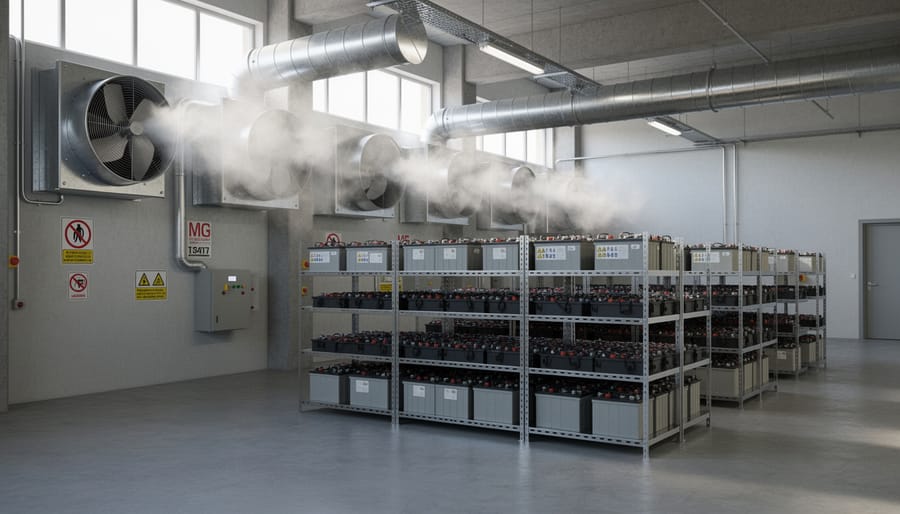
Mechanical ventilation uses powered exhaust fans to actively remove air from the battery area. This approach suits larger installations, commercial systems, or enclosed spaces where passive airflow is insufficient. BC installations often benefit from mechanical systems during our mild but humid winters when natural convection slows down. These systems provide consistent, measurable air exchange rates regardless of weather conditions, though they require electricity to operate and periodic maintenance. Many BC installers recommend mechanical ventilation for systems above 15 kWh or in basement locations with limited natural airflow paths. Some homeowners choose hybrid approaches, combining natural vents with small backup fans for optimal safety and efficiency.
Sizing Your Ventilation System Correctly
Calculating the right ventilation capacity prevents both under-sizing (which creates safety risks) and over-sizing (which wastes energy and money). The calculation centers on hydrogen gas production rates from your specific battery type and capacity.
Start with your battery’s amp-hour rating. During charging, batteries release hydrogen at predictable rates. A common rule of thumb: for every 100 amp-hours of battery capacity, you need approximately 30-50 cubic feet per minute (CFM) of ventilation. For example, a home with a 400 amp-hour battery bank would require roughly 120-200 CFM.
Room dimensions matter too. BC Building Code requires complete air changes every 10-12 minutes in battery rooms. Measure your space’s volume (length × width × height in feet), then divide by 10 to find minimum CFM. Use whichever calculation gives you the higher number.
A Surrey community center recently sized their ventilation system for a 600 amp-hour solar battery installation. They calculated 180 CFM based on battery capacity, but their 12×10×8 foot room needed 96 CFM for adequate air changes. They installed a 200 CFM system to exceed both requirements safely.
Consider consulting with certified installers who understand local climate conditions and can account for factors like elevation and seasonal temperature variations affecting ventilation performance.
A BC Success Story: Safe Storage in Action
When the Riverside Community Centre in Kelowna decided to install a 50kWh battery storage system for their solar array in 2023, proper ventilation wasn’t an afterthought—it was a cornerstone of their planning process.
“We wanted to lead by example,” explains Facilities Manager Carol Henderson. “As a community hub, safety had to come first, especially with children and seniors using our building daily.”
The project team worked with a certified installer to design a dedicated battery room with both passive and active ventilation systems. The initial cost breakdown included $3,200 for the ventilation system itself, $800 for hydrogen detection sensors, and $1,500 for fire-rated construction upgrades—adding roughly 8% to their overall battery installation budget.
The challenges were real. The original mechanical room location had insufficient airflow, requiring the team to relocate batteries to a ground-floor storage area with exterior wall access. This adjustment delayed the project by three weeks but proved worthwhile.
Two years later, the benefits are clear. The Centre has experienced zero safety incidents, and their battery system operates at optimal temperatures year-round, actually extending the expected lifespan by maintaining ideal conditions. Regular monitoring shows hydrogen levels consistently remain well below detectable thresholds.
Perhaps most valuable was the peace of mind. When a neighbouring building experienced a minor electrical fire last winter, Carol’s team confidently demonstrated their safety protocols to concerned community members and insurance providers.
“The upfront investment in proper ventilation was money well spent,” Carol notes. “We’re not just storing energy—we’re protecting our community while reducing our carbon footprint by 40%. That’s a success story worth sharing.”
Their experience shows that prioritizing ventilation and fire readiness isn’t just about compliance—it’s about responsible renewable energy adoption.
Your Battery Room Safety Checklist
Ensuring your battery storage system operates safely year-round starts with proper ventilation, but it doesn’t end there. Here’s your practical checklist to keep your battery room safe and compliant:
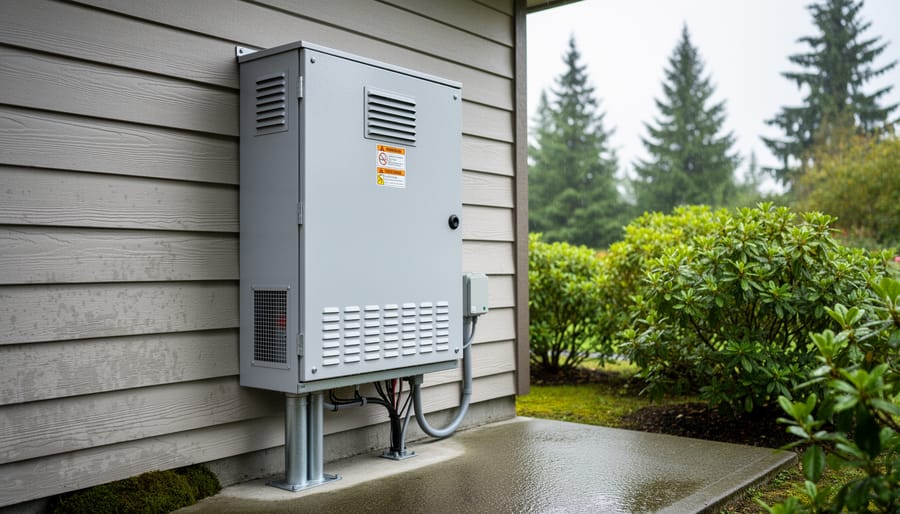
Ventilation essentials: Verify your system includes mechanical ventilation with adequate airflow rated for your battery capacity. Ensure intake vents draw fresh air from ground level while exhaust vents are positioned high on walls or ceiling to capture rising hydrogen gas. In BC’s coastal regions, install weather-protected vent covers to prevent rain infiltration during our wet winters.
Fire safety measures: Confirm your battery room has ABC-rated fire extinguishers accessible within 10 meters. Install smoke and hydrogen gas detectors with battery backup systems. Ensure your installer provides emergency response procedures specific to your battery type, and share these with your local fire department.
Regular maintenance tasks: Inspect ventilation fans quarterly to ensure they’re operating properly and clear of debris. Clean air filters monthly during spring when pollen counts peak in BC. Check battery terminals for corrosion every six months, as our coastal humidity can accelerate this process. Test gas detectors according to manufacturer specifications, typically every three months.
Monitoring recommendations: Schedule annual inspections with certified professionals who understand BC Building Code requirements. Document all maintenance activities in a logbook. During extreme weather events common in our region, particularly heat waves or prolonged freezing temperatures, increase monitoring frequency to weekly checks.
Keep your installer’s contact information readily available and establish a relationship with a qualified maintenance provider for ongoing support.
Investing in proper battery room ventilation is more than a regulatory checkbox—it’s a commitment to protecting your family, employees, and valuable energy infrastructure. When you prioritize ventilation from the start, you’re choosing peace of mind alongside your clean energy solution. A well-ventilated battery room prevents hydrogen buildup, extends battery lifespan, and ensures your system operates safely for decades to come.
Working with certified Solar BC installers makes all the difference. These qualified professionals understand BC’s unique climate considerations, local building codes, and the specific ventilation requirements for different battery technologies. They’ll assess your space, recommend appropriate solutions, and ensure every safety element meets or exceeds standards.
Don’t leave battery safety to chance. Connect with a certified installer in your community who prioritizes proper ventilation design. Ask about their experience with battery systems, request references from local projects, and ensure they stay current with evolving safety standards. Your investment in solar and storage deserves professional expertise that puts safety first—because clean energy should always be safe energy.